

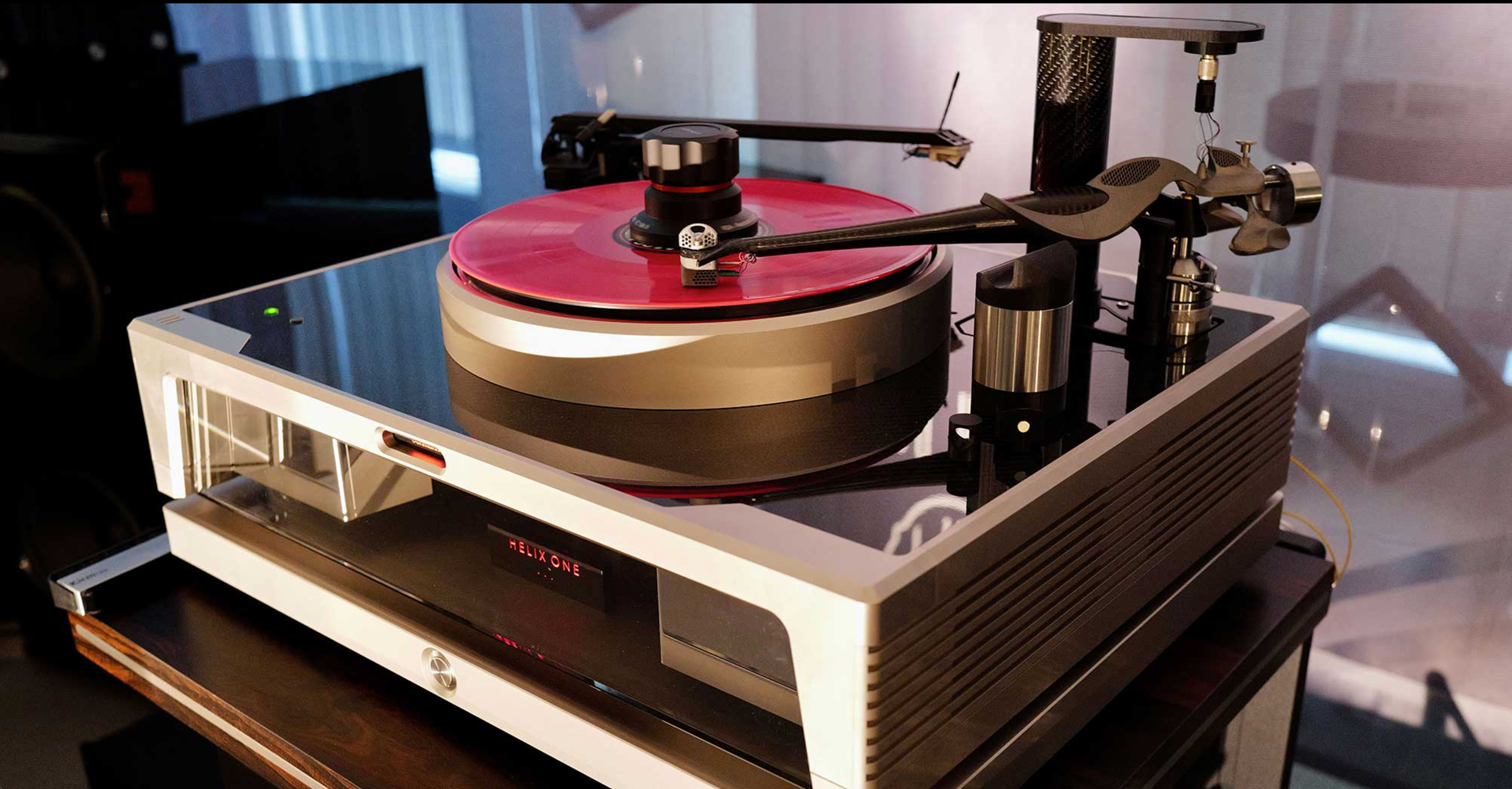
The Wilson Benesch Graviton Ti is not presented as a simple accessory for an analog front end. It is a highly specialized tonearm built around the idea that every mechanical and electrical interface in vinyl replay can influence performance. Its appeal lies in the way Wilson Benesch has addressed familiar tonearm challenges — stiffness, damping, bearing precision, cable drag, cartridge coupling, and turntable integration — with a set of deliberately engineered solutions rather than conventional hardware choices. For prospective owners building a serious vinyl system, the Graviton Ti is most interesting as a complete mechanical ecosystem: a 12-inch tonearm whose materials, geometry, and signal path have been developed to work together.
A 12-Inch Tonearm With a Materials-First Philosophy
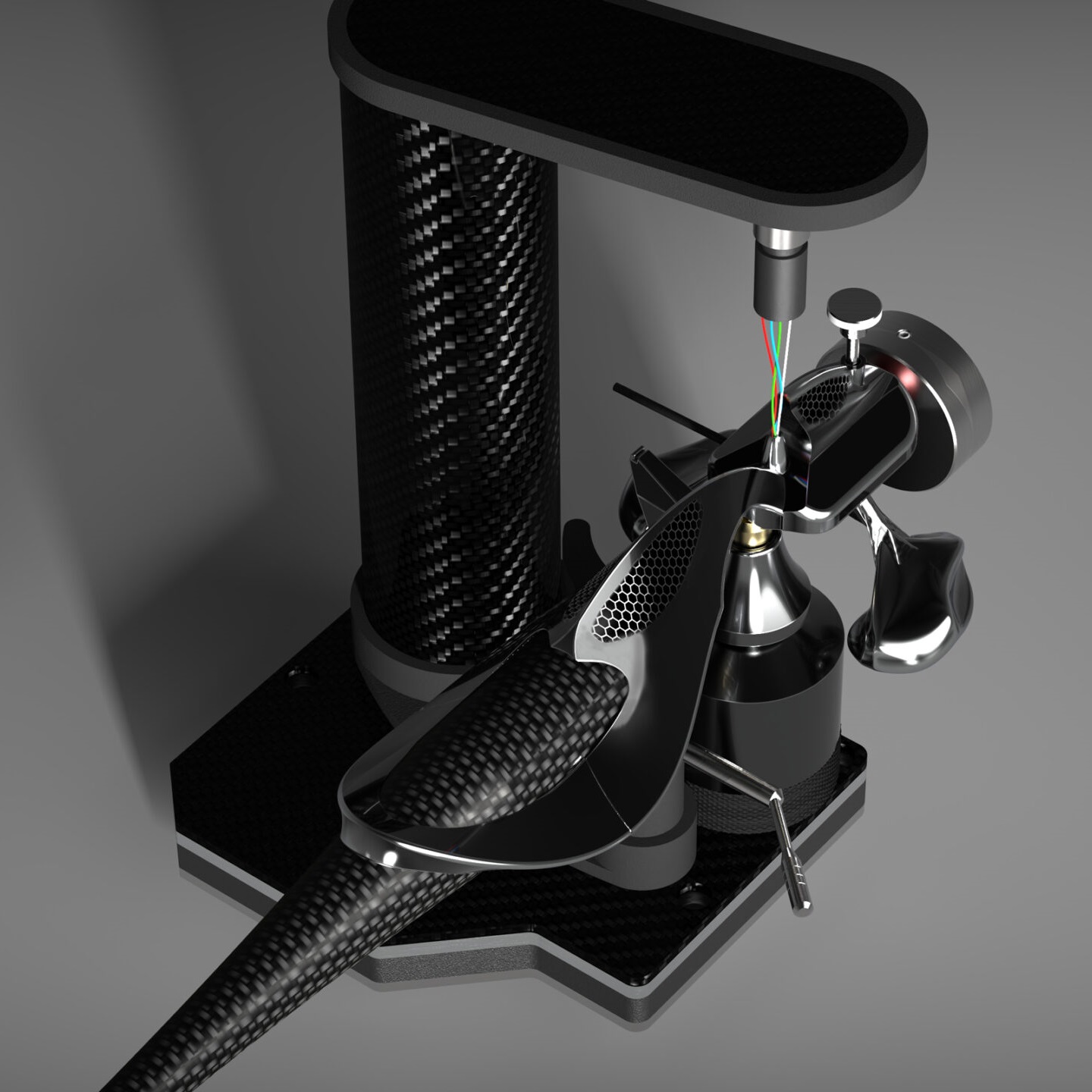
At the center of the Graviton Ti is a one-piece carbon fiber arm tube, hand-laid by Wilson Benesch engineers and formed with a complex quad-helix fiber orientation. This is significant because the arm tube is one of the most critical structural parts of any tonearm. It must be light enough to allow precise tracking, stiff enough to resist unwanted flex, and well damped enough to prevent stored energy from returning to the cartridge.
Wilson Benesch has reinforced the carbon fiber structure with a graphene-enhanced matrix and selective placement of unidirectional fibers. The aim is not simply to make the arm tube stronger, but to control how energy moves through it. In a tonearm, uncontrolled energy can compromise the mechanical relationship between stylus, cartridge, headshell, arm tube, and bearing. The Graviton Ti’s construction is therefore intended to combine rigidity with energy management, two qualities that are often difficult to balance.
The hyperbolic arm tube profile is another important design choice. Rather than using a uniform tube shape, Wilson Benesch has shaped the arm to optimize stiffness and mass distribution without unnecessary material. The integrated carbon fiber headshell continues that thinking by reducing the number of separate parts at the cartridge end of the arm. Fewer mechanical joints can mean fewer potential points of movement, resonance, or energy loss, which is especially relevant at the cartridge interface where tiny groove movements are converted into an electrical signal.
Damping Inside the Arm Tube
The Graviton Ti’s arm tube is not only about external shape and carbon lay-up. Internally, Wilson Benesch uses Rohacell and viscoelastic materials to provide damping. This matters because stiffness alone is not enough in a tonearm. A rigid structure that rings, stores energy, or reflects vibration back toward the cartridge can create its own problems.
By combining a stiff carbon fiber shell with internal damping materials, the design attempts to control resonant behavior without adding excessive mass. That balance is central to the product’s appeal. The arm must support the cartridge accurately while avoiding the kind of stored mechanical energy that could interfere with groove tracing. For an owner using high-resolution cartridges and carefully set-up turntables, this attention to internal damping is one of the Graviton Ti’s more meaningful engineering details.
Titanium Counterbalance Architecture With Functional Geometry
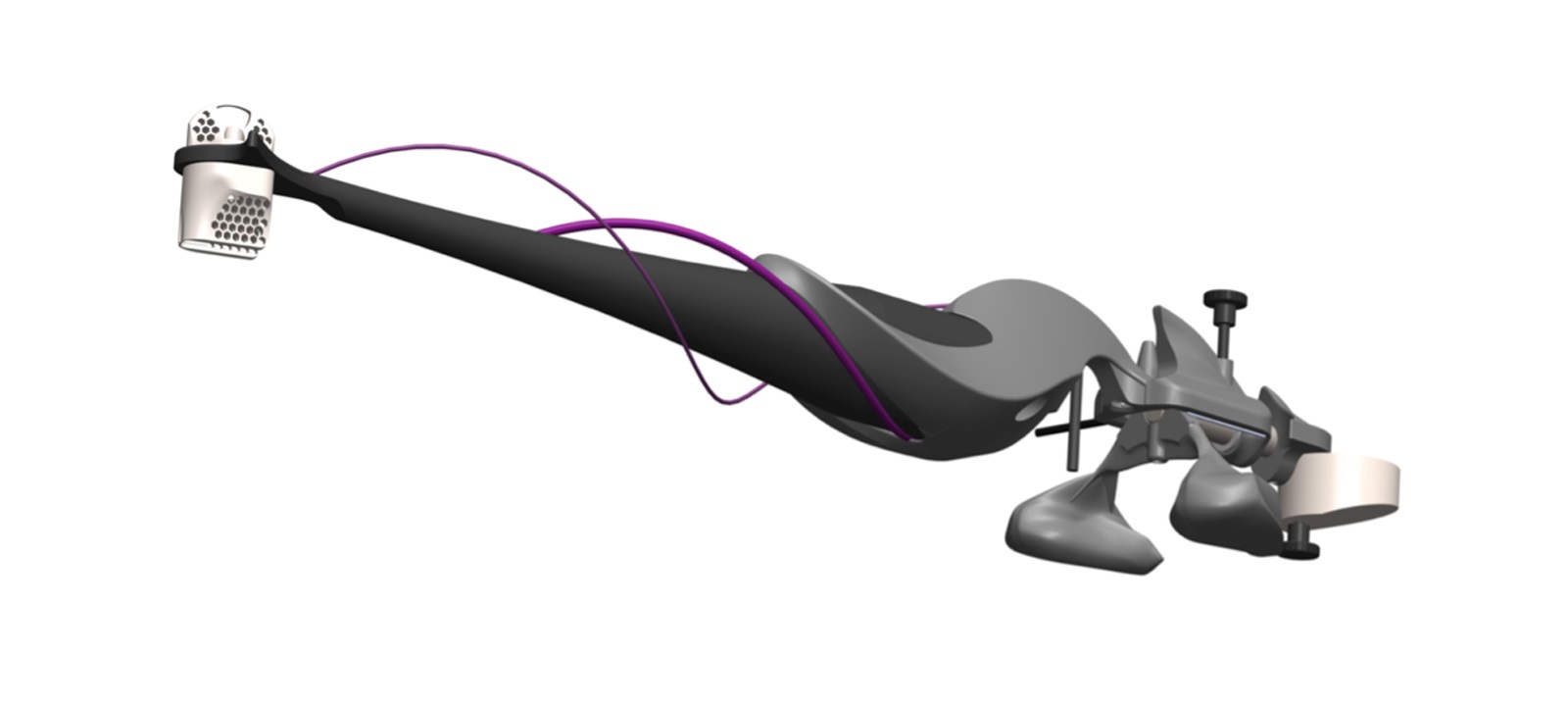
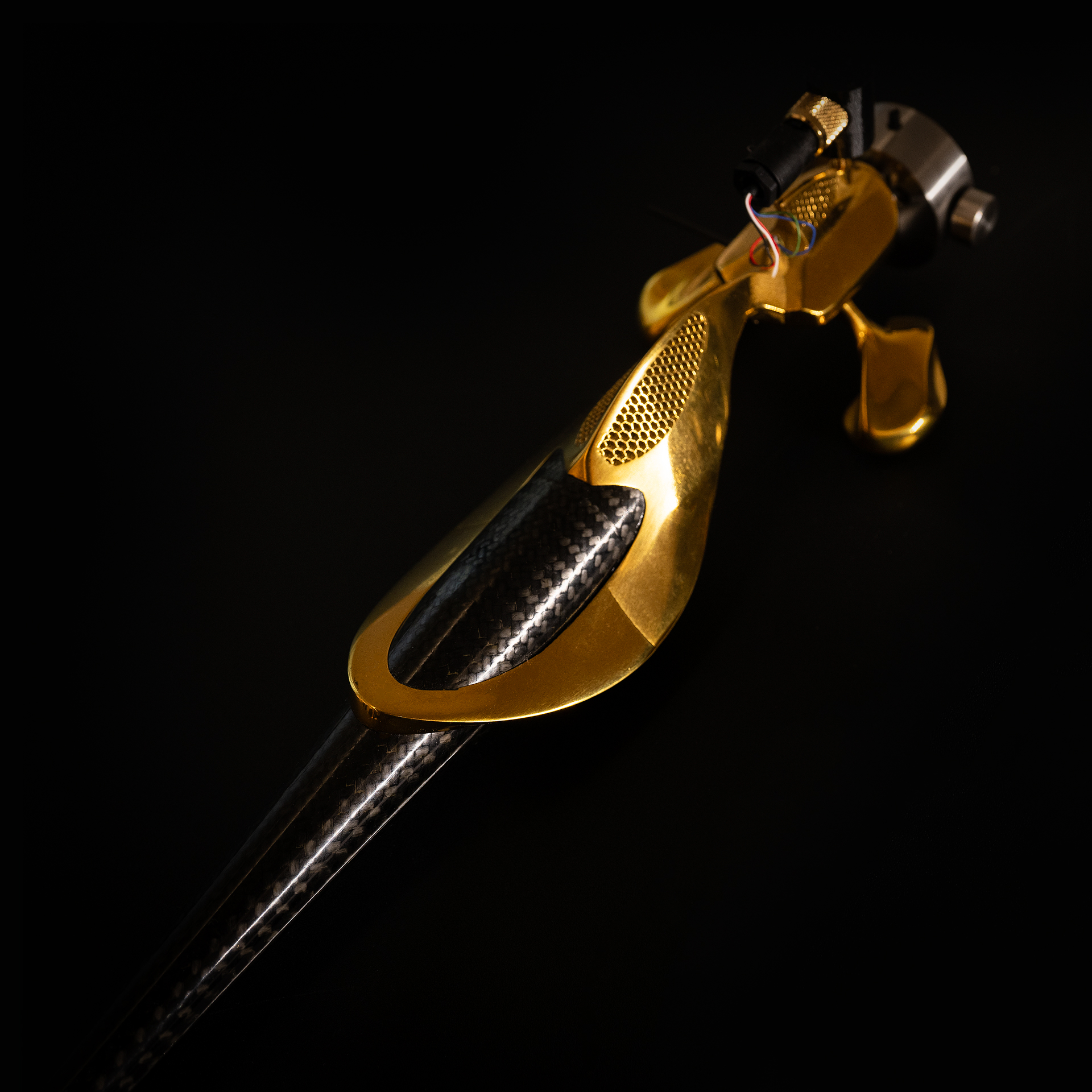
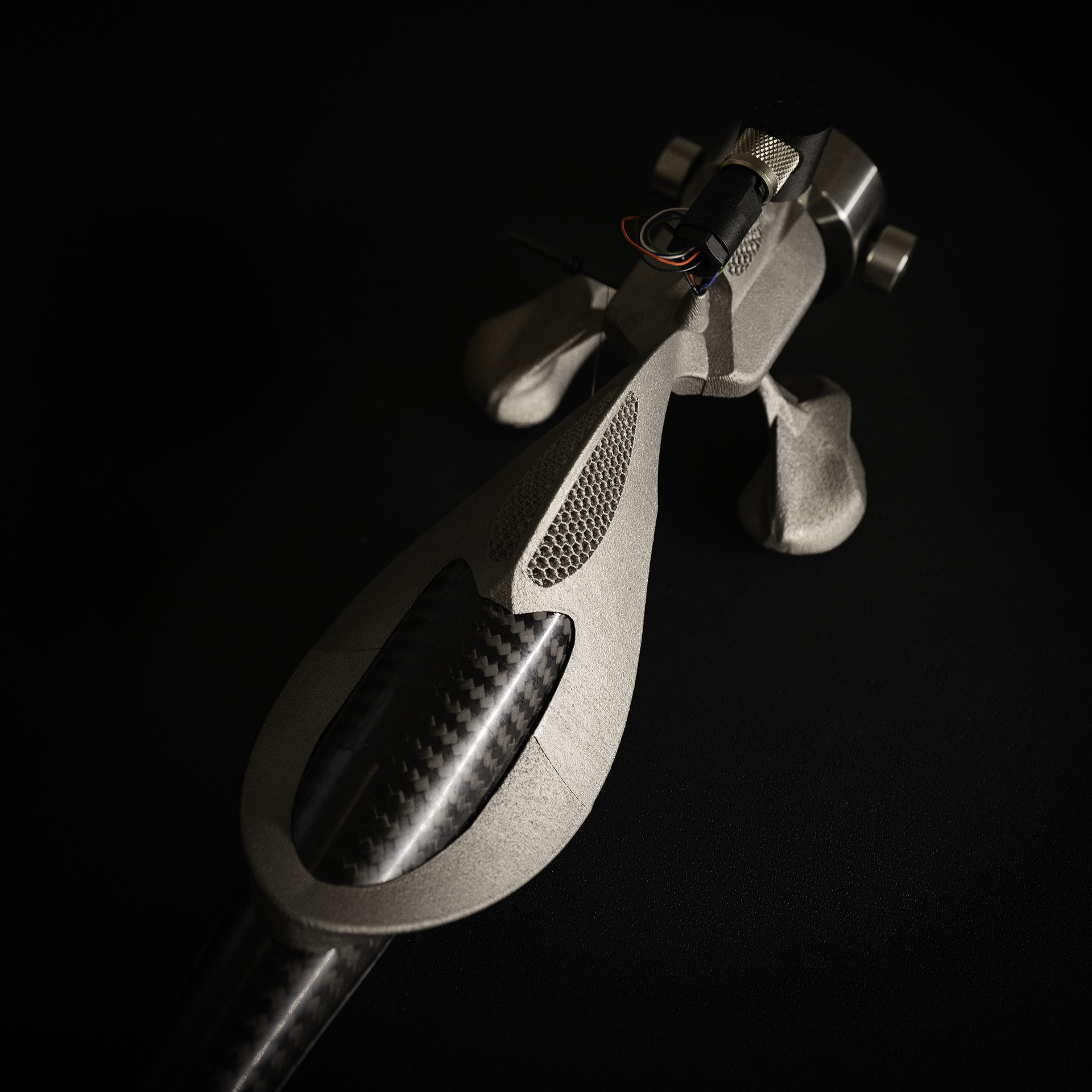
The counterbalance system is another area where Wilson Benesch has chosen a more elaborate solution than a simple mass on the back of the arm. The Graviton Ti uses a titanium counterbalance architecture made up of hollow, tiled, and solid sections, each assigned a different mechanical role.
The first part of the structure is a lightweight hollow form that follows the helix of the carbon arm tube. This creates a large contact area for energy transfer while keeping mass under control. Below the pivot, the structure uses an internally tiled geometry intended to absorb energy through an anisotropic lattice arrangement. At the bearing surface, the architecture becomes solid, prioritizing stiffness where the tonearm needs the most stable mechanical reference.
This type of shape is useful because a counterweight is not merely there to balance tracking force. Its mass, location, damping behavior, and connection to the rest of the arm all affect how the tonearm behaves dynamically. By placing mass low and shaping the structure according to function, Wilson Benesch is seeking a low center of gravity, controlled energy flow, and mechanical stability around the pivot. For users who value precise setup and repeatable performance, that level of mechanical consideration is a key part of the Graviton Ti’s identity.
A Kinematic Bearing System Using Zirconium Elements
The bearing system is developed from Wilson Benesch’s ACT One tonearm and uses ultra-hard zirconium bearing elements. In a tonearm, the bearing must permit extremely small movements with minimal friction while maintaining geometric stability. Even tiny resistance or instability can matter because the stylus is being asked to follow microscopic groove modulations.
The Graviton Ti uses a hybrid tri-point bearing arrangement with two zirconium balls and one conductive steel ball. The zirconium elements are selected for surface finish and behavior under high Hertzian contact loads, while the steel element also supports electrical grounding. This combination is intended to address both mechanical and electrical requirements in the same bearing assembly.
The grounding aspect should not be overlooked. In analog playback, the signal level from a phono cartridge is very small, which makes noise management especially important. A bearing design that also considers grounding reflects the broader Graviton Ti approach: mechanical precision and signal integrity are treated as connected problems rather than separate design departments.
Stage One Over-Arm Interface and Cable Management
One of the most distinctive features of the Graviton Ti is the Stage One over-arm interface. Tonearm wiring is often hidden from view, yet it can exert force on the arm if routed in a way that creates torsion, drag, or changing resistance during movement. The Graviton Ti addresses this by taking the wire vertically above the pivot point into a copper-shielded chamber, leaving less than an inch of exposed cable.
The purpose is twofold. Mechanically, the arrangement is designed to remove cable force from the bearing so that the arm can move without the wire influencing its behavior. Electrically, the shielded chamber protects the signal at an especially vulnerable point. Because cartridge output is low-level, careful treatment of the first part of the signal path is valuable.
Stage One was originally developed for Wilson Benesch system turntables, including the GMT One and Prime Meridian, but it has now been designed to integrate with select turntables from other manufacturers. That makes the Graviton Ti more relevant beyond Wilson Benesch’s own ecosystem, especially for owners who want to upgrade the tonearm and preserve a high standard of cable management and shielding.
The Fin Cartridge Interface
The Fin is a precision-engineered titanium bow created for the connection between the Tessellate Ti cartridge and the Graviton Ti tonearm. It is produced using Selective Laser Sintering, a manufacturing process that allows complex shapes to be built in titanium. Its role is to provide minimal mass with high stiffness at the cartridge mounting point.
This is a notable alternative to traditional cartridge installation using bolts and washers. By replacing conventional hardware with a structurally integrated component, the Fin is intended to create a more cohesive mechanical connection between cartridge and tonearm. It also forms a multi-material damping pad, which supports the larger design goal of controlling energy at every interface.
This feature will be most relevant to users considering the Graviton Ti as part of a Wilson Benesch cartridge and tonearm combination. It also illustrates the company’s system-thinking approach: the tonearm is not treated as an isolated component, but as part of a chain that includes the cartridge, mounting hardware, bearing, wiring, and turntable structure.
Modularity and Turntable Compatibility
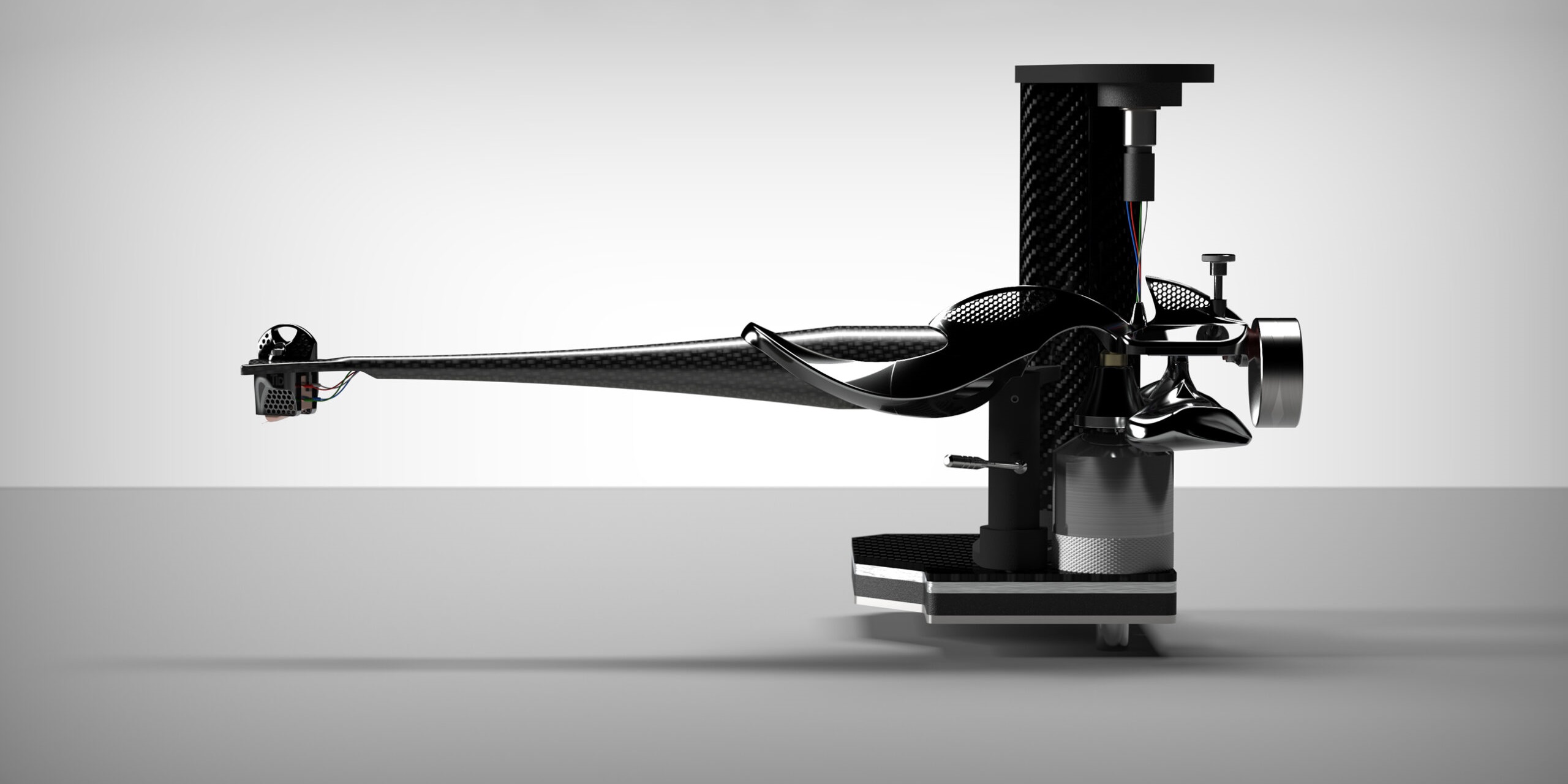
Although the Graviton Ti was developed for Wilson Benesch system turntables, the company has also created a custom armboard to support installation on other high-end turntables. Additional armboards are planned for other platforms. This matters because a tonearm at this level is likely to be considered by owners of already established analog systems, not only by those buying a complete Wilson Benesch turntable package.
The 12-inch format also positions the Graviton Ti for turntables that can accommodate a longer arm. A 12-inch tonearm requires suitable mounting geometry and adequate space, so compatibility should be evaluated carefully. The modular armboard strategy is therefore important: it gives the product a path into wider systems while acknowledging that installation is not universal or casual.
For the prospective owner, the key advantage is flexibility without abandoning the product’s core engineering. The Stage One interface, bearing architecture, arm tube design, and counterbalance system remain part of the package, while armboard development opens the possibility of integration beyond Wilson Benesch’s own decks.
Conclusion
The Wilson Benesch Graviton Ti is best understood as a serious analog engineering project rather than a conventional tonearm upgrade. Its strongest documented qualities are its graphene-reinforced carbon fiber arm tube, internally damped structure, biomimetic titanium counterbalance architecture, zirconium-based kinematic bearing, carefully managed Stage One wiring interface, and modular approach to turntable installation. It is most suitable for experienced vinyl listeners, system builders, and owners of high-end turntables who are prepared to address precise compatibility, setup, cartridge matching, and installation requirements. It will be less appropriate for casual vinyl users or systems where the turntable platform cannot support its 12-inch geometry and specialized mounting needs. For the right analog front end, the Graviton Ti offers a carefully integrated set of mechanical and electrical solutions aimed at extracting more stability and control from vinyl playback.



Sound Off
0Join the discussion if you have something to add.