
Best AV Receivers Compared: Pioneer, Anthem and More
The Pioneer VSX-LX305 is the strongest all-rounder here, combining nine-channel amplification, immersive-format support and unusually broad connectivity. But the cheaper VSX-935, music-focused Anthem MRX 540 and Canton-based stereo option each make a convincing case for different systems.

Choosing an AV receiver is no longer simply a question of counting HDMI sockets or picking the biggest power figure. The five source articles here point to several different buying priorities: the Pioneer VSX-LX305 is built for a substantial immersive cinema system, the VSX-935 aims to deliver much of that experience in a more accessible format, and the Anthem MRX 540 concentrates on five-channel performance and advanced room correction.
There is also an important system-level choice. The Canton Ergo 690 is a stereo-focused floorstanding speaker that can anchor a high-quality front end, while the AirPlay 2 and Google Cast comparison explains why network convenience and ecosystem compatibility matter when choosing a receiver. The result is not one universal winner, but the Pioneer VSX-LX305 is the most complete all-round recommendation for a modern home cinema.
Quick verdict
- Best Overall: Pioneer VSX-LX305 — the most capable receiver here for a serious immersive home-cinema system, with nine amplification channels, 5.2.4 or 7.2.2 support, broad streaming and strong video connectivity.
- Best Value: Pioneer VSX-935 — the sensible choice when seven channels, Dolby Atmos and DTS:X are enough, while retaining two HDMI outputs, room correction and extensive network playback.
- Best Sound Character: Anthem MRX 540 — the pick for buyers who value powerful, rich, dynamic sound and deep bass, and who can work within a five-channel layout.
- Best Stereo Foundation: Canton Ergo 690 — not an AV receiver, but the strongest choice in this group for a buyer prioritising accurate, spacious and musical front-channel reproduction.
AirPlay 2 and Google Cast are not receiver models, but they are relevant to the buying decision: both are designed to make network and multi-room playback easy, with the choice often determined by the user’s preferred ecosystem.
| Product or platform | Best suited to | System scale or role | Key strengths | Main limitation or consideration |
|---|---|---|---|---|
| Pioneer VSX-LX305 | Immersive home cinema | 9.2 channels; 5.2.4 or 7.2.2 | Broad streaming, 8K support, IMAX Enhanced hardware, MCACC | Power figures are specified with one channel driven; IMAX Enhanced requires an upgrade |
| Pioneer VSX-935 | Flexible mainstream cinema system | 7.2 channels; 7.1 or 5.2.2 | Two HDMI outputs, Dolby Atmos, DTS:X, MCACC, phono and network playback | Seven amplification channels limit the scale of an Atmos installation |
| Anthem MRX 540 | Five-channel cinema and music | 5.2 channels; 3.1, 5.1 or 5.2 | ARC Genesis room correction, rich sound, deep bass, preamp outputs | No built-in amplification for an Atmos speaker layout |
| Canton Ergo 690 | High-quality stereo front end | Passive, three-way floorstanding speaker | Neutral mid/highs, spatial resolution, realistic dynamics | It is a speaker rather than a receiver and needs suitable amplification |
| AirPlay 2 / Google Cast | Simple network and multi-room streaming | Network playback platforms | User-friendly operation and Wi-Fi or Ethernet transmission | AirPlay 2 streams audio in ALAC at 16-bit/44.1 kHz |
Pioneer VSX-LX305
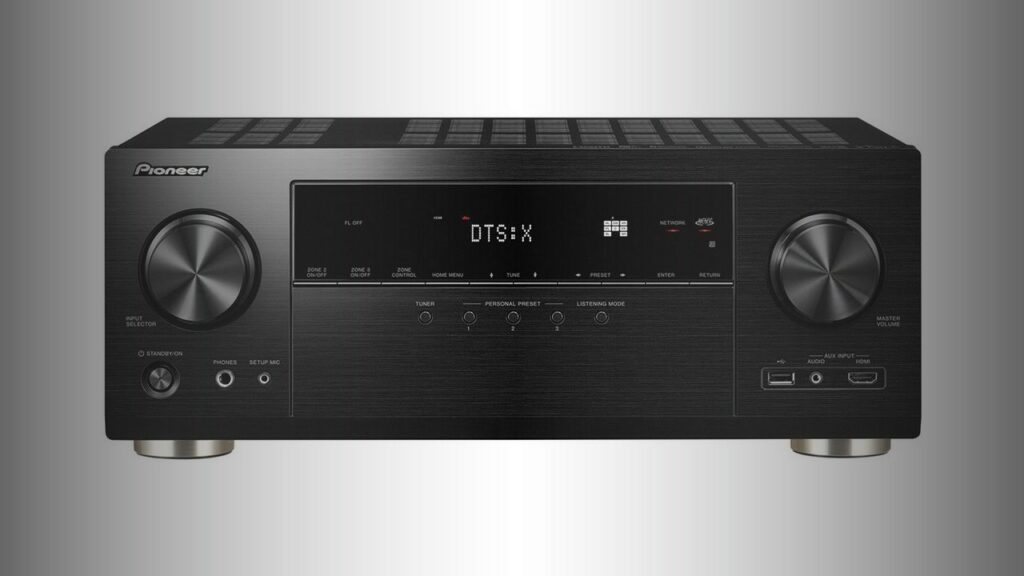
The Pioneer VSX-LX305 is the clear Best Overall because it combines the broadest home-cinema ambitions in this comparison with a practical feature set. Its nine-channel amplifier section supports 5.2.4 or 7.2.2 layouts, giving it a meaningful advantage over the seven-channel VSX-935 when the goal is to install four overhead or height speakers. It also has Dolby Atmos and DTS:X decoding, enhanced MCACC calibration and two subwoofer outputs.
That extra system flexibility matters more than the headline power figure. The receiver is specified at 170 watts per channel into 8 ohms with one channel driven, while the source also gives a 185-watt figure at 6 ohms and 10% distortion. The more useful comparison is that the LX305 has the amplification and speaker terminals required for a larger system. As with any receiver rated with one channel driven, the specification does not describe simultaneous full-power operation across all nine channels.
The LX305 is also the most forward-looking option here for a mixed home-entertainment system. It has seven HDMI inputs, two HDMI outputs, 8K/60 Hz signal support, HDR10 and Dolby Vision, plus a front-panel HDMI input. There is an MM phono input for vinyl, four line-level inputs, digital inputs, USB and Ethernet. Wireless and network features include Wi-Fi, Bluetooth 4.2, Chromecast, AirPlay 2, DTS Play-Fi, FlareConnect and Sonos compatibility, alongside access to services including Deezer, TIDAL, Amazon Music and Spotify.
IMAX Enhanced support is another differentiator, although the source article states that a software upgrade is needed and that suitable content was only beginning to appear. That makes it a useful capability rather than a reason on its own to buy the receiver. The stronger argument is the combination of nine channels, broad connectivity and the ability to serve as the central hub of a contemporary entertainment system.
Choose the LX305 if you want a receiver that can grow into a serious Atmos installation, need several streaming routes, or want one component to handle movies, music, games, television and vinyl. It is not necessarily the right answer for a simple five-channel room, but it offers the best balance of scale, usability and features in this group.
Pioneer VSX-935
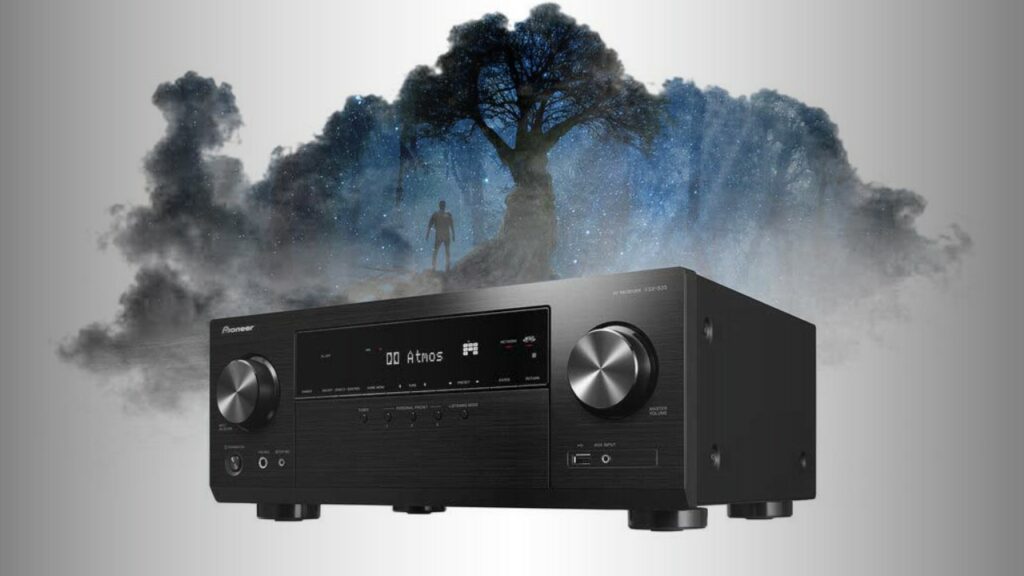
The Pioneer VSX-935 is the more restrained alternative to the LX305, but it is not a stripped-down receiver. Its seven built-in amplifiers support either a conventional 7.1 arrangement or a 5.2.2 Dolby Atmos/DTS:X system. That makes it a particularly sensible fit for buyers who want height effects without committing to the larger 5.2.4 layout enabled by the LX305.
The VSX-935 also gives the user several ways to approach height sound. Ceiling speakers can be installed, upward-firing Dolby Atmos modules can be placed on the front speakers, or virtual height processing can blend upper-channel information into the existing setup. Those alternatives make installation easier, especially where cutting into the ceiling is not practical. The receiver supports Dolby Atmos, DTS:X, Dolby Height Virtualizer and DTS Virtual:X, so it can adapt to both native immersive soundtracks and more conventional multichannel material.
Its MCACC auto-calibration system measures the room with the supplied microphone, adjusts levels and frequency response, and is described as helping to address standing waves and room resonances. That is important for value: room correction can make a substantial difference when the room, speaker placement and listening position are less than ideal.
Connectivity is another strong point. There are six HDMI 2.1 inputs and two HDMI 2.1 outputs, with support for 8K/60 Hz, HDR10 and Dolby Vision. The receiver also includes phono, four RCA line inputs, coaxial and optical digital inputs, USB, Ethernet, Wi-Fi on both 2.4 and 5 GHz bands, Bluetooth 4.2 and a headphone output. DLNA network playback, AirPlay 2, DTS Play-Fi, FlareConnect and services such as Spotify, TIDAL and Deezer give it a broad streaming toolkit.
The VSX-935 is therefore the strongest alternative for anyone who does not need nine amplification channels. It is a better choice than the LX305 when the intended system is 7.1 or 5.2.2, and its feature set remains unusually complete for that role. The trade-off is straightforward: it cannot provide the same number of powered height channels, so it has less room to grow into a larger Atmos system.
Anthem MRX 540
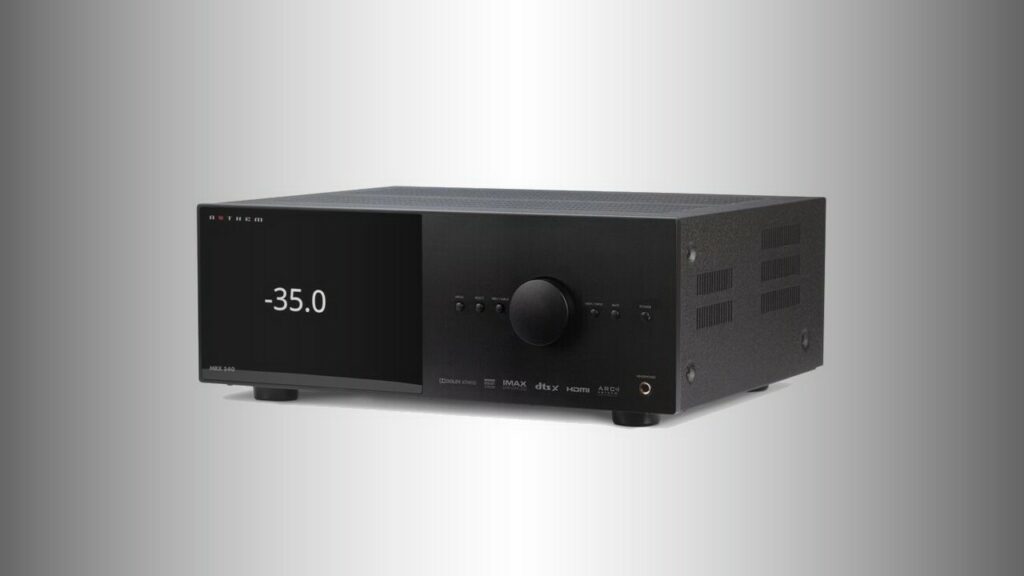
The Anthem MRX 540 takes a different approach from both Pioneer models. It has five channels of amplification, supporting 3.1, 5.1 and 5.2 configurations. There is no built-in amplification for a height-speaker Atmos system, so it is aimed at buyers who would rather build a strong conventional surround or stereo-plus-subwoofer system than chase the largest number of channels.
Its main selling point is ARC Genesis, Anthem’s room-correction platform. The source describes it as an advanced system using calibrated microphone measurements, proprietary DSP and configurable target curves, including deep-bass and treble options. The software supports Mac and Windows, and the web-based interface allows users to alter speaker levels, delays, channel trim, network settings and zones from a phone, tablet or laptop.
The reported sound character is also distinctive. The source describes the MRX 540 as powerful and rich on both movie soundtracks and music, with clear effects, convincing movement and localisation, and notably deep bass. Those comments make it the most obvious choice here for listeners who place sound character above channel count. Its five-channel design is not a weakness if the room only needs 3.1, 5.1 or 5.2; it becomes a limitation only when overhead channels are part of the plan.
There is plenty of physical connectivity: seven HDMI inputs, two HDMI outputs, three optical inputs, two coaxial inputs, five analogue stereo inputs, an Ethernet port and preamp outputs for all channels, including two subwoofer outputs. Video support includes Ultra HD signals up to 18.2 Gbps, Dolby Vision, HDR and Hybrid Log Gamma, with eARC. The source says HDMI 2.1/8K support was intended as a future upgrade rather than a standard capability at the time described.
Choose the MRX 540 if you want a five-channel receiver with a strong, full-bodied presentation and unusually sophisticated room correction. It is arguably the best fit for a dedicated 5.1 music-and-film system, but the Pioneers are more suitable for buyers who need extensive immersive-channel support or more expansive current video connectivity.
Canton Ergo 690
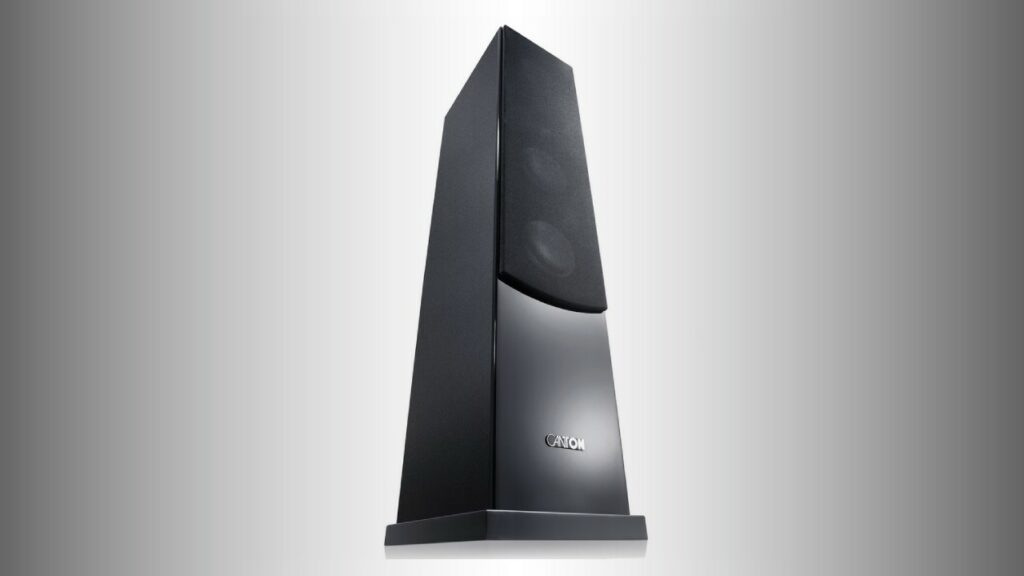
The Canton Ergo 690 is the outlier in this guide: it is a passive floorstanding speaker, not an AV receiver. It belongs here because it clarifies an important buying decision. A receiver is only as useful as the speaker system it drives, and a buyer focused primarily on music may gain more from a strong stereo front end than from adding more surround channels.
The Ergo 690 is a three-way bass-reflex design with a 25mm aluminium/magnesium tweeter, a 180mm aluminium midrange driver and two 180mm aluminium low-frequency drivers. The source describes its presentation as free from noticeable coloration in the mid and high frequencies, with good spatial resolution and confident, realistic dynamics. Crucially, that accuracy is described as artistic rather than dry or analytical.
Its stated sensitivity is 88.3dB, impedance is 4–8 ohms and the recommended amplifier power is 170–320 watts. It also supports bi-wiring and has a stated frequency range of 20Hz–40kHz. These details make it a potentially demanding but versatile partner for a capable receiver, although the supplied articles do not identify a specific receiver pairing or provide a comparative listening test between the Canton and the AV receiver models.
The right way to view the Ergo 690 is as a route for the buyer who values front-channel quality, stereo listening and a conventional speaker layout. It does not replace the need for an AV receiver in a surround system, but it may make a five-channel Anthem system or a stereo-focused Pioneer installation more attractive than a channel-count-led upgrade.
AirPlay 2 and Google Cast
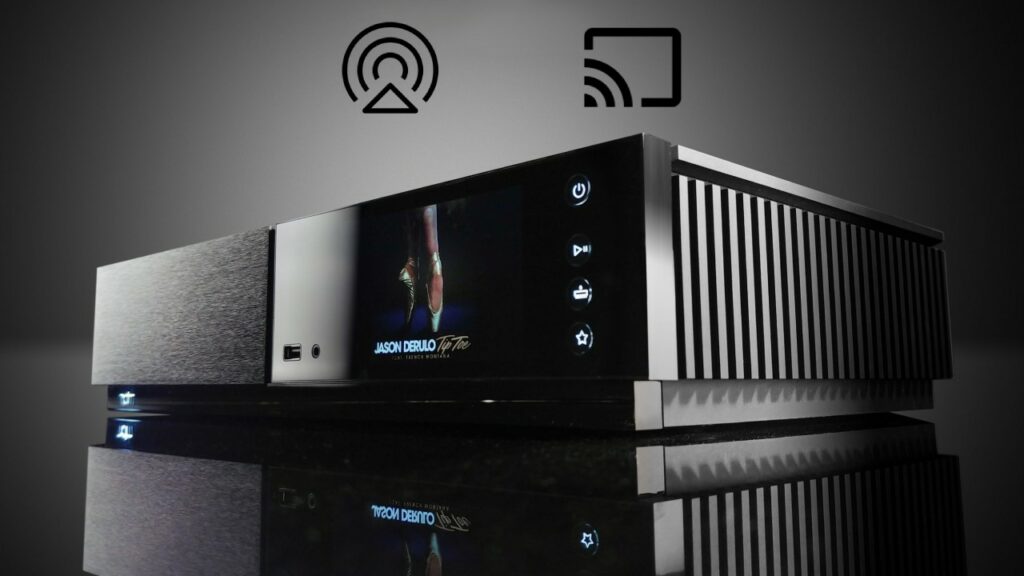
The AirPlay 2 and Google Cast comparison is relevant because network playback is now part of the receiver experience. Both technologies are designed for straightforward streaming and multi-room use over Wi-Fi or Ethernet, and both are intended to make it easy to move from listening on a smartphone to playback through compatible speakers or a home-cinema system.
The distinction is less about a simple winner and more about ecosystem. AirPlay 2 is particularly convenient for Apple users because the Apple device acts as the controller and player, while the compatible component receives the processed stream. The source states that AirPlay 2 transmits audio using ALAC at 16-bit/44.1kHz and uses a buffer to improve stability during brief network interruptions. That can make it easy and dependable, but it is not the same as unrestricted high-resolution playback.
Google Cast follows a similar consumer-friendly approach, and the source notes that both platforms have the technical capability to transmit high-resolution audio even though they were designed primarily around convenience and stability rather than specialist music playback. Buyers should therefore choose the receiver whose supported platform best matches their existing phones, services and multi-room products. The VSX-LX305 and VSX-935 list AirPlay 2, while the LX305 also lists Chromecast; the Anthem source lists AirPlay and AirPlay 2 and describes Chromecast audio as part of the wider platform.
How they differ
Channel count is the biggest dividing line. The Anthem MRX 540 is a five-channel receiver for 3.1, 5.1 or 5.2 systems. The VSX-935 has seven channels and can run 7.1 or 5.2.2. The LX305 has nine channels and supports 5.2.4 or 7.2.2. If four height speakers are a firm requirement, the LX305 is the natural choice from this group.
Room correction also differs in emphasis. Both Pioneers use MCACC, which handles room measurements, level setting and response adjustments. Anthem’s ARC Genesis is the MRX 540’s defining feature and offers a computer-based workflow, target-curve options and web-based system management. That gives the Anthem a particularly strong usability argument for owners prepared to spend time configuring the system carefully.
Sound character is not presented in the same way. The Anthem source makes the strongest subjective claims, describing rich, powerful sound, deep bass and excellent clarity on both movies and music. The Canton source describes a neutral, spacious and dynamically realistic presentation. The Pioneer articles emphasise capability, decoding and calibration more than a detailed tonal description, so it would be unjustified to declare either Pioneer the best-sounding product solely from these sources.
Video and streaming requirements may settle the decision. The LX305 and VSX-935 offer 8K/60 Hz support and two HDMI outputs, useful for systems with both a television and projector. The Anthem supports Ultra HD, Dolby Vision, HDR and HLG, with HDMI 2.1 described as an upgrade path in the source. For network playback, the Pioneers offer a particularly broad combination of Wi-Fi, Bluetooth, AirPlay 2 and other streaming or multi-room options.
Which one should you buy?
- Choose the Pioneer VSX-LX305 if you are building a 5.2.4 or 7.2.2 cinema, want nine powered channels, need two HDMI outputs and value a wide selection of streaming and multi-room options. It is the safest all-round purchase in this comparison.
- Choose the Pioneer VSX-935 if your target is 7.1 or 5.2.2 and you want to spend your system budget sensibly without giving up two HDMI outputs, Dolby Atmos, DTS:X, phono, USB or extensive network playback.
- Choose the Anthem MRX 540 if five channels are enough and your priorities are powerful, rich sound, deep bass and advanced ARC Genesis room correction. It is especially appealing for a carefully configured 5.1 system used for both music and films.
- Choose the Canton Ergo 690 as a speaker foundation if stereo quality, spacious imaging and realistic dynamics matter more than adding surround channels. Pair it with suitable amplification rather than treating it as an alternative receiver.
- Choose your network platform around your existing devices if streaming and multi-room operation are central. AirPlay 2 is the obvious route for an Apple-centred home, while Google Cast makes most sense for buyers already using Google’s ecosystem. The source evidence supports ease of use and network convenience, not a blanket sound-quality victory for either platform.
Final verdict
The Pioneer VSX-LX305 is Best Overall because it delivers the most complete combination of immersive-channel support, video connectivity, streaming options and everyday flexibility. The VSX-935 is the smarter buy for a smaller or simpler Atmos system, the Anthem MRX 540 is the specialist choice for five-channel sound and room correction, and the Canton Ergo 690 shows why a well-chosen stereo speaker system can still be the right priority. Match the receiver to the size of the room, the number of speakers you genuinely plan to install and the network ecosystem you already use.







 VS
VS VS
VS VS
VS VS
VS VS
VS VS
VS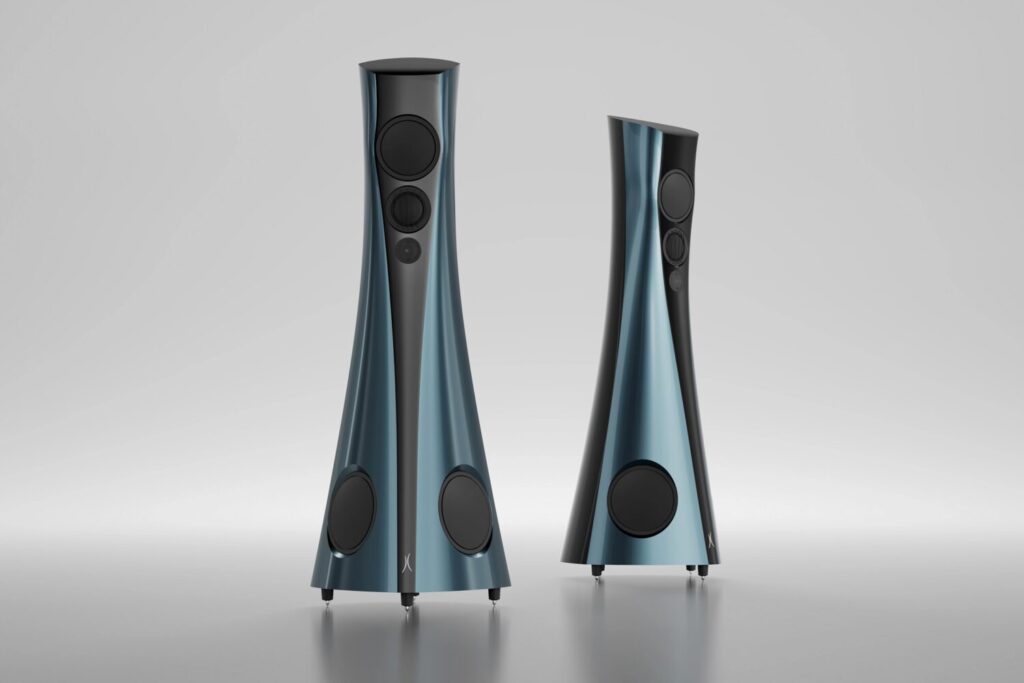
Comments 0
Share your experience, questions and perspective with other hi-fi enthusiasts.