Looking for an AV Receiver? Start With the System You Want to Build
The most relevant AV receiver options here are the Onkyo TX-SR3100 and Onkyo HT-S5915, while powered speakers, HEOS streaming and source components help define what kind of system you should build.

Choosing an AV receiver is less about chasing a single headline feature and more about matching a component to the room, speakers, sources, and habits it will actually serve.
The strongest options in the supplied material range from dedicated surround receivers to complete home-theater packages, while several related products show where an AV receiver may or may not be necessary.

1. The Future of the Audio Industry According to Harman Luxury Audio
Harman Luxury Audio’s home-cinema ecosystem includes Arcam receivers and processors alongside JBL Synthesis speakers and amplification.
This article is not a single-product AV receiver review, but it is relevant for buyers tracking Harman Luxury Audio’s direction in home cinema.
The source notes new HDMI 2.1 AV receivers and Arcam processors, including Arcam AVR11 and AVR21 amplifier receivers, alongside JBL Synthesis cinema demonstrations and architectural speaker lines.
Treat it as a useful overview of ecosystem direction rather than a specification sheet for one model.
Best for: Buyers researching Harman Luxury Audio cinema ecosystems
- Mentions new HDMI 2.1 AV receivers and Arcam processors
- Includes Arcam AVR11 and AVR21 amplifier receivers
- Places receivers within a wider JBL Synthesis cinema ecosystem
- Covers related in-wall, in-ceiling and subwoofer amplification products
Verdict: A useful context piece for home-cinema planning, but not a substitute for a model-specific AV receiver comparison.
2. Klipsch R-51PM: High-quality active bookshelf speakers
Klipsch R-51PM active bookshelf speakers combine amplification, source inputs and subwoofer output in a compact stereo package.
The Klipsch R-51PM is not an AV receiver; it is an active bookshelf speaker system with amplification and inputs built into the lead speaker.
That makes it relevant to AV receiver shoppers mainly as a reminder that smaller stereo-focused systems can avoid a separate receiver altogether.
The source describes a compact powered setup with optical, USB, Aux, RCA line/phono input and subwoofer output, which suits simple TV, computer, vinyl or stereo listening systems rather than surround decoding.
Best for: Compact stereo systems without a separate receiver
- Built-in amplification rated at 50 W per channel
- RCA input can operate as line or phono
- Optical, USB and 3.5 mm Aux inputs
- Sub Out for adding an active subwoofer
Verdict: Choose it when you want a simple powered speaker solution, not when you need multi-channel AV receiver functions.

3. Klipsch The Fives: Bookshelf speakers with a dynamic bass equalizer
Klipsch The Fives use a powered master speaker and passive partner speaker for a self-contained stereo setup.
Klipsch The Fives are powered bookshelf speakers, not an AV receiver.
Their value for this guide is in showing an alternative path for listeners who want an all-in-one stereo speaker system with flexible placement.
The source highlights a master-speaker architecture, switchable left or right main-speaker placement, built-in custom amplification, a two-way driver layout and a bass-reflex MDF cabinet with natural wood veneer.
Best for: Stylish powered stereo systems where surround is not required
- Built-in custom amplification
- Main speaker can be assigned left or right
- Two-way design with Tractrix horn tweeter
- MDF cabinet with natural wood veneer
Verdict: A strong receiver alternative for powered stereo use, but it does not replace an AV receiver in a surround system.

4. Onkyo TX-SR3100: A complete home entertainment center
Onkyo TX-SR3100 combines HDMI 2.1a video features with Dolby Atmos and DTS:X processing in a standalone AV receiver.
The Onkyo TX-SR3100 is the clearest standalone AV receiver recommendation in the supplied material.
It is positioned for movie watching and gaming, with HDMI 2.1a support, 8K60 and 4K120 video passthrough, Dolby Vision and HDR10+, plus Dolby Atmos and DTS:X decoding.
The receiver uses five amplification channels and can process Atmos and DTS:X in a 3.2.2 configuration, while AccuEQ with AccuReflex is provided for easier surround setup.
Best for: Movie and gaming systems needing a modern standalone receiver
- HDMI 2.1a with 8K60 and 4K120 support
- Dolby Atmos and DTS:X decoding
- Dolby Vision and HDR10+ support
- AccuEQ with AccuReflex auto-calibration
Verdict: The TX-SR3100 is the most direct choice here for buyers who want a current AV receiver with surround processing and gaming-friendly video support.

5. Onkyo HT-S5915: A complete home theater kit worth checking out
Onkyo HT-S5915 packages a TX-SR494 receiver with speakers for a complete 5.1.2-capable home-theater system.
The Onkyo HT-S5915 is a complete home-theater package rather than a receiver-only purchase, combining speakers with a TX-SR494 AV receiver.
Its main advantage is system completeness: the package supports conventional 5.1 playback and Dolby Atmos in a 5.1.2 configuration.
The included receiver has seven amplification channels, four HDMI inputs and one output, 4K UHD passthrough including Dolby Vision, HDR10 and HLG, plus analog and digital audio inputs.
Best for: First-time home-theater buyers wanting a matched package
- Includes speakers and an AV receiver
- Supports Dolby Atmos in a 5.1.2 configuration
- Seven amplification channels in the included receiver
- 4K UHD passthrough with Dolby Vision, HDR10 and HLG
Verdict: The HT-S5915 is the practical choice when you need the receiver and speaker array together rather than selecting separates.

6. KEF LS50 Wireless II: First-class wireless all-in-one audio system
KEF LS50 Wireless II is a self-contained wireless stereo system with streaming and wired source support.
The KEF LS50 Wireless II is not an AV receiver, but it is a serious alternative for buyers whose priority is high-quality stereo streaming rather than surround sound.
The source describes a wireless all-in-one system with streaming support for high-resolution files, MQA and DSD256, plus AirPlay 2, Chromecast and the ability to connect a TV, game console or vinyl player.
KEF’s Metamaterial Absorbent Technology is also highlighted as a key acoustic development.
Best for: High-quality stereo streaming without an AV receiver
- All-in-one wireless stereo system
- Supports streaming up to 24 bit / 384 kHz, MQA and DSD256
- AirPlay 2 and Chromecast support
- Can connect to a TV, game console or vinyl player
Verdict: Consider the LS50 Wireless II if your system is stereo-first and streaming-led, not if you need surround decoding and multiple amplified channels.
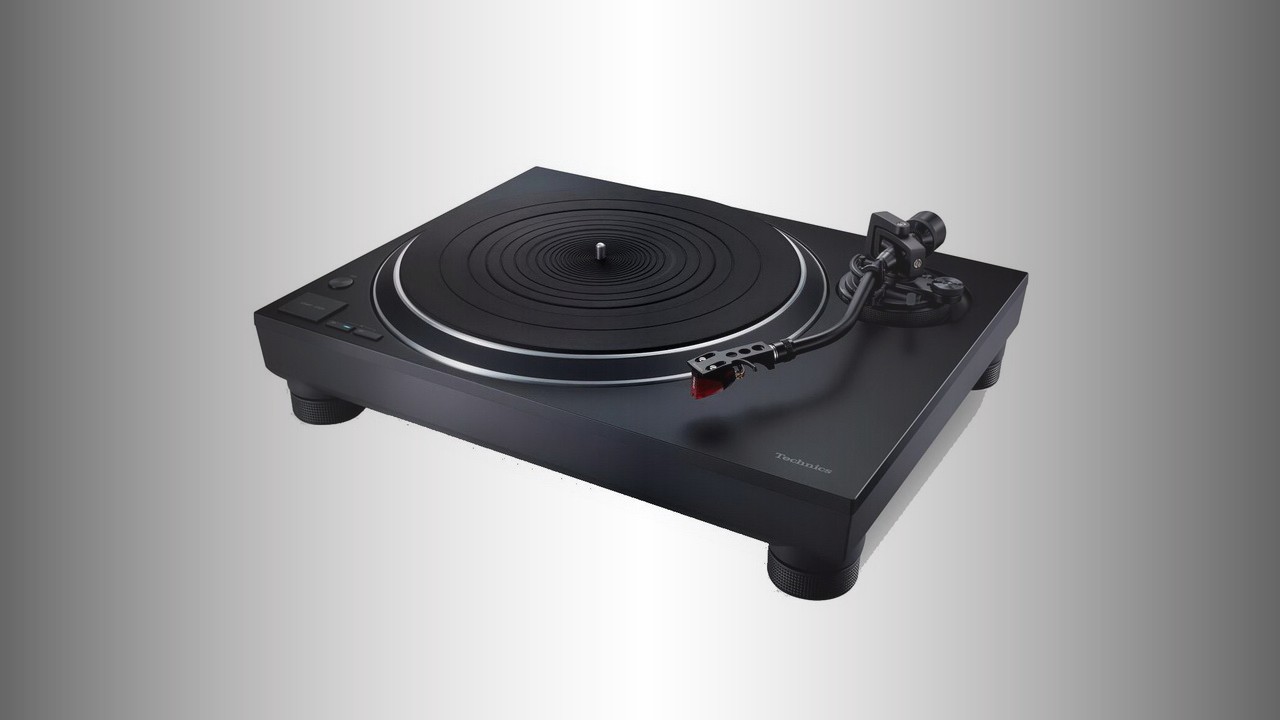
7. Technics SL-1500C: Turntable made for audiophiles
Technics SL-1500C includes a cartridge and MM phono stage, reducing the need for a separate phono input in the receiver.
The Technics SL-1500C is a turntable, so it belongs in an AV receiver buying guide only as a source-component consideration.
Its built-in MM phono preamplifier makes integration simpler with receivers or powered speakers that do not have a phono input.
The source also notes a preinstalled Ortofon 2M Red cartridge, direct drive, automatic tonearm lift at the end of a record and a chassis designed for resonance damping.
Best for: Vinyl listeners checking receiver input needs
- Built-in MM phono preamplifier
- Preinstalled Ortofon 2M Red cartridge
- Direct-drive design
- Automatic tonearm lift at the end of a record
Verdict: It can simplify vinyl connection choices, but it is a source component rather than an AV receiver candidate.

8. Primare
Primare’s story is presented through design, ergonomics and high-end component heritage rather than a specific AV receiver model.
The Primare article is a brand-history piece, not a buying recommendation for a specific AV receiver.
Its relevance is contextual: the source emphasizes Primare’s design identity, ergonomics and influence on the appearance of modern AV electronics.
It is useful background for readers interested in component design philosophy, but it does not provide model-level AV receiver specifications or features.
Best for: Readers interested in AV component design background
- Strong emphasis on component design and ergonomics
- Discusses influence on modern AV electronics
- Covers the brand’s high-end component heritage
Verdict: Informative as brand context, but too general to guide a receiver purchase on its own.

9. Updated HEOS app for Denon and Marantz network components
The updated HEOS app affects how compatible Denon and Marantz components, including AV receivers, handle streaming and control.
This article concerns the HEOS control and streaming ecosystem used in compatible Denon and Marantz products, including AV receivers and network amplifiers.
The source highlights an improved interface, easier access to radio, podcasts and favorite tracks, a now-playing indicator, universal search and HEOS playlists that can include songs from different streaming platforms.
For AV receiver shoppers, the practical point is that the app ecosystem can matter as much as the receiver’s back-panel connections.
Best for: Buyers prioritizing app control and multi-device streaming
- HEOS is built into compatible Denon and Marantz products
- Supports wireless streaming to compatible devices
- Improved interface with now-playing indicator
- Universal search across streaming services and personal library
Verdict: Not a receiver review, but highly relevant if you are comparing Denon or Marantz models with HEOS built in.

10. Bowers & Wilkins 603 S2: An excellent basis for a high-end home theater system
Bowers & Wilkins 603 S2 floor-standing speakers can form the front-channel basis of a home-theater system.
The Bowers & Wilkins 603 S2 is a floor-standing speaker, not an AV receiver, but it directly affects receiver choice because large main speakers place demands on amplification and system matching.
The source describes it as the largest model in its series, capable of high sound pressure in a large room, with a three-way configuration, separate midrange driver, upgraded crossovers and a reinforced MDF cabinet.
It is best understood as a speaker foundation around which an AV receiver may be selected.
Best for: Home-theater builders choosing speakers before electronics
- Three-way floor-standing design
- Separate midrange driver
- Upgraded crossovers in the Anniversary Edition series
- Designed for high sound pressure in a large room
Verdict: A substantial speaker option for a serious home theater, but it still needs a suitable receiver or amplifier to complete the system.
Quick comparison
The supplied material mixes true AV receivers, a complete home-theater package, app ecosystem coverage, speakers, a turntable and brand context.
The distinctions below keep those roles separate so the strongest receiver-related choices are easier to identify.
| Product | Best for | Verdict |
|---|---|---|
| The Future of the Audio Industry According to Harman Luxury Audio | Researching Harman Luxury Audio cinema direction | Useful for ecosystem context around Arcam receivers and processors, but not a model-specific buying choice. |
| Klipsch R-51PM: High-quality active bookshelf speakers | Simple powered stereo systems | A receiver-free stereo alternative with built-in amplification, phono option and subwoofer output. |
| Klipsch The Fives: Bookshelf speakers with a dynamic bass equalizer | Powered stereo with flexible speaker placement | A self-contained speaker system for stereo use rather than an AV receiver replacement for surround. |
| Onkyo TX-SR3100: A complete home entertainment center | Standalone AV receiver for movies and gaming | The most direct receiver choice, with HDMI 2.1a, 8K60, 4K120, Dolby Atmos and DTS:X support. |
| Onkyo HT-S5915: A complete home theater kit worth checking out | Complete surround package buyers | Pairs speakers with a seven-channel AV receiver for a ready-made 5.1.2-capable setup. |
| KEF LS50 Wireless II: First-class wireless all-in-one audio system | High-resolution wireless stereo streaming | A premium all-in-one stereo route for listeners who do not need AV receiver surround functions. |
| Technics SL-1500C: Turntable made for audiophiles | Vinyl source planning | Its built-in MM phono stage can simplify connection to receivers or powered speakers. |
| Primare | Brand and design context | Relevant background on AV electronics design, but not a product recommendation. |
| Updated HEOS app for Denon and Marantz network components | Streaming control across compatible Denon and Marantz devices | Important ecosystem information if app usability and HEOS streaming are priorities. |
| Bowers & Wilkins 603 S2: An excellent basis for a high-end home theater system | Speaker-first home-theater planning | A floor-standing speaker candidate that should influence the power and channel planning of the receiver you choose. |
Frequently asked questions
Which item here is the clearest AV receiver choice?
The Onkyo TX-SR3100 is the clearest standalone AV receiver in the supplied material.
It supports HDMI 2.1a, 8K60, 4K120, Dolby Atmos, DTS:X, Dolby Vision, HDR10+ and auto-calibration with AccuEQ and AccuReflex.
Should I buy a receiver-only model or a complete home-theater kit?
Choose a receiver-only model such as the Onkyo TX-SR3100 if you already have speakers or want to select them separately.
Choose a package such as the Onkyo HT-S5915 if you want the receiver and speaker set together, including support for 5.1 playback and Dolby Atmos in a 5.1.2 configuration.
Can powered speakers replace an AV receiver?
Powered speakers such as the Klipsch R-51PM, Klipsch The Fives and KEF LS50 Wireless II can replace a receiver in a stereo system because amplification and inputs are built in.
They are not direct substitutes when you need multi-channel surround decoding and several amplified speaker channels.
What source and ecosystem details should I check before choosing an AV receiver?
Check your video needs, surround format needs, speaker layout, app ecosystem and source connections.
The supplied material highlights HDMI 2.1a and 4K120 for gaming-oriented systems, Dolby Atmos and DTS:X for surround, HEOS for compatible Denon and Marantz streaming control, and phono considerations for turntables such as the Technics SL-1500C.
How to Choose From This Shortlist
Start by deciding whether you are building a surround system or a simpler stereo setup.
If the goal is a conventional AV receiver for movies and games, the Onkyo TX-SR3100 is the most relevant standalone option in the supplied material, particularly because it combines modern HDMI support with Dolby Atmos and DTS:X processing.
If you want a receiver and speakers in one purchase, the Onkyo HT-S5915 is the more complete package, with a seven-channel receiver and a speaker system arranged for 5.1.2 Atmos playback. If your needs are stereo-first, several products here point away from an AV receiver. The Klipsch R-51PM and Klipsch The Fives build amplification into the speakers, while the KEF LS50 Wireless II adds a broader wireless streaming platform and high-resolution file support. These systems can be neater than a receiver-based setup, but they are not the right answer for multi-channel surround. Finally, plan around the rest of the system. A turntable such as the Technics SL-1500C may reduce the need for a receiver with a dedicated phono input because it includes an MM phono preamplifier. Large floor-standing speakers such as the Bowers & Wilkins 603 S2 should influence the receiver or amplifier you choose. App ecosystems also matter: HEOS support in compatible Denon and Marantz products can be an important part of everyday use if streaming and multi-device control are priorities.