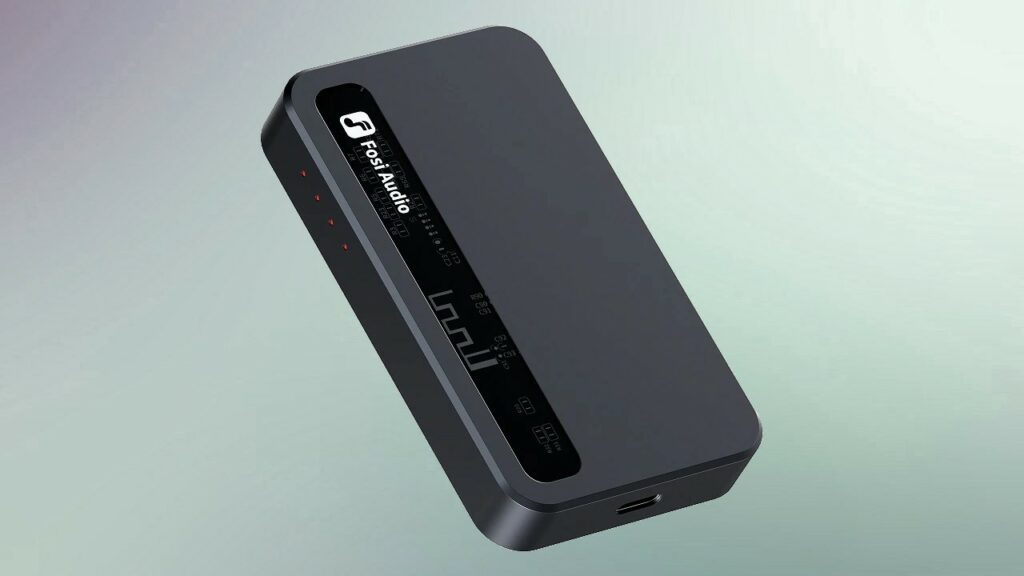
Our Editors Choose Which Amplifier Should You Choose for Your System?
A practical guide to choosing between stereo power amplifiers, preamplifiers, AV amplifiers, headphone amplifiers, active subwoofers, and soundbar-based systems using only documented product details.
Choosing an amplifier is less about chasing the biggest specification and more about matching the right type of component to the system you actually own.
A two-channel power amplifier, an AV receiver, a headphone amplifier, a preamplifier, and an active subwoofer all solve different problems, even though they may sit under the broad amplifier umbrella.
This guide is based only on the supplied Stereoindex source material, so the recommendations focus on documented design choices, connectivity, power configuration, and intended use rather than unsupported performance claims. Some entries are traditional stereo or mono power amplifiers, while others are system-building components such as preamps, AV amplifiers, a headphone amplifier, a wireless subwoofer, and a soundbar package with its own compact amplifier. The clearest way to choose is to start with the role your system needs filled. If you already have a preamp or streamer with volume control, a power amplifier may be appropriate. If you are building a home theater, an AV amplifier or surround package makes more sense. If headphones are your main listening format, a dedicated headphone amplifier belongs higher on the list than speaker power.

1. Mark Levinson 600 Series: Dual-Mono Architecture, Precision DACs, and Class A/AB Power
Mark Levinson 600 Series components combine machined aluminum chassis work, glass panels, black controls, and signature red accents.
The Mark Levinson 600 Series is not a single amplifier but a high-end electronics family built around the No.
626 preamplifier, No.
632 stereo power amplifier, and No. 631 mono power amplifier. The source highlights Mark Levinson’s Pure Path circuit philosophy, dual-mono preamp architecture, Precision Link III DAC implementation, and the brand’s Tectonic industrial design with machined aluminum, glass panels, black anodized controls, and red accents. The No. 626 is especially system-oriented, offering multiple digital inputs, balanced and single-ended analog inputs, a Pure Phono MM/MC stage, and a Class A headphone amplifier. For buyers assembling a full reference-style chain rather than adding a single box, this series is the most complete ecosystem in the selection.
Best for: High-end separates systems
- Includes preamplifier, stereo power amplifier, and mono power amplifier options
- No. 626 supports digital, analog, phono, and headphone use
- Pure Path analog circuit philosophy
- Distinctive machined-aluminum and glass-panel design
Verdict: Choose the Mark Levinson 600 Series if you want a coordinated preamp and power-amplifier platform with extensive source handling at the preamplifier stage.
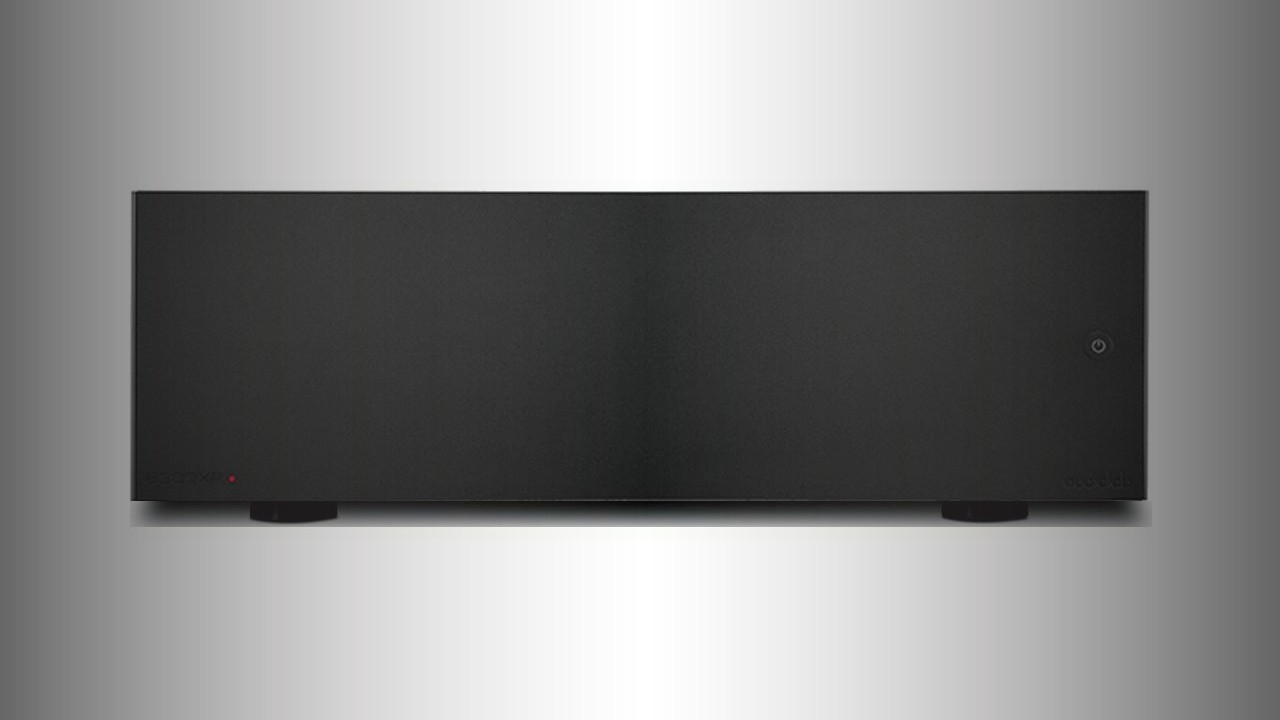
2. Audiolab 8300XP: Classic power amplifier with crisp and clear sound
The Audiolab 8300XP presents a minimalist power-amplifier design focused on balanced signal handling and speaker control.
The Audiolab 8300XP is a classic stereo power amplifier aimed at listeners who want a straightforward, balanced power stage rather than an all-in-one component.
Its fully balanced amplifier stage is designed to take advantage of XLR inputs, including use with long cables when partnered with the Audiolab 8300CDQ.
The source emphasizes noise suppression, reduced transient distortion, strong current delivery, and the ability to maintain control with large or delicate speakers. It is a sensible choice when the rest of the system already provides source selection and volume control, and the missing piece is clean, controlled speaker drive.
Best for: Balanced two-channel power amplification
- Fully balanced power amplifier stage
- Balanced XLR input support
- Designed for high noise suppression and reduced transient distortion
- Current delivery intended to help control demanding speakers
Verdict: The Audiolab 8300XP suits systems that need a clean, balanced power amplifier without added source or streaming features.
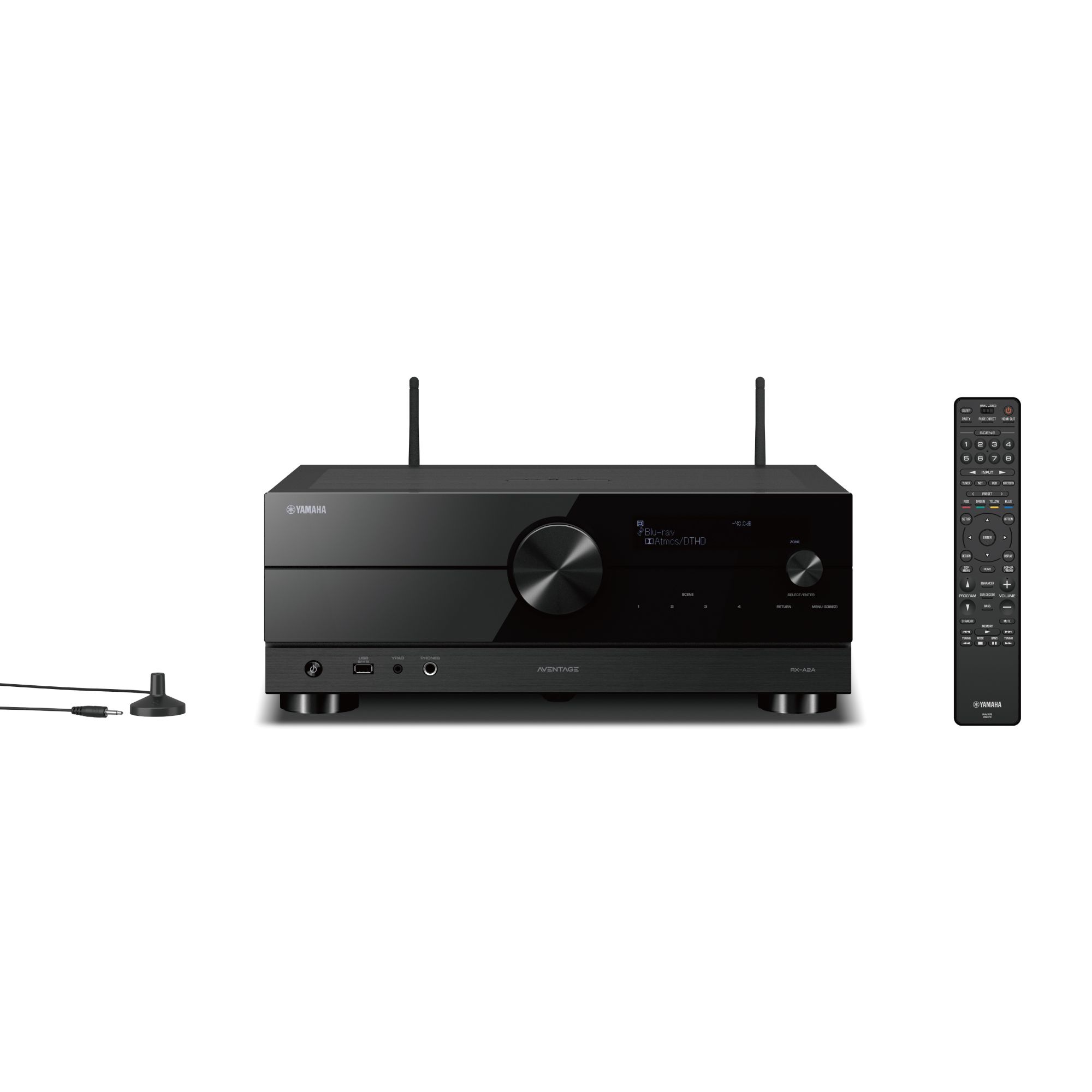
3. Yamaha RX-A2A: The first amplifier of the Aventage series
The Yamaha RX-A2A uses the Aventage design language with a more rectangular, solid-looking front panel and improved chassis damping.
The Yamaha RX-A2A is an AV amplifier rather than a purist stereo power amp, making it relevant for readers building a surround system around HDMI sources, room correction, and wireless audio features.
The source lists 7.2 channels, 125 watts with one channel driven at 8Ω, 17 DSP systems, Dolby Atmos with Height Virtualizer, DTS:X, Burr-Brown DACs, 4K upscaling, MusicCast, AirPlay 2, Bluetooth, and YPAO automatic room correction.
It also has seven HDMI inputs and one output, a trigger, remote input, Class AB amplification, and support for MusicCast wireless surround speakers. Its role is clear: this is the choice for a multipurpose home cinema and media-room system where processing and connectivity matter as much as amplification.
Best for: Home theater and AV systems
- 7.2-channel AV amplifier configuration
- Dolby Atmos with Height Virtualizer and DTS:X support
- MusicCast, AirPlay 2, Bluetooth, and YPAO room correction
- Seven HDMI inputs and one HDMI output
Verdict: The Yamaha RX-A2A is the practical pick when surround processing, HDMI connectivity, and room correction are central to the system.
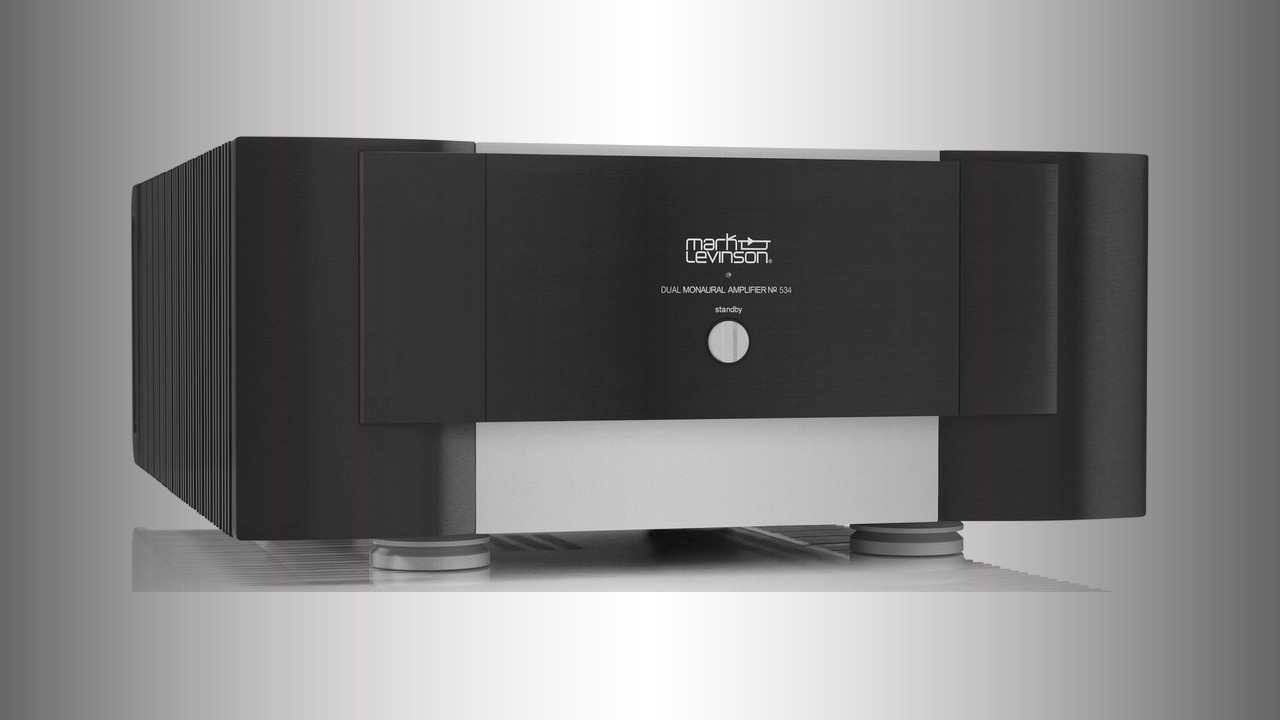
4. Mark Levinson No. 534: Pure Path stereo amplifier
The Mark Levinson No. 534 is a dual-mono stereo power amplifier using the company’s Pure Path circuit approach.
The Mark Levinson No.
534 is a dedicated stereo power amplifier built around a fully differential, fully discrete dual-mono Pure Path topology.
The source states 250 watts per channel into 8 ohms and the ability to handle a 2 ohm load, supported by high-current direct-coupled amplification without coupling capacitors in the signal path. Its voltage gain stage and driver section operate in Class A, and the design uses carefully selected components, including tantalum nitride thin-film resistors in gain and feedback adjustment circuits. This is a serious amplifier for systems where the preamplifier and sources are already chosen and the priority is a robust, high-current stereo power stage.
Best for: Demanding stereo speaker systems
- Fully differential, fully discrete dual-mono design
- 250 watts per channel into 8 ohms
- Specified to handle a 2 ohm load
- Pure Path direct-coupled amplification without coupling capacitors in the signal path
Verdict: The Mark Levinson No. 534 is the strongest fit here for a high-end stereo setup that needs a dedicated, high-current power amplifier.
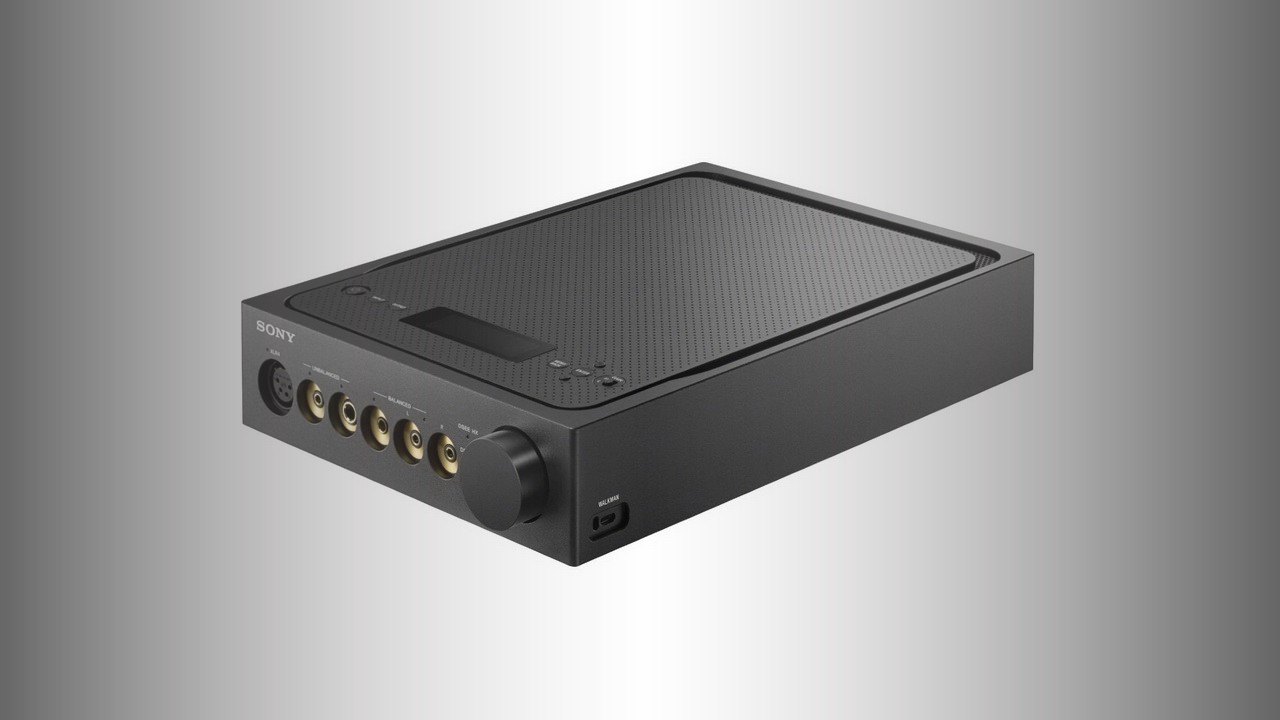
5. Sony TA-ZH1ES: Compact headphone amplifier
The Sony TA-ZH1ES has a compact black metal body with a substantial aluminum-based chassis and front-mounted volume control.
The Sony TA-ZH1ES is a compact desktop-style headphone amplifier from Sony’s Signature Series family, with the source placing particular emphasis on its physical construction.
Its thick aluminum chassis is designed to damp vibrations, while a double-layer metal base lowers the center of gravity and improves structural stability.
The cover combines steel and aluminum to address resonances, and the unit provides numerous inputs and outputs, with controls placed across the cover and front panel. It is the most relevant option in this guide for listeners who primarily use headphones and want a solidly built dedicated amplifier rather than a speaker amp.
Best for: Dedicated headphone listening
- Compact form factor for a home high-end component
- Thick aluminum chassis designed for vibration damping
- Double-layer metal base for structural stability
- Numerous inputs and outputs
Verdict: The Sony TA-ZH1ES is the right direction if headphones are the main system and build quality is a priority.
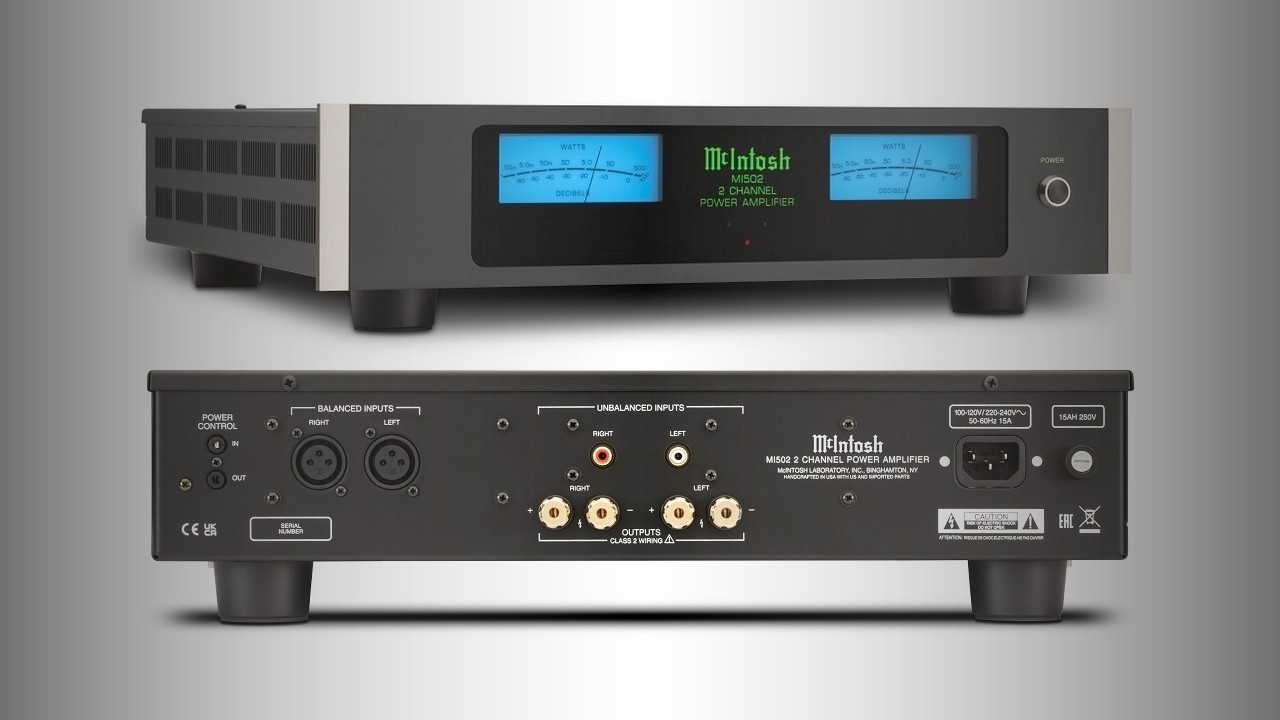
6. McIntosh MI502: Two-channel amplifier with 500 watts of Class D power
The McIntosh MI502 combines a rack-friendly chassis with blue wattmeters, status LEDs, black glass, and silver trim.
The McIntosh MI502 is a two-channel Class D amplifier intended for home theater, stereo, subwoofer, or distributed-audio installations.
The source specifies 500 watts of Class D power and notes that it can power front left and right speakers in a home theater system or two in-wall subwoofers.
Multiple MI502 units can also be used for distributed home audio, helped by its rack-mountable 2U form factor and fanless operation. Balanced and unbalanced inputs, McIntosh five-pin speaker terminals, a 12-volt Power Control system, blue wattmeters, and channel-status LEDs underline its installation-friendly character.
Best for: Installed systems and home theater power
- 500 watts of Class D power
- Can drive front left and right speakers or two in-wall subwoofers
- Rack-mountable 2U design without noisy cooling fans
- Balanced and unbalanced inputs
Verdict: The McIntosh MI502 is well suited to rack-based or theater-oriented systems that need powerful two-channel amplification in a quiet installation format.

7. Denon Introduces Home Compact Wireless Subwoofer for HEOS Systems
The Denon Home Subwoofer houses a downward-facing 8-inch driver, bass-reflex loading, wireless electronics, and a built-in Class D amplifier.
The Denon Home Subwoofer is not a conventional standalone amplifier, but it belongs in this list because it contains a Class D amplifier and is designed to expand a wireless Denon Home system.
The source describes it as a compact subwoofer with a downward-facing 8-inch driver, optimized bass-reflex port, HEOS wireless support, WiFi connectivity, RJ45 network connection, and USB playback capability.
It pairs with Denon Home systems, including the Denon Home Sound Bar 550, and can help form a 5.1 setup when used with compatible speakers from the same series as rear satellites. App-based controls allow adjustment of filter frequency, phase, and level, making it a system-expansion choice rather than a traditional amplifier purchase.
Best for: Adding bass to Denon Home systems
- Built-in Class D amplifier
- HEOS wireless system support
- Compact enclosure with downward-facing 8-inch driver
- App controls for filter frequency, phase, and level
Verdict: Consider the Denon Home Subwoofer only if you are expanding a compatible HEOS-based Denon Home setup rather than shopping for a separate amplifier.

8. Eversolo AMP-F10: Bridgeable class AB stereo power amplifier
The Eversolo AMP-F10 uses an aluminum case with flattened edges and side cooling fins that form part of the design.
The Eversolo AMP-F10 is a Class AB stereo power amplifier designed to visually and technically complement the Eversolo DMP-A10 network player.
The source specifies 200 watts per channel into 8 ohms and 320 watts into 4 ohms, with bridgeable mono operation rated at 650 watts into 8 ohms and 950 watts into 4 ohms, all RMS.
It uses an aluminum chassis with side cooling fins, a linear power supply with a central toroidal transformer, and a DC filtering circuit intended to reduce low-frequency DC interference from the mains supply. Among the traditional power amps in this guide, it stands out for its bridgeable configuration and clearly stated stereo-to-mono flexibility.
Best for: Flexible stereo or bridged mono power
- Class AB stereo power amplifier design
- Bridgeable mono operation
- Linear power supply with central toroidal transformer
- Aluminum chassis with integrated side cooling fins
Verdict: The Eversolo AMP-F10 is a strong match for buyers who want a Class AB power amplifier that can work as either a stereo amp or a bridged mono unit.

9. Sony HT-S40R: New 5.1 soundbar complete with a wireless subwoofer
The Sony HT-S40R system combines a soundbar, wireless subwoofer, rear speakers, and a compact amplifier for the rear channels.
The Sony HT-S40R is a complete 5.1-channel soundbar system rather than a separates amplifier, but it includes a compact amplifier for the rear speakers and is relevant for readers who want a packaged surround solution.
The source describes a 600-watt system built around a soundbar, subwoofer, and two rear speakers.
The subwoofer and satellites work wirelessly with the soundbar, although the rear speakers must be wired to the included compact amplifier, which can be placed nearby or wall-mounted. HDMI ARC, digital optical, analog input, Dolby Digital support, Bluetooth music streaming, and USB playback make it a straightforward alternative to assembling separate AV electronics and speakers.
Best for: Simple surround sound without separates
- Complete 5.1-channel soundbar system
- Includes compact amplifier for rear speakers
- HDMI ARC, optical, and analog inputs
- Bluetooth streaming and USB playback
Verdict: The Sony HT-S40R is for buyers who want an all-in-one 5.1 soundbar package, not for those seeking a standalone hi-fi amplifier.
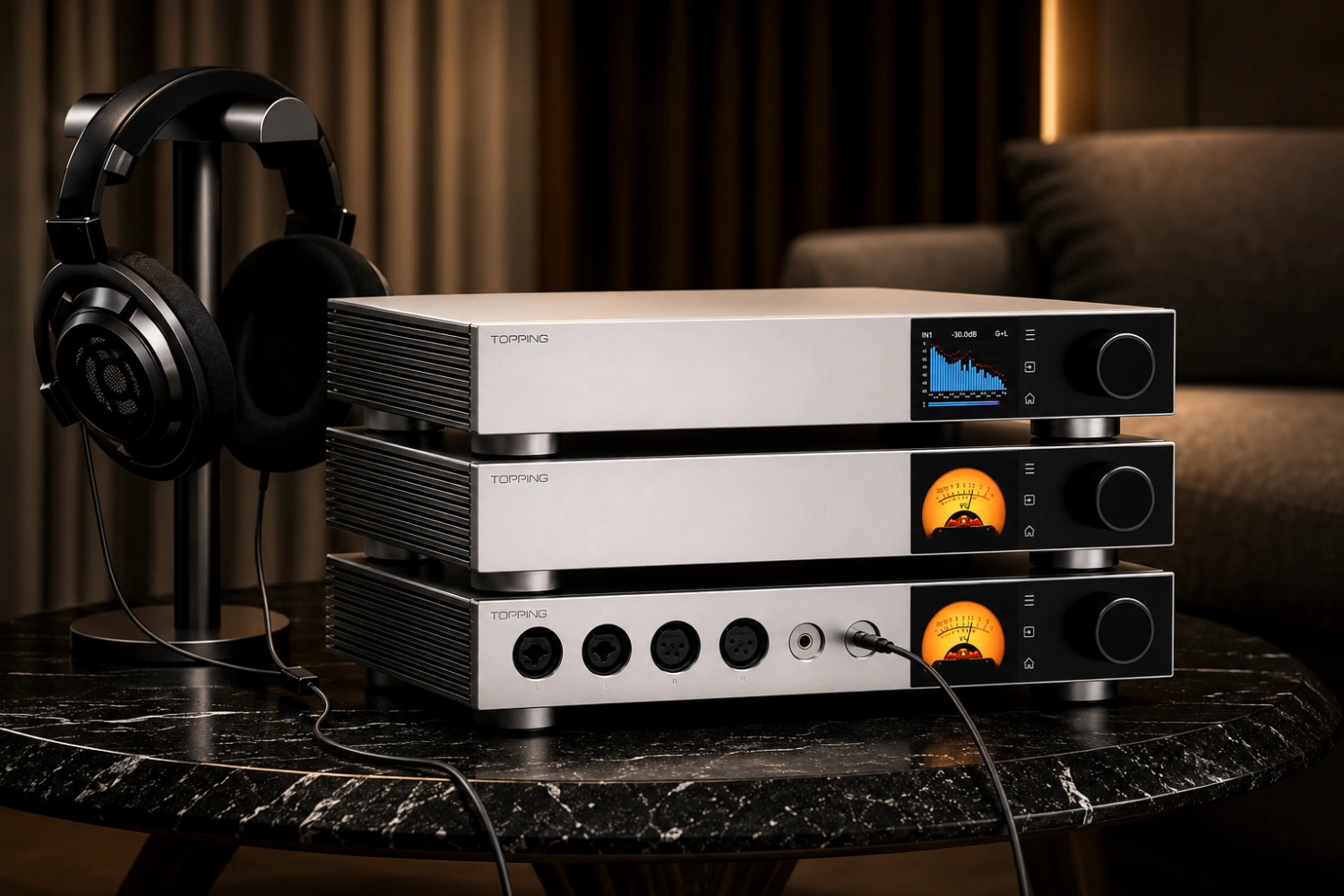
10. TOPPING Pre900: Fully Balanced Preamplifier With 1000-Step Volume Control
The TOPPING Pre900 is a balanced preamplifier focused on signal-path separation and fine relay-based volume control.
The TOPPING Pre900 is a preamplifier, so it does not replace a power amplifier; instead, it sits before one and controls signal routing and volume.
The source describes a fully balanced four-channel differential architecture with separate left and right signal paths, intended to minimize crosstalk, suppress unwanted noise, and preserve stereo imaging.
Dedicated power circuits for digital and analog sections are used to reduce interference between control electronics and audio stages. Its relay-controlled 1000-step volume system is the headline feature, making it especially relevant for systems where fine level control, balanced operation, and signal integrity are priorities.
Best for: Balanced preamp control before a power amplifier
- Fully balanced four-channel differential architecture
- Independent left and right signal paths
- Dedicated power circuits for digital and analog sections
- Relay-controlled 1000-step volume system
Verdict: The TOPPING Pre900 is the logical choice when the system already has or will have a power amplifier and needs precise balanced preamplifier control.
Quick comparison
The main distinction between these products is not simply power; it is system role.
Some are pure power amplifiers, some are preamplifiers, and some are complete AV or wireless-system components with amplification built in.
Use the table to narrow the field by the job each product is documented to perform.
| Product | Best for | Verdict |
|---|---|---|
| Mark Levinson 600 Series | High-end separates systems | A coordinated preamp, stereo power amp, and mono power amp family with extensive No. 626 source support. |
| Audiolab 8300XP | Balanced two-channel power amplification | A minimalist stereo power amplifier for systems that already have source selection and volume control. |
| Yamaha RX-A2A | Home theater and AV systems | An AV amplifier with surround processing, HDMI connectivity, MusicCast, and YPAO room correction. |
| Mark Levinson No. 534 | Demanding stereo speaker systems | A dedicated high-current stereo power amplifier with Pure Path dual-mono construction. |
| Sony TA-ZH1ES | Dedicated headphone listening | A compact headphone amplifier with substantial metal construction and vibration-focused chassis design. |
| McIntosh MI502 | Installed systems and home theater power | A two-channel Class D amplifier suited to rack, theater, subwoofer, and distributed-audio applications. |
| Denon Home Subwoofer | Adding bass to Denon Home systems | A HEOS-compatible active subwoofer with built-in Class D amplification, not a standalone hi-fi amplifier. |
| Eversolo AMP-F10 | Flexible stereo or bridged mono power | A Class AB stereo power amplifier that can also be bridged for mono operation. |
| Sony HT-S40R | Simple surround sound without separates | A complete 5.1 soundbar package with a compact amplifier for the rear speakers. |
| TOPPING Pre900 | Balanced preamp control before a power amplifier | A fully balanced preamplifier with relay-controlled 1000-step volume adjustment. |
Frequently asked questions
Should I buy a power amplifier or a preamplifier first?
Buy the component that fills the missing role in your system.
A power amplifier such as the Audiolab 8300XP, Mark Levinson No.
534, McIntosh MI502, or Eversolo AMP-F10 drives speakers but needs a source and volume control. A preamplifier such as the TOPPING Pre900 or Mark Levinson No. 626 controls signal level and source handling but still needs a power amplifier to drive passive speakers.
Are AV amplifiers a good choice for stereo listening?
An AV amplifier such as the Yamaha RX-A2A is built for surround formats, HDMI sources, room correction, and multiple channels.
It can be the right choice for a media room or home theater, but a dedicated stereo power amplifier is usually the cleaner match when the system is strictly two-channel and already has a suitable preamp or source component.
When do balanced XLR inputs matter?
Balanced inputs are most useful when the source and amplifier both support them, especially where longer cable runs are involved or where noise rejection is a priority.
The Audiolab 8300XP is specifically described as taking advantage of balanced XLR inputs, while products such as the McIntosh MI502 and TOPPING Pre900 also emphasize balanced connectivity or architecture.
Should I consider a soundbar or active subwoofer when shopping for amplifiers?
Only if your goal is system convenience rather than building a separates hi-fi chain.
The Denon Home Subwoofer is an active HEOS bass add-on with built-in amplification, and the Sony HT-S40R is a complete 5.1 soundbar package with a compact amplifier for rear speakers.
Neither replaces a conventional stereo power amplifier in a separates system.
How to choose the right amplifier from this list
Start by identifying the system architecture.
For a traditional passive-speaker stereo system, focus on power amplifiers such as the Audiolab 8300XP, Mark Levinson No.
534, McIntosh MI502, or Eversolo AMP-F10, then match them with an appropriate preamplifier or source with volume control. If you need balanced preamp control rather than speaker drive, the TOPPING Pre900 is the relevant component; if you want a full Mark Levinson separates chain, the 600 Series is the broader platform. Home theater buyers should look in a different direction. The Yamaha RX-A2A brings AV processing, HDMI connectivity, room correction, and surround-channel support into one chassis, while the Sony HT-S40R is a packaged soundbar-based route for simpler 5.1 playback. For an existing Denon Home system, the Denon Home Subwoofer is best understood as a bass-expansion component with its own Class D amplification rather than as a general amplifier purchase. For headphone-first listening, the Sony TA-ZH1ES is the most relevant product here because it is purpose-built as a compact headphone amplifier with substantial resonance-conscious construction. For speaker systems, pay close attention to whether the amplifier is stereo, mono, bridgeable, rack-oriented, or part of a larger ecosystem. The right choice is the one that fits your system’s signal path, loudspeaker requirements, room use, and installation needs without paying for functions you will not use.