Turntables Worth Considering for Different Vinyl Setups
A practical buying guide to turntables for different vinyl setups, from beginner-friendly automatic models to manual hi-fi decks, direct-drive control, and specialist high-end construction.

Buying a turntable is less about chasing one universal winner and more about matching the deck to the way you actually listen.
Some listeners want a simple, automatic player that removes the setup anxiety.
Others want a manual hi-fi platform with cartridge upgrade potential, a built-in phono stage, wireless convenience, DJ-style direct drive control, or a more ambitious mechanical design built around vibration control. This guide brings together turntables from the supplied Stereoindex source material and separates them by practical strengths rather than by hype. The selection spans accessible plug-and-play models, flexible hi-fi decks, direct-drive designs for hands-on use, and more specialized turntables aimed at enthusiasts who care deeply about construction, tonearm setup, isolation, and future upgrades. Where the source material relies on manufacturer claims, the recommendations are framed accordingly. Specifications, features, and setup advice are limited to what is stated in the source articles, with an emphasis on helping readers understand which turntable is most appropriate for a particular system or listening style.
1. Pro-Ject Audio T1 EVO: The perfect entry-level turntable
Pro-Ject Audio T1 EVO turntable series with options for standard, built-in phono, and Bluetooth-equipped systems.
The Pro-Ject Audio T1 EVO is positioned as a user-friendly entry point into serious vinyl playback, with the series split into three versions for different systems.
The standard T1 EVO is intended for use with an external phono amplifier, the T1 EVO Phono adds an integrated phono amplifier for easier system matching, and the T1 EVO BT adds Bluetooth 5.0 with aptX HD streaming.
Across the series, Pro-Ject highlights a CNC-machined chassis, an anti-resonant sub-platter, electronic speed switching between 33 and 45 RPM, a pre-installed Ortofon OM 10 cartridge, and an 8.6-inch aluminum tonearm. That makes it a sensible choice for buyers who want a straightforward, pre-configured turntable but still want to choose between traditional, built-in phono, or wireless-friendly versions.
Best for: Entry-level buyers choosing between wired, phono-ready, and Bluetooth-capable setups
- Three versions cover standard, phono, and Bluetooth setups
- Electronic switching between 33 and 45 RPM
- Pre-installed Ortofon OM 10 cartridge
- 8.6-inch aluminum tonearm
Verdict: The T1 EVO is a practical first serious turntable because the range lets buyers choose the level of connectivity their system needs without complicating the core vinyl experience.
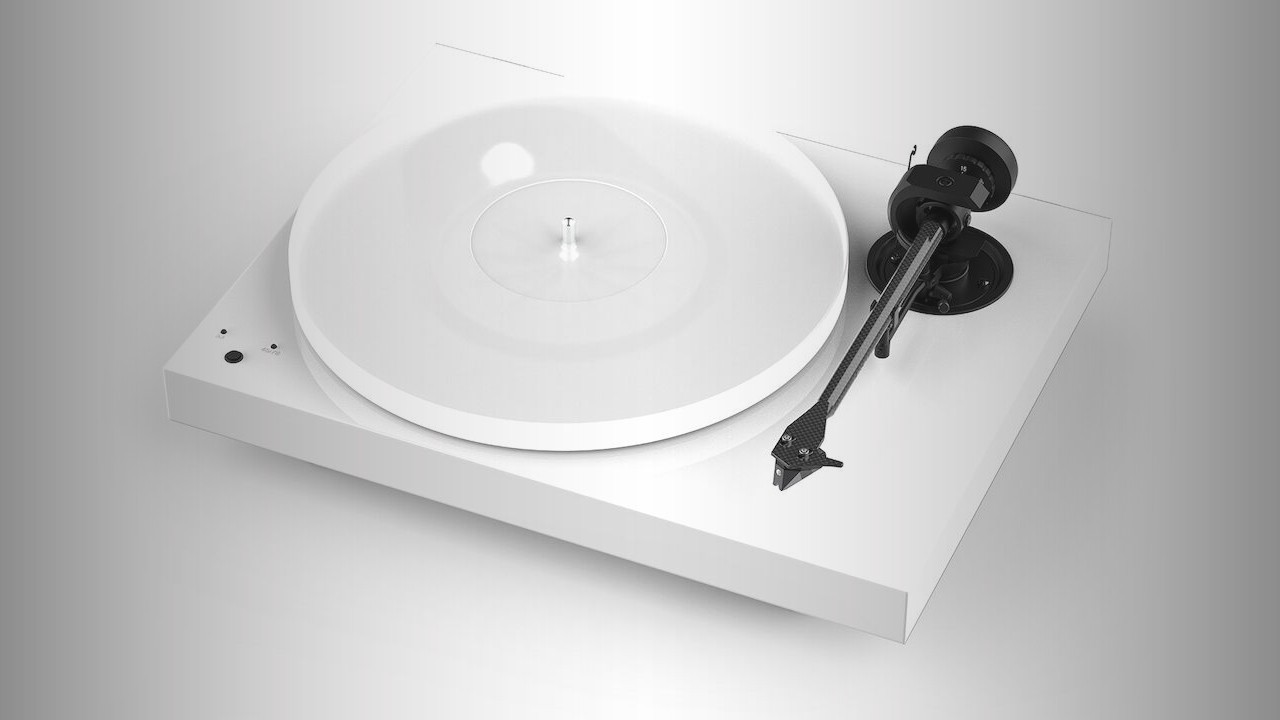
2. Pro-Ject X1 B: A sleek and sophisticated turntable
Pro-Ject X1 B turntable with a lacquered plinth and balanced-upgrade capability.
The Pro-Ject X1 B is the more upgrade-minded Pro-Ject option in this guide.
Its key distinction is the True Balanced signal path, designed to support a future balanced Moving Coil setup when paired with a compatible balanced RIAA amplifier, while still arriving with an Ortofon Pick it S2 MM cartridge for use out of the box.
The source also highlights electronic speed switching between 33 and 45 rpm, a plinth finished with eight layers of lacquer, and an optional real walnut veneer finish. It is a strong fit for listeners who want a polished turntable now but also want a clear route toward a more advanced balanced phono configuration later.
Best for: Listeners planning a future balanced phono or Moving Coil upgrade path
- True Balanced signal path for compatible balanced phono setups
- Supplied with Ortofon Pick it S2 MM cartridge
- Electronic 33/45 rpm speed switching
- Eight-layer lacquer finish with walnut veneer option
Verdict: The X1 B stands out as a refined manual turntable for buyers who want immediate usability with a built-in path toward a more ambitious balanced system.

3. Vestlyd PRO T2: Old-School Direct Drive Muscle with Modern Sound Control
Vestlyd PRO T2 direct-drive turntable with large controls and a retro DJ-inspired design.
The Vestlyd PRO T2 is the hands-on, direct-drive outlier here: a turntable designed around physical control rather than quiet minimalism.
The source describes a bold retro appearance, solid construction, large controls, a sturdy tonearm, an industrial finish, and a chassis with substantial mass.
It is explicitly framed as suitable for cueing, mixing, scratching, and back-cueing, with a powerful direct-drive motor that starts confidently and helps the platter lock onto speed quickly. For a listener who wants a deck that feels closer to an instrument than a passive accessory, the PRO T2 offers a very different proposition from the belt-drive hi-fi models in this list.
Best for: Hands-on users, DJ-style operation, and retro direct-drive appeal
- Direct-drive motor with fast start-up
- Designed for cueing, mixing, scratching, and back-cueing
- Large controls and sturdy tonearm
- Retro-inspired, visibly substantial construction
Verdict: The PRO T2 is the right kind of turntable for buyers who want tactile control and direct-drive confidence rather than a discreet audiophile object.
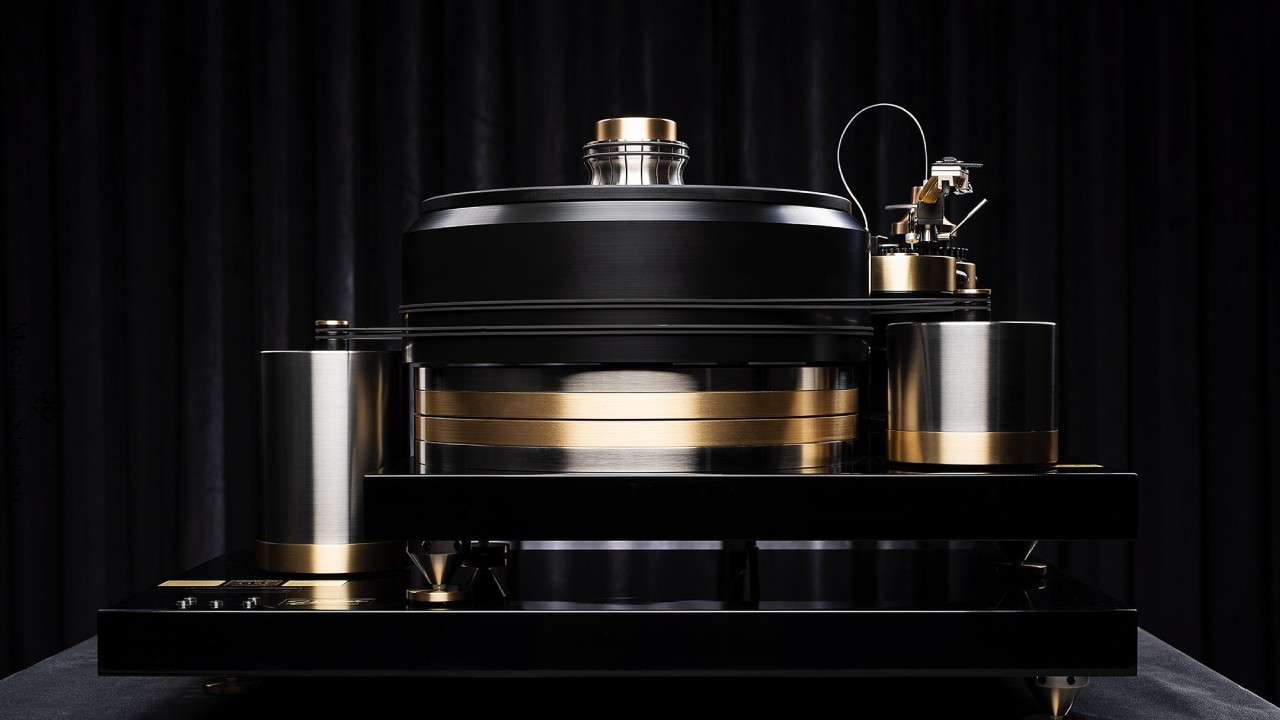
4. J.Sikora unveils anniversary edition of the Standard MAX turntable at Axpona
J.Sikora Standard MAX anniversary turntable featuring revised metal structures and damping-focused construction.
The J.Sikora Standard MAX anniversary edition is the most specialist turntable in this guide, built around extensive material changes and trickle-down technology from the company’s Leadware Reference turntable.
The source describes the designers replacing aluminum elements in the suspension with brass, using steel, copper, and solid brass plates in the separating layers at the bottom of the turntable, and adopting stainless-steel motor housings with improved internal damping.
It is presented as a highly tuned instrument with unusual combinations of metals and alloys. This is not a convenience-first recommendation; it is for experienced listeners interested in ambitious mechanical engineering, material tuning, and a turntable conceived as a serious high-end platform.
Best for: Experienced enthusiasts interested in high-end mechanical design and material tuning
- Technology derived from the Leadware Reference turntable
- Brass elements used in the suspension
- Steel, copper, and solid brass separating layers
- Stainless-steel motor housings with improved internal damping
Verdict: The Standard MAX anniversary edition is a specialist choice for listeners who value complex construction and vibration-control engineering over convenience features.

5. Audio-Technica AT-LP60X Review: The Perfect Turntable for Vinyl Beginners
Audio-Technica AT-LP60X turntable, a compact plug-and-play model aimed at vinyl beginners.
The Audio-Technica AT-LP60X is presented in the source as a beginner-friendly turntable because it reduces setup to the essentials.
The article describes a tidy, protected package, setup that takes only a few minutes, and no need for cartridge alignment, counterweight adjustment, or tonearm balancing.
The Bluetooth version is also mentioned, giving the range an option for more flexible wireless listening. The main practical caveat from the source is placement: the feet are not adjustable, so the turntable needs to sit level, and shimming may be required if the furniture is uneven. For first-time vinyl buyers, that simplicity is the central appeal.
Best for: First-time vinyl listeners who want minimal setup work
- Quick setup described as taking only a few minutes
- No cartridge alignment or counterweight adjustment required
- Bluetooth version available
- Compact and beginner-friendly presentation
Verdict: The AT-LP60X is the simplest recommendation here for beginners who want vinyl playback without learning manual tonearm and cartridge setup from day one.
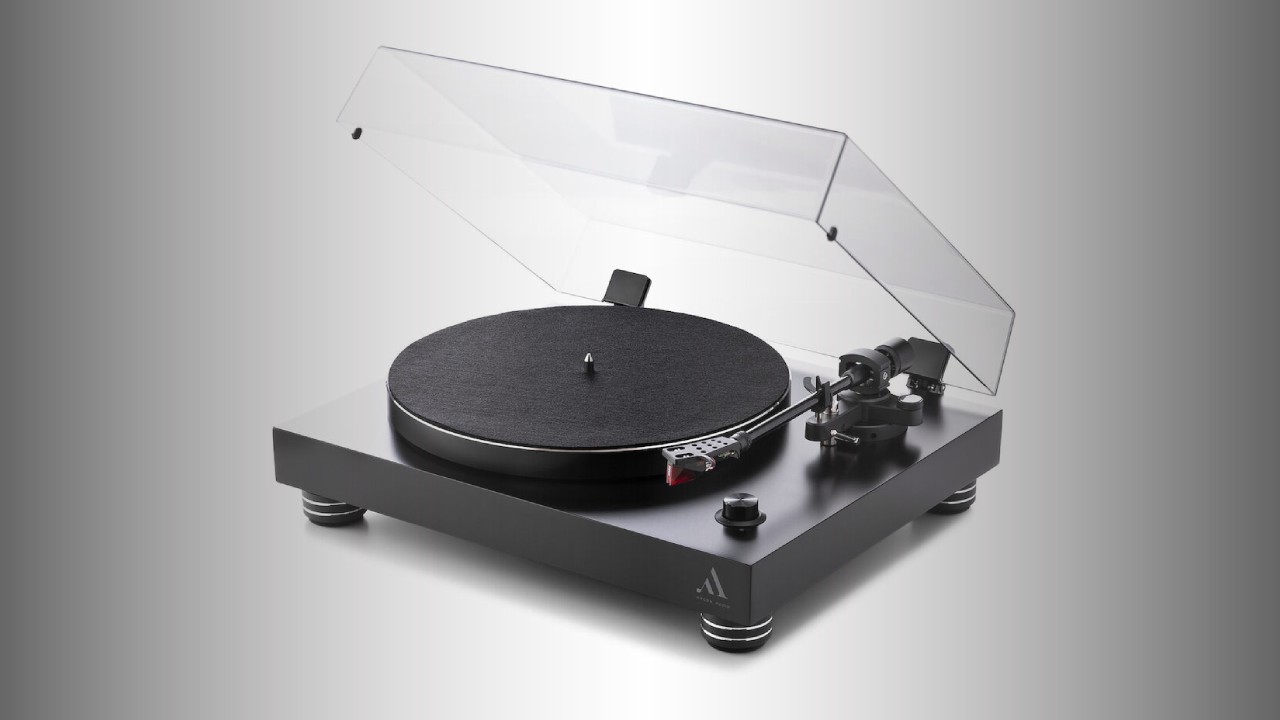
6. Argon Audio TT-4: High-fidelity turntable
Argon Audio TT-4 belt-drive turntable with built-in RIAA preamp and Ortofon 2M Red cartridge.
The Argon Audio TT-4 is a manual belt-drive turntable built around a blend of convenience and upgrade flexibility.
The source highlights a built-in RIAA preamp, a dense plinth for resonance damping, a substantial aluminum platter, and an Ortofon 2M Red cartridge supplied for immediate use.
Its preamp means it can work with systems that do not have a dedicated turntable input, while the option to bypass that preamp makes the deck more adaptable for listeners who later move toward external phono stages or Low Output Moving Coil cartridges. It is a strong middle-ground choice for buyers who want better component substance than a basic automatic deck but do not want to start with a bare, phono-stage-dependent platform.
Best for: Listeners wanting a built-in phono stage plus room for future upgrades
- Built-in RIAA preamp
- Preamp can be bypassed
- Supplied with Ortofon 2M Red cartridge
- Dense plinth and substantial aluminum platter
Verdict: The TT-4 is a practical hi-fi turntable for systems that need phono-stage flexibility without giving up a clear cartridge and upgrade path.

7. Denon DP-400: Perfect turntable for any entry-level stereo system
Denon DP-400 automatic belt-drive turntable with glossy finish, dust cover, and multi-speed playback.
The Denon DP-400 is aimed at listeners who want automation without abandoning a more traditional component-style turntable.
The source describes a glossy, rigid plastic body with anti-vibration legs, a dust cover, automatic operation, and the ability to select 12-inch or 7-inch records before pressing Start.
The tonearm sets down automatically at the start of the record and returns after playback, while manual cueing remains possible when selecting a track. The DP-400 also supports 33⅓, 45, and 78 rpm playback, and includes a built-in speed sensor to monitor playback accuracy. It is particularly useful for buyers who want automated everyday operation and broader speed compatibility than many simpler decks provide.
Best for: Entry-level stereo systems where automatic operation and 78 rpm support matter
- Fully automated start and tonearm return
- Manual cueing remains possible
- Supports 33⅓, 45, and 78 rpm playback
- Built-in speed sensor
Verdict: The DP-400 is a convenient automatic turntable for listeners who want easy operation, manual override, and support for more than the usual two speeds.

8. Musical Fidelity Roundtable S: Unique turntable boasting excellent anti-vibration
Musical Fidelity Roundtable S turntable with rounded MDF plinth, polished steel platter, and straight tonearm.
The Musical Fidelity Roundtable S is presented as a turntable with a strong emphasis on anti-vibration and anti-resonance behavior.
The source describes a polished steel platter, a central bearing designed for smooth operation and durability, a varnished MDF plinth with rounded corners, and a straight nine-inch aluminum tonearm.
It arrives factory-adjusted, requiring the user to set the recommended tracking force for the supplied Ortofon 2M Red cartridge, and it also allows tonearm-height adjustment if the cartridge is changed. That makes it appealing to buyers who want a largely prepared manual turntable but still value the ability to make cartridge-related adjustments later.
Best for: Manual turntable buyers who want factory setup with some cartridge-adjustment flexibility
- Anti-vibration and anti-resonance design emphasis
- Polished steel platter
- Nine-inch straight aluminum tonearm
- Supplied with Ortofon 2M Red cartridge
Verdict: The Roundtable S is a distinctive manual deck for listeners who want vibration-conscious construction and a supplied Ortofon cartridge without starting from a fully DIY setup.

9. Denon DP-300F: Vinyl player made in an elegant, laconic style
Denon DP-300F automatic turntable with glossy plinth, dust cover, and front-panel start and stop controls.
The Denon DP-300F is another automatic Denon option, described with an elegant, understated design, a glossy finish, anti-vibration legs, and a dust cover.
After assembly and setup, operation is simple: place the record, select the record size, and press Start.
The cartridge needle moves to the initial track automatically, and the tonearm returns when the record has finished. Manual needle placement is also possible for choosing a specific track. Compared with more manual hi-fi decks in this guide, its clearest purpose is convenience: it suits listeners who want the turntable to handle the basic playback routine consistently.
Best for: Listeners who prioritize automatic operation in a conventional hi-fi component
- Fully automated playback routine
- Automatic tonearm return after the record finishes
- Manual needle placement possible
- Glossy finish with anti-vibration legs and dust cover
Verdict: The DP-300F is a straightforward automatic turntable for buyers who want vinyl playback to feel easy and familiar rather than hands-on and tweakable.
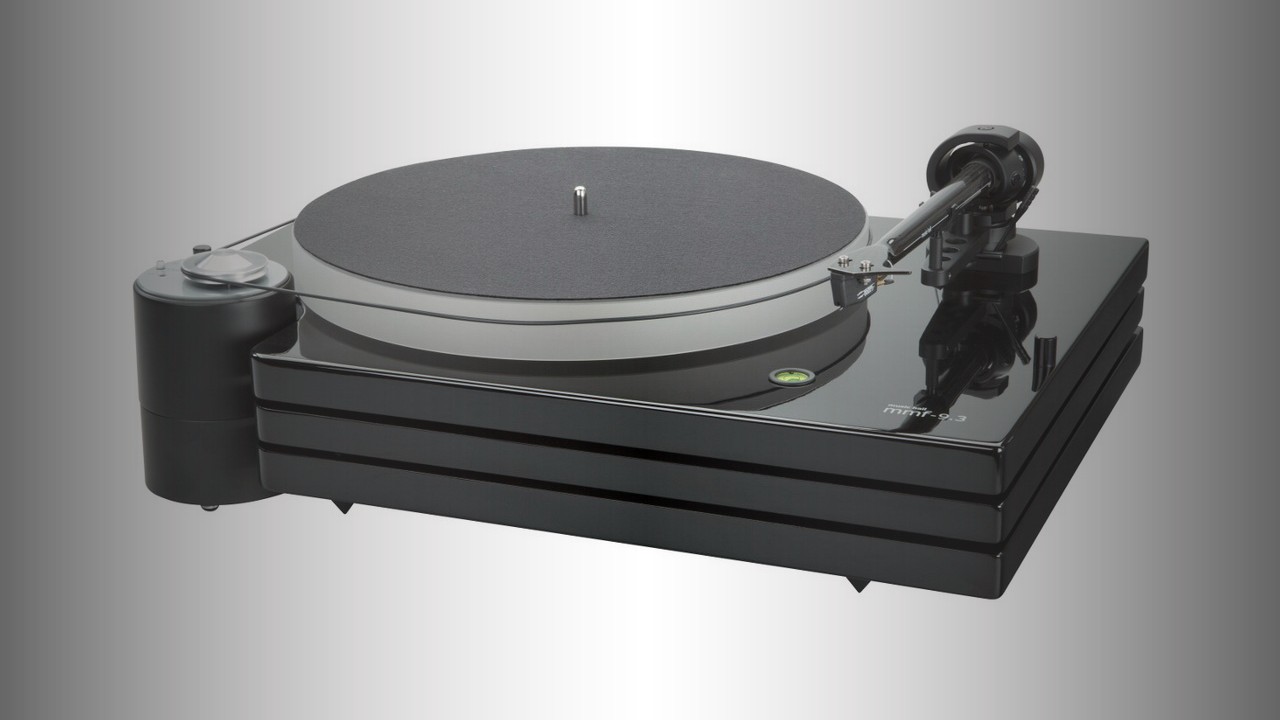
10. Music Hall mmf-9.3: Plug and play turntable in a High Gloss finish
Music Hall mmf-9.3 turntable with multi-layer plinth, isolated motor, acrylic platter, and high-gloss finish.
The Music Hall mmf-9.3 is built around extensive mechanical isolation.
The source describes a three-layer MDF plinth separated by vibration-insulating sorbothane pads, multiple layers of piano lacquer for added damping, adjustable steel cone feet, and a built-in miniature spirit level for checking horizontality.
Its motor is mechanically isolated from the player and sits in a cutout, while rotation reaches the acrylic platter through a long square-section belt. Speed switching for 33 and 45 rpm is handled by buttons on the rotation stabilizer. This is a good fit for listeners who care about setup precision, isolation, and a more elaborate belt-drive architecture.
Best for: Enthusiasts focused on isolation, leveling, and belt-drive refinement
- Three-layer MDF plinth with sorbothane isolation
- Mechanically isolated motor
- Adjustable steel cone feet
- Built-in miniature spirit level
Verdict: The mmf-9.3 is the isolation-focused choice here, aimed at buyers who appreciate a more elaborate mechanical platform and careful setup control.
Quick comparison
The turntables differ most clearly in setup complexity, connectivity, drive concept, automation, and upgrade potential.
Use the table as a quick way to identify which design direction fits your system before comparing tonearms, cartridges, phono-stage needs, and placement requirements in more detail.
| Product | Best for | Verdict |
|---|---|---|
| Pro-Ject Audio T1 EVO | Entry-level buyers choosing between standard, built-in phono, or Bluetooth versions | A flexible first serious turntable range with electronic speed switching and a pre-installed Ortofon OM 10 cartridge. |
| Pro-Ject X1 B | Listeners planning a possible balanced phono or Moving Coil upgrade | A polished manual deck with True Balanced signal-path capability and an Ortofon Pick it S2 MM cartridge supplied. |
| Vestlyd PRO T2 | Hands-on direct-drive use, including DJ-style cueing and mixing | A bold, tactile direct-drive turntable built for active control rather than set-and-forget listening. |
| J.Sikora Standard MAX anniversary turntable | High-end enthusiasts interested in material tuning and complex mechanical construction | A specialist turntable using brass, steel, copper, and stainless-steel elements to pursue vibration and resonance control. |
| Audio-Technica AT-LP60X | Vinyl beginners who want the easiest setup | A plug-and-play beginner turntable that avoids cartridge alignment, counterweight adjustment, and tonearm balancing. |
| Argon Audio TT-4 | Systems needing a built-in phono preamp with future bypass options | A manual belt-drive model with built-in RIAA preamp, Ortofon 2M Red cartridge, and upgrade flexibility. |
| Denon DP-400 | Automatic operation with support for 33⅓, 45, and 78 rpm records | A convenient automatic turntable with manual cueing available and a built-in speed sensor. |
| Musical Fidelity Roundtable S | Buyers wanting anti-vibration emphasis and a factory-adjusted manual deck | A distinctive manual turntable with a polished steel platter, nine-inch tonearm, and Ortofon 2M Red cartridge. |
| Denon DP-300F | Simple automatic playback in a conventional stereo setup | A fully automated player with automatic tonearm return and manual needle placement when needed. |
| Music Hall mmf-9.3 | Isolation-conscious listeners who value careful leveling and mechanical separation | A multi-layer belt-drive design with sorbothane isolation, adjustable feet, and an isolated motor. |
Frequently asked questions
Do I need a separate phono preamp for these turntables?
It depends on the model and version.
The Pro-Ject T1 EVO Phono and Argon Audio TT-4 include built-in phono amplification, while the standard Pro-Ject T1 EVO requires an external phono amplifier.
The Pro-Ject X1 B is especially relevant if you plan to pair it with a compatible balanced RIAA amplifier for its True Balanced capability.
Should a beginner choose an automatic or manual turntable?
Automatic models such as the Audio-Technica AT-LP60X, Denon DP-400, and Denon DP-300F reduce the amount of handling and setup involved.
Manual turntables such as the Argon Audio TT-4, Musical Fidelity Roundtable S, Pro-Ject X1 B, and Music Hall mmf-9.3 give the listener more direct involvement and, in several cases, more scope for cartridge or system upgrades.
What matters most if I want to upgrade later?
Look for cartridge flexibility, tonearm adjustment, and phono-stage options.
The Pro-Ject X1 B is notable for its balanced upgrade path, the Argon Audio TT-4 can bypass its built-in RIAA preamp, and the Musical Fidelity Roundtable S allows tonearm-height adjustment if the cartridge is changed.
Are direct-drive and belt-drive turntables aimed at different users?
In this selection, the Vestlyd PRO T2 is the direct-drive model and is described for hands-on use such as cueing, mixing, scratching, and back-cueing.
The belt-drive models generally lean toward home hi-fi listening, with several placing emphasis on isolation, resonance control, speed switching, or cartridge upgrade potential.
How to choose the right turntable from this list
Start with the rest of your system.
If your amplifier or speakers do not have a phono input, a model with a built-in phono stage, such as the Pro-Ject T1 EVO Phono or Argon Audio TT-4, can simplify setup.
If you already own, or plan to buy, a separate phono stage, the standard Pro-Ject T1 EVO, Pro-Ject X1 B, or more ambitious manual decks may make more sense. Next, decide how much you want to interact with the record player. The Audio-Technica AT-LP60X is the most beginner-oriented option in the supplied material because it avoids cartridge alignment, counterweight adjustment, and tonearm balancing. Denon’s DP-400 and DP-300F add automatic routines, with the DP-400 also supporting 78 rpm playback. Those models suit listeners who value convenience and predictable operation. For more involved listening, the Argon Audio TT-4, Musical Fidelity Roundtable S, Pro-Ject X1 B, and Music Hall mmf-9.3 offer a more traditional manual hi-fi experience, with differences in preamp flexibility, tonearm adjustment, balanced-system potential, or mechanical isolation. If tactile control and direct-drive behavior are the priority, the Vestlyd PRO T2 is the clear alternative, especially for users drawn to cueing, mixing, scratching, and back-cueing. Finally, consider placement and setup. Turntables are mechanical devices, so level support and vibration control matter. The Audio-Technica source specifically notes that the AT-LP60X needs to sit level because its feet are not adjustable, while the Music Hall mmf-9.3 includes adjustable feet and a built-in spirit level. Buyers looking at higher-end or specialist models such as the J.Sikora Standard MAX anniversary edition should treat construction, material choices, isolation, and system matching as central parts of the purchase decision rather than afterthoughts.