Luxsin X8: A Desktop DAC/Amp Built Around AI-Assisted Personalization
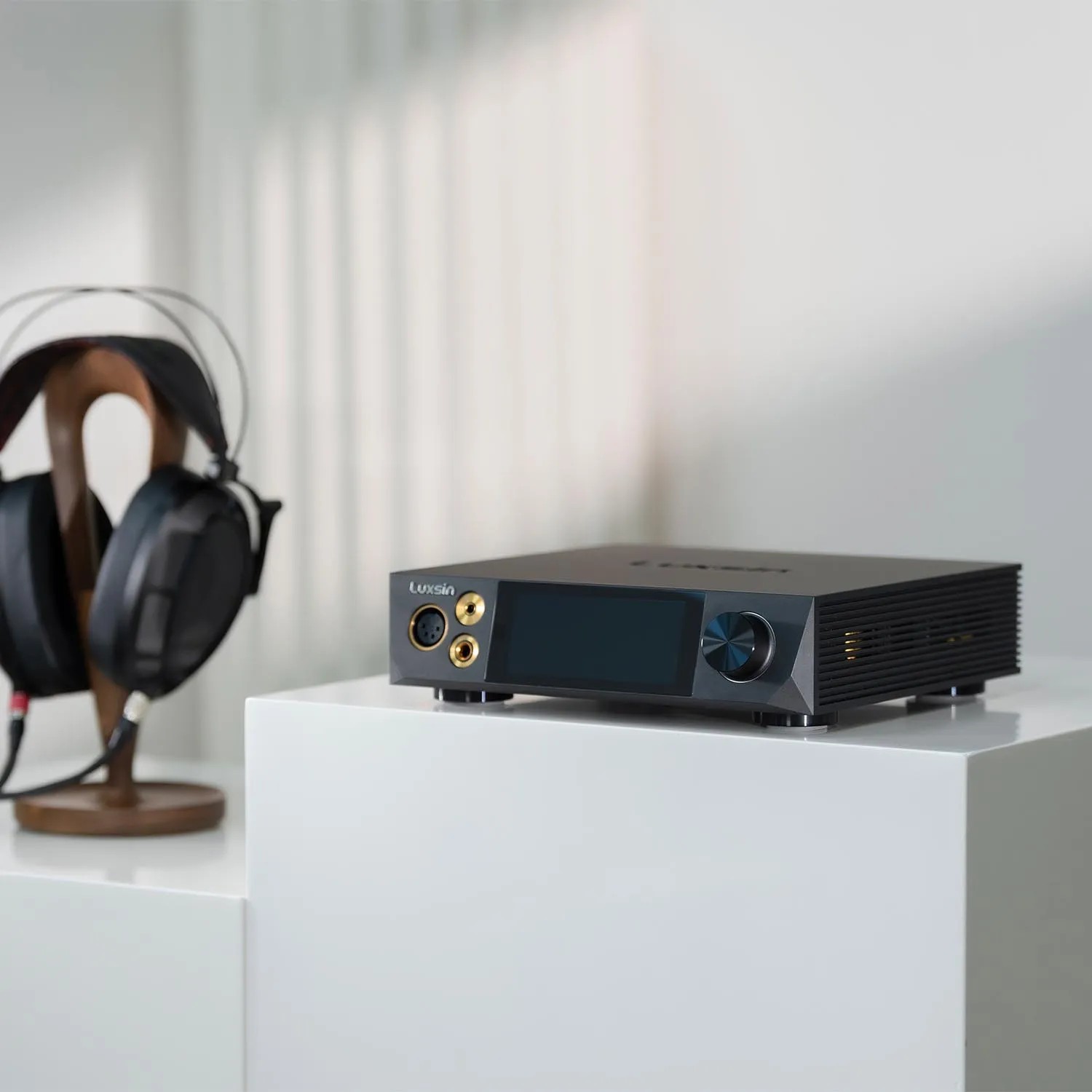
The Luxsin X8 is a desktop DAC/headphone amplifier that pairs an ambitious eight-DAC hardware platform with AI-assisted EQ, headphone profiling, and substantial output power.
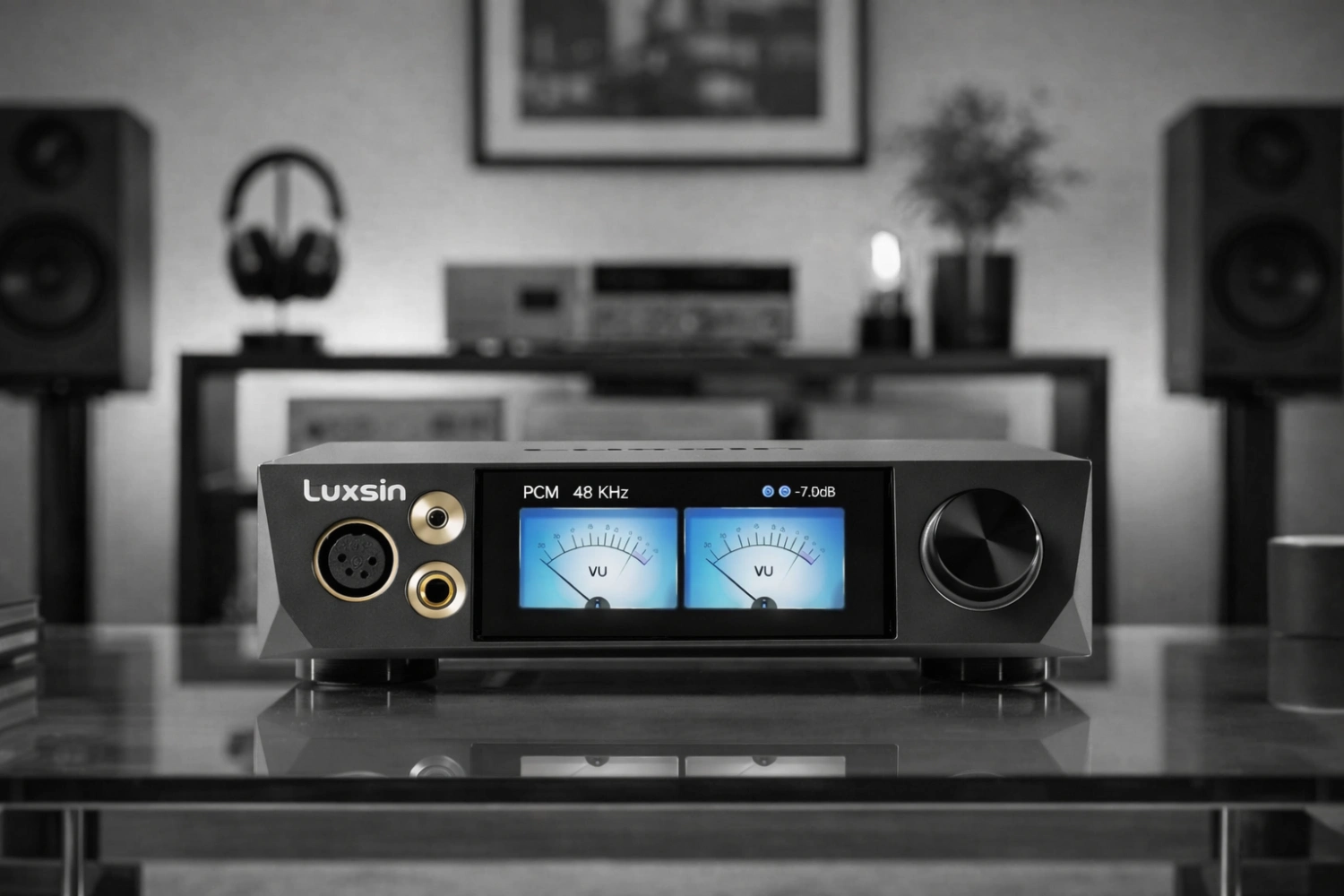
The Luxsin X8 is not positioned as a simple desktop DAC/amp refresh. Its appeal lies in the way it combines conventional high-performance audio engineering with a more adaptive approach to sound shaping. On the hardware side, it uses an eight-DAC architecture, a separated linear power supply, and a headphone amplifier rated at up to 4800mW per channel. On the software side, it introduces a proprietary Digital Audio Core with AI-assisted EQ, headphone compensation, and support for stored profiles. That combination makes the X8 interesting not merely as a converter and amplifier, but as a desktop control center for listeners who want both technical flexibility and a more accessible way to tailor their headphone system.
Eight DACs arranged for separation and control
At the heart of the Luxsin X8 is an array of eight Cirrus Logic CS43198 DAC chips. Rather than using a single chip per channel, the X8 places four DACs on each side in a true dual-mono parallel arrangement. In this layout, the left and right channels are physically and electrically separated, with independent signal paths and power delivery.
The practical attraction of this approach is not simply the number of chips. A parallel DAC configuration can be used to lower noise and improve behavior at very low signal levels by summing the output of multiple converter channels. For headphone listening, where small changes in channel separation, background noise, and level resolution can be particularly noticeable, this kind of architecture is a meaningful design choice.
Luxsin has also included dedicated buffering and clock distribution so the DACs operate from a shared timing reference. That matters because a multi-DAC design depends on coherent operation; without careful synchronization, the theoretical benefits of parallel conversion can be undermined. Individual shielding for each DAC is another detail aimed at electrical isolation and thermal consistency, both of which are important in a compact desktop component that combines digital processing, conversion, and amplification in one chassis.
A Digital Audio Core designed for real-time processing
One of the X8’s more distinctive elements is its proprietary Digital Audio Core. This processing platform is built around a dual-core HiFi-5 DSP and ARM architecture running at more than 500 MHz, with substantial on-chip memory. The point is not just to add a menu of effects, but to provide enough processing headroom for real-time audio functions such as advanced EQ and headphone compensation.
For prospective owners, this matters because modern headphone systems are increasingly shaped by software as much as hardware. Many listeners use equalization, target curves, and headphone-specific correction, but these tools are often handled externally through computer software or apps that can be technical to configure. By building a real-time processing platform into the DAC/amp itself, the X8 is designed to make those functions part of the core product rather than an afterthought.
The processing platform also gives Luxsin a foundation for firmware-driven development. No product should be bought on the assumption of future features that have not been specified, but a capable internal DSP and ARM architecture does suggest that the X8 has been designed as a flexible platform rather than a fixed-function converter. That is a relevant distinction for desktop users who expect their main DAC/amp to remain useful as listening habits and headphone collections change.
AI-assisted EQ lowers the barrier to personalization
The headline feature of the Luxsin X8 is its AI-assisted EQ system. Traditional parametric EQ can be extremely powerful, but it often requires users to understand frequency bands, Q values, gain changes, and target curves. The X8 approaches the same broad problem from a more conversational direction: users can describe the change they want, such as more warmth, tighter bass, or clearer vocals, and the system adapts the equalization accordingly.
This is potentially useful because many listeners know what they want to adjust but do not necessarily know how to translate that preference into technical EQ settings. The benefit is not that AI replaces careful tuning, but that it can make tuning more approachable. It gives the listener a way to begin with descriptive language rather than a blank parametric EQ screen.
Importantly, the AI-assisted system is tied to Luxsin’s HP-EQ platform, which includes a database of more than 2,500 headphone models. That database allows the X8 to apply headphone calibration toward target curves such as Harman, or to layer additional personal adjustments on top. The ability to store up to 50 unique headphone profiles is especially relevant for users with several headphones or IEMs. Instead of rebuilding EQ settings every time a different model is connected, the X8 is designed to let users move between established profiles more conveniently.
High output power with multiple headphone connections
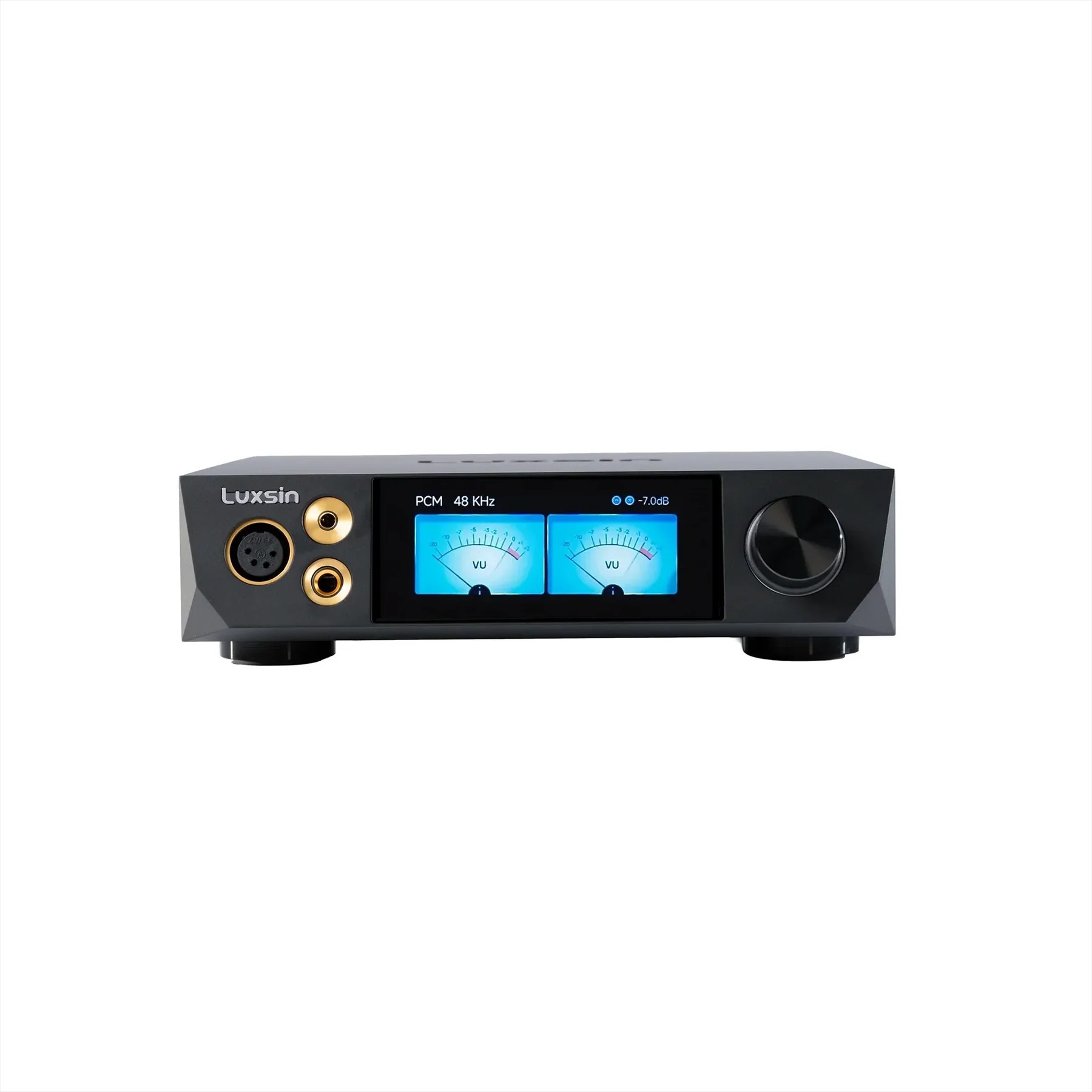
The Luxsin X8’s amplification stage is specified at up to 4800mW per channel. The design uses OPA1612 op-amps together with TPA6120A2 high-current drivers, a pairing chosen to support low distortion and linear behavior under load. While real-world suitability always depends on the specific headphone and listening level, the stated output gives the X8 a broad operating range for both sensitive earphones and harder-to-drive full-size headphones.
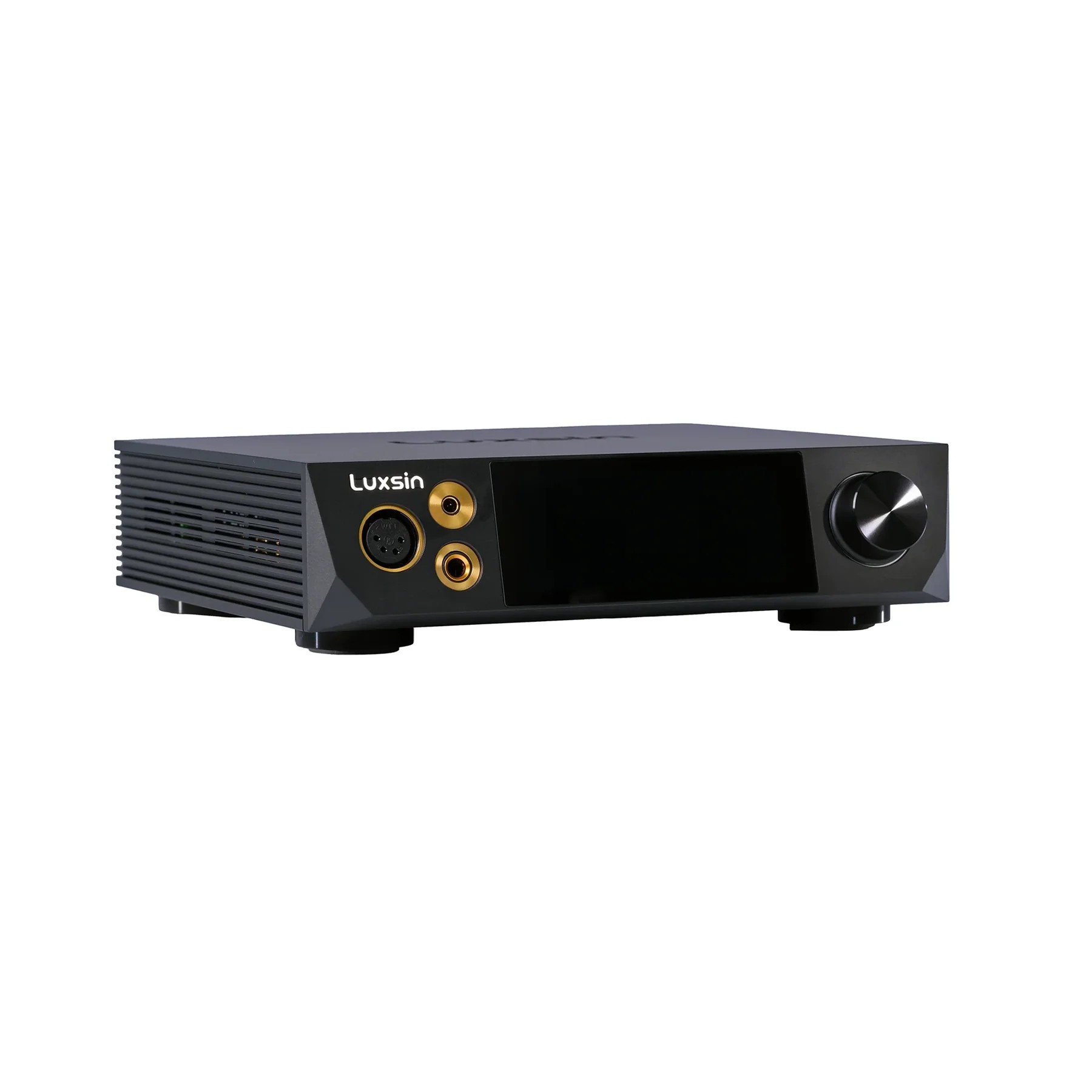
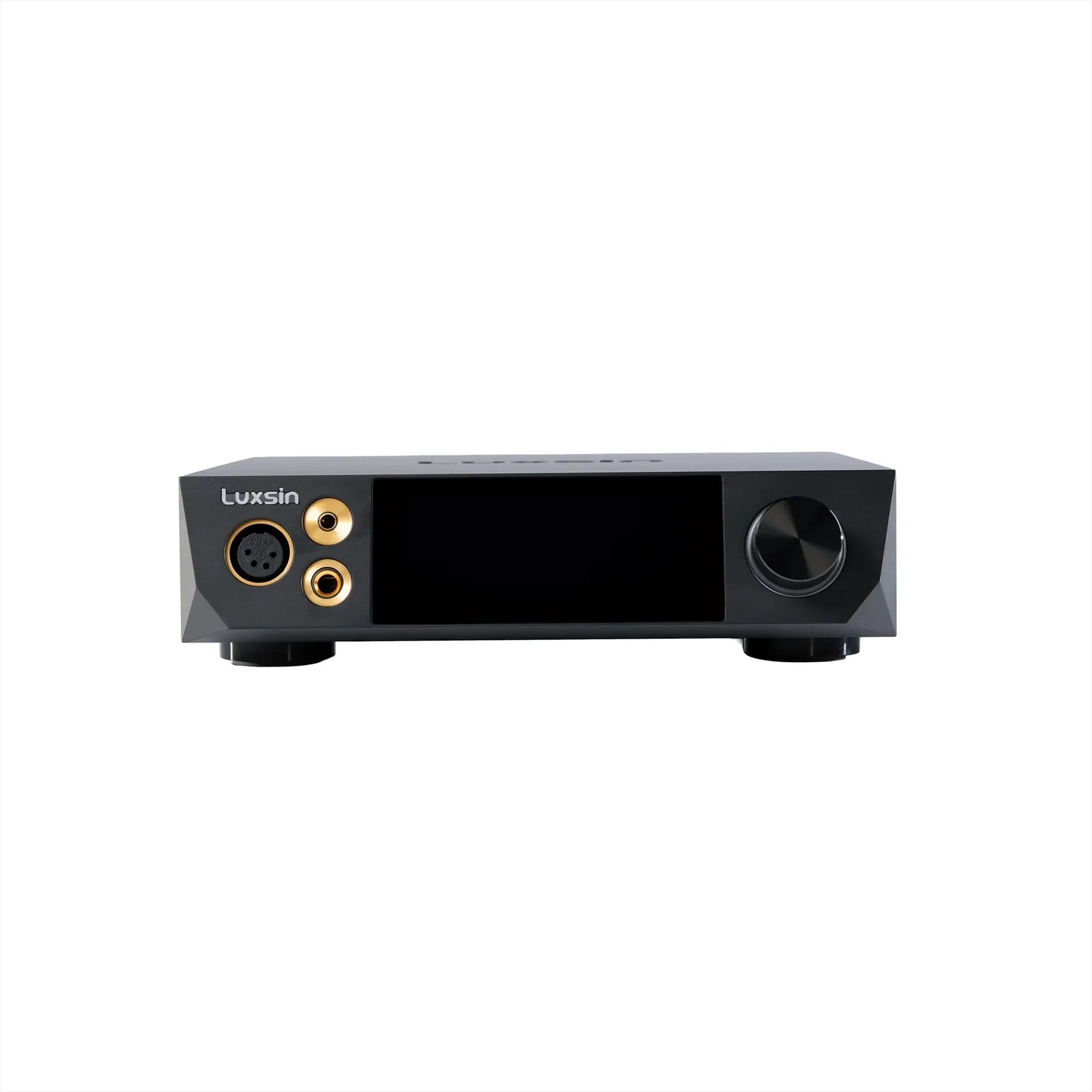
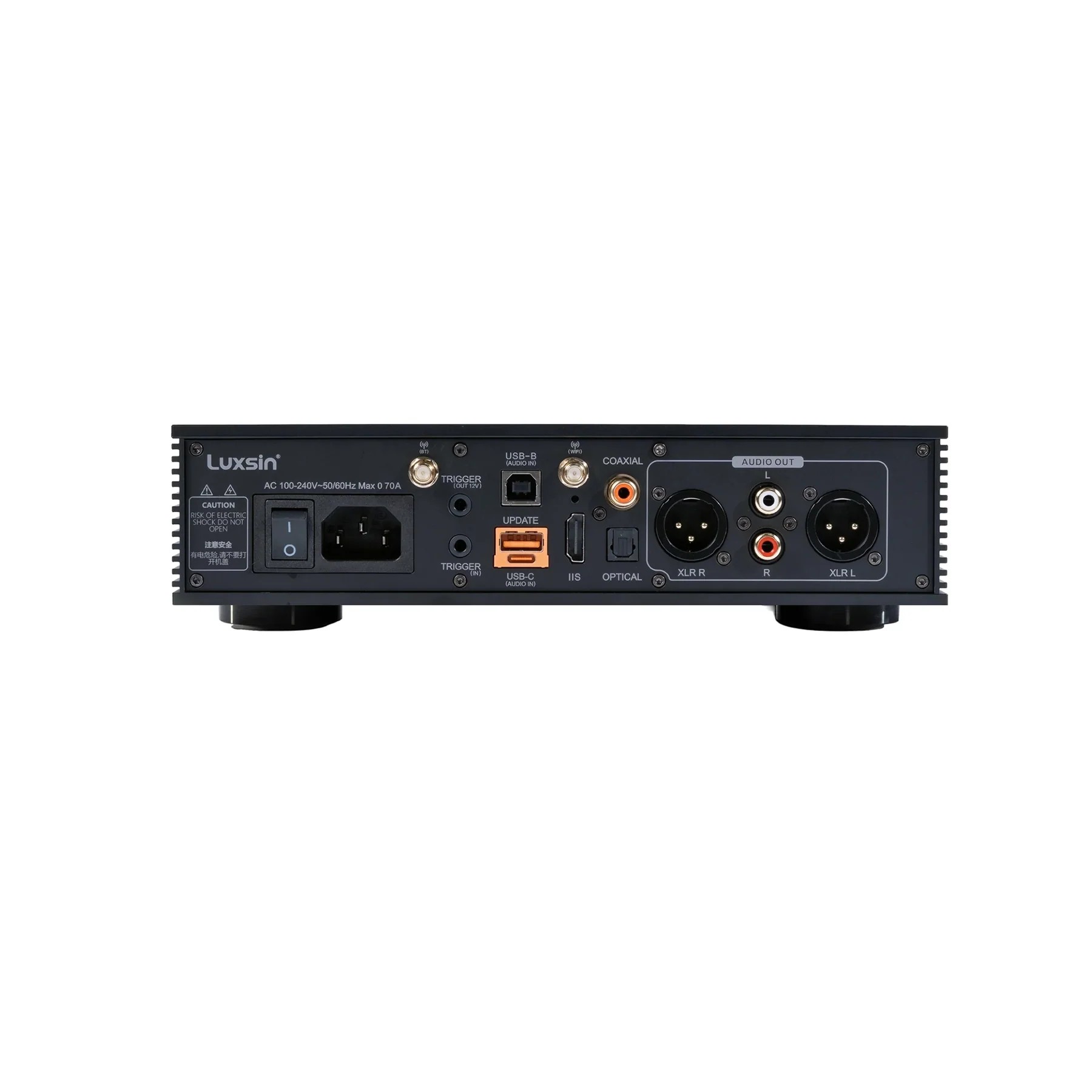
Connection flexibility is another part of the product’s appeal. The X8 supports XLR4, 4.4mm, and 6.35mm headphone outputs, covering the common balanced and single-ended formats used in desktop headphone systems. That makes it easier to integrate the unit into a mixed collection without relying immediately on adapters.
Luxsin also includes an upgraded impedance detection system that automatically identifies connected headphones across those outputs and adjusts gain accordingly. This is a practical usability feature rather than a headline specification. Gain management can be a nuisance on desktop amplifiers, especially when switching between sensitive IEMs and demanding over-ear headphones. Automatic detection is intended to reduce the risk of using an inappropriate gain setting and to make day-to-day operation more straightforward.
Separated power architecture for digital and analog stages
The X8’s power supply architecture is another area where Luxsin has made deliberate choices. The unit uses a fully separated linear power supply, with isolation between digital and analog sections. In a DAC/amp, that separation is valuable because the digital processing stage, DAC section, and analog output stage all place different demands on the power system.
Keeping these sections isolated is intended to reduce noise coupling and maintain stable operating conditions. Multiple monitoring sensors track voltage and current in real time, adding another layer of oversight to the design. The X8 also includes selectable analog voltage rails at 12V and 15V, giving the unit an additional means of optimizing operating conditions.
For owners, the relevance is simple: power design affects consistency and system behavior, especially in a component expected to handle conversion, DSP, and headphone amplification simultaneously. A separated supply does not guarantee any particular listening impression, but it does show that Luxsin has treated power management as a central part of the X8 rather than a supporting detail.
Who the Luxsin X8 is most suitable for
The Luxsin X8 appears most suitable for headphone-focused listeners who want one desktop component to handle digital conversion, amplification, and sophisticated sound personalization. It will be especially attractive to users who own multiple headphones, want to experiment with target curves, or find conventional EQ tools too technical but still want meaningful control over tonal balance.
It also makes sense for listeners who value both balanced and single-ended headphone connectivity, as well as those who need enough amplifier capability to support a varied collection that may include sensitive IEMs and more demanding full-size designs. The stored profile system and automatic impedance detection are practical features for that kind of mixed setup.
The X8 may be less relevant for someone who wants a very simple plug-and-play DAC with no interest in EQ, headphone compensation, profiles, or DSP-driven personalization. Its most distinctive strengths are tied to configurability and interaction. Listeners who prefer a minimalist signal chain with few options may not take full advantage of what makes the product different.
A desktop component with a software-aware identity
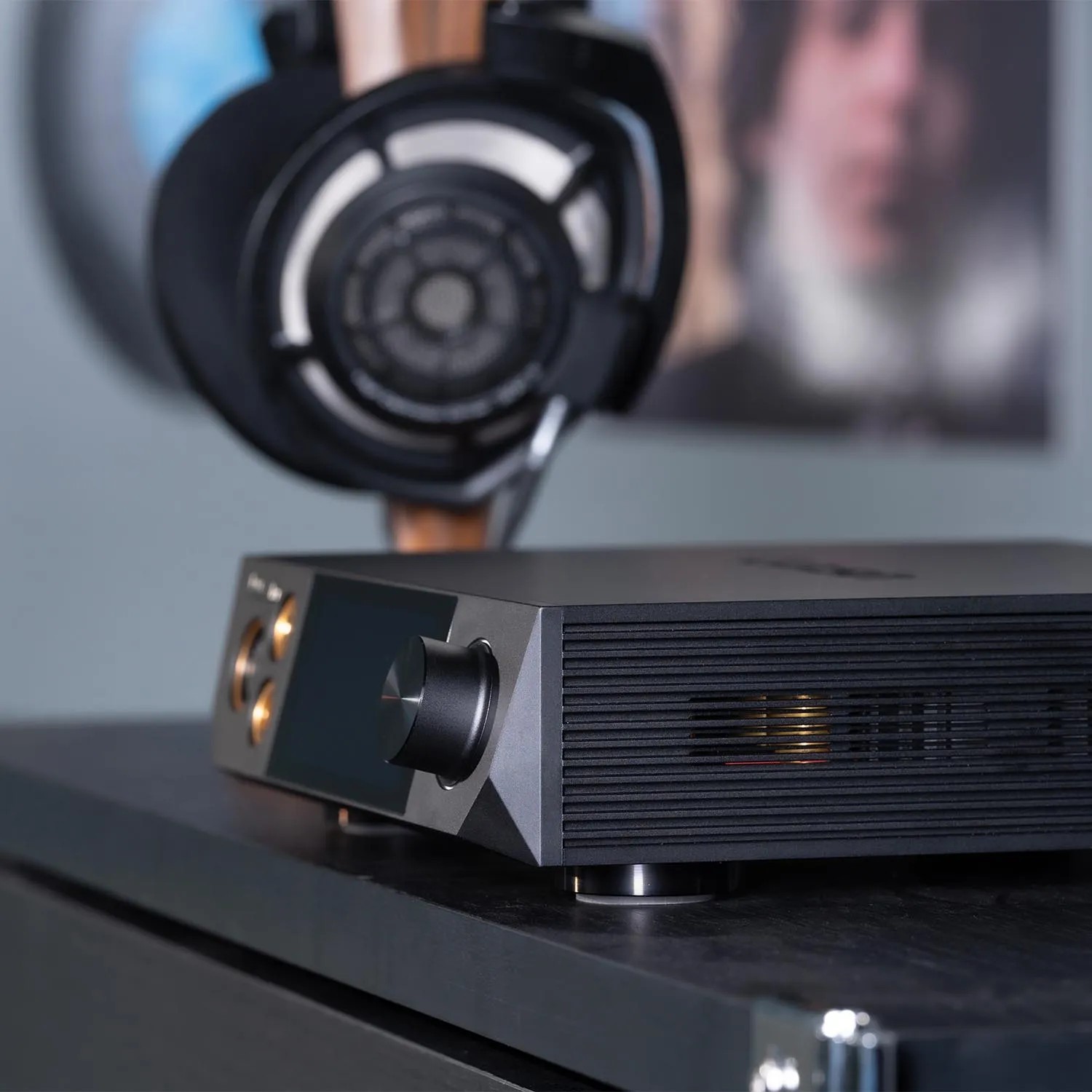
What makes the Luxsin X8 distinctive is the balance between hardware scale and software intelligence. The eight-DAC layout, separated signal paths, clocking, shielding, and high-output amplifier section all point to a serious desktop audio design. At the same time, the Digital Audio Core and AI-assisted EQ system give the product an identity that goes beyond traditional DAC/amp specifications.
That combination reflects a broader shift in headphone listening. Many users now expect precise control over the way their systems respond, but they do not necessarily want to manage every adjustment manually. The X8 is designed for that middle ground: more capable than a fixed-output DAC/amp, but more approachable than a purely technical EQ workflow.
Conclusion
The Luxsin X8’s strongest documented qualities are its eight-DAC dual-mono architecture, substantial headphone amplifier output, separated linear power supply, real-time Digital Audio Core, AI-assisted EQ, and support for extensive headphone profiling. Its appeal is not based on one feature alone, but on the way these elements work together to create a flexible desktop hub for headphone listening. It is best suited to users who want powerful hardware, multiple output options, and a more accessible path to personalized sound without abandoning advanced control.