
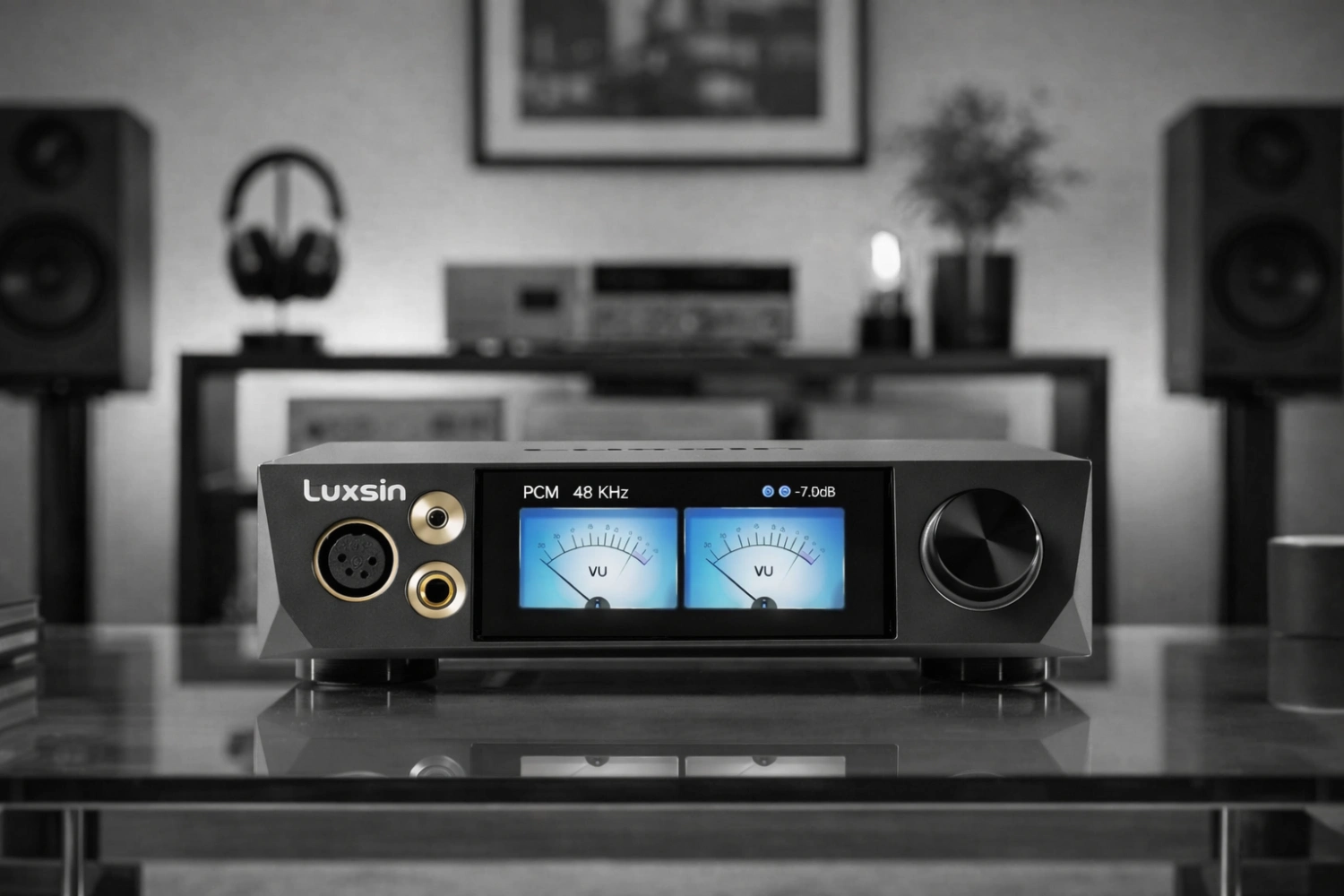
Luxsin isn’t playing it safe with the X8. Instead of another incremental DAC/amp refresh, the company is introducing a product that genuinely shifts the conversation — blending serious hardware engineering with software intelligence in a way we haven’t really seen before in desktop audio.
At a glance, the X8 delivers brute-force performance: an eight-DAC array, nearly 5 watts per channel of output power, and a fully separated linear power supply. But what makes it stand out is how it combines that hardware with a new layer of interaction — one where AI and personalization become central to the listening experience.
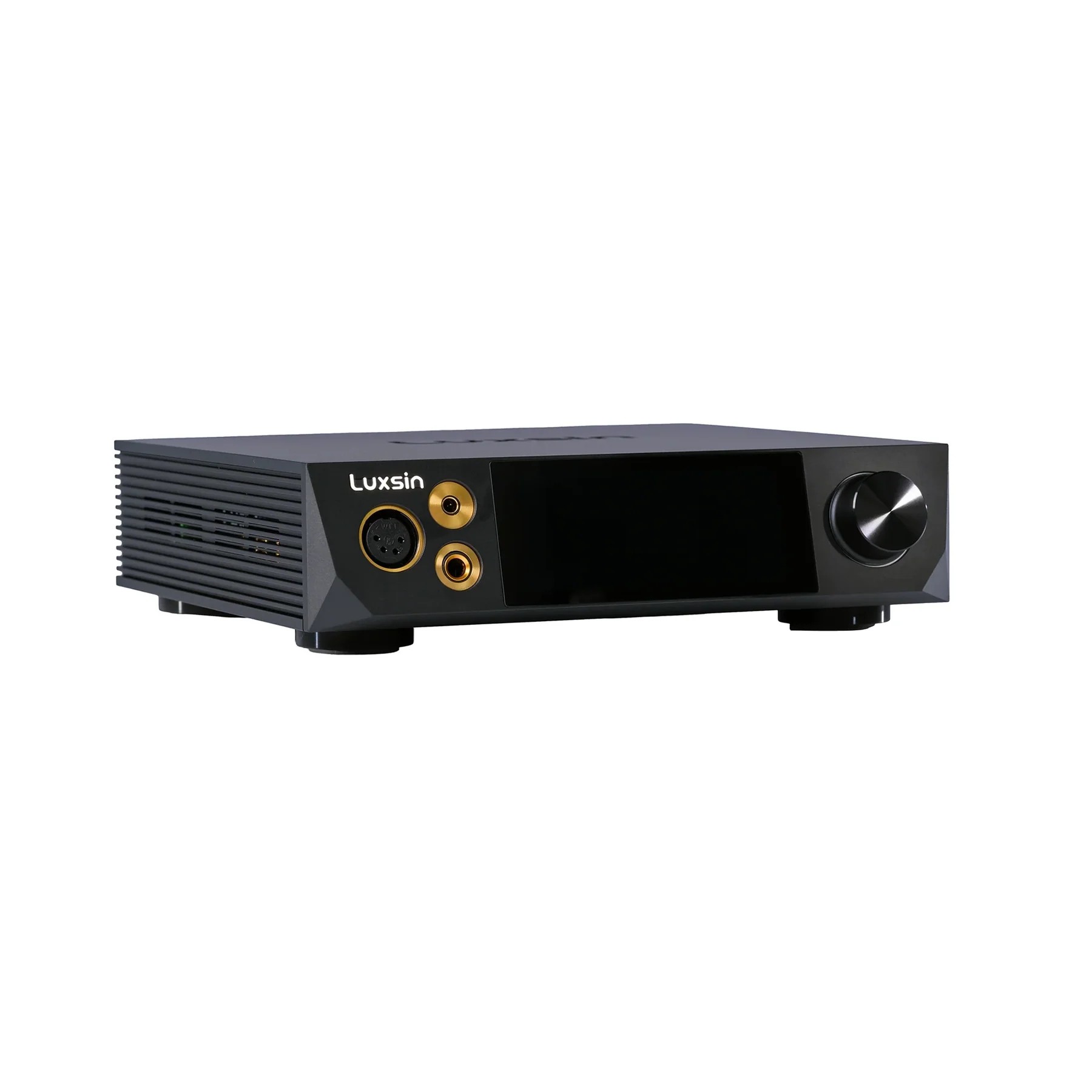
Eight DACs, one coherent sound
The X8 is built around eight Cirrus Logic CS43198 DAC chips, arranged in a true dual-mono parallel architecture. Four DACs per channel operate in sync, each contributing to a summed analog output designed to reduce noise and improve resolution at low signal levels.
Left and right channels are physically and electrically separated, with independent power delivery and signal paths. The result is a cleaner stereo image, more precise spatial cues, and a presentation that feels stable and composed even in complex passages.
A dedicated buffering and clock distribution system keeps all DACs locked to the same timing reference, avoiding phase inconsistencies that can smear detail. Add individual shielding for each DAC, and you’re looking at a design that prioritizes both electrical isolation and thermal consistency — two factors that often get overlooked, but matter deeply at this level.
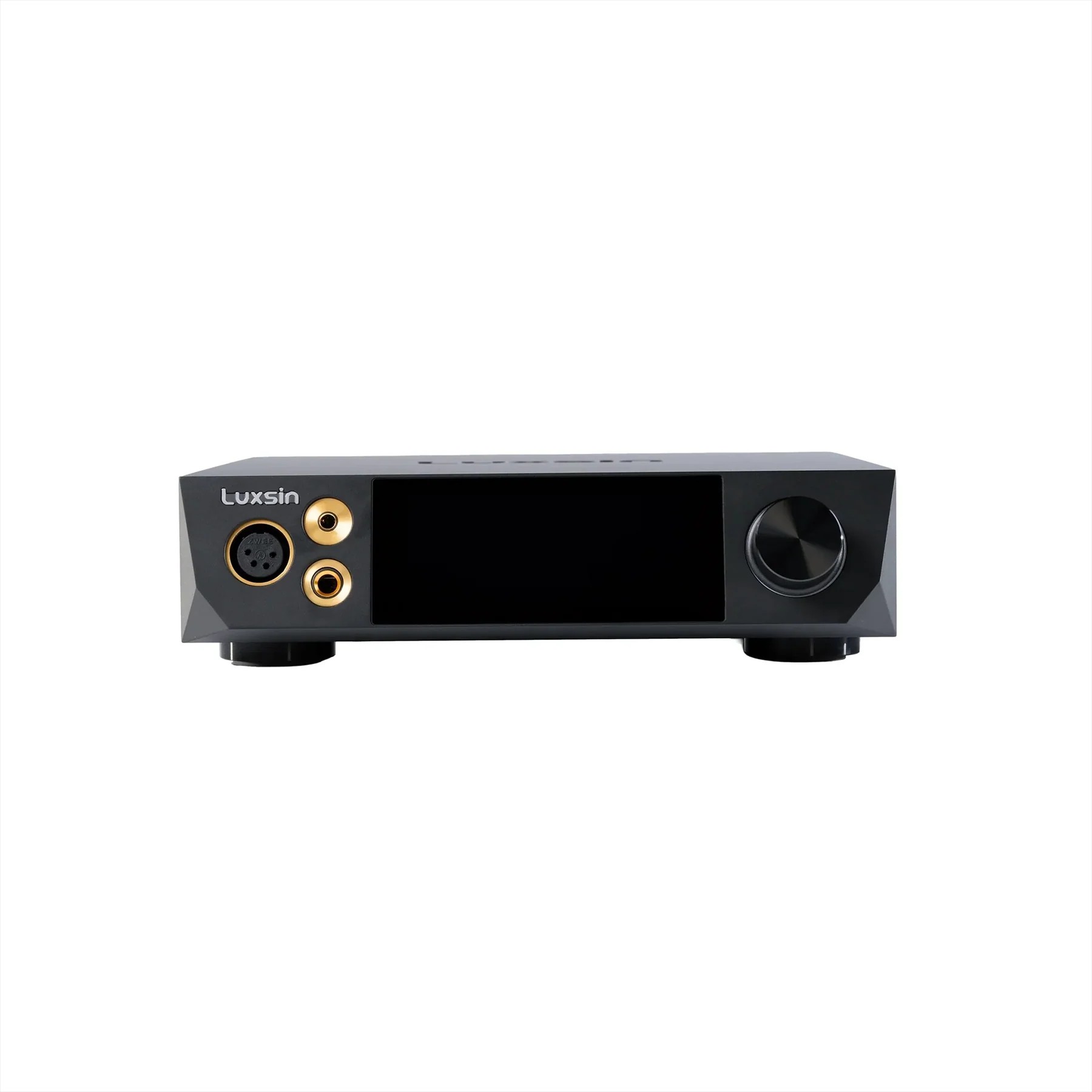
A Digital Audio Core built for real-time processing
What really sets the X8 apart is its proprietary Digital Audio Core. This isn’t just a standard DSP implementation — it’s a high-performance processing platform built around a dual-core HiFi-5 DSP and ARM architecture, running at over 500 MHz with substantial on-chip memory.
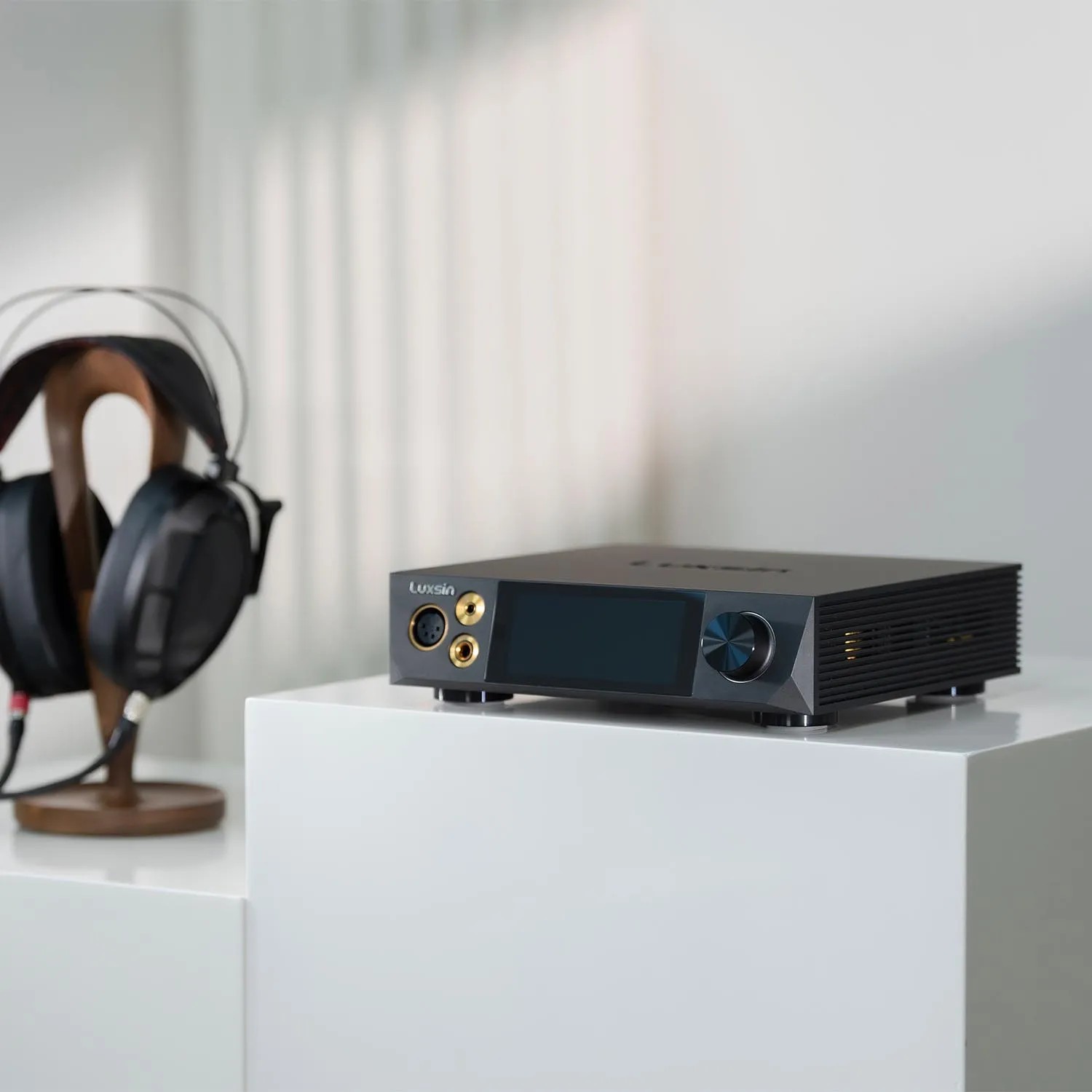
In practical terms, this gives the X8 the headroom to handle complex real-time audio processing without compromise. Whether it’s advanced EQ, headphone compensation, or future firmware-driven features, the platform is designed to evolve — not just deliver a fixed set of capabilities on day one.
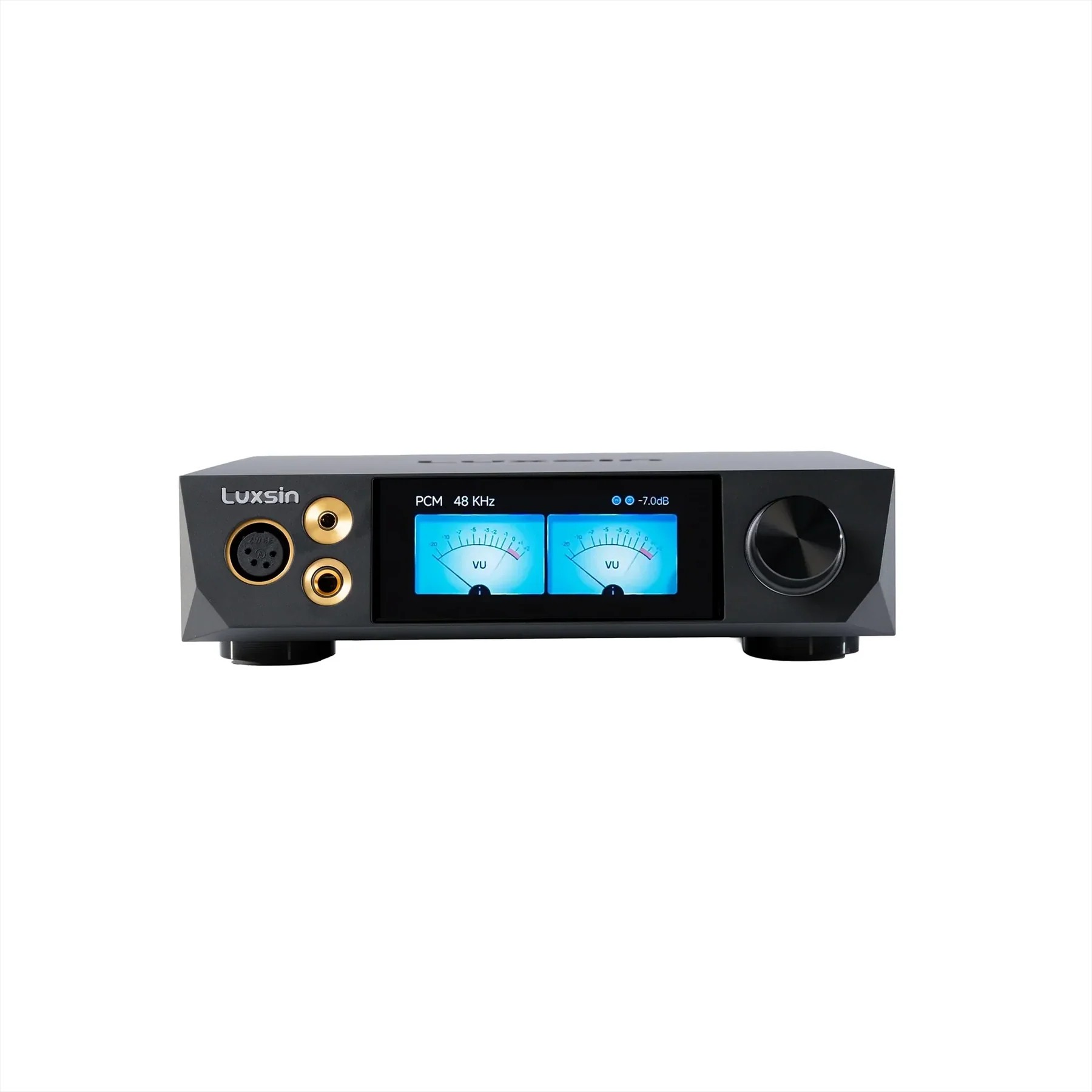
AI-assisted EQ enters the hi-fi space
The headline feature is Luxsin’s AI-assisted EQ system, which brings a new level of accessibility to sound tuning. Instead of manually adjusting parametric EQ bands, users can simply describe what they want — more warmth, tighter bass, clearer vocals — and the system adapts accordingly.
It’s a surprisingly big step for hi-fi, where tuning has traditionally been either rigid or highly technical. Here, the barrier to entry drops significantly, without removing the depth that experienced users expect.
The system integrates with Luxsin’s HP-EQ platform, which already includes a database of over 2,500 headphone models. This allows the X8 to calibrate headphones to target curves like Harman, or apply more personalized adjustments on top. Up to 50 unique headphone profiles can be stored, making it easy to switch between setups without reconfiguring everything.
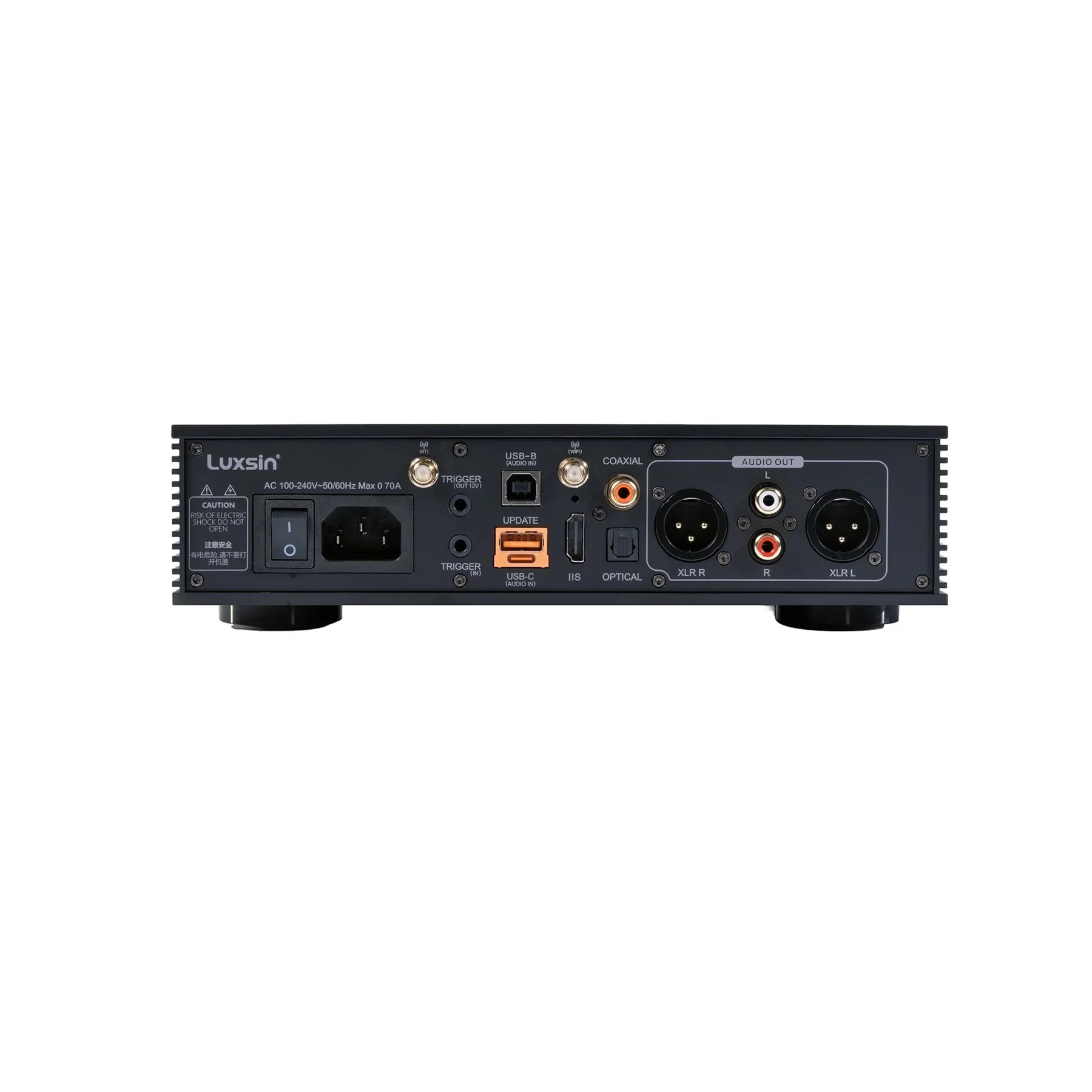
Power that matches the ambition
On the amplification side, the X8 delivers serious output: up to 4800mW per channel. Using a combination of OPA1612 op-amps and TPA6120A2 high-current drivers, the design focuses on maintaining low distortion and high linearity even under load.
In real-world terms, that means the X8 can comfortably drive the vast majority of headphones on the market, from sensitive IEMs to demanding full-size designs. Dynamics feel immediate, transients are fast, and there’s enough headroom to avoid compression when the music gets complex.
An upgraded impedance detection system automatically identifies connected headphones across XLR4, 4.4mm, and 6.35mm outputs, adjusting gain accordingly. It’s a small feature, but one that improves usability in day-to-day listening.
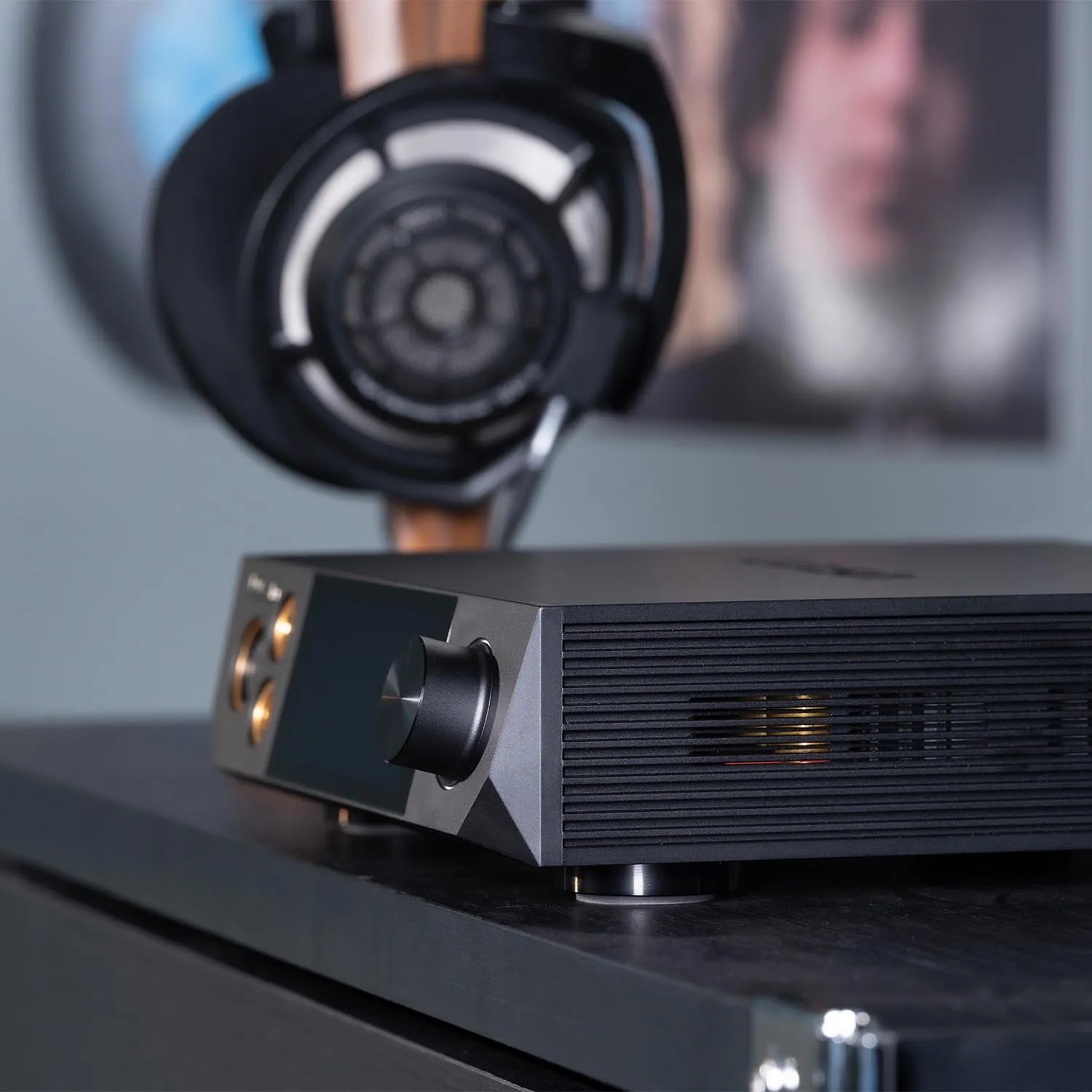
Clean power, cleaner background
The X8’s power architecture is just as deliberate as its signal path. A fully separated linear power supply isolates digital and analog sections, reducing noise coupling and improving overall stability.
Multiple monitoring sensors track voltage and current in real time, while selectable analog voltage rails (12V and 15V) allow for further optimization. The goal is simple: a darker background, better microdetail, and a more controlled presentation across the board.
A new direction for desktop audio
The Luxsin X8 doesn’t just aim to sound better — it aims to be smarter. By combining high-end DAC design, serious amplification, and AI-driven personalization, it represents a new direction for desktop audio systems.
For listeners, that means less time wrestling with settings and more time enjoying music — without sacrificing the level of control and precision that defines high-end hi-fi.
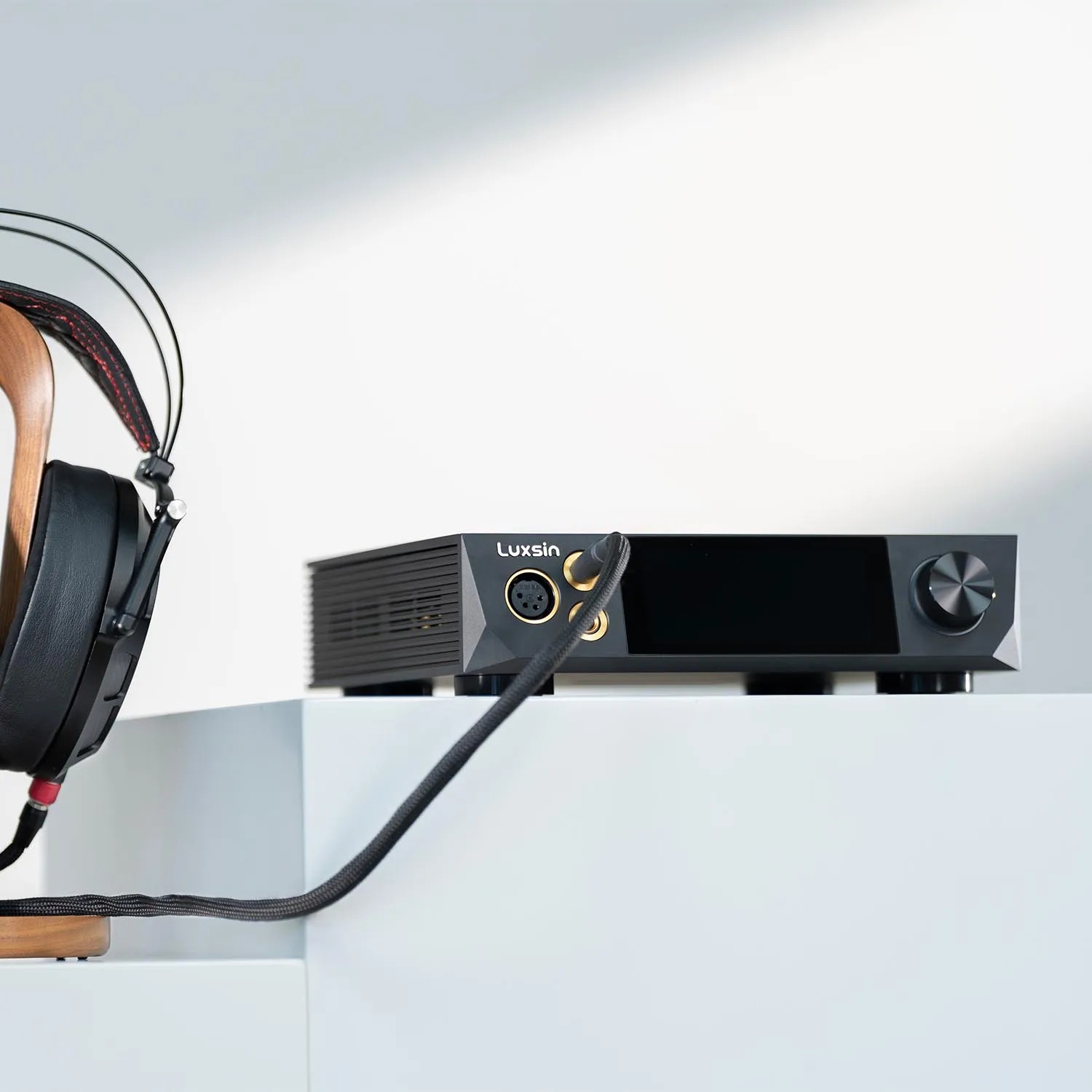
In a market full of iterative upgrades, the X8 feels like something different. Not just another DAC/amp, but a glimpse at where the category might be heading next.



Sound Off
0Join the discussion if you have something to add.