Atoll SDA300 Signature: A Network Integrated Amplifier Built Around Flexibility
The Atoll SDA300 Signature brings network streaming, digital conversion, analogue switching, preamplifier functionality, and substantial integrated amplification into one full-size component.
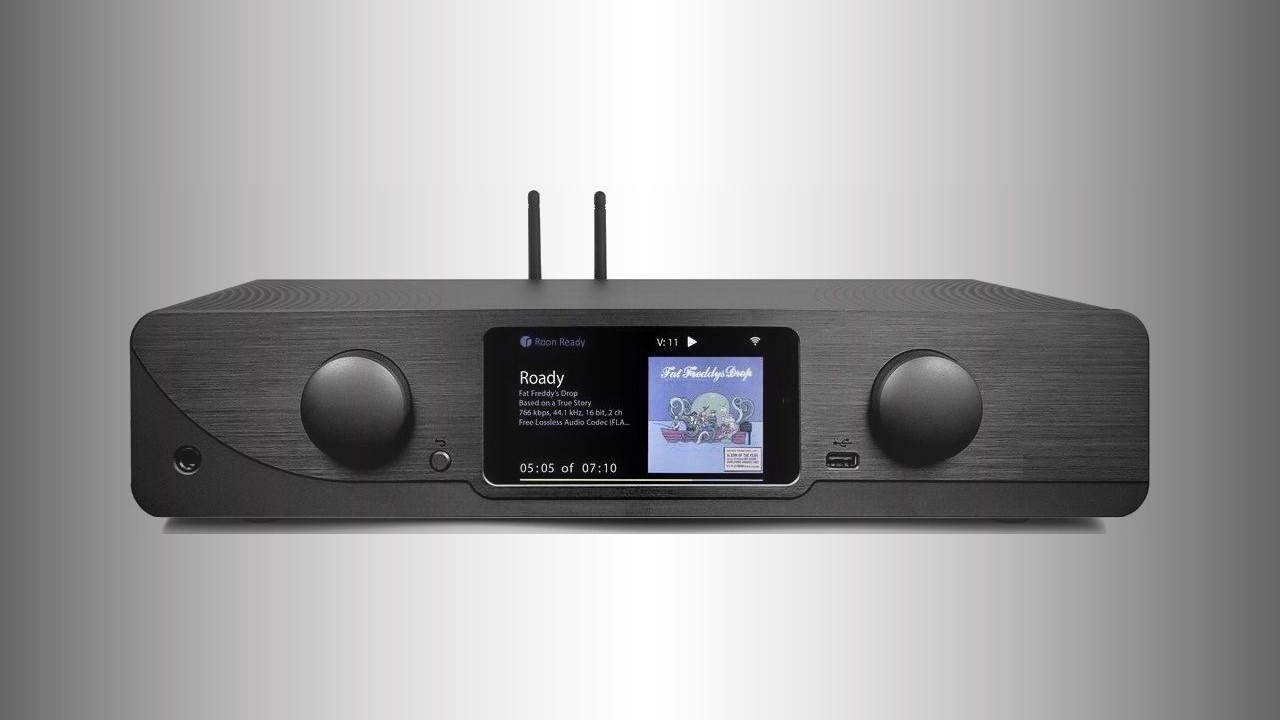
The Atoll SDA300 Signature is designed for listeners who want a serious integrated amplifier without giving up the convenience of modern network audio. Rather than treating streaming as an add-on, it combines a Burr-Brown-based DAC section, network playback, physical digital inputs, analogue line inputs, preamplifier outputs, headphone access, Bluetooth, app control, and a substantial power amplifier stage in a single chassis. Its appeal lies not in one headline feature, but in the way many system roles are gathered into one component while retaining the connection options needed for a conventional hi-fi setup.
A complete amplifier with a serious digital core
At the center of the SDA300 Signature’s digital section is a Burr-Brown PCM1792 DAC. The unit accepts PCM files up to 24-bit/192 kHz and DSD64/DSD128, whether playback is coming from a local network or USB storage. That range covers a large portion of commonly available high-resolution music libraries, while still supporting familiar compressed and lossless formats including FLAC, ALAC, AIFF, WAV, AAC, MP3, WMA, OGG, LPCM, and DSF.
For many prospective owners, the practical value is straightforward: the SDA300 Signature can serve as the main digital hub of a system. Music stored on computers, servers, USB drives, or networked storage can be played without requiring a separate streamer and DAC. The inclusion of both optical and coaxial digital outputs also means the digital signal can be routed onward to another compatible component if a system requires it.
The amplifier is also described as Roon Ready, which is especially relevant for listeners who organize music through Roon’s library and multi-room ecosystem. Combined with UPnP and DLNA support, the SDA300 Signature is not tied to a single playback method. It can fit into several types of digital audio environments, from app-driven streaming to local file playback over a home network.

Amplification designed for demanding loudspeaker loads
Beyond its streaming and DAC features, the SDA300 Signature is a full integrated amplifier. Its rated output is 2 x 150 watts into 8 ohms and 2 x 280 watts into 4 ohms. The amplifier stage uses two pairs of MOSFETs per channel, and the design is specified as delivering significant output current. According to the supplied specification, this helps the amplifier handle loudspeakers with complex impedance characteristics.
This matters because many real-world loudspeakers are not simple loads. Their impedance can vary with frequency, and an amplifier that is expected to control them must provide more than just a convenient feature set. By combining network functionality with a high-power output stage, the SDA300 Signature is positioned for systems where the owner wants both modern source flexibility and the ability to drive substantial passive loudspeakers from a single main component.
The power supply is also notable in the context of an all-in-one amplifier. Atoll uses two toroidal transformers, with digital devices assigned a separate power supply, and total capacitance is stated at more than 65,800 μF. Separating power requirements for digital and amplification sections is a deliberate design choice in a component that combines streaming, conversion, control, and speaker drive in one chassis.

Analogue volume control and considered signal-path parts
One of the more distinctive design choices is the analogue volume control, implemented using switched resistors. On the front panel, volume is controlled by a step attenuator, with buttons also provided for the analogue volume system. In an integrated amplifier that includes extensive digital functionality, retaining an analogue control approach will be attractive to users who prefer a traditional hi-fi architecture rather than relying entirely on digital attenuation.
The signal path is specified as using selected MKP Mundorf capacitors in reinforced, shielded housings. The article also notes custom screw speaker terminals and gold-plated contact surfaces across the connectors. These details speak to the product’s positioning: the SDA300 Signature is not simply a streaming box with amplification attached, but a full-size integrated amplifier that gives attention to component selection, mechanical construction, and connection quality.
Its all-metal chassis and thick aluminum front panel reinforce that impression. At 440 x 105 x 365 mm and 18.9 kg, it is a substantial piece of equipment, closer in presence to a conventional premium integrated amplifier than to a compact network receiver. That will suit owners who prefer a single main component but still want the physical substance of traditional hi-fi hardware.

Connectivity for both modern and conventional systems
The SDA300 Signature’s rear panel is arranged to accommodate several system types. Digital inputs include two optical and two coaxial S/PDIF connections, while USB connectivity is available for flash drives and hard drives. A LAN port provides wired network access, and Wi-Fi is supported via 802.11 b/g/n. There is also a built-in Bluetooth receiver for wireless playback from Bluetooth sources.
Analogue connectivity is provided by two line-level RCA inputs. These allow the amplifier to accept sources such as an external phono stage, tuner, CD player with analogue outputs, or another line-level device. This is important because many music systems remain hybrid by nature: streaming may be central, but owners often still use legacy or specialist analogue sources.
Outputs include optical and coaxial digital outputs, RCA pre-outs, and a 12 V trigger output. The pre-out capability expands the SDA300 Signature’s usefulness beyond that of a fixed integrated amplifier. It can function as a full preamplifier in a system using an external power amplifier, or it can potentially feed additional amplification where appropriate. The trigger output can activate a connected amplifier or DAC that has a compatible trigger input, helping a multi-component system behave more coherently in daily use.

Front-panel usability and everyday access
The front of the SDA300 Signature is unusually practical for a network integrated amplifier. A 5-inch color TFT display with 800 x 480 resolution provides organized visual information, making the unit more usable from the listening position or when navigating directly at the component. The source material specifically highlights the amount and organization of graphics data on the display, a useful point for anyone who dislikes relying exclusively on a phone or tablet.
Physical navigation is handled with a slider and back button on the left side of the front panel, while the right side carries the volume control. This gives the amplifier a direct, tactile operating logic rather than reducing all control to an app. For many owners, that balance is important: app control is convenient, but front-panel operation remains valuable when changing a source, checking playback, or making quick adjustments.
A front USB port allows external drives to be connected without reaching behind the unit, and a 3.5 mm headphone jack is also built into the façade. These two details make the SDA300 Signature easier to live with. Temporary music libraries on USB storage can be attached quickly, and headphone listening does not require a separate desktop device for casual use.

Streaming services, radio, and app control
Control is available via the supplied remote, but the SDA300 Signature is also designed for use with Atoll’s proprietary application for iOS and Android devices. Through the app, users can access online music services including Qobuz, Tidal, and Deezer. Airable support adds access to more than 100,000 radio stations, broadening the product’s use beyond stored music and on-demand streaming catalogs.
The amplifier supports gapless playback and playlist creation, both of which matter for album-focused listeners. Gapless playback is particularly relevant for live recordings, classical works, DJ mixes, and albums where tracks are intended to flow without interruption. RTSP playback control support is also listed, adding another layer of network-control compatibility.
USB storage support includes FAT32, NTFS, and EXT2/3/4 file systems, which is helpful for users with music libraries stored on drives prepared in different computing environments. This kind of format flexibility may not be glamorous, but it reduces friction in real-world ownership.
Who the Atoll SDA300 Signature is most suitable for
The SDA300 Signature is best suited to listeners who want a central hi-fi component that can replace several separate boxes without abandoning serious system architecture. It is particularly relevant for owners of passive loudspeakers who need an integrated amplifier, but also want Roon Ready streaming, local network playback, USB file playback, online music service access, Bluetooth convenience, and conventional digital and analogue inputs.
It will also make sense for users who value both app control and front-panel control. The large color display, physical navigation controls, front USB input, and headphone jack make the product approachable even when a phone or tablet is not immediately at hand. At the same time, the iOS and Android app support keeps it aligned with modern listening habits.
It may be less suitable for someone seeking only a minimalist power amplifier, a compact desktop streamer, or a purely analogue integrated amplifier with no interest in network playback. Its strength is integration: DAC, streamer, preamplifier, and power amplifier functions are all part of the proposition. Buyers who already own dedicated high-end separates for each of those roles may not need this level of consolidation, while those building a streamlined but capable system are more likely to appreciate it.
Conclusion
The Atoll SDA300 Signature stands out as a full-scale integrated amplifier that treats digital audio, network playback, and traditional hi-fi requirements as equally important. Its documented strengths include a Burr-Brown PCM1792 DAC, support for PCM up to 24-bit/192 kHz and DSD128, Roon Ready operation, UPnP/DLNA networking, app access to major services, extensive digital and analogue connectivity, preamplifier outputs, a 12 V trigger, a substantial MOSFET power stage, and a carefully specified power supply. With its metal construction, large color display, analogue switched-resistor volume control, front USB access, and headphone output, it is aimed at listeners who want a capable central component for a modern yet conventional loudspeaker-based hi-fi system.