
AV Receivers and Home-Theater Components Worth Shortlisting
A practical guide to AV receivers and related home-theater components, with clear distinctions between surround receivers, speakers, subwoofers, stereo electronics, and editorial context.

A good AV receiver is the control center of a home-theater system: it handles HDMI switching, surround decoding, amplification, room correction, and often network audio.
The strongest choices in the supplied material are the dedicated receivers from Onkyo, Marantz, Arcam, and Pioneer, each aimed at a different level of system complexity.
This guide also includes several adjacent hi-fi and home-theater components from the source list. A stereo preamplifier, floorstanding speakers, a subwoofer, a stereo integrated amplifier, an awards overview, and a readership roundup are not substitutes for an AV receiver, but they can still be relevant when planning the wider system around one. The recommendations below therefore separate true AV receiver candidates from supporting components and editorial context. The emphasis is on supported facts only: channel capability, room-calibration platform, HDMI provision, surround-format support, vinyl or streaming features, and the role each product can realistically play in a home-cinema or hi-fi setup.
1. Naim NAC 252: Based on one of the finest preamplifiers ever made

Naim NAC 252 preamplifier, a stereo control component with DIN inputs, configurable RCA inputs, and a matched SuperCap power-supply approach.
The Naim NAC 252 is not an AV receiver, but it is relevant to buyers building a serious music-first system alongside home theater.
Based on the NAC 52, it is described as offering expanded control and connectivity, improved design and finish, and a faster, more detailed, more transparent and musical sound.
The source highlights extensive circuit work, precision rotary potentiometers, ten independently regulated power supplies fed by a matched SuperCap, and separate regulation for digital control and relay sections to reduce noise. Connectivity includes traditional DIN inputs, two configurable RCA inputs, and a configurable unity-gain input, making it a high-end stereo control component rather than a surround processor.
Best for: Music-first stereo control in a high-end system
- Based on the respected NAC 52 preamplifier
- Ten independently regulated power supplies with matched SuperCap supply
- Traditional DIN inputs plus configurable RCA inputs
- Configurable unity-gain input for system integration
Verdict: A sophisticated stereo preamplifier with serious system-control credentials, but not a replacement for an AV receiver.
2. Bowers & Wilkins 603 S2: An excellent basis for a high-end home theater system

Bowers & Wilkins 603 S2 Anniversary Edition floorstanding speaker, designed as the largest model in its series with a three-way configuration.
The Bowers & Wilkins 603 S2 Anniversary Edition is a floorstanding speaker, not an AV receiver, yet it is one of the more directly home-theater-relevant products in the source list.
It is described as the largest model in its series and capable of delivering high sound pressure in a large room.
The three-way configuration uses a separate midrange driver, while upgraded crossover components, including improved bypass capacitors and upgraded high-frequency and mid-frequency capacitors, are credited with better resolution and clarity. Its reinforced MDF cabinet, internal partitions, solid base, and supplied support options underline its role as a serious front-channel speaker for a surround system.
Best for: Front left and right speakers in a capable home-theater system
- Three-way floorstanding design with separate midrange driver
- Upgraded crossover components for improved resolution and clarity
- Capable of high sound pressure in a large room
- Reinforced MDF cabinet with internal partitions
Verdict: A strong loudspeaker foundation for home theater, provided it is partnered with a suitable AV receiver or amplifier.
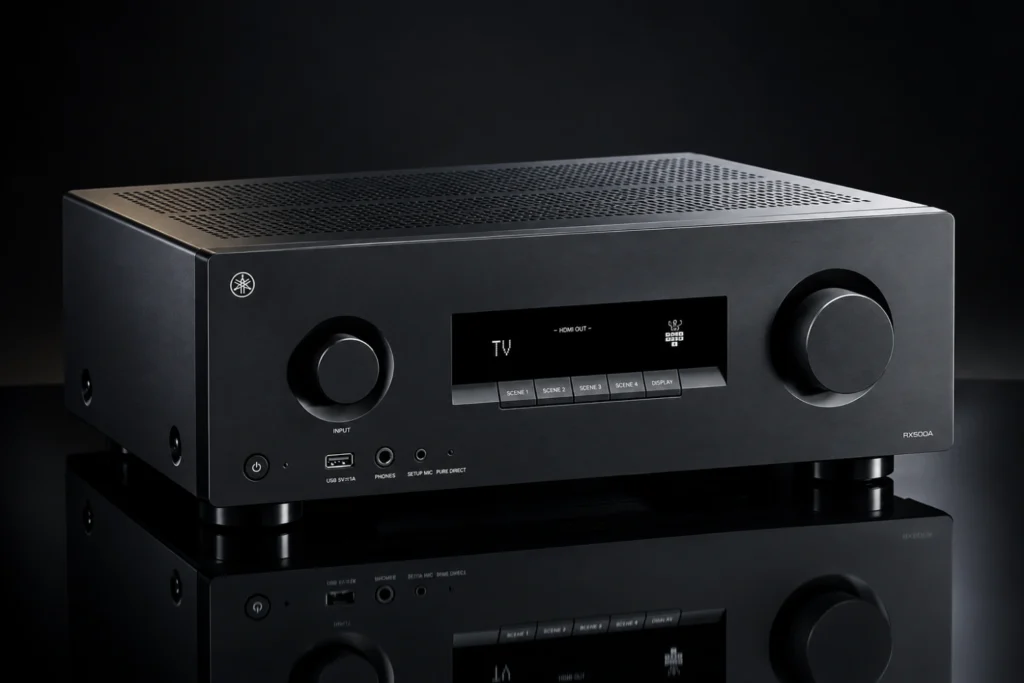
3. Pioneer VSX-835 and VSX-535 AV receivers: Ultra HD, IMAX, and 165-watt amplifiers

Pioneer VSX-835 and VSX-535 AV receivers, offering 7.2-channel and 5.2-channel options within the same family.
Pioneer’s VSX-835 and VSX-535 are genuine AV receivers and sit at the more accessible, practical end of this selection.
The VSX-835 is presented as a 7.2-channel model, while the VSX-535 is a 5.2-channel model; the source notes that both share the same terminals.
Power is stated as a 165-watt peak into 6-ohm speakers, or 80 watts with two channels driven into 8 ohms. The VSX-835 adds IMAX certification, Dolby Atmos, Dolby Surround, DTS Virtual:X, HDMI 2.1 with 8K and 4K support, and MCACC room calibration using a supplied Auto Room Tuning microphone. It can be configured for 7.2 or 5.2.2 systems, and height virtualization is available for three-dimensional sound without overhead or rear sources.
Best for: Practical surround systems with modern HDMI and immersive-audio support
- Choice of 7.2-channel VSX-835 or 5.2-channel VSX-535 configurations
- VSX-835 supports Dolby Atmos, Dolby Surround, DTS Virtual:X, and IMAX certification
- HDMI 2.1 with 8K and 4K support on the VSX-835
- MCACC room calibration for the VSX-835
Verdict: The VSX-835 is the stronger home-theater pick here, while the VSX-535 suits simpler 5.2-channel layouts.
4. Canton Ergo SUB 650: Classic subwoofer with a vintage look
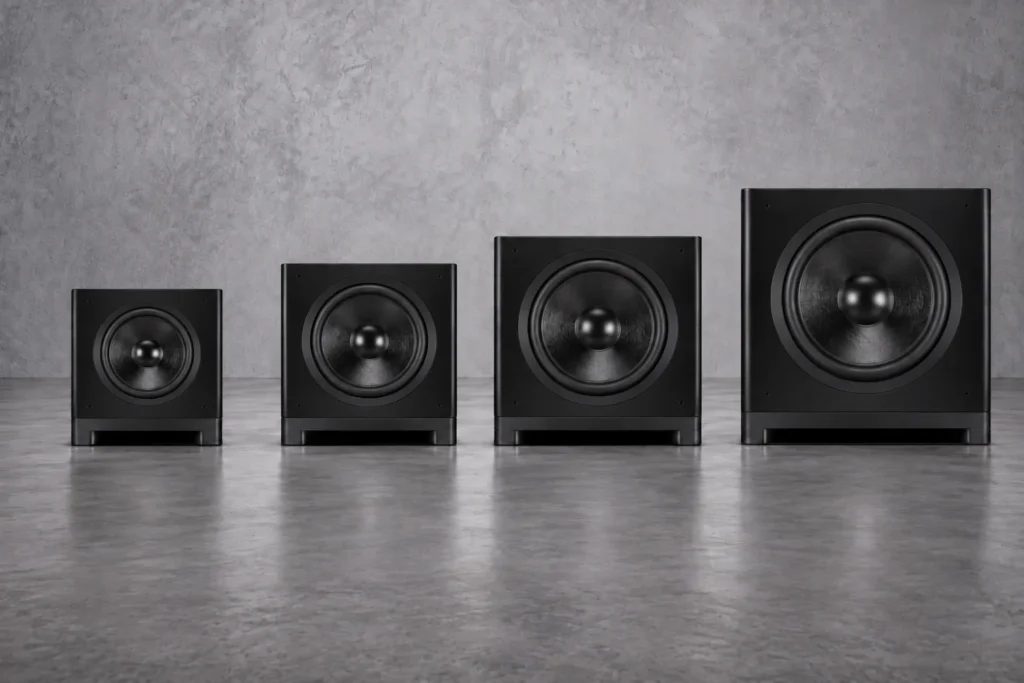
Canton Ergo SUB 650 subwoofer, presented as part of the long-running Ergo line with classic cabinet styling.
The Canton Ergo SUB 650 is a subwoofer rather than an AV receiver, so its role is low-frequency reinforcement within a stereo or cinema system.
The source frames the wider Ergo line as a long-running classic, associated with wooden cabinets, rounded edges, stamped metal grilles, and a design language that has changed only gradually.
It also notes Canton’s attention to driver matching and crossover design in the Ergo series. For an AV receiver buyer, the practical takeaway is that a subwoofer like this belongs on the speaker side of the system plan: it can support bass performance, but it still requires appropriate bass management and connection from the electronics.
Best for: Bass support with traditional Canton styling
- Classic Ergo-series design language
- Wooden cabinets with rounded edges are part of the series identity
- Stamped metal grilles reinforce the vintage character
- Source notes careful driver matching and crossover attention in the Ergo range
Verdict: A characterful subwoofer option for system builders, not a receiver or processing hub.
5. Onkyo TX-NR7100 B M2: Fully equipped AV receiver

Onkyo TX-NR7100 B M2 AV receiver, specified with nine channels, extensive HDMI connectivity, Dirac Live, and modern streaming support.
The Onkyo TX-NR7100 B M2 is one of the most complete AV receivers in the supplied material.
It uses a 9-channel setup, carries THX certification, meets IMAX Enhanced standards, and is specified with Dynamic Audio Amplification delivering up to 220 watts of output power.
Its HDMI section is extensive: seven inputs, including one on the front panel, and two outputs with support for 8K video, HDCP 2.3, Dolby Vision, HDR10+, and eARC. Surround support includes Dolby Atmos and DTS:X for systems up to 7.1.2 or 5.1.4, with Dirac Live provided for setup optimization. The receiver also includes two subwoofer outputs, analog and digital inputs, an MM phono input, Ethernet, dual-band Wi-Fi, DTS Play-Fi, AirPlay 2, and Chromecast.
Best for: Feature-rich home theaters needing Dirac Live and broad connectivity
- 9-channel AV receiver with THX certification and IMAX Enhanced support
- Seven HDMI inputs and two outputs with 8K, Dolby Vision, HDR10+, HDCP 2.3, and eARC support
- Dolby Atmos and DTS:X for up to 7.1.2 or 5.1.4 layouts
- Dirac Live, dual subwoofer outputs, MM phono input, and network streaming
Verdict: A highly versatile AV receiver for immersive cinema, network audio, and mixed digital-analog systems.
6. Onkyo A-9150: Feature-packed amplifier with a classic design

Onkyo A-9150 integrated amplifier, featuring classic front-panel controls and MM/MC phono support.
The Onkyo A-9150 is a stereo integrated amplifier, so it does not provide surround processing, HDMI switching, or AV receiver functions.
Its relevance is for listeners considering a separate two-channel music system, especially one centered on vinyl.
The source emphasizes its classic aluminum front panel, physical volume, tone, and balance controls, and a full phono stage for both MM and MC cartridges. That phono stage is described as being built from discrete elements on a separate board, rather than reduced to a simple add-on circuit. For buyers whose priority is analog stereo rather than cinema decoding, it represents a different path from an AV receiver.
Best for: Vinyl-focused stereo listening
- Full phono stage for both MM and MC cartridges
- Discrete phono stage on a separate board
- Physical bass, treble, balance, and volume controls
- Classic analog-style front-panel design
Verdict: A strong analog stereo amplifier choice, but outside the AV receiver category.
7. EISA Awards -: Winners in the Home Theatre Audio category announced

Home-theater audio awards overview highlighting the Marantz CINEMA 30 AV receiver and its 13.4-channel processing capability.
This is an awards overview rather than a single product review, but it is relevant because the supplied excerpt highlights the Marantz CINEMA 30 in the AV receiver category.
The summary describes the CINEMA 30 as equipped with a 13.4-channel processor and an 11-channel power amplifier, positioning it for high-end home theater.
It also credits the receiver with high power reserves and a wide dynamic range. Used carefully, this article is best treated as supporting context for the Marantz model rather than a separate hardware recommendation.
Best for: Editorial context around high-end AV receiver recognition
- Provides home-theater audio category context
- Highlights the Marantz CINEMA 30 as an AV receiver reference point
- Notes 13.4-channel processing and 11-channel amplification for the CINEMA 30
- Credits the CINEMA 30 with high power reserves and wide dynamic range
Verdict: Useful as supporting context, especially for understanding how the Marantz CINEMA 30 is positioned.
8. Marantz Cinema 30: Feature-packed AV receiver

Marantz Cinema 30 AV receiver, specified with 11 amplification channels, 13.4-channel processing capability, and extensive HDMI and surround-format support.
The Marantz Cinema 30 is the most ambitious AV receiver described in the supplied material.
It has 11 class AB amplification channels and can process up to 13.4 channels with an external amplifier.
HDMI provision includes seven inputs, six of which support 8K resolution, and support for Dolby Vision and HDR10+. Format support is extensive, covering Dolby Atmos, DTS:X, DTS:X Pro, Auro-3D, and IMAX Enhanced mode. The source also specifies 140 watts into two channels at 8 ohms, a 32-bit ESS Sabre DAC, Audyssey MultiEQ XT32 room calibration, HEOS, AirPlay 2, Bluetooth, dual Analog Devices Sharc chipsets, a Marantz HDAM SA-2 preamp stage, MM turntable input, four independent subwoofer outputs, front USB-A, app and remote control, and voice-control compatibility.
Best for: Large, high-end immersive home-theater systems
- 11 class AB amplification channels with up to 13.4-channel processing via external amplification
- Seven HDMI inputs, six with 8K support
- Dolby Atmos, DTS:X, DTS:X Pro, Auro-3D, and IMAX Enhanced support
- Audyssey MultiEQ XT32, HEOS, AirPlay 2, Bluetooth, MM phono input, and four independent subwoofer outputs
Verdict: A deeply specified AV receiver for demanding surround layouts and broad format support.
9. Top 10 most read audiophile articles of

Audiophile readership roundup including coverage of the Devialet Astra integrated amplifier rather than a dedicated AV receiver.
This article is a readership roundup, not an AV receiver recommendation.
Its value in this guide is limited to editorial context: it shows which hi-fi topics drew attention across the site and includes coverage of products such as the Devialet Astra amplifier.
The excerpt describes the Astra as an integrated amplifier with analog and digital inputs, 2 x 150 watts into eight ohms according to the manufacturer, and a special Astra Opéra de Paris version with 23-carat gold plating. None of that makes it a surround receiver, so this entry should be treated as discovery material rather than a buying-guide candidate for home theater electronics.
Best for: Editorial discovery rather than AV receiver shopping
- Shows reader-interest trends across audiophile coverage
- Includes mention of the Devialet Astra integrated amplifier
- Notes analog and digital inputs for the Astra
- Mentions the Astra Opéra de Paris special version
Verdict: Useful for seeing popular hi-fi coverage, but not a direct AV receiver recommendation.
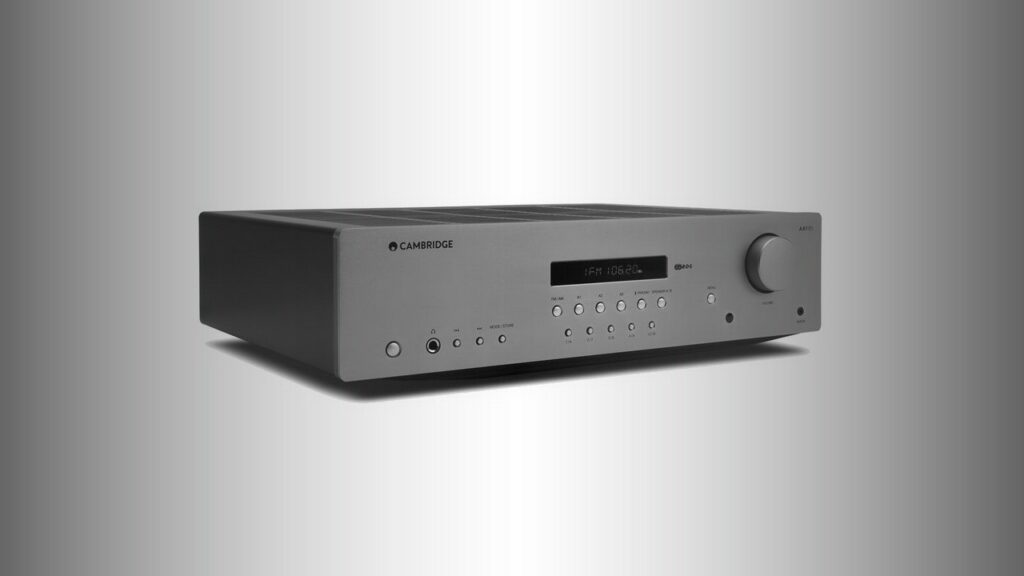
10. Arcam AVR30: Powerful AV receiver with 7 inputs and 3 outputs

Arcam AVR30 AV receiver, specified with G-class amplification, Dirac calibration, Dolby Atmos, DTS:X, and IMAX Enhanced support.
The Arcam AVR30 is a serious AV receiver with a strong emphasis on calibration and amplification design.
The source describes it as a 7.1-channel model supporting Dolby Atmos in a 5.1.2 configuration, with the ability to operate in 7.1.4 when partnered with additional amplification.
DTS:X and IMAX Enhanced support are also specified. Full 16-channel Dirac calibration is onboard, while streaming is available through a standard app, Apple AirPlay 2, or Google Chromecast. The receiver uses a large toroidal transformer and G-class amplification, stated at 7 x 100 watts into 8 ohms. Front-panel features include a volume control, VF display, menu and source buttons, Direct mode, a headphone output, and a 3.5 mm auxiliary input.
Best for: Calibration-focused home theaters with room to expand
- Dolby Atmos, DTS:X, and IMAX Enhanced support
- Full 16-channel Dirac calibration
- Can expand to 7.1.4 with additional amplification
- G-class amplification rated at 7 x 100 watts into 8 ohms
Verdict: A powerful AV receiver for buyers who value Dirac calibration, robust amplification, and an upgrade path to larger layouts.
Quick comparison
The clearest AV receiver choices in this selection are the Onkyo TX-NR7100 B M2, Marantz Cinema 30, Arcam AVR30, and Pioneer VSX models.
The remaining entries are best understood as supporting system components or editorial context, not as substitutes for a receiver.
| Product | Best for | Verdict |
|---|---|---|
| Naim NAC 252 | High-end stereo system control | A premium stereo preamplifier with flexible analog integration, but no AV receiver role. |
| Bowers & Wilkins 603 S2 | Front-channel speakers for a home-theater system | A capable floorstanding speaker foundation that still requires suitable amplification and processing. |
| Pioneer VSX-835 and VSX-535 | Modern 5.2, 7.2, or 5.2.2 receiver-based systems | A practical AV receiver family, with the VSX-835 offering the stronger immersive-audio feature set. |
| Canton Ergo SUB 650 | Low-frequency support with classic styling | A subwoofer candidate for completing a system, not a receiver. |
| Onkyo TX-NR7100 B M2 | Feature-rich immersive home theater | A well-equipped 9-channel AV receiver with Dirac Live, modern HDMI support, streaming, phono input, and dual subwoofer outputs. |
| Onkyo A-9150 | Vinyl-focused stereo playback | A classic integrated amplifier with serious MM and MC phono support, but no surround processing. |
| EISA Awards -: Winners in the Home Theatre Audio category announced | Context around home-theater audio recognition | Most useful here because it reinforces the Marantz CINEMA 30’s high-end AV receiver positioning. |
| Marantz Cinema 30 | Large high-end immersive systems | The most expansively specified receiver in the source, with 11 amplification channels and up to 13.4-channel processing. |
| Top 10 most read audiophile articles of | Editorial discovery | A popularity roundup that includes hi-fi amplifier coverage rather than a direct receiver recommendation. |
| Arcam AVR30 | Dirac-calibrated home theater with expansion potential | A powerful AV receiver with Dolby Atmos, DTS:X, IMAX Enhanced, G-class amplification, and a path to 7.1.4 with extra amplification. |
Frequently asked questions
Which entries are actual AV receivers?
The dedicated AV receiver entries are the Pioneer VSX-835 and VSX-535, Onkyo TX-NR7100 B M2, Marantz Cinema 30, and Arcam AVR30.
The Naim NAC 252, Bowers & Wilkins 603 S2, Canton Ergo SUB 650, and Onkyo A-9150 are supporting hi-fi or speaker components, while the awards and readership articles provide editorial context.
How many channels should an AV receiver have?
Match the receiver to the speaker layout.
The Pioneer options cover 5.2 and 7.2-style systems, with the VSX-835 also supporting 5.2.2.
The Onkyo TX-NR7100 supports layouts up to 7.1.2 or 5.1.4. The Marantz Cinema 30 goes further with 11 amplification channels and up to 13.4-channel processing using external amplification, while the Arcam AVR30 can move beyond its basic configuration with additional amplification.
Is room calibration important?
Room calibration can be very useful because speaker placement and room acoustics strongly affect surround performance.
The supplied material mentions MCACC for the Pioneer VSX-835, Dirac Live for the Onkyo TX-NR7100, Audyssey MultiEQ XT32 for the Marantz Cinema 30, and full 16-channel Dirac calibration for the Arcam AVR30.
What HDMI features should matter most?
Focus on the number of HDMI inputs and outputs, supported video formats, and compatibility with the sources and display in the system.
The Onkyo TX-NR7100 is specified with seven HDMI inputs and two outputs supporting 8K video, HDCP 2.3, Dolby Vision, HDR10+, and eARC.
The Marantz Cinema 30 has seven HDMI inputs, six with 8K support, plus Dolby Vision and HDR10+. The Pioneer VSX-835 is described with HDMI 2.1 and 8K and 4K support.
Buying advice for a balanced AV receiver shortlist
For a true AV receiver purchase, the most relevant shortlist begins with the Onkyo TX-NR7100 B M2, Marantz Cinema 30, Arcam AVR30, and Pioneer VSX-835 or VSX-535.
The Onkyo is the broad all-rounder in the supplied material, combining nine channels, Dirac Live, modern HDMI support, Dolby Atmos, DTS:X, streaming, phono input, and dual subwoofer outputs.
The Marantz Cinema 30 is the most expansive option, with 11 amplification channels, up to 13.4-channel processing, wide surround-format support, four independent subwoofer outputs, and a high-end feature set. The Arcam AVR30 stands out for Dirac calibration, G-class amplification, and expansion to 7.1.4 with additional amplification. The Pioneer VSX-835 is the practical choice for buyers who want current HDMI support, MCACC calibration, and immersive-audio options without moving into the most elaborate systems. The remaining products should be positioned correctly. The Bowers & Wilkins 603 S2 can form part of the speaker system an AV receiver drives. The Canton Ergo SUB 650 is a bass component, not the control center. The Naim NAC 252 and Onkyo A-9150 are stereo electronics for music-first systems, with the Onkyo especially relevant to vinyl users. The awards and readership articles can help provide context, but they should not be treated as direct substitutes for product-specific receiver information. A sensible buying process starts with the speaker layout, then checks the receiver’s amplification channels, processing capability, HDMI needs, room-calibration platform, subwoofer outputs, streaming requirements, and any analog sources such as a turntable. Once those essentials are aligned, the choice becomes clearer: Pioneer for simpler surround systems, Onkyo for a fully equipped mid-to-high specification setup, Arcam for Dirac-led performance and amplification design, and Marantz for the most ambitious immersive layouts described in the source material.













 VS
VS VS
VS VS
VS VS
VS VS
VS VS
VS VS
VS VS
VS

Share your thoughts on this 0
Keep it civil, relevant and respectful.