
10 Curated AV Receiver and Home-Theater Choices for Building a Smarter System
A practical, system-focused guide to 10 AV receiver and home-theater choices, separating true receivers from speakers, soundbar alternatives and source components so buyers can plan with confidence.

Choosing an AV receiver is rarely just about counting HDMI sockets or surround channels.
The receiver has to match the room, the speaker layout, the video sources, the preferred streaming habits and, in many systems, legacy sources such as vinyl.
The most useful shortlist is therefore one that looks at receivers in context rather than treating them as isolated boxes. This curated selection starts with dedicated AV receivers from Denon, Yamaha, Onkyo and Arcam, then broadens into the surrounding ecosystem: speaker packages, a soundbar alternative, a Bluetooth DAC and practical turntable guidance. Those entries are included because they affect the same buying decisions an AV receiver owner has to make: how many channels are required, whether physical height speakers are realistic, what source components need connecting and when a simpler system may be more appropriate. Every recommendation below is grounded in the supplied source material. Where a product is not an AV receiver, it is clearly treated as a system-building companion or alternative rather than forced into the receiver category.
1. Denon AVC-X4800H: The ideal companion for a high-end home theater setup
Denon AVC-X4800H AV receiver, suited to expanded Dolby Atmos and DTS-based home theater layouts.
The Denon AVC-X4800H is the most advanced receiver choice in this selection for a system built around flexible surround expansion.
It has nine built-in amplifiers and Dolby Atmos and DTS:3D decoding, allowing 5.2.4 or 7.2.4 configurations, while its 11.4-channel processor output permits expansion with external power amplifiers.
The receiver also supports virtual surround modes for rooms where separate height speakers are not practical. Connectivity is another major strength, with eight HDMI inputs, three outputs, 8K signal handling on one input, 8K upscaling, HDCP 2.3, HDR10+, Dolby Vision, HLG and eARC, plus an MM phono input for a turntable.
Best for: Ambitious home theaters with room to expand
- Nine built-in amplifiers
- Expandable via 11.4-channel processor output
- Eight HDMI inputs and three outputs
- Audyssey MultEQ XT32 room calibration
Verdict: The AVC-X4800H is the strongest fit here for buyers planning a serious multi-speaker cinema system with broad HDMI flexibility and room-calibration support.
2. Yamaha RX300A and RX500A Bring 8K Video and Atmos to New AV Receiver Range
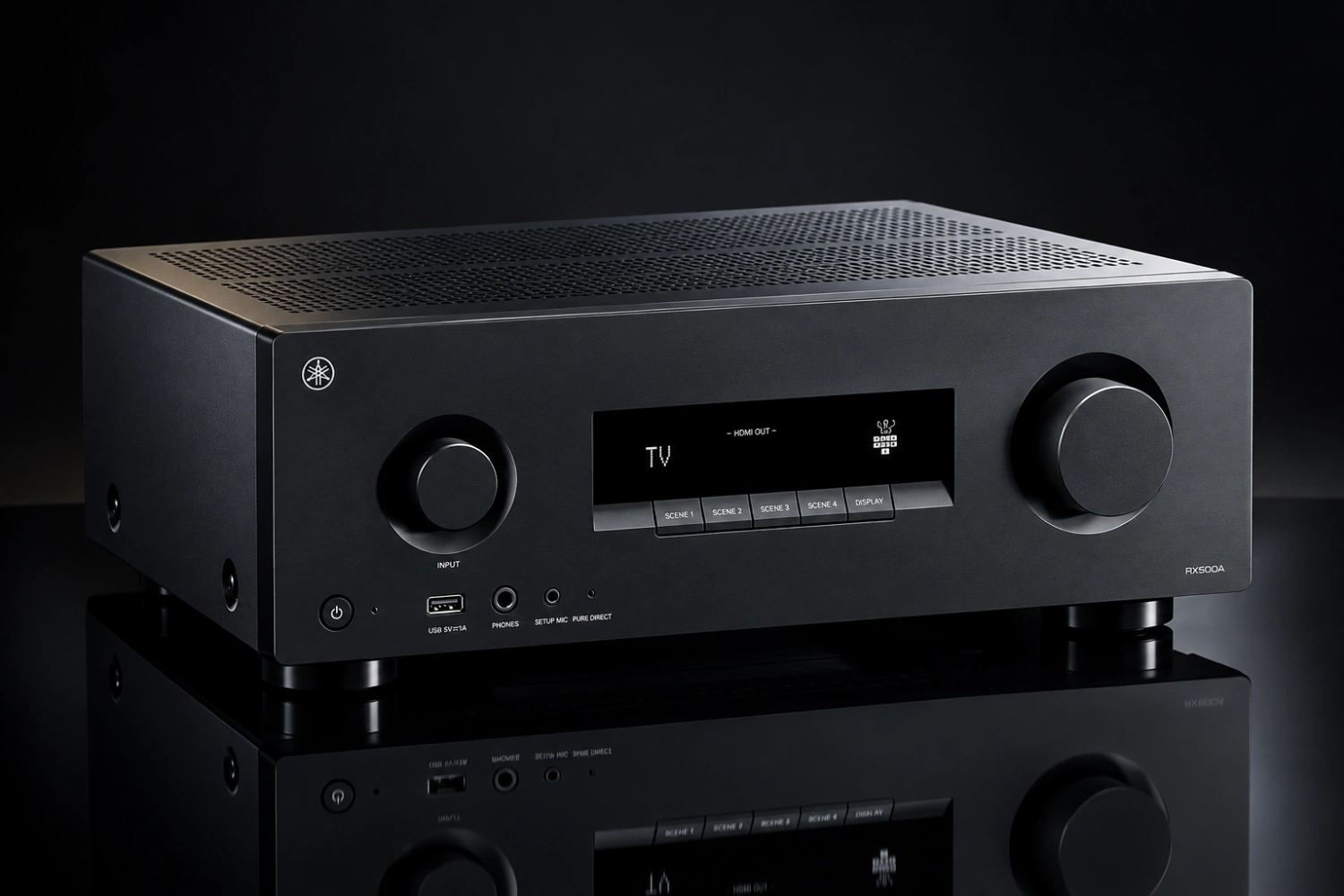
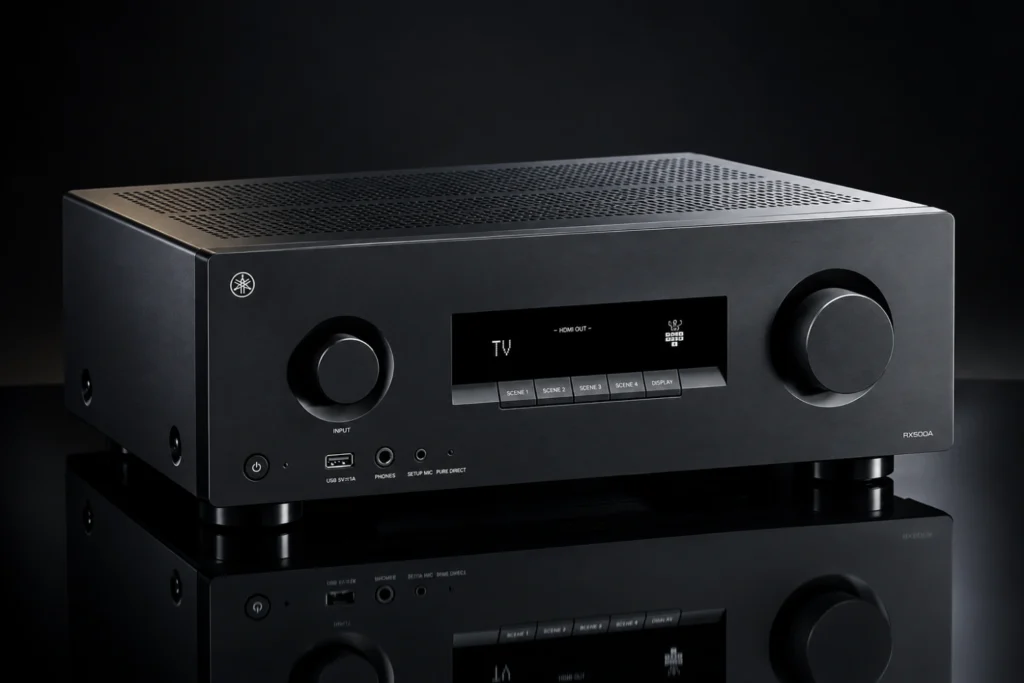
Yamaha RX300A and RX500A AV receivers, offering different channel capacities for Atmos-capable systems.
Yamaha’s RX300A and RX500A are presented as two related AV receiver options for home theater systems that also need to accommodate music, gaming and television sources.
Both support Dolby Atmos, DTS:X and DTS Virtual:X, high-frame-rate video, 8K video handling and automated room correction with a supplied calibration microphone.
The RX300A is aimed at simpler layouts, including 5.2 or 3.2.2 configurations, while the RX500A adds two amplifier channels for 7.2 or 5.2.2 systems and includes integrated network streaming.
Best for: Buyers choosing between compact and expanded Yamaha layouts
- Two channel-count options
- Dolby Atmos, DTS:X and DTS Virtual:X support
- Room correction with supplied microphone
- RX500A adds integrated network streaming
Verdict: The RX300A and RX500A make sense for users who want Yamaha processing and calibration in either a modest 5.2-style system or a broader layout with the RX500A.
3. Jamo S 809: Award-winning floorstanding speakers

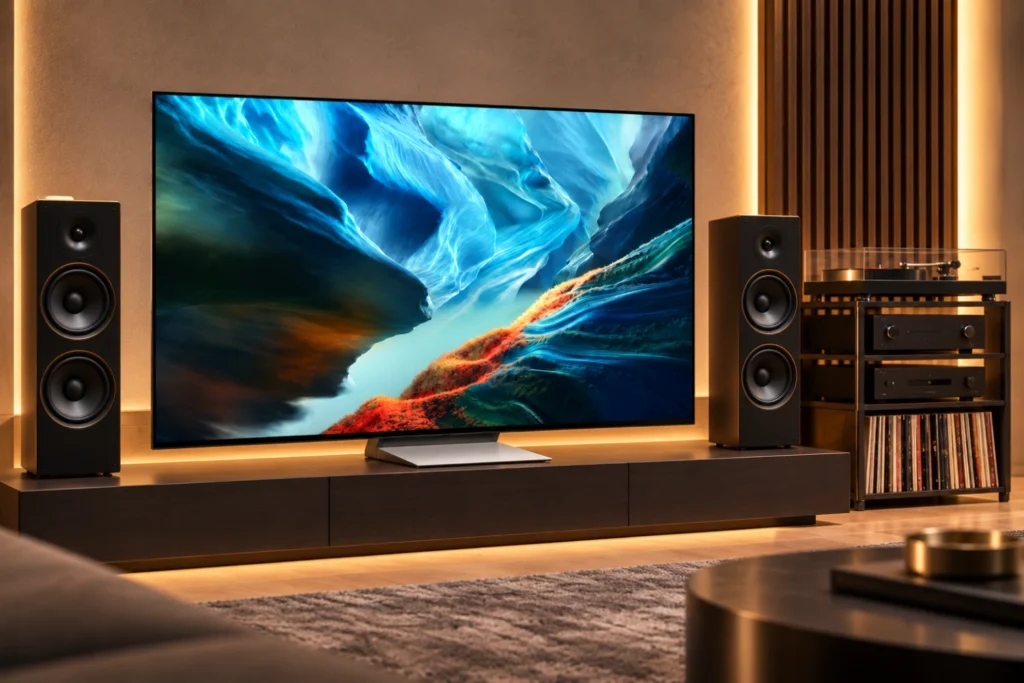
Jamo S 809 floorstanding speakers, part of the Studio 8 range for stereo and home-theater systems.
The Jamo S 809 is not an AV receiver, but it is relevant to receiver planning because speakers determine how an AV system is ultimately configured and driven.
The S 809 sits at the top of Jamo’s Studio 8 range and forms the basis of the Jamo S 809 HCS home cinema speaker package.
The wider Studio 8 line includes floorstanding, bookshelf, center, subwoofer and Dolby Atmos-certified 3D Audio speaker options, giving buyers a path toward a coordinated speaker system around an AV receiver. The S 809 itself is described as a large two-way floorstanding speaker with a dome tweeter and three long-throw drivers.
Best for: AV receiver buyers planning a matched speaker package
- Part of a broad Studio 8 home-theater range
- Basis of the S 809 HCS cinema package
- Available with matching center, subwoofer and Atmos speaker options
- Front-panel bass reflex design in the floorstanding models
Verdict: The S 809 is best viewed as a speaker-system foundation for buyers who want coordinated Jamo components around a receiver rather than a receiver in itself.
4. Onkyo HT-S3705: Home cinema system with true high-resolution surround sound

Onkyo TX-SR333 receiver, presented as the heart of the HT-S3705 home cinema system.
The Onkyo HT-S3705 article centers on the TX-SR333 receiver, an entry-level model with five channels of amplification, discrete WRAT wideband amplification technology and support for high-resolution surround sound.
Its feature set includes six HDMI inputs, ultra-high-definition video signal support up to 60 Hz, built-in Bluetooth, HDMI pass-through, Hybrid Standby mode and high-resolution audio transmission via USB.
For buyers who want a straightforward receiver-based system rather than a complex expandable platform, the TX-SR333 is framed as a functional entry point with Onkyo technologies drawn from more expensive AV receiver lines.
Best for: Straightforward entry-level surround systems
- Five-channel amplification
- Six HDMI inputs
- Built-in Bluetooth
- USB high-resolution audio transmission
Verdict: The Onkyo TX-SR333 is the practical choice here for a simpler five-channel receiver setup with useful HDMI, Bluetooth and USB features.
5. Tannoy Mercury 7.2: High-quality speakers made for hi-fi fans

Tannoy Mercury 7.2 bookshelf speakers, designed for hi-fi and home-theater applications.
The Tannoy Mercury 7.2 is another speaker entry rather than an AV receiver, but it matters when selecting a receiver for a music-focused or compact home-theater system.
It is the larger bookshelf model in the Mercury 7 line, which also includes a floorstanding speaker, a smaller bookshelf speaker, a center channel and a powered subwoofer.
The source describes the Mercury series as a long-running high-quality and inexpensive option for stereo and home theater systems, with the 7 range redesigned to improve engagement and articulation over its predecessor.
Best for: Hi-fi listeners building a compact receiver-based system
- Larger bookshelf model in the Mercury 7 line
- Part of a range with center and subwoofer options
- Intended for stereo and home-theater use
- Available in three finishes
Verdict: The Mercury 7.2 is most relevant as a speaker choice for buyers who want a bookshelf-based system that can sit within a broader stereo or home-theater setup.
6. Yamaha YAS-408: A universal system for use in any home theater

Yamaha YAS-408 MusicCast BAR 400 soundbar system with matching subwoofer for discreet TV audio.
The Yamaha YAS-408, also described as the MusicCast BAR 400, is a soundbar system rather than an AV receiver.
Its role in this guide is as an alternative for buyers who want a discreet system instead of a component receiver and separate speaker layout.
The source emphasizes its modest appearance, low visual profile and rectangular subwoofer, along with Yamaha’s distinction between YAS soundbars and more complex YSP sound projectors. It is presented as a universal home-theater system, especially for situations where unobtrusive installation is a priority.
Best for: Rooms where a receiver and separate speakers are impractical
- Discreet low-profile design
- Includes a rectangular subwoofer
- Designed as a universal home-theater soundbar system
- Suitable for placement under a TV
Verdict: The YAS-408 is the sensible alternative for buyers who value simplicity and visual discretion over a conventional AV receiver-and-speaker installation.
7. Aune Flamingo BD: Tube Bluetooth receiver

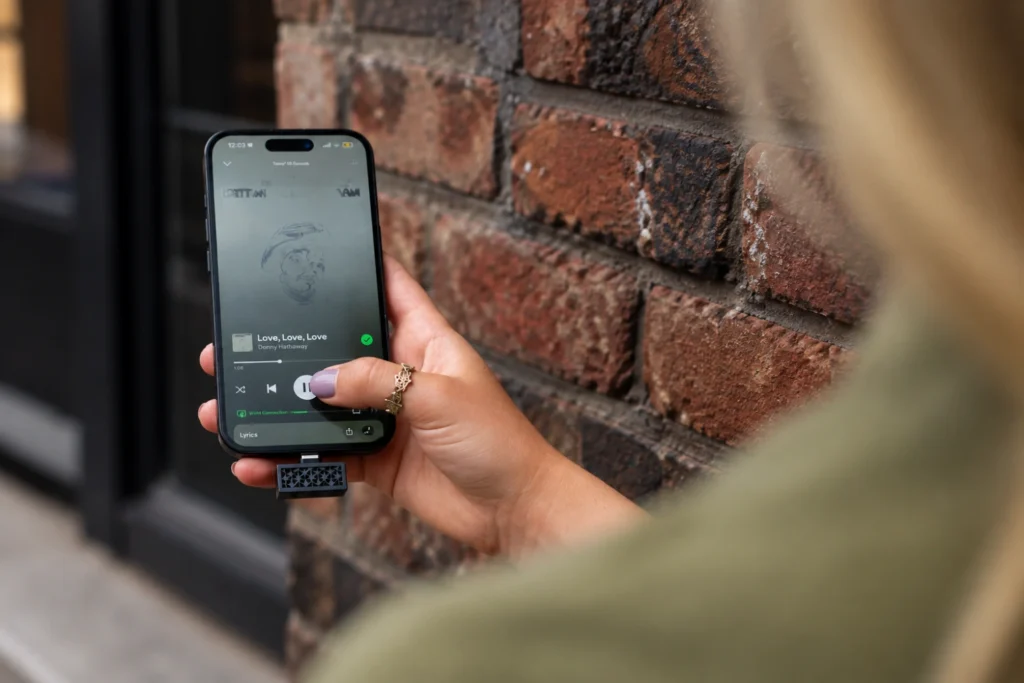
Aune Flamingo BD Bluetooth DAC, designed to connect wireless music sources to amplifiers, DACs or AV receivers.
The Aune Flamingo BD is not an AV receiver; it is a compact Bluetooth DAC designed to feed music wirelessly into an amplifier, powered speakers, DAC or AV receiver.
It supports Bluetooth 5.1, LDAC and aptX HD, and includes a tube output stage described as delivering a warm and harmonious character.
Seven selectable digital filters provide system-matching flexibility, while adjustable line output plus coaxial and optical outputs make it a useful source component for an existing receiver-based setup.
Best for: Adding wireless music playback to an existing system
- Bluetooth 5.1 with LDAC and aptX HD
- Seven selectable digital filters
- Adjustable line output
- Coaxial and optical outputs
Verdict: The Flamingo BD is best considered an accessory for receiver owners who want a compact Bluetooth DAC with flexible digital filtering and multiple outputs.
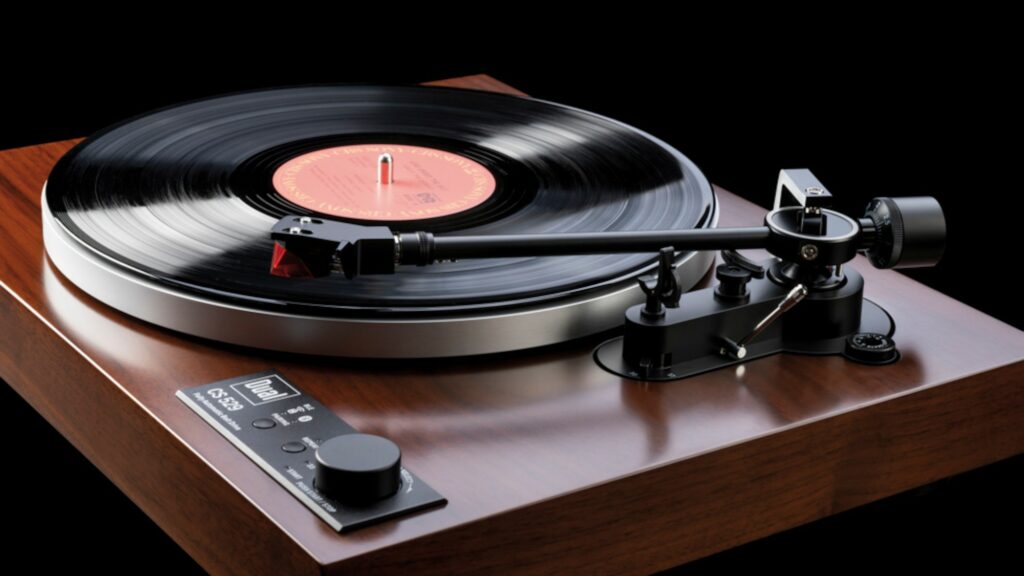
8. 5 useful tips for choosing your first turntable

Turntable setup guidance for buyers deciding between convenience, tactile operation and system compatibility.
This is a buying-advice article rather than a product recommendation, but it belongs in an AV receiver guide because turntable compatibility affects receiver choice.
The source highlights the first major decision: whether to choose a fully automatic turntable for convenience or a more manual hi-fi model for a more tactile experience.
It also stresses that sound quality is influenced by construction materials. For receiver buyers, the practical implication is to check how a turntable will connect, particularly if the receiver includes a dedicated phono input like the Denon AVC-X4800H mentioned elsewhere in this selection.
Best for: Receiver buyers who want to add vinyl playback
- Explains manual versus automatic operation
- Connects turntable choice with listening priorities
- Emphasizes construction and sound quality
- Useful for vinyl-focused system planning
Verdict: The article is a useful primer for anyone choosing a turntable to integrate with a stereo or home-theater receiver system.
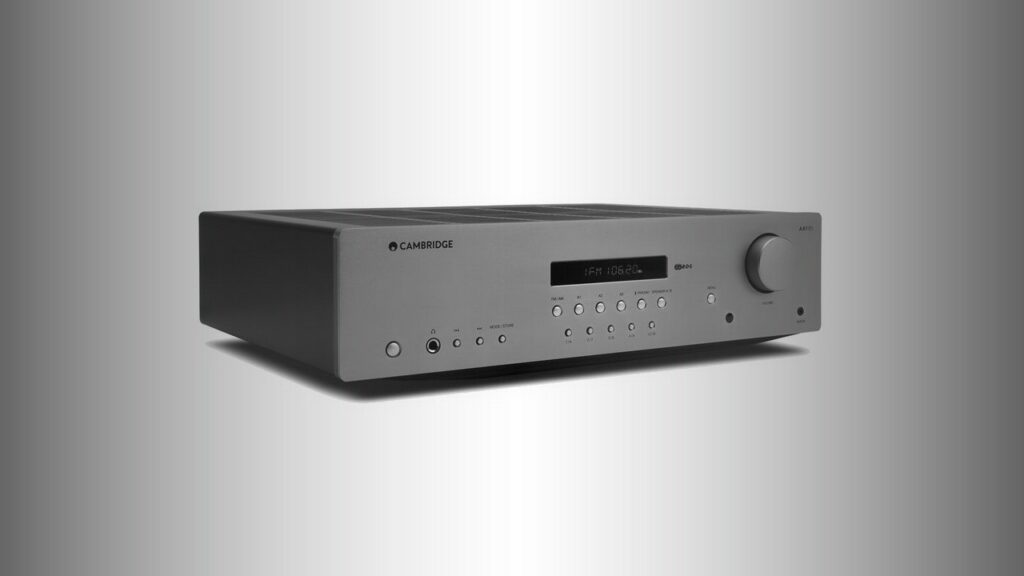
9. Arcam AVR20: AV receiver equipped with a powerful toroidal transformer

Arcam AVR20 AV receiver, featuring Dirac calibration and expansion options for immersive surround systems.
The Arcam AVR20 is a 7.1-channel AV receiver aimed at buyers who want a receiver with serious audio calibration and expansion potential.
It supports Dolby Atmos in a 5.1.2-channel configuration and can be expanded to 7.1.4 with additional power amplification.
The AVR20 works with major codecs including DTS-HD Master Audio, Dolby TrueHD, DTS:X and IMAX Enhanced, and includes full 16-channel Dirac calibration. Streaming support is provided through a standard app, Apple AirPlay 2 or Google Chromecast, while the design includes a powerful toroidal transformer, FM tuner and DAB digital radio support.
Best for: Audio-focused theater systems with calibration demands
- 7.1-channel receiver platform
- Expandable to 7.1.4 with external amplification
- Full 16-channel Dirac calibration
- AirPlay 2 and Chromecast support
Verdict: The AVR20 stands out for buyers who prioritize Dirac calibration, codec support and a receiver architecture that can grow with external amplification.
10. Denon AVR-X1800H: Fully equipped AV receiver

Denon AVR-X1800H AV receiver, built for 7.2-channel systems and 5.2.2 immersive layouts.
The Denon AVR-X1800H is a 7.2-channel AV receiver with seven built-in power amplifiers, Dolby Atmos and DTS:X decoding, and support for a 5.2.2-channel surround system.
It can also create virtual height effects when height speakers are not used, with DTS Virtual:X available for 7.1, 5.1 or 2.1 speaker configurations.
Audyssey MultEQ XT calibration uses the included measurement microphone to analyze the room and adjust the sound across several listening points. On the video side, the AVR-X1800H provides six HDMI inputs, one HDMI output, HDCP 2.3 support and video transmission up to 8K.
Best for: Mainstream Atmos systems with room correction
- 7.2-channel configuration
- Supports 5.2.2 Dolby Atmos and DTS:X systems
- Audyssey MultEQ XT room calibration
- Six HDMI inputs with 8K video transmission support
Verdict: The AVR-X1800H is a well-equipped choice for buyers who want a practical 7.2-channel Denon receiver with immersive audio, calibration and modern HDMI support.
Quick comparison
The table below separates true AV receivers from speakers, source components and system alternatives, so the distinctions remain clear when planning a complete home theater.
| Product | Best for | Verdict |
|---|---|---|
| Denon AVC-X4800H | Expanded high-end home theater layouts | Nine built-in amplifiers, 11.4-channel processing output, extensive HDMI connectivity and Audyssey MultEQ XT32 make it the most expandable Denon option in this group. |
| Yamaha RX300A and RX500A | Choosing between smaller and larger Yamaha receiver configurations | The RX300A suits 5.2 or 3.2.2 layouts, while the RX500A adds channels for 7.2 or 5.2.2 systems and includes network streaming. |
| Jamo S 809 | Building a matched speaker system around an AV receiver | A floorstanding speaker and Studio 8 system anchor rather than a receiver, relevant for buyers planning coordinated home-cinema speakers. |
| Onkyo HT-S3705 / TX-SR333 | Entry-level five-channel home cinema | A straightforward receiver-centered system with five-channel amplification, six HDMI inputs, Bluetooth and USB high-resolution audio support. |
| Tannoy Mercury 7.2 | Compact hi-fi and home-theater speaker setups | A larger bookshelf speaker in a range that includes center and subwoofer options, useful when planning a receiver-driven system. |
| Yamaha YAS-408 / MusicCast BAR 400 | A discreet soundbar alternative to a component receiver system | A low-profile soundbar and subwoofer system for buyers who want simpler installation instead of separate AV receiver components. |
| Aune Flamingo BD | Adding Bluetooth music playback to an existing audio system | A compact Bluetooth DAC with LDAC, aptX HD, digital filters and outputs that can feed an AV receiver or amplifier. |
| 5 useful tips for choosing your first turntable | Planning vinyl playback before choosing receiver connections | A practical guidance piece that helps buyers think through manual versus automatic turntables and sound-quality priorities. |
| Arcam AVR20 | Calibrated home theater with external amplification potential | A 7.1-channel AV receiver with Dirac calibration, Atmos support, major codec compatibility and expansion to 7.1.4 with added amplifiers. |
| Denon AVR-X1800H | Mainstream 7.2-channel immersive home theater | A fully equipped Denon receiver for 5.2.2 Atmos or DTS:X systems, with Audyssey MultEQ XT and six HDMI inputs. |
Frequently asked questions
How many channels should an AV receiver have?
Start with the speaker layout you can actually install.
A 5.2 receiver suits a conventional surround setup with up to two subwoofers, while 5.2.2 adds two height channels for Atmos-style playback.
Models such as the Denon AVC-X4800H and Arcam AVR20 also support expansion with external amplification for larger layouts.
Do I need physical height speakers for Dolby Atmos or DTS:X?
Physical height or upward-firing speakers are the more direct route to a hardware-based height presentation, as shown by layouts such as 3.2.2, 5.2.2 and 5.2.4 in the source material.
Several receivers here also offer virtual height or virtual surround processing for rooms where extra speakers are not practical.
Why does room correction matter in an AV receiver?
Room correction measures the speakers and listening space, then adjusts the receiver’s output to better suit those conditions.
The Denon AVC-X4800H includes Audyssey MultEQ XT32, the Denon AVR-X1800H uses Audyssey MultEQ XT, the Arcam AVR20 includes Dirac calibration, and the Yamaha receivers are supplied with a calibration microphone for onboard room correction.
Should I choose an AV receiver, a soundbar or separate speakers first?
If you want a multi-speaker cinema system with source switching and room correction, begin with the AV receiver and plan speakers around it.
If installation space is limited, a soundbar such as the Yamaha YAS-408 may be more practical.
If sound quality and system matching are the priority, speaker choices such as the Jamo S 809 or Tannoy Mercury 7.2 should be considered alongside the receiver from the start.
How to choose the right AV receiver for your system
The most reliable way to choose an AV receiver is to draw the system before comparing model names.
Decide whether the room can support a basic 5.2 layout, a 5.2.2 Atmos system, a 7.2 surround arrangement or a larger configuration that may need external amplification.
The Denon AVC-X4800H is the most flexible Denon option here for ambitious layouts, while the Denon AVR-X1800H covers the practical middle ground with 7.2 channels, 5.2.2 immersive support and Audyssey calibration. Arcam’s AVR20 is the stronger fit when Dirac calibration and expansion with separate power amplifiers are priorities. Yamaha’s RX300A and RX500A are worth separating carefully: the RX300A is for smaller systems, while the RX500A adds channel capacity and network streaming. The Onkyo TX-SR333, as presented in the HT-S3705 context, is better suited to a simpler five-channel approach. Those distinctions matter more than buying the largest receiver by default. Do not choose the receiver in isolation. Speakers such as the Jamo S 809 and Tannoy Mercury 7.2 determine the scale and character of the system the receiver must support. Source choices matter too: the Aune Flamingo BD can add Bluetooth DAC functionality to an existing setup, and turntable buyers should think about whether they need a receiver with a phono input or another way to connect vinyl playback. For rooms where component installation is not realistic, the Yamaha YAS-408 soundbar system is the cleaner alternative rather than a compromised receiver installation. The right choice is the one that matches your speaker plan, room constraints and source needs. Prioritize channel layout, HDMI requirements, room correction and expansion potential before moving on to brand preference or secondary features.






 VS
VS VS
VS VS
VS VS
VS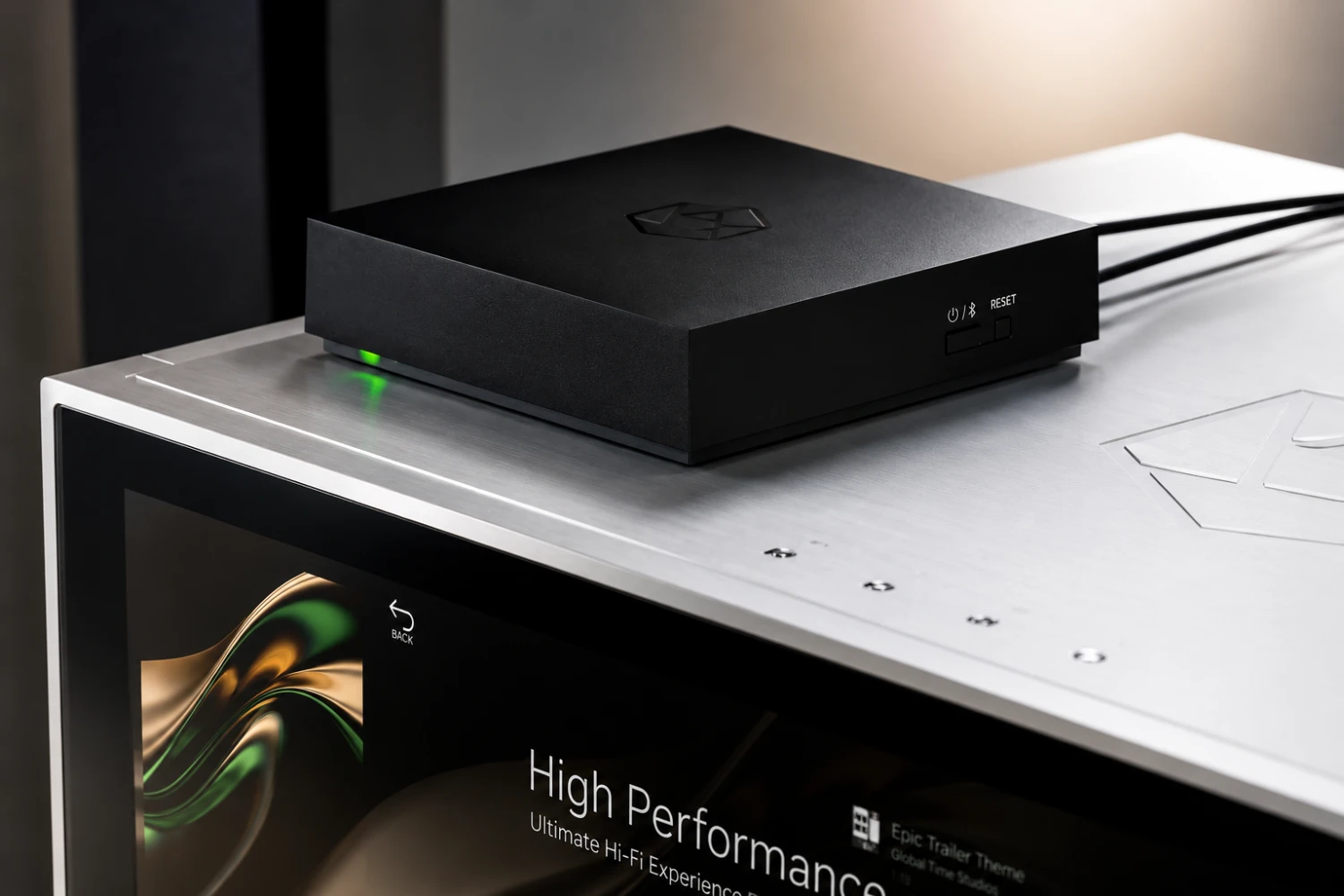 VS
VS VS
VS VS
VS VS
VS

Share your thoughts on this 0
Keep it civil, relevant and respectful.