

A good amplifier is not just a box that makes a signal louder.
In a real system, it determines how sources are managed, how loudspeakers are controlled, and how easily the whole setup fits into daily listening.
The amplifiers gathered here cover very different roles: integrated amplifiers, stereo and mono power amplifiers, preamplifiers, phono-focused designs, multichannel units, and multi-zone solutions. That variety matters because the right choice depends less on a universal ranking than on system context. A flagship integrated amplifier such as the Luxman L-509X suits listeners who want preamp and power amp sections in one refined chassis, while models such as the Anthem STR Power Amplifier, Rotel RMB-1575, and Mark Levinson № 536 are built around power-amplifier duties. Preamplifiers including the Premiera X1S PRO, Audio Analogue ABsolute Line Preamplifier, HSE Swiss RL-7, and Ladder Bach II focus on source handling and signal control rather than speaker drive. The most useful way to read this guide is by matching each product’s strengths to a practical need. Some are made for high-current loudspeaker control, some for home-theater or multi-room installations, and others for analog purity, streaming convenience, or balanced system architecture. The recommendations below preserve those distinctions and avoid treating unlike components as if they perform the same job.

1. Luxman L-509X: Exceptionally solid integrated amplifier
Luxman L-509X integrated amplifier with separateable preamp and power amp sections and support for two speaker pairs.
The Luxman L-509X is a flagship integrated amplifier designed for listeners who want a serious preamplifier and power amplifier in one chassis without giving up flexibility.
Its preamp and power amp sections can be separated at the press of a button, and it can connect two pairs of speakers for switching or simultaneous use.
The source material emphasizes the quality of its internal construction, including neat circuit layout, high-grade board material, ODNF 4.0 negative feedback, a discrete buffer circuit in the pre-section, and a substantial power supply with a 600 VA transformer and eight high-capacity capacitors.
Best for: A refined one-box integrated amplifier for serious stereo systems
- Preamp and power amp sections can be separated
- Supports two pairs of speakers
- ODNF 4.0 circuit is designed to reduce distortion
- Substantial internal construction and power supply
Verdict: The L-509X is the most versatile integrated choice here, combining system flexibility with the kind of internal engineering expected from a flagship Luxman design.

2. Fosi Audio BT30D Pro: HiFi Bluetooth 5.0 power amplifier
Fosi Audio BT30D Pro compact Bluetooth 5.0 amplifier with front-panel tone and subwoofer controls.
The Fosi Audio BT30D Pro is a compact 2.1-channel Bluetooth 5.0 power amplifier aimed at practical home audio setups using passive speakers and subwoofers.
It supports Bluetooth and RCA inputs, includes volume, subwoofer frequency, bass, and treble controls, and is specified with TPA3255 amplification.
The supplied specifications list output power of 165 W x 2 plus 350 W at 4 ohms, support for 2 to 8 ohm speaker impedance, a 20 Hz to 20 kHz frequency range, and a small 6 x 5 x 1 inch enclosure.
Best for: Compact desktop or small-room 2.1 systems
- Bluetooth 5.0 and RCA input options
- 2.1-channel speaker and subwoofer support
- Bass, treble, and subwoofer frequency controls
- Compact aluminum housing
Verdict: The BT30D Pro stands out as the practical compact amplifier in this group, especially where Bluetooth input and subwoofer control are priorities.

3. Premiera X1S PRO: High-quality preamplifier with a built-in network player
Premiera X1S PRO preamplifier with display, source controls, network playback, phono input, DAC, and HDMI ARC support.
The Premiera X1S PRO is a feature-rich preamplifier that combines source control with network playback functions.
It includes a built-in network player, MM/MC phono preamplifier, DAC, Bluetooth, HDMI ARC, Wi-Fi, and AirPlay 2, making it one of the most broadly equipped control components in this selection.
The source material notes twelve possible input sources, a user-friendly settings menu, tone and loudness options, display and button brightness adjustment, and analog outputs for recording, power amplifier connection, and an active subwoofer.
Best for: Systems needing modern source management before a power amplifier
- Built-in network player and DAC
- MM/MC phono preamplifier included
- HDMI ARC, Bluetooth, Wi-Fi, and AirPlay 2
- Balanced and unbalanced adjustable outputs
Verdict: The X1S PRO is the connectivity specialist here, suited to listeners who want one preamplifier to manage analog, digital, network, TV, and subwoofer duties.
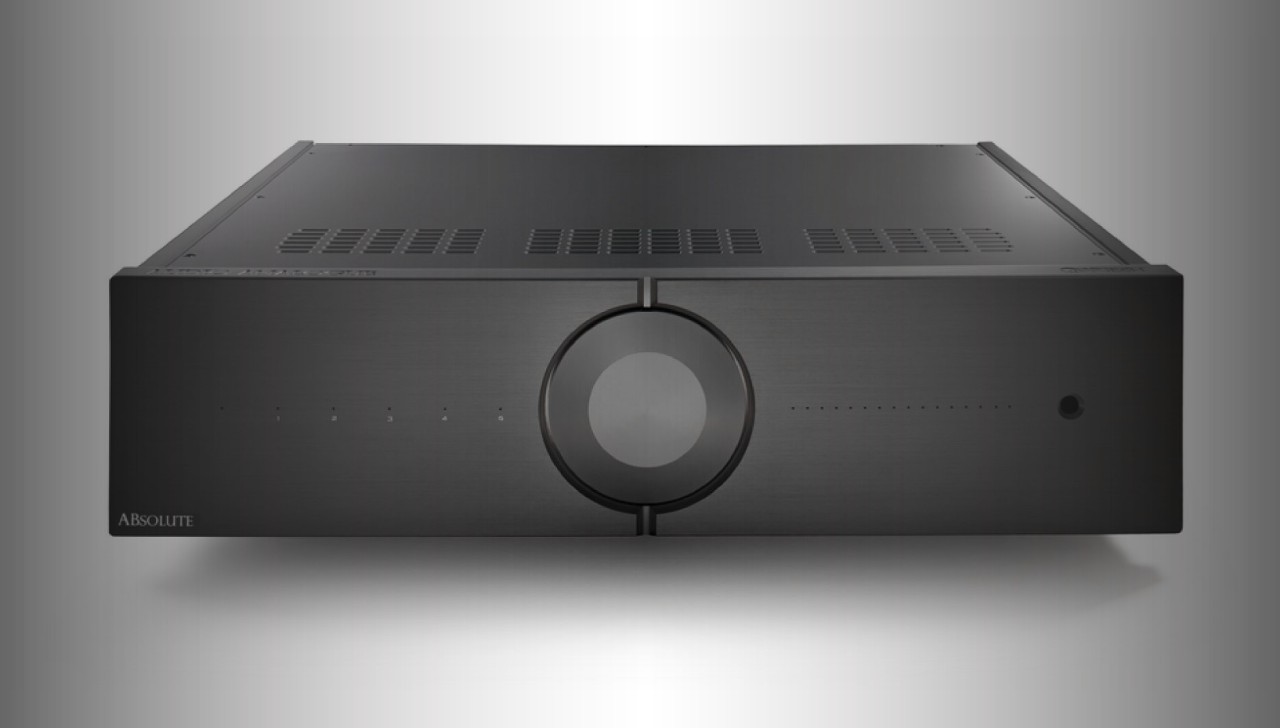
4. Audio Analogue ABsolute Line Preamplifier: Flagship preamplifier
Audio Analogue ABsolute Line Preamplifier, a flagship analog line stage with RCA and XLR connectivity.
The Audio Analogue ABsolute Line Preamplifier is a reference-level analog preamplifier intended to partner the company’s ABsolute Monoblock amplifier.
Its signal circuit is dual mono, fully differential, and designed without global feedback.
The power supply uses two 50 watt transformers that are shielded from magnetic and electrostatic interference and resin-coated, while the signal boards are mechanically isolated from the power supply circuits. This is a purist line-stage design with three RCA line inputs, two XLR inputs, two RCA outputs, and two XLR outputs; the source explicitly states that it has neither phono nor digital inputs.
Best for: Purist analog systems using separate power amplifiers
- Dual-mono fully differential signal circuit
- No global feedback
- Relay-based input selection and volume control
- RCA and XLR inputs and outputs
Verdict: The ABsolute Line Preamplifier is the analog purist of the group, built for systems that value dedicated line-stage engineering over built-in digital or phono facilities.

5. Anthem STR Power Amplifier: A powerful classic designed and crafted in Canada
Anthem STR Power Amplifier with graphic front display and dual-mono Class AB architecture.
The Anthem STR Power Amplifier is a dual-mono Class AB power amplifier built around two toroidal transformers and extensive monitoring.
Anthem’s Advanced Load Monitoring technology continuously monitors internal temperature, current, and voltage without causing distortion, according to the source material.
The amplifier also includes a front-panel graphic display for power levels and status, hand-selected and matched critical transistors, sixteen bipolar output devices per channel, and output capability specified up to 800 watts per channel into a two-ohm load when suitable terminal blocks are used.
Best for: Demanding stereo power-amplifier systems
- Fully dual-mono design with two toroidal transformers
- Advanced Load Monitoring for system integrity
- Front-panel display for power and status
- Specified up to 800 watts per channel into 2 ohms
Verdict: The STR Power Amplifier is the high-current stereo workhorse here, combining robust dual-mono construction with active monitoring and substantial low-impedance capability.
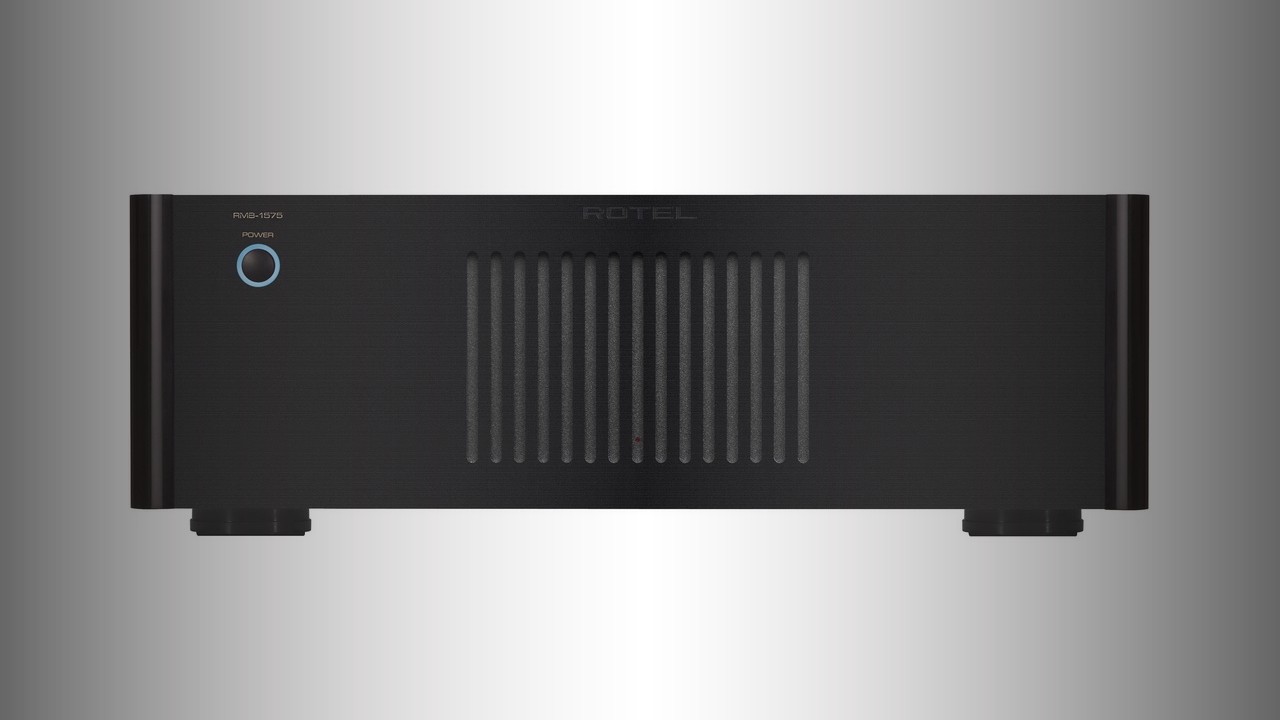
6. Rotel RMB 1575: Impressive five-channel power amplifier
Rotel RMB-1575 five-channel Class D power amplifier for larger rooms and multichannel systems.
The Rotel RMB-1575 is a five-channel Class D power amplifier intended for larger rooms and multichannel systems.
It is specified at 5 x 250 W with all channels operating simultaneously into 8 ohms, with output power doubling into 4 ohms.
Its Class D design keeps network power consumption to 600 W despite the high rated output, and the source notes low heat and the absence of noisy fans. Connectivity is straightforward, with five RCA inputs, five pairs of WBT speaker terminals, and a trigger connector for remote control.
Best for: Large-room or multichannel speaker systems
- Five-channel power amplification
- 5 x 250 W into 8 ohms with all channels operating
- Output power doubles into 4 ohms
- Class D design with low heat and no fans
Verdict: The RMB-1575 is the multichannel power choice, especially where five channels, strong output, and cooler Class D operation are required.

7. TRIVUM SC340m: New multi-zone amplifier launched
TRIVUM SC340m compact multi-zone amplifier with Ethernet streaming and integration control options.
The TRIVUM SC340m is a compact multi-zone amplifier designed to serve four rooms, delivering 2 x 30 W to each room.
Its main signal source is an Ethernet local network, and it supports AirPlay, Spotify Connect, TuneIn internet radio, and other popular streaming platforms.
Control options include a free mobile application, KNX communication bus, and available drivers for RTI, URC, and Control4 platforms. The source also notes that two SC340m units can be combined for rack installation.
Best for: Integrated multi-room audio installations
- Serves four rooms from one compact amplifier
- 2 x 30 W available to each room
- Ethernet-based streaming module
- Control via app, KNX, RTI, URC, and Control4
Verdict: The SC340m is the installation-minded option, built less for a single audiophile rack and more for reliable networked audio across multiple rooms.
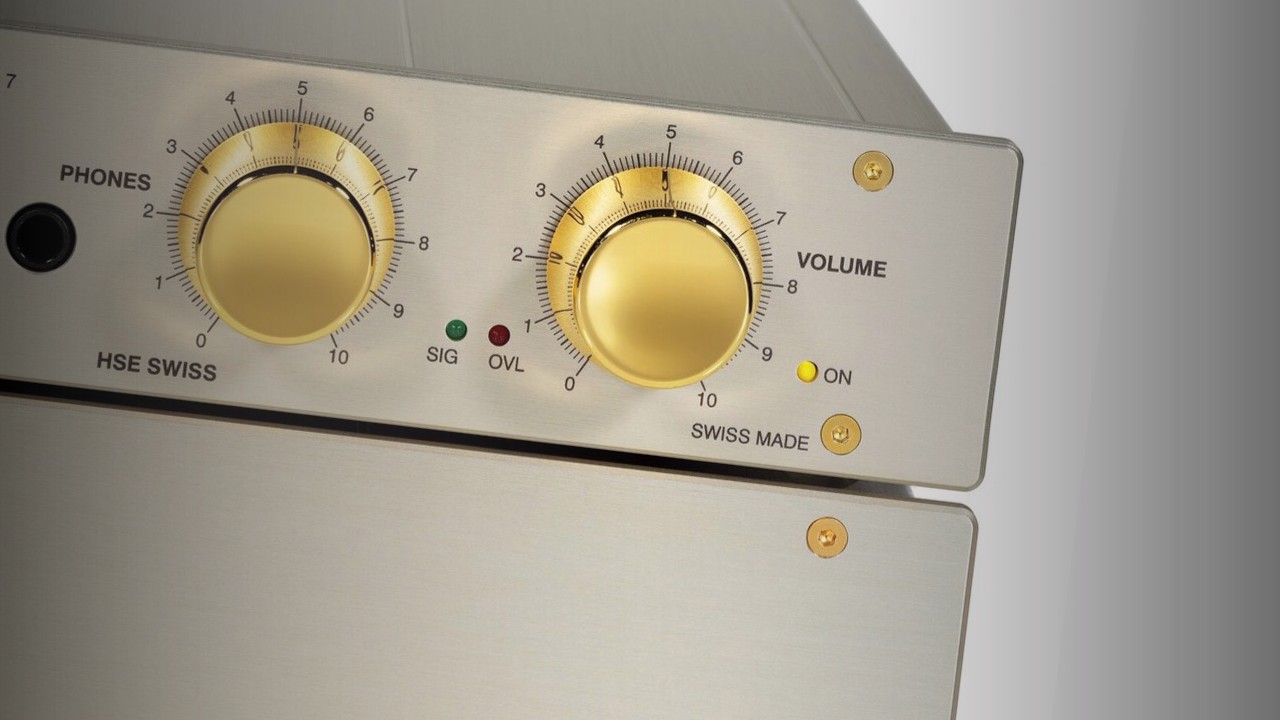
8. HSE Swiss RL-7: Limited edition phono amplifier from Switzerland
HSE Swiss RL-7 phono amplifier and preamplifier system with separate external power supply.
The HSE Swiss RL-7, also known as Referenceline 7, is a phono-focused amplifier from a Swiss specialist that also includes an integrated preamplifier, variable headphone output, and master volume control.
It uses the same Zero-Ohm Class A ultra-low-noise head amplifiers as the company’s Masterline 7, according to the source.
The design is split between an audio unit and an external power supply, both housed in champagne-colored milled and brushed aluminum cabinets. The supplied material also highlights hand-selected and matched key electronic components, precision-matched ALPS Blue Velvet knobs, and a two-week curing and maturation process for each unit.
Best for: Vinyl-focused systems needing phono amplification and preamp control
- Zero-Ohm Class A ultra-low-noise head amplifiers
- Integrated preamplifier and master volume control
- Variable headphone output
- Separate external power supply
Verdict: The RL-7 is the specialist analog choice, aimed at vinyl listeners who want a phono stage with preamplifier functions and meticulous component selection.

9. Ladder Bach II: High-End Class A Balanced Preamplifier
Ladder Bach II Class A balanced preamplifier with dual rotary controls and front-panel display.
The Ladder Bach II is a Class A preamplifier with a fully balanced, fully discrete circuit architecture.
Its power supply is based around an 80 watt low-noise toroidal transformer with ELNA and WIMA capacitor filtering, and a discrete unity-gain buffer stage is used for signal transmission.
Volume control is handled by a microcontroller and 60-step relay attenuator with precision-matched resistors, a design intended to avoid channel skew and maintain stability at low levels. The rear panel includes two balanced XLR inputs, one RCA input, and both balanced and unbalanced outputs, while the unit supports 115/230 V power supplies.
Best for: Balanced stereo systems needing a dedicated line preamplifier
- Class A fully discrete balanced circuit
- 60-step relay attenuator
- Two XLR inputs plus one RCA input
- Balanced and unbalanced outputs
Verdict: The Bach II is a focused balanced line-stage preamplifier, offering relay volume control and discrete Class A architecture without the extra source features of a network preamp.
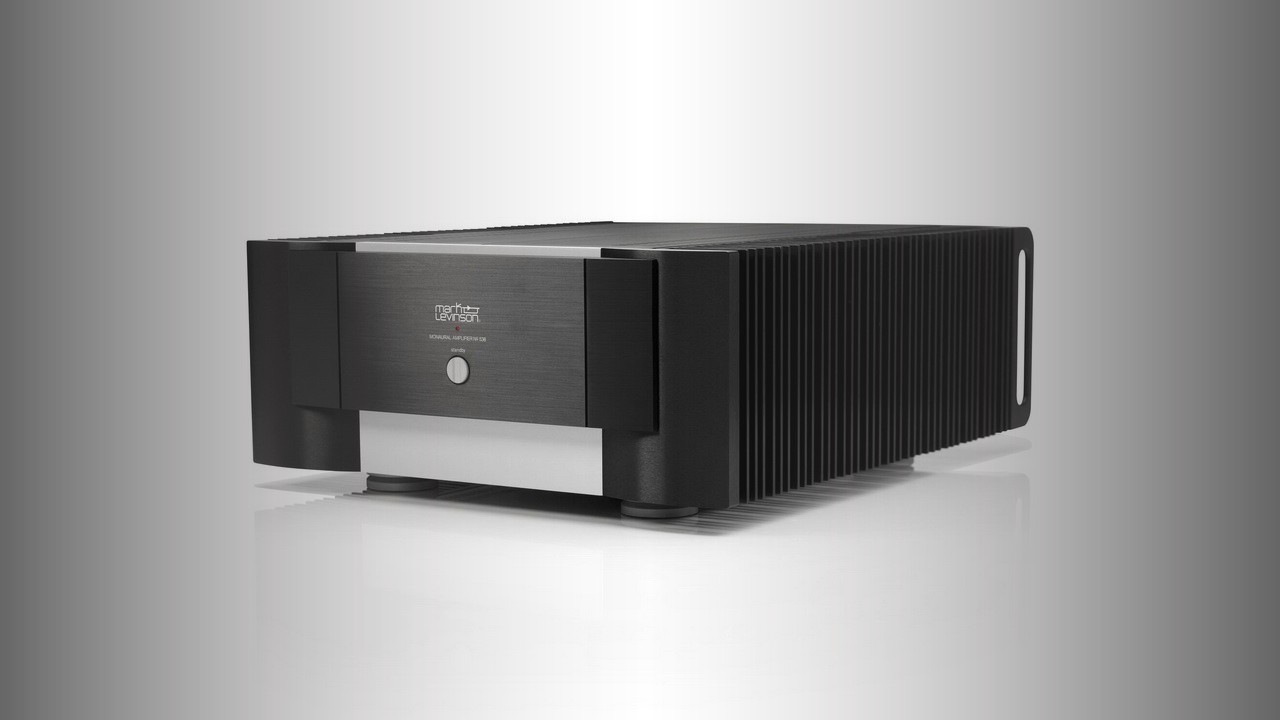
10. Mark Levinson #536: Fully discrete mono amplifier
Mark Levinson № 536 mono power amplifier with fully discrete architecture and control connections.
The Mark Levinson № 536 is a fully differential, fully discrete mono power amplifier using the company’s Pure Path design.
Its direct-coupled signal path, low-feedback approach, and Class A operation in the voltage gain and main gain stages are central to the supplied description.
The amplifier includes balanced and single-ended inputs, making it compatible with a wide range of preamplifiers or source devices with adjustable output, and it also provides Ethernet, RS-232, and USB connections for monitoring and control. The chassis is made from extruded 6063-T5 aluminum alloy, and the source states that the amplifier is designed and hand-assembled in the USA.
Best for: High-end systems built around mono power amplification
- Fully differential, fully discrete mono design
- Direct-coupled signal path
- Balanced and single-ended inputs
- Ethernet, RS-232, and USB monitoring and control
Verdict: The № 536 is the dedicated mono-amplifier option, suited to systems where separate amplification per channel and modern control integration are central requirements.
Quick comparison
These products are not interchangeable, so the comparison is most useful when viewed by role.
Integrated amplifiers combine control and power, preamplifiers manage sources and volume before a separate power amplifier, power amplifiers drive speakers directly, and multi-zone amplifiers are designed around distribution rather than a single listening position.
| Product | Best for | Verdict |
|---|---|---|
| Luxman L-509X | A refined one-box integrated stereo system | Combines integrated-amplifier convenience with separable preamp and power amp sections and two-speaker-pair flexibility. |
| Fosi Audio BT30D Pro | Compact 2.1-channel Bluetooth and RCA setups | A small, feature-led amplifier with tone controls, subwoofer control, and passive speaker support. |
| Premiera X1S PRO | Modern source-heavy systems feeding a power amplifier | The broadest connectivity package here, with network playback, DAC, phono, HDMI ARC, and subwoofer output. |
| Audio Analogue ABsolute Line Preamplifier | Purist analog line-stage systems | A flagship analog preamplifier with dual-mono, fully differential circuitry and no digital or phono inputs. |
| Anthem STR Power Amplifier | Demanding stereo power-amplifier applications | A dual-mono Class AB power amplifier with monitoring technology and substantial low-impedance output capability. |
| Rotel RMB-1575 | Five-channel multichannel or large-room systems | Provides five high-power Class D channels with low heat, no fan noise, and simple RCA input connectivity. |
| TRIVUM SC340m | Four-room multi-zone installations | Designed for distributed audio, with Ethernet streaming and integration support for control systems. |
| HSE Swiss RL-7 | Vinyl-focused analog systems | A phono amplifier with integrated preamplifier functions, headphone output, and a separate power supply. |
| Ladder Bach II | Balanced Class A line-level control | A dedicated balanced preamplifier with discrete architecture and relay-based volume control. |
| Mark Levinson #536 | Separate mono power amplification | A fully discrete mono amplifier with balanced and single-ended inputs plus modern monitoring and control ports. |
Frequently asked questions
Should I choose an integrated amplifier, preamplifier, or power amplifier?
Choose an integrated amplifier such as the Luxman L-509X when you want volume control and speaker drive in one chassis.
Choose a preamplifier such as the Premiera X1S PRO, Audio Analogue ABsolute Line Preamplifier, HSE Swiss RL-7, or Ladder Bach II when you already have or plan to add a separate power amplifier.
Choose a power amplifier such as the Anthem STR, Rotel RMB-1575, or Mark Levinson № 536 when source selection and volume control are handled elsewhere.
Which amplifier type is best for a home-theater or multi-room system?
For multichannel speaker systems, the Rotel RMB-1575 is the most directly relevant option here because it provides five channels of power.
For distributed audio across several rooms, the TRIVUM SC340m is the more appropriate design because it is built to serve four rooms and supports network streaming and installation control platforms.
What should vinyl listeners look for in this selection?
Vinyl listeners should check whether a phono stage is included.
The Premiera X1S PRO includes an MM/MC phono preamplifier, while the HSE Swiss RL-7 is specifically described as a phono amplifier with integrated preamplifier functions.
The Audio Analogue ABsolute Line Preamplifier explicitly has no turntable input, so it would require an external phono stage.
How important are inputs and control options when buying an amplifier?
They are essential because the amplifier must match the rest of the system.
The Premiera X1S PRO suits systems that need HDMI ARC, network playback, Bluetooth, Wi-Fi, AirPlay 2, DAC, and phono functions.
The Audio Analogue and Ladder models are more focused line preamplifiers with analog connectivity. Power amplifiers such as the Anthem STR, Rotel RMB-1575, and Mark Levinson № 536 rely on an upstream preamplifier or processor for source selection and volume control.
How to choose the amplifier that fits your system
Start with the amplifier’s role.
If you want one serious stereo component to handle both control and speaker drive, the Luxman L-509X is the clearest match in this selection because it is an integrated amplifier with unusual flexibility, including separable preamp and power amp sections.
If your system already has a control component and needs speaker-driving muscle, focus instead on the power amplifiers: the Anthem STR for a dual-mono stereo power design with monitoring, the Rotel RMB-1575 for five-channel systems, or the Mark Levinson № 536 for mono-block architecture. If source management is the main need, the preamplifiers separate into two broad camps. The Premiera X1S PRO is the feature-rich hub, with network playback, HDMI ARC, DAC, Bluetooth, Wi-Fi, AirPlay 2, phono input, tone functions, and subwoofer output. The Audio Analogue ABsolute Line Preamplifier and Ladder Bach II are more purist line-stage choices, with the Audio Analogue emphasizing a dual-mono fully differential analog design without phono or digital inputs, and the Ladder focusing on Class A balanced discrete circuitry and relay attenuation. For vinyl-first systems, the HSE Swiss RL-7 is the most specialized analog option because it is a phono amplifier with integrated preamplifier functions and a separate power supply. Also consider the room and installation. A single listening room with passive stereo speakers has very different needs from a five-channel setup or a four-room distributed system. The Rotel RMB-1575 and TRIVUM SC340m are included precisely because amplification is not always about a two-channel hi-fi rack: one addresses multichannel speaker power, while the other is designed around multi-zone networked playback and control integration. The best choice is the component whose function, inputs, outputs, and system architecture line up cleanly with the equipment you already own or plan to build around.



Join the discussion
Share your thoughts, listening impressions or product experience.