

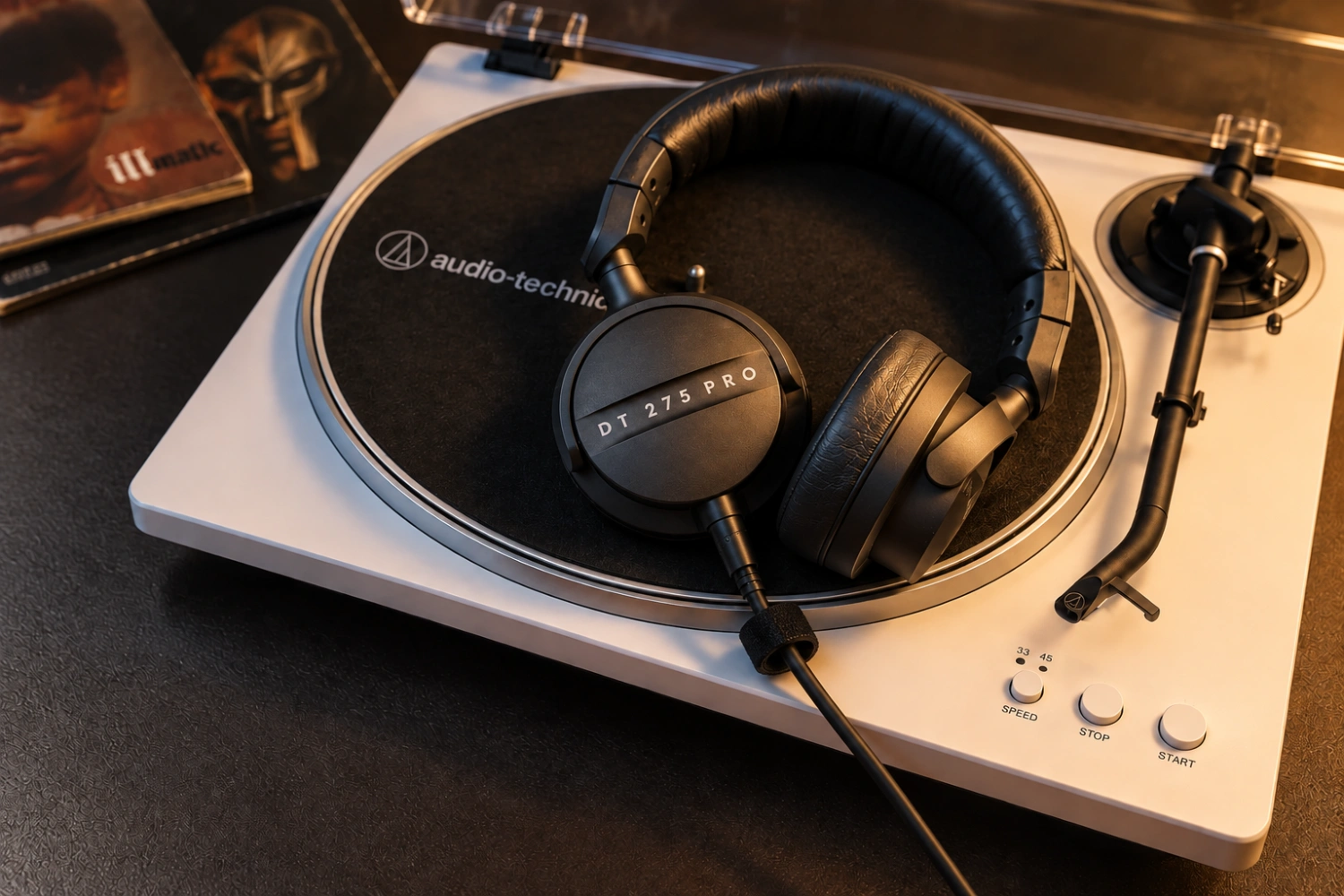
The Beyerdynamic DT 275 PRO arrives with a rather different brief from the studio headphones most closely associated with the German manufacturer. This is not a large circumaural model designed primarily for long mixing sessions in a quiet control room. Instead, Beyerdynamic has built a compact, closed-back on-ear headphone for environments where monitoring has to remain reliable despite noise, movement and limited space.
That puts the DT 275 PRO into the world of video production, live sound, field recording and DJ cueing rather than traditional home listening. At $149.99 in the US, it is also positioned at a level where it could appeal not only to established professionals but also to anyone putting together a relatively affordable mobile production setup.
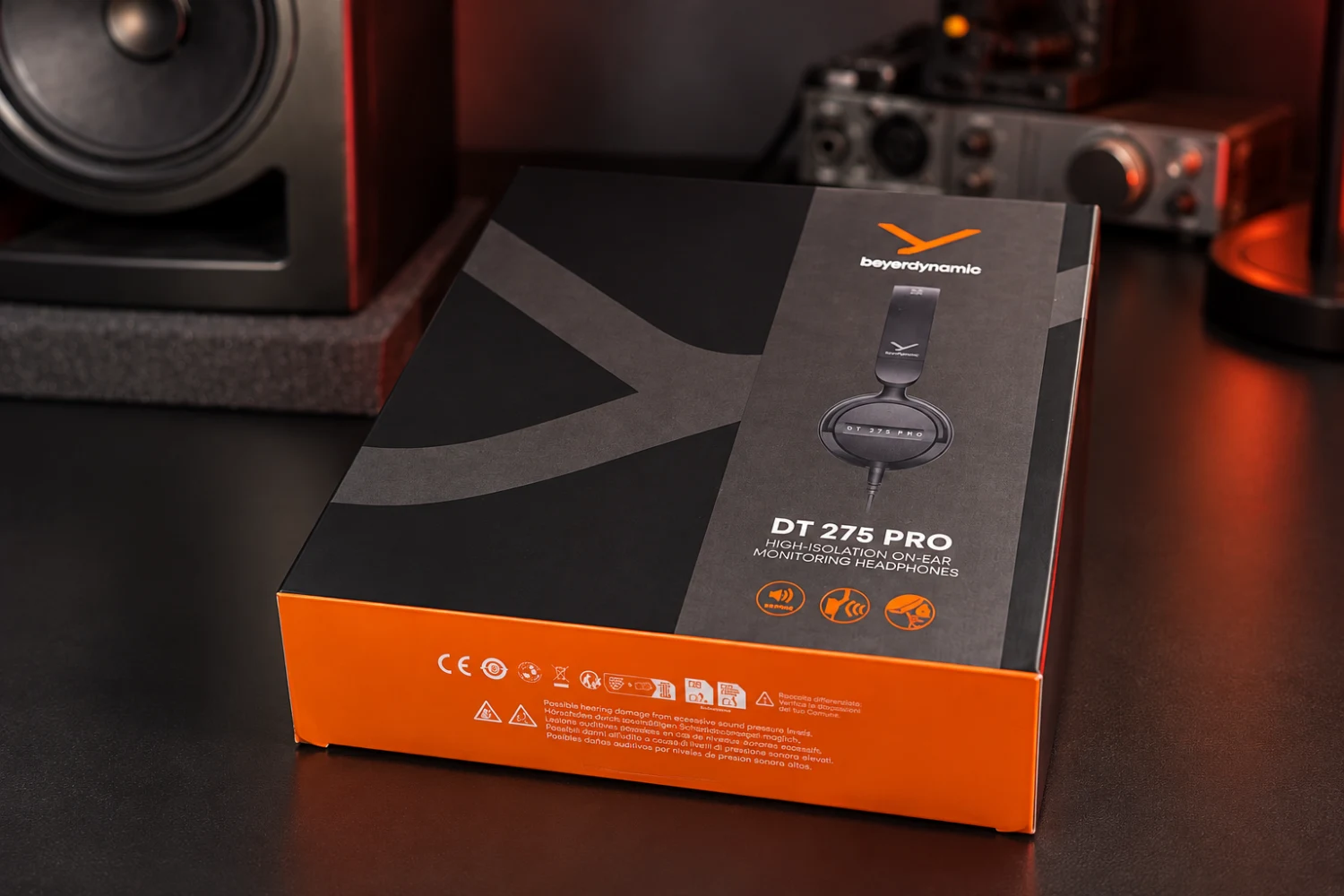
The important thing is to judge it on those terms. The DT 275 PRO is less concerned with being luxurious or feature-packed than with being compact, practical and predictable when the working environment becomes difficult.
A Different Kind of PRO Headphone
Beyerdynamic's PRO range covers a surprisingly broad collection of headphones, and the DT 275 PRO fills a gap that is easy to overlook. Larger models such as the DT 770 PRO have become familiar sights in studios, but carrying a full-size monitoring headphone around a location shoot or constantly taking one on and off beside a mixing console is not always ideal.
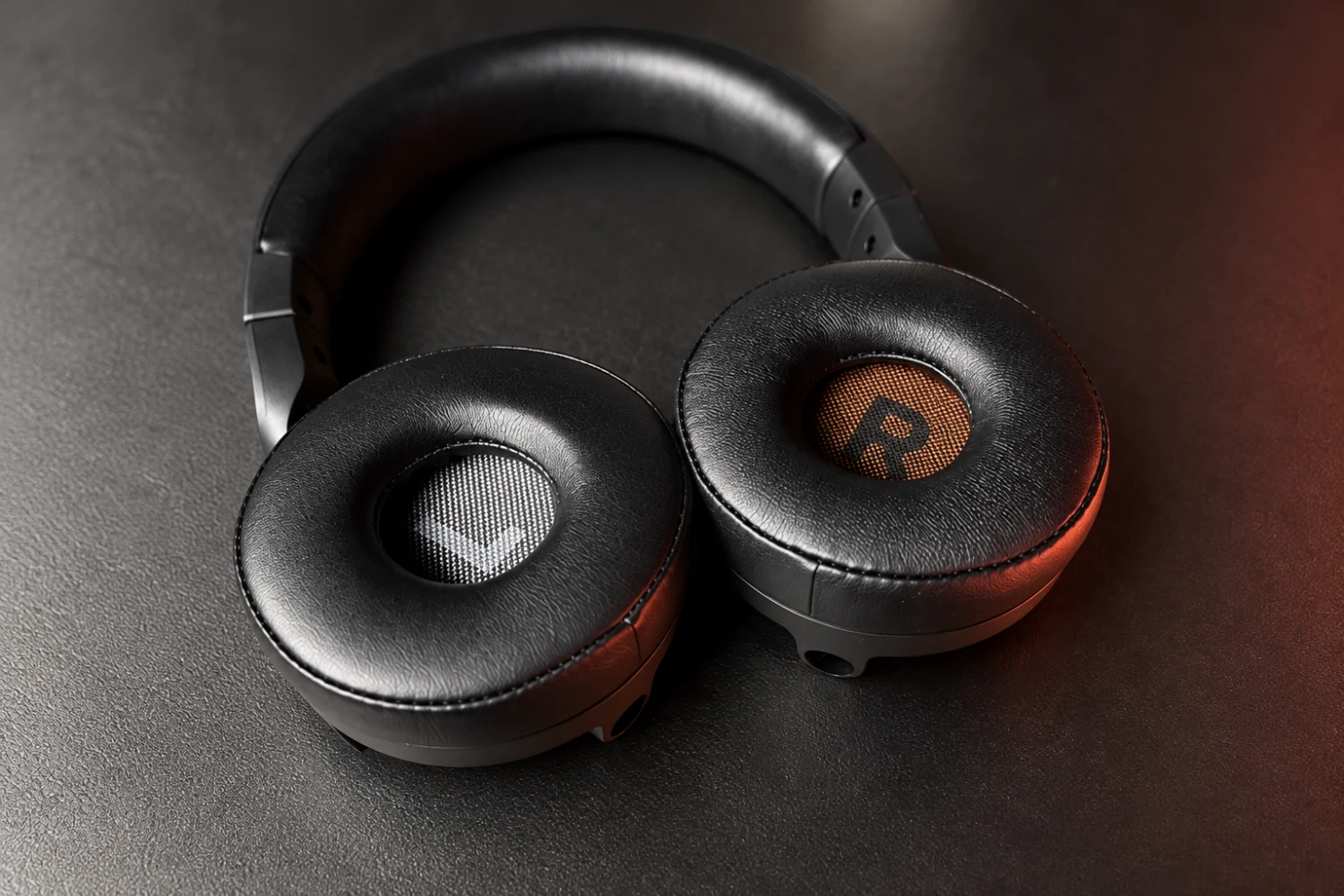
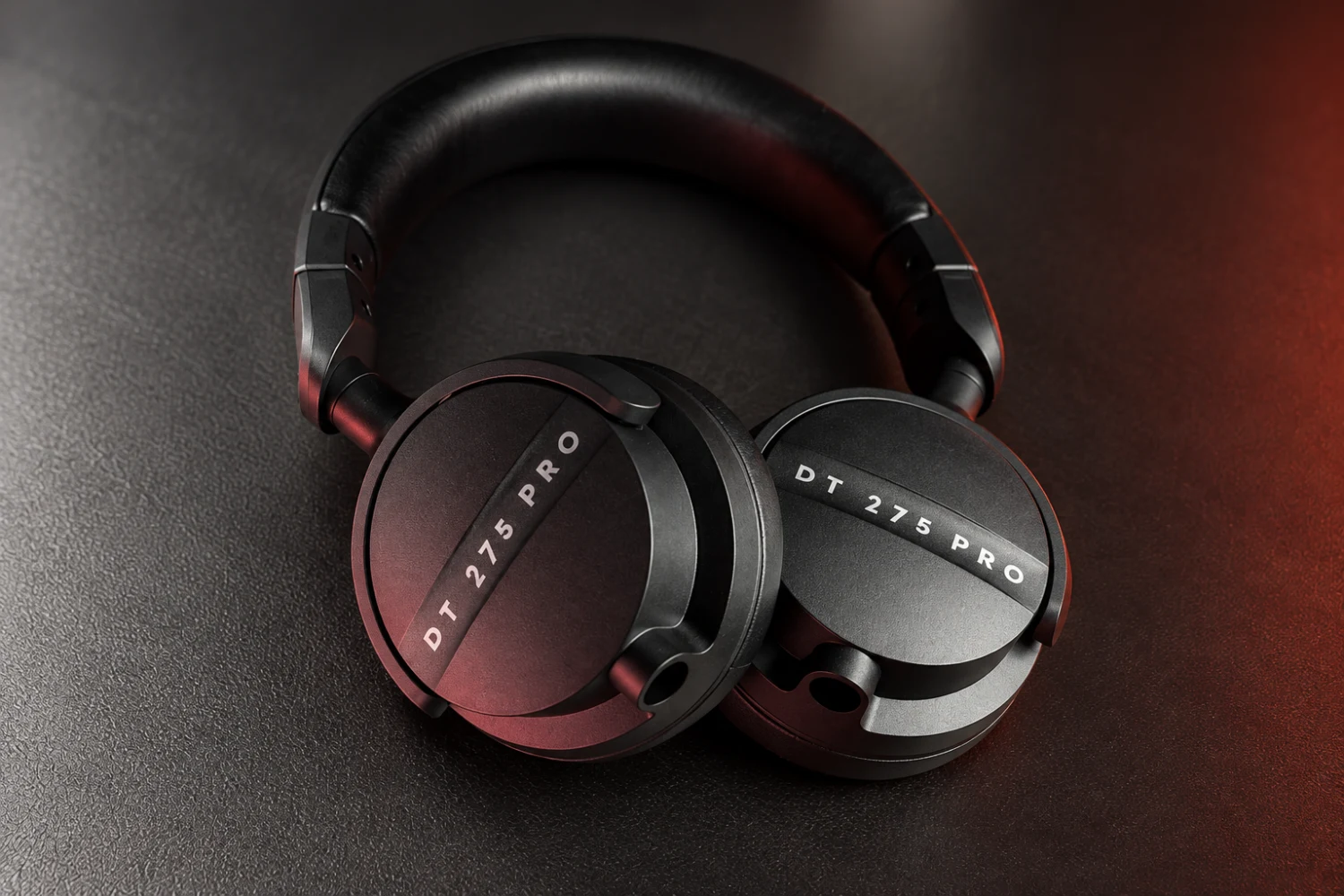
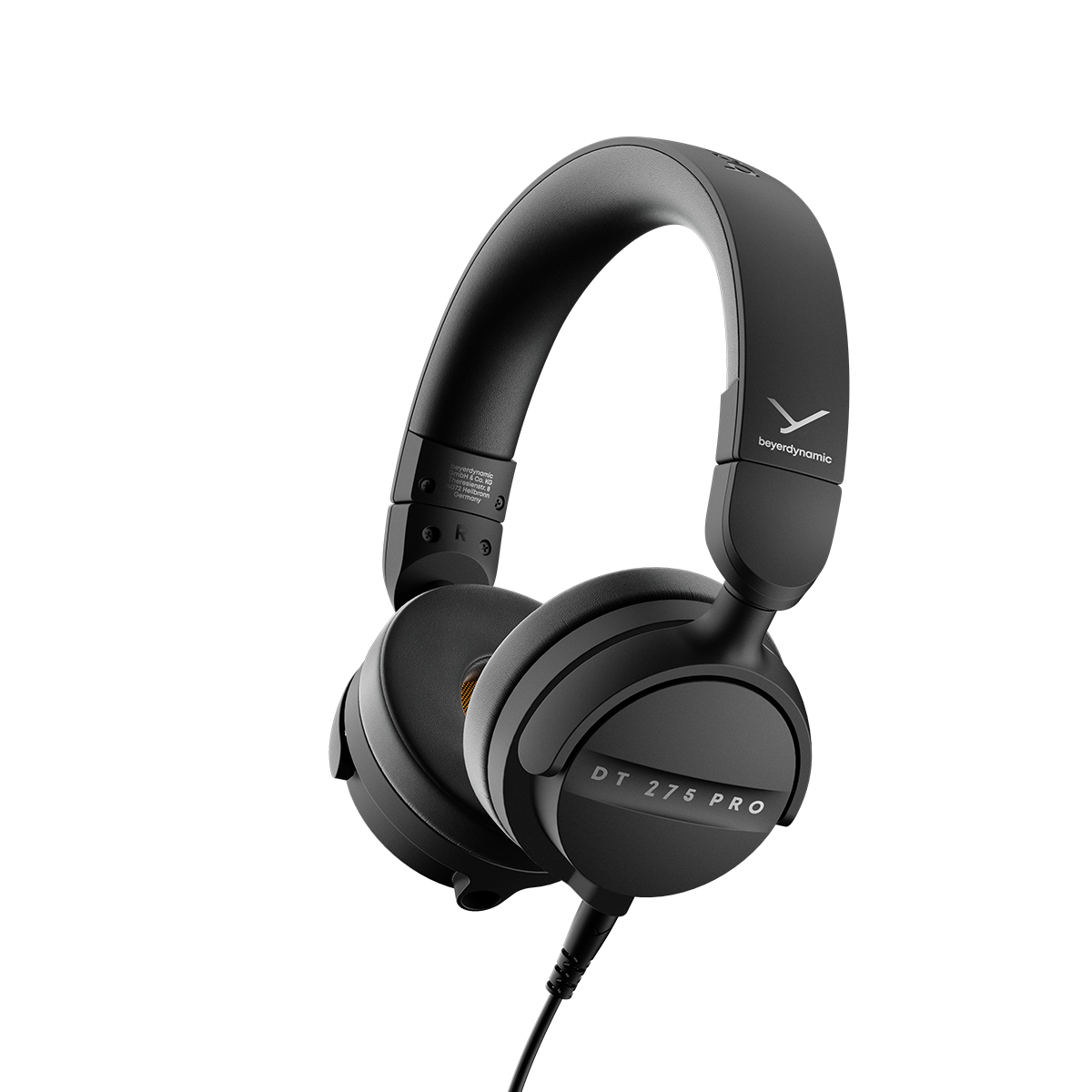
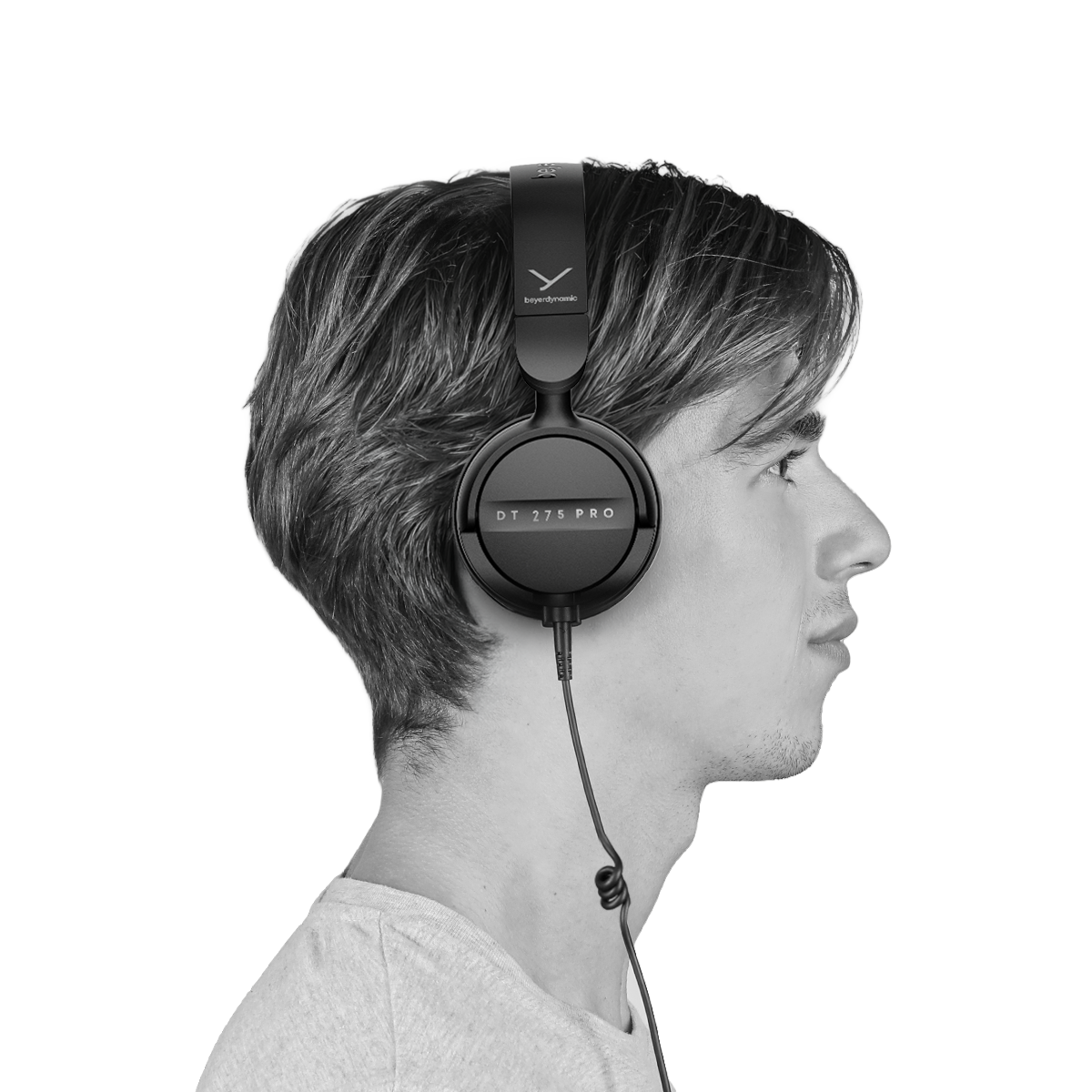
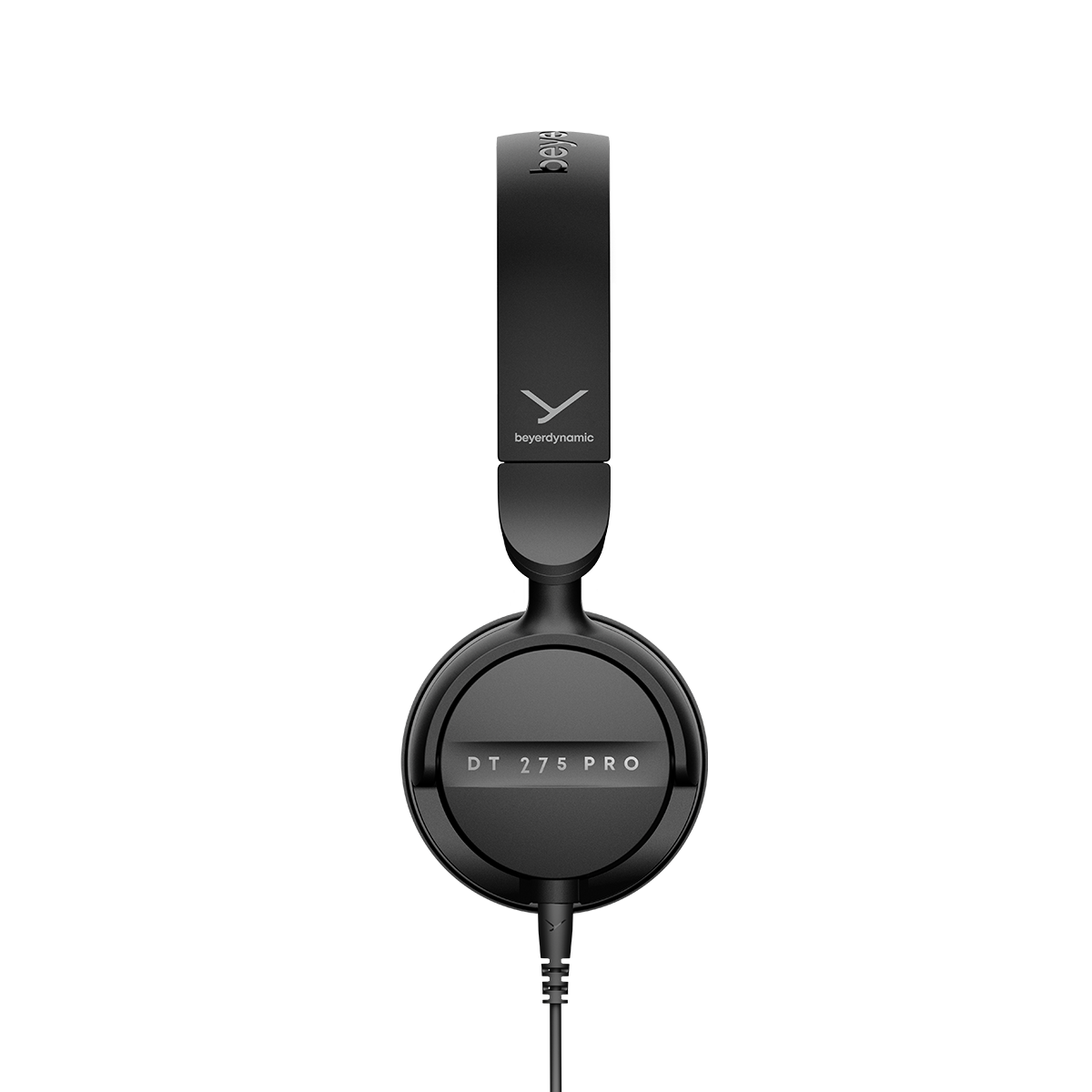
The DT 275 PRO takes a more compact approach. Its closed-back earcups sit directly on the ears rather than surrounding them, and the complete headphone weighs just 195 grams without the cable. The earcups also rotate, making the headphone relatively easy to flatten down and store in a production bag between jobs.
It is a design that makes immediate sense for mobile use. Low weight matters when equipment is being carried for an entire working day, while the smaller dimensions make the DT 275 PRO less cumbersome around cameras, mixers and other hardware. There is inevitably a compromise, however. Some listeners simply prefer the pressure distribution of a full-size over-ear headphone, particularly during very long sessions, and an on-ear design is unlikely to change that preference.
Beyerdynamic has tried to minimise the issue with soft leatherette pads and a padded headband, but comfort here is closely tied to the overall philosophy of the product. The DT 275 PRO has been designed to remain compact and quick to handle rather than to feel like a large pair of headphones disappearing around the ears.
Isolation Is the Real Story
The closed on-ear construction is not only about saving space. It is fundamental to what the DT 275 PRO is designed to do.
Beyerdynamic describes the headphone as a monitoring model for loud environments, where speech, levels, cue points and other important audio details still need to be heard clearly. That includes situations such as video shoots, front-of-house sound, side-stage monitoring and DJ work.
In those surroundings, isolation becomes every bit as relevant as frequency response. A headphone used beside a stage or in a busy production environment has to compete with substantial external noise, and simply increasing the listening level is not always the best solution. A tightly sealed passive design can make important details easier to identify without forcing the user to fight the room continuously.
This is also where the DT 275 PRO begins to separate itself from the DT 270 PRO. Although the two models are similar in size, Beyerdynamic describes the DT 270 PRO as a compact over-ear headphone intended primarily for recording, practising instruments, podcasting and studio work. The DT 275 PRO is the more specialised monitoring model, aimed at louder and faster-moving environments where isolation and quick handling become more important.
That distinction gives the DT 275 PRO a clearer purpose than simply being another inexpensive Beyerdynamic studio headphone.
Practical Design Goes Beyond the Ear Cups
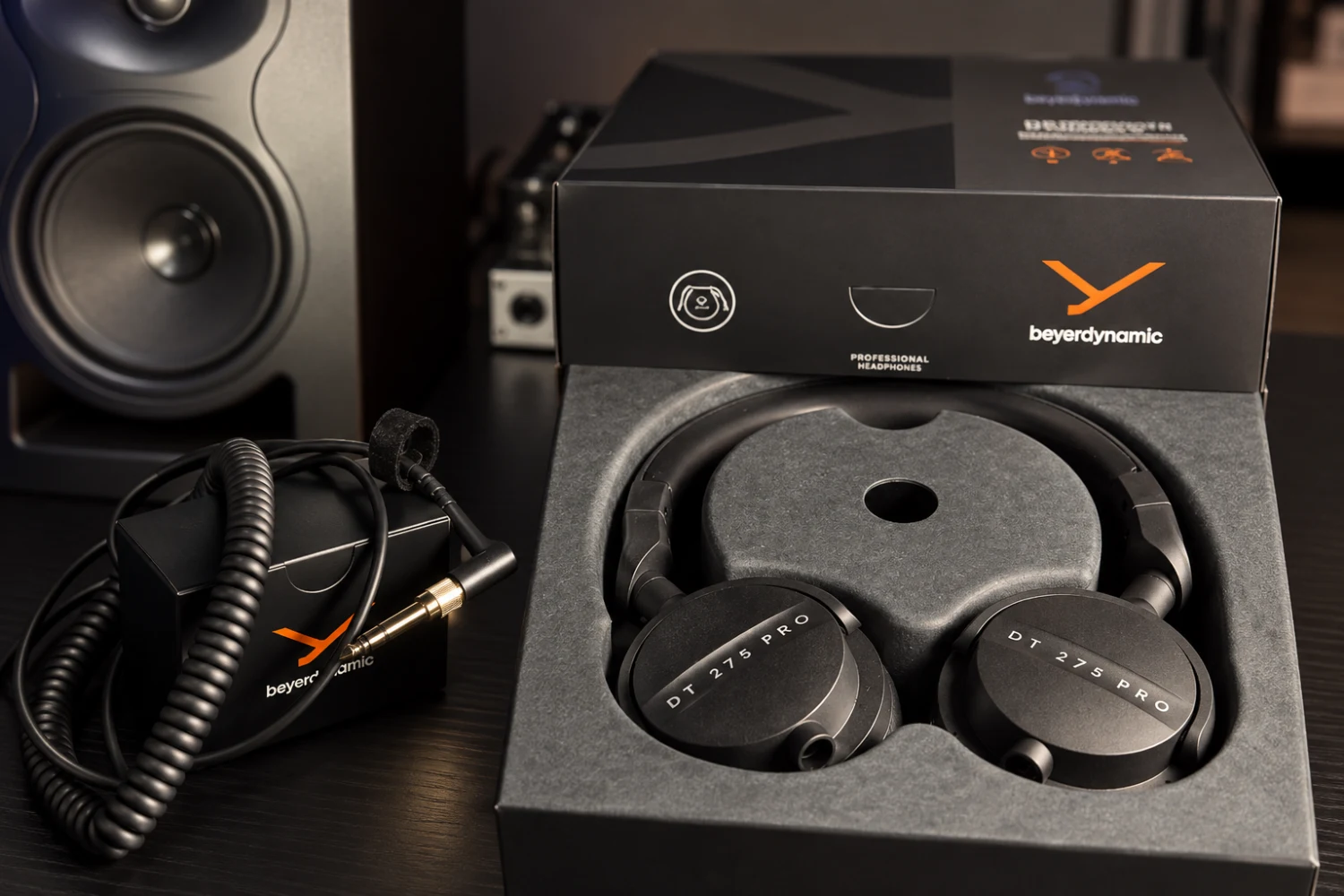
Some of the most convincing details are found away from the drivers. The DT 275 PRO uses a detachable 1.5-metre cable that locks into the headphone, reducing the likelihood of it being pulled loose accidentally during use. More unusually, the cable can be connected to either the left or right earcup.
It sounds like a minor feature until the headphone is used around professional equipment. Cable direction can depend entirely on where a recorder, mixer or camera is positioned, and the ability to choose the connection side can prevent the cable from crossing controls or constantly running across the user's body. The locking mechanism should also be reassuring in situations where losing the monitoring feed during a take or live event would be considerably more inconvenient than it would be at home.
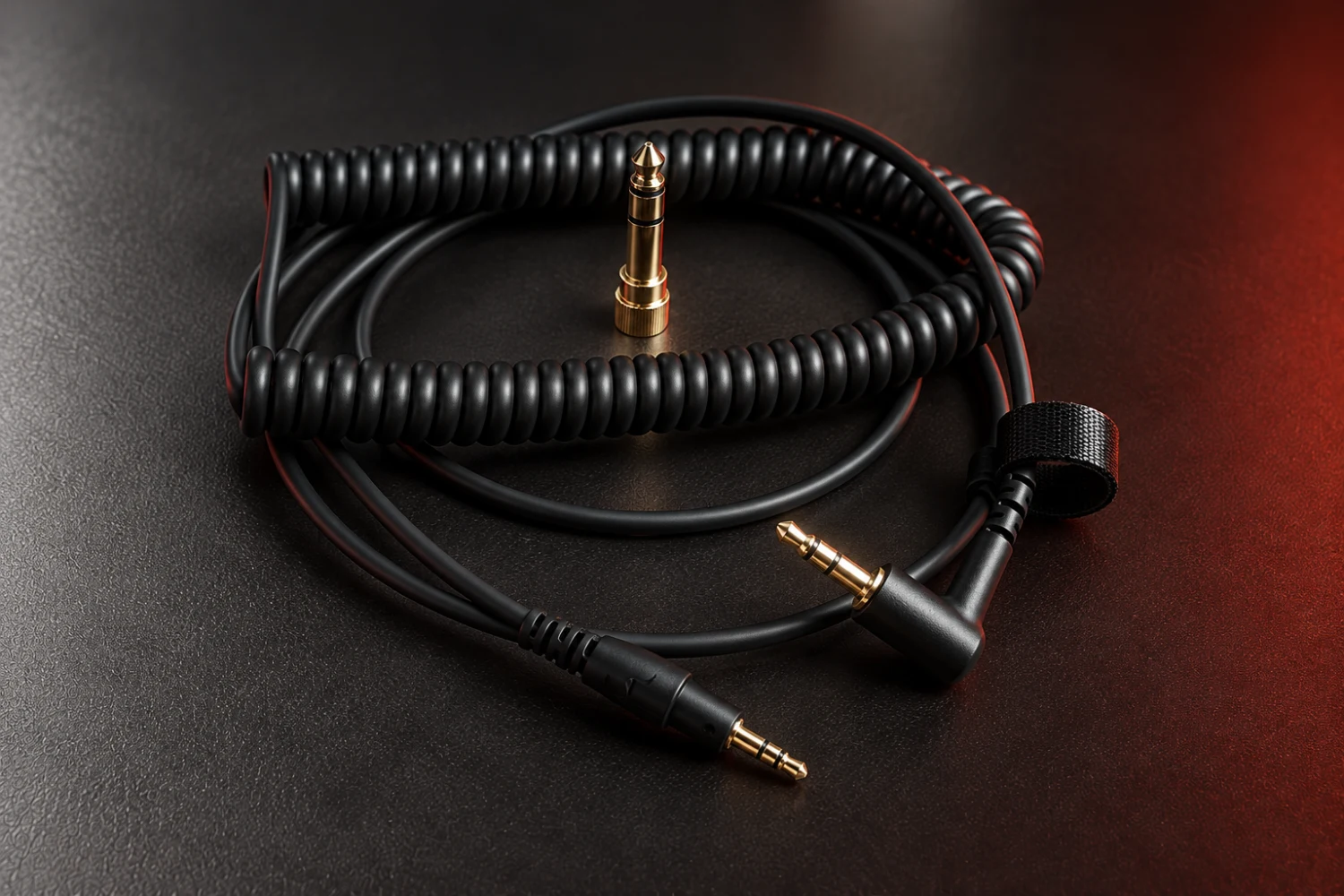
Beyerdynamic has also made the cable, ear pads and headband padding replaceable. That matters more on a professional product than it might appear from a specification sheet. Headphones that spend years travelling between locations will eventually suffer worn pads, damaged cables and deteriorating padding. Making those parts replaceable allows normal wear to be treated as maintenance rather than the end of the product.
The DT 275 PRO therefore feels sensibly engineered around ownership as much as initial use. There are no elaborate mechanisms or unnecessary decorative details; most of the design decisions have an obvious practical reason for being there.
Straightforward Specifications
The DT 275 PRO uses dynamic drivers with a nominal impedance of 45 ohms and a quoted frequency response of 5 Hz to 24 kHz. Beyerdynamic specifies a nominal sound pressure level of 105 dB, while the headphone connects through a conventional 3.5 mm stereo plug and includes a 6.35 mm adapter.
A 45-ohm load is a sensible choice for this kind of headphone. The DT 275 PRO is likely to spend much of its life connected directly to mixers, audio interfaces, portable recorders, DJ equipment and other devices where carrying a dedicated headphone amplifier would defeat much of the point. Its electrical characteristics therefore appear to favour broad compatibility rather than demanding amplification.
That does not make the specifications particularly exotic, but exotic is not really the goal. A professional monitoring headphone benefits from being easy to integrate into different setups, and the DT 275 PRO appears designed to move between equipment without requiring much consideration beyond plugging it in.
Monitoring Rather Than Hi-Fi Spectacle
Beyerdynamic describes the DT 275 PRO as having a balanced sound tuning focused on reliable assessment of speech, signal levels and other critical audio information. The company also points to controlled bass and low distortion as part of that approach.
That wording is worth paying attention to because it tells us what the headphone is not attempting to be. A monitoring product does not necessarily benefit from exaggerated bass, expansive staging or a dramatic tonal character. Its job is to allow the listener to make decisions quickly and consistently.
In practical terms, that could mean checking whether dialogue is clean, identifying unwanted noise in a recording, confirming a cue point before bringing in the next track or making sure a signal has not disappeared somewhere further up the chain. Those requirements place intelligibility and consistency ahead of entertainment.
This is also why it would be unfair to approach the DT 275 PRO as though it were simply a smaller alternative to one of Beyerdynamic's home or studio headphones. A listener who spends evenings playing albums through a dedicated headphone amplifier is looking for something quite different from a camera operator or live engineer trying to confirm that an audio feed is clean while people and equipment are moving around them.
Comfort and Portability
At 195 grams, the DT 275 PRO is exceptionally light compared with many full-size professional headphones. That should reduce the sense of carrying another substantial piece of equipment, particularly during location work where headphones may spend almost as much time around the neck or inside a bag as they do on the head.
The swivelling earcups also make single-ear monitoring relatively natural, which is relevant both for DJ use and for production situations where the user may need to hear what is happening in the room at the same time as checking the monitored signal.
The potential limitation remains the supra-aural fit. Some listeners can wear on-ear headphones all day without difficulty, while others find pressure against the ears increasingly noticeable over time. It is therefore one area where personal fit matters more than specifications can reveal.
Even so, there is a coherent reason behind the decision. Moving to a larger over-ear construction might improve long-session comfort for some users, but it would also reduce the portability and quick handling that are central to the DT 275 PRO's purpose.
No Wireless, No ANC, and That Is Probably Fine
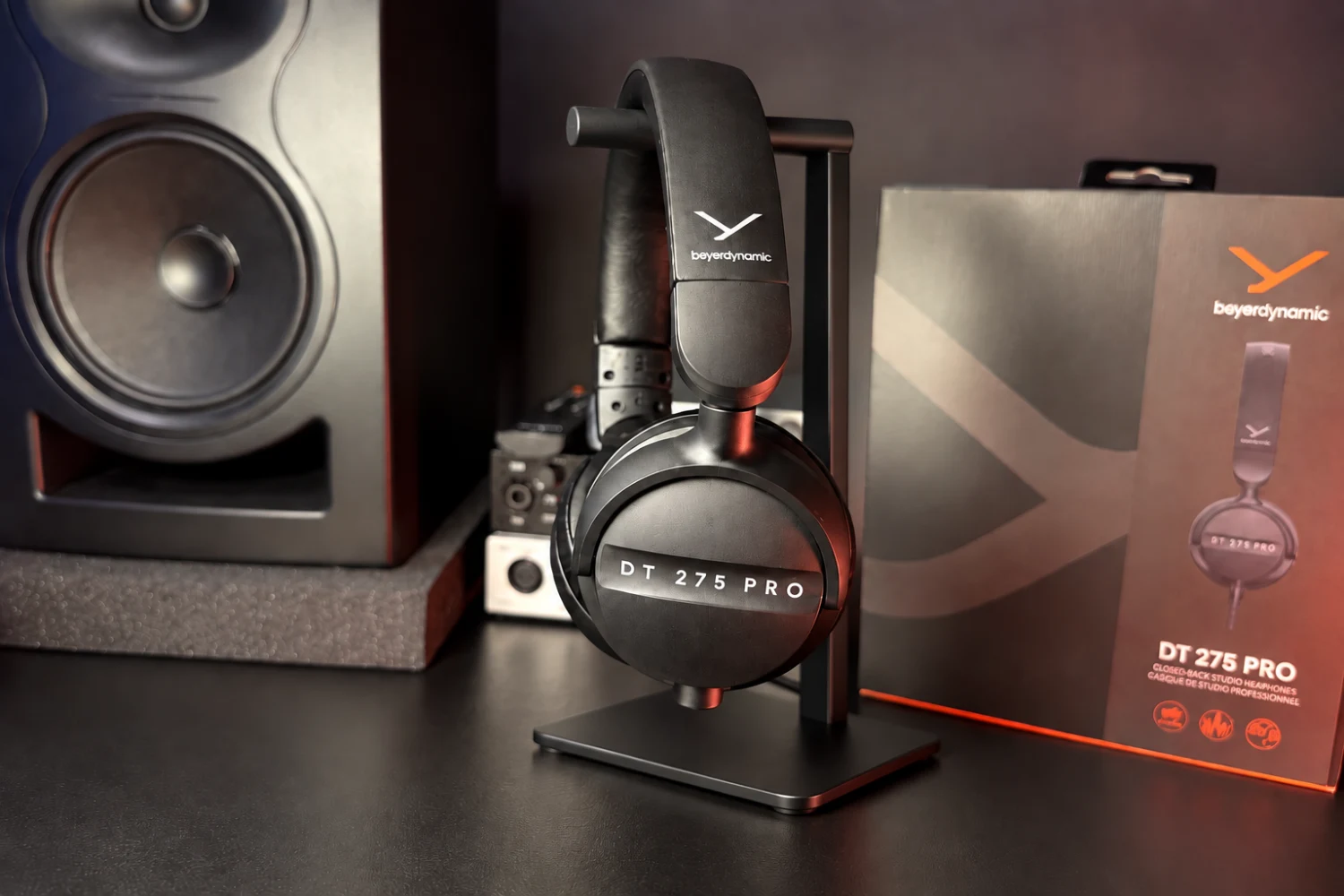
There is nothing especially fashionable about the DT 275 PRO. It does not include Bluetooth, app control, touch-sensitive surfaces or active noise cancellation. In another category, those omissions might look significant. Here they make considerably more sense.
A wired connection removes concerns surrounding latency, pairing and battery life, while passive isolation avoids the additional electronics involved with ANC. For monitoring work, simplicity has obvious benefits. The headphone can be connected to a device and used immediately without wondering whether it has enough battery remaining or whether a wireless codec is adding delay.
That simplicity also contributes to the sense that the DT 275 PRO has been designed around a relatively specific audience. It does not attempt to double as a commuting headphone or wireless lifestyle product, and there is something refreshing about a design that does not try to solve problems its intended users probably do not have.
Value for Money
At $149.99, the DT 275 PRO sits in an interesting part of the professional headphone market. It is inexpensive enough to be considered as a practical working purchase rather than a major studio investment, while still carrying the expectations that come with Beyerdynamic's established professional range.
The value proposition also extends beyond the sound itself. The replaceable cable and wear components should make the headphone easier to keep in service over the long term, while the reversible cable connection and low weight provide benefits that become more obvious through everyday use than they do on a product page.
For someone looking purely for a pair of headphones to enjoy music at home, $149.99 opens the door to plenty of alternatives with larger earcups and a more listening-oriented presentation. The DT 275 PRO becomes more persuasive when its professional features are actually relevant. If isolation, portability, serviceability and reliable wired monitoring are priorities, its asking price seems far easier to justify.

Pros
- Compact and extremely light at 195 grams
- Strong focus on passive isolation
- Practical for video, live sound and mobile monitoring
- Locking detachable cable
- Cable can connect to either earcup
- Replaceable cable, pads and headband padding
- Easy 45-ohm load for professional equipment
- Sensible $149.99 price
Cons
- On-ear fit may become tiring for some listeners
- Less suitable for relaxed, long-session home listening
- Not designed to deliver a large, spacious presentation
- Buyers wanting wireless connectivity or ANC need to look elsewhere
The Beyerdynamic DT 275 PRO is a refreshingly focused headphone. Rather than attempting to become a smaller version of a conventional studio model, it has been built around the practical requirements of people monitoring sound in places where conventional studio conditions simply do not exist.
Its strongest qualities are therefore not particularly glamorous. The 195-gram weight makes it easy to carry, the closed on-ear design prioritises isolation, the 45-ohm impedance keeps it easy to drive, and the lockable cable can be connected to whichever side makes most sense for the equipment being used. Replaceable pads, padding and cables complete a design that appears intended to remain useful after years of regular work rather than simply look attractive when new.
There are compromises. An on-ear headphone will never suit every listener for long sessions, and anyone interested primarily in spacious, immersive home listening will find more appropriate choices elsewhere. The DT 275 PRO is instead at its most convincing when the surroundings become noisy and the headphone has a specific job to perform.
At $149.99, that makes it a well-conceived specialist rather than a universal recommendation. For video crews, live engineers, DJs and anyone needing compact wired monitoring away from the studio, however, its priorities appear very well judged.
Conclusion
What makes the DT 275 PRO interesting is not any single specification but how consistently the entire design follows the same idea. Beyerdynamic has taken the requirements of mobile professional monitoring and worked backwards from them: keep the headphone small, keep it light, provide meaningful passive isolation, make the cable difficult to disconnect accidentally, allow it to leave from either side and ensure the parts most likely to wear out can be replaced.
The result is a headphone that feels far more deliberate than its relatively straightforward appearance suggests. It does not try to impress with technology that has little relevance to its intended job, nor does it pretend to replace Beyerdynamic's larger studio models. Instead, it occupies a useful middle ground between studio headphones and specialised field-monitoring equipment.
That focused approach is ultimately the DT 275 PRO's biggest strength. For the right user, its compact dimensions and seemingly mundane practical details may prove substantially more valuable than another wireless feature or headline-grabbing specification.


Sound Off
0Join the discussion if you have something to add.