

Choosing an amplifier is less about chasing a single universal winner and more about matching topology, connectivity, power delivery and system role to the way you listen.
The strongest choices in this selection cover very different needs: traditional high-current power amplification, compact desktop-friendly Class D, networked integrated designs, phono-ready amplifiers and hybrid tube-transistor architecture.
The source material ranges from specification-heavy product articles to early announcements with limited detail, so the recommendations below stay deliberately grounded. Where a manufacturer claim is central to a product, it is treated as such; where information is scarce, the entry focuses on the confirmed configuration and supported use case rather than filling gaps. For buyers, the first decision is whether the amplifier must be the system hub or simply the muscle behind a preamplifier. Integrated models such as the Rotel RA-1592 MKII, JBL SA750, Cyrus i7-XR and Leema Acoustics i85 or iD85 combine source handling and amplification, while power amplifiers from Accuphase, Yamaha and Pro-Ject are more suitable for systems where control and source selection are handled elsewhere.
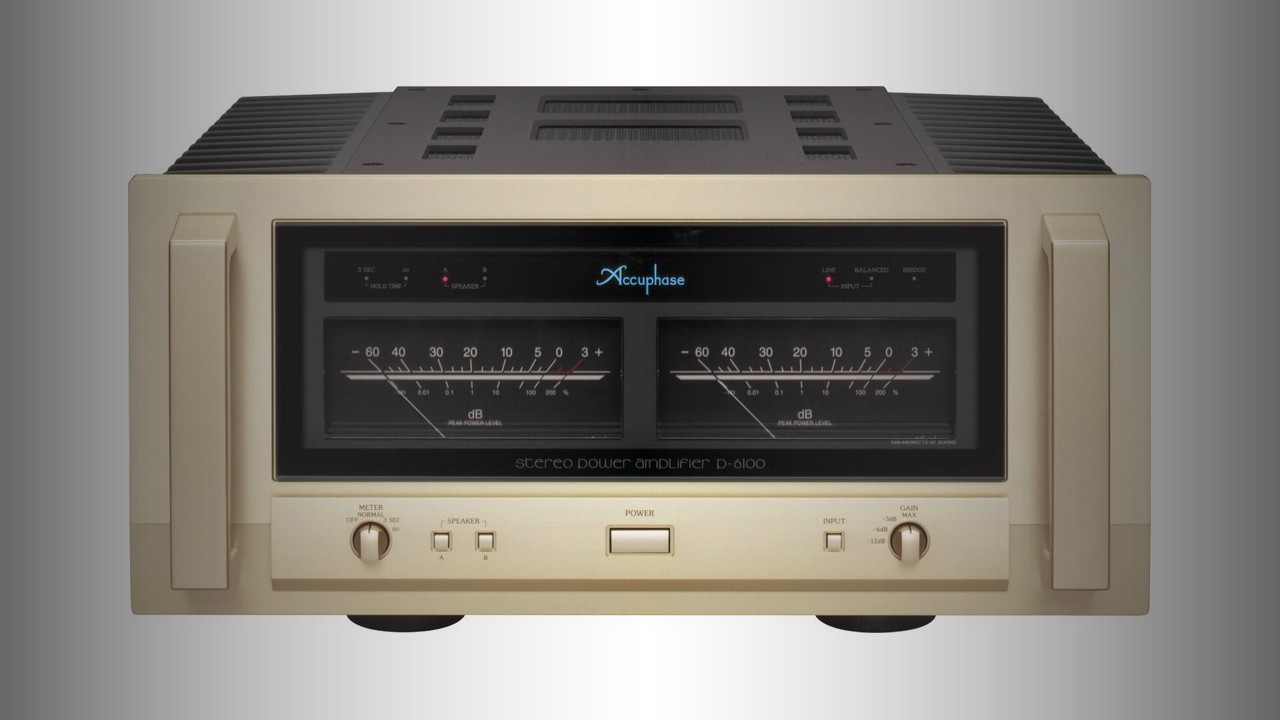
1. Accuphase P-7300: Anniversary edition power amplifier
Accuphase P-7300 power amplifier with analogue dial indicators and front-panel speaker switching.
The Accuphase P-7300 is a serious stereo power amplifier for systems that need high-current drive and flexible operation.
Its published output ratings scale from 2 x 125 watts at 8 ohms to much higher figures into lower impedances, and the source highlights a damping coefficient of 1000, a fully symmetrical circuit, MCS+ technology and current feedback.
The design also includes a shielded toroidal transformer with independent windings, two 56,000 uF capacitors, parallel MOSFET output devices and selectable stereo, dual mono and bridged modes. Front-panel speaker switching for two pairs of speakers and gain reduction settings add practical control to what is otherwise a purist power-amplifier platform.
Best for: High-current separates-based systems
- High damping coefficient specified at 1000
- Stereo, dual mono and bridged operating modes
- Two pairs of speakers can be connected and switched from the front panel
- Substantial power supply with toroidal transformer and large capacitors
Verdict: The Accuphase P-7300 is the shortlist choice here for demanding loudspeaker control and flexible power-amplifier operation in a traditional separates system.

2. Bluesound Powernode Edge: Powerful amplifier with network functions
Bluesound Powernode Edge network amplifier with front touch controls and HDMI eARC connectivity.
The Bluesound Powernode Edge is the most lifestyle-oriented amplifier in this group, combining 2 x 40 watts into 8 ohms with broad network and wireless functionality.
It supports WiFi, Bluetooth 5.0, Spotify Connect, TIDAL Connect, AirPlay 2 and access to streaming services and web radio through the BluOS ecosystem.
HDMI eARC makes it suitable for TV audio, while bi-directional Bluetooth with aptX HD support allows both receiving audio and sending it to Bluetooth headphones or speakers. Control options include the BluOS mobile app, a front touch interface, voice assistants and integration into home automation systems.
Best for: Compact streaming and TV-friendly systems
- WiFi and Bluetooth streaming support
- HDMI eARC for TV audio
- Spotify Connect, TIDAL Connect and AirPlay 2 support
- BluOS app, touch, voice and home automation control options
Verdict: The Bluesound Powernode Edge is a practical pick when network music, app control and HDMI eARC matter more than separates-style expandability.

3. Aiyima A05: Small, simple and effective Class D amplifier
Aiyima A05 compact Class D amplifier with Bluetooth 5.0 and stereo RCA input.
The Aiyima A05 is a compact Class D amplifier intended for a small, straightforward audio system.
It uses a TPA3221 amplifier chip and is specified at up to 2 x 10⁵ watts into 4 ohms at 10 percent THD+N with a 30V power supply, or 2 x 85 watts into 4 ohms at 1 percent THD+N under the same supply condition.
Inputs are kept simple with stereo RCA and Bluetooth 5.0 via a Qualcomm QCC3034 receiver, with SBC, AAC, aptX and aptX HD codec support. The external DC power supply requirement is important to note because the source states that the power supply is sold separately.
Best for: Small budget-conscious stereo setups
- Compact 133 x 91 x 43 mm chassis
- RCA and Bluetooth 5.0 inputs
- aptX and aptX HD codec support
- High-efficiency Class D design
Verdict: The Aiyima A05 is a simple compact amplifier for users who need RCA and Bluetooth input without the complexity of a full-size integrated amplifier.
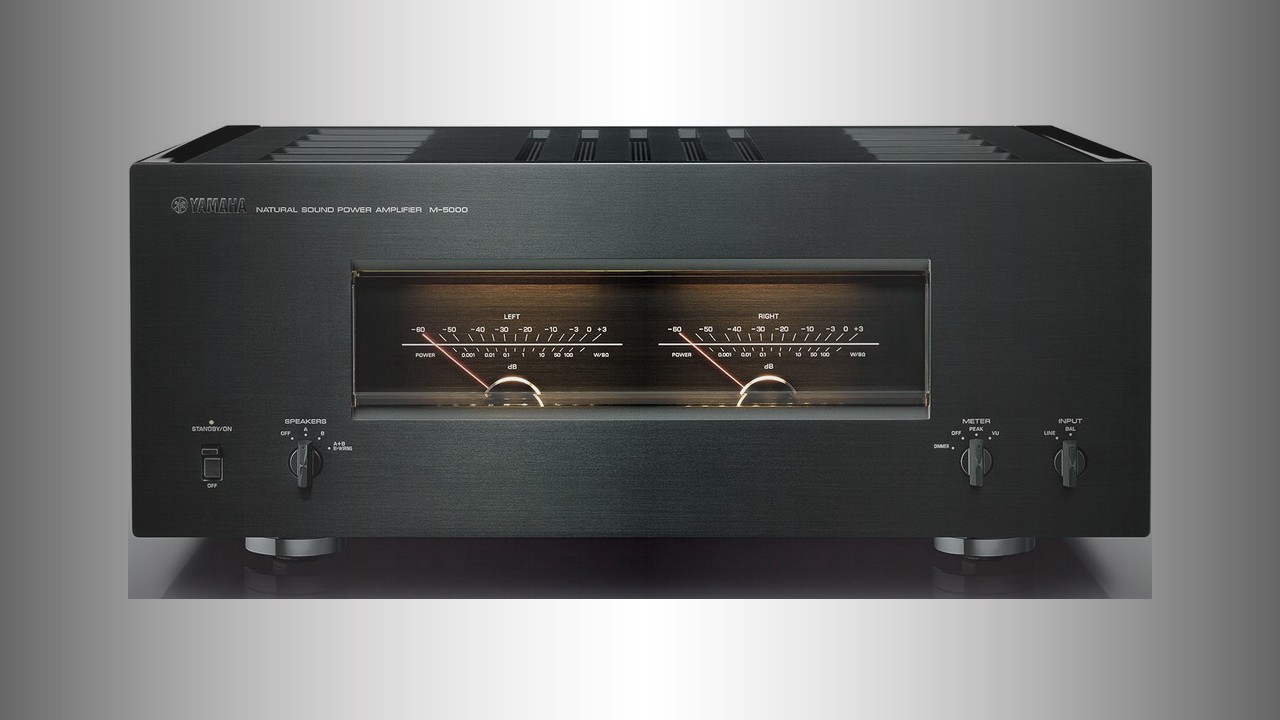
4. Yamaha M-5000: A model of high-fidelity audio reproduction
Yamaha M-5000 power amplifier with a symmetrical internal design and mechanically grounded structure.
The Yamaha M-5000 is presented as a high-fidelity power amplifier built around symmetry, rigidity and vibration control.
Its fully symmetrical design physically separates the left and right channels into separate electrical circuits, while the simplified component layout is intended to minimize the signal path and reduce power loss.
The source also describes a direct connection to the positive and negative sides of the output stage, complete isolation of the power amplifier circuit from transient voltage fluctuation and ground noise, and suitability of the symmetrical design for MOSFET power amplification with low-impedance speaker systems. Mechanical grounding is used by bolting the transformer, capacitors and heatsink to the rigid structure.
Best for: Premium separates systems prioritizing symmetrical design
- Fully symmetrical left and right channel design
- Short signal-path-oriented component layout
- Mechanical grounding for key components
- Designed with MOSFET power amplification in mind
Verdict: The Yamaha M-5000 suits listeners building a separates system around a carefully engineered, mechanically rigid power amplifier.

5. Rotel RA-1592 MKII: Flagship Integrated amplifier
Rotel RA-1592 MKII integrated amplifier with broad analog, digital and wireless input support.
The Rotel RA-1592 MKII is a full-featured integrated amplifier that brings together preamplifier and power-amplifier sections in one chassis, simplifying placement and avoiding extra interconnects.
The source says its circuits are arranged to reduce crosstalk and operate from independent power supplies.
Connectivity is extensive: MM phono input, line-level analog inputs including balanced XLR, three optical inputs, three coaxial inputs, asynchronous USB for computer connection, Bluetooth with aptX support and a front USB for iPhone or iPod connection. Digital conversion uses a Texas Instruments DAC chip with tuned output filtering, and the large front display is designed to be readable from a distance.
Best for: Feature-rich main stereo systems
- Integrated preamp and power amp in one chassis
- MM phono input and balanced XLR analog input
- Optical, coaxial, asynchronous USB and Bluetooth inputs
- Large front display
Verdict: The Rotel RA-1592 MKII is the versatile integrated option for systems with a wide mix of analog, digital, computer and Bluetooth sources.

6. Pro-Ject Amp Box RS2: Compact and powerful stereo power amplifier
Pro-Ject Amp Box RS2 compact stereo power amplifier with visible top-mounted tube elements.
The Pro-Ject Amp Box RS2 is a compact stereo power amplifier with a hybrid approach that uses a 6922 type triode tube in each channel’s pre-amplifier stage while operating as a discrete Class AB design.
It is rated at 80 watts per channel into 8 ohms and 130 watts into 4 ohms, with the ability to bridge its two channels for mono operation at around 350 watts into 8 ohms.
The full metal casing is not only a visual feature but also part of the heat distribution and dissipation strategy. The source also notes an optional Power Box RS2 Amp linear power supply for those who want to upgrade beyond the included supply.
Best for: Compact separates systems needing bridgeable power
- Hybrid tube and transistor design
- Bridgeable for mono operation
- Compact metal casing aids heat dissipation
- Optional linear power supply available
Verdict: The Pro-Ject Amp Box RS2 stands out as a compact, bridgeable Class AB power amplifier with tube input-stage character and practical upgrade potential.

7. JBL SA750 amplifier: Class G, built-in DAC, MQA support and wireless connectivity
JBL SA750 integrated amplifier combining vintage visual cues with network streaming and room calibration.
The JBL SA750 is a retro-styled integrated amplifier with a modern digital feature set.
Its Class G amplifier section is specified at 120 watts per channel into 8 ohms and 220 watts into 4 ohms, with an additional power supply brought in when operating conditions demand more output.
Wireless and network support includes Google Chromecast, Apple AirPlay 2, Bluetooth, UPnP over Ethernet and WiFi, Roon Ready capability and MQA decoding. The amplifier also includes a built-in DAC and Dirac Live sound calibration, giving it a broader digital and room-tuning remit than many traditional integrated designs.
Best for: Modern digital systems with room calibration needs
- Class G amplification with specified 8-ohm and 4-ohm output
- Chromecast, AirPlay 2 and Bluetooth support
- Built-in DAC with MQA decoding
- Dirac Live sound calibration
Verdict: The JBL SA750 is the most digitally ambitious integrated amplifier here, combining Class G power, network playback and Dirac Live calibration in a retro-inspired package.

8. Cyrus i7-XR: Integrated amplifier with a re-designed preamp
Cyrus i7-XR integrated amplifier in the brand’s compact die-cast enclosure.
The Cyrus i7-XR is an integrated amplifier focused on internal redesign rather than visual reinvention, retaining the brand’s compact die-cast body while introducing a newly designed preamp section with relay selectors and shorter signal paths.
Its power supply uses Schottky diodes instead of traditional bridge rectifiers, a change the source says reduces losses in that part of the circuit.
Output is specified at 2 x 52 watts per channel into 6 ohms with a dynamic range of 101 dB. Inputs include four analog connections, an MM phono stage, two coaxial digital inputs, two optical inputs and USB, supported by the proprietary QXR DAC platform.
Best for: Compact integrated systems with vinyl and digital sources
- Redesigned preamp with relay selectors
- MM phono stage included
- Five digital inputs including USB
- Compact Cyrus die-cast chassis
Verdict: The Cyrus i7-XR is a strong fit for buyers who want a compact integrated amplifier with both an MM phono stage and a serious spread of digital inputs.
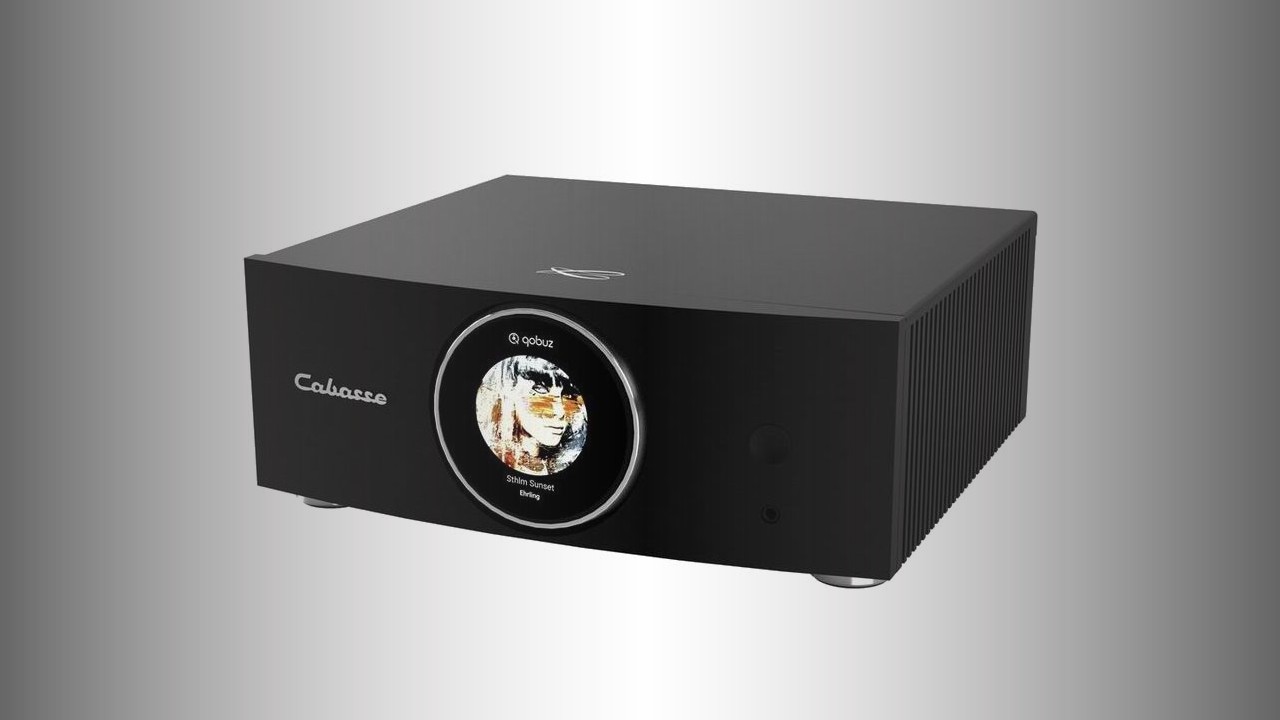
9. Cabasse Abyss: Innovative high-end amplifier
Cabasse Abyss connected amplifier with touch screen and rotating volume-control ring.
The Cabasse Abyss is a connected Class D integrated amplifier specified at 2 x 120 watts into 8 ohms or 215 watts into 4 ohms.
The source highlights DSP calibration algorithms intended to identify compatible Cabasse input models and adapt configuration accordingly, along with DFE Dynamic Fidelity Enhancer technology that optimizes dynamics according to listening volume, frequency content and musical material.
Its interface centers on a touch screen surrounded by a rotating volume ring for smooth level adjustment. The article also notes enhanced sharing of audio streaming and connection to other sources, while specifically saying this is achieved without HDMI connectivity.
Best for: Cabasse-centered connected systems
- 2 x 120 watts into 8 ohms specified
- DSP calibration approach for Cabasse speaker matching
- DFE technology adjusts dynamics with listening volume
- Touch screen with rotating volume ring
Verdict: The Cabasse Abyss is most compelling for users building around Cabasse compatibility, DSP adaptation and a distinctive connected-amplifier interface.

10. Leema Acoustics i85 & iD85: British Integrated Amplifiers With Serious Intent
Leema Acoustics i85 and iD85 integrated amplifiers, with the iD85 adding onboard DAC inputs to the shared analog platform.
The Leema Acoustics i85 and iD85 are closely related integrated amplifiers in the company’s 100 series, with the i85 handling exclusively analog signal processing and the iD85 adding digital-to-analog conversion.
The i85 is a Class AB design rated at 85 watts per channel into 8 ohms, with four RCA inputs, an MM-compatible turntable input, subwoofer output, preamp output and recording output.
The power supply uses a large toroidal transformer and 27,000 uF of smoothing capacitance per channel, and the source also notes an analog volume control and separate headphone amplifier. The iD85 keeps the same foundation and adds a DAC powered by a separate power line, plus two coaxial RCA, two optical and asynchronous USB-B digital inputs.
Best for: Buyers choosing between analog purity and onboard digital input
- Choice of analog-only i85 or DAC-equipped iD85
- MM-compatible turntable input
- Subwoofer, preamp and recording outputs
- Class AB design rated at 85 watts per channel into 8 ohms
Verdict: The Leema Acoustics i85 and iD85 make sense for listeners who want the same integrated-amplifier platform with a clear choice between analog-only operation and added digital connectivity.
Quick comparison
The amplifiers below differ mainly by system role.
Some are pure power amplifiers that require a preamplifier or source with volume control, while others are integrated models designed to anchor a complete stereo system.
The most useful comparison is therefore not only power, but also source handling, streaming, phono support, room correction and whether the design is intended for compact placement or full-size separates.
| Product | Best for | Verdict |
|---|---|---|
| Accuphase P-7300 | High-current stereo power amplification | A separates-focused power amplifier with symmetrical circuitry, major power-supply resources and multiple operating modes. |
| Bluesound Powernode Edge | Streaming-first compact systems | A network amplifier with HDMI eARC, BluOS control and broad wireless playback support. |
| Aiyima A05 | Small RCA and Bluetooth setups | A compact Class D amplifier with simple inputs and aptX HD-capable Bluetooth, noting that the power supply is sold separately. |
| Yamaha M-5000 | Premium symmetrical power-amplifier systems | A power amplifier built around channel separation, mechanical rigidity and a fully symmetrical design approach. |
| Rotel RA-1592 MKII | One-box analog and digital hub duties | A broadly equipped integrated amplifier with MM phono, balanced analog input, digital inputs, USB and Bluetooth. |
| Pro-Ject Amp Box RS2 | Compact bridgeable power amplification | A hybrid Class AB power amplifier with tube input-stage elements and mono bridging capability. |
| JBL SA750 | Networked integrated systems with room calibration | A Class G integrated amplifier with DAC, MQA decoding, streaming features and Dirac Live calibration. |
| Cyrus i7-XR | Compact integrated systems with vinyl and USB audio | A redesigned compact integrated amplifier with MM phono, multiple digital inputs and QXR DAC architecture. |
| Cabasse Abyss | Cabasse-oriented connected listening | A Class D connected amplifier with DSP adaptation, DFE processing and a touch-and-ring control interface. |
| Leema Acoustics i85 and iD85 | Choosing analog-only or DAC-equipped integrated amplification | Two related Class AB integrated amplifiers, with the iD85 adding digital inputs to the i85 analog foundation. |
Frequently asked questions
Should I choose an integrated amplifier or a power amplifier?
Choose an integrated amplifier if you want source selection, volume control and amplification in one chassis.
Models such as the Rotel RA-1592 MKII, Cyrus i7-XR, JBL SA750, Bluesound Powernode Edge, Cabasse Abyss and Leema i85 or iD85 are built for that role.
Choose a power amplifier such as the Accuphase P-7300, Yamaha M-5000 or Pro-Ject Amp Box RS2 if you already have a preamplifier, streamer with volume control or separate system controller.
Which amplifiers here are most suitable for streaming?
The Bluesound Powernode Edge is the clearest streaming-first option because it supports BluOS, WiFi, Bluetooth, Spotify Connect, TIDAL Connect and AirPlay 2.
The JBL SA750 also has extensive network features including Chromecast, AirPlay 2, Bluetooth, UPnP, Roon Ready capability and MQA decoding.
The Cabasse Abyss is described as a connected amplifier with audio streaming support, while the Aiyima A05 offers simpler Bluetooth playback.
Which choices support turntables?
The Rotel RA-1592 MKII includes a built-in MM phono preamplifier.
The Cyrus i7-XR also includes an MM phono stage, and the Leema Acoustics i85 and iD85 include a turntable input suitable for MM cartridges.
The other entries should not be assumed to support a turntable directly unless a suitable external phono stage or separate preamplifier is used.
How should I match one of these amplifiers to speakers?
Start with the speaker impedance and the amplifier’s supported output ratings.
The source material gives several relevant examples: the Accuphase P-7300 is specified across 8, 4, 2 and 1 ohm loads, the JBL SA750 and Cabasse Abyss list both 8-ohm and 4-ohm output, and the Pro-Ject Amp Box RS2 is rated at 8 and 4 ohms with a bridged mono option.
Also consider system control needs; a power amplifier still requires upstream volume control.
How to choose from this amplifier shortlist
Begin by defining the amplifier’s job.
If it only needs to drive loudspeakers in a separates system, the Accuphase P-7300, Yamaha M-5000 and Pro-Ject Amp Box RS2 are the relevant starting points.
The Accuphase emphasizes high-current capability, damping and multiple operating modes; the Yamaha centers on symmetrical design and vibration control; the Pro-Ject is the compact bridgeable option with a hybrid tube and transistor architecture. If the amplifier must be the system hub, focus on the integrated models. The Rotel RA-1592 MKII is the broadest conventional hub, with MM phono, balanced analog input, optical and coaxial digital inputs, computer USB and Bluetooth. The Cyrus i7-XR is more compact and still covers MM vinyl and several digital inputs. The Leema Acoustics i85 and iD85 make the decision especially clear: choose the i85 if you want analog-only signal handling, or the iD85 if digital inputs and onboard conversion are required. For wireless and connected systems, the Bluesound Powernode Edge is the most direct choice when BluOS, HDMI eARC and app-based streaming are priorities. The JBL SA750 adds a different mix: Class G amplification, network playback, DAC functions, MQA decoding and Dirac Live calibration. The Cabasse Abyss should be considered primarily in the context of Cabasse speaker matching and its DSP-oriented connected design. Finally, check the small practical details before deciding: whether a power supply is included, as with the Aiyima A05 where the source states it is sold separately; whether the amplifier has the exact input your source requires; whether a turntable needs an MM phono stage; and whether your speakers’ impedance aligns with the amplifier’s published ratings. The right amplifier in this group is the one whose role, inputs and load capability match your actual system rather than the one with the longest feature list.


Join the discussion
Share your thoughts, listening impressions or product experience.