

Amplifiers are not one-size-fits-all components.
The right choice depends on whether the system needs to feed several rooms, drive passive speakers in a cinema setup, sit on a desktop with headphones, accept a turntable, or simply disappear into a compact living-room installation.
This comparison keeps those distinctions at the center. The source material covers multiroom distribution, integrated amplifiers, power amplification, tube designs, headphone amplification, a preamplifier, and one loudspeaker article that is relevant mainly as a reminder that amplifier matching still matters. Rather than treating every product as a direct rival, the guide explains where each one fits. A custom-install amplifier and a compact HDMI-equipped integrated amp solve very different problems, while a passive/active preamp or a five-channel power amplifier belongs in a system with separate source and amplification stages.

1. Denon Heos Drive HS2: Feature-packed Multiroom amplifier
Denon HEOS Drive HS2 multiroom amplifier with four-zone distribution and installer-focused connectivity.
The Denon HEOS Drive HS2 is aimed squarely at installers and integrators rather than a conventional two-channel rack.
Its 2RU chassis combines four-zone audio distribution with an eight-channel Class D amplifier, zone-by-zone configuration, multiple digital and analog inputs, USB per zone, DSP filtering, and trigger outputs.
The ability to assign inputs to zones and configure stereo or mono output makes it a practical hub for distributed audio systems where flexibility matters more than minimalist hi-fi simplicity.
Best for: Custom multiroom installations
- Four-zone audio distribution in one chassis
- Eight channels of Class D amplification
- Digital, analog, and USB connectivity by zone
- Built-in DSP with crossover options
Verdict: Choose the Denon HEOS Drive HS2 when the priority is controlled, flexible audio distribution across several zones rather than a traditional single-room integrated amplifier.

2. Cambridge Audio Edge A: High-quality flagship integrated amplifier
Cambridge Audio Edge A integrated amplifier from the company’s flagship Edge range.
The Cambridge Audio Edge A is presented as the integrated amplifier in Cambridge Audio’s flagship Edge range.
The source highlights its brushed-metal minimalist design, reduced signal-chain philosophy, dual opposing toroidal transformers intended to reduce electromagnetic interference, and Cambridge’s Class-XA topology, which the company positions as combining Class A-like sound quality with higher efficiency.
It is the most conventional high-end integrated amplifier entry here, intended for listeners who want a single premium amplifier rather than separates.
Best for: High-end two-channel integrated systems
- Flagship integrated amplifier design
- Minimalist brushed-metal construction
- Reduced signal-chain approach
- Dual opposing toroidal transformers
Verdict: The Edge A is the most natural fit here for a premium stereo system built around a single integrated amplifier.

3. McIntosh MHA200 – Awesome Vacuum Tube Amplifier for your headphones
McIntosh MHA200 vacuum-tube headphone amplifier with balanced and single-ended headphone outputs.
The McIntosh MHA200 is a dedicated vacuum-tube headphone amplifier designed for premium headphones and close-to-seat placement.
The compact chassis is supported by balanced and unbalanced inputs, three headphone output options, and McIntosh’s Unity Coupled Circuit transformer technology adapted for headphone use.
Its tube complement includes 12AT7 valves for signal amplification and 12BH7A tubes for driving the headphone output.
Best for: Premium headphone listening with tube amplification
- Dedicated vacuum-tube headphone amplifier
- Balanced and unbalanced inputs
- Multiple balanced and single-ended headphone outputs
- Compact enough for placement near the listener
Verdict: The MHA200 is the specialist choice for listeners who want McIntosh tube headphone amplification rather than a speaker-driving amplifier.
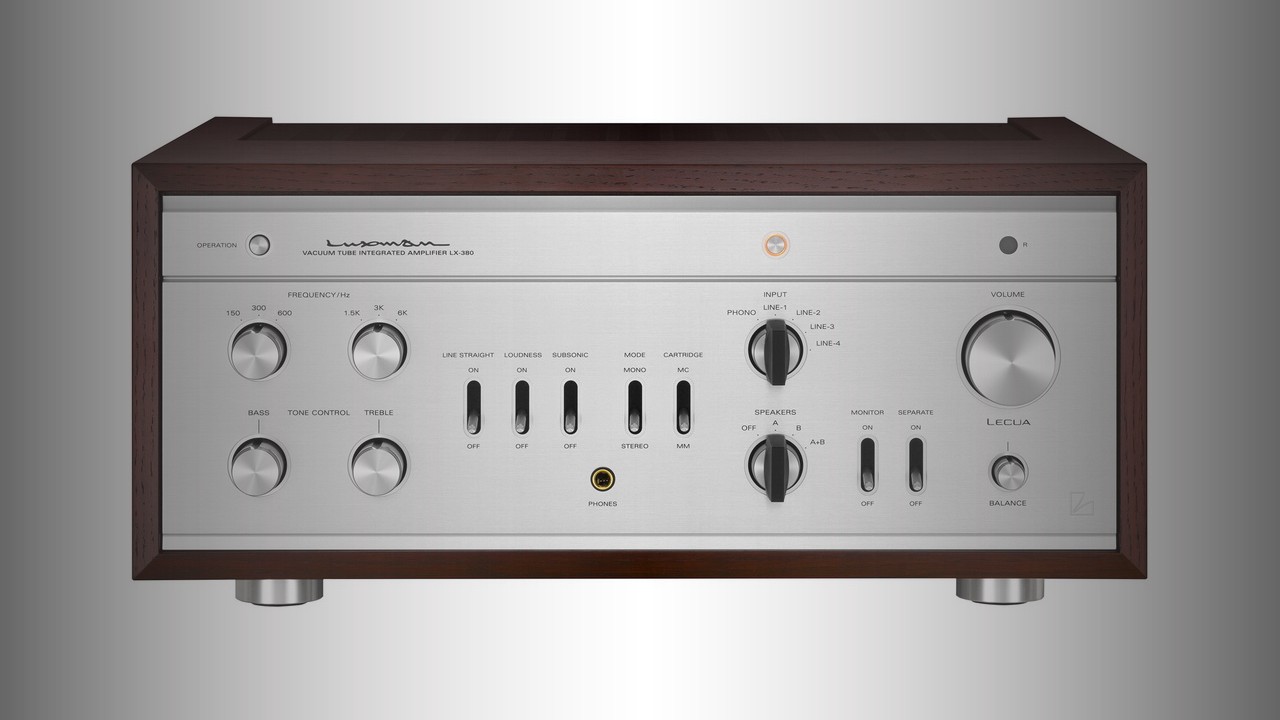
4. Luxman LX-380: Classic tube integrated amplifier
Luxman LX-380 tube integrated amplifier with wooden casework and classic front-panel controls.
The Luxman LX-380 is a classic tube integrated amplifier from Luxman’s long-running 38 series.
It uses a push-pull circuit with ECC82 driver tubes and 6L6GC output tubes, rated at 18 W per channel into 8 ohms.
The built-in MC and MM phono stage, infrasonic filter, headphone jack, tone and balance controls, loudness function, wooden case, and aluminum front panel make it a traditional, tactile amplifier for vinyl-friendly systems.
Best for: Classic tube-based stereo systems with vinyl
- Tube integrated amplifier with push-pull topology
- Built-in MC and MM phono stage
- LECUA volume attenuator
- Tone, balance, loudness, and headphone facilities
Verdict: The LX-380 suits listeners who want a traditional tube integrated amplifier with hands-on control and built-in phono support.

5. PS Audio Aspen FR30 Floorstanders: Five decades of development
PS Audio Aspen FR30 floorstanding loudspeaker, included here for its amplifier-matching relevance rather than as an amplifier.
The PS Audio Aspen FR30 is not an amplifier; it is a floorstanding loudspeaker.
Its place in an amplifier guide is therefore indirect, but useful: the source emphasizes a crossover optimized for phase correction and an almost flat impedance curve intended to make the speaker easier to drive with any power amplifier.
The article also describes a three-way architecture with multiple woofers, passive woofers, ribbon midrange, ribbon tweeters, and carefully designed cabinet construction aimed at low distortion.
Best for: Amplifier matching considerations with full-range speakers
- Designed with an almost flat impedance curve
- Crossover optimized for phase correction
- Three-way floorstanding speaker architecture
- Cabinet design focused on reducing distortion
Verdict: The Aspen FR30 should be treated as a speaker-matching reference in this list, not as an amplifier recommendation.

6. FX-AUDIO L07: Powerful high-quality speaker amplifier
FX-AUDIO L07 compact Class D speaker amplifier with XLR, RCA, and speaker connections.
The FX-AUDIO L07 is a compact Class D speaker amplifier built around a fully balanced architecture and an Infineon MA5332MS chipset.
The source lists balanced XLR and unbalanced RCA inputs, speaker outputs, an aluminum-alloy chassis, and output ratings of 100 W plus 100 W into 8 ohms or 200 W plus 200 W into 4 ohms.
Its small size and stated thermal stability make it a practical option for systems that need substantial rated power without a large amplifier chassis.
Best for: Compact high-power speaker amplification
- Fully balanced Class D architecture
- Balanced XLR and unbalanced RCA inputs
- Compact aluminum-alloy housing
- Rated for 4-ohm and 8-ohm speaker loads
Verdict: The L07 is a space-conscious Class D power option for listeners who need speaker-driving power and simple analog input choices.

7. Hattor Audio Takman REX AMRT: Beautifully crafted preamp
Hattor Audio Takman REX AMRT preamplifier with passive and active-buffered operating options.
The Hattor Audio Takman REX AMRT is a preamplifier rather than a power amplifier, available for use as a passive preamp, input selector, or active-buffered preamp.
The source highlights two RCA inputs, three XLR inputs, RCA and XLR outputs, Takman REX AMRT resistor attenuators, optional active buffer operation, remote-controlled gain levels of +3 dB, +6 dB, and +9 dB, and channel-level control options.
It is best understood as a control center for a separates system.
Best for: Separates systems needing flexible preamplification
- Passive or active-buffered preamp operation
- RCA and XLR input and output connectivity
- Remote-selectable gain levels
- High-precision resistor attenuators
Verdict: The Hattor is the choice for systems that already have power amplification and need precise, flexible signal control.
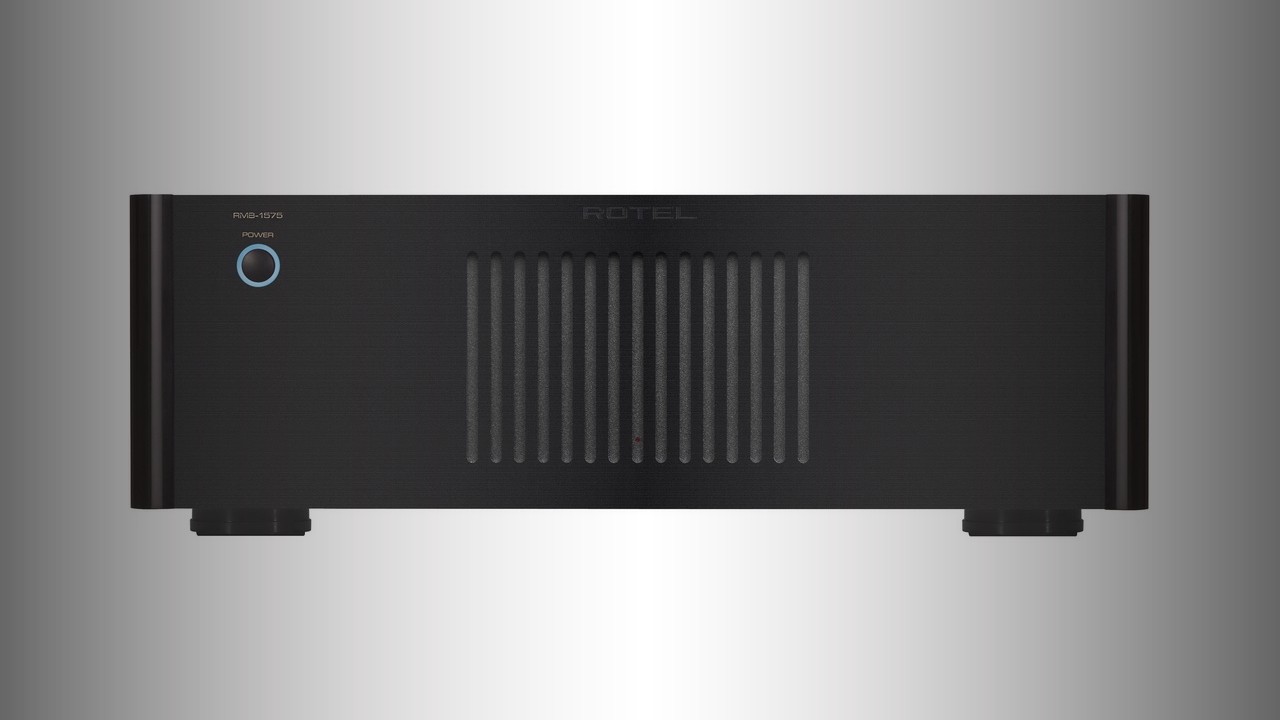
8. Rotel RMB 1575: Impressive five-channel power amplifier
Rotel RMB-1575 five-channel Class D power amplifier for multichannel speaker systems.
The Rotel RMB-1575 is a five-channel Class D power amplifier intended for large rooms and multichannel systems.
The source states 5 x 250 W with all channels operating into 8 ohms, with power doubling into 4 ohms, plus low heat, no noisy fans, RCA inputs, WBT speaker terminals, and a trigger connector.
It is not an integrated amplifier; it needs upstream control, but it provides substantial multichannel power for demanding loudspeaker setups.
Best for: Large-room multichannel speaker systems
- Five-channel power amplifier layout
- 5 x 250 W into 8 ohms stated output
- Designed to handle 4-ohm speaker loads
- Low heat operation with no noisy fans
Verdict: The RMB-1575 is the strongest fit here for users who need separate five-channel power amplification rather than stereo integration.

9. Original Audio OPA-5A: Tube amplifier with Bluetooth
Original Audio OPA-5A tube amplifier with Bluetooth, speaker outputs, and balanced headphone output.
The Original Audio OPA-5A combines a Class A tube speaker amplifier with headphone amplification and Bluetooth connectivity.
The source lists 12AU7 preamp tubes, KT88 output tubes, RCA and XLR inputs, Bluetooth, speaker terminals, a 6.35 mm headphone output, and a balanced four-pin XLR headphone output.
With 2 x 8 W stated speaker output into 4 to 8 ohms, it is better suited to appropriate speaker pairings or headphone use than to high-output speaker systems.
Best for: Tube listening with headphones and suitable speakers
- Tube Class A amplifier and headphone amplifier
- Bluetooth, RCA, and XLR inputs
- Speaker and headphone outputs
- Balanced headphone output provided
Verdict: The OPA-5A is a versatile small tube amplifier for users who value headphone support, Bluetooth, and speaker outputs in one unit.

10. Argon Audio SA1 MK2 Review: Compact amplifier with big hi-fi sound
Argon Audio SA1 MK2 compact integrated amplifier with HDMI ARC, Bluetooth, and phono connectivity.
The Argon Audio SA1 MK2 is a compact integrated amplifier designed for modern living spaces where a full-size component may be impractical.
The source describes HDMI ARC, Bluetooth, digital inputs, analog inputs, a moving-magnet phono stage, a proper remote control, clear input selection, and a minimalist chassis.
Its strongest distinction is convenience: it bridges TV, wireless sources, vinyl, and conventional stereo inputs in a small, straightforward package.
Best for: Small living-room stereo and TV systems
- Compact integrated amplifier design
- HDMI ARC for TV integration
- Bluetooth and digital inputs
- Built-in moving-magnet phono stage
Verdict: The SA1 MK2 is the most lifestyle-friendly integrated amplifier here, especially where HDMI ARC and compact size are priorities.
Quick comparison
These products are not interchangeable.
The most useful comparison is by role: multiroom distribution, integrated stereo amplification, headphone amplification, preamplification, multichannel power, compact lifestyle integration, or speaker matching.
| Product | Best for | Verdict |
|---|---|---|
| Denon Heos Drive HS2: Feature-packed Multiroom amplifier | Custom multiroom installations | A zone-based distribution amplifier with extensive installer-oriented routing, DSP, and trigger options. |
| Cambridge Audio Edge A: High-quality flagship integrated amplifier | High-end two-channel integrated systems | A premium integrated amplifier focused on reduced signal path design, flagship build, and Cambridge’s Class-XA approach. |
| McIntosh MHA200 – Awesome Vacuum Tube Amplifier for your headphones | Premium headphone listening | A dedicated tube headphone amplifier with balanced and unbalanced system connections and multiple headphone outputs. |
| Luxman LX-380: Classic tube integrated amplifier | Traditional tube stereo with vinyl | A classic integrated tube amplifier with MC and MM phono, tone controls, headphone output, and 18 W per channel into 8 ohms. |
| PS Audio Aspen FR30 Floorstanders: Five decades of development | Speaker and amplifier matching context | Not an amplifier, but relevant because the speaker design is described as having an almost flat impedance curve for easier power-amplifier matching. |
| FX-AUDIO L07: Powerful high-quality speaker amplifier | Compact Class D speaker power | A small balanced Class D amplifier with XLR and RCA inputs and stated high output into 4-ohm and 8-ohm loads. |
| Hattor Audio Takman REX AMRT: Beautifully crafted preamp | Separates systems needing input control | A passive or active-buffered preamp with RCA and XLR connectivity, precision attenuation, and remote-selectable gain. |
| Rotel RMB 1575: Impressive five-channel power amplifier | Large multichannel rooms | A five-channel Class D power amplifier designed to deliver substantial output with low heat and no fan noise. |
| Original Audio OPA-5A: Tube amplifier with Bluetooth | Tube headphone and modest speaker systems | A Class A tube amplifier with Bluetooth, RCA, XLR, speaker terminals, and both single-ended and balanced headphone outputs. |
| Argon Audio SA1 MK2 Review: Compact amplifier with big hi-fi sound | Compact TV-friendly stereo systems | A small integrated amplifier with HDMI ARC, Bluetooth, digital and analog inputs, and a moving-magnet phono stage. |
Frequently asked questions
Should I choose an integrated amplifier, a power amplifier, or a preamplifier?
Choose an integrated amplifier when you want source selection, volume control, and speaker amplification in one box, as with the Cambridge Audio Edge A, Luxman LX-380, Original Audio OPA-5A, or Argon Audio SA1 MK2.
Choose a power amplifier such as the Rotel RMB-1575 or FX-AUDIO L07 when you already have upstream volume control or a processor.
Choose a preamplifier such as the Hattor Audio Takman REX AMRT when you need input switching and level control for separate power amplification.
Which amplifiers here make sense for headphones?
The McIntosh MHA200 is the dedicated headphone amplifier in the list, with tube circuitry and multiple headphone output formats.
The Original Audio OPA-5A also includes headphone outputs, including a balanced XLR output, while the Luxman LX-380 includes a standard headphone jack as part of a speaker-focused integrated amplifier.
What should I consider for TV or living-room use?
For a compact stereo system built around a TV, HDMI ARC is a major convenience feature, and the Argon Audio SA1 MK2 is the only product in the supplied material described with HDMI ARC.
If the system is distributed across rooms rather than centered on one TV, the Denon HEOS Drive HS2 is the more relevant option because it is designed for multi-zone installations.
How important is speaker matching with these amplifiers?
Speaker matching remains important because amplifier output, impedance handling, and system role vary widely.
The Rotel RMB-1575 is described as working effectively with 4-ohm speakers and difficult impedance characteristics, while the FX-AUDIO L07 lists different output ratings into 8 ohms and 4 ohms.
The PS Audio Aspen FR30 entry is a loudspeaker, not an amplifier, but its almost flat impedance curve is specifically presented as a way to ease matching with power amplifiers.
Final buying advice
Start by defining the system architecture before comparing amplifier features.
For whole-home audio, the Denon HEOS Drive HS2 is the relevant option because it is built around zones, input assignment, DSP, and installer control.
For a premium two-channel integrated amplifier, the Cambridge Audio Edge A is the clearest fit. For a more traditional tube-based stereo system with vinyl support, the Luxman LX-380 offers integrated amplification, phono capability, and front-panel control. Headphone users should separate their needs from speaker-system shopping. The McIntosh MHA200 is the purpose-built headphone amplifier, while the Original Audio OPA-5A is more of a hybrid tube speaker and headphone amplifier with Bluetooth. If the system uses separates, the Hattor Audio Takman REX AMRT belongs before a power amplifier, not after one, while the Rotel RMB-1575 is the obvious multichannel power choice for large-room speaker systems. For compact everyday stereo, the Argon Audio SA1 MK2 stands out because its small chassis includes HDMI ARC, Bluetooth, digital inputs, analog inputs, and a moving-magnet phono stage. The FX-AUDIO L07 is the more direct compact power solution when balanced or RCA analog input and Class D speaker drive are the main requirements. Finally, treat the PS Audio Aspen FR30 as context rather than a competing amplifier: it underlines why load behavior and speaker design should be part of any amplifier decision.


Join the discussion
Share your thoughts, listening impressions or product experience.