

A DAC should fit the structure of your system rather than simply offer the longest specification sheet.
Input compatibility, output configuration, volume control and headphone amplification can matter as much as the conversion architecture itself.
A network-connected listening room has different requirements from a desktop headphone station, while a system built around professional digital interfaces may need signal conversion rather than analog output. The recommendations below cover full-size converters, integrated streaming sources, desktop DAC and headphone amplifiers, a lightweight personal-audio option and one specialist digital-to-digital converter. The latter is not a substitute for a DAC, but it may solve USB isolation and interface-conversion problems before the signal reaches one. Several products support exceptionally high-resolution formats, but those figures should be considered alongside practical questions: which inputs your sources use, whether you need balanced analog outputs, whether volume control is required and whether the unit must drive headphones directly. Those distinctions provide a more useful basis for choosing among these models.

1. Leema Constellation Libra
The full-size Leema Constellation Libra features a replaceable balanced DAC module, asynchronous USB and two RJ45-based I2S connections.
The Leema Constellation Libra is a full-size converter designed around the company’s replaceable Quattro Infinity DAC module.
Its fully balanced, dual-mono architecture is complemented by asynchronous USB and two non-certified I2S connections on RJ45 sockets, one of which is configurable.
USB and I2S accommodate PCM up to 24-bit/384 kHz, DXD, DSD64 and DSD128. Compatibility with Leema’s LIPS control and monitoring system makes the Libra especially relevant to a rack built around other Constellation components, although its interface selection also gives it a place in more specialized digital systems.
Best for: Leema systems and advanced digital-source setups
- Fully balanced dual-mono conversion architecture
- Replaceable Quattro Infinity DAC module
- Configurable I2S interface
- LIPS system integration
Verdict: The Libra is a strong fit for listeners who value balanced construction, unusual I2S flexibility and close integration with other Leema components.

2. Atoll DAC200 Signature
The Atoll DAC200 Signature places its display and switchable volume controls in a low-profile, all-metal full-size chassis.
Atoll’s DAC200 Signature combines an ESS Sabre ES9028PRO converter with balanced circuitry, two linear power transformers and twelve independent voltage regulators.
Its discrete Class A output stages operate without feedback, while USB format support extends to PCM 32-bit/768 kHz and DSD512.
Switchable volume adjustment allows the DAC to feed a power amplifier directly, and users can also access the available DAC filters. These features make it more adaptable than a fixed-output converter while retaining a conventional full-width component format.
Best for: Full-size systems needing variable output
- Balanced circuitry with discrete Class A output stages
- PCM 32-bit/768 kHz and DSD512 support
- Switchable volume control
- User-selectable DAC filters
Verdict: The DAC200 Signature suits a traditional hi-fi installation where extensive digital support and optional direct power-amplifier connection are priorities.

3. FiiO K13 R2R
The FiiO K13 R2R integrates a balanced R2R DAC, headphone amplifier, LCD interface and app-based sound adjustment.
The FiiO K13 R2R combines a desktop DAC, balanced headphone amplifier and extensive adjustment facilities.
Its proprietary 24-bit R2R conversion stage uses four channels of resistor arrays, with NOS and oversampling modes available.
Bluetooth with LDAC broadens source compatibility, while a 10-band parametric equalizer supports more detailed personal tuning. Operation is available from the front-panel LCD, the FiiO Control application or a web interface. Rated output reaches 2,400 mW per channel into 32 ohms, positioning the K13 R2R as an integrated desktop hub rather than a basic line-level DAC.
Best for: Desktop headphone listening with extensive tuning
- Discrete 24-bit R2R conversion
- NOS and oversampling modes
- 10-band parametric equalizer
- Balanced headphone output rated at 2,400 mW per channel into 32 ohms
Verdict: The K13 R2R is the most adjustment-focused desktop option here, combining discrete conversion, headphone power, wireless input and parametric EQ.

4. Gold Note DS-1000 MKII
The Gold Note DS-1000 MKII combines network streaming, USB media playback and digital conversion behind a 3.5-inch information display.
The Gold Note DS-1000 MKII combines digital-to-analog conversion with network-player functions.
Coaxial and optical inputs accept PCM up to 24-bit/192 kHz, while its USB host connection handles PCM and DSD64, DSD128 and DSD256.
It can read music from FAT32 USB drives and hard drives, access network music over LAN or Wi-Fi, and use the cited Tidal and Qobuz services as well as internet radio. A 3.5-inch TFT display and Single Knob Control provide access to inputs, radio and media-server functions without making the remote the only means of operation.
Best for: Networked systems needing a DAC and streamer
- Integrated LAN and Wi-Fi streaming
- USB playback from drives and hard disks
- PCM and DSD support over USB
- 3.5-inch TFT display with single-knob control
Verdict: The DS-1000 MKII is the practical choice when network playback, local USB storage and conventional digital inputs need to coexist in one source component.

5. Topping D900
The Topping D900 houses its discrete 1-bit PSRM conversion system in a low-profile aluminum chassis with finned sides.
Topping’s D900 takes a less conventional approach than DACs built around standard off-the-shelf converter chips.
Its proprietary Precision Stream Reconstruction Matrix is a discrete 1-bit conversion topology used for all incoming material.
The physical construction is correspondingly substantial, with three-millimeter aluminum chassis panels, an eight-millimeter front panel and side cooling fins. At 330 millimeters wide, it follows the proportions of a compact full-size hi-fi component, while the supplied remote is milled from aluminum rather than made from plastic with a metallic finish.
Best for: Listeners seeking discrete 1-bit conversion in a substantial chassis
- Proprietary discrete 1-bit PSRM conversion
- Three-millimeter aluminum chassis panels
- Eight-millimeter aluminum front panel
- Milled aluminum remote control
Verdict: The D900 stands apart through its proprietary conversion method and unusually extensive aluminum construction rather than a conventional DAC-chip specification.

6. Mutec MC1.2+
The Mutec MC1.2+ converts between professional and consumer digital interfaces while providing USB isolation and signal regeneration.
The Mutec MC1.2+ is a digital-to-digital converter, not a DAC that produces an analog signal.
It can route and convert PCM streams among USB, AES/EBU, AES3/EBUid and S/PDIF interfaces, with simultaneous bidirectional USB operation.
Mutec also uses low-noise clock oscillators, regenerated signal handling and USB-voltage isolation; the manufacturer says these measures reduce phase noise and clock jitter. Its flexibility is especially relevant to studios, although a hi-fi system may also benefit when a computer’s USB connection must be isolated or converted before reaching a separate DAC.
Best for: Digital interface conversion and USB isolation
- Bidirectional digital interface conversion
- USB, AES/EBU, AES3/EBUid and S/PDIF connectivity
- Simultaneous USB input and output operation
- USB-voltage isolation and signal regeneration
Verdict: The MC1.2+ is a specialist problem-solver for routing and conditioning digital signals, but it still requires a separate DAC for analog playback.

7. SPEC RMP-DAC3X
The dual-case SPEC RMP-DAC3X uses a specialized R-core transformer and carefully selected components in pursuit of its purist design goals.
The RMP-DAC3X is SPEC’s dual-case digital-to-analog converter and reflects the Japanese manufacturer’s emphasis on component selection and analog-stage power delivery.
The design uses a specialized R-core transformer intended to provide ample current to the output stage, while particular attention is given to capacitor choice.
SPEC describes the converter’s design objective in terms of preserving instrumental timbre, overtones and subtle expressive information. The available source material does not provide a detailed input or format list, so its clearest distinction here is its purist, component-led construction rather than broad feature coverage.
Best for: Purist systems focused on analog-stage construction
- Dual-case construction
- Specialized R-core transformer
- Carefully selected capacitors
- Design emphasis on instrumental timbre and subtle signals
Verdict: The RMP-DAC3X is the specialist choice for buyers drawn to SPEC’s component-led approach, although source compatibility should be confirmed separately.
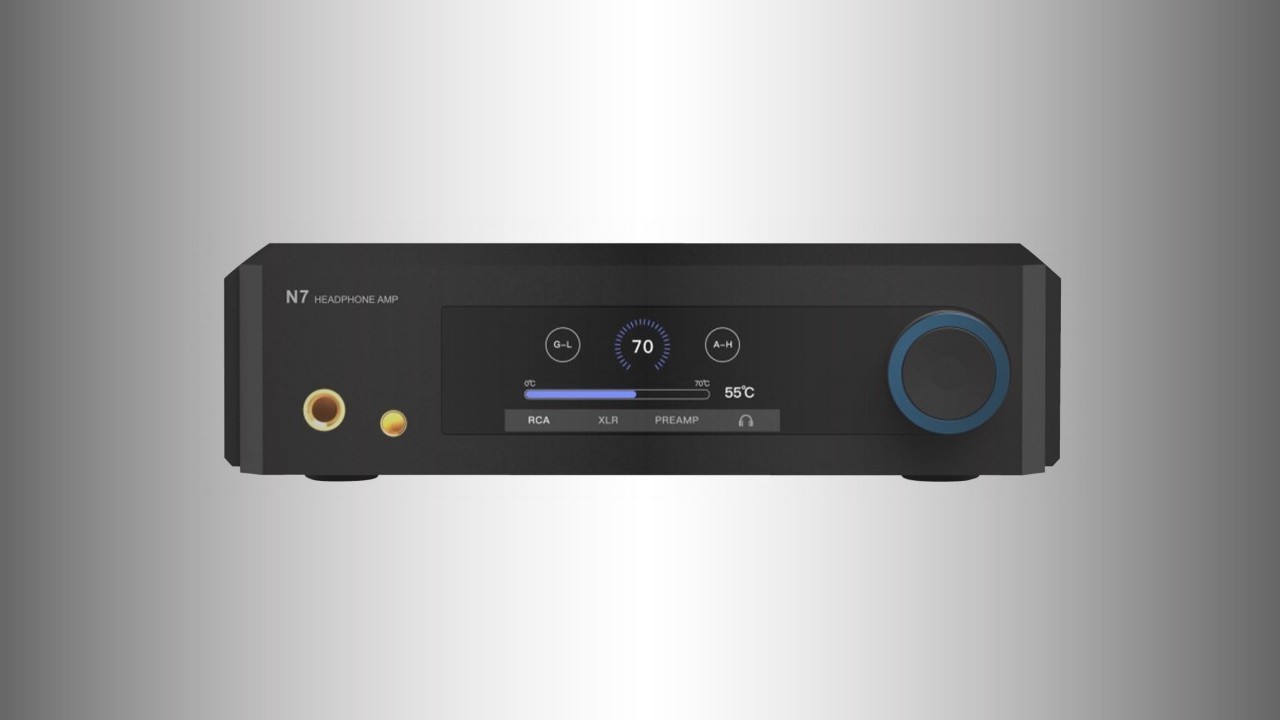
8. Aune N7 DAC Edition
The Aune N7 DAC Edition combines dual CS43198 conversion with discrete Class A headphone amplification and preamplifier operation.
The Aune N7 DAC Edition brings together a dual-CS43198 DAC, a balanced Class A headphone amplifier and preamplifier functions.
USB-C accepts PCM up to 32-bit/384 kHz and DSD256.
The analog section uses discrete JFET transistors, while a four-channel R2R volume circuit is intended to maintain channel balance and stable adjustment. Aune specifies support for headphones from 16 to 600 ohms, with rated output of up to 1,900 mW into 32 ohms from the 6.35 mm connection and 6,570 mW into 32 ohms from the balanced 4.4 mm output.
Best for: A combined headphone station and preamplifier
- DAC, headphone amplifier and preamplifier functions
- Dual Cirrus Logic CS43198 DACs
- Discrete JFET Class A amplification
- 6,570 mW rated output into 32 ohms from the balanced connection
Verdict: The N7 DAC Edition is a versatile centerpiece for headphone users who also want balanced Class A amplification and preamplifier control.

9. Luxman DA-07X
The Luxman DA-07X combines dual-mono ROHM conversion with balanced analog circuitry and a broad selection of wired digital inputs.
The Luxman DA-07X uses two ROHM BD34301EKV DAC chips in a dual-mono configuration, supported by fully balanced current-to-voltage conversion and a discrete buffer that also serves as a low-pass filter.
Its USB-B input handles PCM up to 32-bit/768 kHz and DSD 22.5 MHz, and a full MQA decoder is included.
Two coaxial inputs, two optical inputs and AES/EBU accommodate additional sources. The DA-07X can also convert digital inputs for output as PCM up to 24-bit/192 kHz, and those digital outputs can be disabled to remove unnecessary signal paths when using the analog RCA or XLR outputs.
Best for: Full-size systems with several wired digital sources
- Dual-mono ROHM DAC configuration
- PCM 32-bit/768 kHz and DSD 22.5 MHz over USB
- AES/EBU, coaxial and optical inputs
- Digital-to-digital conversion with switchable digital outputs
Verdict: The DA-07X offers wide wired connectivity, advanced USB format support and both analog and digital output flexibility in a dedicated converter.

10. EPZ TP50
The 28-gram EPZ TP50 pairs a metal-and-carbon-fiber enclosure with a status screen and 3.5 mm and 4.4 mm headphone outputs.
The EPZ TP50 is a lightweight DAC and headphone amplifier built around two Cirrus Logic CS43198 converters and two RT6863 amplifier chips.
Separate left- and right-channel decoding supports its balanced architecture, while 3.5 mm and 4.4 mm headphone outputs accommodate common personal-audio connections.
It supports PCM up to 32-bit/768 kHz and DSD256, with Type-C or Lightning input options. A 0.87-inch screen shows operating information including sample rate, volume and gain, and the metal-and-carbon-fiber body weighs 28 grams.
Best for: Lightweight phone and computer headphone setups
- Dual CS43198 DAC configuration
- 3.5 mm and balanced 4.4 mm outputs
- PCM 32-bit/768 kHz and DSD256 support
- 28-gram metal-and-carbon-fiber body
Verdict: The TP50 is the most portable-minded option in this selection, providing dual-DAC conversion, two headphone outputs and a useful display in a 28-gram body.
Quick comparison
The main differences are functional rather than purely numerical.
The Gold Note adds network playback, the FiiO and Aune are desktop headphone centers, and the EPZ is suited to a lightweight personal setup.
Leema, Atoll, Topping, SPEC and Luxman follow more conventional component formats but differ in architecture, integration and connectivity. Mutec occupies a separate category because it converts digital interfaces without producing an analog output.
| Product | Best for | Verdict |
|---|---|---|
| Leema Constellation Libra | Leema systems and advanced digital-source setups | A balanced, modular DAC distinguished by configurable I2S and LIPS integration. |
| Atoll DAC200 Signature | Full-size systems needing variable output | A balanced ESS-based converter with Class A output stages and switchable volume control. |
| FiiO K13 R2R | Desktop headphone listening with extensive tuning | A discrete R2R DAC and balanced headphone amplifier with PEQ, LDAC and multiple control methods. |
| Gold Note DS-1000 MKII | Networked systems needing a DAC and streamer | An integrated digital source for network services, local USB media and conventional wired inputs. |
| Topping D900 | Listeners seeking discrete 1-bit conversion in a substantial chassis | A dedicated component DAC centered on proprietary PSRM conversion and extensive aluminum construction. |
| Mutec MC1.2+ | Digital interface conversion and USB isolation | A bidirectional DDC for routing and isolating digital audio before it reaches a separate DAC. |
| SPEC RMP-DAC3X | Purist systems focused on analog-stage construction | A dual-case design emphasizing selected components, transformer design and instrumental timbre. |
| Aune N7 DAC Edition | A combined headphone station and preamplifier | A dual-DAC, balanced Class A headphone amplifier and preamplifier in one desktop component. |
| Luxman DA-07X | Full-size systems with several wired digital sources | A dual-mono DAC with broad wired connectivity, balanced analog circuitry and digital conversion facilities. |
| EPZ TP50 | Lightweight phone and computer headphone setups | A compact dual-DAC headphone device with two output types, high-resolution support and a status screen. |
Frequently asked questions
Should format limits be the first consideration when choosing a DAC?
Usually not.
Confirm that a DAC supports the files and services you actually use, then give equal attention to input type, analog outputs, volume control and system role.
Very high PCM or DSD limits offer little practical benefit if the unit cannot connect conveniently to your source or amplifier.
Do I need balanced outputs?
Balanced outputs are useful when the rest of the system accepts them, but a balanced specification alone does not determine suitability.
Check whether you need balanced line outputs for an amplifier, a balanced headphone connection such as 4.4 mm, or both; these are different functions.
Can a DAC with volume control replace a preamplifier?
It can in a digital-only system if the model provides suitable variable analog output and the required source connections.
The Atoll DAC200 Signature offers switchable volume control, while the Aune N7 DAC Edition explicitly includes preamplifier functionality.
Systems with analog sources will generally need another switching solution.
Is a digital-to-digital converter the same as a DAC?
No.
A DDC such as the Mutec MC1.2+ converts or routes one digital interface to another and may isolate a USB connection, but it does not create the analog signal required by an amplifier or active speakers.
A separate DAC remains necessary.
How to choose the right DAC for your system
Begin by defining the job the device must perform.
For a conventional hi-fi system, list every digital source and identify whether it uses USB, optical, coaxial, AES/EBU or I2S.
Then check the amplifier connection: RCA and XLR line outputs are not interchangeable with 3.5 mm and 4.4 mm headphone sockets, even when both are described as balanced. If headphones are central to the system, the FiiO K13 R2R, Aune N7 DAC Edition and EPZ TP50 eliminate the need for a separate headphone amplifier, but they target different settings. The FiiO emphasizes R2R conversion and detailed EQ, the Aune combines high rated balanced output with preamplifier duties, and the EPZ prioritizes low weight and phone-friendly input options. Output ratings should still be checked against the specific headphones being used rather than treated as a universal indicator of compatibility. For a main listening room, decide whether streaming belongs inside the DAC. The Gold Note DS-1000 MKII integrates network and USB-storage playback, whereas models such as the Leema Libra, Atoll DAC200 Signature, Topping D900, SPEC RMP-DAC3X and Luxman DA-07X concentrate on conversion and wired-system integration in different ways. The Leema is particularly relevant to a matching Constellation system, the Atoll offers variable output, the Topping uses proprietary discrete 1-bit conversion, the SPEC follows a component-focused dual-case approach, and the Luxman provides an especially broad set of wired digital inputs. Finally, distinguish a source upgrade from an interface fix. If the real problem is connecting USB, AES/EBU or S/PDIF equipment, or isolating a computer’s USB connection, the Mutec MC1.2+ may be more relevant than replacing the DAC. Match the product to the unresolved system requirement first; conversion architecture and maximum sample rate should follow that practical decision, not lead it.


Join the discussion
Share your thoughts, listening impressions or product experience.