
Choosing speakers is less about chasing a single universal answer and more about matching the system to the room, the format, and the way you actually listen.
A four-tower flagship loudspeaker system, a compact passive monitor, a wireless subwoofer, a modular Dolby Atmos soundbar, and an in-car hi-fi installation all solve different problems, so they should not be judged by the same checklist.
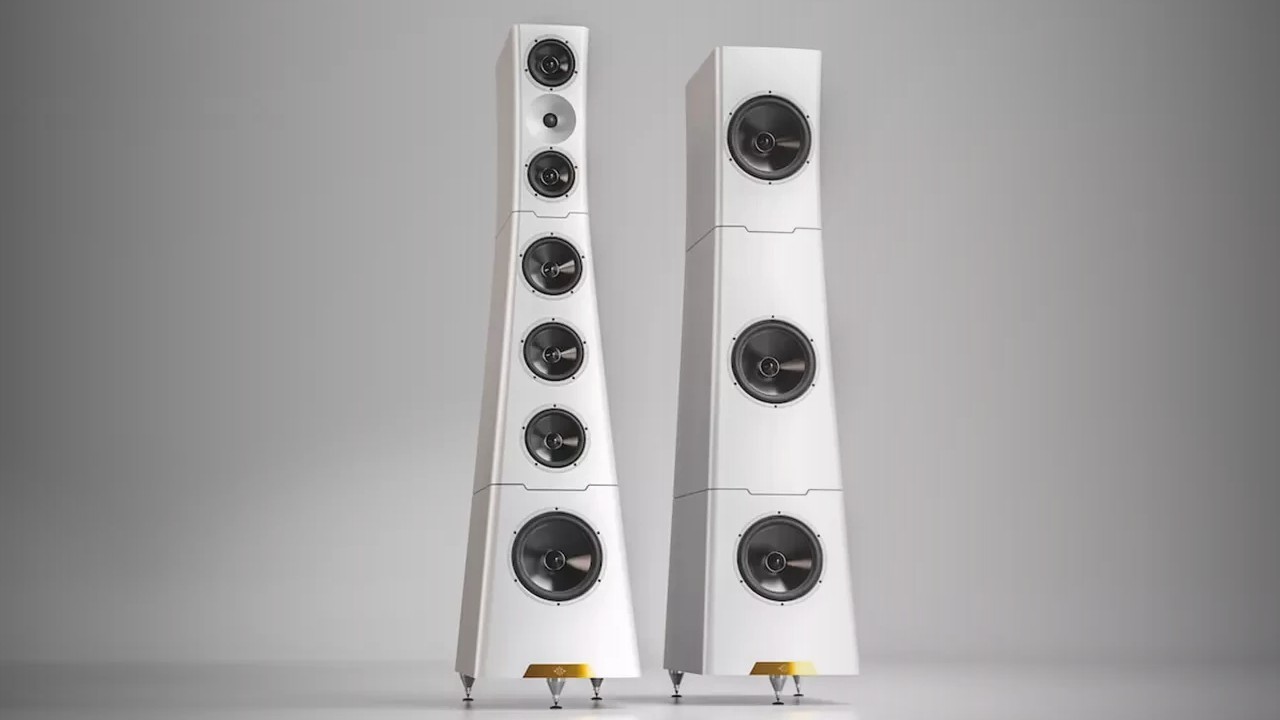
1. YG Acoustics XV 3 Signature: Flagship floorstanding speakers
YG Acoustics XV 3 Signature shown as a four-tower flagship loudspeaker system.
The YG Acoustics XV 3 Signature sits at the extreme end of high-end loudspeaker design.
Described as the top version of YG Acoustics’ flagship XV 3 system, it uses four floor-standing towers and was developed around unusually ambitious component and tuning work at the company’s research and development center.
The source emphasizes large-scale soundstaging, fine-detail retrieval, clarity, accuracy, and musical involvement, while also noting that production is limited to just eight pairs. This is not a practical recommendation for most rooms or budgets, but it is a clear reference point for what a no-compromise statement loudspeaker can represent.
Best for: No-compromise reference systems
- Four-tower flagship loudspeaker system
- Limited edition of eight pairs
- Carefully tuned at YG Acoustics’ research and development center
- Designed around advanced capacitor work
Verdict: A rare statement speaker for listeners seeking an extreme, large-scale flagship design rather than a conventional domestic loudspeaker.

2. LG Sound Suite Breaks the Soundbar Mold with Modular Dolby Atmos
LG Sound Suite combines a soundbar, wireless subwoofer, and surround modules for an expandable Atmos setup.
LG Sound Suite is the most flexible home-cinema entry in this selection.
Developed with Dolby, it is described as a modular wireless audio system built around Dolby FlexConnect, with automatic speaker calibration and the ability to expand the system over time using separate speakers and a subwoofer.
The source says the system can scale up to a full 13.1.7 layout using a soundbar, wireless woofer, and four wireless multi-speaker units. That makes it especially relevant for listeners who want immersive Dolby Atmos without committing to a traditional wired surround installation from the beginning.
Best for: Expandable Dolby Atmos rooms
- Modular wireless system
- Dolby FlexConnect support
- Automatic speaker calibration
- Expandable with separate speakers and subwoofer
Verdict: A strong concept for home-cinema buyers who want wireless Atmos flexibility and the option to grow the system gradually.

3. Sonos Sub 4: Wireless and powerful subwoofer for your Sonos system
Sonos Sub 4 is designed to add wireless low-frequency support to Sonos music and home-theater systems.
Sonos Sub 4 is not a complete speaker system on its own, but it is a meaningful upgrade for listeners already using Sonos speakers, a Sonos soundbar, or Sonos Amp.
The source highlights straightforward app-based setup, wireless operation apart from mains power, and compatibility with Sonos soundbars, wireless Sonos speakers, Sonos Amp, and traditional hi-fi speakers through that ecosystem.
Its two opposing bass drivers are designed to reduce cabinet vibration, and placement can be upright or horizontal, including under a sofa. It is best treated as a system-building component for adding deeper bass rather than as a standalone purchase.
Best for: Sonos systems needing deeper bass
- Wireless Sonos ecosystem integration
- Two opposing bass drivers to reduce cabinet vibration
- Can be placed upright or horizontally
- Optional second Sub 4 support
Verdict: A practical bass upgrade for Sonos owners who want more low-end weight with minimal cabling and flexible placement.

4. Bose 901: Classic speaker reimagined
The reimagined Bose 901 updates the classic pentagonal speaker concept associated with Bose’s acoustic heritage.
The reimagined Bose 901 is included here for design heritage and acoustic concept rather than conventional specification-led comparison.
The original Bose 901 used nine four-inch full-range drivers, with one facing forward and eight angled to project sound backward, creating an experience built around room reflections.
The source describes a redesign created with Kith that preserves the essence of the original while adding contemporary materials and visual updates. For buyers, the key point is that this speaker concept is intentionally unconventional and will appeal most to those interested in Bose history, design identity, and reflected-sound presentation.
Best for: Design-led listeners and Bose enthusiasts
- Reimagines an iconic Bose speaker concept
- Based on a distinctive nine-driver layout
- Uses room reflections as part of the listening experience
- Updated with contemporary design elements
Verdict: A heritage-focused speaker for listeners drawn to the Bose 901’s unusual reflected-sound philosophy and refreshed styling.
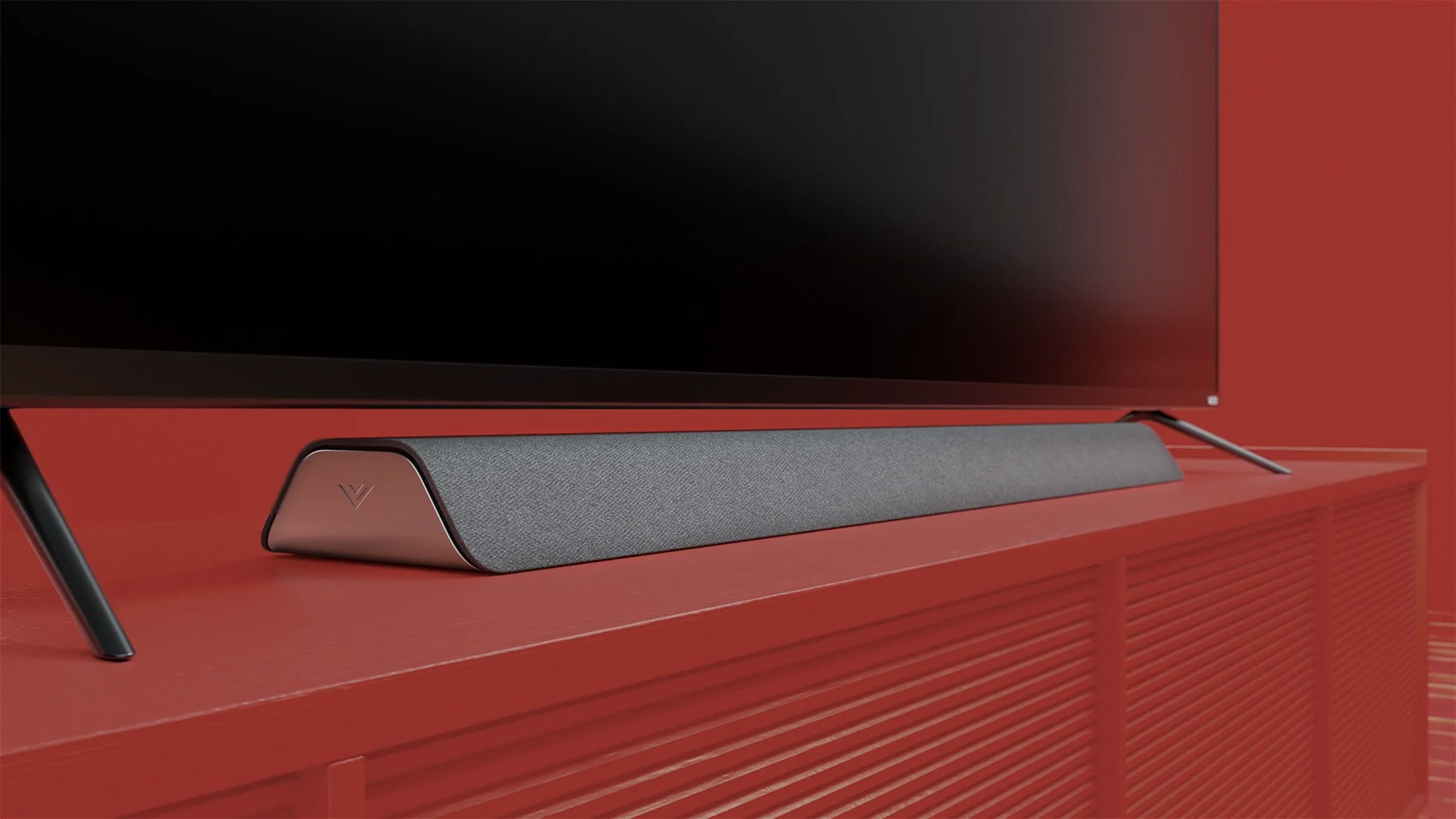
5. Vizio ups the ante by cutting prices on soundbars
Vizio M-Series soundbars target budget-conscious home-theater users with Atmos-capable and all-in-one configurations.
Vizio’s M-Series soundbars are the value-oriented home-theater option in this guide.
The M-Series Elevate is described with a 5.1.2 configuration, swivel height speakers, Dolby Atmos and DTS:X support, wireless surrounds, a subwoofer, and bass extension down to 45 Hz.
The M-Series All-In-One takes a simpler 2.1 approach, using DTS:X Virtual processing for immersive playback from a compact four-speaker layout. The supplied pricing positions these models as budget-conscious alternatives, with the M-Series Elevate listed at $799 and the M-Series All-In-One at $199 in the United States, though pricing can vary by market and availability.
Best for: Affordable soundbar upgrades
- M-Series Elevate supports Dolby Atmos and DTS:X
- Wireless surround speakers included with M-Series Elevate
- M-Series All-In-One offers compact 2.1 layout
- Budget-focused positioning
Verdict: Vizio’s M-Series is a sensible choice for buyers prioritizing home-cinema features and lower system cost over a traditional speaker setup.
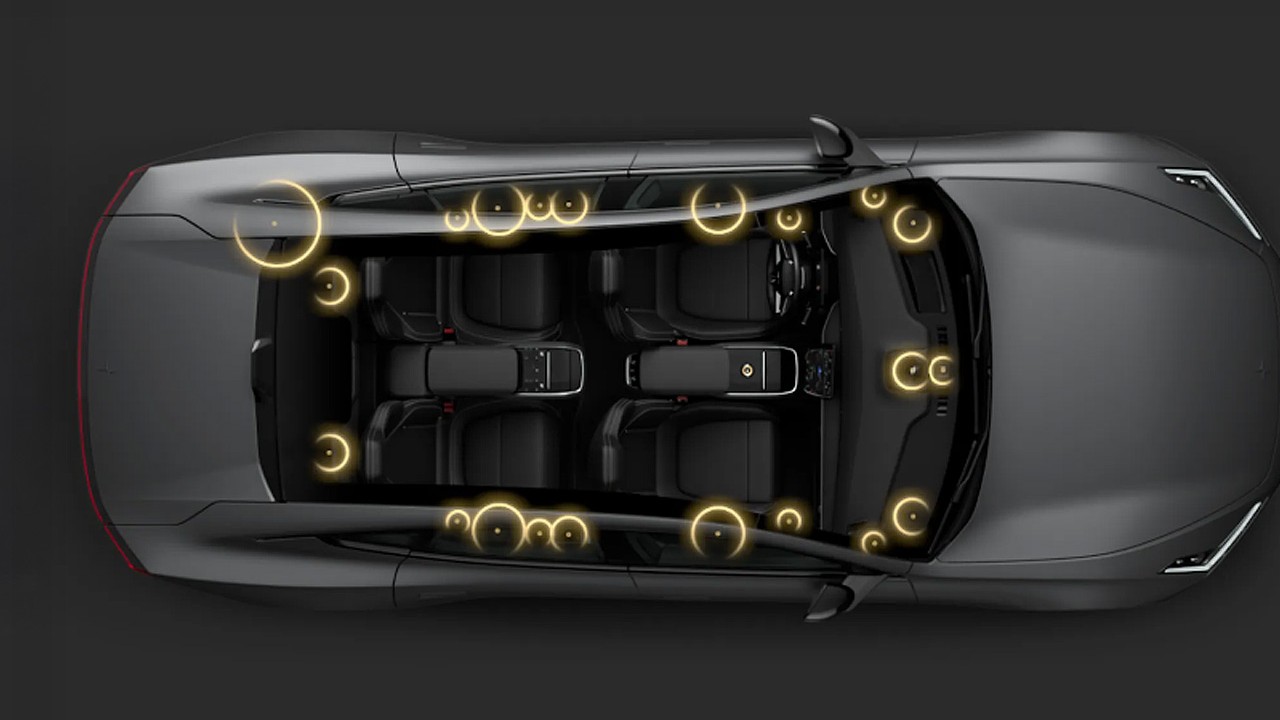
6. Polestar 5 Debuts With 21-Speaker Bowers & Wilkins Hi-Fi System and 650 kW Performance
The Polestar 5 integrates a 21-speaker Bowers & Wilkins system designed for premium in-car listening.
The Polestar 5’s Bowers & Wilkins system is a reminder that serious speaker design is not limited to the living room.
The source describes a 21-speaker in-car system powered by 1,680 watts of total amplifier output, positioned as an upgrade over the standard 10-speaker Polestar system.
Its layout is said to draw from Bowers & Wilkins’ studio and home-audio expertise and includes Nautilus-derived double-dome tweeters. This recommendation is relevant only for those considering the vehicle itself, but it is a notable example of premium hi-fi thinking applied to an automotive cabin.
Best for: Premium in-car audio
- 21-speaker Bowers & Wilkins system
- 1,680 watts of total amplifier output
- Upgrade over the standard 10-speaker Polestar system
- Includes Nautilus-derived double-dome tweeters
Verdict: A high-spec automotive audio option for listeners who want a factory-integrated Bowers & Wilkins system in an electric grand tourer.

7. JBL BAR 800MK2: True Cinema Thrills, No Cables Attached
JBL BAR 800MK2 uses detachable wireless rear speakers and a wireless subwoofer for a cable-light surround setup.
JBL BAR 800MK2 is aimed at viewers who want real rear-channel placement without permanent cable runs.
The source describes it as a 7.1-channel soundbar system with Dolby Atmos, battery-powered wireless rear speakers, and a wireless 10-inch subwoofer.
The detachable rear speakers can be placed behind the sofa and then docked on the soundbar to recharge, with playback stated at up to 10 hours. Streaming support is also broad, with Spotify Connect, TIDAL Connect, Google Cast, Apple AirPlay, and Bluetooth mentioned in the source.
Best for: Cable-light surround sound
- 7.1-channel soundbar system
- Battery-powered wireless rear speakers
- Wireless 10-inch subwoofer
- Supports major music streaming and casting options
Verdict: A convenient soundbar package for movie fans who want physical rear speakers without committing to a wired surround installation.
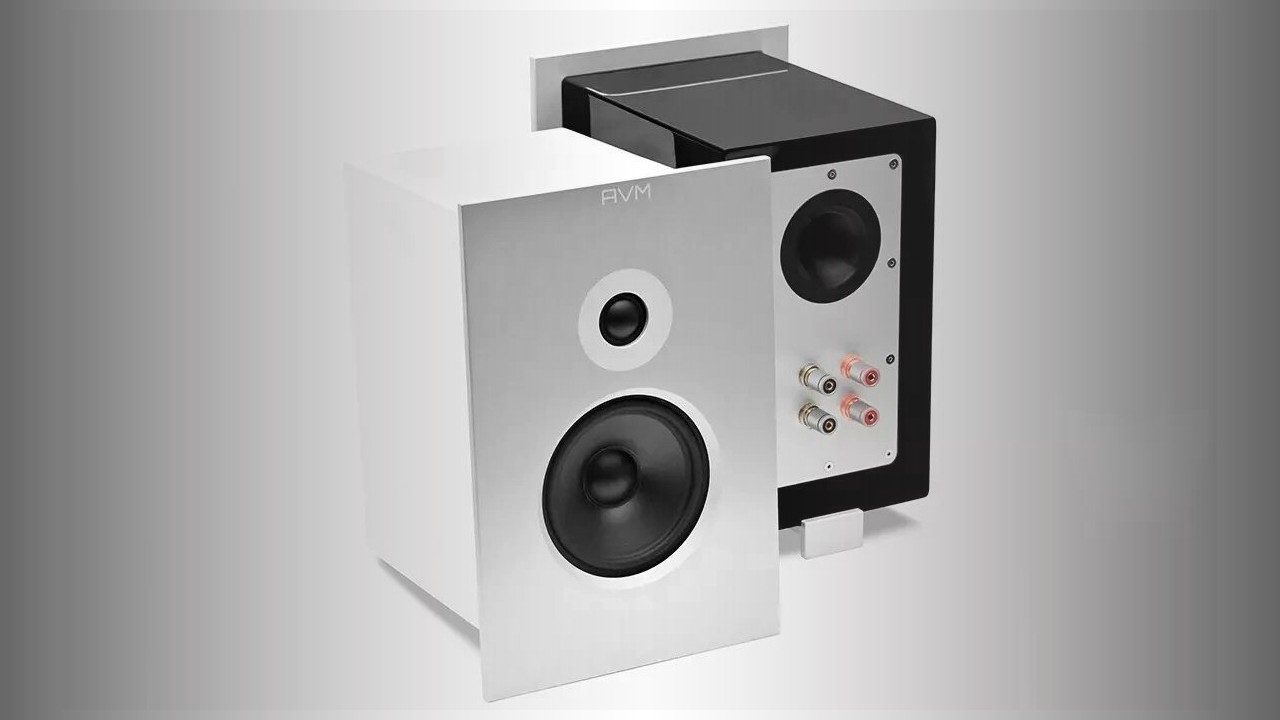
8. AVM Audition CB 2.3: Compact two-way monitors from Germany
AVM Audition CB 2.3 is a compact two-way passive monitor with an aluminum front panel and glossy cabinet finish.
The AVM Audition CB 2.3 is a compact passive monitor for listeners who prefer a more traditional hi-fi system built around separate amplification.
It is AVM’s first speaker design and combines the company’s electronics background with the expertise of speaker specialist Karl-Heinz Fink.
The source specifies a two-way bass-reflex design with a 160 mm woofer, fabric-diaphragm dome tweeter, 1,850 Hz crossover frequency, 37 Hz to 50 kHz operating range, 88 dB sensitivity, 140-watt declared power, and support for two-cable connection. Its glossy lacquer cabinet and anodized silver aluminum front panel are also central to the design.
Best for: Compact passive hi-fi systems
- Compact two-way bass-reflex design
- Developed with Karl-Heinz Fink
- Supports two-cable connection
- Available in black and white finishes
Verdict: A polished compact monitor for listeners who want a standmount-style speaker with traditional hi-fi partnering and refined industrial design.

9. 2nd generation Naim Mu-so speaker with wood trim
Naim Mu-so 2nd Generation Wood Edition adds varnished abachi wood panels to the familiar active wireless speaker platform.
The 2nd generation Naim Mu-so with wood trim is the all-in-one wireless speaker for listeners who want a complete active system rather than separate components.
The source describes an African abachi wood treatment with polished, varnished panels, along with matching changes to the grille shade and rear radiator color.
Internally, it retains the established 2nd generation Mu-so feature set, including 450 watts total output, twin one-inch silk-dome tweeters, two-inch midrange drivers, five-inch oval woofers, and driver development involving Focal specialists. Connectivity includes wired or Wi-Fi network use, Bluetooth, USB storage, Chromecast, AirPlay 2, Spotify Connect, and Roon Ready support.
Best for: Premium all-in-one wireless listening
- All-in-one active speaker design
- 450 watts total output
- Broad wired and wireless connectivity
- Wood-trimmed finish using African abachi
Verdict: A stylish active speaker for listeners who want Naim’s Mu-so platform with a warmer wood-trimmed visual finish.
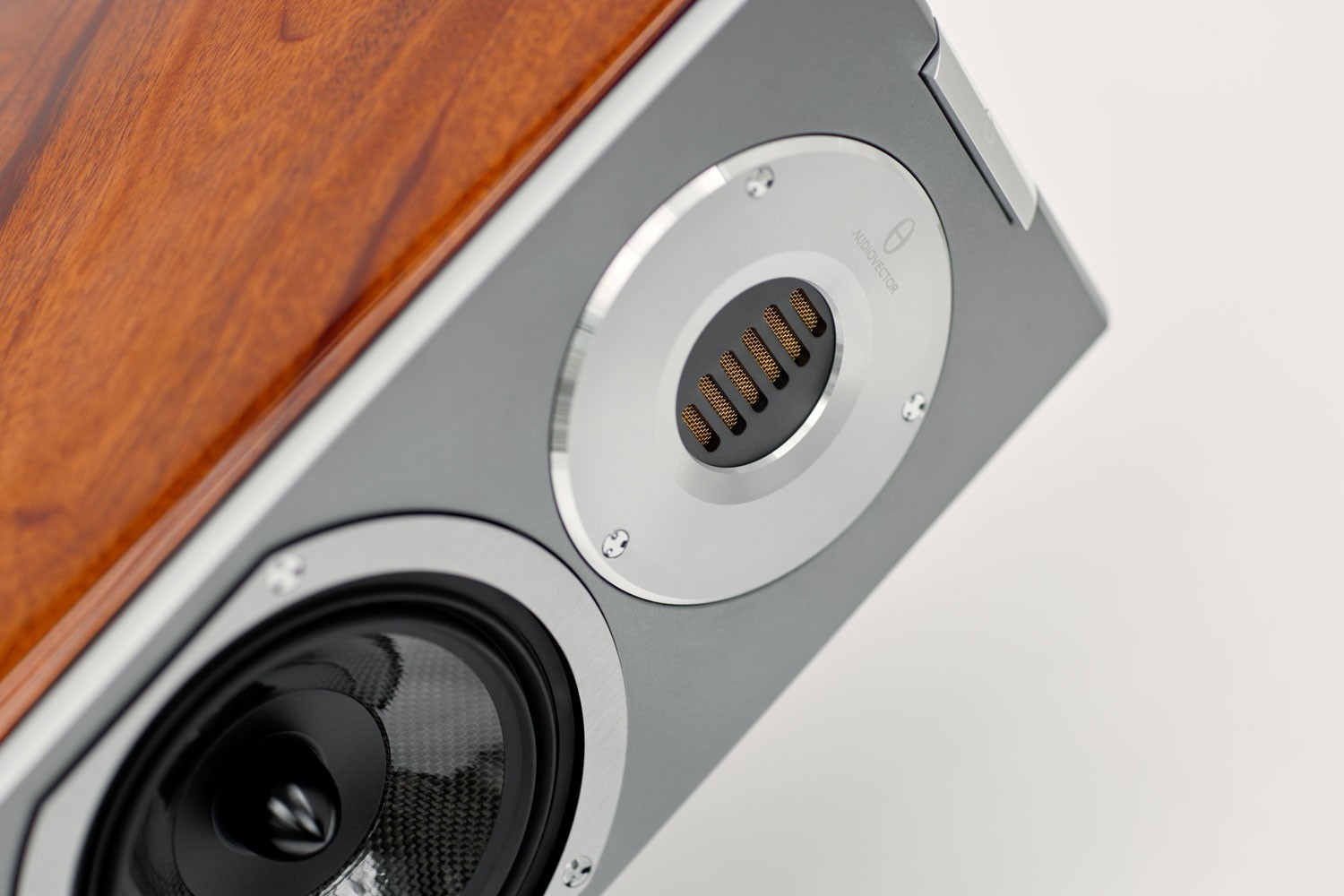
10. Audiovector R 5 Arreté: High-End Floorstanding Speaker With R10 Technology and AMT Tweeter
Audiovector R 5 Arreté is a 3.5-way floorstanding loudspeaker with an AMT tweeter and bottom bass-reflex ports.
Audiovector R 5 Arreté is a high-end passive floorstander that brings technology from the company’s flagship R10 Arreté into a model positioned between the R3 and R6 Arreté.
The source describes a 3.5-way architecture with bottom bass-reflex ports, two woofers assigned different bass duties, and the latest evolution of Audiovector’s Air Motion Transformer tweeter.
The tweeter is specified to operate from 2.8 kHz to 53 kHz, and the cabinet is handcrafted from high-density wood. For listeners building a conventional high-end stereo system, this is one of the more clearly speaker-focused recommendations in the set.
Best for: High-end stereo floorstanding systems
- 3.5-way floorstanding design
- Technology derived from the R10 Arreté
- Air Motion Transformer tweeter
- Handcrafted high-density wood cabinet
Verdict: A serious passive floorstander for listeners who want Audiovector’s R-series engineering in a system built around separate amplification.
Quick comparison
These recommendations cover several different speaker categories, so the most useful comparison is by system role rather than by ranking alone.
The YG Acoustics and Audiovector models are passive high-end loudspeakers for dedicated stereo systems, while the AVM is a compact passive monitor.
The Naim Mu-so is an active all-in-one speaker, Sonos Sub 4 is a bass-extension component, and the LG, JBL, and Vizio options target home cinema. The Polestar entry belongs to in-car audio and should only be considered in that context.
| Product | Best for | Verdict |
|---|---|---|
| YG Acoustics XV 3 Signature | No-compromise reference systems | An extreme four-tower flagship loudspeaker system with very limited production. |
| LG Sound Suite | Expandable Dolby Atmos rooms | A modular wireless Atmos platform designed to expand with additional speakers and subwoofer support. |
| Sonos Sub 4 | Sonos systems needing deeper bass | A wireless subwoofer for adding low-frequency weight to compatible Sonos music and theater systems. |
| Bose 901 | Design-led listeners and Bose enthusiasts | A reimagined heritage speaker built around the 901’s distinctive reflected-sound concept. |
| Vizio M-Series soundbars | Affordable soundbar upgrades | A budget-focused soundbar range with Atmos-capable and compact all-in-one options. |
| Polestar 5 Bowers & Wilkins system | Premium in-car audio | A factory-integrated 21-speaker Bowers & Wilkins system for the Polestar 5 cabin. |
| JBL BAR 800MK2 | Cable-light surround sound | A 7.1-channel soundbar package with detachable battery-powered rear speakers and a wireless subwoofer. |
| AVM Audition CB 2.3 | Compact passive hi-fi systems | A compact two-way passive monitor with a bass-reflex design and refined cabinet construction. |
| Naim Mu-so 2nd Generation Wood Edition | Premium all-in-one wireless listening | An active wireless speaker with broad streaming support and a distinctive wood-trimmed finish. |
| Audiovector R 5 Arreté | High-end stereo floorstanding systems | A 3.5-way passive floorstander using R10-derived technology and an Air Motion Transformer tweeter. |
Frequently asked questions
Should I choose passive speakers, an active wireless speaker, or a soundbar?
Choose passive speakers such as the Audiovector R 5 Arreté or AVM Audition CB 2.3 when you want to build a hi-fi system with separate amplification.
Choose an active wireless speaker such as the Naim Mu-so if you want a self-contained music system.
Choose a soundbar system such as LG Sound Suite, JBL BAR 800MK2, or Vizio M-Series when TV and movie convenience are the main priorities.
When does a subwoofer make sense?
A subwoofer is useful when the main system needs more low-frequency weight for music, films, or games.
Sonos Sub 4 is specifically intended for compatible Sonos systems, while LG, JBL, and Vizio soundbar packages include or support subwoofer-based home-cinema setups.
Are wireless surround systems a replacement for traditional speaker packages?
They can be a practical alternative when cable routing and room disruption are major concerns.
JBL BAR 800MK2 uses battery-powered wireless rear speakers, and LG Sound Suite is described as a modular wireless Atmos system with automatic calibration.
A traditional passive speaker system still makes more sense for listeners prioritizing stereo hi-fi with separate amplification.
What should matter most when comparing these recommendations?
Start with the listening context.
Room-based stereo listening points toward passive speakers such as the YG Acoustics, Audiovector, or AVM models.
TV and film use points toward LG, JBL, or Vizio. Existing Sonos owners should view Sonos Sub 4 as an ecosystem upgrade, while the Polestar 5 Bowers & Wilkins system is relevant only as part of that vehicle.
Final buying advice
The strongest choice depends on the role the speaker system must play.
For a dedicated high-end stereo room, Audiovector R 5 Arreté is the most conventional and broadly understandable floorstanding recommendation here, while YG Acoustics XV 3 Signature is a far rarer statement-level proposition.
AVM Audition CB 2.3 is the compact passive option for a more space-conscious hi-fi setup, and Naim Mu-so 2nd Generation Wood Edition suits listeners who want an elegant all-in-one active speaker rather than separate boxes. For home cinema, the decision is mainly about expandability, rear-speaker placement, and budget. LG Sound Suite is the most modular Atmos concept, JBL BAR 800MK2 emphasizes detachable wireless rear speakers and a substantial wireless subwoofer, and Vizio M-Series focuses on value-oriented soundbar configurations. Sonos Sub 4 is best treated as an add-on for a Sonos system, not as a universal subwoofer for every setup. The Bose 901 appeals through heritage and design philosophy, while the Polestar 5 Bowers & Wilkins system belongs in the separate world of factory-integrated car audio. In practical terms, define the room first, then decide whether you want passive hi-fi, active wireless convenience, modular home cinema, or ecosystem-specific expansion.


Sound Off
0Join the discussion if you have something to add.