

The Goldmund x Pink Faun Eidos, Fosi Audio S3, SOtM sMS-2000, Zidoo Z30 PRO and Denon DNP-F109 all belong to the broad category of network audio products, but they are not interchangeable. One is an integrated streamer, DAC and preamp; another is a high-capacity Roon server; one is built around home cinema and 8K video; and another is a compact classic network player.
That distinction matters more than a simple specification contest. The best choice depends on whether you need a complete control centre for active speakers, local storage for a large music library, a serious Roon Core platform, video playback, or an affordable way to add network audio to an existing stereo system. Here is how the five products differ in practical use.
Quick verdict
Best Overall: Fosi Audio S3. It combines streaming, DAC and preamplifier functions in one compact chassis, while adding balanced XLR outputs, HDMI eARC, a subwoofer output, Bluetooth, Wi-Fi, Ethernet and broad platform support. It is the most adaptable solution for the widest range of modern systems.
- Best for Goldmund systems and built-in storage: Goldmund x Pink Faun Eidos.
- Best for a high-end Roon server and very large music libraries: SOtM sMS-2000.
- Best for combined 8K video and surround sound: Zidoo Z30 PRO.
- Best for a compact traditional stereo system: Denon DNP-F109.
Comparison table
| Product | What it is best suited to | Network and platform support | Local storage | System connections |
|---|---|---|---|---|
| Goldmund x Pink Faun Eidos | High-end Roon-based listening and Goldmund active speakers | Wired or wireless network; Roon app; Tidal, Qobuz and KKBOX | 8TB built in | Designed to complement Goldmund active speakers; S/PDIF expansion mentioned |
| Fosi Audio S3 | Compact all-in-one stereo, active-speaker or TV system | AirPlay 2, Spotify Connect, Tidal Connect, Google Cast, DLNA and Roon Ready | Not stated | Balanced XLR, subwoofer output and HDMI eARC; Wi-Fi, Ethernet and Bluetooth 5.3 |
| SOtM sMS-2000 | High-end network playback, server use and Roon installations | Eunhasu OS with Roon, MPD and DLNA compatibility | Up to 48TB installable | Integrated USB audio host card and Ethernet card |
| Zidoo Z30 PRO | Home cinema, 8K video and music in one media player | Android 11, dual-band Wi-Fi and Gigabit Ethernet | 64GB eMMC; SATA 3.0 connection | HDMI 2.1a, USB, optical, coaxial and RCA; Dolby Atmos and DTS support |
| Denon DNP-F109 | Existing stereo systems and compact Denon F109 setups | DLNA 1.5, AirPlay, web radio and selected internet music services | Not stated | Linear RCA and coaxial outputs; Ethernet, Wi-Fi and USB for iPod/iPhone |
Goldmund x Pink Faun Eidos
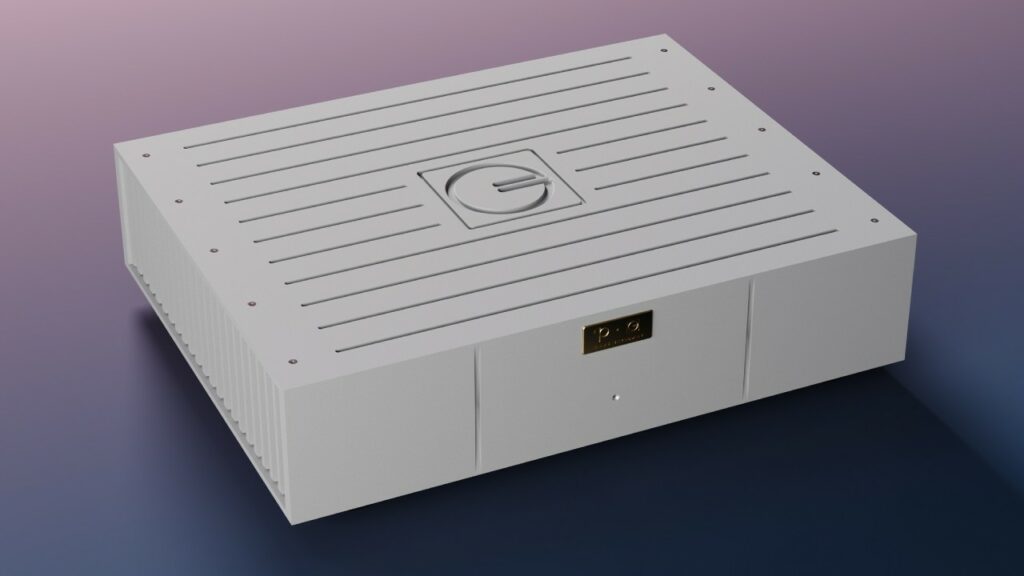
The Eidos is the most clearly system-specific product in this comparison. It marks Goldmund’s entry into streaming, developed with Dutch specialist Pink Faun, and is intended to complement Goldmund active speakers. That makes it a particularly logical choice for an owner of that ecosystem rather than a generic recommendation for every stereo system.
Its central proposition is a Roon-focused network player with 8TB of local storage. The player can connect to a network by wire or wirelessly, and the Roon app provides access to Tidal, Qobuz and KKBOX as well as control of a local library. For someone who wants both streamed music and a substantial collection stored locally, that built-in capacity is a meaningful advantage over products in this group where storage is either not stated or requires a separate installation.
The Pink Faun OS is designed for Roon Core compatibility, with the source describing hardware and software integration, regular updates and driver optimisation. Goldmund also adds customisations involving CPU timings, noise adjustment and integration with its active speakers. The passive cooling system uses water-filled heatpipes, while the CNC-milled aluminium chassis and Goldmund feet reflect the product’s high-end positioning.
There are limits to its broad appeal. The source does not describe the Eidos as an all-in-one DAC and preamplifier with the S3’s collection of outputs, nor does it list HDMI, Bluetooth or a subwoofer output. Its 45 x 11.9 x 35.5cm dimensions and 15kg weight also make it a substantial component. Choose it when the Goldmund connection, Roon-based operation and 8TB of local storage matter more than compactness or wide-ranging home-entertainment connectivity.
Fosi Audio S3
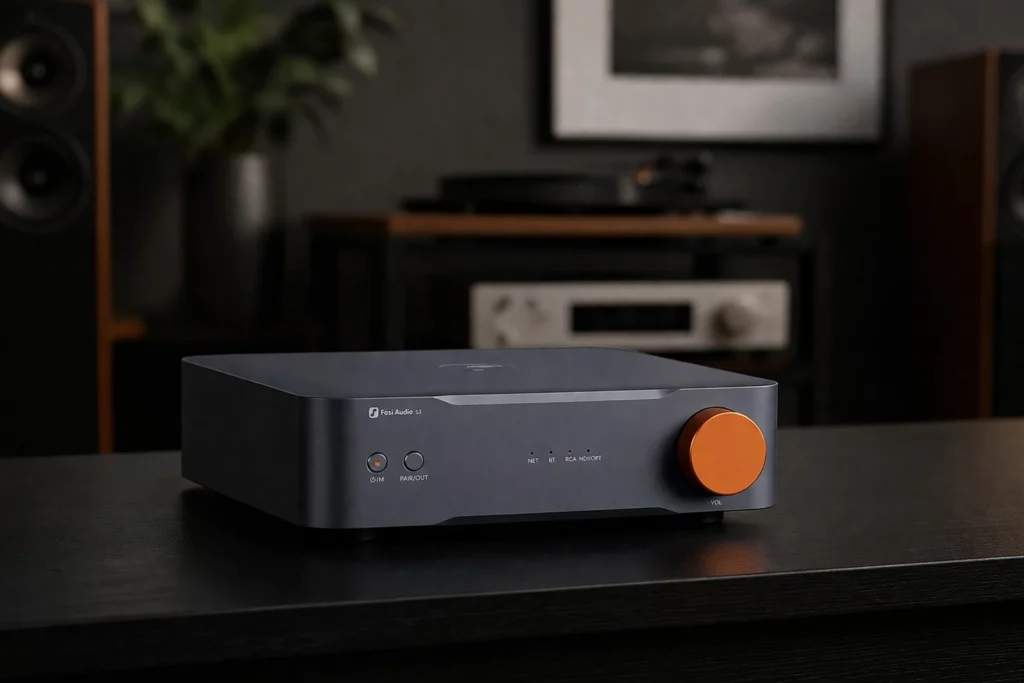
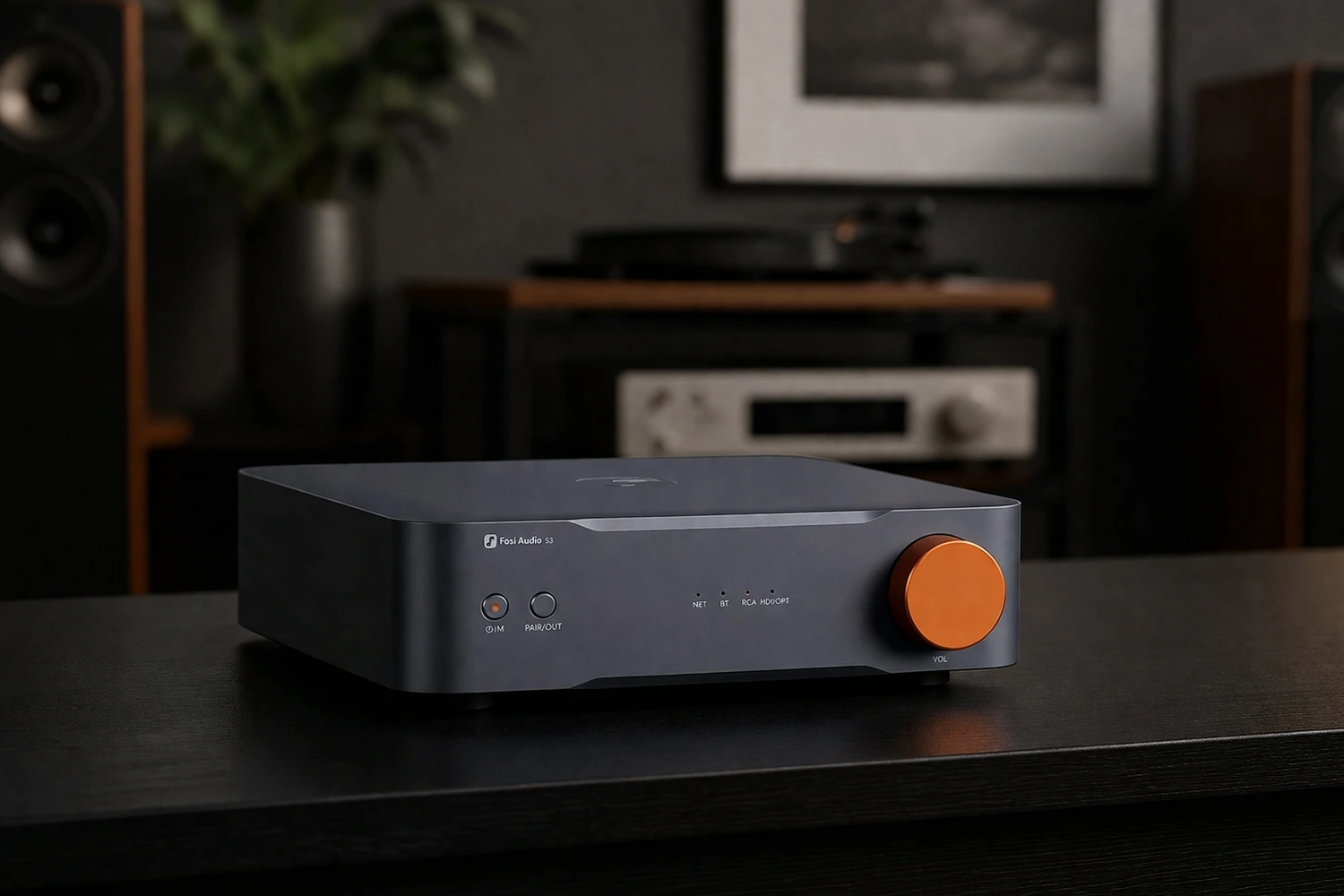
The S3 is the strongest all-round choice because it addresses the largest number of real system-building problems in one box. It combines a network streamer, DAC and preamplifier, so it can feed a power amplifier or active speakers directly. That removes the need to assemble a separate streamer, converter and preamp, and its 17.3 x 17.3 x 4.7cm chassis is by far the most compact explicitly described all-in-one option here.
Its connectivity is unusually broad. The S3 offers balanced XLR outputs, a dedicated subwoofer output and HDMI eARC, alongside dual-band Wi-Fi, Ethernet and Bluetooth 5.3. HDMI eARC is particularly important for a living-room system because it allows a television to use the stereo system for film and series audio without requiring an AV receiver. The subwoofer output also gives the compact system a straightforward route to 2.1 operation.
On the software side, it supports AirPlay 2, Spotify Connect, Tidal Connect, Google Cast, DLNA and Roon Ready operation. That makes it less dependent on a single ecosystem than the Roon-centred Eidos or the Eunhasu-based SOtM. Fosi’s app handles playback and includes a five-band EQ, giving users some control over system voicing without adding another component.
The S3 also has a clearly specified digital and analogue architecture: an AKM4493SEQ DAC supporting PCM up to 32-bit/384kHz, OPA1612 op-amps in a fully balanced circuit, ELNA capacitors and a low-noise LDO power supply. Those details do not establish how it sounds against the other products, but they do show that its appeal is not based solely on convenience. It is the best fit for someone building a modern, compact system around active speakers, a power amplifier, a television or a subwoofer.
SOtM sMS-2000
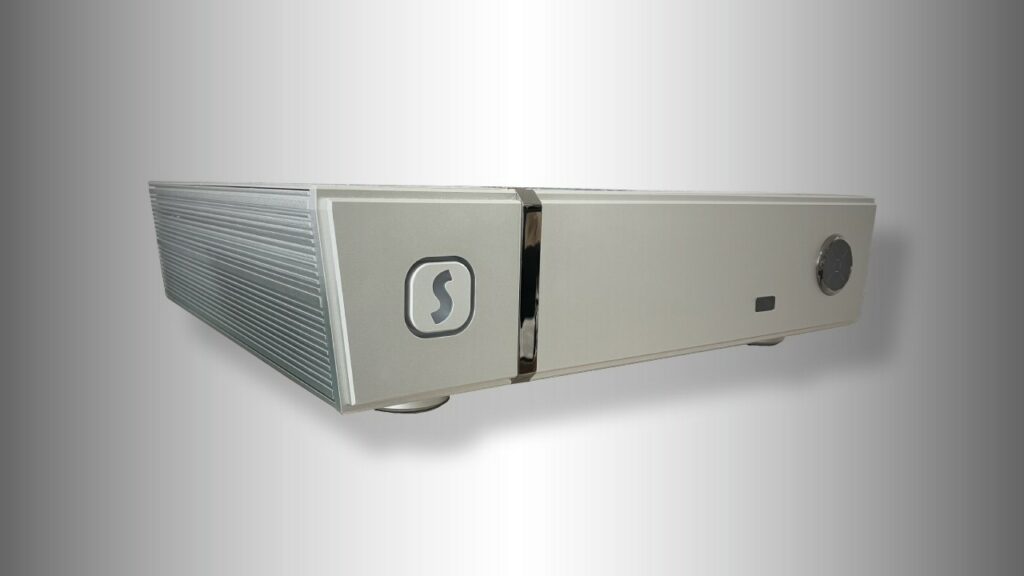
The sMS-2000 occupies the opposite end of the design brief from the Fosi. It is a high-end network player and server designed specifically for audiophiles, with configuration options based around different processors, RAM and storage capacities. The listed versions range from an i7-9700 model with 512GB SSD and 16GB RAM at $11,499 to an i9-9900K model with 4TB SSD and 32GB RAM at $12,499.
Its biggest practical distinction is the scale of its local-library capability. Users can install up to 48TB of local storage, giving it a much greater stated capacity than the Eidos’s 8TB. That makes the SOtM the more suitable product for an unusually large digital collection, particularly if the player is expected to act as a server as well as a playback device.
The hardware is built around SOtM’s sMB-Q370 motherboard, an Intel i7 CPU and DDR4 RAM, with an integrated USB audio host card and Ethernet card. The sPM-ATX100 high-end audio ATX power supply and dedicated ATX power cables are also part of the design. Eunhasu OS supports Roon, MPD and DLNA, and is described as being optimised for high-end audio with hardware-control features and fewer unnecessary components.
This is the specialist choice, not the obvious solution for a small living-room system. The source focuses on server architecture, configurable hardware and storage rather than HDMI, Bluetooth, active-speaker integration or a built-in preamplifier. It is also the only product here with listed prices in the five-figure range. Buy it when a high-end digital hub, extensive local storage and the flexibility of a configurable server are central requirements.
Zidoo Z30 PRO
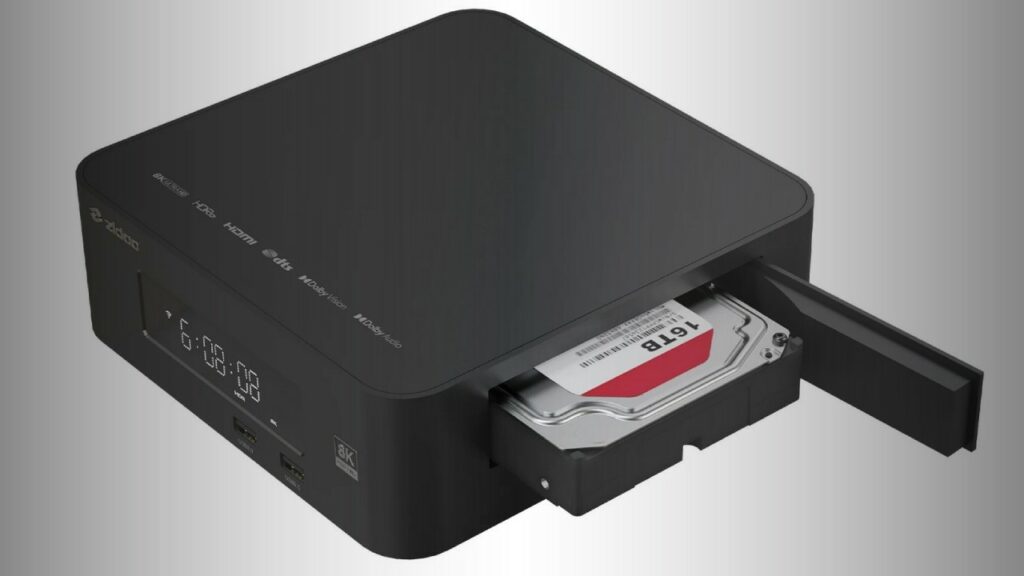
The Z30 PRO is the clearest choice for listeners who also want a serious video source. Calling it simply a network streamer would undersell what it does: this is a flagship media player built around 8K video, HDR formats and surround sound as much as music playback.
Its HDMI 2.1a output supports up to 8K at 60 frames per second, HDR10, HDR10+, HLG and Dolby Vision, with 12-bit colour depth and BT.2020 support. For audio, it supports Dolby Atmos and DTS, including Dolby TrueHD Atmos, and provides USB, optical, coaxial and RCA outputs. That range of connections makes it much more directly relevant to a television or home-cinema installation than the Eidos, SOtM or Denon.
The Z30 PRO also offers practical media-player hardware: an Amlogic S928X-K processor, 6GB of DDR4 RAM, 64GB of eMMC storage, Android 11, dual-band Wi-Fi, Gigabit Ethernet, three USB 3.0 ports, two USB 2.0 ports and SATA 3.0. Its Zidoo Home Theatre interface and control options include applications for iPhone, iPad and Android, as well as RS-232 and TCP/IP.
It is therefore the best feature choice for a mixed movie-and-music system. However, the source does not present it as a Roon-focused streamer, a preamplifier or a dedicated local music server with a stated multi-terabyte capacity. If your priority is two-channel streaming simplicity, the S3 is more directly targeted at that job. If your priority is 8K video and surround formats, the Zidoo is the more appropriate purchase.
Denon DNP-F109

The DNP-F109 is the oldest-style product in this group, and that is part of its appeal. It belongs to Denon’s classic F109 mini-system generation but can also operate independently. Its compact 250 x 82 x 257mm chassis, front aluminium panel, three-line OLED display and supplied remote control make it feel like a conventional hi-fi source rather than a computer-based server.
It supports wired Ethernet and built-in Wi-Fi, DLNA 1.5, AirPlay, web radio and music libraries from services including Last.fm. The Denon Remote App provides control from iOS and Android devices, while the front-panel controls and remote mean that phone control is not the only route into the system. A USB port supports iPod and iPhone connection and charging, including while the unit is in standby.
The DNP-F109 has linear RCA and coaxial outputs, making it straightforward to connect to an existing amplifier or DAC. Its stated audio specifications include 24-bit/192kHz DAC resolution, support for FLAC HD and WAV at 24-bit/192kHz, a 110dB signal-to-noise ratio and 0.0035% total harmonic distortion at 1kHz.
Its limitations are equally clear when compared with newer products. The source does not mention Roon Ready support, HDMI, Bluetooth, a subwoofer output or current platform coverage such as Tidal Connect and Google Cast. It is best viewed as a compact network source for an established stereo system, particularly for someone who values physical controls, a display and conventional Denon integration over the broadest modern feature set.
How they differ
The biggest difference is system role. The Fosi is a complete front end: streamer, DAC and preamp in one. The Eidos and SOtM are more focused on high-end network playback and local libraries, while the Denon is a traditional network source with line-level and coaxial outputs. The Zidoo is a media player first, with music as one part of a much wider audio-video brief.
Storage is another decisive dividing line. The Eidos includes 8TB, while the SOtM can be configured with up to 48TB. The Zidoo has 64GB of internal eMMC storage and a SATA 3.0 connection, but the source does not describe it in the same way as a dedicated music-library server. Storage is not stated for the Fosi or Denon, so neither should be selected on the assumption that it includes a large local library.
Software ecosystems are not interchangeable. The Eidos is built around Roon and its Pink Faun OS. The SOtM uses Eunhasu OS and supports Roon, MPD and DLNA. The Fosi covers the widest explicitly listed set of consumer platforms, including AirPlay 2, Spotify Connect, Tidal Connect, Google Cast, DLNA and Roon Ready. The Denon offers DLNA and AirPlay, while the Zidoo uses Android 11 and Zidoo’s own home-theatre interface.
Connectivity points to different types of system. HDMI eARC gives the Fosi a strong advantage in a compact TV-based stereo system. The Zidoo goes much further for video, with HDMI 2.1a, 8K and Dolby Vision. Balanced XLR and a subwoofer output make the Fosi attractive for active speakers, balanced amplification and 2.1 systems. The Denon’s RCA and coaxial outputs suit a conventional stereo chain, while the Eidos is specifically intended to work with Goldmund active speakers.
Size and complexity also matter. The Fosi is a small 17.3cm square unit, and the Denon remains compact at 2kg. The Eidos is a substantial 15kg component, while the SOtM’s server-like architecture is aimed at buyers prepared to build around a specialist digital source. The Zidoo sits between those approaches as a compact but feature-heavy media hub.
Which one should you buy?
- Choose the Fosi Audio S3 if you want one compact component to handle streaming, conversion and volume control. It is the best match for active speakers, a power amplifier, a television or a subwoofer, and it has the broadest stated platform support.
- Choose the Goldmund x Pink Faun Eidos if you own or plan to use Goldmund active speakers, prefer a Roon-centred system and want 8TB of local storage in the player. Its casework, cooling and software are part of a more specialised high-end proposition.
- Choose the SOtM sMS-2000 if your digital library is exceptionally large or you want a configurable high-end Roon, MPD or DLNA server. Its up-to-48TB storage capacity and server architecture are the reasons to choose it, not compact-system convenience.
- Choose the Zidoo Z30 PRO if movies, 8K video, HDR and surround sound are as important as music. It is the obvious specialist for a combined home-cinema and audio installation.
- Choose the Denon DNP-F109 if you want a compact, conventional network player for an existing stereo system, especially one built around Denon F109 components. Its display, remote, AirPlay, DLNA and physical outputs remain useful, but it is not the most modern platform here.
Final verdict
The Fosi Audio S3 is the Best Overall because it makes the fewest compromises for the widest range of real-world systems. Its combination of streamer, DAC, preamp, balanced outputs, HDMI eARC, subwoofer integration and broad network support gives it a practical advantage over the more specialised alternatives.
The other four are not simply weaker versions of the same product. The Eidos is the more focused Goldmund and Roon solution, the SOtM is the specialist high-capacity server, the Zidoo is the superior choice for 8K home cinema, and the Denon remains a sensible compact source for a traditional stereo system. Choose according to that role, and the comparison becomes much clearer.

Join the discussion
Share your thoughts, listening impressions or product experience.