
Our Favorite DACs and Digital Converters for Hi-Fi Systems
A grounded buying guide to DACs and digital converters, covering purist high-end models, volume-equipped DACs, desktop DAC/amps, portable Bluetooth options, and digital interface conversion.

A DAC can be a simple bridge between a digital source and an amplifier, or it can become the control point of a whole digital playback system.
The right choice depends less on headline format support alone and more on how the unit fits your sources, amplifier, headphones, and day-to-day listening habits.
1. Vincent DAC-1MK

Vincent DAC-1MK external digital-to-analog converter with upgraded USB, optical, and coaxial input support.
The Vincent DAC-1MK is an upgraded version of Vincent’s junior DAC, with broader functionality and a more ambitious internal layout than its predecessor.
Its USB input supports DSD reception and PCM files up to 32-bit/384 kHz, while optical and coaxial inputs handle digital signals up to 24-bit/192 kHz.
Vincent uses an ES9038 conversion chip, balanced circuitry after conversion, selected WIMA and Nichicon components, and a power supply with separate transformer windings for the analog and digital sections to help reduce interference.
Best for: Systems needing a capable standalone DAC with strong input support
- USB supports DSD and up to 32-bit/384 kHz PCM
- Optical and coaxial inputs support up to 24-bit/192 kHz
- ES9038 DAC chip with balanced signal processing
- Separate power supply windings for analog and digital sections
Verdict: The Vincent DAC-1MK is a well-specified standalone DAC for listeners who want modern USB capability and careful analog and digital power separation without moving into all-in-one territory.
2. Merason Mountain
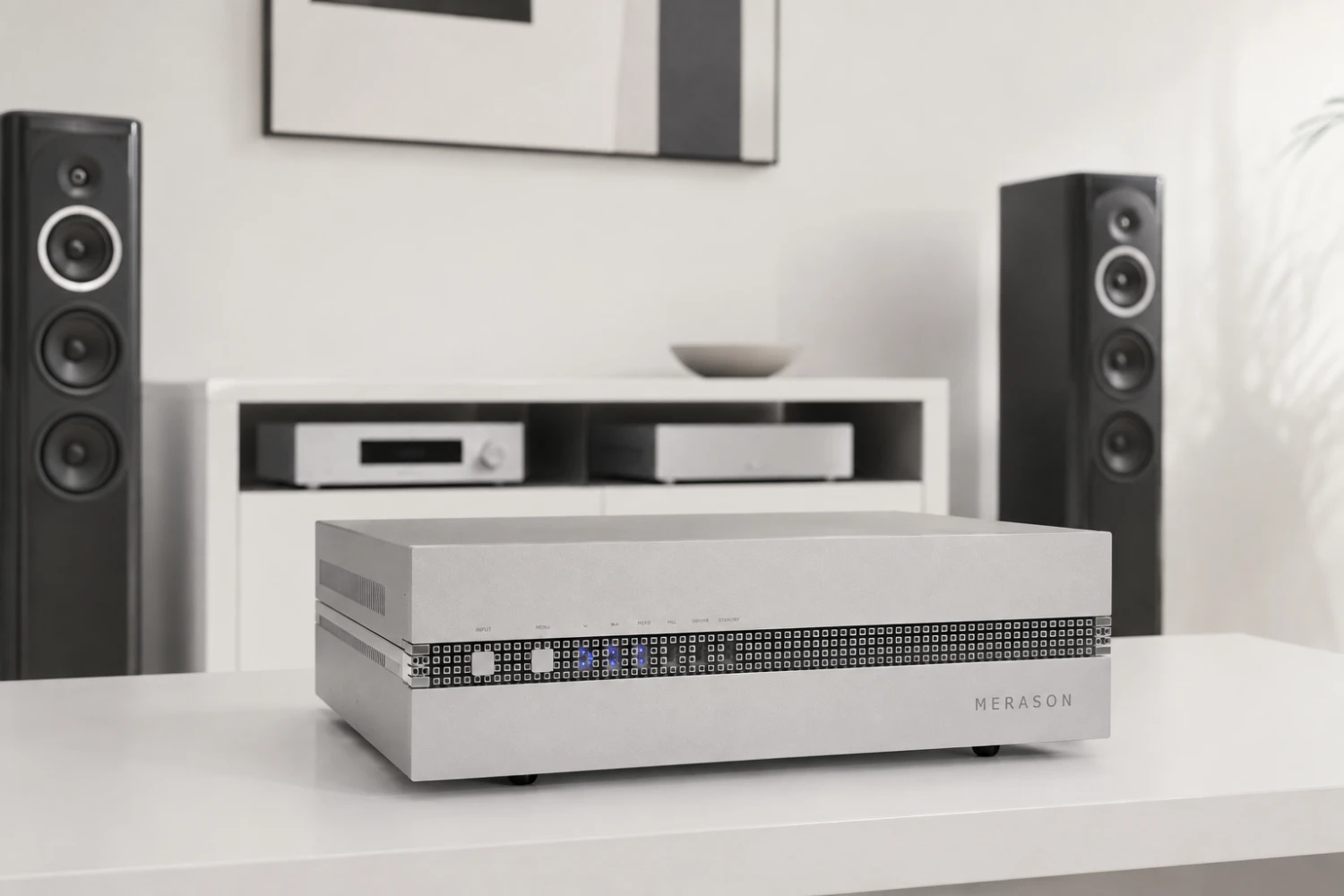
Merason Mountain flagship DAC designed for high-end systems with balanced and unbalanced analog outputs.
The Merason Mountain is the flagship DAC in Merason’s range and is developed and manufactured in Switzerland for high-end systems.
It is a dedicated converter rather than an all-in-one digital hub, with balanced and unbalanced analog outputs for connection to a separate preamplifier or integrated amplifier.
Format support includes PCM up to 24-bit/192 kHz and DSD64 or DSD128, and Merason emphasizes a natural, neutral presentation, dynamic range, and spatial definition as design goals.
Best for: High-end systems built around separate amplification
- Flagship model in Merason’s DAC range
- Supports PCM up to 24-bit/192 kHz
- Handles DSD64 and DSD128
- Balanced and unbalanced analog outputs
Verdict: The Merason Mountain is aimed at listeners who want a dedicated flagship DAC focused on conversion quality, balanced system integration, and core PCM and DSD support.
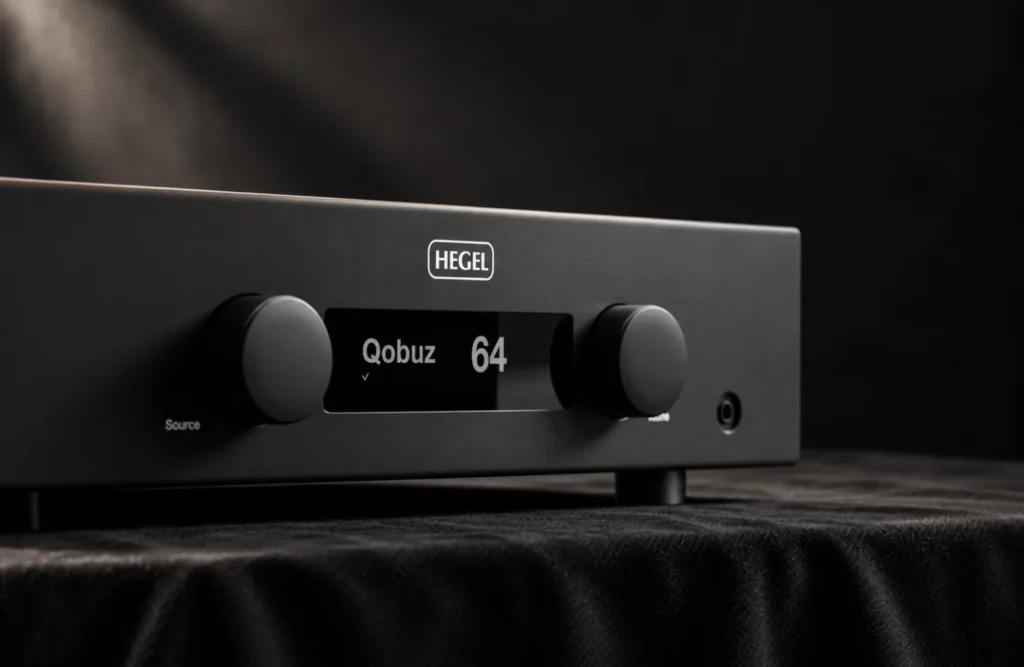
3. Hegel D50 The Raven
Hegel D50 The Raven purist digital-to-analog converter with a shielded dual-transformer power supply design.
The Hegel D50, also known as The Raven, is a purist DAC that deliberately omits streaming functions and volume control to focus on digital-to-analog conversion.
Hegel highlights noise reduction as a key design priority, using two low-noise toroidal transformers, one for digital processing and standby power and the other for analog and sensitive digital sections.
The transformers are shielded in steel, while the aluminum chassis and machined front bezel reinforce the model’s serious, dedicated-converter approach.
Best for: Listeners who want a dedicated DAC with no added hub features
- Purist DAC design without streaming or volume control
- Two low-noise toroidal transformers
- Separate transformer roles for digital and analog-related sections
- Aluminum chassis with machined front bezel
Verdict: The Hegel D50 The Raven suits systems where the DAC’s only job is high-quality conversion, leaving streaming, volume control, and system management to other components.
4. Atoll DAC200 Signature

Atoll DAC200 Signature external DAC with full-size chassis, OLED display, and front-panel volume control.
The Atoll DAC200 Signature is a full-size external DAC with balanced circuitry, discrete Class A output stages, and a substantial power supply arrangement.
It uses an ESS SABER ES9028PRO converter chip and supports PCM up to 32-bit/768 kHz and DSD up to DSD512.
Atoll also includes volume adjustment, accessible by remote or front-panel control, along with DAC filter access, making it suitable for systems where the converter may connect directly to downstream amplification.
Best for: Full-size hi-fi systems needing a DAC with volume control
- ESS SABER ES9028PRO converter chip
- Supports PCM up to 32-bit/768 kHz and DSD up to DSD512
- Balanced circuitry and discrete Class A output stages
- Volume adjustment and DAC filter access
Verdict: The Atoll DAC200 Signature combines high-resolution format support, robust analog design, and practical control features for a conventional component system.
5. Métronome Le DAC 3

Métronome Le DAC 3 high-end DAC with USB, AES/EBU, coaxial, and optical digital input options.
The Métronome Le DAC 3 is positioned as a reference-grade high-end DAC with an emphasis on broad format compatibility and a complete digital input array.
It supports PCM up to 32-bit/768 kHz and native DSD up to DSD1024, making it one of the most format-flexible DACs in this selection based on the supplied specifications.
Inputs include USB, AES/EBU, coaxial S/PDIF, and optical Toslink, and the source material also notes optional streaming capability.
Best for: High-end systems needing extensive format and input flexibility
- Supports PCM up to 32-bit/768 kHz
- Supports native DSD up to DSD1024
- USB, AES/EBU, coaxial S/PDIF, and optical Toslink inputs
- Optional streaming capability
Verdict: The Métronome Le DAC 3 is a strong fit for listeners who want a high-end DAC with unusually broad file support and a serious selection of digital inputs.
6. Exposure DAC

Exposure DAC with 99-step digital volume control and RCA or XLR output options for direct power amplifier use.
The Exposure DAC is a British standalone converter designed without streaming functions or analog inputs, but with a 99-step digital volume control and high output signal.
That means it can connect directly to a power amplifier using RCA or XLR outputs, which makes it more flexible than a fixed-output DAC in minimal systems.
It offers seven S/PDIF inputs supporting 44.1 kHz to 192 kHz PCM, plus USB support up to 32-bit/768 kHz and DSD256.
Best for: Minimal digital systems feeding a power amplifier directly
- 99-step digital volume control
- Can connect directly to a power amplifier via RCA or XLR
- Seven S/PDIF inputs
- USB supports up to 32-bit/768 kHz and DSD256
Verdict: The Exposure DAC is especially appealing when you want a focused converter that can also handle volume duties without adding streaming or analog input sections.
7. Esoteric D-02X

Esoteric D-02X digital-to-analog converter with dual-mono architecture and extensive power-supply separation.
The Esoteric D-02X is a completely redesigned digital-to-analog converter that compresses ideas from Esoteric’s Grandioso D1 into a single dual-mono chassis.
Its power supply architecture uses four toroidal transformers for digital circuits, the clock generator, and the left and right analog channels.
The DAC section uses 16 AK4490 chips per channel in differential mode, while other stated highlights include ES-LINK4, 36-bit D/A conversion, HCLD linear buffer amplification, and support for 11.2 MHz DSD.
Best for: Advanced high-end systems needing a heavily engineered dedicated DAC
- Dual-mono single-chassis design
- Four toroidal transformers for separate circuit areas
- 16 AK4490 DAC chips per channel in differential mode
- Supports 11.2 MHz DSD
Verdict: The Esoteric D-02X is the most technically elaborate unit here, built for systems where power-supply separation, dual-mono architecture, and advanced digital interfaces matter.
8. iFi GO blu Air
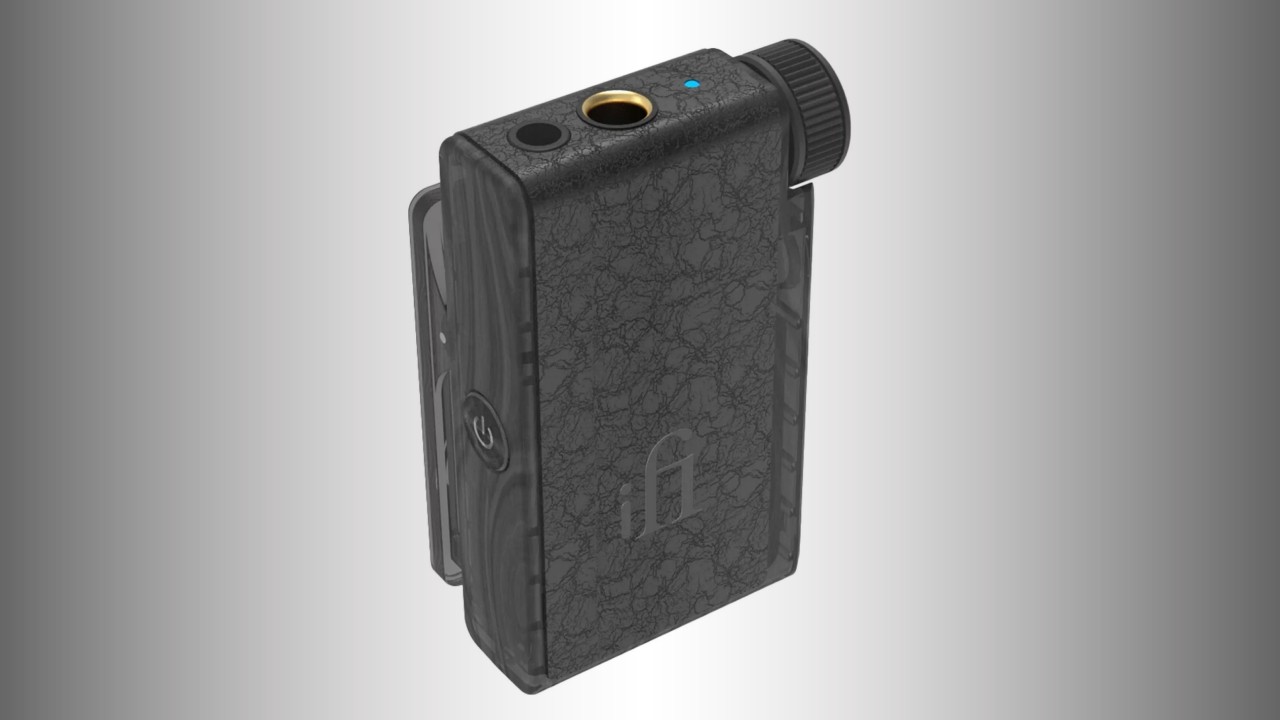
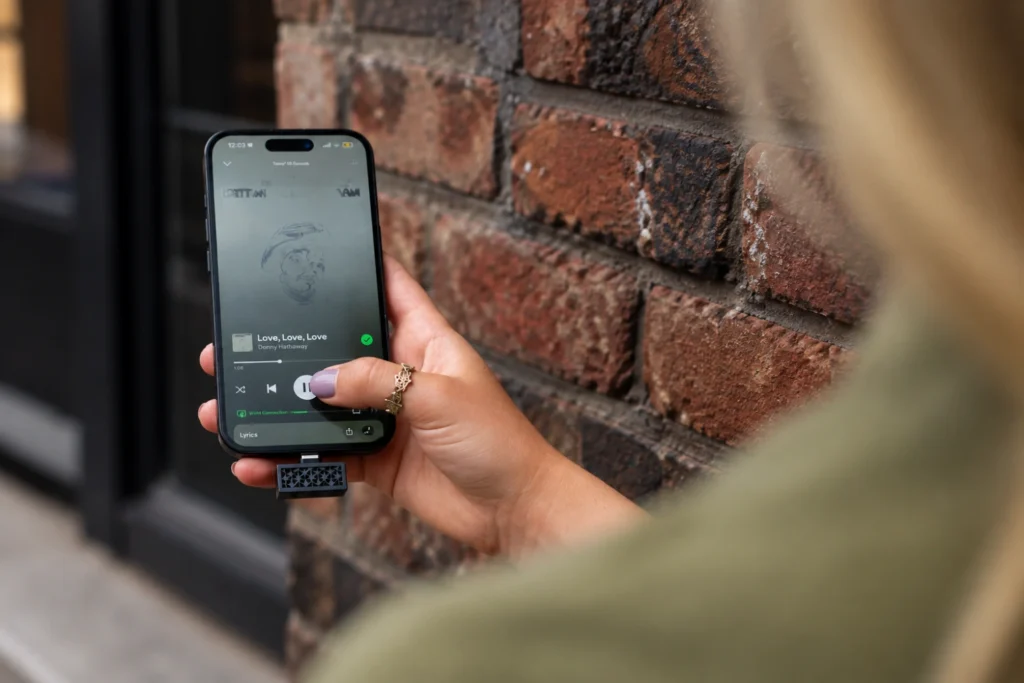
iFi GO blu Air portable Bluetooth DAC and headphone amplifier with clip-on design and dual headphone outputs.
The iFi GO blu Air is a portable Bluetooth DAC and headphone amplifier intended to make wired headphones work wirelessly.
It combines a Bluetooth module, DAC, and amplifier in a compact body with a magnetic clip, plus a built-in microphone with noise reduction for calls.
The Cirrus Logic MasterHIFI-series DAC supports streams up to 24-bit/96 kHz, while output options include a balanced 4.4 mm connection and a 3.5 mm jack with S-Balanced technology. XBass and XSpace modes provide sound customization.
Best for: Wireless use with wired headphones on the move
- Portable Bluetooth DAC and headphone amplifier
- Magnetic clip for attaching to clothing, a belt, or a bag
- Balanced 4.4 mm output and 3.5 mm S-Balanced jack
- Built-in microphone with noise reduction
Verdict: The iFi GO blu Air is the practical portable option here, trading full-size system integration for Bluetooth convenience, headphone outputs, and call support.
9. FiiO K17
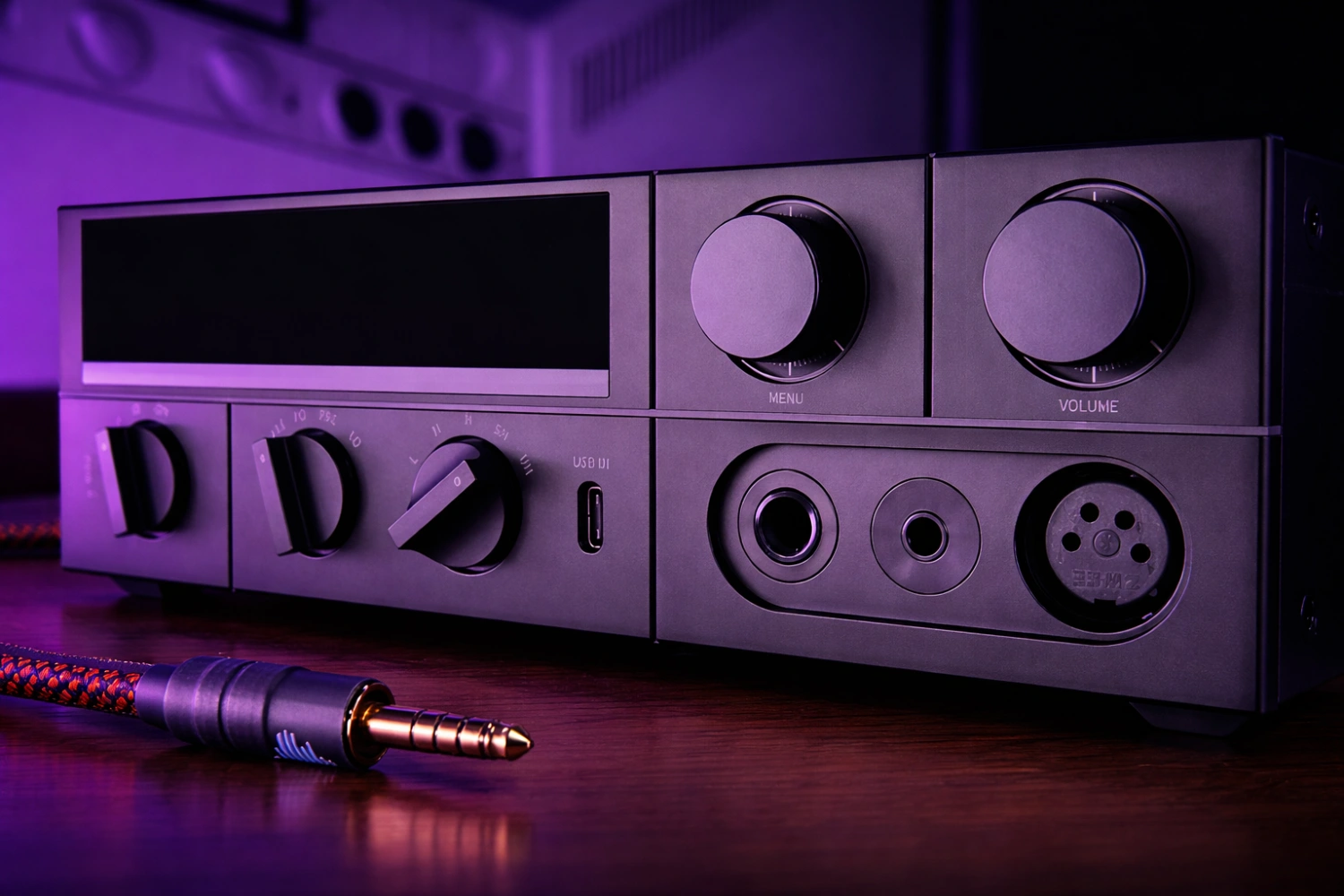
FiiO K17 desktop DAC and headphone amplifier with compact chassis, front controls, and included remote.
The FiiO K17 is a desktop DAC and headphone amplifier presented as a flexible system centerpiece rather than a simple converter.
The source describes a dense, solid, compact chassis with a restrained retro design, functional ventilation, tactile controls, and a package that includes useful accessories such as cables, a power cord, adapters, a remote control, a spare fuse, and an XLR plug.
Its appeal is rooted in desktop versatility, hands-on control, and DAC/amp integration rather than a single-format headline specification in the supplied material.
Best for: Desktop listeners wanting an integrated DAC and headphone amp
- Desktop DAC and headphone amplifier design
- Compact, solid chassis described in the source
- Remote control and useful accessories included
- Hands-on controls highlighted for tactile operation
Verdict: The FiiO K17 stands out as a desktop DAC/amp for users who value physical controls, accessory support, and a compact component that can anchor a headphone-focused setup.
10. Mutec MC1.2+

Mutec MC1.2+ bidirectional digital-to-digital converter for routing PCM signals between multiple digital interfaces.
The Mutec MC1.2+ is not a DAC, but a bidirectional digital-to-digital converter designed to convert PCM audio streams between USB, AES/EBU, AES3/EBUid, and S/PDIF interfaces.
It can work simultaneously in both directions via USB, which makes it especially relevant in professional recording environments.
The design also uses low-noise audio clock oscillators to regenerate the USB audio stream and isolate USB voltage, with the manufacturer describing reductions in phase noise and clock jitter.
Best for: Digital interface conversion before a DAC or in studio setups
- Bidirectional digital-to-digital conversion
- USB, AES/EBU, AES3/EBUid, and S/PDIF interface support
- Simultaneous two-way operation via USB
- USB stream regeneration and voltage isolation
Verdict: The Mutec MC1.2+ belongs in this guide as a specialist digital bridge for users who need interface conversion or USB isolation rather than analog output conversion.
Quick comparison
These products differ less by category label than by system role.
Some are purist standalone DACs, some add volume control, some target headphones, and one is a digital-to-digital converter that belongs before a DAC rather than after it.
| Product | Best for | Verdict |
|---|---|---|
| Vincent DAC-1MK | Standalone DAC use with modern USB sources | A balanced, upgraded converter with DSD-capable USB and separated analog and digital power windings. |
| Merason Mountain | High-end systems with separate amplification | A flagship dedicated DAC with PCM, DSD, and balanced or unbalanced analog output options. |
| Hegel D50 The Raven | Purist conversion without streaming or volume control | A focused DAC built around noise reduction, dual transformers, and a deliberately streamlined feature set. |
| Atoll DAC200 Signature | Full-size systems wanting volume control and high-resolution support | A component DAC with ESS conversion, Class A output stages, remote volume adjustment, and extensive PCM and DSD compatibility. |
| Métronome Le DAC 3 | High-end digital systems with many source types | A reference-grade DAC with very wide PCM and DSD support plus USB, AES/EBU, coaxial, and optical inputs. |
| Exposure DAC | Direct connection to a power amplifier | A focused DAC with 99-step digital volume control, RCA and XLR outputs, multiple S/PDIF inputs, and high-resolution USB support. |
| Esoteric D-02X | Advanced high-end systems prioritizing architecture | A heavily engineered dual-mono DAC with multiple transformers, many DAC chips per channel, ES-LINK4, and 11.2 MHz DSD support. |
| iFi GO blu Air | Portable Bluetooth headphone listening | A compact Bluetooth DAC/headphone amp with clip-on use, microphone support, and balanced or S-Balanced headphone outputs. |
| FiiO K17 | Desktop headphone and DAC/amp setups | A compact desktop DAC/amp with tactile controls, practical accessories, and an integrated approach to headphone listening. |
| Mutec MC1.2+ | Digital signal routing and USB isolation | A specialist DDC for converting PCM between digital interfaces before the signal reaches a DAC. |
Frequently asked questions
Should I choose a DAC with volume control?
Choose volume control if you want the DAC to feed a power amplifier directly or act as a simpler control point.
The Exposure DAC and Atoll DAC200 Signature both include volume functions, while purist models such as the Hegel D50 The Raven are designed to leave volume control to another component.
Which digital inputs matter most?
Match the DAC to the sources you already use.
USB is important for computers and many music servers, coaxial and optical suit traditional digital transports and TVs, and AES/EBU appears on more specialized or high-end sources.
The Métronome Le DAC 3 is notable for offering USB, AES/EBU, coaxial S/PDIF, and optical Toslink.
Do I need very high PCM or DSD support?
Only if your music library or playback chain uses those formats.
Several models here support very high PCM or DSD rates, including the Atoll DAC200 Signature, Métronome Le DAC 3, and Exposure DAC, while the Merason Mountain focuses on PCM up to 24-bit/192 kHz plus DSD64 and DSD128.
What is the difference between a DAC and a digital-to-digital converter?
A DAC converts a digital audio signal into analog for an amplifier or headphones.
A digital-to-digital converter, such as the Mutec MC1.2+, converts or conditions one digital format into another and still needs a DAC downstream if you want analog audio output.
How to Choose the Right DAC
Start with system role.
If you already own a preamplifier or integrated amplifier, a dedicated fixed-output DAC such as the Hegel D50 The Raven, Merason Mountain, Vincent DAC-1MK, or Esoteric D-02X may be the cleanest fit.
If you want the DAC to reduce box count by controlling level, focus on models with volume control such as the Exposure DAC or Atoll DAC200 Signature. For headphones, the iFi GO blu Air and FiiO K17 make more sense than a conventional line-level DAC because amplification is built into the product concept. If your problem is digital routing rather than analog conversion, the Mutec MC1.2+ is the specialist tool.



 VS
VS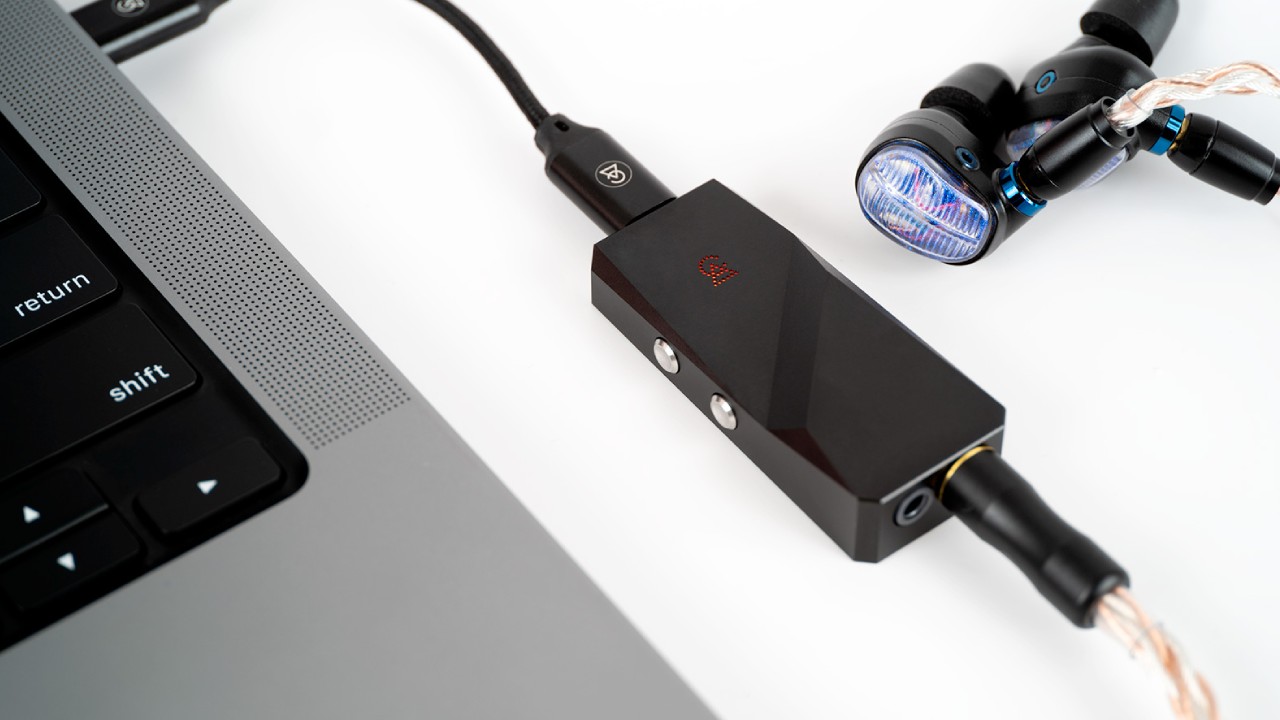 VS
VS VS
VS VS
VS VS
VS VS
VS VS
VS VS
VS

Share your thoughts on this 0
Keep it civil, relevant and respectful.