

Choosing headphones starts with deciding where and how they will be used.
Open-back designs suit quiet rooms, closed over-ear models provide useful passive isolation, and true wireless earbuds prioritize mobility.
Wired in-ear headphones offer another route, with compact designs that avoid batteries and Bluetooth. This selection spans professional monitors, home-listening headphones, adaptable USB-C earphones and feature-rich wireless models. The products are not interchangeable: some focus on neutral reproduction and serviceability, while others emphasize active noise cancellation, water resistance, charging convenience or adjustable sound. Specifications can narrow the field, but fit, source compatibility and acoustic design matter just as much. Manufacturer sound claims are identified as such, and the recommendations below stay within the capabilities and observations documented in the supplied reports.

1. Sony MDR-M1: Closed over-ear headphones for use in the (home) studio
Sony MDR-M1 closed over-ear studio headphones with a detachable cable and replaceable ear pads.
Sony’s MDR-M1 succeeds the long-running MDR-7506 as a closed over-ear monitor for recording, music creation and sound work.
Its new 40-millimeter driver is specified at 102 dB/mW with a frequency range of 5 Hz to 80 kHz.
More practically, Sony has adopted detachable cables and easily replaceable ear pads, making routine maintenance less involved than it was with the fixed cable of the MDR-7506. The source describes the sound as neutral and the fit as comfortable enough for hours of use. Two detachable cables are supplied, including a 1.2-meter option intended for connection to a phone.
Best for: Studio work and neutral home listening
- Neutral sound
- Comfortable for extended wear
- Detachable cables included
- Easily replaceable ear pads
Verdict: A practical closed studio monitor that combines neutral reproduction with improved cable and pad serviceability.

2. Padmate PaMu Slide Mini: Updated TWS headphones
Padmate PaMu Slide Mini true wireless earbuds beside their compact case with four charge-level LEDs.
The PaMu Slide Mini addresses the bulky case associated with the earlier PaMu Slide by using a smaller charging case and compact earbuds.
Four exterior LEDs show the case charge in 25-percent increments, while charging is available through USB-C or a Qi wireless pad.
The earbuds enter pairing mode when removed from the case, and the source found pairing quick, fit comfortable and music playback enjoyable across several genres. Touch controls cover the operating functions without requiring physical buttons.
Best for: Everyday true wireless convenience
- Compact charging case
- USB-C and Qi wireless charging
- Quick automatic pairing
- Comfortable fit
Verdict: A compact update for listeners who value straightforward pairing, comfortable earbuds and flexible case charging.
3. Focal Hadenys and Azurys: Over-ear open and closed headphones
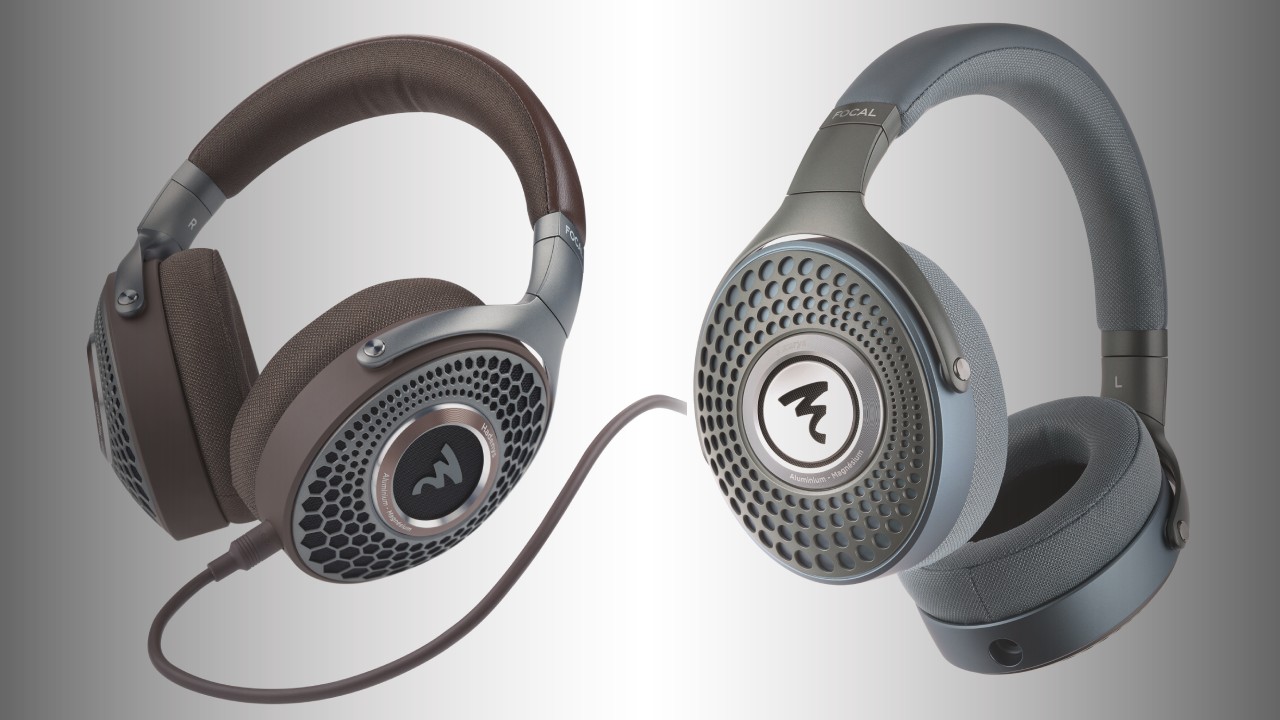
Focal Hadenys and Azurys wired over-ear headphones, offering open and closed earcup designs respectively.
Focal’s wired, passive over-ear pair covers two distinct settings.
Hadenys uses open earcups and is intended for home listening, while Azurys is closed for more flexible use at home or on the road.
Both draw on drivers from the wireless Bathys and share design elements including genuine leather and woven material. Focal describes Hadenys as accurate, dynamic and warm; those are manufacturer characterizations rather than independent listening findings. The key buying decision is therefore architectural: choose Hadenys for a quiet listening space or Azurys when reduced leakage and greater environmental separation are more important.
Best for: Listeners choosing between home openness and closed-back versatility
- Choice of open or closed construction
- Wired passive operation
- Over-ear design
- Shared premium material treatment
Verdict: Two related Focal designs that make the open-versus-closed decision unusually clear.

4. Final DX3000CL: Closed-Back Headphones with Paper-Carbon Drivers and Natural Sound
Final DX3000CL closed-back over-ear headphones featuring an in-house 40-millimeter paper-carbon driver.
The DX3000CL is the first closed-back model in Final’s DX line.
Its in-house 40-millimeter dynamic driver combines a paper-carbon diaphragm with a free-edge surround structure intended to control movement and reduce unwanted resonance.
Final claims a smooth, natural balance with a clear midrange, open treble and rich but controlled bass. Closed earcups provide some passive isolation and limit what nearby people can hear, while the acoustic chambers are tuned to preserve a more open presentation. A detachable cable, padded cushions and a balanced headband system round out a design intended for extended listening.
Best for: Home listeners wanting closed-back privacy
- Some passive isolation
- Reduced sound leakage
- Detachable cable
- Padded, balanced wearing system
Verdict: A closed DX-series headphone built around Final’s paper-carbon driver approach and an intentionally open-style presentation.
5. Dan Clark Aeon Core: Revolutionary Planar Magnetic Headphones
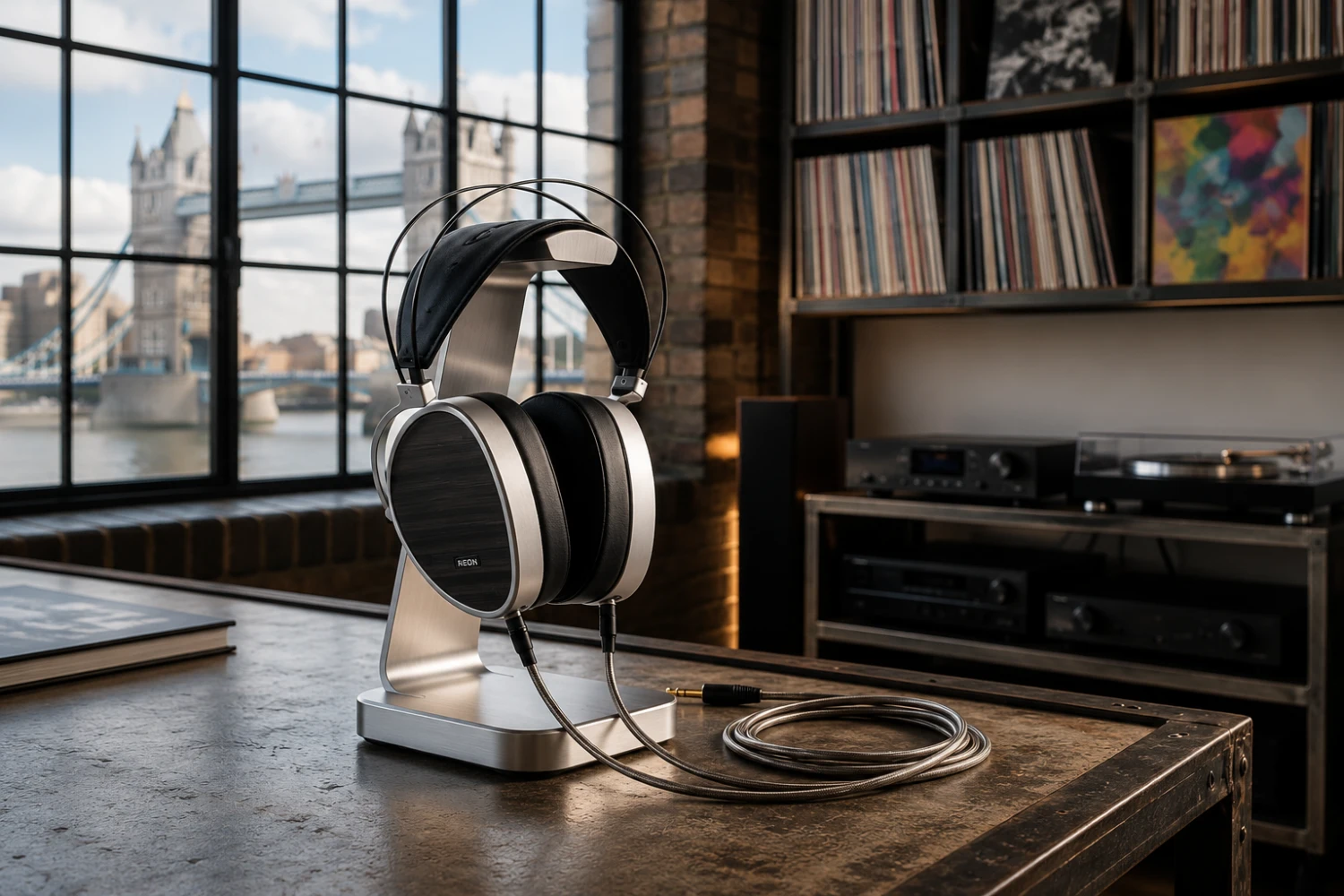
Dan Clark Aeon Core closed-back planar magnetic headphones with detachable cabling.
Dan Clark Audio’s Aeon Core is a closed-back planar magnetic headphone and successor to the Aeon 2.
It introduces a new magnetostatic driver and revised earcup tuning, with the manufacturer emphasizing broader compatibility and an unusually open, spacious presentation for a closed design.
Its closed earcups naturally reduce leakage and improve isolation compared with an open-back headphone, making it more practical when other people are nearby. Detachable cables add convenience and allow replacement without retiring the headphones. The expansive sound description remains a manufacturer claim in the supplied report, but the combination of planar construction and closed-back practicality clearly distinguishes the Aeon Core.
Best for: Planar headphone listeners who need a closed design
- Closed-back passive isolation
- Reduced sound leakage
- Detachable cables
- New planar magnetic driver
Verdict: A closed planar model aimed at combining everyday isolation with the spacious presentation claimed by Dan Clark Audio.

6. Shanling MTW200 Plus: Affordable TWS headphones with ANC
Shanling MTW200 Plus true wireless earbuds in a compact zinc-alloy charging case.
Shanling’s MTW200 Plus combines adaptive active noise cancellation with aptX Adaptive support and an IPX7 water-resistance rating for the earbuds.
A Qualcomm QCC3072 chipset handles Bluetooth 5.3 connectivity, while codec support also includes aptX, AAC and SBC.
The acoustic design uses a 10-millimeter dynamic driver with a titanium-coated diaphragm and a shielded chamber intended to protect it from Bluetooth-related interference. The specified battery life reaches 10 hours from the earbuds and 42 hours with the zinc-alloy charging case. Music, ANC and transparency modes make this the most feature-focused wireless option in the selection.
Best for: Wireless listening, commuting and active use
- Adaptive active noise cancellation
- IPX7-rated earbuds
- Up to 10 hours per charge
- aptX Adaptive support
Verdict: A well-equipped TWS option for buyers prioritizing ANC, codec choice, water resistance and long specified battery life.

7. Roland VMH-S100: Ergonomic over-ear headphones designed for studio recording
Roland VMH-S100 closed studio headphones with dual earcup cable connections and replaceable pads.
Roland designed the closed-back VMH-S100 for musicians, producers and sound designers, while also positioning it for serious home listening.
Custom 50-millimeter drivers are claimed to deliver a flat, accurate profile across a specified 5 Hz to 40 kHz range.
Its 30-ohm impedance supports use with equipment such as synthesizers, audio interfaces and mobile workstations. Cable routing can be selected through connectors on both earcups, and two detachable cables are included. Replaceable pads and a robust but lightweight construction address the practical demands of prolonged studio use.
Best for: Recording, production and flexible studio setups
- Dual earcup cable connections
- Two detachable cables included
- Replaceable ear pads
- 30-ohm device compatibility
Verdict: A purpose-built closed monitor with useful cable-routing options and maintenance-friendly replaceable pads.
8. Moondrop Chu II DSP: Dynamic headphones with signal processor
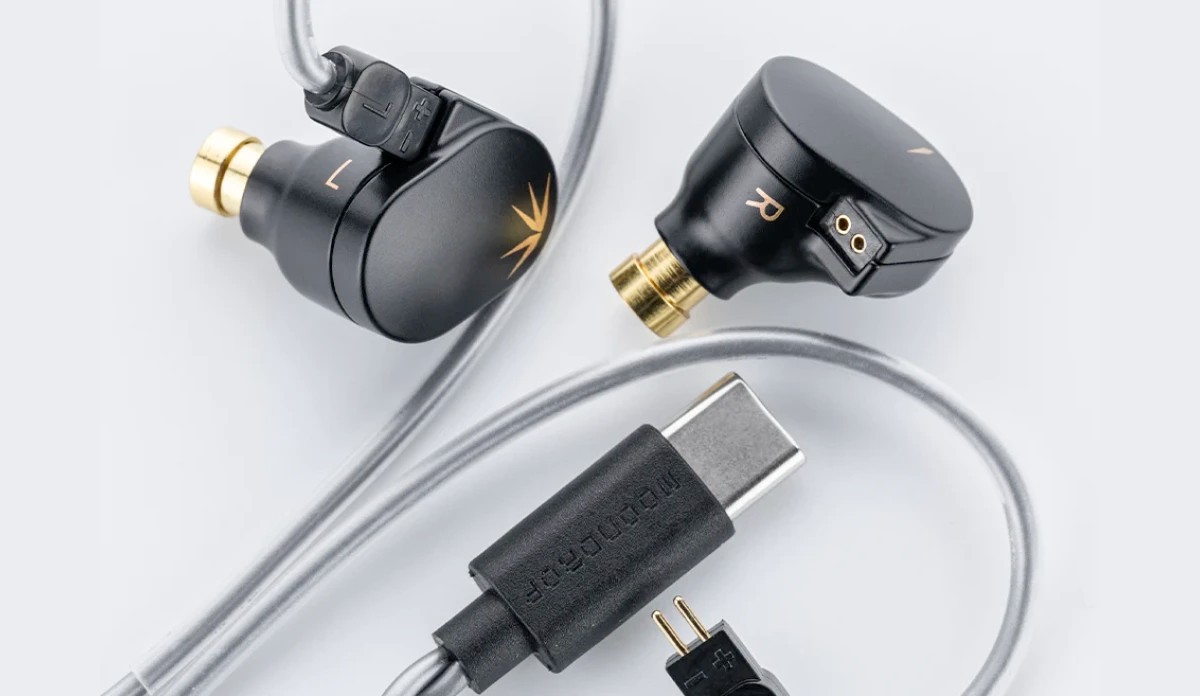
Moondrop Chu II DSP metal in-ear headphones with a detachable cable and USB-C signal processor.
The Chu II DSP is a wired in-ear headphone that connects through USB-C rather than the standard version’s conventional termination.
A miniature processor in the connector works with the Moondrop Link 2.0 application, providing a parametric equalizer and preset curves for different genres.
The acoustic section uses a 10-millimeter aluminum-magnesium dynamic diaphragm, while the cast stainless-alloy shells incorporate brass nozzles with replaceable acoustic filters. Its detachable cable includes a microphone and connects to the earpieces through 0.78-millimeter sockets. This is the most directly adjustable wired in-ear option here, although buyers should first confirm that their playback device supports the required USB-C connection and application.
Best for: USB-C listeners who want adjustable wired sound
- USB-C digital connection
- Parametric equalizer support
- Detachable microphone cable
- Replaceable acoustic filters
Verdict: A compact wired in-ear design that adds app-based DSP tuning without changing the Chu II acoustic platform.

9. Beyerdynamic T1 2nd Gen: Award-winning headphones with elegant design and quality workmanship
Beyerdynamic T1 2nd Gen open-back headphones with fine metal grilles and memory-foam velour pads.
Beyerdynamic’s T1 2nd Gen is an open, full-size headphone built around the company’s 1-Tesla dynamic drivers.
Velour pads filled with memory foam and a padded headband provide a close yet comfortable fit according to the source, while fine metal mesh covers the open earcups.
The defining practical consideration is its 600-ohm impedance: the report states that obtaining its highest sound quality requires a suitable high-class headphone amplifier. Its open construction also makes it more appropriate for quiet, private listening than for shared rooms or travel. Buyers already equipped with appropriate amplification are the natural audience.
Best for: Amplifier-equipped home listening systems
- Open full-size construction
- Memory-foam velour ear pads
- Detailed metal workmanship
- High-sensitivity 1-Tesla drivers
Verdict: A carefully made open headphone for stationary systems, provided the amplifier is suitable for its demanding 600-ohm load.

10. Best Audiophile Headphones: Wired Full-Size Ranking
A selection of wired full-size audiophile headphones representing open- and closed-back approaches.
This source article is a broader guide rather than a single headphone.
It concentrates on wired full-size models for focused home listening, explaining how large earcups, acoustic volume and properly implemented drivers can support soundstage, dynamics and control.
The selection covers five dynamic-driver headphones, including both closed and open designs, and recognizes that a suitable DAC or headphone amplifier may be part of the system. It is most useful as orientation for readers who have decided that sound quality and stationary listening matter more than wireless convenience or portability.
Best for: Comparing dedicated wired home-listening headphones
- Focuses on wired full-size headphones
- Covers open and closed designs
- Discusses source and amplifier matching
- Concentrates on dynamic-driver models
Verdict: A useful companion guide for understanding the trade-offs within full-size wired headphone systems.
Quick comparison
The strongest distinctions are design, intended setting and connection method.
Open headphones favor quiet private rooms, closed models reduce leakage and provide passive isolation, and TWS earbuds trade cables for batteries, charging cases and wireless features.
The Moondrop sits between these groups as a wired USB-C in-ear model with digital sound adjustment.
| Product | Best for | Verdict |
|---|---|---|
| Sony MDR-M1 | Studio work and neutral home listening | Closed, serviceable and supplied with detachable cables for professional or home use. |
| Padmate PaMu Slide Mini | Everyday true wireless convenience | Compact TWS earbuds with simple pairing and both USB-C and Qi case charging. |
| Focal Hadenys and Azurys | Choosing between open home listening and closed versatility | A related wired pair differentiated primarily by open and closed earcup construction. |
| Final DX3000CL | Closed-back home listening with less leakage | A closed dynamic headphone using Final’s paper-carbon composite diaphragm. |
| Dan Clark Aeon Core | Closed-back planar magnetic listening | A planar design that combines passive isolation with a manufacturer-claimed spacious presentation. |
| Shanling MTW200 Plus | ANC, water resistance and longer wireless use | Feature-rich TWS earbuds with adaptive ANC, aptX Adaptive and an IPX7 rating. |
| Roland VMH-S100 | Recording and production setups | A closed studio monitor with replaceable pads and selectable left- or right-side cable routing. |
| Moondrop Chu II DSP | Adjustable wired listening over USB-C | A metal in-ear model with connector-based DSP and app-controlled equalization. |
| Beyerdynamic T1 2nd Gen | Dedicated home systems with suitable amplification | An open 600-ohm headphone whose source requirements deserve careful attention. |
| Best Audiophile Headphones: Wired Full-Size Ranking | Researching full-size wired alternatives | A broader comparison resource covering dynamic-driver headphones and system matching. |
Frequently asked questions
Should I choose open-back or closed-back headphones?
Choose open-back headphones for quiet, private listening where leakage will not disturb anyone.
Closed-back designs provide more passive isolation and keep more of the music from reaching bystanders, making them better suited to studios, shared rooms and travel.
Do wired headphones always need a separate amplifier?
No.
Impedance and device compatibility vary by model.
The 30-ohm Roland VMH-S100 is designed for a broad range of equipment, while the 600-ohm Beyerdynamic T1 2nd Gen requires suitably capable amplification to achieve its best performance.
Is active noise cancellation the same as closed-back isolation?
No.
Closed earcups reduce outside sound passively through their physical design.
Active noise cancellation uses electronics to suppress ambient noise; among these selections, the Shanling MTW200 Plus specifically provides adaptive ANC as well as a transparency mode.
What should I check before buying USB-C or true wireless earbuds?
Confirm device and application compatibility, supported Bluetooth codecs where relevant, expected battery life, charging method and water-resistance rating.
For the Moondrop Chu II DSP, check USB-C and app support; for TWS models, also consider case size and charging options.
How to Choose the Right Headphones
Start with the listening environment rather than a driver specification.
For production work, the Sony MDR-M1 and Roland VMH-S100 combine closed construction with detachable cables and replaceable pads.
The Sony is described as neutral and comfortable, while the Roland adds dual earcup connectors and a 30-ohm load intended to work across varied studio equipment. For dedicated home listening, decide whether an open design is practical. Focal’s Hadenys and the Beyerdynamic T1 2nd Gen suit private rooms, but the Beyerdynamic’s 600-ohm impedance makes amplifier matching essential. Focal’s Azurys, the Final DX3000CL and the planar magnetic Dan Clark Aeon Core provide closed alternatives when isolation and reduced leakage matter more. Portable buyers have a different set of priorities. The PaMu Slide Mini emphasizes a compact case and flexible charging, whereas the Shanling MTW200 Plus adds adaptive ANC, water resistance, broader codec support and longer specified endurance. The Moondrop Chu II DSP avoids wireless charging and battery concerns altogether, using USB-C DSP and application-based equalization instead. Finally, consider long-term ownership. Detachable cables, replaceable pads and replaceable filters can extend useful life, but only if the headphone also fits comfortably and works with the intended source. Treat extreme frequency-response figures and manufacturer sound descriptions as supporting information, not substitutes for choosing the correct form factor, connection and electrical requirements.

Join the discussion
Share your thoughts, listening impressions or product experience.