
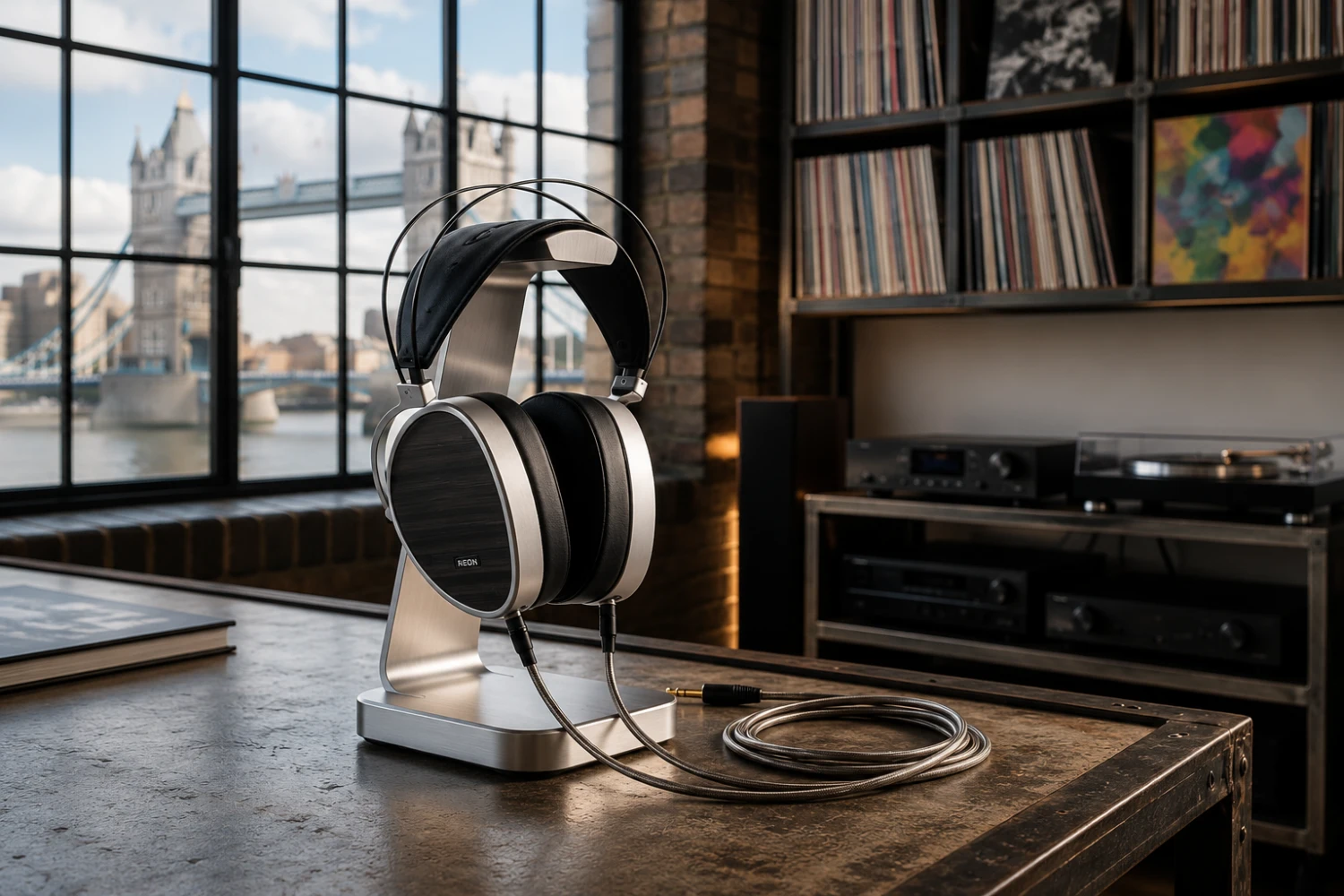
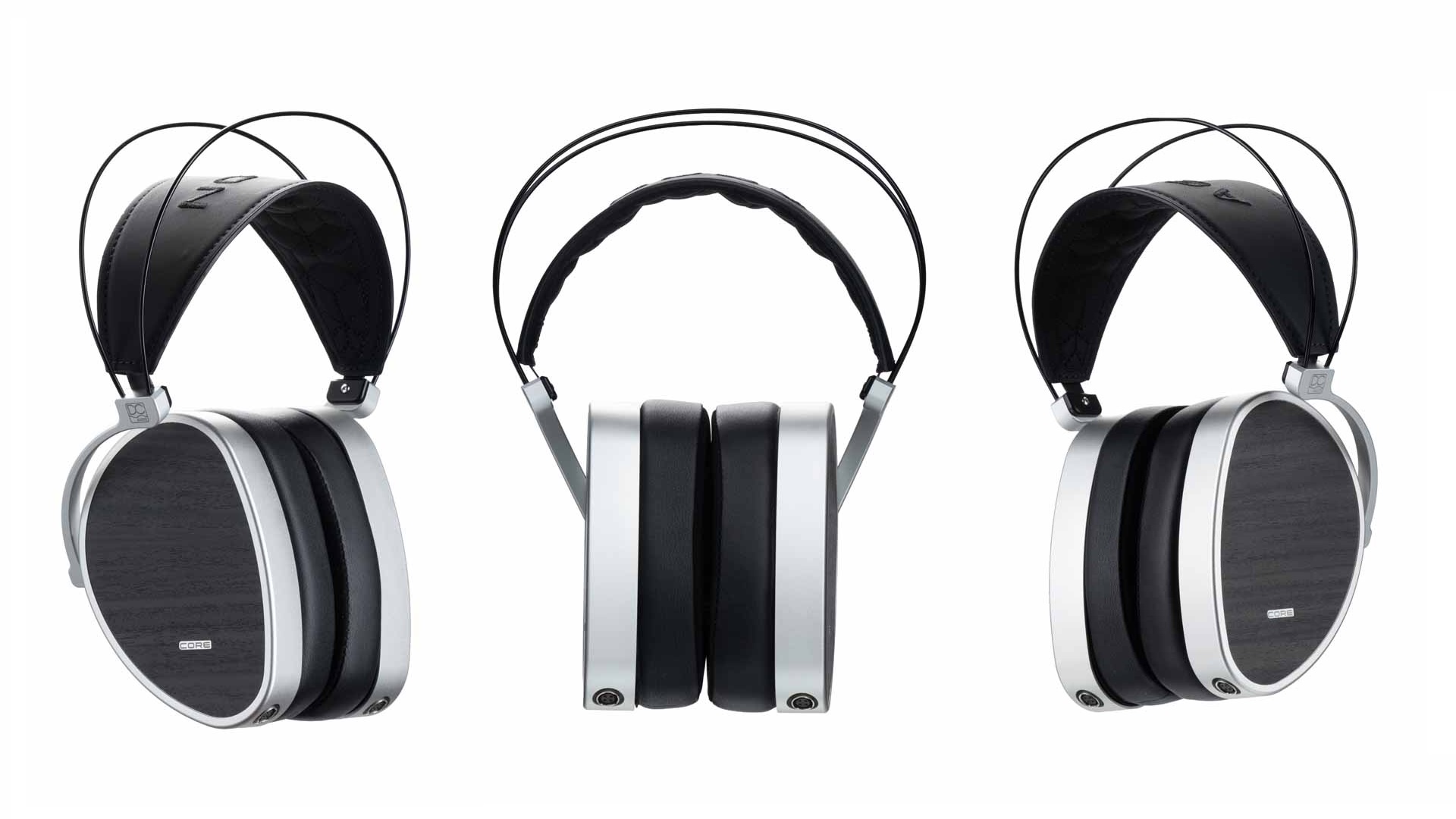
The Aeon Core from Dan Clark Audio features an entirely new magnetostatic driver, revised ear cup tuning, and broader compatibility, which, according to the designers, sets a new standard for closed headphones under 1,000 euros. Naturally, the Aeon Core has detachable cables.
Dan Clark Audio (DCA) is based in Southern California and is a manufacturer of handcrafted headphones. Since 2017, the Aeon line has served as the entry-level model in DCA's portfolio, offering reference-quality magnetostatic headphones at a more affordable price. According to the makers, the new Aeon Core continues this mission and is the successor to the highly acclaimed Aeon 2, while offering significant improvements in driver technology, sound reproduction, and the measurement science underlying the tuning itself.
The Aeon Core is a closed-back headphone designed to deliver an unusually open sound. Closed-back headphones offer less sound leakage and better noise isolation, but their acoustic properties often cause them to sound more “enclosed” than open-ear headphones. Therefore, it is often assumed that open-back headphones are superior in terms of sound quality, although they are less practical in some environments. However, DCA’s closed-back headphones prove the opposite: their unique design ensures an extremely open and spacious sound.
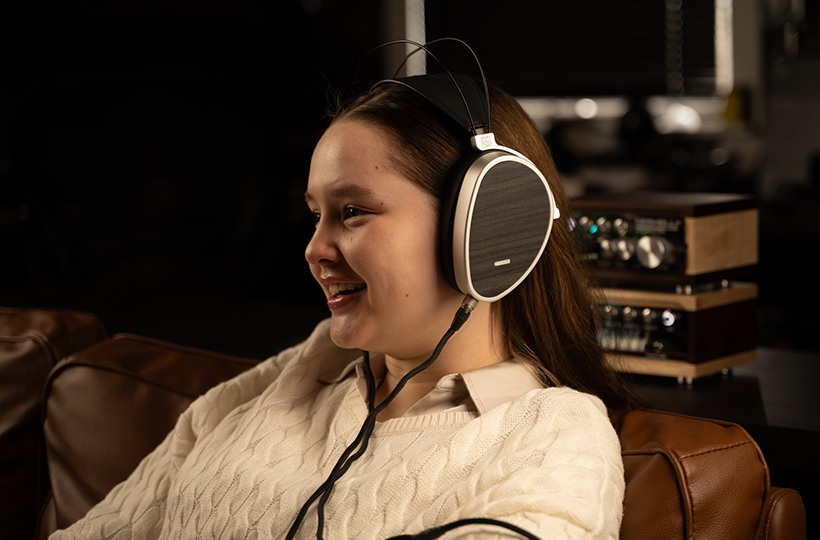
According to the manufacturer, the new Aeon Core is a perfect example of this. The natural isolating properties of their design, which prevent sound from leaking in or out, combined with their ergonomics and electrical efficiency, make them extremely versatile and suitable for a wide range of environments. They are ideal for shared spaces, such as an office. And they are perfect for mixing music or creating AV content, at home or in a studio. Best of all, they never sound “enclosed” or have an exaggerated bass response, like many closed models. The makers of the Aeon Core promise a spacious, detailed, clear, and expressive sound, with a natural reproduction of the recording.
The most efficient driver DCA has ever made
The all-new magnetostatic driver stack of the Aeon Core was designed with three priorities in mind: efficiency, tonal consistency, and unit-to-unit reliability. The result is the easiest-to-drive headphone from DCA to date, and according to the manufacturer, the Aeon Core is easier to drive than most magnetostatic headphones on the market.
While magnetostatic headphones offer clear sonic advantages over traditional headphones with dynamic drivers, such as lower distortion and a more spacious soundstage, they generally place higher demands on the connected amplifier. As a result, they are less suitable for lower-power amplifiers – particularly regarding current output.
With a sensitivity of 97 dB/mW, however, the Aeon Core combines perfectly with portable headphone amplifiers, dongles, and desktop systems, as well as with more powerful headphone amplifiers. An output of 125 mW at 16 Ohms is sufficient to drive the Aeon Core. Additional power is welcome, but not necessary.
DCA has worked extensively on the development of the Aeon Core's driver stack, utilizing a new membrane material to improve efficiency and reliability and achieve a strong price-performance ratio. The company's V-Planar technology has been applied to the membrane surface to reduce distortion, improve dynamic performance, and optimize frequency response.
The Harman curve redefined
Dan Clark, founder and chief engineer of DCA, uses the Harman curve as an important reference when tuning new headphone designs. The Harman curve was developed by Harman International as an ‘ideal' frequency response profile, resulting from groundbreaking research into listening satisfaction using a large, diverse population sample and extensive double-blind listening tests.
In the world of headphones, this is considered a key foundation for optimal performance. Technically, the Harman Curve tuning is not ‘neutral,' but it can produce a tonal balance that is captivating without being fatiguing—expressive and subjective, yet simultaneously natural and effortless. While many other aspects influence the overall listening experience, it offers the assurance of a well-balanced performance that is appreciated by headphone enthusiasts and has become the de facto gold standard in the industry.
However, since Dr. Sean Olive, Todd Welti, and their team began developing the Harman Curve in 2012, headphone measurement technology has evolved. In particular, a more recent microphone—the GRAS RA0402—has become universal in headphone development, along with GRAS ear cups (models of the outer part of the human ear) that differ in shape and consistency from the ear cups used by Olive and Welti. As a result, the original Harman Curve measurement system and the laboratory equipment now standard throughout the industry register different frequency responses when measuring the same headphones.
This has led to a built-in ‘error' in the Harman curve; headphones developed with currently standard test equipment may not match the intended result when the original data is used as a reference. In 2025, Dan Clark collaborated with Olive on the development of a corrected version of the over-ear test curve, using the original hardware as a reference point to produce an updated curve that is accurately translatable to current measurement systems. The Aeon Core are the first headphones developed with this new curve.
The result is a tuning that is subtle yet fundamentally different from previous Aeon models: a slightly leaner upper bass, a slightly boosted lower midrange, and a softer upper midrange. Vocals take center stage without sounding harsh. Acoustic instruments retain their body and weight. The bass is tight and present without being exaggerated.
Comfortable for long listening sessions
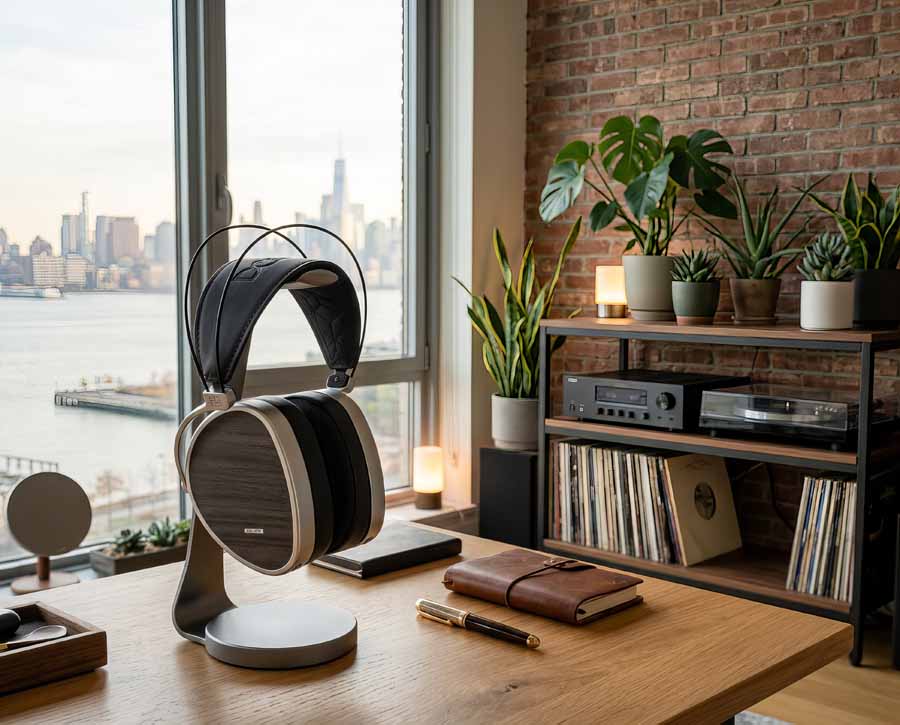
The Aeon Core features a new aluminum and dark wood aesthetic but retains the physical elements that characterize the line, including DCA's signature Aeon ear cushions, a lightweight titanium headband, and a self-adjusting headband. The fit is immediately comfortable and prevents fatigue, even during prolonged listening, thanks in part to the weight of 440 grams—which is relatively light for a magnetostatic headphone, especially considering the high-quality construction and materials.
Dan Clark Audio manufactures all its headphones at its factory in San Diego, California. The Aeon Core comes with a detachable cable featuring a connector of the customer's choice, i.e., balanced 4.4 mm, 4-pin XLR, or 6.35/3.5 mm jack plug.


Sound Off
0Join the discussion if you have something to add.