
Choosing Speakers That Fit the Room, System, and Listener
A practical guide to choosing speakers by room, system type, placement, and supported features, covering compact active models, floorstanders, bookshelf speakers, and in-wall home theater designs.
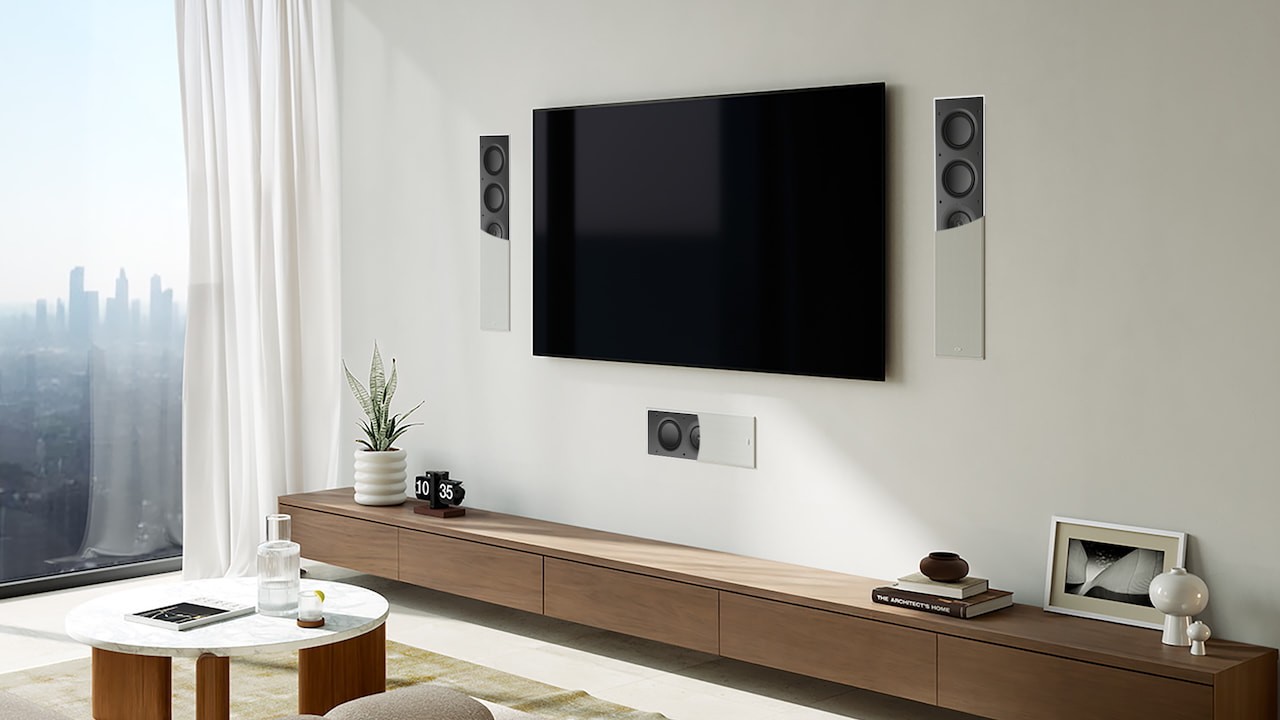
A better speaker choice starts with context.
Room size, placement, source equipment, and the kind of system you want to build matter at least as much as driver count or cabinet size.
A compact active speaker with Bluetooth can be the right answer for a desk or casual living space, while a floorstanding design may make more sense when the room and amplifier can support it. The speakers gathered here are very different: compact powered monitors, bookshelf designs, floorstanders, in-wall home theater models, and ambitious high-end loudspeakers with distinctive engineering. Rather than rank them by a single idea of performance, this guide explains what each model appears to be for, using only the available source information. That makes the list especially useful if you are comparing speaker types rather than chasing one universal recommendation. Some models prioritize ease of use and built-in electronics; others focus on traditional passive hi-fi, room integration, home cinema installation, or large-scale reproduction.

1. Audio-Technica AT-SP3X
Audio-Technica AT-SP3X compact active speakers in a white matte finish.
The Audio-Technica AT-SP3X is a compact two-way active master/slave speaker system designed for simple installation and everyday flexibility.
It can accept music through a stereo RCA input or wirelessly over Bluetooth, and Multipoint Pairing allows switching between two paired source devices such as a laptop and smartphone.
The master speaker contains the electronics, power control, LED indicator, and volume control, while the speakers connect to each other with an included two-meter cable. Its compact proportions, minimalist styling, and matte white finish make it one of the most straightforward choices here for rooms where convenience and appearance matter.
Best for: Compact rooms, desks, and simple Bluetooth or RCA playback
- Compact two-way active speaker system
- Stereo RCA input and Bluetooth playback
- Bluetooth Multipoint Pairing for two source devices
- Simple master/slave setup with onboard controls
Verdict: A practical powered speaker system for listeners who want easy setup, wired and wireless input options, and a clean compact design.

2. Silent Pound Challenger 2
Silent Pound Challenger 2 floorstanding speaker with exposed driver layout and unconventional woofer construction.
The Silent Pound Challenger 2 is a floorstanding speaker from a Lithuanian manufacturer with a deliberately unusual construction.
It uses five drivers, including two 30 cm woofers operating without a conventional sound box and with an open back, supported by two 160 mm midrange drivers and a tweeter.
Silent Pound says the design is aimed at lifelike, dynamic reproduction with realistic timbres and spatial presentation, and states that the speaker is suitable for rooms from 18 to 80 square meters. The model is notable for its open-back bass concept and a patent-applied midrange cabinet intended to improve acoustic balance between the mid and low frequencies.
Best for: Listeners interested in distinctive floorstanding engineering for medium to large rooms
- Five-driver floorstanding design
- Open-back 30 cm woofer arrangement
- Manufacturer states suitability for 18 to 80 square meter rooms
- Patent-applied midrange cabinet concept
Verdict: A highly individual floorstander whose appeal rests on its open-back bass architecture and ambitious room-scale design.
3. Klipsch The Nines
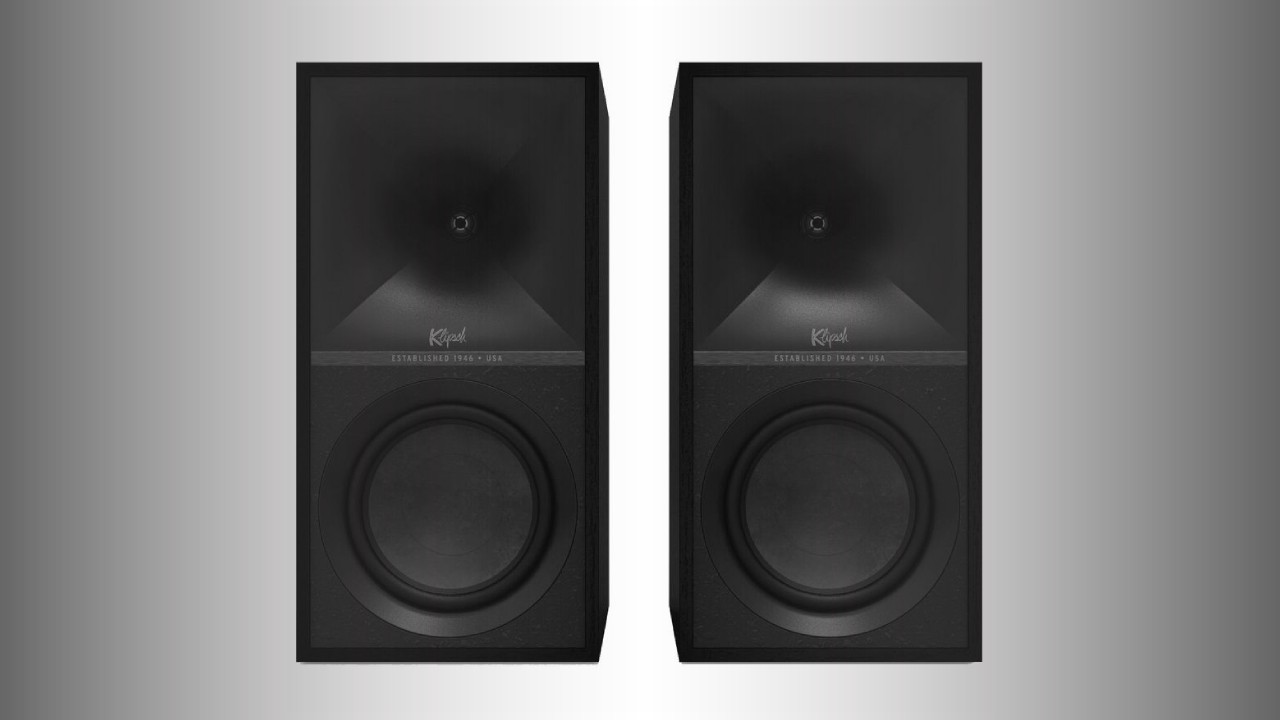
Klipsch The Nines active/passive bookshelf speakers with retro styling and removable magnetic grilles.
Klipsch The Nines is an active/passive bookshelf speaker pair positioned by Klipsch as an alternative to a modern soundbar.
The design combines retro styling, removable magnetic grilles, built-in Class D amplification, a proprietary Tractrix horn with a 1-inch titanium-dome LTS compression tweeter, and an 8-inch long-throw fiber-composite mid/bass driver.
Connectivity is unusually broad for a speaker pair in this guide, including an MM phono stage for turntables, Bluetooth with AAC and aptX HD support, USB input with PCM support up to 24-bit/192 kHz, DSP processing, and bass enhancement through a dynamic low-pass equalizer. For buyers who want fewer boxes without giving up stereo speaker separation, The Nines is the most fully integrated option in the selection.
Best for: Stereo TV, turntable, and streaming setups where a soundbar alternative is desired
- Active/passive bookshelf speaker system
- Built-in amplification and DSP processing
- MM phono stage for turntable connection
- Bluetooth with AAC and aptX HD support
Verdict: A feature-rich powered Klipsch pair for listeners who want classic speaker form with modern inputs and built-in amplification.

4. Ocean Way Sausalito Mk II
Ocean Way Sausalito Mk II compact floorstanding speaker finished in matte natural walnut veneer.
The Ocean Way Sausalito Mk II is a second-generation compact floorstanding speaker from Ocean Way Audio.
It is a three-way, phase-inverted design using a 1-inch soft-dome tweeter, an 8-inch aluminum-cone midrange driver, and a 12-inch aluminum-cone woofer.
According to the developers, attention to phase consistency was central to the design, with the aim of producing a natural, open, accurate, and timbrally balanced presentation. The composite cabinet is finished in matte natural walnut veneer and includes strengthened internal baffles intended to improve rigidity and reduce reflections from the baffles, helping compensate for low-frequency resonances.
Best for: Traditional hi-fi rooms where a compact floorstander and refined cabinet finish are priorities
- Three-way floorstanding configuration
- 1-inch soft-dome tweeter, 8-inch midrange, and 12-inch woofer
- Composite cabinet with strengthened internal baffles
- Matte natural walnut veneer finish
Verdict: A compact three-way floorstander with serious driver complement and cabinet work for listeners who value traditional loudspeaker engineering.
5. Dynaudio Xeo 10
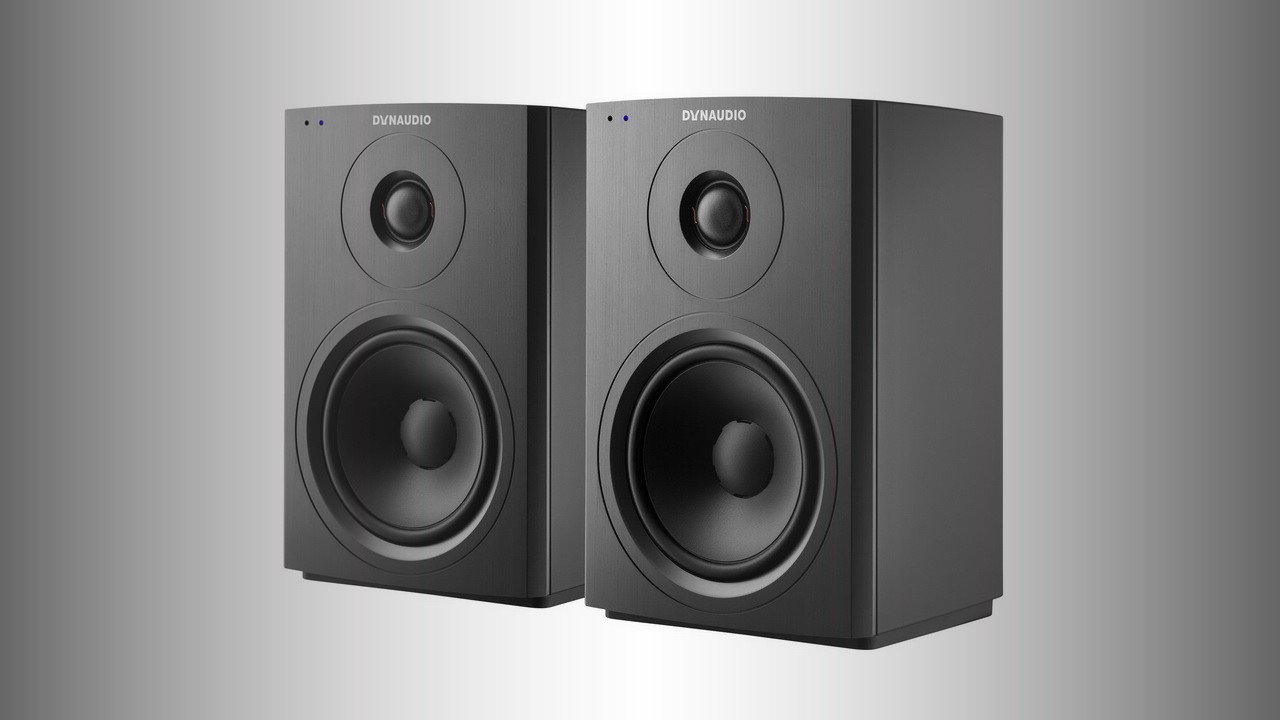
Dynaudio Xeo 10 compact active bookshelf speaker with aluminum front panel and clean cabinet design.
The Dynaudio Xeo 10 is a compact active bookshelf speaker that replaces the earlier Xeo 2 while retaining a living-room-friendly form.
It uses damped MDF cabinets, a cast aluminum rear mounting panel, and a new aluminum front panel with a rough finish, with matte black and matte white versions described in the source.
The driver set consists of a 140 mm MSP woofer and a 28 mm soft-dome tweeter, each powered by its own 65-watt amplifier. DSP handles the crossover, and a new overload-protection limiter is described as supporting high-quality sound even at high volume.
Best for: Compact active hi-fi systems where bookshelf size and integrated amplification are important
- Compact active bookshelf design
- 140 mm MSP woofer and 28 mm soft-dome tweeter
- Separate 65-watt amplifier for each driver
- DSP crossover and overload-protection limiter
Verdict: A refined active bookshelf option for listeners who want Dynaudio engineering in a compact, interior-friendly speaker.
6. KEF Ci5120QLM-THX and Ci3120QLM-THX
KEF Ci5120QLM-THX and Ci3120QLM-THX in-wall speakers with paintable magnetic grilles.
KEF’s Ci5120QLM-THX and Ci3120QLM-THX are in-wall speakers from the brand’s Extreme Home Theater line.
Both are three-way designs using KEF’s 12th-generation Uni-Q driver array with Metamaterial Absorption Technology, which the source describes as absorbing unwanted noise from the rear of the tweeter.
The Ci5120QLM-THX is the larger model with four woofers, while the Ci3120QLM-THX uses two woofers and is described as optimized for smaller rooms. Paintable, magnetically attached grilles make these models suitable for installations where the speaker should visually recede into the wall.
Best for: Built-in home theater systems where speakers need to be visually discreet
- Three-way in-wall speaker designs
- 12th-generation Uni-Q driver array
- Metamaterial Absorption Technology behind the tweeter
- Paintable magnetic grilles
Verdict: A strong architectural-speaker choice for home theater installations that require in-wall placement and KEF’s latest Uni-Q and MAT technologies.
7. Fyne Audio Vintage Fifteen
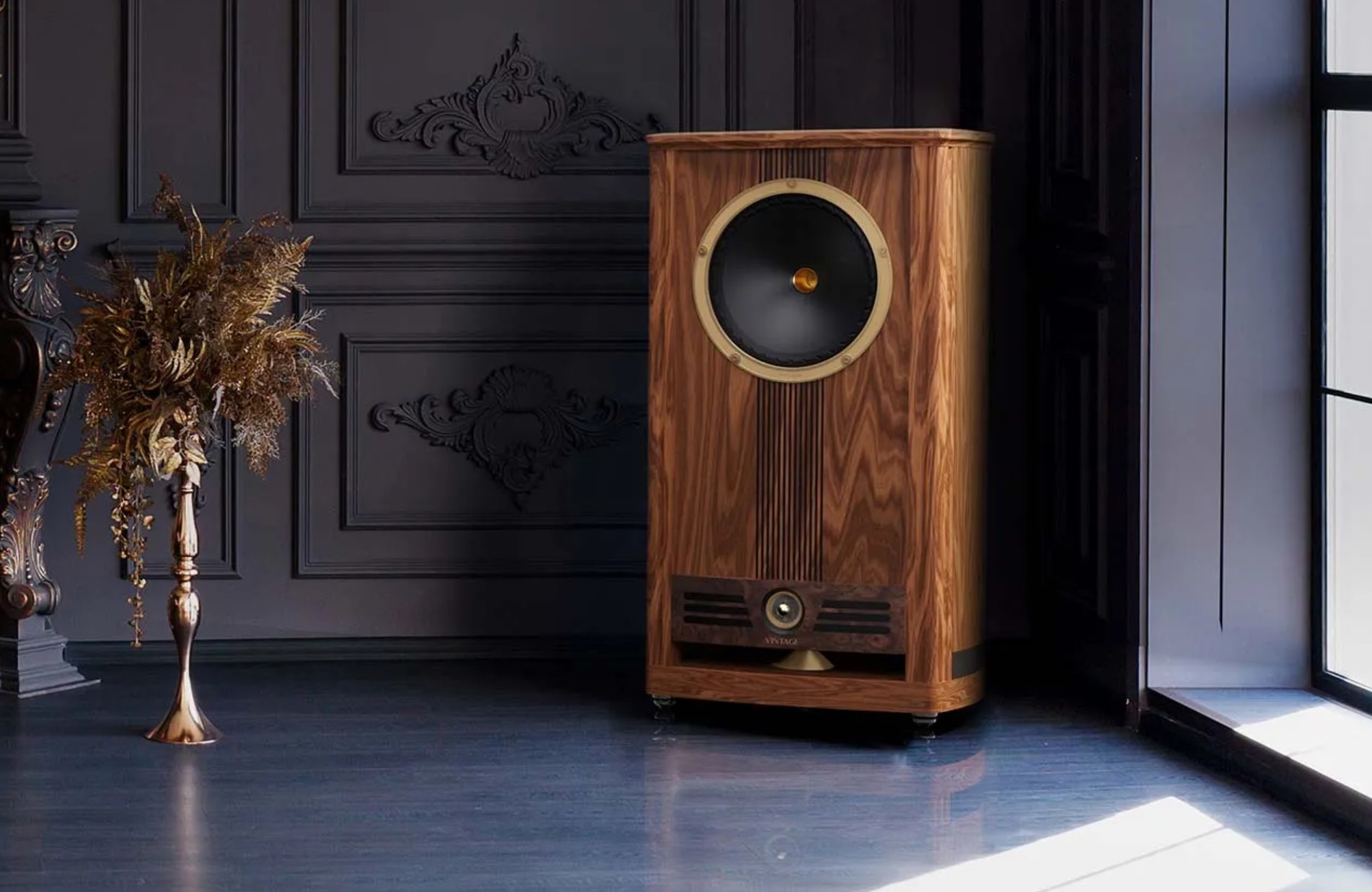
Fyne Audio Vintage Fifteen floorstanding speaker with large 15-inch IsoFlare coaxial driver and walnut finish.
The Fyne Audio Vintage Fifteen is the flagship model of Fyne Audio’s Vintage series and uses the largest IsoFlare driver described in the source.
That driver combines a 380 mm, 15-inch fiber-cone mid/bass unit with a 75 mm neodymium titanium tweeter in a coaxial arrangement.
The cabinet includes a downward-firing BassTrax Tractrix bass reflex system with birch plywood ports, and the manufacturer recommends amplifiers from 20 to 400 watts, with peak handling noted up to 800 watts. With a stated sensitivity of 97 dB at 2.83 V/1 m and an 8-ohm impedance, it is specifically described as working well with both powerful solid-state and tube amplifiers.
Best for: Large traditional hi-fi systems, including setups using tube or solid-state amplification
- 15-inch coaxial IsoFlare driver
- 97 dB stated sensitivity
- Downward-firing BassTrax Tractrix bass reflex system
- Walnut veneer cabinet with solid walnut inlays
Verdict: A large, high-sensitivity floorstander for listeners drawn to vintage styling, coaxial driver design, and flexible amplifier matching.

8. Neat Acoustics Mystique Classic
Neat Acoustics Mystique Classic compact floorstanding speaker with raised base and bottom port arrangement.
The Neat Acoustics Mystique Classic is a relatively small floorstanding speaker in the Classic range and is described as a lower-cost alternative to the Elite Classic.
At 78 cm tall, it is aimed at small spaces, making it a floorstander for buyers who may not have room for a larger tower.
The driver arrangement combines a 134 mm paper-cone mid/woofer from the Neat Motive series with an Air Motion Transformer tweeter shared across the Classic range. A bottom bass port vents above the speaker base via four aluminum spacers, and the crossover is described as carefully refined with air coils and polypropylene capacitors.
Best for: Small rooms where a compact floorstanding speaker is preferred over a bookshelf model
- Relatively small 78 cm floorstanding design
- 134 mm paper-cone mid/woofer
- Air Motion Transformer tweeter
- Bottom bass port with raised base spacing
Verdict: A space-conscious floorstander that brings Neat’s Classic range design language into a smaller and more accessible form.

9. Polk Audio S60
Polk Audio S60 floorstanding tower speaker from the Signature series.
The Polk Audio S60 is presented as the premier floorstanding model in Polk’s Signature series and is framed around the brand’s signature sound.
The source emphasizes cabinet design rather than detailed specifications, noting gently rounded horizontal edges and a more complex construction than a simple rectangular box.
It also describes the cabinets as carefully made, with a vinyl finish that is not hidden and no visible defects in the reviewed sample. Buyers considering the S60 should view it as a full-size Signature-series tower where cabinet execution and Polk’s mainstream speaker design approach are central to the appeal.
Best for: Listeners considering a large Polk Signature-series floorstanding speaker
- Premier floorstanding model in the Signature series
- Gently rounded cabinet edges
- Carefully finished cabinet construction described in the source
- Full-size tower format
Verdict: A full-size Polk tower whose source material highlights cabinet design, finish quality, and its role at the top of the Signature line.
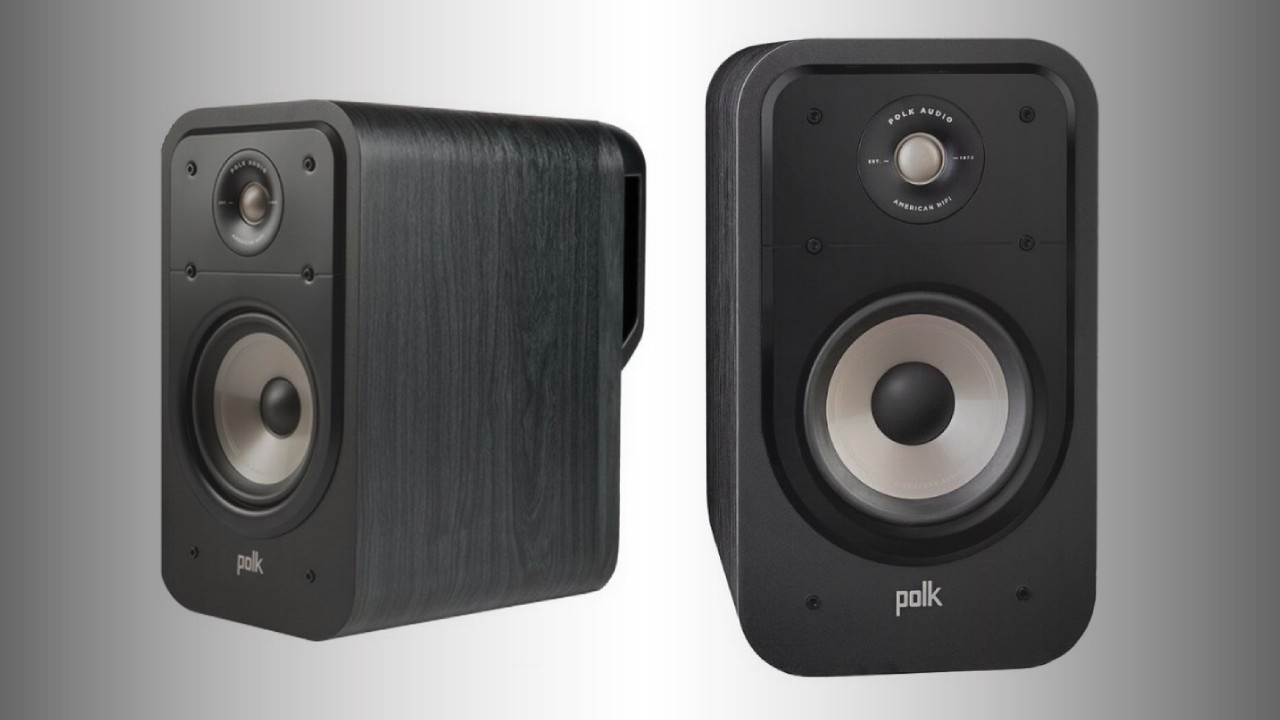
10. Polk Audio Signature S20e
Polk Audio Signature S20e bookshelf speaker from the updated Signature E line.
The Polk Audio Signature S20e is a bookshelf speaker from the updated Signature E line, a range described as certified for Hi-Res audio playback and borrowing technologies from Polk’s top lines.
The series uses Polk’s Power Port design to improve bass performance, and the S20e is described as capable of significant sound pressure and as a potential replacement for small floorstanders.
Polk’s Dynamic Balance technology is also highlighted in the source as a way of selecting materials and driver geometries while reducing problems in the electroacoustic and mechanical system. With Black and Winter White finishes mentioned, it is a practical bookshelf choice for buyers who want substantial output without moving to towers.
Best for: Bookshelf systems that need stronger output than very small speakers can provide
- Bookshelf model in the updated Signature E line
- Power Port bass design
- Dynamic Balance driver technology
- Black and Winter White finishes described
Verdict: A substantial Polk bookshelf speaker for listeners who want Signature E technology and room-filling ambition without choosing a floorstander.
Quick comparison
These speakers differ more by intended use than by small feature variations.
The clearest split is between powered speakers that simplify system building, passive floorstanders that need suitable amplification and space, in-wall models for installed home theater, and compact designs aimed at smaller rooms.
| Product | Best for | Verdict |
|---|---|---|
| Audio-Technica AT-SP3X | Simple compact systems with Bluetooth and RCA sources | Choose it when ease of setup, compact size, and multipoint wireless convenience matter most. |
| Silent Pound Challenger 2 | Medium to large rooms and listeners interested in unusual floorstanding construction | Its open-back woofer concept and five-driver layout make it the most unconventional tower here. |
| Klipsch The Nines | A stereo alternative to a soundbar with turntable, USB, and Bluetooth support | The broad built-in feature set makes it the most self-contained entertainment-room option. |
| Ocean Way Sausalito Mk II | Traditional hi-fi systems seeking a compact three-way floorstander | It stands out for its three-way driver array, phase-focused design approach, and walnut-finished cabinet. |
| Dynaudio Xeo 10 | Compact active bookshelf systems | A neat route to integrated amplification, DSP crossover control, and a small cabinet footprint. |
| KEF Ci5120QLM-THX and Ci3120QLM-THX | Discreet in-wall home theater installations | The right fit when architectural integration, paintable grilles, and KEF Uni-Q technology are priorities. |
| Fyne Audio Vintage Fifteen | Large-format hi-fi systems and amplifier-flexible setups | Its 15-inch coaxial driver and high stated sensitivity suit listeners seeking a substantial traditional loudspeaker. |
| Neat Acoustics Mystique Classic | Small rooms needing a compact floorstanding speaker | It offers a floorstanding format without the height and scale of a large tower. |
| Polk Audio S60 | Buyers considering a full-size Polk Signature-series tower | Its distinction in the source is cabinet execution and its position as the premier Signature floorstander. |
| Polk Audio Signature S20e | Bookshelf setups needing more presence than very small speakers | A practical bookshelf option where Polk’s Power Port and Dynamic Balance technologies are part of the appeal. |
Frequently asked questions
Should I choose active or passive speakers?
Active speakers such as the Audio-Technica AT-SP3X, Klipsch The Nines, and Dynaudio Xeo 10 include amplification, so they can reduce system complexity.
Passive speakers such as the Fyne Audio Vintage Fifteen, Polk Audio S60, and Neat Acoustics Mystique Classic need an external amplifier, which gives more flexibility but requires careful matching.
How much should room size influence the choice?
Room size is central.
The Neat Acoustics Mystique Classic is specifically described as aimed at small spaces, while Silent Pound states that the Challenger 2 is suitable for rooms from 18 to 80 square meters.
Compact active speakers are easier to place in smaller rooms, while larger floorstanders generally need more physical space around them.
When do in-wall speakers make sense?
In-wall speakers make sense when the system is part of a built-in home theater or when visible speaker cabinets are not desired.
The KEF Ci5120QLM-THX and Ci3120QLM-THX use paintable magnetic grilles and are designed to be hidden in the room while still serving movie, game, and music playback roles described in the source.
Are bookshelf speakers always for small systems?
Not necessarily.
The Polk Audio Signature S20e is a bookshelf model described as developing significant sound pressure and potentially replacing small floorstanders.
Larger powered bookshelf-style systems such as Klipsch The Nines also include substantial drivers and built-in amplification, so cabinet format alone does not define system scale.
How to choose the right speaker from this group
Start with the room and the system you want to live with.
If you need the simplest path to music from a phone, laptop, or line-level source, the Audio-Technica AT-SP3X is the most compact and straightforward.
If you want a powered stereo pair that can take on TV-style duties, turntable playback, USB audio, and Bluetooth streaming, Klipsch The Nines is the most broadly equipped. For a compact active hi-fi speaker with dedicated amplification per driver and DSP crossover control, the Dynaudio Xeo 10 is the cleaner bookshelf-style choice. For passive hi-fi, think carefully about space, amplifier matching, and cabinet scale. The Neat Acoustics Mystique Classic is the most explicitly small-room floorstander in the source material. The Ocean Way Sausalito Mk II suits buyers drawn to a compact three-way floorstanding format with serious cabinet construction. The Polk Audio S60 is the full-size Polk Signature-series tower option, while the Polk Audio Signature S20e is the more space-efficient bookshelf model with Power Port and Dynamic Balance technologies. The more specialized choices should be chosen for their specific strengths. The KEF Ci5120QLM-THX and Ci3120QLM-THX belong in planned in-wall installations, not casual two-channel setups. The Fyne Audio Vintage Fifteen is for buyers who want a large, high-sensitivity, vintage-styled floorstander built around a 15-inch coaxial driver. The Silent Pound Challenger 2 is the adventurous option, defined by its open-back woofer system and the manufacturer’s claims for dynamic, lifelike reproduction in medium to large rooms. The safest buying approach is to rule out the wrong speaker type before comparing details. Decide whether you need powered or passive, freestanding or in-wall, compact or full-size, then look at the supported features that matter to your use: inputs, amplifier requirements, room-size guidance, driver layout, and placement needs. The strongest recommendation is the speaker whose design assumptions match your room and system, not the one with the most imposing cabinet or longest feature list.