

An AV receiver should be chosen around the system you intend to build, not simply by comparing headline power figures.
Speaker count, video compatibility, room calibration and source connections are the distinctions that matter most.
A straightforward 5.2-channel installation has different requirements from a nine-channel Dolby Atmos system, while vinyl playback introduces another set of connection questions. The supplied material contains three model-level AV receiver options: the accessible 5.2-channel Sony STR-DH590, the nine-channel Yamaha RX-A3080 and the 9.2-channel Marantz SR7015. It also includes an Anthem brand overview, a Denon soundbar alternative and several articles that provide background rather than a specific receiver recommendation. That mixed selection requires some care. The receiver models can be compared by their documented channels, video support, surround formats and calibration systems. The remaining entries are included transparently as alternatives or related reading rather than being presented as AV receivers.

1. KEF
KEF is covered here as a loudspeaker manufacturer rather than as an AV receiver option.
This is a history of KEF and its loudspeaker engineering rather than an AV receiver review.
It outlines the English company’s long-standing focus on technological development and provides useful brand context for anyone considering KEF speakers as part of a home-cinema system.
It does not identify a receiver, specify system-matching requirements or provide enough information to recommend a particular KEF speaker package.
Best for: Readers researching speaker-brand background
- Established loudspeaker heritage
- Strong emphasis on engineering innovation
Verdict: Useful context for choosing home-cinema speakers, but not an AV receiver recommendation.

2. Denon DHT-S516H: Powerful 2.1 soundbar with a wireless subwoofer
The Denon DHT-S516H combines a low-profile 2.1 soundbar with an automatically connected wireless subwoofer.
The Denon DHT-S516H is a 2.1 soundbar system for readers who want a simpler alternative to a receiver and separate speakers.
Its low-profile main enclosure is designed to sit in front of many televisions, and an IR repeater addresses installations in which the bar blocks the television’s remote sensor.
The package includes an automatically paired wireless subwoofer, while HDMI with Audio Return Channel, optical and analog inputs provide several television and source connections. This convenience comes without the expandable multichannel architecture of an AV receiver.
Best for: A compact 2.1 television-audio system
- Low-profile soundbar design
- Wireless subwoofer included
- HDMI ARC, optical and analog connections
- IR command repeater
Verdict: A practical soundbar alternative when simplicity matters more than the flexibility of a component home cinema.

3. Anthem
Anthem’s home-theater range encompasses AV receivers, processors and multichannel power amplifiers.
Anthem is presented as a Canadian manufacturer of home-theater electronics, including AV receivers, AV processors and multichannel power amplifiers.
The article emphasizes a consistent design approach across product families and describes the company’s use of substantial video processing rather than inexpensive processing solutions.
It also cites modular upgrade support for an earlier processor. However, no current receiver model, channel configuration or connection list is supplied, so this entry is better treated as brand research than as a direct purchase recommendation.
Best for: Researching a home-theater electronics brand
- Dedicated home-theater product range
- Receivers, processors and power amplifiers covered
- Canadian design and manufacturing stated
- Modular upgrade support illustrated
Verdict: Anthem merits consideration at the brand level, but the source lacks a specific receiver model to compare directly.

4. Sony STR-DH590: 5.2-channel AV receiver that supports 4K resolution
The Sony STR-DH590 is a 5.2-channel receiver with 4K HDR handling, Bluetooth and automatic speaker calibration.
The Sony STR-DH590 is the most straightforward conventional receiver in the supplied selection.
Its 5.2-channel configuration suits a traditional surround system with provision for two subwoofers, while its video section supports 4K, HDR10, HLG and Dolby Vision.
Dolby TrueHD and DTS-HD Master Audio are among the documented surround codecs, and S-Force PRO Front Surround can create a virtual surround presentation from a 2.1-channel setup. Sony’s Digital Cinema Auto Calibration adjusts the speakers for the room, and Bluetooth provides convenient wireless audio playback.
Best for: A conventional 5.2-channel home cinema
- 5.2-channel speaker configuration
- 4K, HDR10, HLG and Dolby Vision support
- Digital Cinema Auto Calibration
- Bluetooth audio streaming
Verdict: A focused choice for shoppers who need 4K HDR compatibility, automatic calibration and five-channel surround without a nine-channel platform.

5. This legendary Japanese HiFi brand is returning to the scene with new audio equipment
Onkyo’s renewed product-development strategy is the subject, rather than a specific AV receiver.
This article covers Onkyo’s strategic revival, ownership changes, product-development center and plans to broaden its audio range.
The brand has a long association with hi-fi, but the supplied text does not describe a current AV receiver, its channels, connections, room correction or supported formats.
It therefore offers company context rather than a product that can be compared with the Sony, Yamaha or Marantz receivers.
Best for: Following Onkyo’s broader brand direction
- Dedicated product-development center
- Established Japanese audio heritage
- Planned expansion of the product range
Verdict: Relevant industry background, but not enough product-level information for an AV receiver recommendation.

6. Yamaha RX-A3080: Fully equipped flagship AV Receiver
The nine-channel Yamaha RX-A3080 uses class AB amplification, dual heat sinks and an anti-resonance chassis.
The Yamaha RX-A3080 is a nine-channel AVENTAGE receiver built around a class AB power-amplifier section and a substantial transformer-based power supply.
Its digital section uses ESS SABRE ES9026PRO conversion, while two heat sinks manage the output stage’s thermal demands.
The specified 150 watts per channel applies to stereo operation from 20 Hz to 20 kHz into 8 ohms, so it should not be interpreted as an all-channels-driven figure. An anti-resonance ART chassis with a fifth support is intended to reduce mechanical influence from the transformer. Among the supplied choices, this is the receiver for readers prioritizing nine-channel amplification and substantial construction.
Best for: A substantial nine-channel home-theater installation
- Nine channels of amplification
- Class AB output stage
- ESS SABRE ES9026PRO DAC section
- Anti-resonance chassis with fifth support
Verdict: The Yamaha is the construction-focused nine-channel option, with traditional class AB amplification and a carefully engineered chassis.

7. Top 10 most read audiophile articles of
This readership roundup spans general audiophile topics rather than focusing on AV receivers.
This readership roundup covers a variety of popular audiophile subjects rather than evaluating an AV receiver.
The available excerpt begins with a Devialet integrated amplifier and does not supply receiver specifications, connection guidance or a home-cinema comparison.
It has no defensible place on an AV receiver shortlist beyond illustrating broader reader interest in audio equipment.
Best for: Browsing popular general-audio topics
Verdict: A general editorial roundup with no usable basis for choosing an AV receiver.
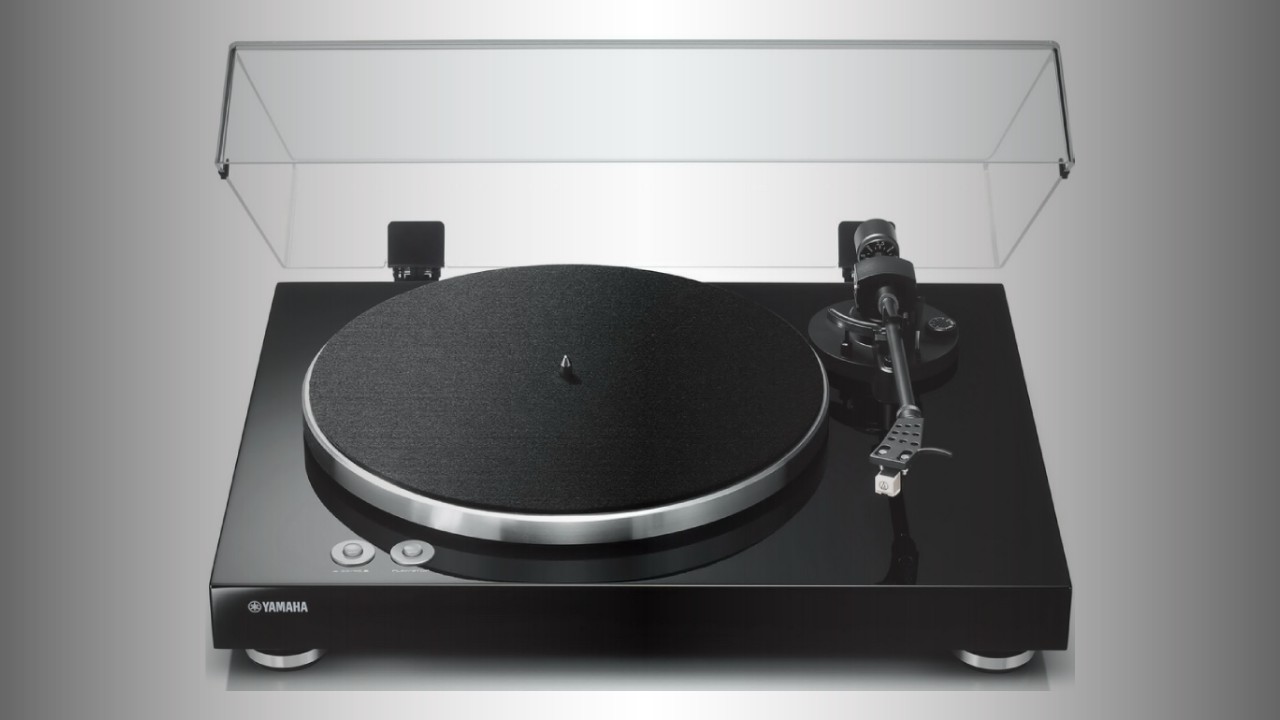
8. Yamaha TT-S303: Keep your vinyl collection alive with this record player
The Yamaha TT-S303 can use its internal phono preamplifier or feed a compatible phono input.
The Yamaha TT-S303 is a turntable rather than an AV receiver, but it is relevant to shoppers who want vinyl in a mixed music and movie system.
Its built-in phono preamplifier allows connection to a receiver’s line-level input, while phono output mode can be selected when the partnering amplifier or receiver has a suitable phono stage.
That flexibility is useful because not every receiver provides a dedicated phono input. The source does not provide enough information to compare the turntable’s performance with other record players.
Best for: Adding vinyl playback to a receiver-based system
- Built-in phono preamplifier
- Switchable phono output mode
- Can connect to a line-level input
- Compatible with stereo amplifiers and AV receivers
Verdict: A flexible turntable source for systems with or without a suitable built-in phono stage.

9. Marantz SR7015: IMAX Enhanced 9.2-channel AV receiver
The Marantz SR7015 combines 9.2-channel processing with immersive-audio formats and advanced video passthrough.
The Marantz SR7015 has the broadest documented home-cinema format support in this selection.
It is a 9.2-channel, IMAX Enhanced receiver supporting Dolby Atmos, DTS:X, Auro-3D and DTS Virtual:X; the source notes that a 7.1.4-channel arrangement requires an additional stereo driver.
Its video platform handles 8K at 60 Hz, 4K at 120 Hz and multiple HDR formats, alongside gaming-oriented features including Quick Frame Transport and Auto Low Latency Mode. Audyssey MultEQ XT32 provides speaker and room calibration, while network and USB playback include high-resolution audio and DSD support. This combination makes it the most format-rich option described in the source material.
Best for: Immersive audio and advanced video systems
- 9.2-channel architecture
- Dolby Atmos, DTS:X and Auro-3D support
- 8K 60 Hz and 4K 120 Hz video handling
- Audyssey MultEQ XT32 calibration
Verdict: The Marantz is the strongest documented choice here for shoppers seeking extensive 3D-audio, HDR and high-frame-rate video support.

10. Most common questions about vinyl players and
Phono-stage compatibility is an important consideration when adding a turntable to an AV receiver.
This explanatory article is most relevant to AV receiver buyers who plan to connect a turntable.
It distinguishes phono stages by moving-magnet and moving-coil cartridge compatibility and explains that a phono preamplifier may be built into the turntable or amplifier, or supplied as a separate component.
It also notes that more advanced external stages may offer cartridge-specific adjustments. The material is useful for planning an analog source connection, although it does not recommend or compare any AV receiver.
Best for: Understanding turntable connections before choosing a receiver
- Explains MM and MC cartridge compatibility
- Covers internal and external phono stages
- Highlights cartridge-adjustment considerations
Verdict: Helpful vinyl-system guidance, but not a receiver review or product recommendation.
Quick comparison
Only the Sony STR-DH590, Yamaha RX-A3080 and Marantz SR7015 are specific AV receivers with enough supplied information for a meaningful product-level distinction.
Anthem is represented by a brand overview, the Denon is a compact soundbar alternative, and the Yamaha TT-S303 and phono-stage guide address vinyl integration.
The remaining articles provide company or editorial background rather than receiver-buying evidence.
| Product | Best for | Verdict |
|---|---|---|
| KEF | Speaker-brand research | Loudspeaker history and engineering context, not an AV receiver option. |
| Denon DHT-S516H: Powerful 2.1 soundbar with a wireless subwoofer | Simple 2.1 television sound | A low-profile soundbar and wireless-subwoofer package that avoids a component receiver system. |
| Anthem | Home-theater brand research | A relevant receiver and processor manufacturer, but no specific model is documented. |
| Sony STR-DH590: 5.2-channel AV receiver that supports 4K resolution | 5.2-channel surround | The most direct option for a conventional 4K HDR system with automatic calibration and Bluetooth. |
| This legendary Japanese HiFi brand is returning to the scene with new audio equipment | Onkyo company background | Brand-development news without a specific AV receiver to assess. |
| Yamaha RX-A3080: Fully equipped flagship AV Receiver | Nine-channel amplification | A substantial class AB receiver emphasizing amplification, conversion and chassis construction. |
| Top 10 most read audiophile articles of | General audio browsing | A popularity roundup rather than an AV receiver buying resource. |
| Yamaha TT-S303: Keep your vinyl collection alive with this record player | Vinyl in a receiver-based system | A switchable turntable that can work with line-level or compatible phono inputs. |
| Marantz SR7015: IMAX Enhanced 9.2-channel AV receiver | Immersive sound and advanced video | The most extensively documented option for 3D audio, 8K, 4K at 120 Hz and HDR formats. |
| Most common questions about vinyl players and more | Phono-stage planning | Connection guidance for vinyl users, not a receiver recommendation. |
Frequently asked questions
How many receiver channels do I need?
Match the receiver to the speaker layout you intend to install.
The Sony STR-DH590 supports a conventional 5.2-channel system, while the Yamaha RX-A3080 provides nine amplified channels and the Marantz SR7015 uses a 9.2-channel architecture.
Do not pay for extra channels unless you have a realistic plan to use them.
Which video features should I check before buying?
Confirm that the receiver supports the resolutions, frame rates and HDR formats used by your television, projector and sources.
The Sony covers 4K with HDR10, HLG and Dolby Vision, while the Marantz adds documented support for 8K at 60 Hz, 4K at 120 Hz and a wider range of HDR and low-latency features.
Why does room calibration matter?
Automatic calibration adjusts the speaker setup in response to placement and room conditions.
The Sony includes Digital Cinema Auto Calibration, while the Marantz uses Audyssey MultEQ XT32.
Calibration is useful, but it does not remove the need for sensible speaker and subwoofer placement.
Can I connect a turntable to an AV receiver?
Yes, but the required connection depends on the equipment.
A turntable such as the Yamaha TT-S303 can use its built-in phono preamplifier with a receiver’s line input, or switch to phono output for a compatible phono input.
Also verify whether the cartridge and phono stage are designed for MM or MC operation.
Choose the system architecture before the receiver
Begin with the room and speaker layout.
For a conventional five-speaker surround system, the Sony STR-DH590 supplies the clearest fit in this group, combining 5.2-channel operation with 4K HDR support, Bluetooth and automatic calibration.
It avoids the complexity of buying a nine-channel receiver for a system that will never expand beyond five main speakers. The Yamaha RX-A3080 is the more construction-led nine-channel choice. Its class AB amplifier, transformer-based supply, ESS conversion and anti-resonance chassis distinguish it from the simpler Sony. When comparing power, remember that the supplied 150-watt specification is stated for stereo operation into 8 ohms rather than with all nine channels driven. Choose the Marantz SR7015 when documented format coverage is the priority. Its 9.2-channel platform, Dolby Atmos, DTS:X, Auro-3D, IMAX Enhanced certification, Audyssey MultEQ XT32 and advanced video handling make it the most versatile receiver described here. Before deciding, confirm that every source, display and planned speaker layout can use those features. A receiver is not always necessary. The Denon DHT-S516H offers a neater 2.1 alternative for television audio, although it does not provide the expansion path of separate speakers and a receiver. Vinyl listeners should also check phono connectivity carefully: a turntable with an internal phono preamplifier can use a normal line input, while other configurations require a compatible phono stage. Finally, verify the exact inputs, outputs and format support of any unit before purchase, because the supplied material does not provide a complete connection inventory for every model.

Join the discussion
Share your thoughts, listening impressions or product experience.