
Choosing a Better DAC Without Chasing Specs Alone
A practical evergreen guide to choosing a DAC by system role, covering R2R designs, DAC-preamplifiers, headphone DAC/amps, Bluetooth models, HDMI ARC options and portable devices.

A DAC can be a simple USB box, a full preamplifier, a headphone hub, a Bluetooth receiver, or the digital center of a serious two-channel system.
The right choice depends less on any single headline specification and more on how the unit fits into the rest of the system: headphones or speakers, desktop or rack, wired or wireless, simple conversion or full system control.
1. FiiO K13 R2R: Fully equipped DAC and headphone amplifier

FiiO K13 R2R desktop DAC and headphone amplifier with display, balanced architecture, Bluetooth, and PEQ features.
The FiiO K13 R2R is a desktop DAC and headphone amplifier built around a fully balanced 24-bit R2R architecture using proprietary resistor matrices.
Its appeal is breadth: NOS and OS modes, LDAC Bluetooth, app or web control, an LCD display, a 10-band PEQ, and a balanced circuit path from DAC to amplifier.
The quoted 2400 mW per channel at 32 ohms also makes it one of the more clearly headphone-focused options in this selection, while support for sensitive in-ear monitors is specifically addressed in the source material.
Best for: Desktop headphone users who want R2R conversion, wireless input, and tuning control
- Fully balanced 24-bit R2R design
- NOS and OS operating modes
- LDAC Bluetooth plus 10-band PEQ
- High quoted headphone output at 32 ohms
Verdict: A feature-rich desktop DAC and headphone amplifier for listeners who want R2R topology without giving up modern control options.
2. Denafrips Terminator PLUS 12Th: High-performance, balanced R2R NOS DAC

Denafrips Terminator PLUS 12Th balanced R2R NOS DAC designed for integration into high-end digital systems.
The Denafrips Terminator PLUS 12Th is a balanced R2R NOS DAC aimed at full-size hi-fi systems rather than compact desktop use.
The source emphasizes hand-selected components, revised OCXO clock power circuitry, extensive digital inputs, RCA and XLR outputs, and two clock outputs for synchronization with other audio devices.
Its separate linear power stage is physically divided from the DAC board by a steel partition, underlining the product’s system-building focus.
Best for: Dedicated two-channel systems needing a serious standalone DAC
- Balanced R2R NOS architecture
- Extensive digital input options
- RCA and XLR analog outputs
- Clock outputs for system synchronization
Verdict: A system-level R2R DAC for users who value connectivity, clocking options, and a fully balanced signal path.
3. SMSL D200: High-End ROHM Sound, MQA Support, LDAC Bluetooth & Stunning Clarity
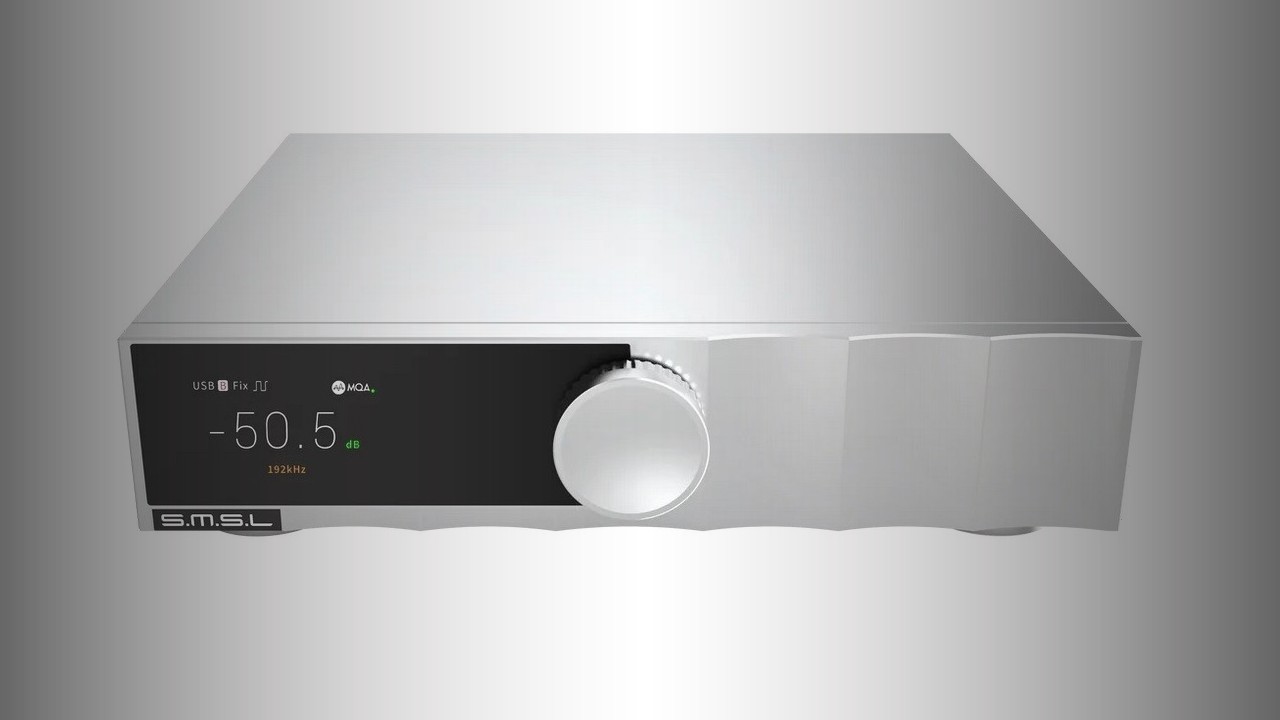
SMSL D200 DAC and preamplifier with ROHM conversion, Bluetooth, display functions, and balanced outputs.
The SMSL D200 combines DAC and preamplifier functions in a desktop-friendly format.
It uses a ROHM BD34352EKV DAC with SMSL’s CK-03 circuit for jitter reduction, a balanced preamplifier stage, and measured performance claims including 0.00019% distortion and up to 115.9 dB SINAD.
Practical features are a major part of the proposition: LDAC and aptX HD Bluetooth, MQA and MQA-CD decoding, PCM up to 32-bit/768 kHz, DSD512 support, an external clock input, and balanced XLR plus unbalanced RCA outputs.
Best for: Desktop systems that need balanced output, Bluetooth, MQA support, and clock flexibility
- ROHM BD34352EKV DAC implementation
- LDAC and aptX HD Bluetooth
- MQA and MQA-CD decoding
- External clock input
Verdict: A compact DAC and preamplifier that balances modern format support with useful everyday connectivity.
4. Topping D900: Flagship Discrete PSRM DAC & Preamplifier

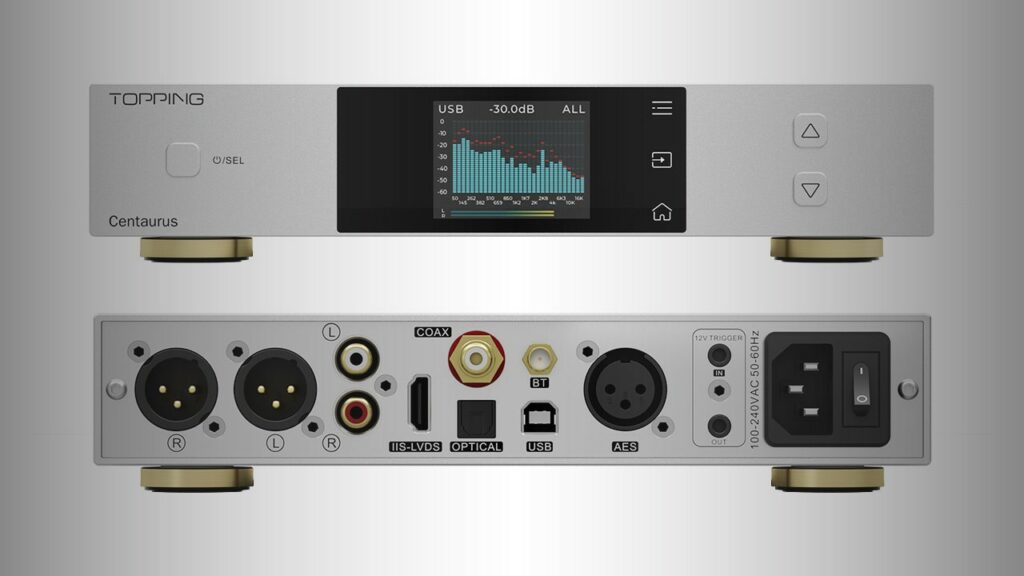
Topping D900 DAC and preamplifier with discrete PSRM architecture, display interface, PEQ, and system trigger support.
The Topping D900 is a DAC and preamplifier built around Topping’s fully discrete PSRM architecture.
The source highlights very low distortion below -140 dB, a 131 dB signal-to-noise ratio, a separate preamplifier stage suitable for direct connection to active speakers, and fine 0.5 dB volume steps with level setting per input.
It also covers a broad digital input set, Bluetooth 5.1 with LDAC, 10-band PEQ, user profiles, an Aurora UI color display, and trigger input and output for system power synchronization.
Best for: Active-speaker and high-end desktop systems needing preamp control and DSP-style adjustment
- Fully discrete PSRM architecture
- Separate preamplifier stage
- 10-band PEQ with user profiles
- Trigger input and output
Verdict: A highly specified DAC-preamplifier for users who want precise control, broad inputs, and configurable EQ in one component.
5. TEAC UD-301-X: DAC with built-in headphone amplifier

TEAC UD-301-X USB DAC with dual Burr-Brown conversion, toroidal power supply, RCA and XLR outputs.
The TEAC UD-301-X is presented as a more affordable USB DAC developed from the higher-positioned UD-501 platform.
Its design includes two Burr-Brown PCM1795 DACs, one per channel, a toroidal transformer power supply, Muses operational amplifiers, and a dual-mono circuit layout for stereo separation.
Format support is practical rather than extreme: DSD 2.8/5.6 MHz over USB, PCM up to 192 kHz/24-bit, optical and coaxial digital inputs, optional upsampling to 192 kHz, and analog outputs on RCA and XLR.
Best for: Listeners wanting a traditional compact USB DAC with balanced outputs and headphone-amp convenience
- Dual Burr-Brown PCM1795 DACs
- Toroidal transformer power supply
- RCA and XLR analog outputs
- Optional upsampling to 192 kHz
Verdict: A conservative, well-specified DAC choice for systems that prioritize established circuitry over feature overload.
6. Shanling EH3: A highly versatile device

Shanling EH3 DAC with wireless playback, network endpoint functions, I2S compatibility, and ESS-based conversion.
The Shanling EH3 is described as a versatile component with both wired and wireless roles.
It supports Bluetooth 5.0 and 2.4G/5G Wi-Fi, works as a Bluetooth receiver with LDAC, AAC, and SBC codecs, and can serve as an AirPlay 1 or DLNA endpoint.
The source also positions it as a companion for Shanling’s ET3 CD player through I2S, while its internal platform uses an ESS ES9039SPRO 8-channel DAC, FPGA processing, and a fully balanced amplifier built around OPA1612 devices.
Best for: Users who want one DAC hub for wireless playback, local network use, and Shanling ET3 integration
- Bluetooth and Wi-Fi playback options
- LDAC, AAC, and SBC Bluetooth support
- AirPlay 1 and DLNA endpoint functions
- ESS ES9039SPRO DAC platform
Verdict: A flexible DAC platform for systems where network and wireless access matter as much as conventional digital inputs.
7. Marantz HD-DAC1: Modern DAC in a classic suit

Marantz HD-DAC1 DAC and headphone amplifier with aluminum front panel, wood side panels, and round display.
The Marantz HD-DAC1 pairs DAC functionality with a headphone amplifier and a classic Marantz-style enclosure.
The source highlights Advanced AL32 signal processing, 32-bit/192 kHz digital-to-analog conversion, a metal case with thick aluminum front panel, natural wood side panels, anti-resonance supports, and a round display showing operating information.
It is less about maximum format count and more about combining digital conversion, headphone use, and traditional hi-fi presentation.
Best for: Headphone listeners who value Marantz styling and a substantial desktop component
- Advanced AL32 signal processing
- 32-bit/192 kHz conversion
- Built-in headphone amplifier
- Metal chassis with wood side panels
Verdict: A DAC-headphone amplifier with a strong emphasis on build, presentation, and Marantz’s established signal-processing approach.
8. SMSL DO100 PRO: Perfectly balanced DAC with Bluetooth 5.1
SMSL DO100 PRO balanced DAC with HDMI ARC, USB-C, Bluetooth 5.1, and RCA/XLR analog outputs.
The SMSL DO100 PRO is a compact balanced DAC designed for broad source compatibility.
It uses two ES9039Q2M DAC chips and a third-generation XU316 XMOS USB interface, supporting PCM up to 32-bit/768 kHz, DSD512, and MQA/MQA-CD.
Its practical strength is connectivity: HDMI ARC for TV audio, USB-C compatibility with several gaming consoles named in the source, Bluetooth 5.1 through a QCC5125 receiver with SBC, AAC, aptX, aptX HD, and LDAC, plus RCA and XLR analog outputs.
Best for: TV, gaming, and desktop setups needing a compact DAC with broad digital input options
- HDMI ARC for TV audio
- USB-C input with console compatibility
- PCM, DSD, MQA, and MQA-CD support
- Bluetooth 5.1 with LDAC and aptX HD
Verdict: A versatile DAC for modern mixed-use systems where HDMI ARC, USB-C, Bluetooth, and balanced output are all useful.
9. Gustard R30: High-End DAC with True 1-Bit Conversion
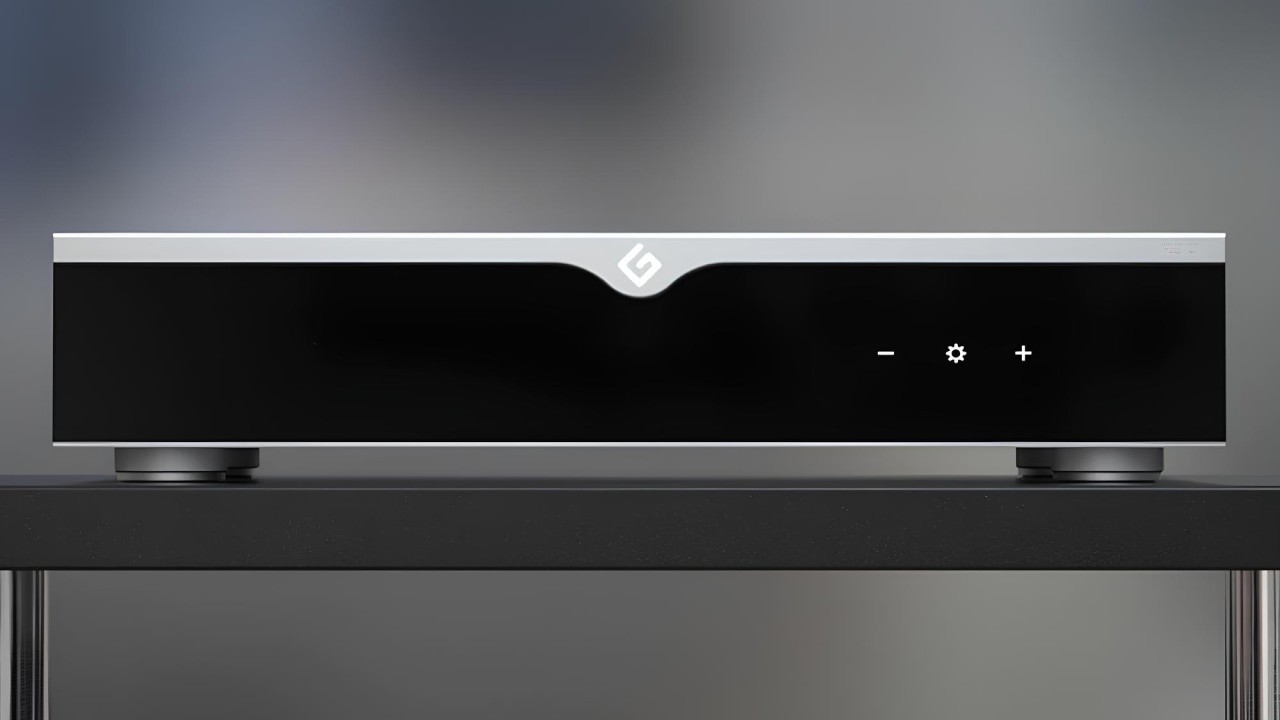
Gustard R30 high-end DAC with discrete R-2R conversion, True-1 Bit DSD processing, and dual-transformer power design.
The Gustard R30 is described as a discrete R-2R DAC with a separate True-1 Bit converter for DSD playback up to DSD1024.
Its design focuses on conversion architecture, clocking, and power separation: a resistor matrix for PCM conversion, multi-level upsampling algorithms, an SC-Cut OCXO generator with GCLK-02 module, external clock input, and two toroidal transformers assigned separately to digital and analog circuits.
The source frames it as a high-end DAC for users interested in both R-2R conversion and advanced DSD handling.
Best for: Enthusiasts focused on R-2R PCM conversion, DSD playback, and clocking architecture
- Discrete R-2R architecture
- True-1 Bit DSD conversion up to DSD1024
- SC-Cut OCXO and GCLK-02 clocking
- Separate toroidal transformers for digital and analog circuits
Verdict: A technically ambitious DAC for systems where conversion method, DSD processing, and power separation are central priorities.
10. Shanling UP6 Review: A Pocket-Sized Flagship DAC & Bluetooth Amplifier
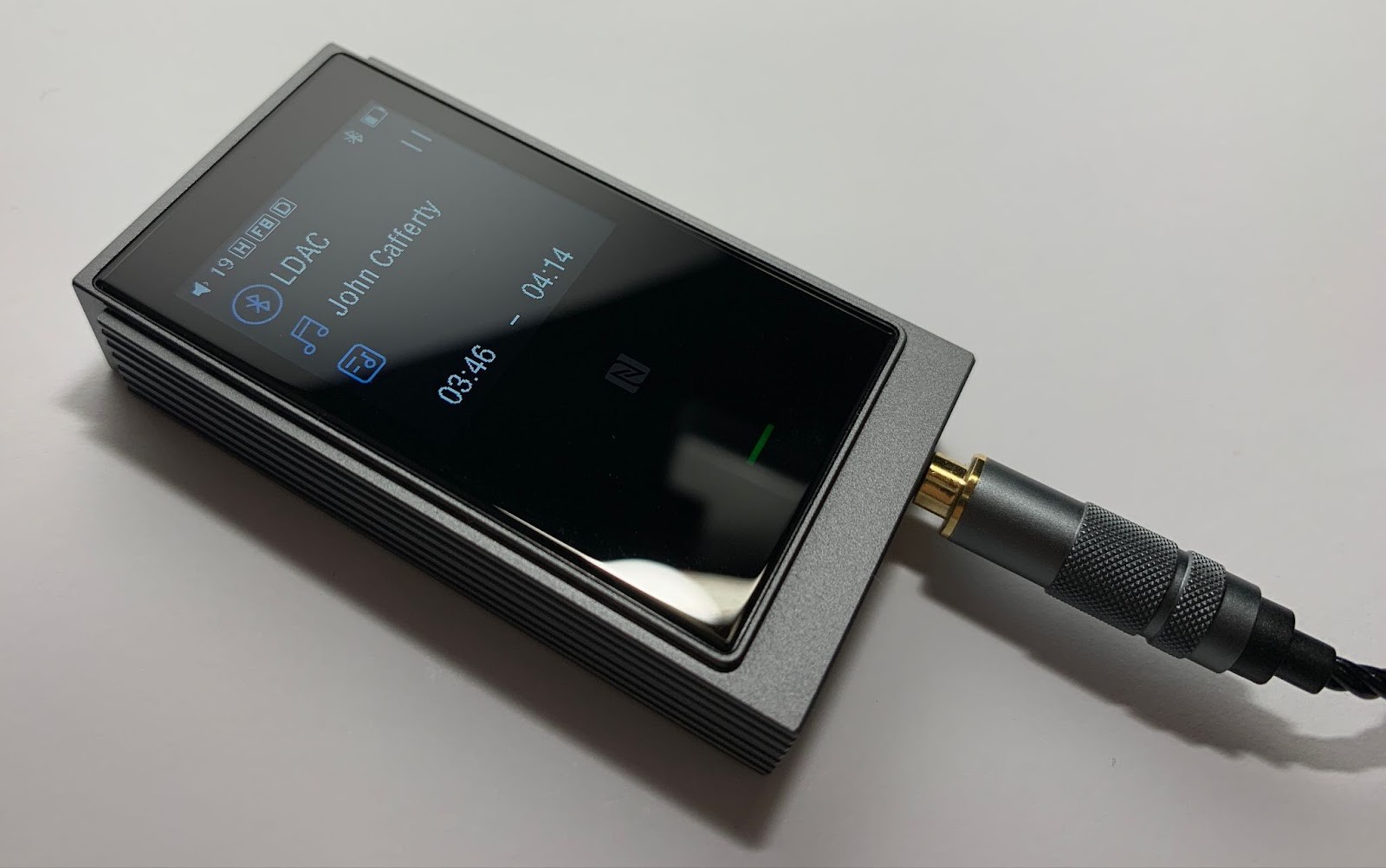
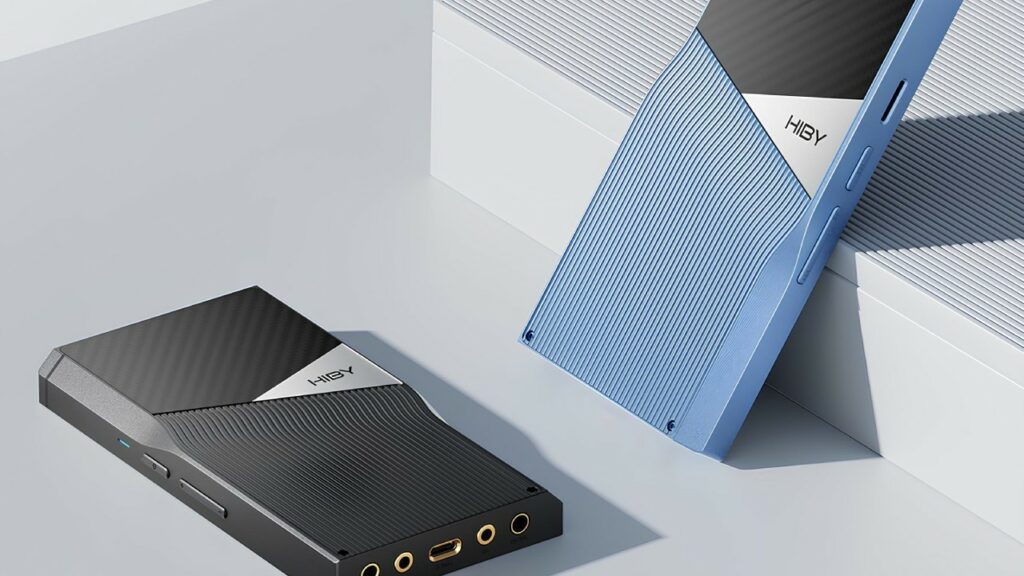
Shanling UP6 portable DAC and Bluetooth headphone amplifier with display, battery operation, and USB accessories.
The Shanling UP6 is the portable outlier in this guide: a pocket-sized DAC and Bluetooth headphone amplifier for users who want wired headphones without relying on a phone’s headphone jack.
The source describes wired and wireless use, a built-in battery, a bright display, and enough output power for in-ear monitors and mid-tier full-size headphones.
Its accessory set includes USB-A to USB-C and short USB-C to USB-C cables, a USB-C to USB-A adapter, printed materials, and Hi-Res Audio stickers, though a protective case is not included.
Best for: Portable listeners who want to keep using wired headphones with phones, tablets, or mobile gaming devices
- Pocket-sized wired and wireless DAC/amp
- Built-in battery and display
- Accessory set includes multiple USB cables
- Intended for IEMs and mid-tier full-size headphones
Verdict: A mobile DAC and Bluetooth amplifier for headphone users who need portability, battery power, and flexible wired or wireless operation.
Quick comparison
These DACs differ most clearly by role.
Some are full-size R2R converters for hi-fi systems, some are DAC-preamplifiers for active speakers or desktops, and others prioritize headphone use, TV integration, wireless playback, or portability.
| Product | Best for | Verdict |
|---|---|---|
| FiiO K13 R2R | Desktop headphone systems with R2R conversion and PEQ | The most obviously headphone-centered R2R option here, with Bluetooth, NOS/OS modes, and strong quoted output. |
| Denafrips Terminator PLUS 12Th | Dedicated balanced two-channel systems | A full-size R2R NOS DAC with extensive inputs, clock outputs, and separated linear power design. |
| SMSL D200 | Desktop systems needing MQA, Bluetooth, balanced output, and external clock input | A compact DAC-preamplifier with modern format support and useful everyday connectivity. |
| Topping D900 | Active-speaker systems and users who want preamp control with PEQ | A feature-heavy DAC-preamplifier with discrete PSRM architecture, fine volume control, triggers, and user EQ profiles. |
| TEAC UD-301-X | Traditional USB DAC setups with RCA/XLR outputs and headphone-amp use | A conservative dual-mono design built around Burr-Brown DACs, toroidal power, and optional upsampling. |
| Shanling EH3 | Wireless, network, and Shanling ET3-centered systems | A versatile DAC hub with Bluetooth, Wi-Fi, AirPlay 1, DLNA, I2S integration, and ESS conversion. |
| Marantz HD-DAC1 | Desktop headphone listening with classic hi-fi styling | A DAC-headphone amplifier that emphasizes Marantz processing, build quality, and a substantial enclosure. |
| SMSL DO100 PRO | TV, gaming, Bluetooth, and compact balanced DAC setups | A modern connectivity-focused DAC with HDMI ARC, USB-C, Bluetooth 5.1, MQA, and XLR/RCA outputs. |
| Gustard R30 | R-2R and DSD enthusiasts with attention to clocking and power supply design | A high-end architecture-focused DAC with discrete R-2R conversion and separate True-1 Bit DSD handling. |
| Shanling UP6 | Portable wired-headphone use with Bluetooth flexibility | A pocket DAC/Bluetooth amplifier with its own battery, display, and useful USB accessory bundle. |
Frequently asked questions
Should I choose a DAC, a DAC-preamplifier, or a DAC/headphone amplifier?
Match the DAC to the job it must do.
For headphones, models such as the FiiO K13 R2R, TEAC UD-301-X, Marantz HD-DAC1, and Shanling UP6 include headphone-amp functionality or are specifically framed around headphone use.
For active speakers or a simplified speaker system, a DAC-preamplifier such as the Topping D900 or SMSL D200 is more relevant because volume control and analog output management are part of the design.
Is R2R automatically the right choice?
Not automatically.
R2R and discrete ladder designs in the FiiO K13 R2R, Denafrips Terminator PLUS 12Th, and Gustard R30 are central to their appeal, especially for buyers interested in NOS operation, resistor-ladder conversion, or separate PCM and DSD architectures.
Other DACs in this guide use chip-based platforms from ROHM, ESS, Burr-Brown, or Marantz processing and may offer stronger everyday convenience, smaller size, wireless playback, or TV-friendly inputs.
How important is Bluetooth in a DAC?
Bluetooth is useful when convenience matters, but it should not be the only deciding factor.
Several models here support higher-grade Bluetooth codecs such as LDAC or aptX HD, including the FiiO K13 R2R, SMSL D200, Shanling EH3, SMSL DO100 PRO, Topping D900, and Shanling UP6.
If the system is mainly stationary and built around USB, I2S, AES/EBU, coaxial, optical, or external clocking, wired connectivity may matter more than Bluetooth.
Do I need balanced XLR outputs?
Balanced XLR outputs are valuable when the downstream amplifier, active speakers, or preamplifier can use them, and many full-size models here provide XLR alongside RCA.
Denafrips, SMSL, Topping, TEAC, and other options in this guide are described with balanced or XLR output capability.
If the rest of the system only accepts RCA, balanced output should be treated as a future-proofing feature rather than a requirement.
How to choose the right DAC from this selection
Start with the role of the DAC in the system.
A headphone-first desktop setup points toward the FiiO K13 R2R if R2R conversion, PEQ, Bluetooth, and strong quoted output are priorities; the Marantz HD-DAC1 if a classic component with headphone use and substantial construction is more appealing; the TEAC UD-301-X if a compact, traditional USB DAC with Burr-Brown conversion and XLR/RCA outputs is sufficient; or the Shanling UP6 if the real requirement is portable wired-headphone use with Bluetooth flexibility.
For a speaker system, the decision shifts toward output control, input range, and integration. The Topping D900 is the most control-oriented option here, with a separate preamplifier stage, per-input level setting, PEQ, triggers, and many digital inputs. The SMSL D200 brings ROHM conversion, MQA support, Bluetooth, external clock input, and balanced outputs in a desktop DAC-preamplifier format. The SMSL DO100 PRO is the more home-entertainment-friendly SMSL option thanks to HDMI ARC, USB-C, Bluetooth 5.1, and console compatibility noted in the source. For a more specialist two-channel system, the Denafrips Terminator PLUS 12Th and Gustard R30 are the architecture-led choices. The Denafrips emphasizes balanced R2R NOS conversion, extensive connectivity, hand-selected parts, clock outputs, and a separated linear power stage. The Gustard R30 focuses on discrete R-2R conversion, True-1 Bit DSD processing up to DSD1024, OCXO-based clocking, external clock input, and separate toroidal transformers for digital and analog circuits. The Shanling EH3 sits in a different lane: it is the network and wireless hub of the group, with Bluetooth, Wi-Fi, AirPlay 1, DLNA, I2S compatibility with Shanling’s ET3 CD player, and an ESS ES9039SPRO DAC platform. In short, choose topology only after confirming the practical fit: inputs, outputs, volume control, headphone needs, wireless use, clocking, and where the DAC will physically live in the system.





 VS
VS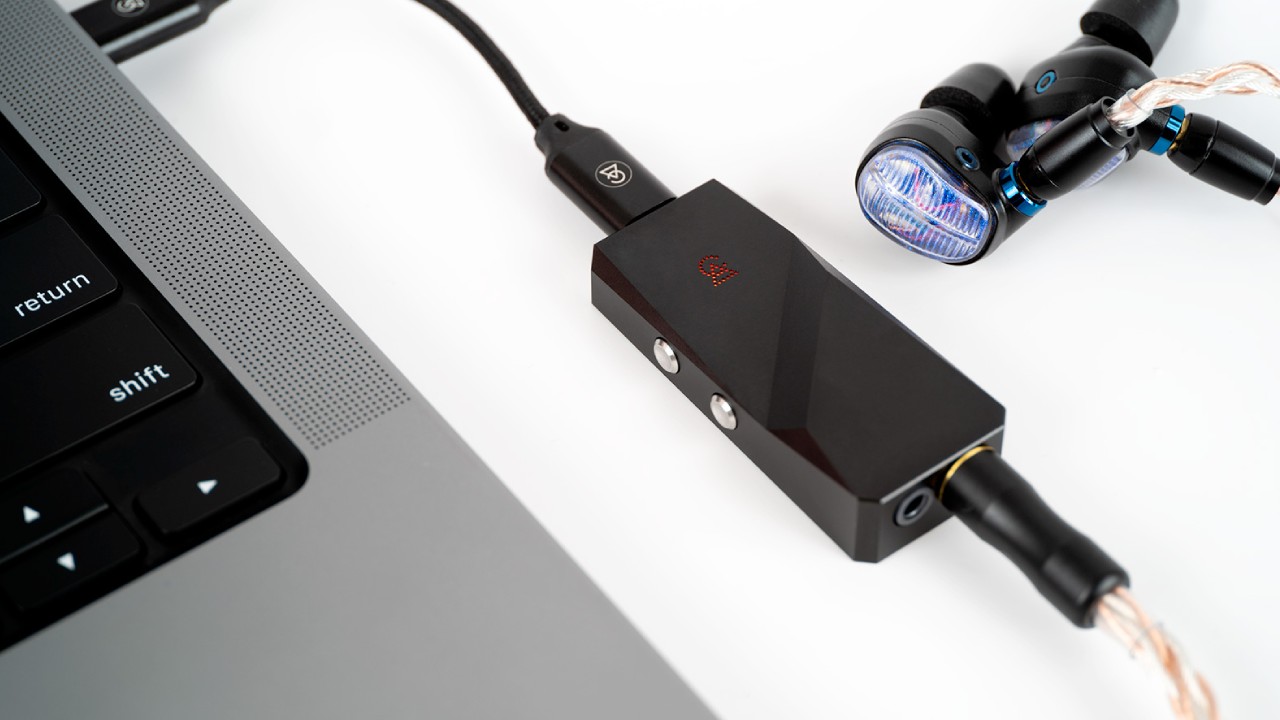 VS
VS VS
VS VS
VS VS
VS VS
VS VS
VS VS
VS

Share your thoughts on this 0
Keep it civil, relevant and respectful.