Our Editors Choose Streaming Components That Bring Music to Life
A practical guide to streaming components that suit different hi-fi systems, including network players, DAC-equipped streamers, streaming preamplifiers, transport-focused options and comparison guides.

Streaming now covers everything from compact network players to reference-level digital transports, full preamplifier hubs, Android-based source components and media devices that reach beyond music.
The strongest choice is rarely the one with the longest feature list.
It is the one that fits the rest of your system: whether you need an internal DAC, balanced analogue outputs, app flexibility, CD playback, local storage, or a clean digital feed into equipment you already own. The models and guides gathered here show how varied the category has become. Cambridge Audio and Arcam focus on approachable hi-fi streaming, Shanling and Eversolo add broader system-control ambitions, Lumin and Voxativ lean into audiophile architecture, while Kalista and SimAudio address more specialised high-end and multi-function installations. Two comparison pieces are also included because they help clarify when a conventional streamer is the right answer and when another kind of networked component makes more sense. This guide does not rank products by claimed performance alone. Instead, it highlights the practical differences supported by the source material: platform support, DAC strategy, connectivity, power-supply design, preamplifier functions, and whether each product is meant to stand alone or sit inside a larger digital chain.

1. Cambridge Audio EXN100: Reference Class Network Streamer
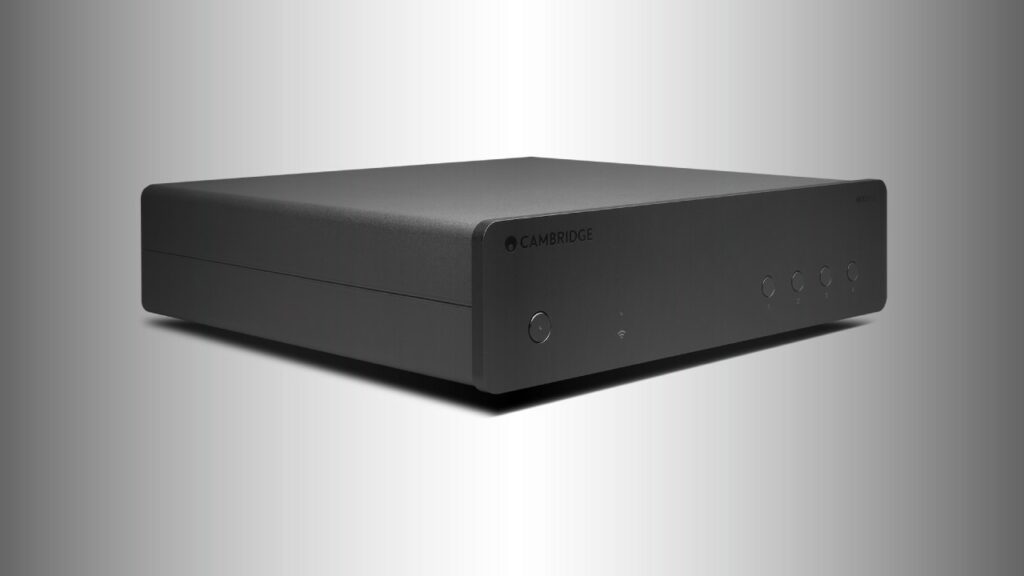
Cambridge Audio EXN100 network streamer with StreamMagic streaming, multiple digital inputs and balanced analogue output.
The Cambridge Audio EXN100 is a full-size network streamer built around Cambridge Audio’s fourth-generation StreamMagic platform.
Its appeal lies in the combination of broad service support, serious digital handling and unusually useful system connectivity.
The ESS ES9028Q2M SABRE32 reference DAC supports PCM digital inputs up to 32-bit/768kHz and DSD512, while StreamMagic brings together Spotify Connect, Tidal Connect, Deezer, Qobuz, Roon Ready, UPnP, internet radio, Chromecast, AirPlay 2 and Bluetooth aptX HD. Connectivity is a major part of the EXN100’s case. Alongside network streaming, it offers HDMI eARC, USB, coaxial and optical TOSLINK digital connections, plus analogue outputs including balanced XLR. That makes it suitable not only as a streamer for a traditional hi-fi system, but also as a digital hub for systems that need TV audio, external digital sources and balanced analogue output in one component.
Best for: Listeners who want a versatile hi-fi streaming hub with broad service support
- Fourth-generation StreamMagic platform
- PCM up to 32-bit/768kHz and DSD512 support
- HDMI eARC, USB, coaxial and optical inputs
- Balanced XLR analogue outputs
Verdict: The EXN100 is a strong choice when streaming flexibility, high-resolution digital support and system-friendly connectivity all matter equally.
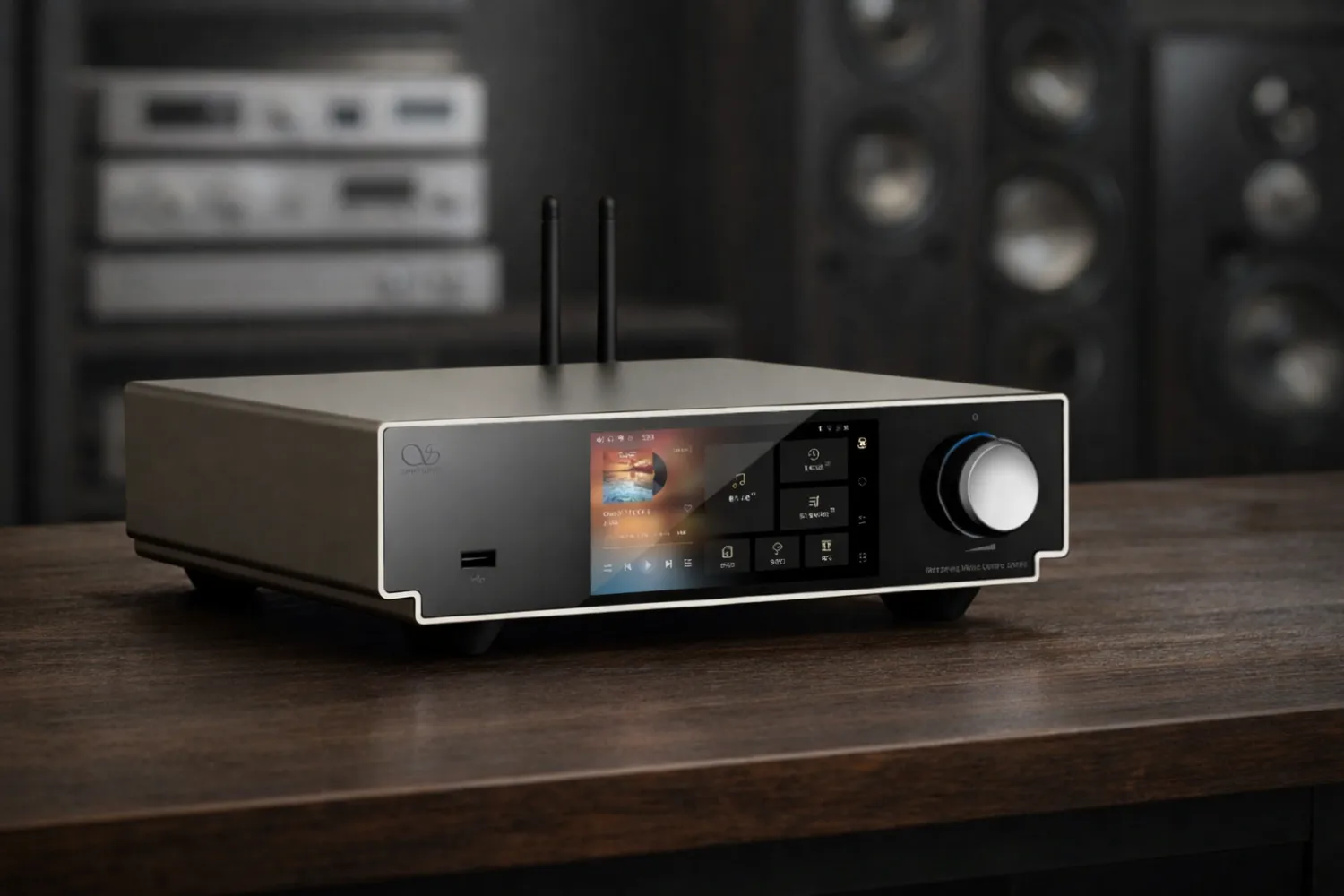
2. Shanling SM90: The streamer that wants to replace everything else
Shanling SM90 digital hub designed to combine streaming, conversion and system-control functions in one chassis.
The Shanling SM90 is presented as more than a network player.
It is described as a compact all-in-one digital hub combining streamer, DAC, digital pre-stage and network bridge functions in a solid aluminium chassis.
The source material places particular emphasis on its dual AKM AK4493S DAC configuration, OPA1612 op-amps and linear power supply with toroidal transformer, all pointing to a design that treats the analogue stage and power supply as central parts of the product rather than afterthoughts. Its other defining feature is software openness. Instead of relying on a closed control ecosystem, the SM90 runs an Android-based platform that allows native apps for Spotify, TIDAL, Qobuz, Apple Music and Amazon Music to run directly on the device. That makes it especially relevant for listeners who want streamer convenience without being limited to a narrow set of built-in services.
Best for: Systems where one compact digital hub is preferred over several separate boxes
- All-in-one streamer, DAC and digital pre-stage concept
- Dual AKM AK4493S DAC configuration
- Linear power supply with toroidal transformer
- Open Android-based app flexibility
Verdict: The SM90 is the practical pick for listeners who want a streamer that also handles DAC duties and app-based playback directly.
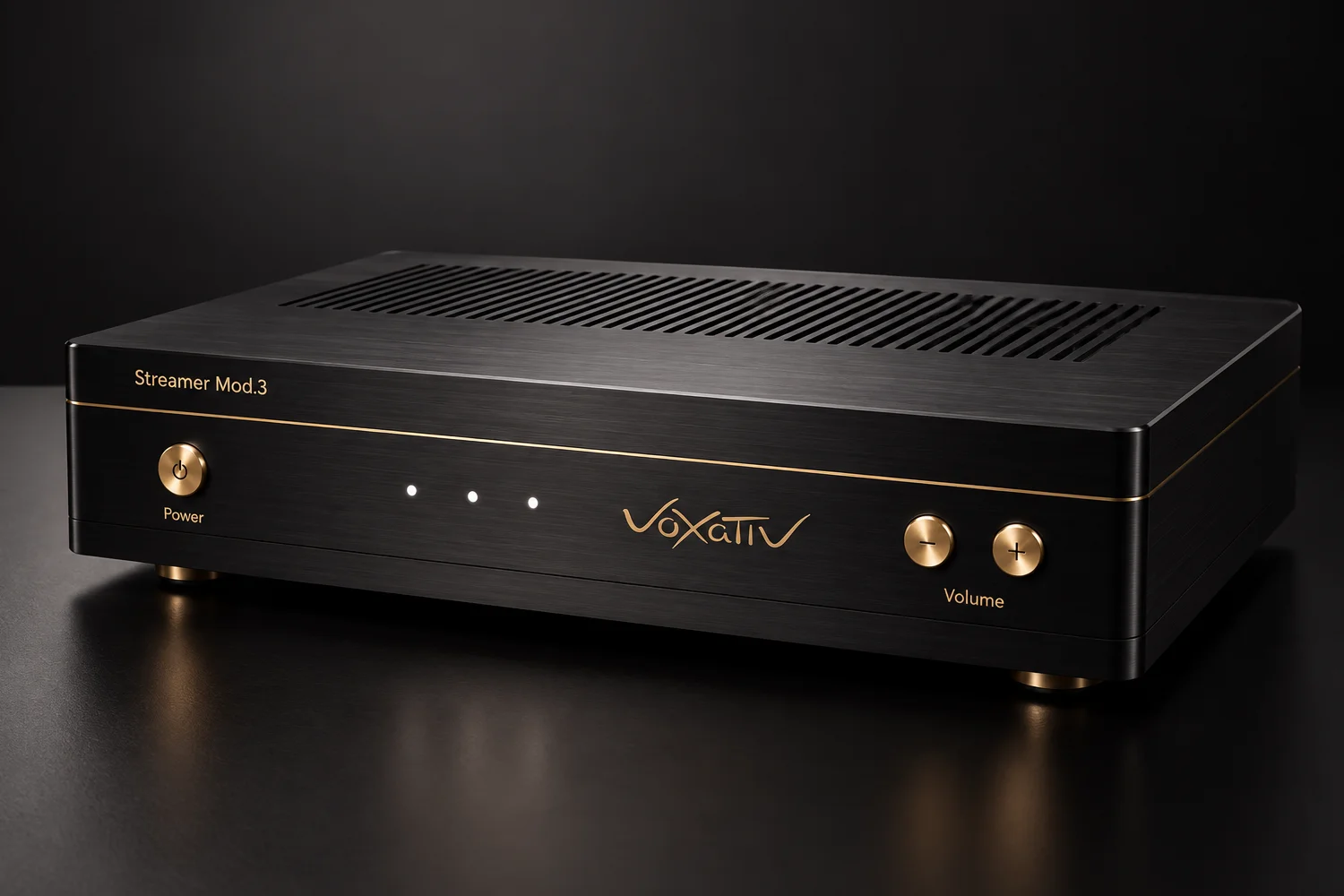
3. Voxativ Streamer Combines Dual ESS DACs With High-Resolution Playback
Voxativ Streamer network player built around dual ESS ES9038PRO DAC chips and balanced analogue output architecture.
The Voxativ Streamer is a German-made network player centred on a dual-mono style digital architecture.
Its two ESS ES9038PRO DAC chips are joined by femto clocking, separate linear power supplies for each channel and a fully balanced analogue output stage.
Voxativ describes the approach as uncompromising, although the source material notes that measurements and deeper internal-circuit details have not been disclosed. For high-resolution playback, the Voxativ Streamer supports PCM up to 32-bit/768kHz and also supports DSD, though no maximum DSD rate is specified. On the basis of the supplied information, it is best understood as a high-end network player for listeners who want a DAC-equipped streamer with balanced analogue architecture and high-resolution PCM capability.
Best for: High-end systems seeking a DAC-equipped network player with balanced analogue design
- Dual ESS ES9038PRO DAC chips
- Femto clocking
- Separate linear power supplies for each channel
- PCM support up to 32-bit/768kHz
Verdict: The Voxativ Streamer stands out for its dual ESS DAC layout, dedicated power-supply architecture and high-resolution PCM support, with some technical details still undisclosed.
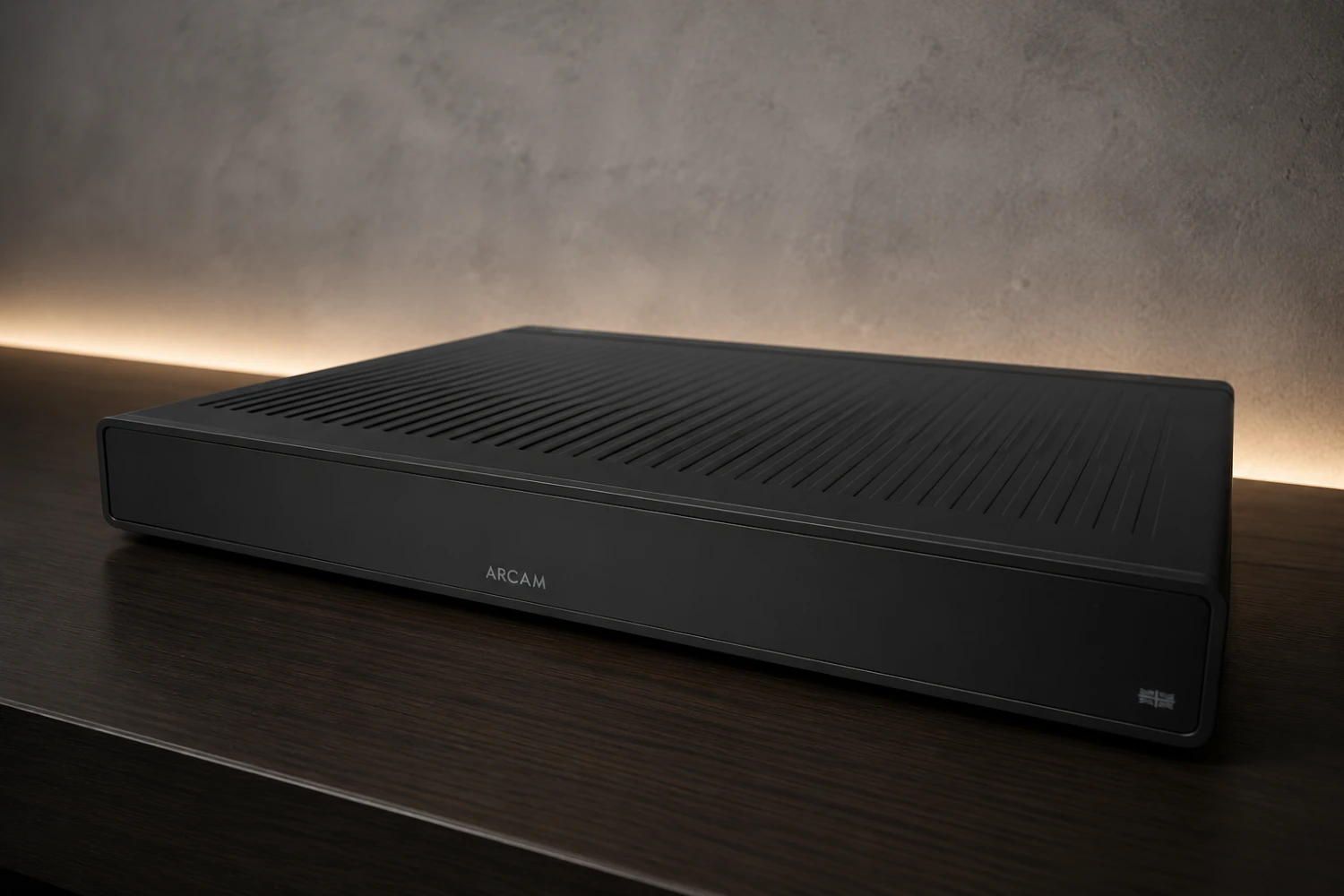
4. Arcam ST5 Review: One of the Best Music Streamers Under $1,000?
Arcam ST5 music streamer with Radia Series styling, matte black aluminium construction and slim front display.
The Arcam ST5 is framed as a dedicated network streamer for listeners who want modern services without abandoning serious hi-fi priorities.
It belongs to Arcam’s Radia Series and is intended to partner with the A5, A15 and A25 integrated amplifiers.
The source review describes it as bridging streaming convenience and audiophile performance, with access to major streaming platforms and a clean, understated design. Build quality is one of the review’s clear talking points. The ST5 uses a thick anodized aluminium chassis in matte black, with minimalist styling, subtle yellow accents and a slim monochrome display behind smoked glass. The review’s verdict is broadly positive after extensive listening, and the separate comparison article in the supplied material also identifies the ST5 as especially compelling for listeners prioritising reviewed sound performance, particularly when using its digital output with an external DAC.
Best for: Arcam Radia owners and listeners prioritising a dedicated music streamer
- Designed to partner with Arcam Radia amplifiers
- Thick anodized aluminium chassis
- Minimalist design with monochrome display
- Reviewed positively for sound performance
Verdict: The ST5 is a focused streaming source with strong system-matching appeal for Arcam setups and a review-backed case for sound quality.

5. SimAudio Moon Neo 390: Extremely versatile network player
SimAudio Moon Neo 390 network player and preamplifier with DAC, phono stage, headphone output and MiND2 streaming.
The SimAudio Moon Neo 390 is one of the most functionally ambitious components in this selection.
It combines a DAC, preamplifier, headphone amplifier, MM/MC phono preamplifier and streaming section in a compact unit, while omitting a built-in power amplifier.
That means it is intended for use with active speakers or an external power amplifier rather than as a complete integrated amplifier. Its streaming and digital credentials are broad. The Neo 390 provides access to services including Tidal Masters, Qobuz Sublime+ and Deezer Hi-Fi, while its converter handles PCM up to 32-bit/384kHz, DSD256 and MQA. It is Roon Ready, includes Bluetooth with aptX and uses SimAudio’s MiND2 streamer, which supports local storage and USB-drive playback. The MiND2 module can also transmit signals from digital or analogue inputs to two identical wireless modules in different zones simultaneously.
Best for: Systems needing a streamer, preamplifier and analogue input hub in one component
- DAC, preamplifier, headphone amp and phono stage in one unit
- PCM up to 32-bit/384kHz, DSD256 and MQA support
- Roon Ready with Bluetooth aptX
- MiND2 streaming with local and USB playback
Verdict: The Moon Neo 390 is the most broadly equipped choice here for users who want streaming integrated with preamp, headphone and phono functions.

6. Lumin T3X: Network player equipped with linear power supply
Lumin T3X network player with linear power supply, fibre networking and dual ES9028Pro SABRE DAC chips.
The Lumin T3X builds on the company’s T3 network player with a clear emphasis on power supply and network isolation.
Its major change is the move from a switching power supply to a linear power supply with a substantial toroidal transformer.
The dual ES9028Pro SABRE DAC chips operating in dual-mono mode are retained from the earlier platform. Network flexibility is another key point. The T3X includes both RJ45 LAN and fibre optic network connections, with the fibre input providing galvanic isolation from network-borne electrical noise. The RJ45 connection remains available, and the source notes that the T3X can be used as a network switch by connecting one port to a router and the other to a Lumin L1/L2 or NAS. A second USB-A port has also been added.
Best for: Audiophile network systems where power supply design and network isolation are priorities
- Linear power supply with toroidal transformer
- Fibre optic network connection for galvanic isolation
- Dual ES9028Pro SABRE DAC chips in dual-mono operation
- Second USB-A port
Verdict: The T3X is a logical choice for Lumin-oriented systems that value linear power, fibre networking and dual-mono DAC architecture.
7. Five Network Streamers Compared: Which One Should You Buy?
A comparison-led network-streamer guide covering compact, audiophile, transport-focused, storage-heavy and headphone-friendly options.
This comparison guide is useful because it separates five network streamers by role rather than treating them as interchangeable.
It covers the Cambridge Audio MXN10, Arcam ST5, Matrix Audio NT-1, Gustard S26 and Leak TruStream, comparing differences in connectivity, internal storage, DAC arrangements, control systems, upgrade paths and intended system level.
Its clearest recommendation is the Cambridge Audio MXN10 as the strongest all-round purchase, thanks to its compact design, analogue and digital outputs, extensive streaming support, Bluetooth, USB playback and high-resolution capability. The guide also identifies the Arcam ST5 for reviewed sound performance, the Matrix Audio NT-1 for high-end digital transport systems, the Gustard S26 for storage and computer-style functionality, and the Leak TruStream for retro styling and headphone use.
Best for: Shoppers comparing several streamer types before choosing a system match
- Compares streamers by system role
- Identifies Cambridge Audio MXN10 as the strongest all-round choice
- Highlights Arcam ST5 for reviewed sound performance
- Covers specialist transport, storage and headphone-use cases
Verdict: This guide is most valuable as a decision tool for narrowing the field by connectivity, DAC needs, storage and intended system level.

8. Eversolo DMP-A6 Gen 2: The ultimate high-fidelity streamer
Eversolo DMP-A6 Gen 2 streamer, DAC and preamplifier with linear power supply and CNC aluminium chassis.
The Eversolo DMP-A6 Gen 2 is described as a music streamer, DAC and preamplifier, updated from the earlier DMP-A6.
The source material highlights its premium linear power supply, with Eversolo claiming noise levels under 40uV, and a wired-network Wake-on-LAN function that allows the device to be activated via the app.
The physical build is also a central part of the presentation. Its chassis is made from aerospace-grade aluminium using seamless CNC construction, with the source noting both durability and protection against unwanted interference. On the basis of the supplied material, the DMP-A6 Gen 2 is best suited to listeners who want a streamer with onboard conversion, preamplifier functionality, app convenience and a strong emphasis on chassis and power-supply design.
Best for: Listeners wanting a modern streamer with DAC, preamp and app-based convenience
- Streamer, DAC and preamplifier functions
- Premium linear power supply
- Wake-on-LAN via wired network
- CNC aluminium chassis
Verdict: The DMP-A6 Gen 2 is a feature-rich streaming source that combines conversion, preamp use, linear power and refined physical construction.
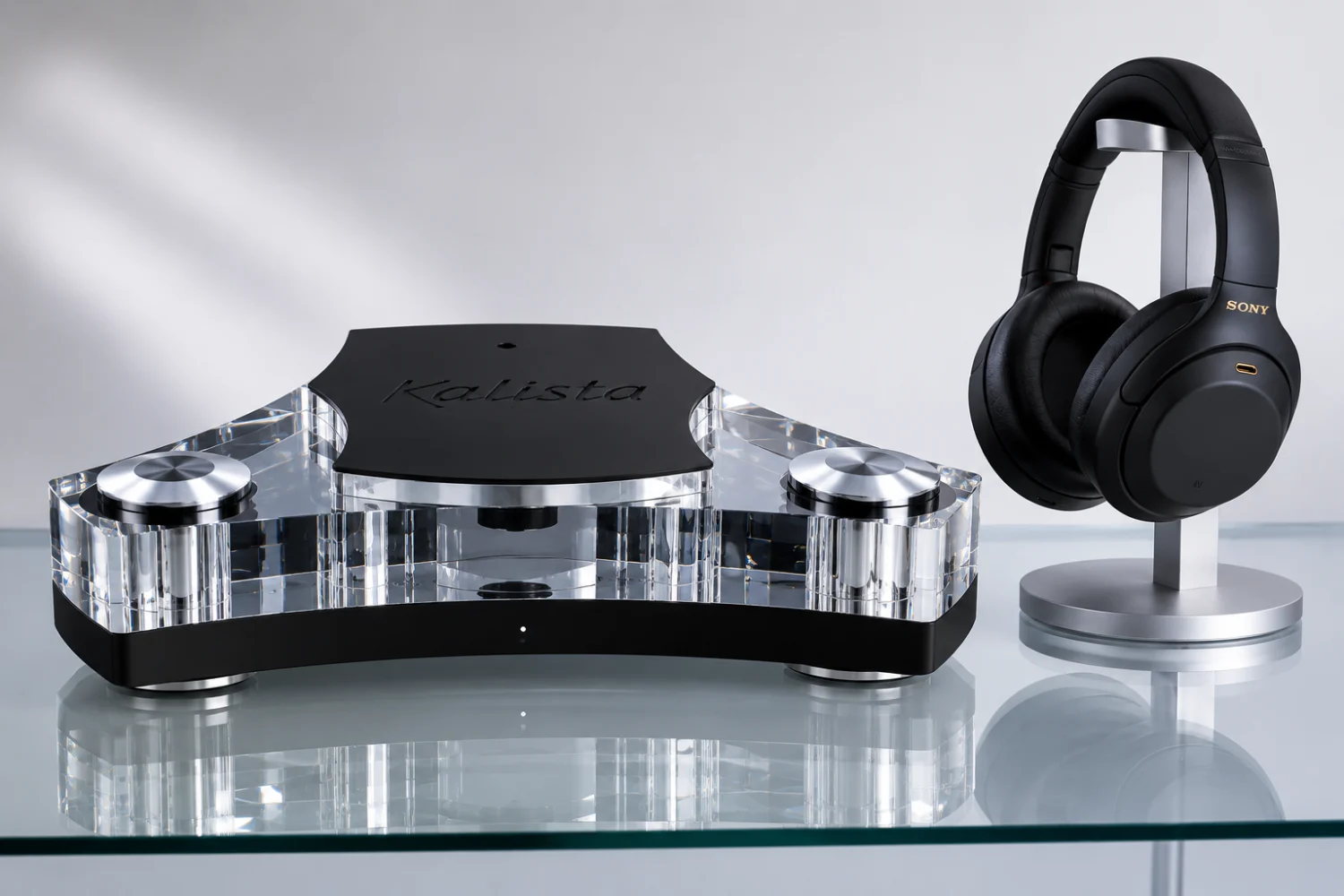
9. Kalista DreamPlay S & DreamPlay SC: French Reference Streamers for High-End Audio
Kalista DreamPlay S and DreamPlay SC reference streamers, offered as transport-only and DAC-equipped versions.
The Kalista DreamPlay S and DreamPlay SC bring Métronome Technologie’s Kalista line into high-end network streaming.
The distinction between the two models is essential: the DreamPlay S is a network player without a DA converter, while the DreamPlay SC includes an onboard DA converter.
That makes the S the more relevant option for owners of an existing high-quality DAC, while the SC is intended as a complete streaming and conversion source. Both models are described as handcrafted in France, with advanced power supplies, broad protocol support and Kalista’s signature use of materials. The source positions them as reference-level streaming components rather than convenience add-ons, aimed at systems where the digital source is expected to match luxury build and specialist audio ambitions.
Best for: High-end systems choosing between an external-DAC transport and an all-in-one reference streamer
- Choice of transport-only or DAC-equipped versions
- Handcrafted in France
- Advanced power supplies
- Broad protocol support
Verdict: The Kalista pair is aimed at luxury digital systems where the key decision is whether streaming should feed an existing DAC or include conversion onboard.

10. Five Streaming Devices Compared: Which One Fits Your System?
A system-focused streaming-device comparison covering audio streaming, multi-source playback, network isolation and media-player use cases.
This comparison is valuable precisely because it does not pretend every networked device serves the same purpose.
It separates a conventional audio streamer, a premium multi-source component, a network isolator, a video-focused media player and one non-hardware source from the supplied material.
That distinction helps prevent a common buying mistake: choosing a device because it appears in a streaming discussion, rather than because it solves the right system problem. The guide identifies the Denon DNP-800NE as the most complete conventional audio-streaming choice in its source set, with wired and wireless networking, local and online playback, AirPlay 2, Spotify Connect, USB playback, a built-in headphone amplifier and both analogue and optical outputs. It also positions the T+A MP 200 G3 as the premium multi-source option for users who want CD playback, Tidal Connect, Spotify Connect, AirPlay 2 and native DSD streaming.
Best for: Buyers deciding whether they need a streamer, multi-source component, isolator or media player
- Clearly separates streamers from other networked devices
- Identifies Denon DNP-800NE as the conventional audio-streaming choice
- Highlights T+A MP 200 G3 as a premium multi-source option
- Useful for matching device type to system need
Verdict: This guide is best used as a system-matching filter before comparing specifications or platform support.
Quick comparison
The products and articles below differ less by simple quality hierarchy than by system role.
Some are DAC-equipped network players, some add preamplifier or phono functions, some prioritise transport duties, and two entries are comparison guides that help clarify buying decisions across several device types.
| Product | Best for | Verdict |
|---|---|---|
| Cambridge Audio EXN100 | A flexible streaming hub with broad platform support and multiple digital inputs | Choose it when HDMI eARC, StreamMagic, balanced outputs and high-resolution digital support are all useful in the same system. |
| Shanling SM90 | An all-in-one digital hub with open Android app support | Choose it when you want native streaming apps, DAC duties and digital pre-stage functionality in one compact component. |
| Voxativ Streamer | High-end streaming with dual ESS conversion and balanced analogue architecture | Choose it for a DAC-equipped network player built around dual ES9038PRO chips, femto clocking and dedicated linear power supplies. |
| Arcam ST5 | A dedicated streamer for Arcam Radia systems or external-DAC use | Choose it when you want a focused music streamer with reviewed sound-performance appeal and understated hi-fi build. |
| SimAudio Moon Neo 390 | A streaming preamplifier with DAC, headphone and phono functionality | Choose it when your system needs a control centre rather than a simple network player. |
| Lumin T3X | Network systems prioritising linear power and galvanic isolation | Choose it when fibre networking, a linear power supply and dual-mono DAC architecture fit your digital-source priorities. |
| Five Network Streamers Compared: Which One Should You Buy? | Comparing compact, audiophile, transport-focused, storage-heavy and headphone-friendly streamers | Use it when you need to narrow several streamer types by role before choosing a specific model. |
| Eversolo DMP-A6 Gen 2 | A streamer with built-in DAC, preamp function and app convenience | Choose it when a modern touchscreen-style streaming source with linear power and preamplifier use is the right fit. |
| Kalista DreamPlay S & DreamPlay SC | Reference-level systems choosing between transport-only and DAC-equipped streaming | Choose the S if you already have a serious DAC, or the SC if you want Kalista streaming with conversion onboard. |
| Five Streaming Devices Compared: Which One Fits Your System? | Understanding whether your system needs a streamer, multi-source player, isolator or media device | Use it as a practical filter when the category itself feels blurred by different kinds of networked products. |
Frequently asked questions
Do I need a streamer with a built-in DAC?
Only if you want the streamer to connect directly to an amplifier, preamplifier, active speakers or headphones through analogue outputs.
Products such as the Cambridge Audio EXN100, Voxativ Streamer, SimAudio Moon Neo 390, Lumin T3X and Eversolo DMP-A6 Gen 2 include DAC functionality, while the Kalista DreamPlay S is specifically for users who already have an external DAC.
When does a streaming preamplifier make more sense than a simple network player?
A streaming preamplifier is useful when you want one component to handle source selection, volume control and analogue output duties.
The SimAudio Moon Neo 390 goes further by adding headphone and MM/MC phono functions, while the Eversolo DMP-A6 Gen 2 and Shanling SM90 are also described as combining streaming with preamplifier or pre-stage roles.
Which streaming platforms should I check before buying?
Check the services and control methods you actually use.
The Cambridge Audio EXN100 lists Spotify Connect, Tidal Connect, Deezer, Qobuz, Roon Ready, UPnP, internet radio, Chromecast, AirPlay 2 and Bluetooth aptX HD.
The Shanling SM90 instead emphasises Android-based native apps for Spotify, TIDAL, Qobuz, Apple Music and Amazon Music. Other models support different ecosystems, so platform fit matters as much as hardware.
Are linear power supplies and fibre networking essential?
They are not essential for every system, but they are meaningful design choices in some streamers.
The Lumin T3X highlights a linear power supply with a toroidal transformer and fibre networking for galvanic isolation.
Eversolo, Shanling and Voxativ also emphasise linear power-supply design. Treat these features as part of the overall engineering approach, not as automatic proof that one product will suit every system better.
How to Choose the Right Streaming Source
Start with the role the streamer must play.
If you simply need a capable network source for an existing amplifier, a focused unit such as the Cambridge Audio EXN100 or Arcam ST5 may make more sense than a heavily integrated component.
If you want one box to reduce system complexity, the Shanling SM90, Eversolo DMP-A6 Gen 2 or SimAudio Moon Neo 390 offer broader hub-like functionality, with the Moon standing out for also including headphone and phono stages. Next, decide whether conversion should happen inside the streamer or elsewhere. A DAC-equipped model simplifies cabling and setup, while transport-focused options make sense when you already own a DAC you trust. The Kalista DreamPlay S and DreamPlay SC illustrate that choice clearly: one omits the DAC, the other includes it. The comparison guide covering Matrix Audio, Gustard, Leak, Cambridge Audio and Arcam also shows why some streamers are better understood as digital transports, storage platforms or specialist system tools rather than universal answers. Connectivity should be checked before any aesthetic or brand preference. HDMI eARC matters if TV audio is part of the system, balanced XLR can be useful with compatible amplifiers, USB playback may be important for local libraries, and fibre networking may appeal in systems where electrical isolation is a priority. Similarly, software support should match real habits: Roon Ready, AirPlay 2, Chromecast, Bluetooth, Tidal Connect, Spotify Connect, UPnP, native Android apps and brand-specific apps all create different day-to-day experiences. Finally, avoid buying more complexity than you need. A high-end reference streamer is sensible only if the rest of the system can take advantage of its architecture and connectivity. A multi-function component is useful only if you will actually use its preamp, phono, headphone, storage or CD-related capabilities. The best streaming choice is the one that makes your system easier to use while fitting cleanly into the signal path you already have or deliberately want to build.






 VS
VS VS
VS VS
VS VS
VS VS
VS VS
VS VS
VS VS
VS