Amplifier designs and system partners that impressed our editors
A grounded Stereoindex guide to amplifier-related products that stood out for class A design, balanced circuitry, multichannel consistency, tube topology, system flexibility or amplifier-matching relevance.
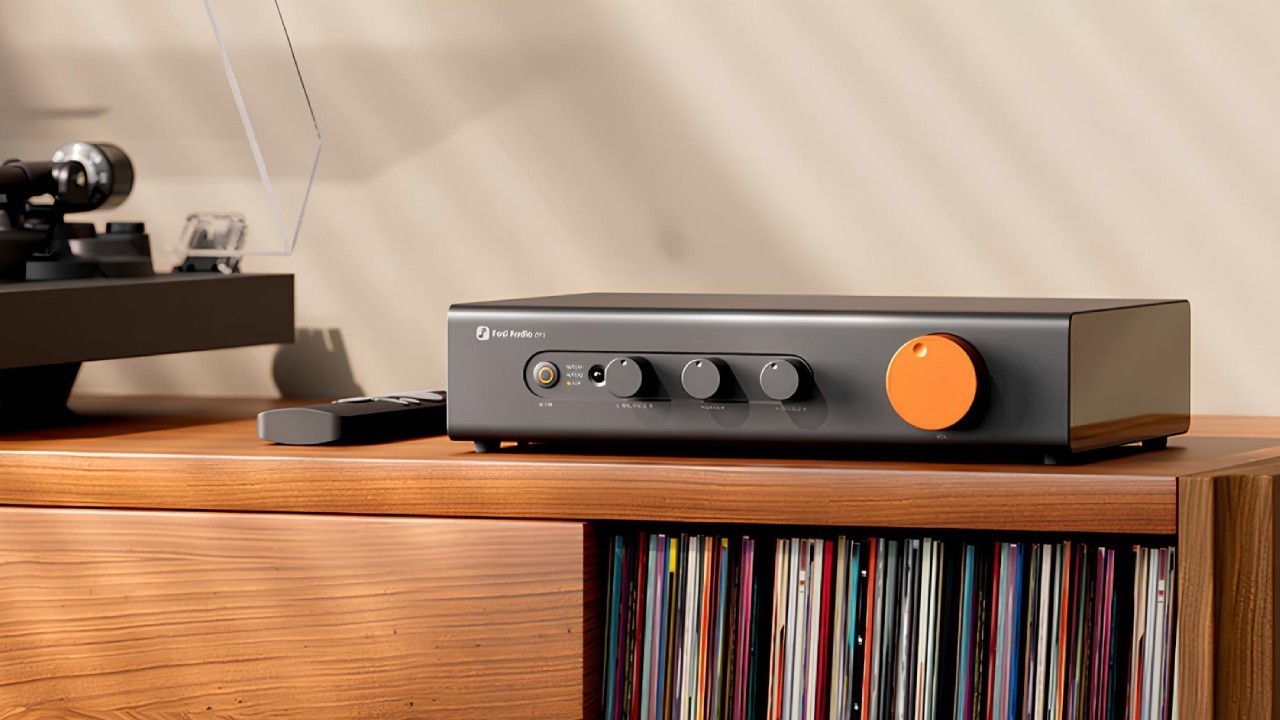
Amplifiers are not a single kind of product.
In this selection, the supplied material ranges from stereo and multichannel power amplifiers to integrated amplifiers, preamplifiers, active subwoofers with onboard amplification, and one loudspeaker article that is most useful here as an amplifier-matching reference.
Rather than force them into the same role, we have treated each product according to what the source actually says it is. The strongest entries stand out for clear engineering choices: class A output stages, balanced signal paths, discrete circuits, relay volume control, multichannel consistency, or flexible switching. Several are aimed at traditional two-channel systems, while others make more sense in home theater, studio-style balanced setups, or systems built around high-sensitivity speakers. Specifications alone do not decide whether an amplifier is right for a system, but they can reveal intent. Power delivery into difficult loads, input and output options, gain structure, channel layout, speaker requirements, and the presence of features such as bridge mode, subwoofer outputs, or remote control all affect long-term suitability. The notes below focus only on those supported distinctions.
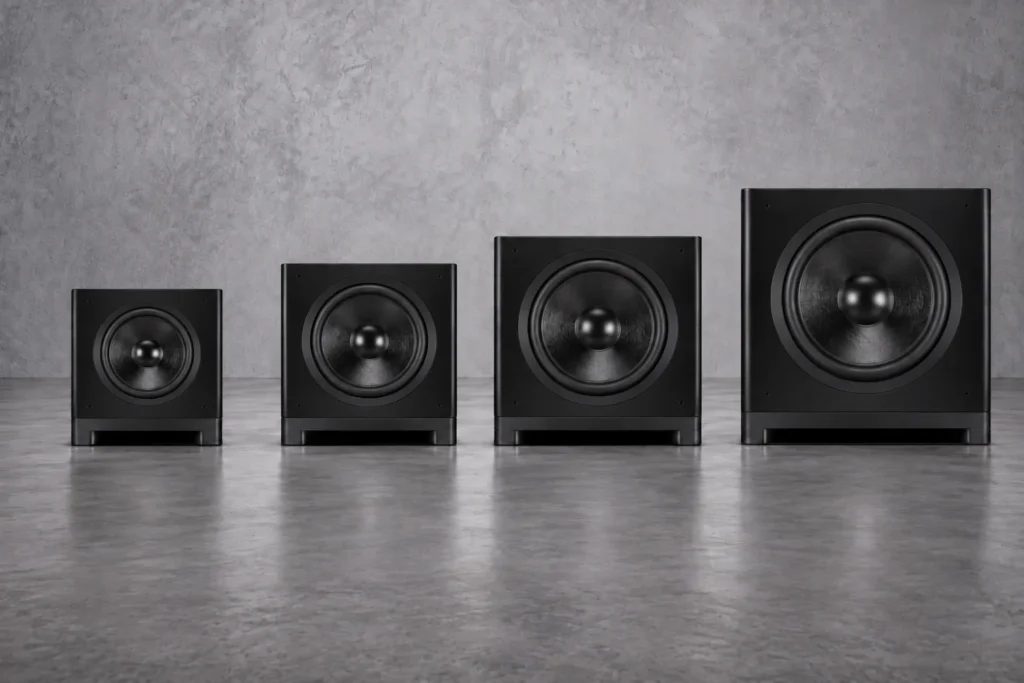
1. PSI Audio A125-M and A225-M Subwoofers: G-Class Amplifiers, 8-inch Drivers and Balanced Switching

PSI Audio A125-M and A225-M active subwoofers with class G amplification, 8-inch drivers, slotted reflex ports and balanced XLR connectivity.
The PSI Audio A125-M and A225-M are active subwoofers rather than standalone amplifiers, but they are relevant to an amplifier guide because their onboard class G amplification and balanced connectivity define how they integrate into a system.
Both models use 8-inch drivers and are described as sharing the same sound character, making system scaling simpler.
The A125-M uses one driver with a 150-watt amplifier, while the larger A225-M uses two drivers with 200 watts. PSI Audio also emphasizes an all-analog approach, balanced XLR input and output connections, and minimal signal delay, which is useful when multiple subwoofers need to operate synchronously.
Best for: Balanced systems needing scalable active bass support
- Class G amplification built in
- Balanced XLR inputs and outputs
- Shared sound character across both models
- All-analog signal path with minimal delay
Verdict: A technically tidy active subwoofer pair for systems where analog balanced integration and consistent bass character matter more than amplifier swapping.
2. Totaldac Amp-1-Sublime: Stereo amplifier or fully balanced monoblock
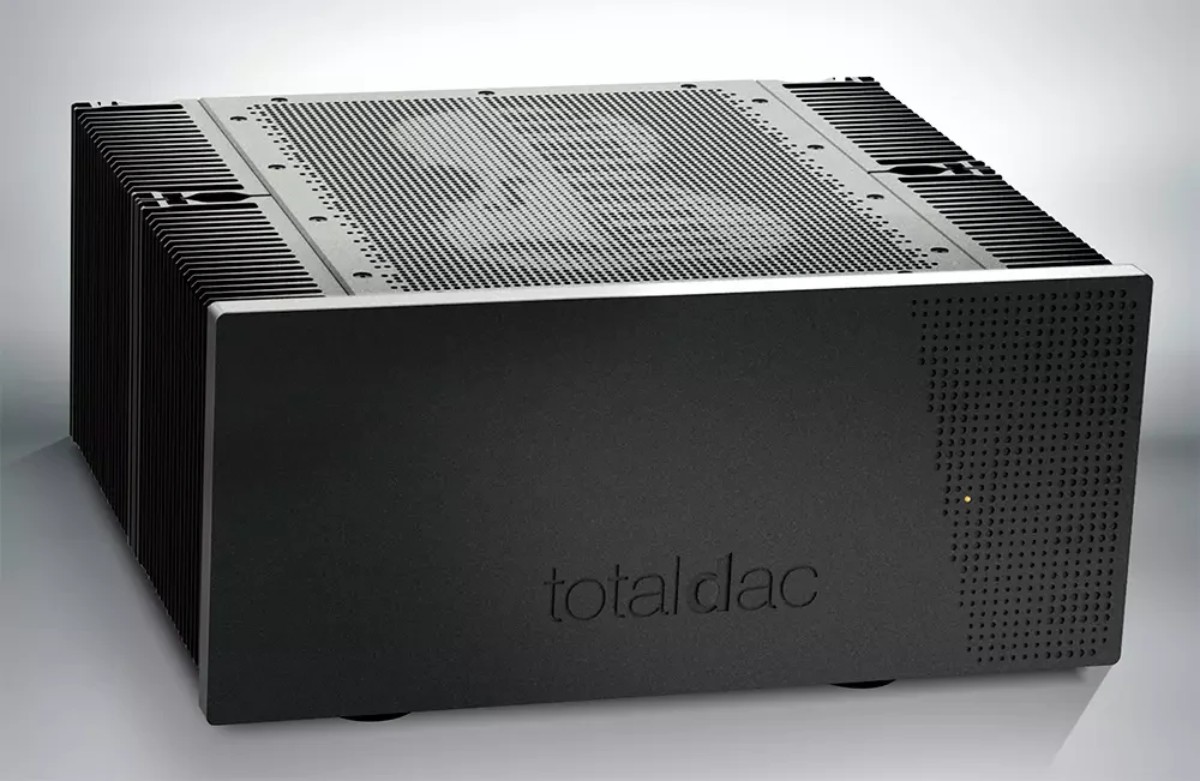
Totaldac Amp-1-Sublime power amplifier, designed for stereo RCA operation or fully balanced XLR monoblock use.
The Totaldac Amp-1-Sublime is a power amplifier built with transistor output stages and a flexible operating concept.
It can be used as a stereo amplifier via unbalanced RCA inputs or as a fully balanced monoblock via XLR, which gives it a clear role in ambitious two-channel systems that may later move toward monoblock amplification.
The source highlights Vishay Bulk Metal foil resistors with 0.01 percent accuracy, no common negative feedback, low noise of 0.2 mV, 33 dB gain, 400 kHz bandwidth, and a 2,500 VA power-supply transformer. Its specified output reaches 2 x 150 watts into 8 ohms in stereo and 1 x 600 watts into 8 ohms in mono.
Best for: High-end systems that may evolve from stereo power amplification to monoblocks
- Stereo or fully balanced monoblock operation
- No common negative feedback
- High-current power supply design
- Wide specified bandwidth
Verdict: A serious power amplifier whose appeal lies in its dual operating modes, robust supply and purist circuit choices.
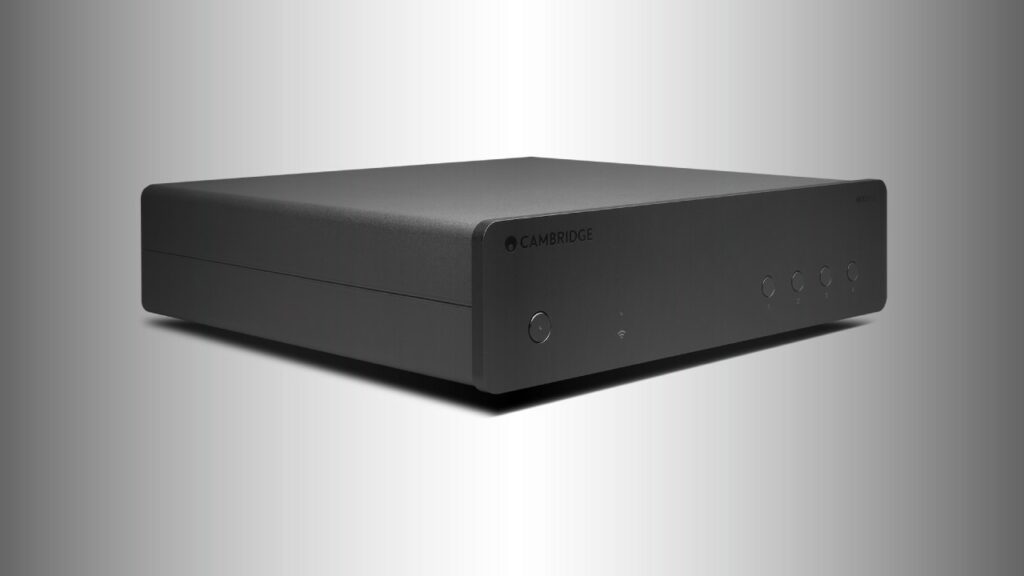
3. Marantz MM8077: Powerful seven-channel power amplifier

Marantz MM8077 seven-channel power amplifier with discrete current feedback circuitry and control-system connections.
The Marantz MM8077 is a seven-channel power amplifier intended for high-end home theater systems and audio systems used for quality music playback.
Its central advantage is channel consistency: the source states that all amplifier channels use an identical design, including the same printed circuit board topology, to support uniform surround sound and precise image placement.
The amplifier uses discrete elements and a current feedback circuit, described as providing a high slew rate and a wide operating frequency range. Practical system-control features are also included, such as an external IR sensor input, trigger input and output, and Marantz control connectors.
Best for: Home theater systems needing consistent multichannel amplification
- Seven-channel power amplification
- Identical design across all channels
- Discrete current feedback circuitry
- IR, trigger and Marantz control connections
Verdict: A multichannel power amplifier that prioritizes uniform channel behavior and system-control integration for serious surround setups.
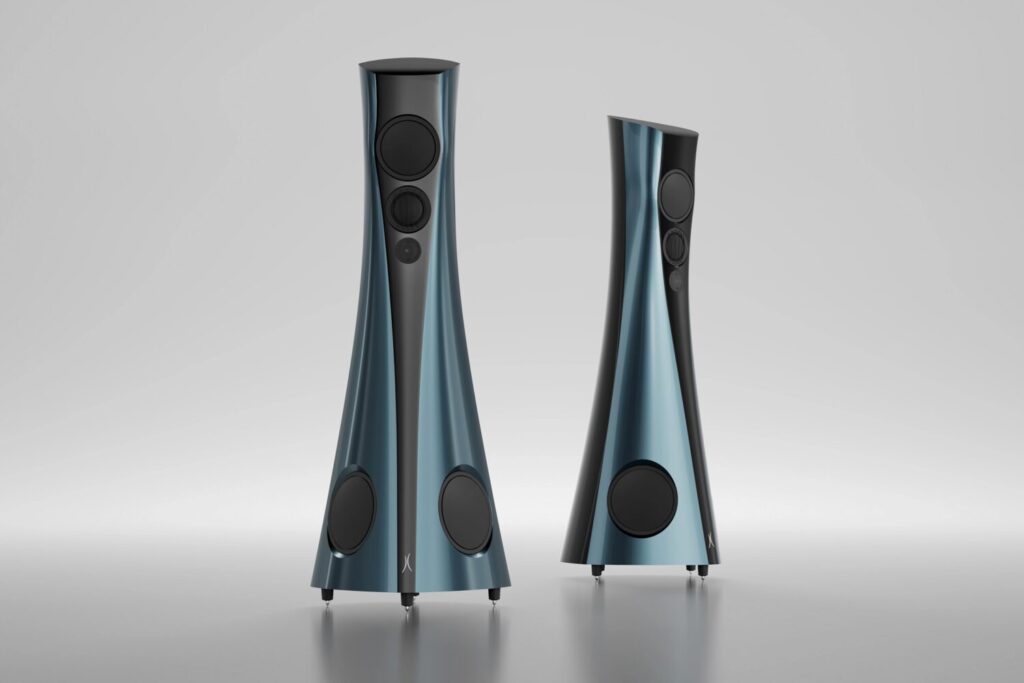
4. Von Schweikert Audio ULTRA 7: $180,000 floorstanders with ceramic cones

Von Schweikert Audio ULTRA 7 floorstanding loudspeaker with ceramic-cone bass and midrange drivers, high-frequency arrays and stated amplifier guidance.
The Von Schweikert Audio ULTRA 7 is not an amplifier, so its place in this amplifier-category guide is as a loudspeaker matching reference.
The source specifies a claimed sensitivity of 94 dB at 1 watt and 1 meter, and states that amplifier power should start at 60 watts per channel.
That makes the entry useful when considering amplifier suitability for a large, complex loudspeaker system. The speaker uses three 9-inch woofers and a 7-inch midrange driver with ceramic cones, a beryllium tweeter, a double planar supertweeter, and a rear array with another ribbon supertweeter plus a tweeter with a magnesium horn. The claimed frequency range is 18 Hz to 60 kHz.
Best for: Amplifier matching with large high-sensitivity floorstanding speakers
- 94 dB claimed sensitivity
- Manufacturer states amplification from 60 watts per channel
- Complex front and rear driver array
- Room adjustment suite referenced in the source
Verdict: Not an amplifier, but a useful reminder that speaker sensitivity, impedance demands and manufacturer power guidance should shape amplifier choice.
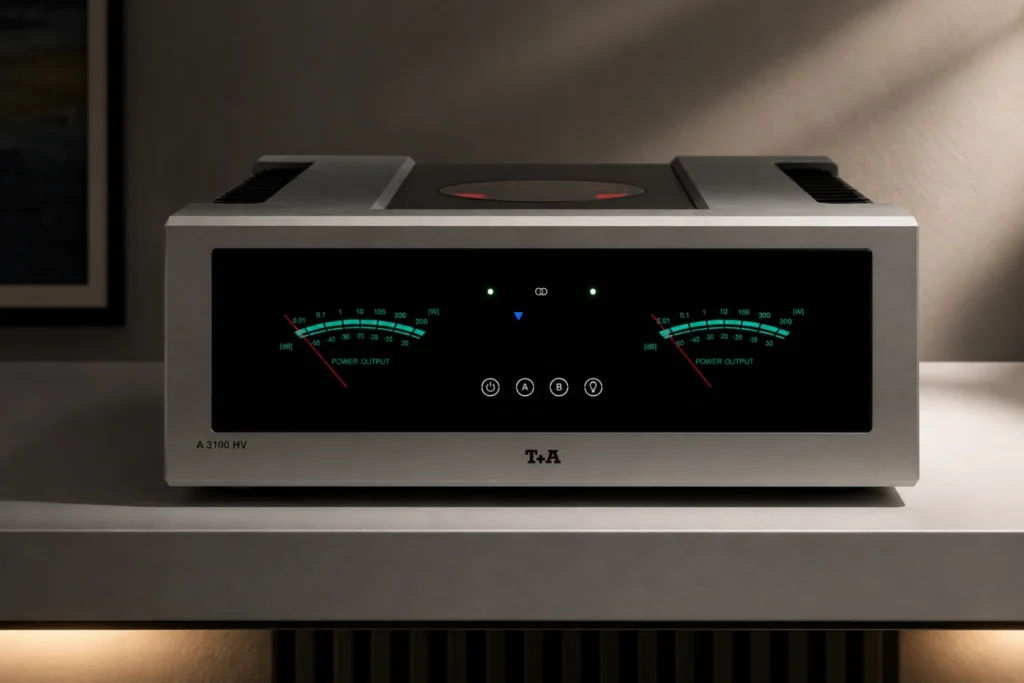
5. Accuphase A-80: class A powerful stereo amplifier

Accuphase A-80 class A stereo power amplifier with large output meters, MOS-FET output stage and substantial power supply.
The Accuphase A-80 is a pure class A stereo power amplifier with substantial power delivery for the topology.
The source states 65 watts per channel into 8 ohms, doubling to 130 watts into 4 ohms, 260 watts into 2 ohms, and 520 watts into 1 ohm.
It can also operate in bridged monoblock mode, where the stated figure is 260 watts into 8 ohms. The power supply uses a large shielded toroidal transformer and 120,000 microfarads of filter capacitance, while the output stage contains 20 MOS-FET transistors. Large front-panel meters show output level in watts and decibels, and the declared damping factor reaches 1000.
Best for: Two-channel systems needing class A operation with strong load capability
- Pure class A operation
- Power doubles as load impedance halves
- Bridgeable monoblock mode
- Large toroidal transformer and high filter capacitance
Verdict: A heavyweight class A power amplifier distinguished by unusually explicit low-impedance power figures and bridgeable flexibility.
6. Onkyo A-9130: Affordable integrated amplifier perfect for beginners

Onkyo A-9130 integrated stereo amplifier with WRAT output-stage technology, Bass Boost circuitry and a transformer-based power supply.
The Onkyo A-9130 is an integrated stereo amplifier presented as an accessible route into hi-fi.
The source emphasizes its reasonable price, broad functionality, build quality and proprietary technologies.
Its output stages use Onkyo WRAT wideband amplification technology with a three-stage Darlington circuit, and the text highlights compatibility with speakers from various brands, including low-impedance models. Shallow negative feedback is described as supporting stability without narrowing dynamic range. The A-9130 also includes a Bass Boost circuit intended to deepen bass while avoiding midbass overload, a low-noise volume-control circuit, and a power supply based on a powerful transformer with dual high-capacity filter capacitors.
Best for: Entry-level hi-fi systems needing one affordable stereo amplifier
- Integrated amplifier format
- WRAT wideband amplification technology
- Designed for compatibility with varied speakers
- Bass Boost circuit described as integrated into the frequency range
Verdict: A practical integrated amplifier for beginners who want speaker-driving flexibility without moving straight to separates.
7. Ladder Bach II: High-End Class A Balanced Preamplifier

Ladder Bach II class A balanced preamplifier with dual front-panel controls, display, XLR and RCA connectivity.
The Ladder Bach II is a class A preamplifier, not a power amplifier, and its strengths sit in signal control rather than speaker drive.
It uses a fully balanced, fully discrete circuit and an 80-watt low-noise toroidal transformer with ELNA and WIMA capacitors for filtering.
The source highlights a discrete unity-gain buffer stage for precise signal transmission without coloration, and a microcontroller-controlled 60-step relay attenuator with precision-matched resistors to avoid channel skew and maintain stability at low levels. Connectivity includes two balanced XLR inputs, one RCA input, and both balanced and unbalanced outputs, housed in an anodized aluminum-alloy enclosure.
Best for: Balanced systems needing precise analog volume and source control
- Class A fully discrete balanced circuit
- 60-step relay attenuator
- Balanced and unbalanced outputs
- Aluminum-alloy enclosure
Verdict: A signal-focused class A preamplifier built around balanced architecture, relay attenuation and careful low-level control.
8. Synthesis FCO-300B: Tube amplifier using 300B triodes from Italy

Synthesis FCO-300B tube integrated amplifier with 300B output triodes, dual-mono layout and separate 4-ohm and 8-ohm speaker terminals.
The Synthesis FCO-300B is a single-ended tube integrated amplifier built in a dual-mono concept.
Its output stages use 300B direct-heated triodes from Electro-Harmonix and operate in pure class A, while the pre-stages use 12AU7 and 12AX7 dual triodes.
A 6CG7 double triode acts as the driver tube, and a 5U4G rectifier tube is used in the power supply. The source states that the amplifier was designed for high-sensitivity speakers. Practical touches include a high-power toroidal power transformer, double C-core output transformers, separate terminals for 4-ohm and 8-ohm speakers, automatic bias adjustment, and remote control for volume and input selection.
Best for: High-sensitivity speaker systems built around 300B tube amplification
- Single-ended 300B tube design
- Pure class A output stages
- Designed for high-sensitivity speakers
- Automatic bias adjustment
Verdict: A specialist integrated amplifier for listeners whose speaker choice suits a single-ended 300B class A design.
9. Yamaha M-5000: A model of high-fidelity audio reproduction
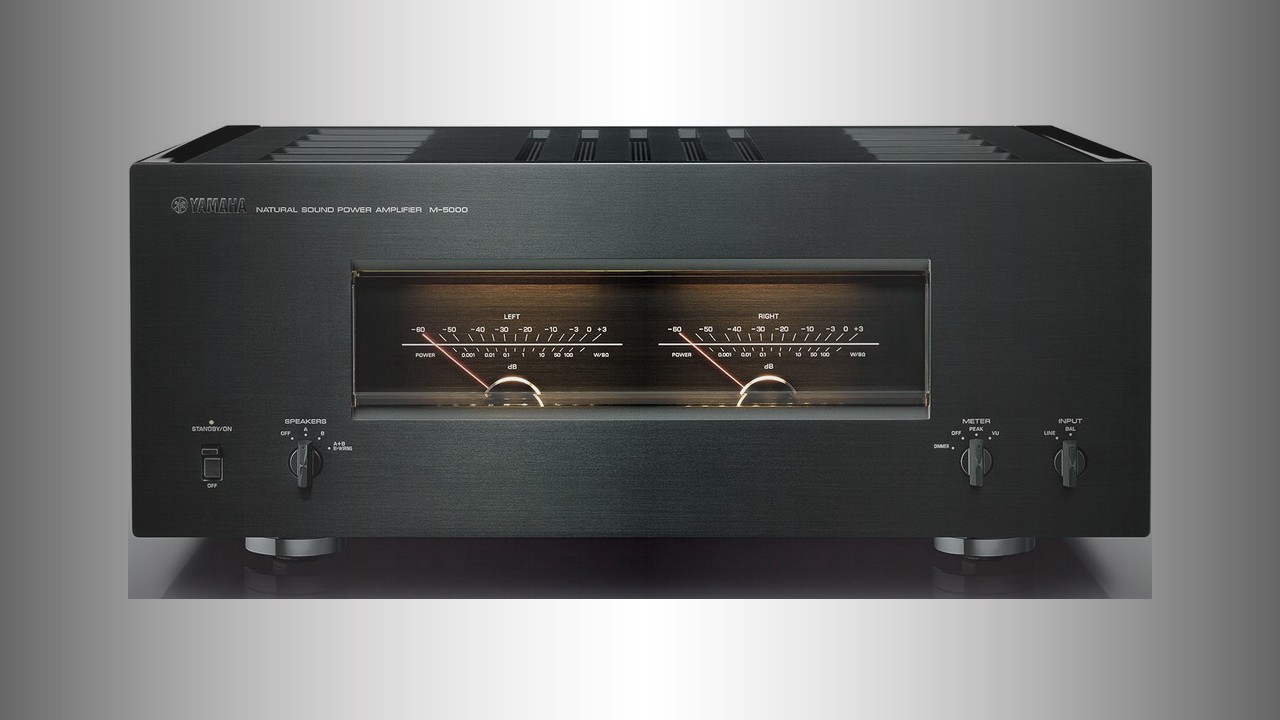
Yamaha M-5000 power amplifier with symmetrical internal architecture, isolated channel circuits and mechanically grounded key components.
The Yamaha M-5000 is a power amplifier built around symmetry, isolation and mechanical rigidity.
The source describes a fully symmetrical design in which the left and right channels are physically isolated and separated into independent electrical circuits.
The deliberately simple component layout is intended to minimize the signal path, reduce power loss and provide low impedance for high-quality playback. Yamaha also connects directly to the positive and negative sides of the output stage, with the text stating that isolation of the power-amplifier circuit helps avoid transient voltage fluctuation and ground-noise effects. A rigid structure and mechanical grounding concept secure the transformer, capacitors and heatsink to reduce vibration.
Best for: Two-channel systems prioritizing balanced internal layout and mechanical control
- Fully symmetrical channel architecture
- Physically isolated left and right circuits
- Mechanical grounding concept
- Designed for low-impedance speaker performance
Verdict: A power amplifier defined by Yamaha’s focus on symmetry, short signal paths, circuit isolation and vibration control.
10. Fosi Audio ZP3: A Versatile Balanced Preamplifier for Home and Professional Use
Fosi Audio ZP3 balanced preamplifier with TRS/XLR combo input, RCA inputs, XLR output, subwoofer output and front-panel controls.
The Fosi Audio ZP3 is a balanced preamplifier designed for home and professional-style setups.
It uses NE5532 operational amplifiers and is described as providing stable, clear signal transmission with reduced interference and ground-loop effects.
Its input options include TRS/XLR combo and stereo RCA connections, while output options include balanced XLR and RCA, plus a subwoofer RCA output covering 20 to 200 Hz. The ZP3 also includes low- and high-frequency controls, channel balance, frequency-division switching for RCA and XLR outputs, and a bypass mode for direct signal passage. The source notes ELNA capacitors, an NJR NJU72315 volume-control chip, gold-plated RCA connectors and a remote control.
Best for: Flexible preamp duties in compact home or professional-style systems
- Balanced XLR output
- TRS/XLR combo and RCA inputs
- Subwoofer output with frequency range stated
- Tone, balance and bypass controls
Verdict: A feature-rich balanced preamplifier for systems that need source control, tone adjustment and subwoofer integration in one small unit.
Quick comparison
The entries differ more by role than by rank.
Some are power amplifiers intended to drive speakers directly, others are preamplifiers for signal routing and volume control, and two are non-amplifier system components included because their amplification or amplifier-matching details are central to the source material.
| Product | Best for | Verdict |
|---|---|---|
| PSI Audio A125-M and A225-M Subwoofers | Adding active, balanced, analog sub-bass support | Active subwoofers with class G amplification and XLR in/out, suited to scalable bass systems rather than main speaker amplification. |
| Totaldac Amp-1-Sublime | High-end stereo or monoblock power amplification | Flexible enough to run as a stereo RCA power amplifier or a fully balanced XLR monoblock. |
| Marantz MM8077 | Seven-channel home theater amplification | A multichannel power amplifier focused on identical channel design and surround-system integration. |
| Von Schweikert Audio ULTRA 7 | Amplifier matching with large floorstanding speakers | A speaker entry, not an amplifier, but useful for its stated sensitivity and minimum amplifier guidance. |
| Accuphase A-80 | Class A stereo power with low-impedance capability | A heavy class A amplifier with stated power doubling into lower impedances and bridgeable monoblock operation. |
| Onkyo A-9130 | Beginner-friendly integrated stereo amplification | An accessible integrated amplifier with WRAT circuitry, Bass Boost and compatibility claims for varied speakers. |
| Ladder Bach II | Balanced analog preamplifier control | A class A preamplifier centered on discrete balanced circuitry and relay-based volume attenuation. |
| Synthesis FCO-300B | High-sensitivity speakers and 300B tube amplification | A single-ended class A integrated tube amplifier with automatic bias and 4-ohm and 8-ohm speaker terminals. |
| Yamaha M-5000 | Symmetrical two-channel power amplification | A power amplifier shaped by isolated left and right circuits, low-impedance design aims and mechanical grounding. |
| Fosi Audio ZP3 | Compact balanced preamplifier and subwoofer integration | A control-focused preamp with balanced output, tone controls, crossover options, bypass mode and remote operation. |
Frequently asked questions
How do I know whether I need an integrated amplifier, power amplifier or preamplifier?
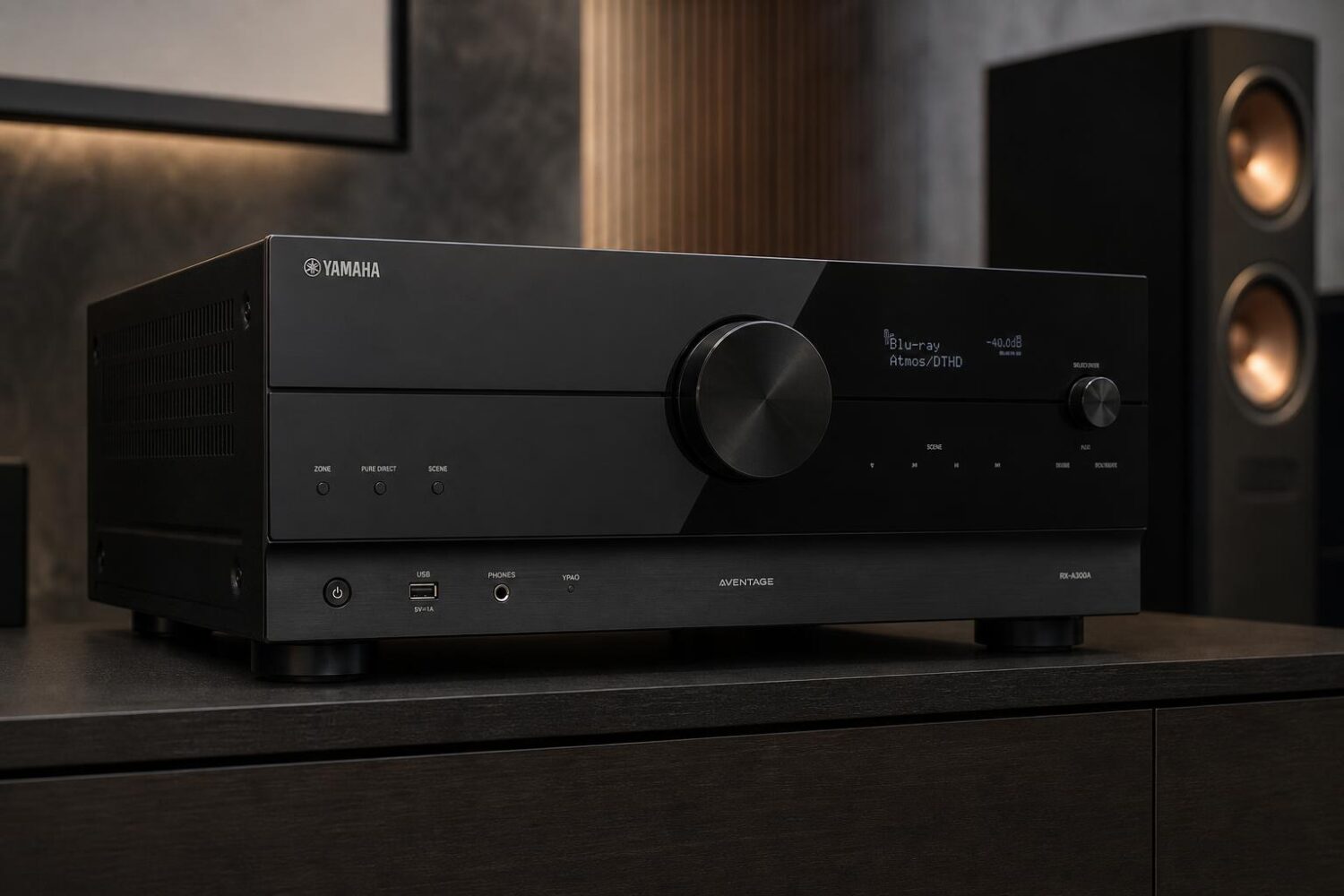
An integrated amplifier combines source selection, volume control and speaker-driving amplification in one chassis, as with the Onkyo A-9130 and Synthesis FCO-300B.
A power amplifier, such as the Totaldac Amp-1-Sublime, Marantz MM8077, Accuphase A-80 or Yamaha M-5000, needs a preamp or processor ahead of it.
A preamplifier, such as the Ladder Bach II or Fosi Audio ZP3, controls sources and level but does not drive passive speakers on its own.
Should power output be the main buying criterion?
Power matters, but it should be judged with speaker requirements and system use.
The Accuphase A-80 and Totaldac Amp-1-Sublime provide detailed load-related power figures, while the Von Schweikert Audio ULTRA 7 source gives a starting amplifier recommendation of 60 watts per channel.
Speaker sensitivity, impedance, room size and desired listening level all affect the practical choice.
When are balanced connections useful?
Balanced connections can be valuable when the rest of the system supports them, especially for longer cable runs or setups where noise rejection is important.
In this source set, PSI Audio uses balanced XLR input and output on its active subwoofers, Totaldac offers fully balanced monoblock operation via XLR, and the Ladder Bach II and Fosi Audio ZP3 are built around balanced preamp connectivity.
Are tube and class A amplifiers suitable for every speaker?
Not automatically.
The Synthesis FCO-300B is specifically described as designed for high-sensitivity acoustics, so speaker matching is central to its use.
The Accuphase A-80 is also class A but is presented with substantial load-related power figures. The safest approach is to match amplifier topology and output behavior to the loudspeaker’s sensitivity, impedance and manufacturer guidance.
How to choose from this amplifier shortlist
Start by defining the missing function in the system.
If there is no amplifier at all and simplicity matters, an integrated amplifier is the most direct route; the Onkyo A-9130 is positioned as an accessible stereo option, while the Synthesis FCO-300B is a more specialized tube integrated amplifier for high-sensitivity speakers.
If a separate preamp or processor is already in place, then a power amplifier such as the Totaldac Amp-1-Sublime, Accuphase A-80, Yamaha M-5000 or Marantz MM8077 is the correct category. Next, match the amplifier to the loudspeakers rather than to a specification sheet in isolation. The Accuphase A-80’s stated ability to double power as impedance halves points toward strong low-impedance behavior, while the Totaldac’s stereo and monoblock figures show a different kind of scalability. The Yamaha M-5000 emphasizes symmetrical layout, isolation and mechanical control rather than headline feature count. For surround systems, the Marantz MM8077’s seven identical channels are the relevant distinction. For systems built around separates, do not overlook the preamp. The Ladder Bach II is the more purist balanced class A control component in this group, with relay attenuation and discrete circuitry. The Fosi Audio ZP3 is more feature-driven, adding tone controls, balance, crossover options, bypass mode, remote control and a subwoofer output. Those differences matter as much as amplifier power if the preamp will become the daily control point. Finally, treat the PSI Audio subwoofers and Von Schweikert Audio ULTRA 7 as system-context entries. The PSI models bring their own class G amplification and balanced analog connectivity, so they supplement rather than replace a main amplifier. The ULTRA 7 is a speaker, but its stated sensitivity and amplifier-power guidance underline the most important rule in amplifier buying: choose the amplifier for the complete system, not as an isolated component.















 VS
VS VS
VS VS
VS VS
VS VS
VS VS
VS VS
VS VS
VS