
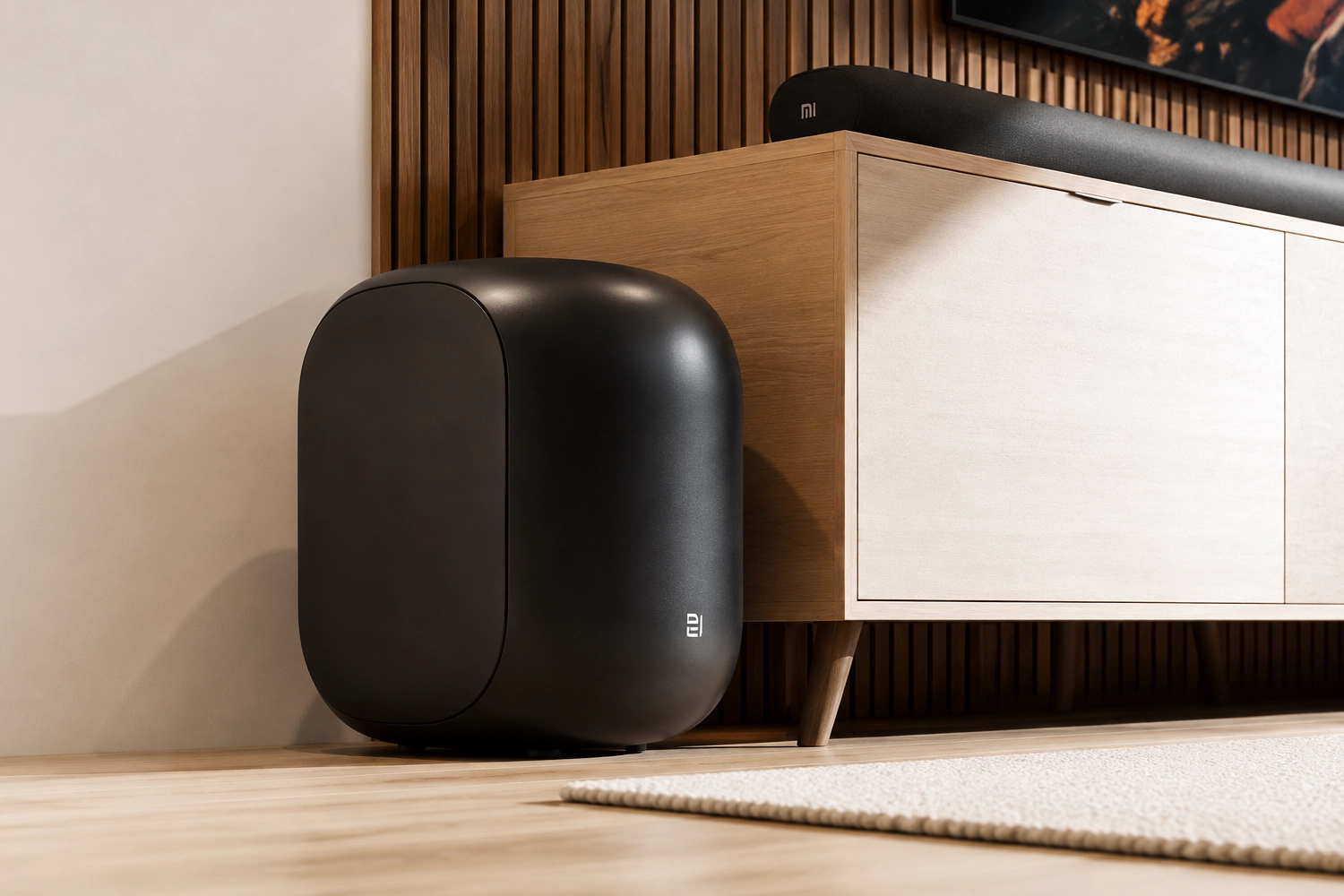
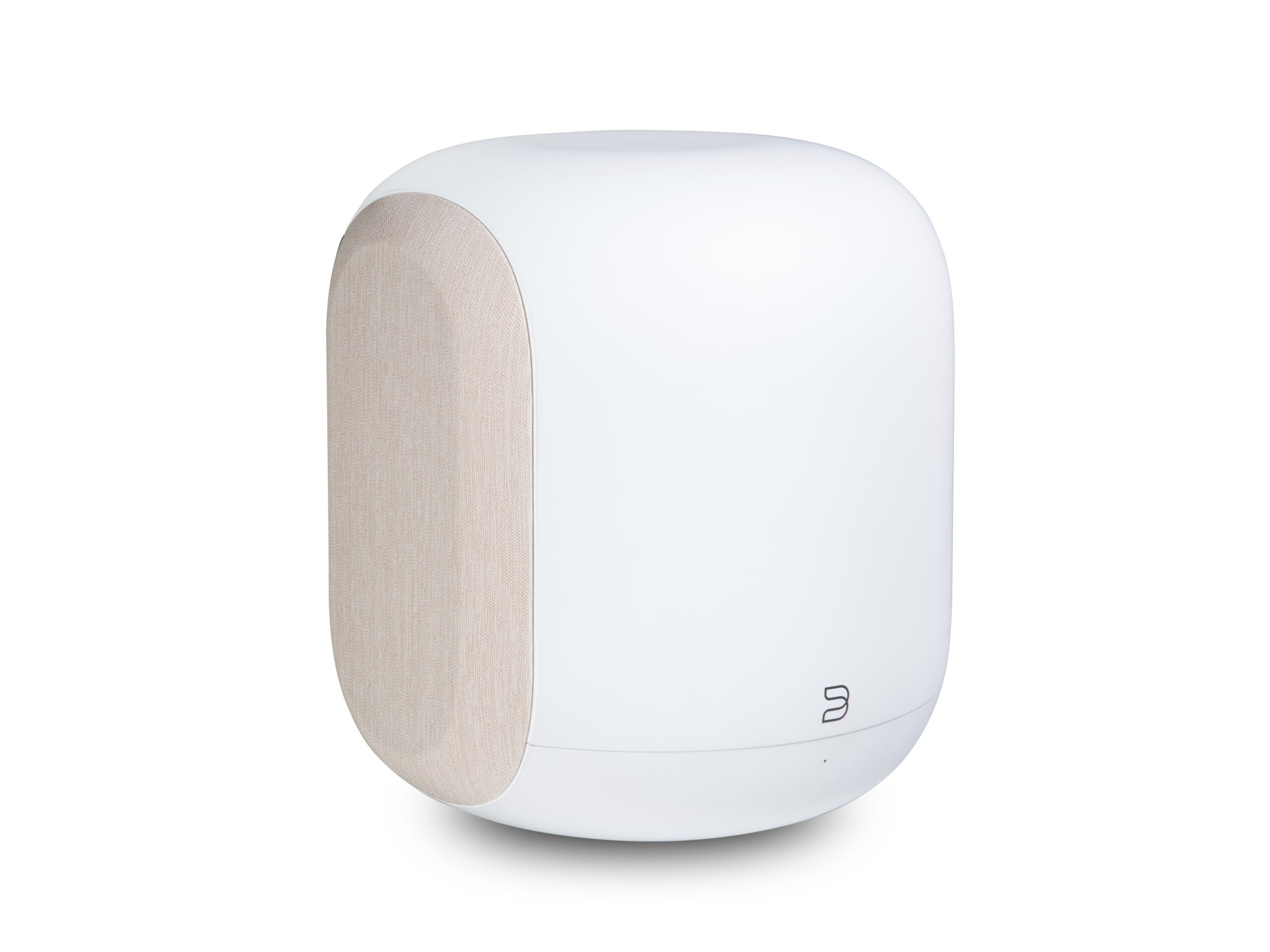
The Bluesound Pulse Sub, model SW200, is designed for listeners who already value the simplicity of BluOS and want to extend a compatible system with dedicated low-frequency support. Rather than approaching the subwoofer as a separate box that must be cabled and configured in isolation, Bluesound has made it part of the same wireless ecosystem used by its soundbars, streaming amplifiers and multiroom products. Its most notable design choices are practical ones: a compact enclosure, dual opposed 6.5-inch woofers, 350-watt amplification, Smart DSP processing and setup through the BluOS Controller app. Together, those elements make the Pulse Sub a focused expansion product for BluOS-based music, film, television and gaming systems.
A subwoofer built around the BluOS ecosystem
The defining appeal of the Pulse Sub is not simply that it is wireless, but that it is wireless within a specific platform. Bluesound has developed the SW200 for the BluOS ecosystem, meaning compatible Bluesound products can discover it, pair with it and manage it through the BluOS Controller app. For existing BluOS users, that matters because the subwoofer becomes an extension of a familiar control environment rather than another component requiring a separate setup routine.
This ecosystem approach is especially relevant in rooms where running a signal cable is awkward or undesirable. A conventional subwoofer may need a long interconnect from an amplifier, processor or soundbar, and that cable path can affect placement choices. By allowing wireless connection to compatible Bluesound products, the Pulse Sub gives owners more freedom to think about where the subwoofer fits physically in the room, not just where a cable can reach.
The product is not positioned as a universal standalone subwoofer for every system. Its value is clearest when viewed as a BluOS component. That focus gives it a distinct role: it is for adding dedicated bass to compatible Bluesound setups without abandoning the integrated software experience that likely attracted the owner to the platform in the first place.
Dual opposed woofers and why the layout matters
Inside the Pulse Sub are two specially developed 6.5-inch woofers mounted opposite one another. This is a force-cancelling arrangement: as the drivers operate, the mechanical forces produced by one woofer are intended to counteract those produced by the other. In a subwoofer, where driver movement can be substantial, that layout can help reduce unwanted cabinet vibration and resonance.
This is a meaningful design decision for a compact subwoofer intended for everyday living spaces. Low-frequency output is not only about moving air; it is also about keeping the enclosure controlled while the drivers work. If the cabinet itself is moving too much, energy is being spent on enclosure vibration rather than bass reproduction. Bluesound’s opposed-driver approach is intended to keep more of the activity focused on the cones and less on shaking the box.
The physical benefits are particularly relevant for users who want a subwoofer that can sit discreetly in a room. A compact enclosure has less visual impact, but it also places demands on driver and amplifier control. By using two opposed 6.5-inch drivers rather than a single visible large driver, the Pulse Sub takes a route that prioritizes controlled packaging and reduced mechanical movement.
Amplification and DSP in a compact enclosure
The Pulse Sub includes a 350-watt amplifier, supported by Smart DSP processing. Bluesound states that the new design provides 2.5 times the amplifier power of the previous generation. Without adding unsupported performance claims, the significance of this specification is straightforward: the amplifier and DSP are central to how an active subwoofer manages driver movement, output demands and integration within its intended system.
Active subwoofers place the amplifier inside the cabinet, allowing the drivers, enclosure, power stage and processing to be developed as one package. In the Pulse Sub, that package is aimed at delivering deeper and more dynamic low frequencies while maintaining controlled operation from a relatively compact enclosure. For owners, the attraction is convenience as much as capability: there is no need to choose a separate subwoofer amplifier or work out how to power a passive bass unit.
Smart DSP also fits the product’s broader identity as an app-integrated system component. Processing is a key part of modern compact subwoofer design, particularly when small cabinets and meaningful low-frequency demands must coexist. In this case, DSP is part of the internal architecture that supports the driver and amplifier system rather than a user-facing gimmick.
Home-cinema uses with Pulse soundbars and wireless surrounds
Bluesound identifies the Pulse Sub as a low-frequency partner for home-cinema systems built around products such as the Pulse Cinema and Pulse Cinema Mini wireless soundbars. In that role, the subwoofer is intended to strengthen the low-frequency foundation for films, television and games. This can be important because soundbars, even capable ones, are usually constrained by slim cabinet dimensions and driver size.
Adding a dedicated subwoofer allows the main soundbar to be supported by a component designed specifically for bass duties. In a living-room cinema arrangement, that can make the system architecture more complete: dialogue and front-channel information remain with the soundbar, while low-frequency effects and bass reinforcement are handled by a separate active unit.
The Pulse Sub can also sit within a wider Bluesound wireless surround configuration. Bluesound names the Pulse Cinema and Pulse Flex as components that can be combined in a wireless surround setup, with the Pulse Sub covering low-frequency responsibilities. The attraction here is system building without the cable complexity often associated with traditional surround installations.
Music-system expansion with Powernode
The Pulse Sub is not limited to soundbar use. Bluesound also lists compatibility with the Powernode wireless streaming amplifier, which makes the subwoofer relevant for music-focused stereo systems using passive speakers. In this context, the Pulse Sub can support a speaker setup without requiring a signal cable between the amplifier and subwoofer.
That is a useful proposition for listeners who like the compactness and networked flexibility of the Powernode concept but want to add dedicated low-frequency extension. Some rooms and speakers benefit from the ability to place bass support independently from the main speakers, and a wireless connection can reduce the practical friction of trying different positions.
The key point is system matching within a known ecosystem. A Powernode owner does not have to treat subwoofer addition as a separate conventional hi-fi project involving extra cabling and manual integration from unrelated hardware. The Pulse Sub is designed as an expansion path for compatible BluOS systems, which is likely to be one of its strongest practical attractions.
App-based setup and day-to-day usability
Setup through the BluOS Controller app is central to the Pulse Sub’s usability. Compatible Bluesound products can discover and connect to the subwoofer wirelessly, with pairing completed through the same app used to manage other Bluesound components. For households already using BluOS, this reduces the learning curve and keeps system management in one place.
This approach also aligns with how many modern listeners interact with audio systems. They may be using one room for streaming music, another for television, and another for casual listening. A subwoofer that can be added and managed within the same software environment helps preserve the simplicity of a multi-product ecosystem.
It is worth emphasizing that this is not just about avoiding a wire. App-based integration can make a product feel less like a technical accessory and more like part of the main system. For users who are not interested in traditional component-level setup, that can be a significant reason to choose an ecosystem-specific subwoofer.
Design choices for domestic rooms
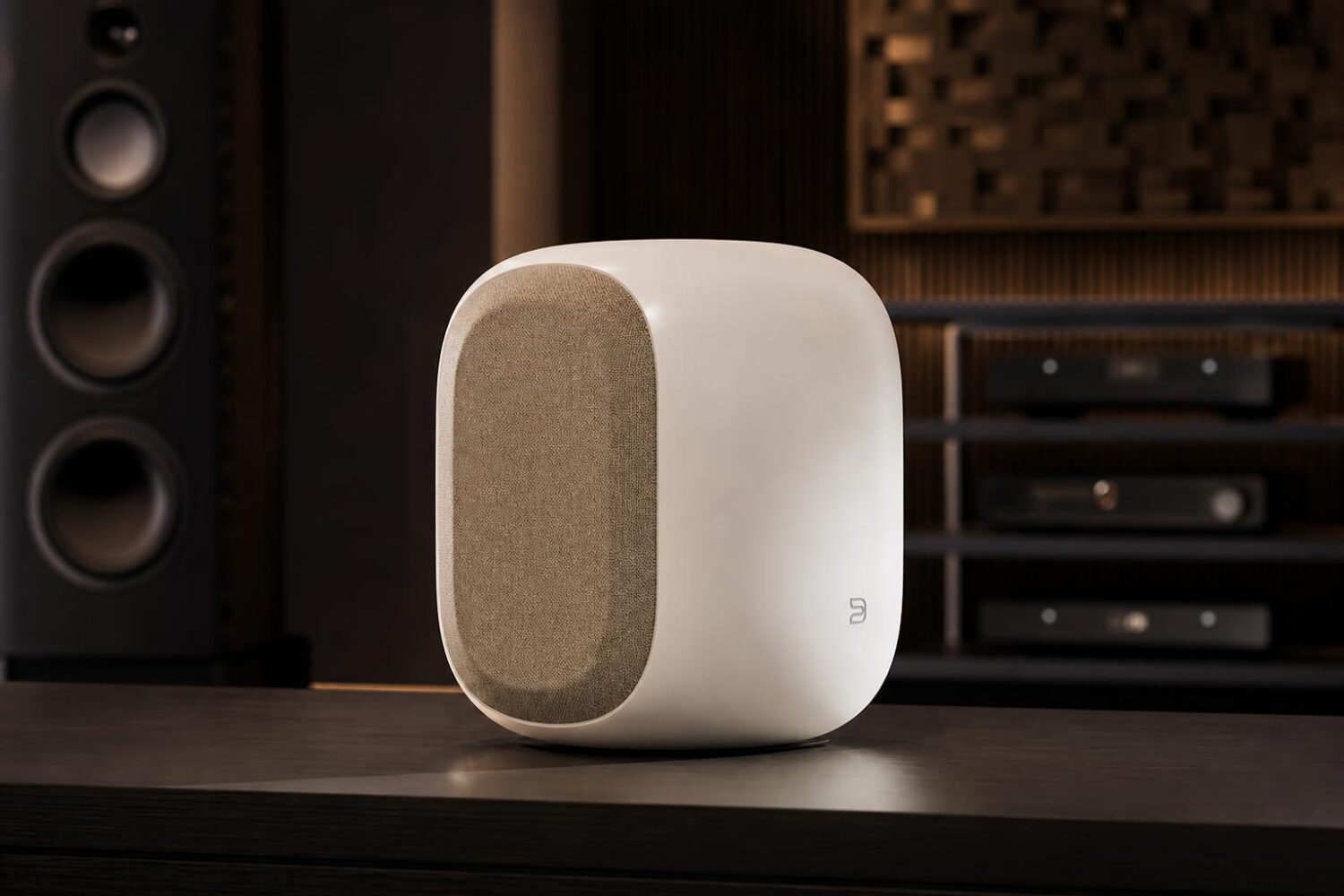
Bluesound has kept the Pulse Sub compact, with the goal of helping it fit into domestic rooms without becoming a dominant visual object. That matters because subwoofers often present a placement challenge: they need to contribute meaningful low-frequency output, yet they are frequently placed in living rooms, media rooms or shared spaces where bulky equipment is unwelcome.
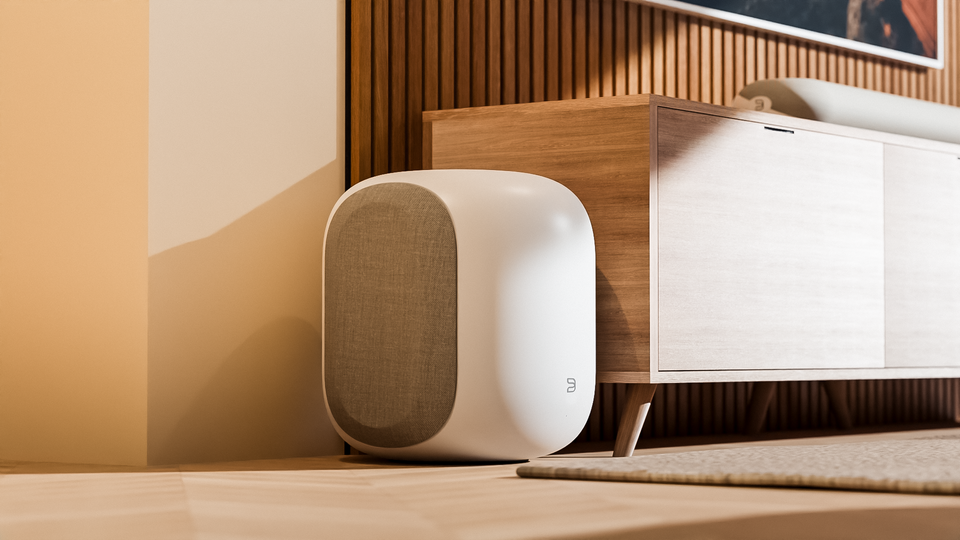
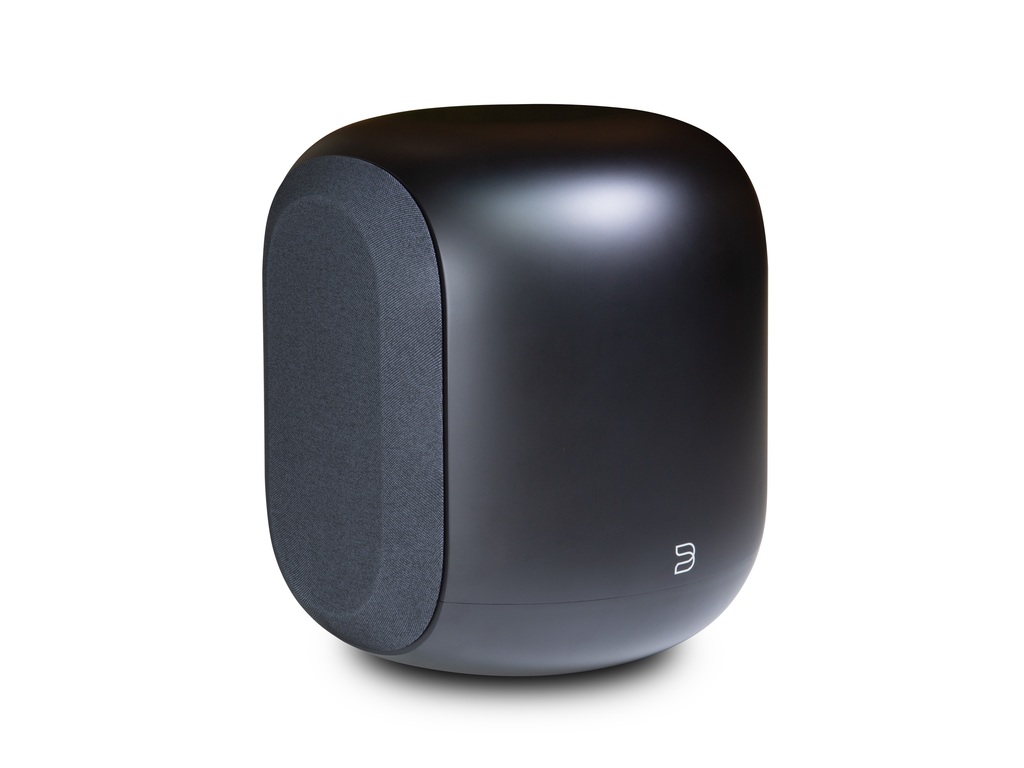
The SW200 will be offered in black and white finishes with tan detailing. The availability of two finishes gives owners some choice when matching the subwoofer to furniture, speakers or other Bluesound components. While finish selection does not determine performance, it can affect whether a product is accepted into a room and used where it is most appropriate rather than hidden in an inconvenient location.
The compact, visually restrained approach supports the Pulse Sub’s core mission. It is designed to add bass capacity to a BluOS system without demanding the kind of installation presence associated with larger traditional subwoofers.
Conclusion
The Bluesound Pulse Sub is most suitable for existing or prospective BluOS owners who want dedicated low-frequency support without adding cable complexity or leaving the Bluesound control environment. It is a logical match for compatible Pulse Cinema and Pulse Cinema Mini soundbar systems, BluOS wireless surround arrangements using products such as Pulse Flex, and Powernode-based music systems where a wireless subwoofer connection is desirable. It will be less relevant for buyers seeking a generic subwoofer for non-BluOS equipment or for those who prefer a fully traditional wired system. Its strongest documented qualities are its dual opposed 6.5-inch woofer layout, 350-watt active amplification, Smart DSP, compact cabinet and direct BluOS app integration. For the right system, those choices make it a focused and practical way to extend bass performance in music and home-cinema rooms.