
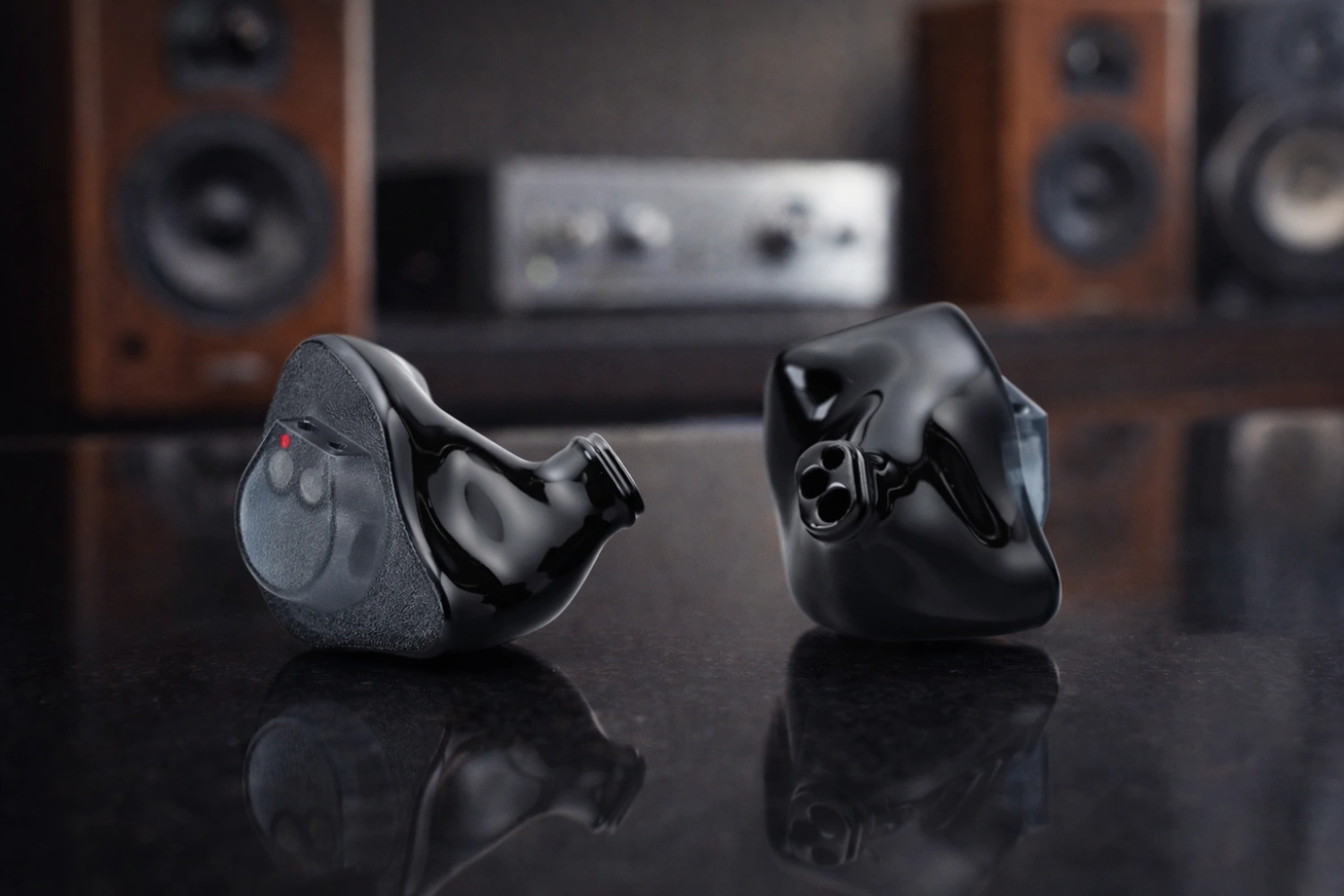
The DUNU Kaoru occupies a very specific place in the high-end in-ear monitor market. Rather than presenting itself as a feature-stacked lifestyle earphone or a bass-forward statement piece, it is documented as a precision-tuned universal IEM shaped by a collaboration between DUNU and FitEar. That pairing is central to its identity. DUNU brings its experience in premium portable audio design, while FitEar contributes a tuning and construction background associated with professional custom in-ear monitors. The result is a $1,699 in-ear monitor built around six balanced armature drivers, a proprietary FitEar connection system, a carefully developed sound tube, and a complete accessory set intended to support serious, repeated use. Its appeal lies less in novelty for novelty’s sake and more in the way its parts are arranged around a clear goal: vocal accuracy, coherent balance, and dependable fit.
A collaboration with a clear purpose
The most distinctive aspect of the DUNU Kaoru is not simply that it uses multiple drivers, but that it is the product of a collaboration between DUNU and FitEar. In a category where many premium IEMs compete through driver counts, materials, or increasingly complex hybrid layouts, Kaoru’s documented focus is more restrained: balanced tuning, midrange clarity, and professional-minded precision.
FitEar’s involvement matters because the brand is associated with custom in-ear monitors used in demanding monitoring contexts. That background helps explain why Kaoru is positioned around tonal control rather than overt exaggeration. The design direction described for this model places emphasis on the fundamentals that matter for vocal-led music, stage monitoring sensibilities, and close listening: coherent driver integration, stable fit, and a midrange that is intended to remain central rather than recessed.
For a prospective owner, that makes Kaoru interesting as a product with a defined philosophy. It is not framed as an all-purpose crowd-pleaser chasing maximum impact. It is aimed at listeners who already know that vocal intelligibility, timbral balance, and long-term comfort can be more valuable than an immediately dramatic presentation. In the upper tier of universal IEMs, having that kind of clear design brief is a strength.
Six balanced armatures, tuned for coherence
At the core of Kaoru is a six balanced-armature driver system. Balanced armatures are widely used in in-ear monitors because they can be compact, responsive, and specialized for different frequency ranges. In a six-driver configuration, the challenge is not merely fitting multiple drivers inside the shell; it is integrating them so that the ear hears a unified result rather than separate frequency bands competing for attention.
Kaoru’s driver array is described as being tuned for speed, separation, and control across the frequency range. More importantly, the emphasis is on coherence. Multi-driver IEMs can become technically complex, and poor integration can lead to uneven transitions or a sense that parts of the spectrum are disconnected. The Kaoru’s design is presented as one that carefully manages the six balanced armatures to avoid phase-related problems and maintain seamless frequency transitions.
That matters because driver count alone does not guarantee a satisfying or useful IEM. A monitor designed around integration can be more practical for listeners who value natural continuity from bass through mids to treble. In Kaoru’s case, the midrange is described as the focal area, with vocals intended to be clear, naturally bodied, and intimate. For anyone who listens heavily to singers, acoustic recordings, dialogue-rich productions, or monitoring material where the human voice needs to remain intelligible, this design priority is especially relevant.
A midrange-first approach without ignoring balance
Kaoru’s stated tuning direction gives the midrange a central role, but the product is not described as a narrow vocal-only design. Its broader goal is tonal balance: clean highs, articulate mids, and a disciplined low end. That is a meaningful distinction. Many listeners want vocal presence, but not at the expense of treble control or bass discipline. An IEM that emphasizes the midrange while keeping the rest of the spectrum in proportion can be more versatile than one that simply pushes voices forward.
The low-frequency approach is described as disciplined rather than dominant. That choice may appeal to listeners who do not want bass energy to obscure vocal lines or instrumental texture. Similarly, the highs are described in terms of cleanliness rather than excess brightness. For long listening sessions, monitoring work, or music where balance is more important than spectacle, those priorities can make practical sense.
This tuning philosophy also helps define Kaoru’s market position. It is not documented as an IEM built to impress through exaggerated extremes. Instead, its appeal is in careful tonal organization. A prospective buyer considering Kaoru is likely someone who values how a product handles the relationships between frequencies, not just whether it highlights a particular band for excitement.
Ergonomic design with acoustic intent
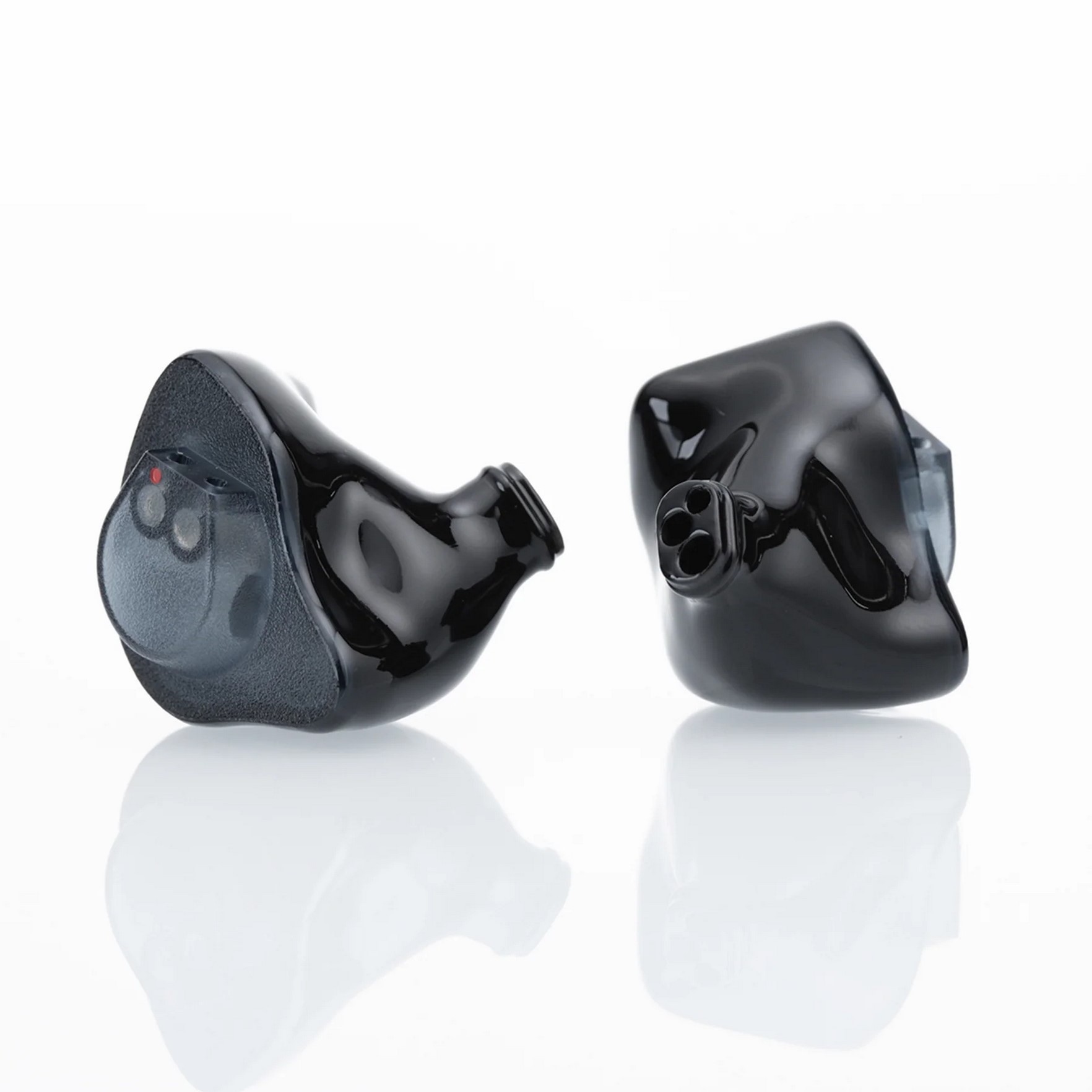
The physical design of an in-ear monitor is not secondary to its acoustic purpose. Fit, seal, and nozzle geometry can all influence perceived performance, comfort, and consistency from one listening session to another. Kaoru’s housings are described as lightweight and ergonomically shaped, which is important for a product intended for serious use rather than occasional novelty listening.
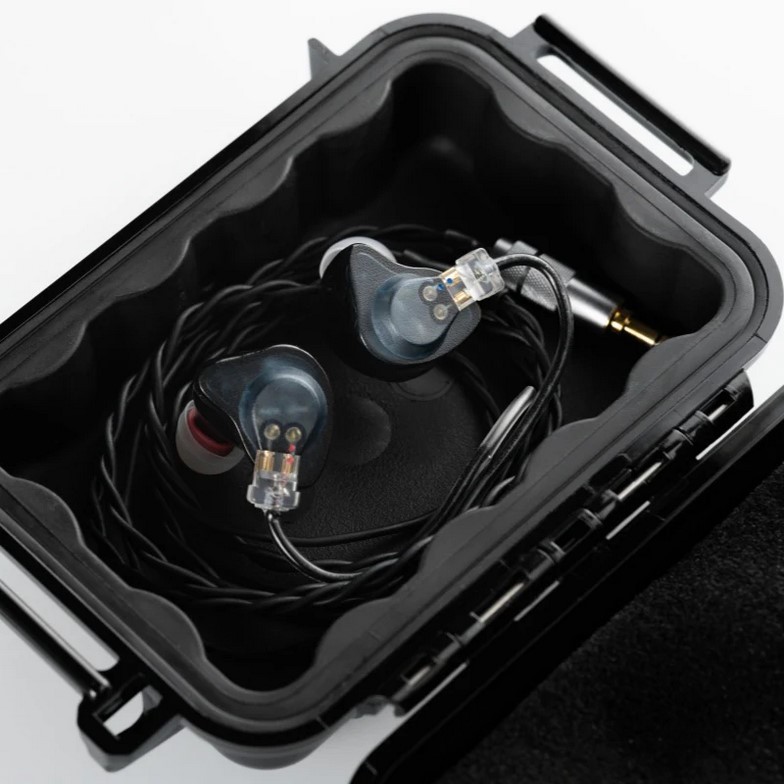
The visual treatment is restrained: black inner shells paired with French Gray faceplates. That understated look suits the product’s broader positioning. Instead of relying on overtly flashy styling, Kaoru presents itself as a refined technical object. For many high-end IEM buyers, finish and shape are part of the ownership experience, but they should not interfere with usability. A lightweight ergonomic shell can be particularly important for listeners who wear IEMs for extended periods at a desk, in a studio-adjacent setup, or during travel.
One of the more distinctive design details is the oval, three-layer sound tube. This is not just an aesthetic feature. It is described as being engineered to improve fit and acoustic stability, helping maintain a consistent seal while optimizing sound delivery. A stable seal is critical for in-ear monitors because even small changes in insertion depth or isolation can affect bass response, tonal balance, and imaging consistency. By addressing the physical interface between the earphone and the listener’s ear canal, DUNU and FitEar are treating ergonomics as part of the sound system rather than as a separate comfort issue.
Connector, cable, and everyday usability
Kaoru uses FitEar’s proprietary two-prong connector and ships with the FitEar Cable 013. The cable is terminated with an Oyaide 3.5 mm plug. This combination reinforces the product’s connection to FitEar’s ecosystem and professional IEM heritage, while also giving users a standard single-ended 3.5 mm connection for common portable audio sources, headphone amplifiers, and desktop devices that support that output.
The use of a proprietary connector is worth noting because it has both advantages and considerations. On one hand, it reflects a specific engineering and system choice rather than a generic parts-bin approach. It may also appeal to users who appreciate the FitEar connection format. On the other hand, buyers who frequently swap aftermarket cables should recognize that compatibility will be more specialized than with some more common IEM connector types. That does not diminish the design, but it is an important practical point for ownership.
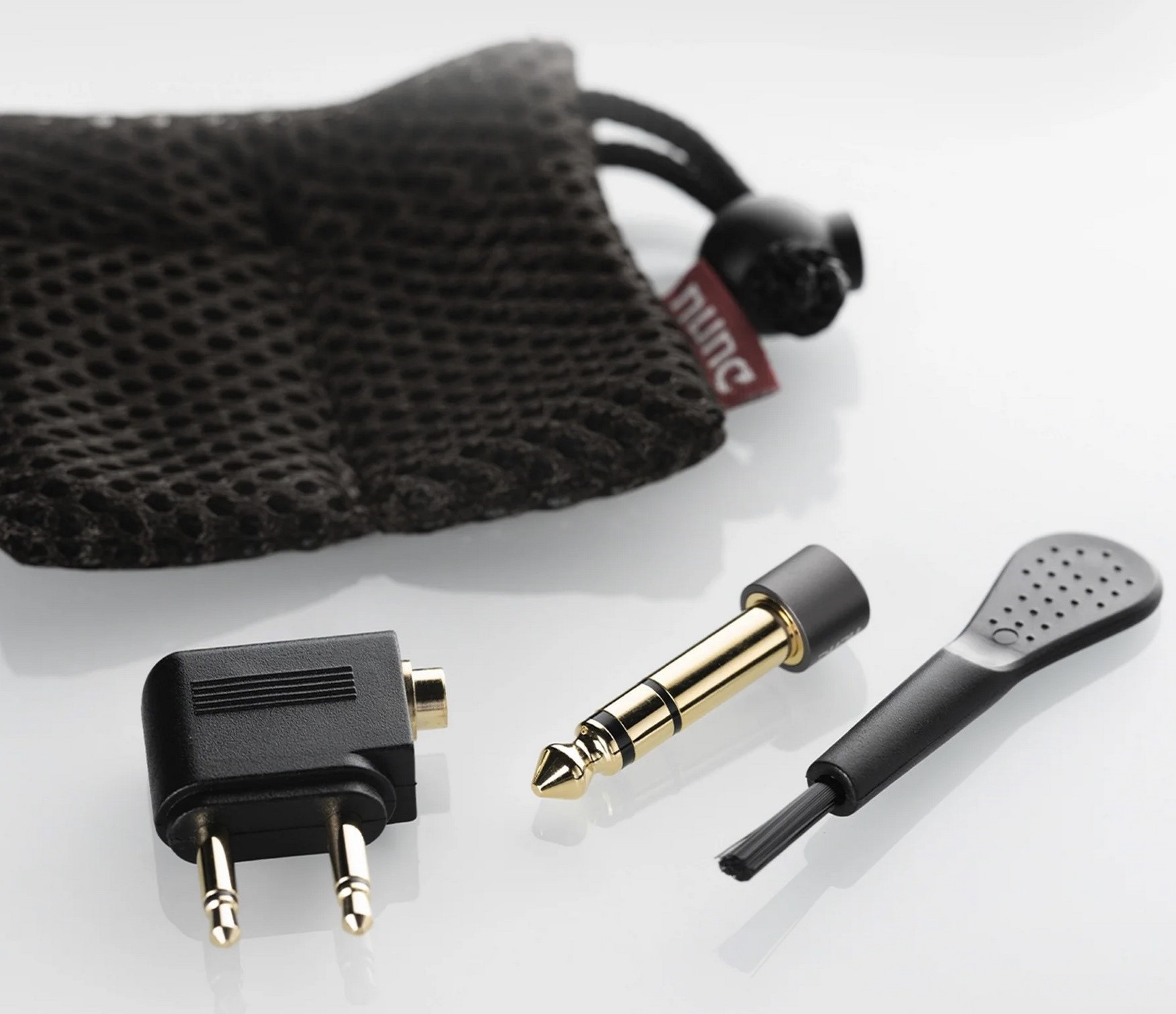
The supplied accessory package is also part of Kaoru’s usefulness. The inclusion of a Pelican 1010 protective case indicates attention to safe storage and transport. Multiple ear tip options, including SpinFit CP100 and DUNU S&S tips, give listeners ways to fine-tune fit and seal without immediately seeking third-party accessories. Cleaning tools, additional accessories, and storage solutions round out a package that treats the IEM as equipment to be maintained over time. For a $1,699 earphone, that completeness is not merely convenient; it supports the idea that Kaoru is intended for regular, careful use.
Who the DUNU Kaoru is most suitable for
The Kaoru is best matched to listeners who place vocals, midrange realism, and tonal balance high on their priority list. It is likely to be especially interesting to people who listen to vocal-driven music, acoustic recordings, singer-songwriter material, jazz vocals, choral works, podcasts, or any content where clarity and natural body in the voice are central to the experience. Its documented focus on coherence also makes sense for users who dislike fragmented or overly showy multi-driver tuning.
It may also appeal to professionals or serious hobbyists who want a universal IEM influenced by monitoring priorities, without moving into a custom-fit product. The ergonomic housing, sound tube design, and broad accessory set all support the idea of a product intended for repeatable use rather than occasional listening. Those who value an understated design and a complete carry-and-care package will likely see additional appeal.
Kaoru is less obviously aimed at listeners who want a bass-heavy presentation, a highly colored signature, or maximum spectacle from the first few seconds of listening. It is also not the most straightforward choice for buyers who prioritize open cable interchangeability, because the FitEar proprietary connector narrows cable compatibility. In that sense, Kaoru’s strengths are tied to a specific set of values: balance over emphasis, refinement over flash, and system integrity over universal modularity.
Positioning in the high-end IEM market
At $1,699, the DUNU Kaoru is firmly positioned in the upper tier of universal in-ear monitors. That price places expectations on more than driver count. A product at this level needs a strong identity, careful execution, and a convincing ownership package. Kaoru’s documented attributes give it that identity: six balanced armatures, FitEar collaboration, a midrange-led tuning philosophy, ergonomic construction, an oval three-layer sound tube, and a premium accessory set.
Its market appeal is therefore not based on being the most radical concept or the most heavily specified design imaginable. Instead, it offers a focused interpretation of what a high-end universal IEM can be when vocal accuracy and tonal organization guide the engineering. For buyers who already know what they want from an IEM, that clarity of intent can be more persuasive than a long list of unrelated features.
The Kaoru also highlights a broader trend in premium personal audio: the move toward products designed around specific listening values. Rather than trying to satisfy every preference equally, it appears to prioritize the listener who wants precision, comfort, and a stable acoustic interface. That makes its proposition easier to understand and easier to match with the right system and user.
Conclusion
The DUNU Kaoru stands out as a high-end in-ear monitor with a well-defined purpose. Its strongest documented qualities are the DUNU and FitEar collaboration, six balanced-armature configuration, midrange-focused tuning philosophy, ergonomic lightweight housing, oval three-layer sound tube, FitEar Cable 013 with Oyaide 3.5 mm plug, and a practical accessory package that includes protective storage, multiple ear tips, and maintenance tools. It is best suited to listeners who value vocal clarity, tonal balance, coherent driver integration, and long-session usability over exaggerated bass or flashy tuning. For the right owner, Kaoru’s appeal is its discipline: a premium universal IEM designed around accuracy, comfort, and a mature sense of balance.