
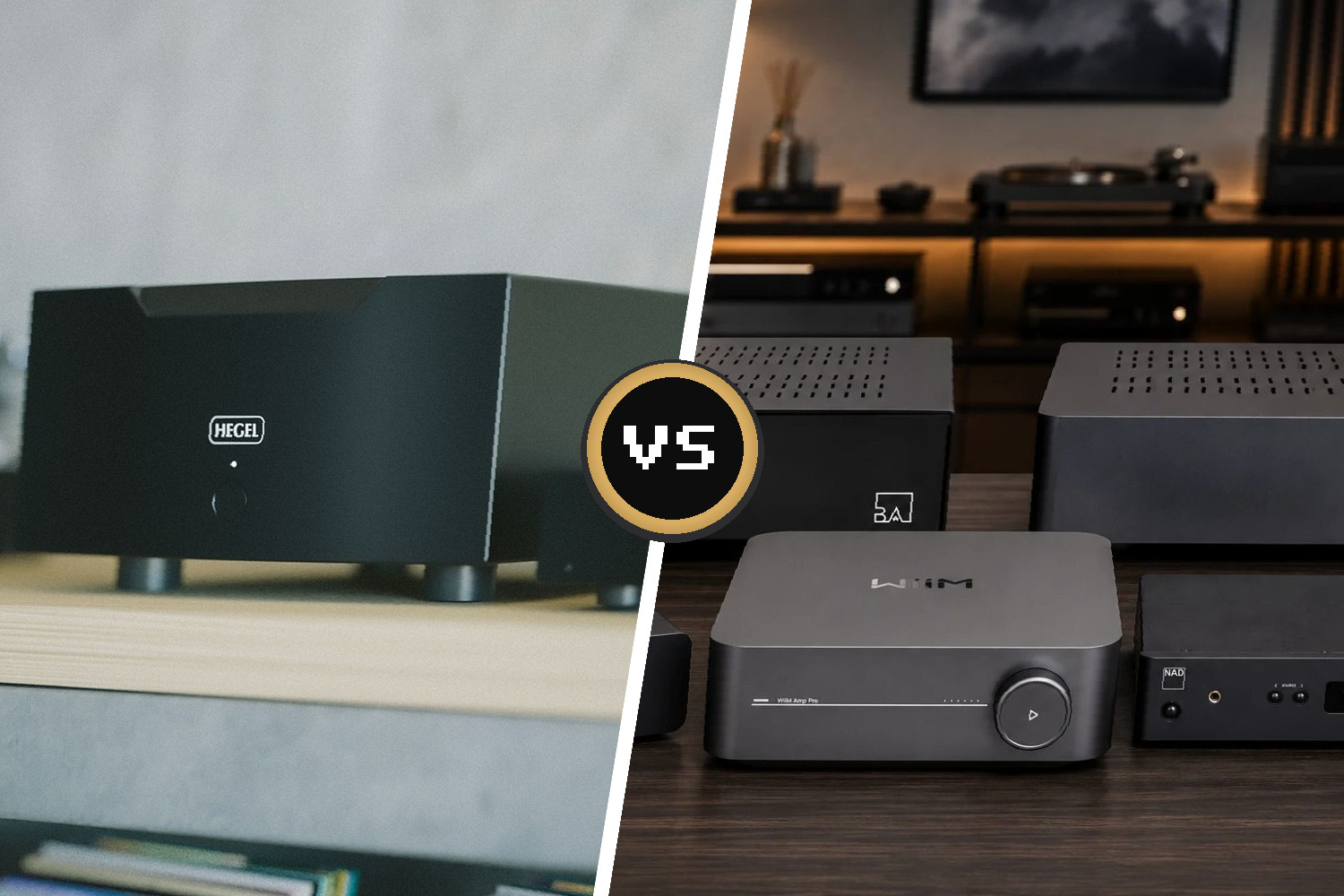
This is not a conventional amplifier shootout between two similarly packaged boxes. On one side sits the Hegel H30A, an extreme high-end power amplifier built around overwhelming headroom, physical mass, minimalist Scandinavian design, and the ability to operate either as a very powerful stereo amplifier or as a no-compromise mono amplifier. On the other side is the modern Class D movement: a broad field of compact, efficient, increasingly sophisticated amplifiers built around platforms such as Texas Instruments TPA3255, Purifi Eigentakt, Hypex NCx500 and Nilai, and GaN-based switching designs.
That contrast makes the comparison useful. The H30A represents the traditional high-end separates mindset taken to a very serious level: big chassis, huge power supply, vibration-damped construction, separate preamplification, and a focus on removing the amplifier as a limitation. Modern Class D represents a different path: high efficiency, low heat, smaller chassis, strong measured performance, and in some cases DACs, streaming, HDMI ARC, room correction, phono stages, and multi-room capability in a single product.
The right choice depends less on ideology than on the system you are building. If you own genuinely demanding loudspeakers and want an amplifier that behaves as if power is never a question, the H30A speaks directly to that ambition. If you want high performance with less heat, less mass, lower entry cost, or a more integrated feature set, today’s best Class D amplifiers make a powerful case.
Hegel H30A: A High-End Power Amplifier Built to Remove Limits
The Hegel H30A is described as an extreme high-end power amplifier rather than a conventional hi-fi component. Its defining specification is its mono output: 1100 watts when run as a monoblock. Hegel also allows the amplifier to be used in stereo, where it delivers well over 2 x 300 watts into 8 ohms. That dual-mode flexibility is central to its appeal. A listener can start with one H30A in stereo and later add a second unit, switching both to mono for a 2 x 1100-watt setup.
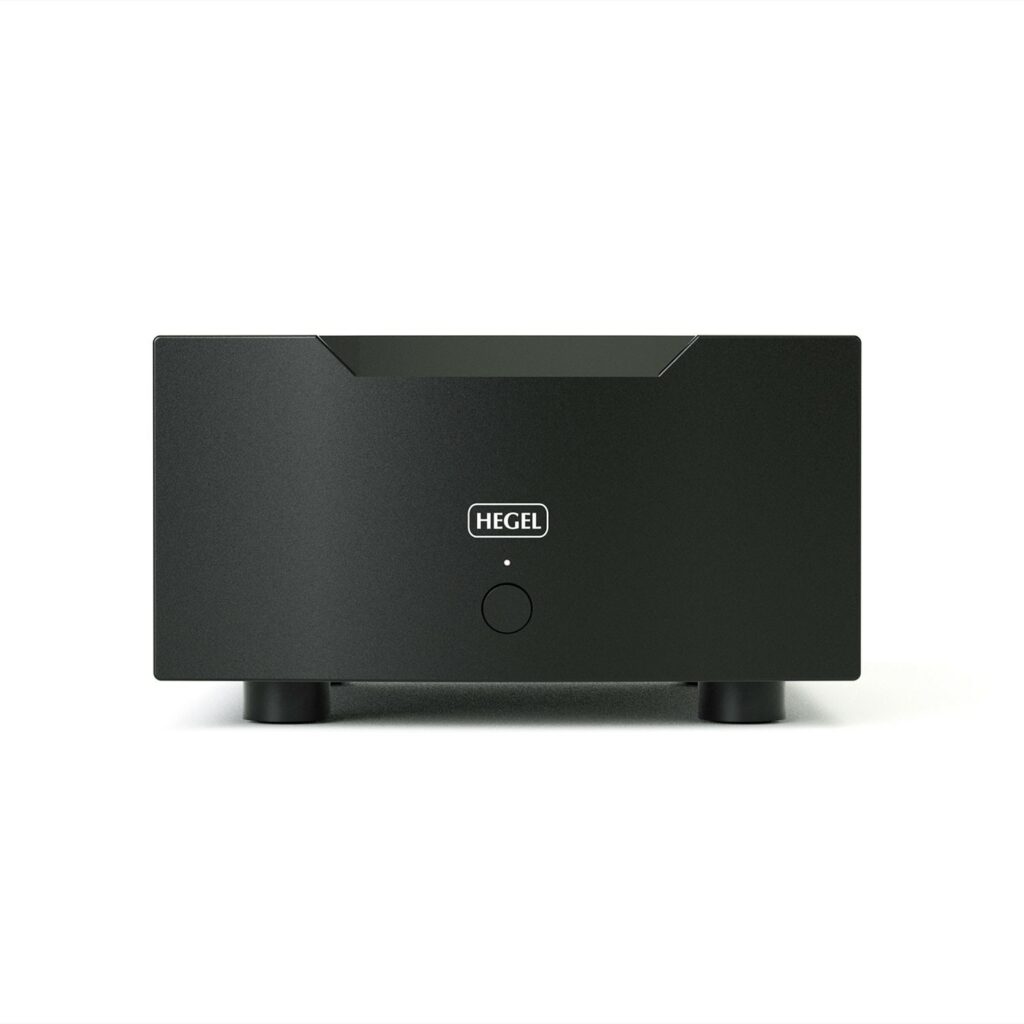
Construction is deliberately serious. The amplifier weighs 47 kilograms and uses a rigid chassis with thick aluminum, vibration-damped cabinetry, upgraded internal components, and a significantly upgraded power supply compared with the previous generation. The design language is pure Hegel: black aluminum, minimal decoration, a front panel carrying only the logo, a power button, and a discreet LED. There is no theatrical styling, no feature clutter, and no attempt to look like anything other than a reference-grade power amplifier.
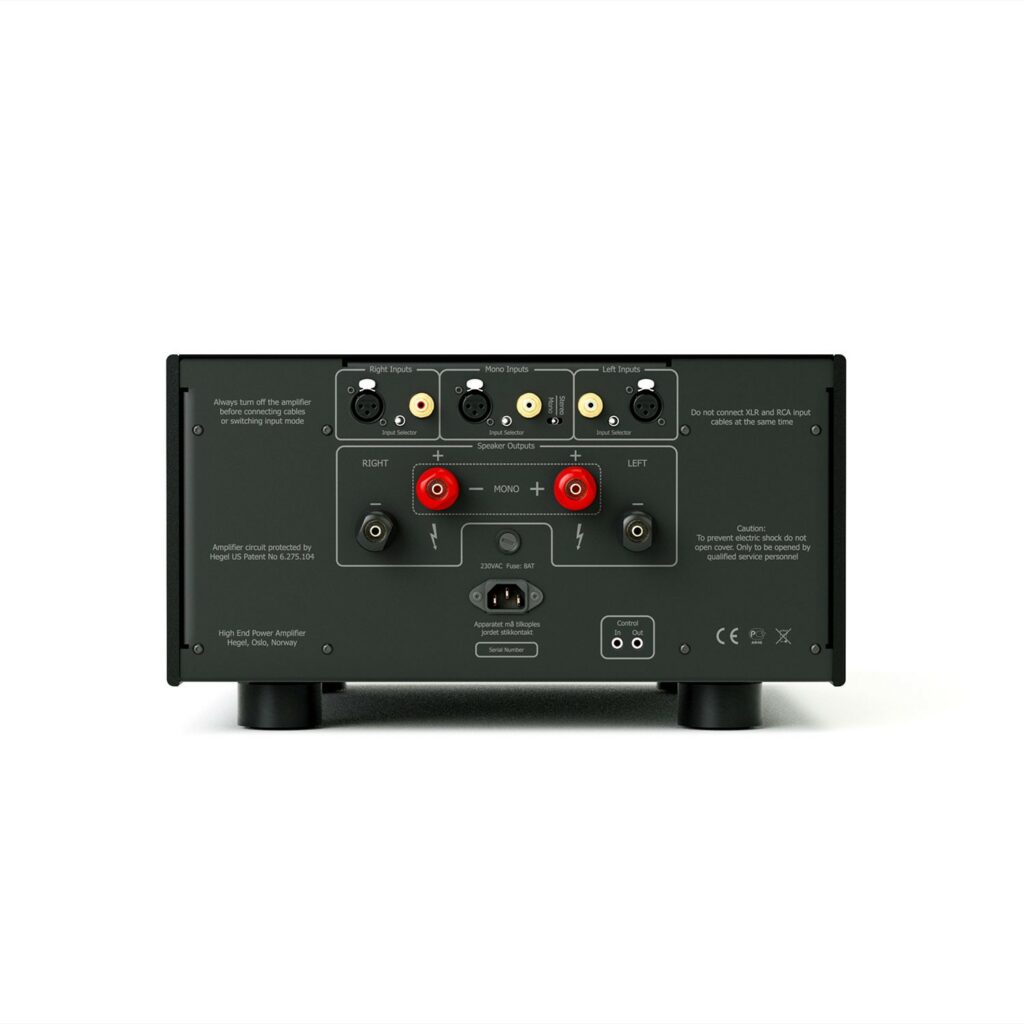
The H30A is not a DAC, streamer, phono stage, or lifestyle hub. It is a dedicated power amplifier that depends on the quality of the preamplifier and upstream source. Hegel’s own P30A preamplifier is presented as an obvious partner, both visually and sonically, but the H30A is also intended to work with other high-end components. The source material emphasizes that it does not impose a character so much as reveal what comes before it.

System matching is where the H30A’s purpose becomes clearest. It is positioned for genuinely serious loudspeakers, including examples such as Bowers & Wilkins 800 Series and DALI EPICON models. The point is not merely loudness. The H30A is described in terms of control: keeping loudspeakers under command, shaping deep bass rather than simply producing it, preserving dynamics without stress, and allowing micro-detail and soundstage scale to emerge without exaggeration. It is for systems where the amplifier must never be the bottleneck.
Pros
- Enormous mono output of 1100 watts, with stereo operation at well over 2 x 300 watts into 8 ohms
- Can be used first as a stereo amplifier and later expanded into a two-unit mono configuration
- 47kg chassis, thick aluminum construction, upgraded power supply, and improved internal components
- Designed for absolute loudspeaker control rather than merely headline power
- Minimalist, non-flashy industrial design that matches Hegel’s reference separates aesthetic
- Natural partner for the Hegel P30A preamplifier and serious high-end loudspeakers
Cons
- Requires separate preamplification and source components; it is not an integrated amplifier, DAC, or streamer
- Physically large and heavy, so placement and rack support matter
- Its capabilities are likely excessive for modest speakers, small rooms, or casual systems
- No supported information here on digital inputs, wireless features, room correction, or app-based control
Best for: Listeners building a reference separates system around demanding loudspeakers, where control, headroom, upgradeability from stereo to mono, and amplifier authority are more important than compactness or integrated features.
Read the original Stereoindex article →
Modern Class D Amplifiers: Efficiency, Integration, and New-Generation Platforms
Modern Class D amplification has moved far beyond its earlier reputation for sterility, brightness, and load-dependent behavior. The core operating principle is very different from Class A or Class AB. Instead of continuously amplifying the waveform, Class D output transistors switch on and off at extremely high frequencies, typically between 300 kHz and 800 kHz. Pulse Width Modulation encodes the music signal into fast switching pulses, and an output filter reconstructs the analog waveform for the loudspeakers.
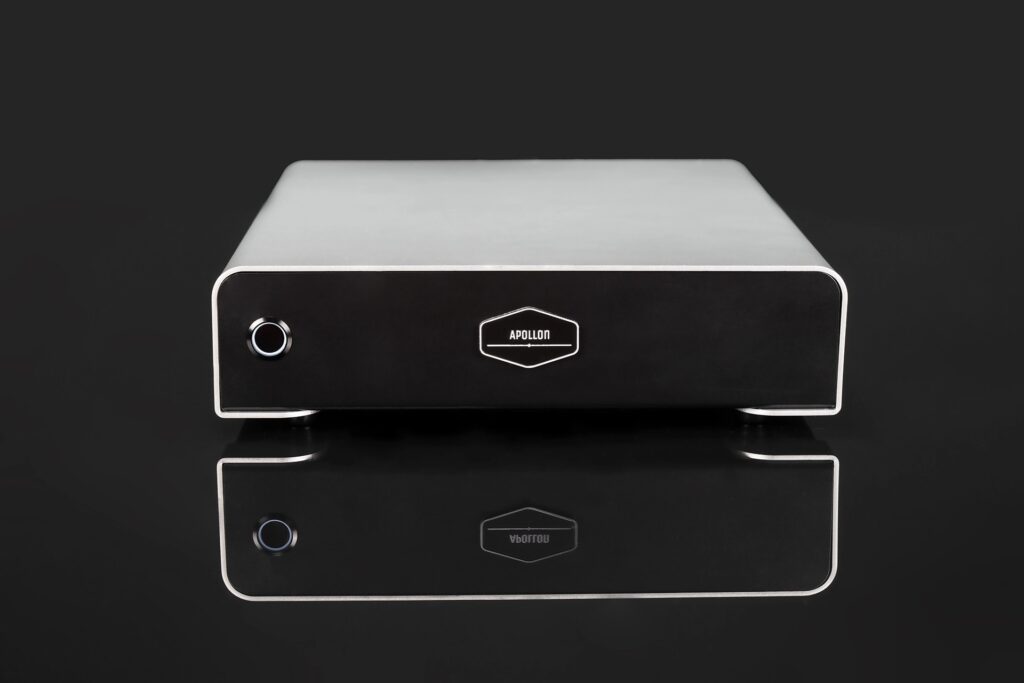
The practical advantages are significant. Class D amplifiers can exceed 90 percent efficiency, generate far less heat, and fit into smaller chassis than traditional high-power designs. That has made the category attractive not only for budget desktop amplifiers and compact active speakers, but also for serious high-end systems. The strongest modern implementations address earlier weaknesses through advanced feedback, improved load independence, faster switching devices, and better control of output-stage errors.
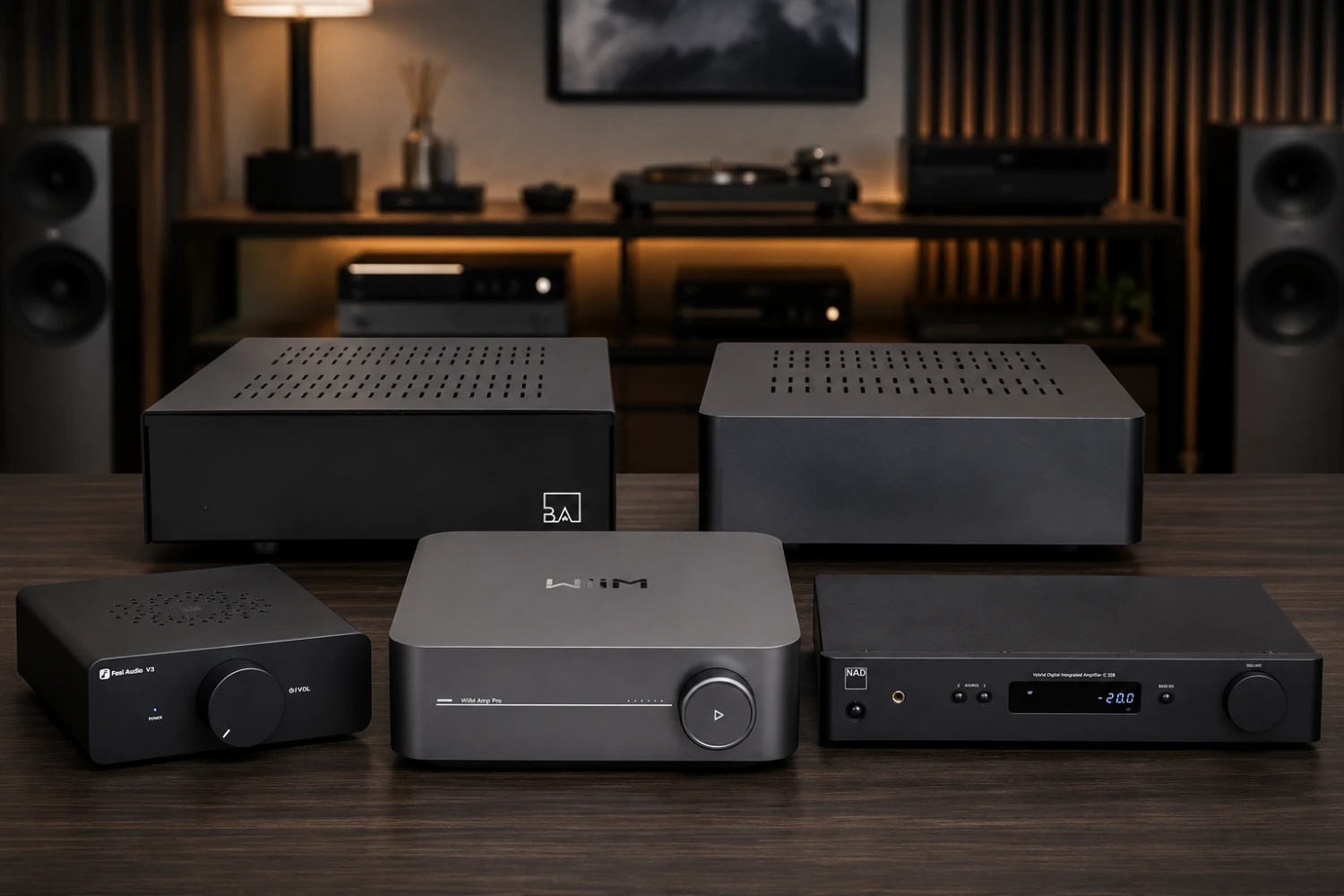
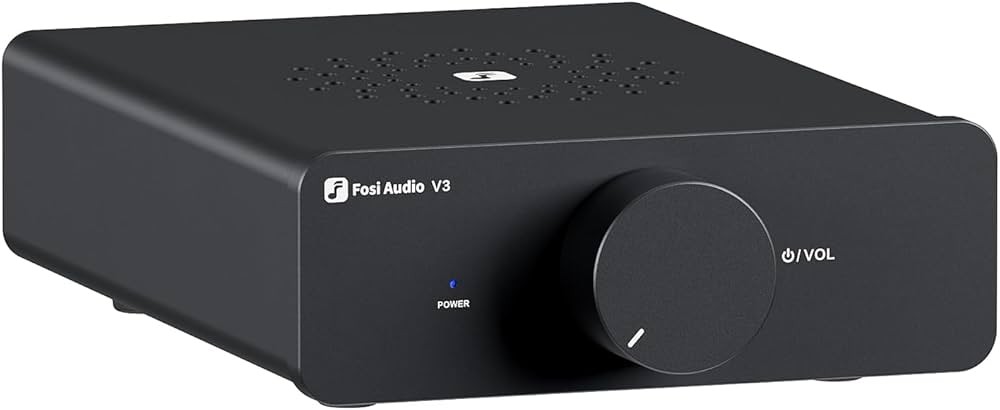
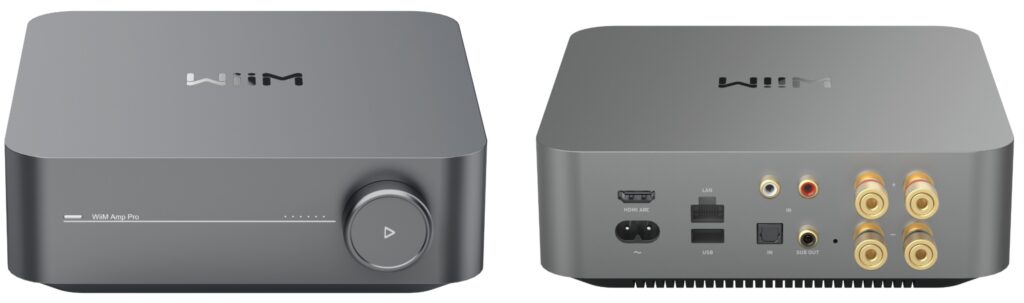
The category is broad. At the budget end, the Fosi Audio V3 uses the Texas Instruments TPA3255 platform, includes WIMA capacitors and premium inductors, and offers upgradeable op-amps. The WiiM Amp combines amplification, DAC functionality, streaming, HDMI ARC, and support for AirPlay 2, Chromecast, Spotify Connect, Tidal Connect, and multi-room audio. NAD’s C 328 adds HybridDigital amplification with Hypex technology, Bluetooth, DAC functionality, and a built-in phono stage.
Higher up, Buckeye Amps offers Hypex NCx500 and Purifi Eigentakt-based models, including the NCx500 Stereo with up to 700 watts into 4 ohms and the Purifi 1ET6525SA for listeners seeking neutrality and consistency across loudspeaker impedance. Peachtree’s Stereo X uses Hypex NCore X technology, a 1.2 kW power supply, and balanced plus single-ended connectivity. Orchard Audio’s Starkrimson Stereo Ultra 2.0 uses GaN technology in a fully balanced architecture, while the NAD M33 V2 combines Purifi Eigentakt amplification with an ESS ES9039PRO DAC, BluOS streaming, Dirac Live room correction, multi-room functionality, and a phono stage.
That variety makes Class D less a single product than a design universe. Some models are pure power amplifiers for separates systems; others are complete hi-fi hubs. Prices in the supplied examples span from the ultra-affordable Fosi Audio V3 to high-end integrated platforms such as the NAD M33 V2. The common themes are efficiency, compactness, and increasingly credible high-performance audio.
Pros
- Very high efficiency, often exceeding 90 percent, with minimal heat generation
- Can deliver strong power from smaller, lighter chassis than traditional high-power amplifiers
- Modern Purifi, Hypex, and GaN designs address many historic Class D weaknesses
- Wide range of prices and formats, from budget power amps to high-end all-in-one systems
- Some models include DACs, streaming, HDMI ARC, Bluetooth, phono stages, room correction, and multi-room functions
- Strong value options exist, including Buckeye, Fosi, WiiM, NAD, Peachtree, and Orchard models highlighted in the source material
Cons
- Performance and feature sets vary heavily by implementation, so the category cannot be judged as one uniform sound or product
- Budget Class D models are not equivalent to high-end Purifi, Hypex, or GaN-based amplifiers
- Some models prioritize integration and convenience rather than the no-compromise separates approach
- Listeners seeking the physical scale and upgrade path of large mono power amplifiers may find compact Class D less emotionally or systemically satisfying
Best for: Listeners who want efficient, compact amplification with strong modern performance, or who prefer integrated features such as streaming, DAC functionality, HDMI ARC, room correction, phono input, or multi-room support depending on model.
Read the original Stereoindex article →
Hegel H30A vs Modern Class D Amplifiers: Direct Differences
The Hegel H30A and modern Class D amplifiers approach the same problem from opposite directions. The H30A assumes a traditional reference system: separate source, separate preamplifier, serious loudspeakers, and a power amplifier whose job is to provide unflappable current delivery and control. It is large, heavy, visually restrained, and unapologetically specialized. Nothing in the supplied material suggests lifestyle integration, wireless control, or built-in digital processing. That absence is not an oversight; it is part of the concept.
Modern Class D amplification, by contrast, is defined by breadth. A Fosi Audio V3 is a low-cost, compact entry point built around TI’s TPA3255 platform. A WiiM Amp is a compact modern hub with streaming, DAC functionality, HDMI ARC, and multi-room features. A Buckeye NCx500 or Purifi model is a performance-focused separates amplifier. An Orchard Audio Starkrimson Stereo Ultra 2.0 showcases GaN switching technology. A NAD M33 V2 combines Purifi Eigentakt amplification with high-end DAC, BluOS streaming, Dirac Live, phono, and multi-room capability. Comparing the Hegel to Class D therefore means comparing a single extreme specialist to a family of increasingly capable alternatives.
In power philosophy, the H30A is about never asking whether the amplifier is enough. Its 1100-watt mono rating and stereo capability of well over 2 x 300 watts into 8 ohms place it squarely in the realm of demanding loudspeakers and high-headroom playback. The Buckeye NCx500 Stereo’s cited output of up to 700 watts into 4 ohms also shows how far modern Class D can go, but Class D power depends on the specific platform, power supply, and implementation. There is no single Class D output figure that represents the whole category.
In system-building terms, the H30A is simpler but less convenient: feed it from a high-quality preamplifier and let it drive loudspeakers with authority. Modern Class D can be just as simple if you choose a pure power amplifier, or dramatically more integrated if you choose something like the WiiM Amp or NAD M33 V2. That flexibility is one of Class D’s major advantages. It can live on a desk, in a living-room TV system, in a minimalist streaming setup, or in a serious separates chain.
The biggest practical difference may be physical and operational. The H30A’s 47kg chassis, thick aluminum construction, and massive power supply communicate old-school high-end engineering. Modern Class D’s efficiency means less heat, less bulk, and easier placement. For some systems, that matters more than absolute amplifier mass. For others, especially systems built around flagship floorstanders and dedicated listening rooms, the Hegel’s sheer authority and upgrade path to dual mono operation will be far more compelling.
| Category | Hegel H30A: Removing Limits From High-End Loudspeakers | Best Class D Amplifiers of 2026: From Budget Hi-Fi to High-End Excellence | Edge |
|---|---|---|---|
| Product type | Dedicated high-end power amplifier with stereo or mono operation | Broad category including power amplifiers, integrated amplifiers, and all-in-one streaming systems | Depends on system goal |
| Power approach | 1100 watts in mono; well over 2 x 300 watts into 8 ohms in stereo | Varies by model; examples include Buckeye NCx500 Stereo with up to 700 watts into 4 ohms | Hegel for stated mono headroom; Class D varies widely |
| Amplifier technology | Source describes power supply, components, chassis, and control, but not amplifier topology | Switching amplification using PWM, typically 300 kHz to 800 kHz; platforms include TI, Purifi, Hypex, GaN, and ICEpower | Class D for documented technical variety |
| Efficiency and heat | No supported efficiency or heat-generation specification provided | Often exceeds 90 percent efficiency with minimal heat generation | Modern Class D |
| Construction | 47kg rigid chassis, thick aluminum, vibration-damped cabinet, upgraded power supply | Generally smaller and lighter by design; construction varies significantly by product | Hegel for physical overbuild |
| Streaming and DAC features | No built-in DAC or streaming features described | Available on selected models such as WiiM Amp and NAD M33 V2 | Modern Class D |
| Room correction | No room correction described | NAD M33 V2 includes Dirac Live room correction | Modern Class D, model-dependent |
| Connectivity | No specific input types supplied; intended for use with a preamplifier such as Hegel P30A | Varies: examples include HDMI ARC, Bluetooth, balanced and single-ended connections, phono stages, and streaming protocols | Modern Class D for feature breadth |
| Upgrade path | Start with one in stereo, add a second for mono operation | Upgrade path depends on model; category ranges from budget units to high-end integrated and power amplifiers | Hegel for clear stereo-to-mono path |
| Ideal loudspeakers | Demanding high-end loudspeakers, with examples including Bowers & Wilkins 800 Series and DALI EPICON models | Ranges from desktop and budget systems to demanding loudspeakers with high-end Purifi, Hypex, or GaN models | Depends on chosen amplifier and speakers |
Verdict: Choose the Hegel for Uncompromising Control, Class D for Efficiency and System Flexibility
The Hegel H30A is the choice for the listener who wants a dedicated high-end power amplifier to disappear as a limitation. Its case is built on enormous headroom, loudspeaker control, 47kg construction, and a clear path from stereo operation to dual-mono authority. It belongs in a serious separates system with a high-quality preamplifier and loudspeakers capable of exposing what such an amplifier can do. If your system revolves around demanding flagship floorstanders and you want bass control, dynamic ease, and the confidence of massive reserves, the H30A is exactly the kind of amplifier that makes sense.
Modern Class D amplifiers win on flexibility, efficiency, and breadth of choice. They can be inexpensive and tweakable, like the Fosi Audio V3; highly connected, like the WiiM Amp; traditional but practical, like the NAD C 328; performance-focused, like Buckeye’s Hypex and Purifi models; GaN-based and high-end, like the Orchard Audio Starkrimson Stereo Ultra 2.0; or fully integrated and room-corrected, like the NAD M33 V2. The category is no longer defined by compromise. Its best implementations are technically ambitious, compact, efficient, and musically credible.
There is no single universal winner because these are not trying to solve exactly the same problem. The Hegel H30A is a specialist instrument for removing power and control limits in a high-end separates chain. Modern Class D is a family of solutions that can simplify systems, reduce heat and size, lower entry cost, or deliver advanced digital features while still reaching serious performance levels. Choose the Hegel if your priority is absolute amplifier authority in a reference system. Choose modern Class D if your priority is efficiency, integration, value range, or compact high-performance design.
Frequently asked questions
Is the Hegel H30A an integrated amplifier?
No. The supplied material presents the H30A as a dedicated power amplifier. It is intended to be used with a preamplifier, with Hegel’s P30A mentioned as an obvious partner.
Can the Hegel H30A be used in stereo?
Yes. One H30A can run in stereo, delivering well over 2 x 300 watts into 8 ohms. It can also be used as a mono amplifier producing 1100 watts, allowing a later upgrade to two mono units.
Do modern Class D amplifiers all sound or perform the same?
No. The category includes many platforms and implementations, from TI TPA3255 budget amplifiers to Purifi Eigentakt, Hypex NCx500 and Nilai, and GaN-based high-end designs. Features, power, connectivity, and performance vary significantly.
Which option is better for streaming and TV use?
Modern Class D has the clear advantage when you choose an integrated model with the right features. The WiiM Amp includes streaming, DAC functionality, HDMI ARC, AirPlay 2, Chromecast, Spotify Connect, Tidal Connect, and multi-room audio. The Hegel H30A does not include such functions in the supplied material.
Which is better for very demanding loudspeakers?
The Hegel H30A is specifically positioned for demanding high-end speakers and massive control, with examples including Bowers & Wilkins 800 Series and DALI EPICON models. Some high-end Class D amplifiers are also described as stable and powerful with difficult loudspeakers, but this depends on the model.
Is Class D only for budget systems?
No. The supplied Class D examples range from very affordable amplifiers to high-end models such as the Orchard Audio Starkrimson Stereo Ultra 2.0 and NAD M33 V2. Modern Purifi, Hypex, and GaN designs are presented as serious high-performance platforms.
One 47kg Hegel Statement Against the New Class D Establishment
Two products. One winner. You decide.

Hegel H30A: Removing Limits From High-End Loudspeakers