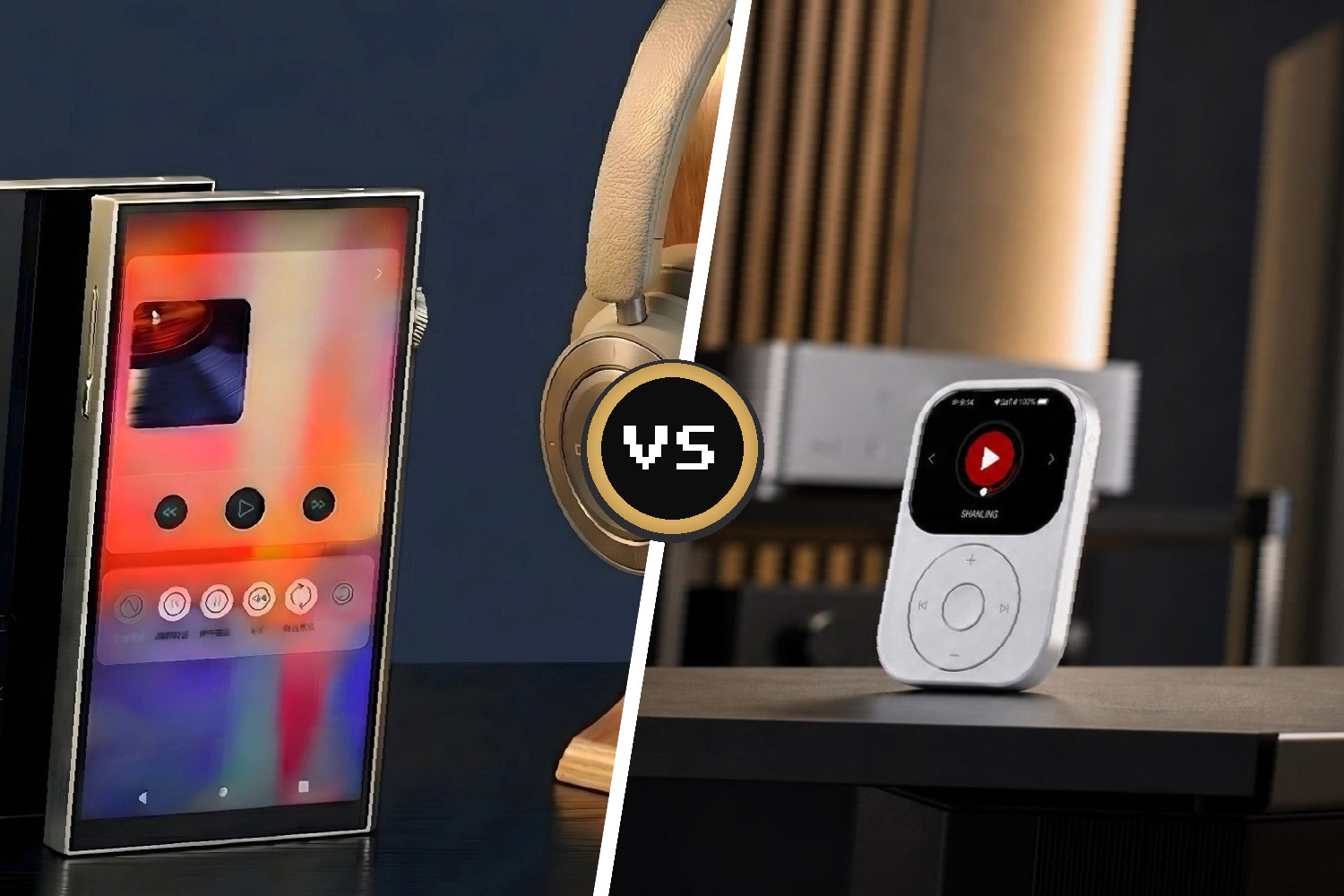

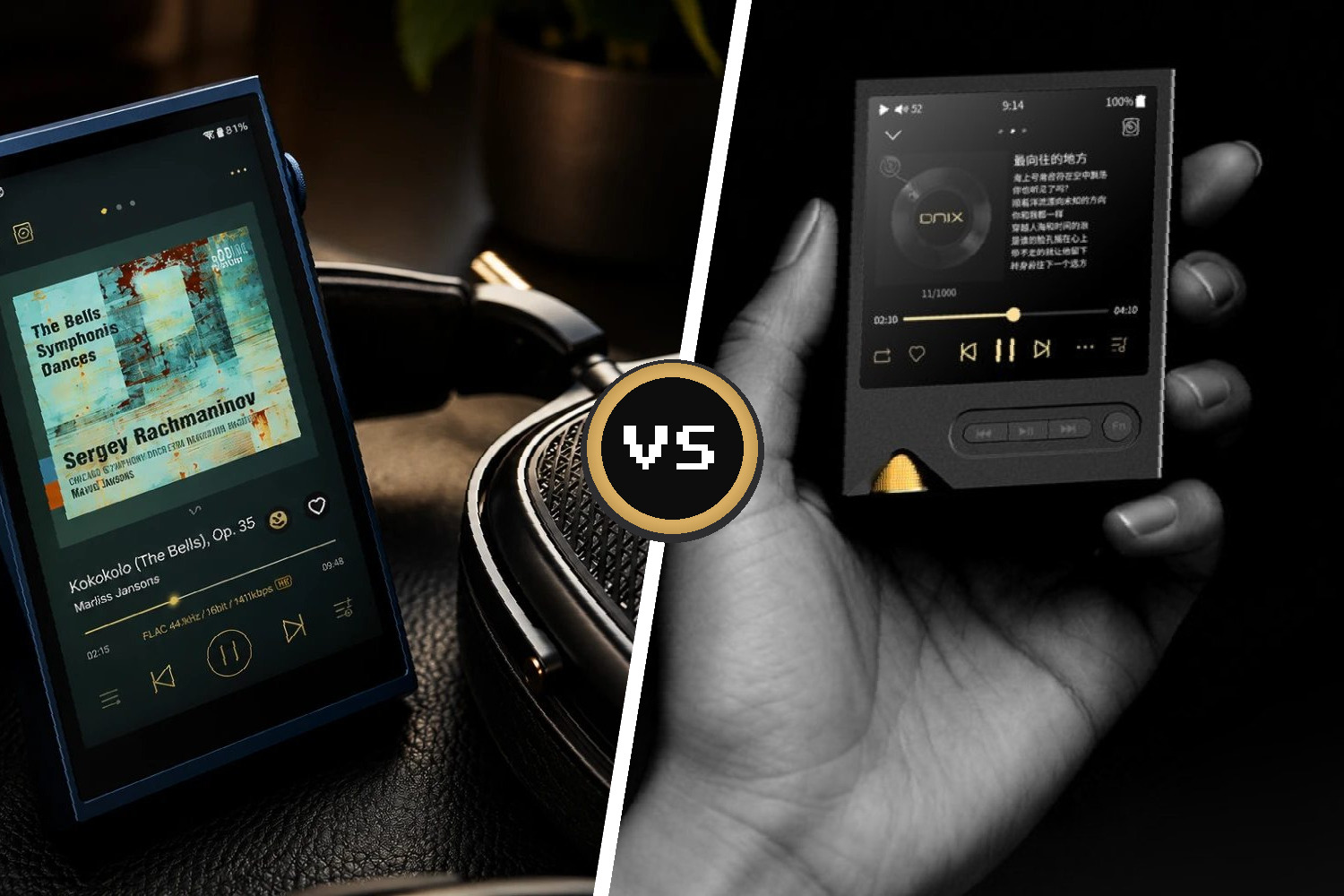
The Shanling M7T Master and Onix Tocata XM2 both sit in the dedicated portable music player category, but they are not trying to win the same argument. The Shanling is a refinement of an existing hi-res player platform, retaining a dual AKM DAC architecture and miniature vacuum tubes while revising the audio path, internal conductors and balanced output stage. The Onix is a compact, specification-rich player built around a Cirrus Logic DAC, modern wireless support, Tidal streaming, USB DAC functionality and clearly stated power figures.
That makes this a useful comparison precisely because the two players draw attention to different buying priorities. The M7T Master is about an established platform being tuned and strengthened in key analog areas. The Tocata XM2 is about compactness, format reach, measured output claims, app control, network playback and flexible daily use. One reads like an audiophile circuit update; the other reads like a portable hub for local files, streaming and wired or wireless scenarios.
There is no need to force a single universal winner. A listener choosing a DAP to anchor a wired headphone setup may be drawn to the Shanling’s mixed digital-and-analog design and tube-equipped stage. A listener who wants a pocketable player with Wi-Fi, Bluetooth, AirPlay, DLNA, Tidal and published output specifications will find the Onix easier to evaluate before purchase. The better choice depends on how you listen, what you connect, and whether your priority is audio-path refinement or all-round portable functionality.
Shanling M7T Master: A focused audio-path revision of the M7T
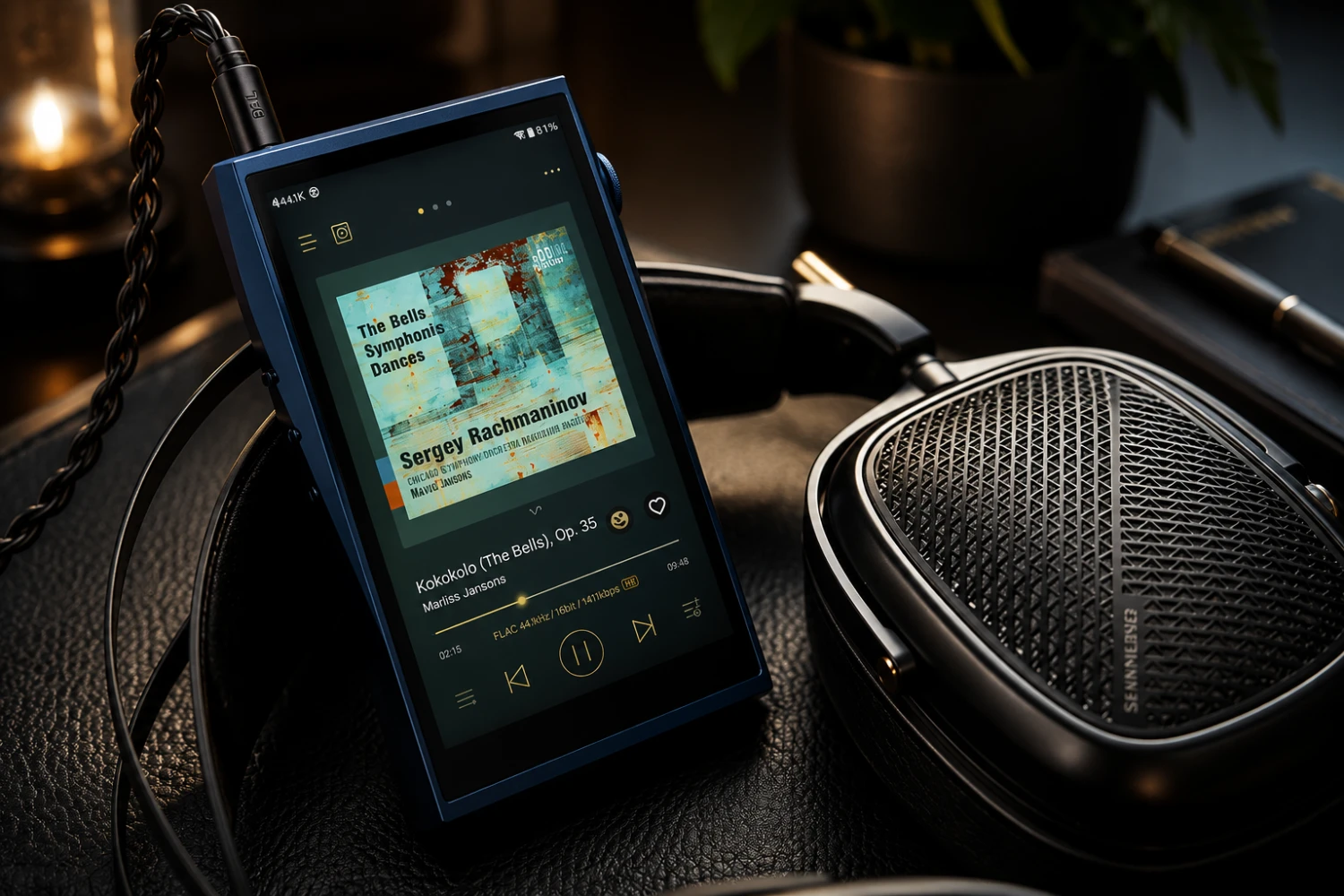
The Shanling M7T Master is not presented as a completely new DAP platform. It is a refined edition of the M7T, positioned as a generational midpoint update rather than a full redesign. That matters because the player keeps the core concept and component foundation of the original M7T, then applies changes to the parts of the circuit Shanling wanted to retune: the audio path, the amplifier section, internal conductors and balanced output stage.
At the digital conversion stage, the M7T Master continues with two AK4498EX DAC chips from Asahi Kasei, paired with an AKM AK4191 used as a dedicated digital filter and delta-sigma modulator. This multi-chip approach separates key parts of the digital processing and conversion chain rather than placing everything into a single simplified implementation. Shanling has deliberately not framed the Master as a new DAC-platform product; the story is implementation, not a fresh converter headline.
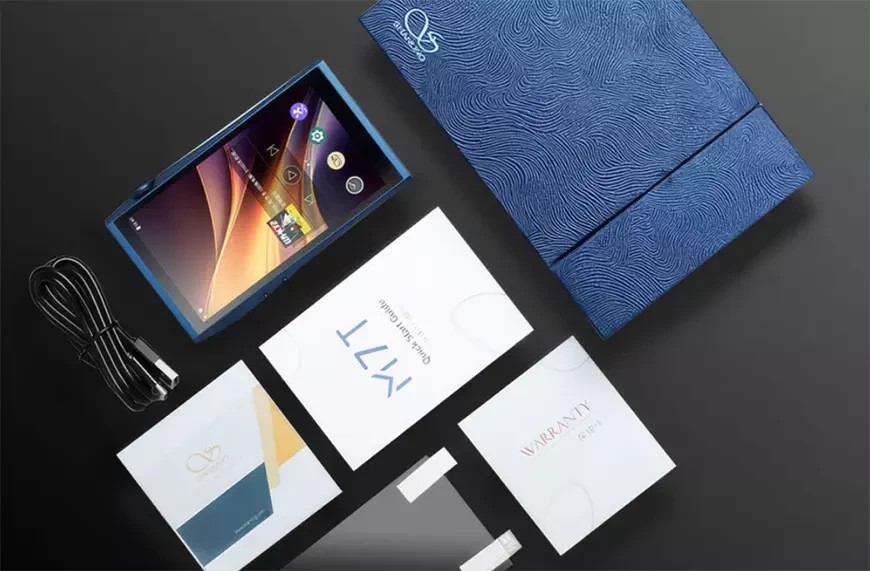
The analog side remains one of the most distinctive parts of the design. The M7T Master retains the pair of miniature JAN6418 vacuum tubes used in the M7T. Combining modern portable high-resolution playback with a tube-equipped analog stage is still unusual in a compact player, and it gives the Shanling a clear identity against more conventional solid-state DAPs. For the Master edition, Shanling has adjusted the amplifier section and introduced ultra-high-purity copper conductors inside the audio circuit.

Shanling’s stated voicing target is evolutionary rather than radical. The original M7T’s neutral and straightforward character is said to be preserved, while the Master version is intended to sound more saturated, substantial and relaxed. That wording points toward refinement rather than a change of personality. Practical results will depend on headphones, output choice and listener preference, but the design direction is clear: Shanling is trying to keep the directness of the M7T while giving the presentation more body and calm.
The other headline change is a more powerful balanced output. Shanling has not published additional output specifications in the announcement, so this cannot be compared numerically with the Onix Tocata XM2. Even so, the emphasis is significant. Balanced drive is often important to portable users running more demanding in-ear monitors or headphones, and Shanling presents the stronger balanced stage as part of the revised amplifier path rather than a cosmetic feature update.
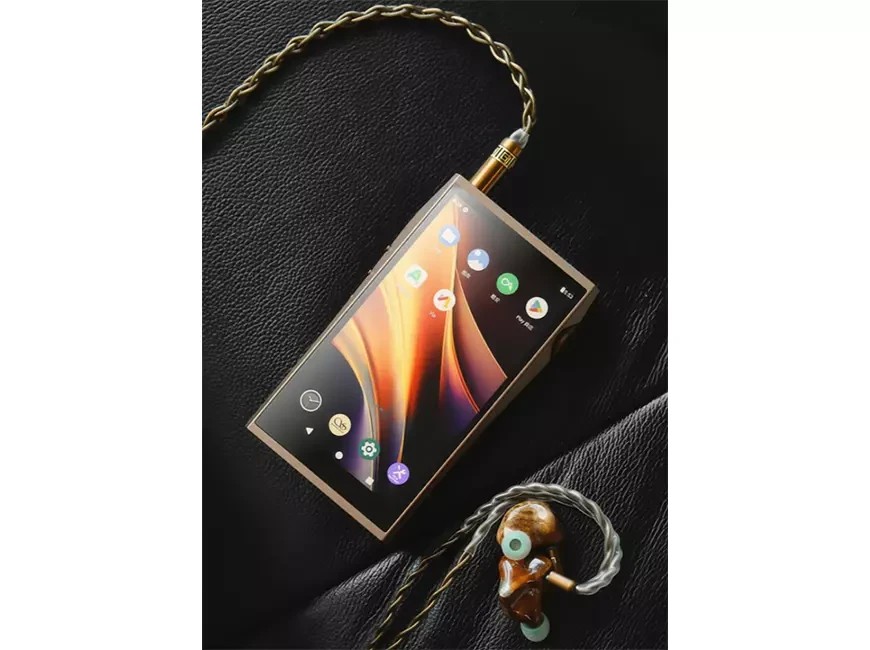
In value terms, the M7T Master is aimed at buyers who were already considering the M7T but want the latest version with the revised internal audio circuit and stronger balanced output. Shanling states that recommended pricing remains in line with the standard M7T, though no USD price is listed here. The value proposition is therefore not based on a newly expanded feature sheet. It is based on a recognizable M7T platform with targeted audio engineering changes.
Pros
- Dual AKM conversion architecture using two AK4498EX DAC chips with an AK4191 digital filter and delta-sigma modulator
- Retains the distinctive pair of miniature JAN6418 vacuum tubes in the analog stage
- Revised amplifier section and ultra-high-purity copper conductors inside the audio circuit
- Stronger balanced output than the standard M7T, according to Shanling
- Clear upgrade path for listeners already interested in the M7T platform rather than a disruptive redesign
- Tuning direction is described as fuller, calmer and more substantial while preserving the original model’s direct character
Cons
- No published numerical balanced-output specification in the announcement, limiting direct power comparisons
- No detailed dimensions, weight, battery life, wireless features or streaming support are stated here
- Not a ground-up new platform, so buyers expecting a new DAC architecture may not see it as a major change
- Its appeal depends heavily on the value a buyer places on the revised audio path and tube-equipped design
Best for: Listeners who want a dedicated hi-res portable player with a refined AKM-based architecture, a tube-equipped analog stage and an upgraded balanced output, especially if they were already drawn to the original M7T concept.
Read the original Stereoindex article →
Onix Tocata XM2: A compact feature-led player with serious connectivity
The Onix Tocata XM2 approaches the DAP brief from a different angle. Onix, a sister brand of Shanling, has built the XM2 around compact dimensions, broad format support, modern network features and clearly specified headphone outputs. It is powered by the Ingenic X2000 platform and uses a Cirrus Logic CS4308P DAC chip. Unlike the Shanling, which is described mainly through its internal audio-path revision, the Onix arrives with a broad list of usability and connectivity details.
Physically, the Tocata XM2 is deliberately small. It measures 82 x 65 x 18 mm, weighs 140 grams and uses a square 3-inch 720p OLED touchscreen. It also includes physical control buttons and a volume knob, which is important for a portable player used in a pocket or bag where touch-only control can be awkward. Music storage is handled via microSD card, with support for capacities up to 2TB.
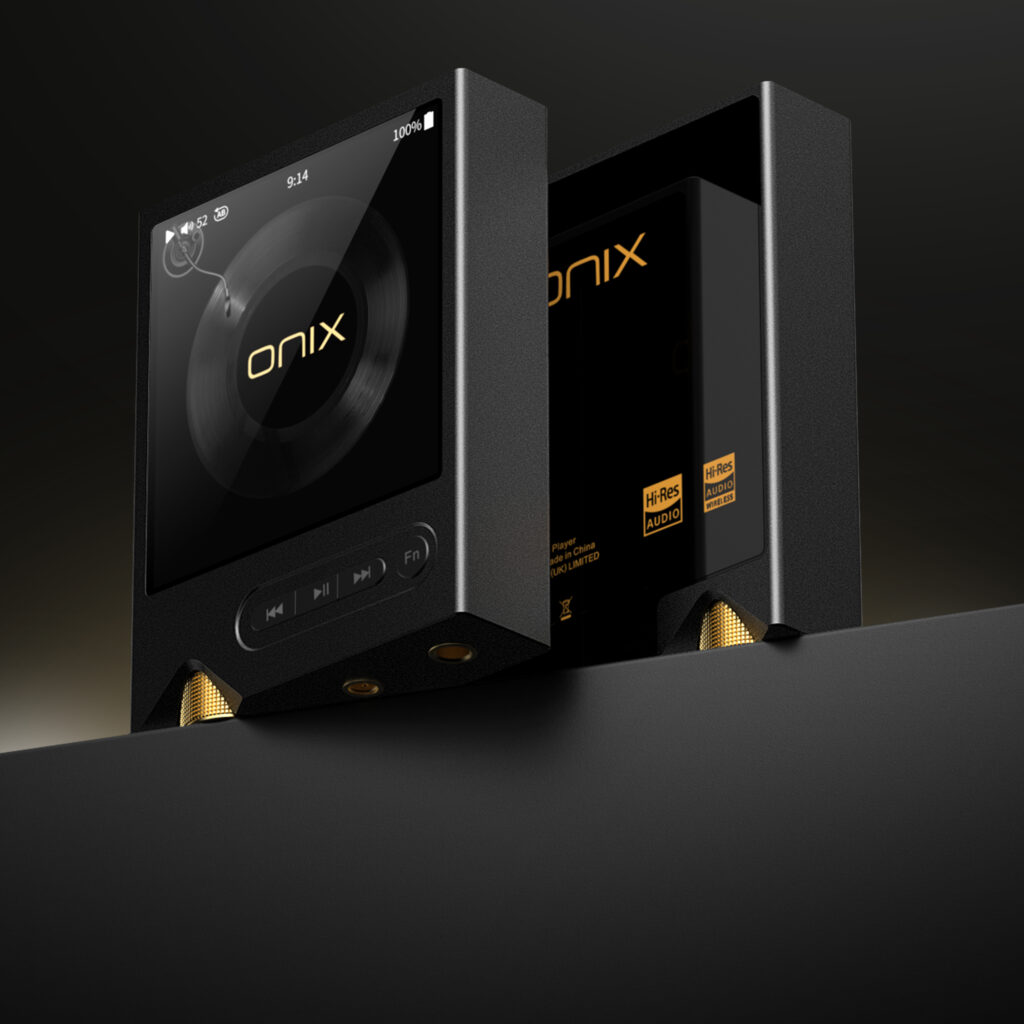
The XM2’s DAC implementation is based on Cirrus Logic’s CS4308P, an 8-channel chip that enables fully balanced hardware circuitry. Onix provides both a 3.5mm single-ended headphone output and a 4.4mm balanced headphone output. The balanced output is rated at up to 800mW into 32 ohms in high gain and 200mW into 32 ohms in low gain. The 3.5mm output is rated at up to 204mW into 32 ohms in high gain. Onix also lists a claimed total A-weighted harmonic distortion and noise figure of 0.0005%, an S/N ratio of 121dB, a noise floor of 114dB and output impedance of 0.7 ohms.
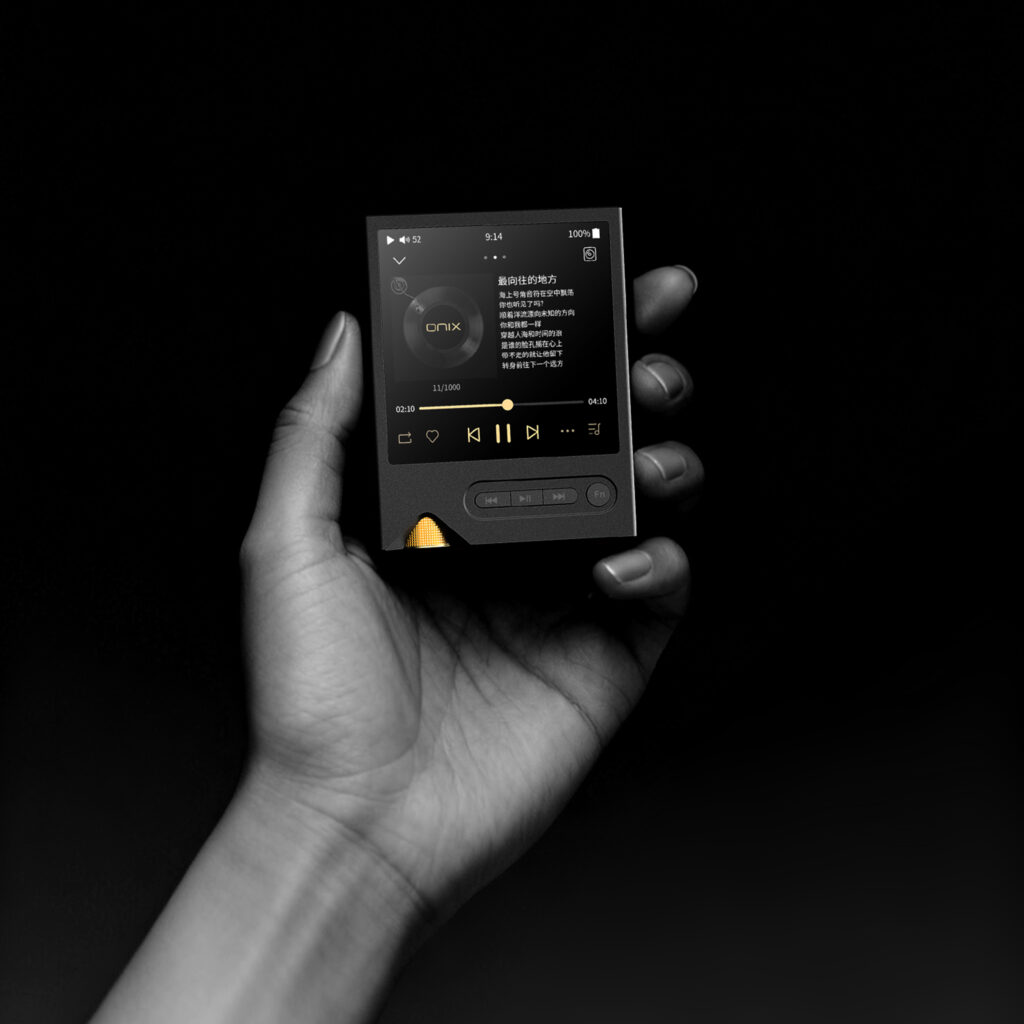
Format support is another major strength. The player supports modern file formats and resolutions up to PCM 768kHz/32-bit and DSD512. For local-file listeners with large high-resolution libraries, those ceilings are generous. For listeners who mix local storage with streaming, the XM2 includes Tidal streaming and Wi-Fi on both 2.4GHz and 5GHz bands. DLNA and AirPlay are also supported, giving it more than one route into a home or portable network playback setup.
Bluetooth is handled in two-way form over Bluetooth 5.2, with LDAC, aptX HD, aptX, SBC and AAC support. That two-way capability makes the Onix more flexible than a player that only transmits or only receives wirelessly. It can serve listeners using wireless headphones, but it can also participate in other Bluetooth-based scenarios depending on system layout. The XM2 can additionally function as a USB DAC and can provide digital audio output via USB.
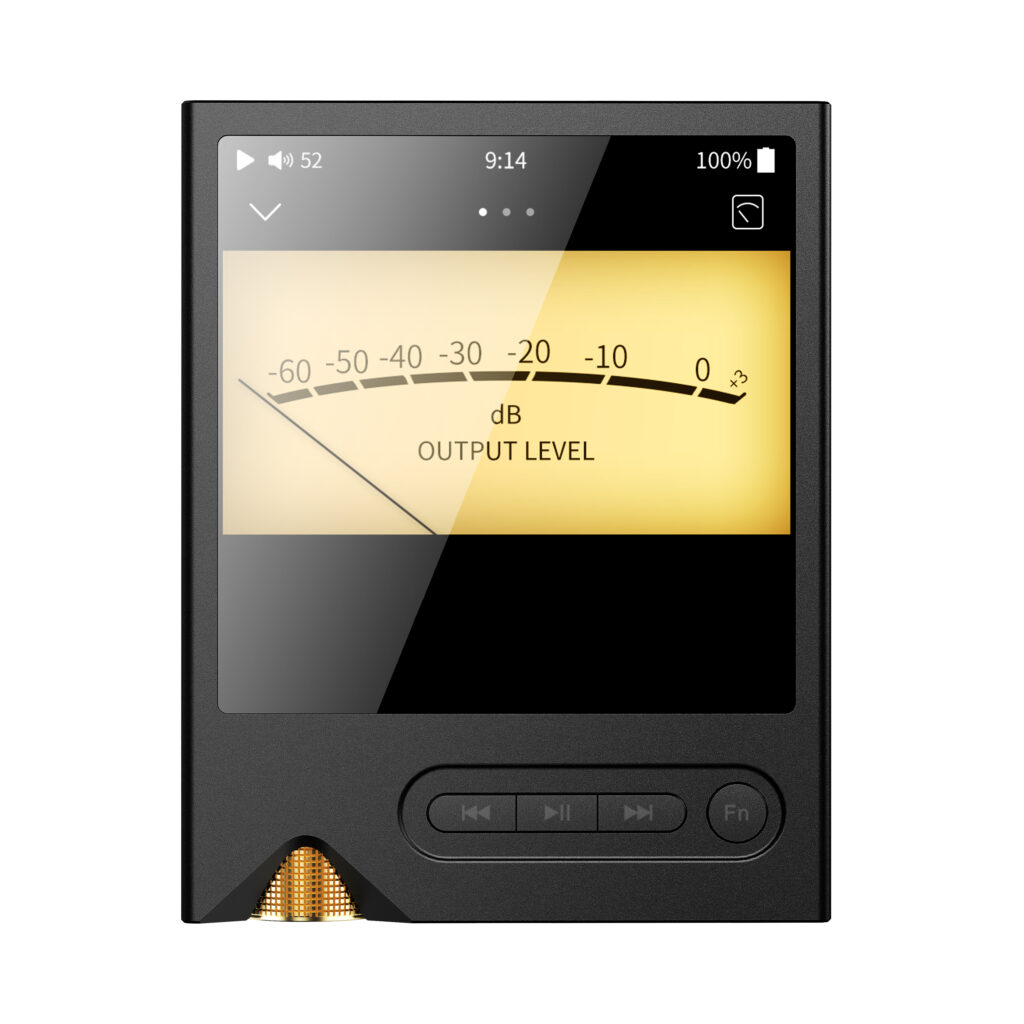
Power comes from a 3,000mAh battery charged via USB-C, with quoted playtime of up to 8.5 hours from both outputs. Remote control is available through the Eddict Player smartphone app. Onix also supports magnetic mounting cases sold separately, allowing the DAP to be attached to smartphones for portable pairing and use with wireless headphones or external DA converters. The XM2 is therefore not simply a small local-file player; it is designed to operate as a compact node in several different listening arrangements.
Pros
- Very compact body at 82 x 65 x 18 mm and 140 grams
- 3-inch 720p OLED touchscreen plus physical buttons and a volume knob
- microSD support up to 2TB for large local libraries
- Wi-Fi on 2.4GHz and 5GHz, with Tidal streaming, DLNA and AirPlay
- Two-way Bluetooth 5.2 with LDAC, aptX HD, aptX, SBC and AAC
- USB DAC function and USB digital audio output
- 4.4mm balanced output rated up to 800mW into 32 ohms in high gain
- Supports PCM up to 768kHz/32-bit and DSD512
Cons
- No pricing is stated here, so value against rivals cannot be judged numerically
- Battery life is quoted at up to 8.5 hours, which may matter to heavy all-day users
- The design uses a single Cirrus Logic DAC chip rather than the Shanling’s dual AKM plus separate AK4191 architecture
- Magnetic mounting cases are sold separately
Best for: Listeners who want a small, practical DAP with strong published output figures, broad high-resolution format support, Tidal, Wi-Fi, two-way Bluetooth, USB DAC use and flexible local or network playback.
Read the original Stereoindex article →
Shanling M7T Master vs Onix Tocata XM2: Core differences that matter
The biggest divide between these players is philosophical. The Shanling M7T Master is an audio-path update to a known platform. Its DAC section remains based on a pair of AK4498EX chips and an AK4191, while the Master changes focus on the amplifier section, high-purity copper conductors and a more powerful balanced output. The Onix Tocata XM2 is a compact all-rounder with an explicitly modern feature set: Wi-Fi, Tidal, DLNA, AirPlay, two-way Bluetooth, USB DAC operation, high-resolution file support and published output specifications.
In design and construction terms, the Onix is easier to place in the hand before you even try it. Its 82 x 65 x 18 mm body and 140-gram weight make it clearly pocket-focused, while the 3-inch 720p OLED touchscreen, buttons and volume knob suggest daily usability was a major design target. The Shanling is described as compact, but no dimensions, weight or display information are provided here. Its construction story is more internal: JAN6418 miniature vacuum tubes, revised amplifier work and ultra-high-purity copper conductors in the audio circuit.
The DAC contrast is equally sharp. Shanling uses a dual AKM DAC arrangement with a separate AKM chip for digital filtering and delta-sigma modulation. Onix uses the Cirrus Logic CS4308P, described as an 8-channel DAC implementation that allows fully balanced hardware circuitry. Neither approach is automatically superior without controlled listening and measurement in the same conditions. What can be said is that the Shanling emphasizes a more elaborate multi-chip AKM path and tube-equipped analog stage, while the Onix emphasizes integration, balanced hardware circuitry and a wider feature set around the DAC.
For amplification and headphone matching, the Onix gives buyers more numbers. Its 4.4mm balanced output reaches up to 800mW into 32 ohms in high gain and 200mW into 32 ohms in low gain, while the 3.5mm output reaches up to 204mW into 32 ohms in high gain. The stated output impedance is 0.7 ohms. That makes the XM2 straightforward to assess for many portable headphones and in-ear monitors. The Shanling’s Master update includes a stronger balanced output than the standard M7T, but without a stated wattage or impedance figure here, it is best judged as a qualitative platform improvement rather than a spec-table win.
Connectivity is the area where the Onix clearly separates itself. The XM2 offers Wi-Fi, Tidal streaming, DLNA, AirPlay, two-way Bluetooth 5.2 with several codec options, USB DAC operation and USB digital output. It also supports remote control via the Eddict Player app and optional magnetic mounting cases. The Shanling material concentrates on audio circuitry and balanced-output changes, not network or app features. If streaming and wireless flexibility are central to your buying decision, the Onix is the safer choice based on stated capability.
For setup, the Onix again presents a more defined path. Add a microSD card of up to 2TB, connect wired headphones through 3.5mm or 4.4mm, sign into Tidal over Wi-Fi if desired, use DLNA or AirPlay in a networked environment, or connect it as a USB DAC. The Shanling setup story is simpler in the available detail: use it as a dedicated hi-res player and choose the output and headphones that best suit its revised amplifier and tube-equipped analog stage. That simplicity may be part of the attraction for listeners who do not want their DAP to behave like a mini network endpoint.
In real-world use, the Onix looks more adaptable. It can play local high-resolution files, stream from Tidal, integrate into wireless listening, act as a USB DAC and provide digital output to external converters. The Shanling looks more specialized. Its reason for existing is the revised sound path: dual AKM conversion retained, tubes retained, copper conductors added, amplifier section adjusted and balanced output strengthened. The choice is not just between two products; it is between two priorities.
| Category | Shanling M7T Master Updates the M7T With a Revised Audio Path | Onix Tocata XM2: Compact Audiophile DAP Supporting PCM 768 kHz and DSD512 | Edge |
|---|---|---|---|
| Product concept | Refined edition of the M7T with targeted audio-path and balanced-output updates | Compact feature-rich DAP with local playback, streaming, wireless and USB functions | Depends on priority |
| DAC architecture | Two AK4498EX DAC chips plus AKM AK4191 digital filter/delta-sigma modulator | Cirrus Logic CS4308P 8-channel DAC enabling fully balanced hardware circuitry | Different approaches |
| Analog/audio stage | Retains two JAN6418 miniature vacuum tubes; revised amplifier section and ultra-high-purity copper conductors | Balanced hardware circuitry with stated output and measurement claims | Shanling for distinctive analog design; Onix for published specs |
| Balanced output | Stronger than standard M7T, but no numerical rating stated here | 4.4mm rated up to 800mW into 32 ohms in high gain and 200mW into 32 ohms in low gain | Onix for specification clarity |
| Single-ended output | Not specified here | 3.5mm rated up to 204mW into 32 ohms in high gain | Onix |
| Wireless and streaming | Not detailed in the available product description | Tidal, Wi-Fi 2.4/5GHz, DLNA, AirPlay, two-way Bluetooth 5.2 with LDAC, aptX HD, aptX, SBC and AAC | Onix |
| File support | Presented as a portable hi-res player; detailed resolution limits not stated here | Up to PCM 768kHz/32-bit and DSD512 | Onix for stated format ceiling |
| Storage | Not specified here | microSD card support up to 2TB | Onix |
| Portability data | Described as compact, but no dimensions or weight stated here | 82 x 65 x 18 mm and 140 grams | Onix for known size and weight |
| Battery | Not specified here | 3,000mAh battery, USB-C charging, quoted up to 8.5 hours from both outputs | Onix for stated information},{ |
Verdict: Choose the Shanling for focused audio-path refinement, the Onix for complete portable versatility
The Shanling M7T Master is the more specialized audiophile proposition. Its appeal lies in how Shanling has chosen to develop the M7T: not by replacing the platform, but by refining the signal path. The dual AKM DAC arrangement remains, the JAN6418 tubes remain, and the Master edition adds revised amplifier work, ultra-high-purity copper conductors and a stronger balanced output. If you value continuity, distinctive analog-stage design and a tuning direction described as more saturated, substantial and relaxed, the Shanling has the stronger identity.
The Onix Tocata XM2 is the easier recommendation for buyers who need breadth. Its small chassis, OLED touchscreen, physical controls, volume knob, microSD support up to 2TB, Wi-Fi, Tidal, DLNA, AirPlay, two-way Bluetooth, USB DAC mode and USB digital output make it a much more explicit everyday tool. It also gives you real output figures: up to 800mW into 32 ohms from the balanced 4.4mm jack in high gain, plus a rated 0.7-ohm output impedance and high-resolution support up to PCM 768kHz/32-bit and DSD512.
The decision comes down to the role the player must serve. If your DAP is primarily a dedicated wired source and you are attracted to Shanling’s combination of AKM conversion, miniature tubes and targeted analog refinement, the M7T Master is the more characterful choice. If your DAP must handle local files, streaming, wireless codecs, USB DAC duties and multiple connection scenarios in a compact body, the Tocata XM2 is the more practical and better-documented option.
Value positioning follows the same split. Shanling says the M7T Master’s recommended pricing remains in line with the standard M7T, making it an upgraded version for buyers already interested in that platform rather than a feature-per-dollar disruptor. The Onix pricing is not stated here, so its market value cannot be judged numerically, but its feature density is undeniable. In short: the Shanling is about a refined listening platform; the Onix is about capability, portability and system flexibility.
Frequently asked questions
Is the Shanling M7T Master a completely new player compared with the M7T?
No. It is described as a refined edition and generational midpoint update. It retains the core M7T architecture, including the dual AKM DAC arrangement and JAN6418 tubes, while revising the audio path, amplifier section, internal conductors and balanced output.
Which player has the more powerful balanced output?
The Onix Tocata XM2 has the clearer published figure: up to 800mW into 32 ohms from its 4.4mm balanced output in high gain. Shanling states that the M7T Master has a stronger balanced output than the standard M7T, but no numerical output specification is provided here.
Which DAP is better for streaming?
The Onix Tocata XM2 is the better-supported choice based on stated features. It includes Tidal streaming, Wi-Fi on 2.4GHz and 5GHz, DLNA and AirPlay. Streaming features for the Shanling M7T Master are not detailed in the product information used here.
Does the Onix Tocata XM2 support Bluetooth headphones?
Yes. It supports two-way Bluetooth 5.2 with LDAC, aptX HD, aptX, SBC and AAC. That makes it suitable for wireless headphone use as well as other Bluetooth scenarios.
What makes the Shanling M7T Master distinctive?
Its identity comes from the combination of dual AKM conversion, a separate AK4191 digital filter/delta-sigma modulator, two miniature JAN6418 vacuum tubes, revised amplifier circuitry, ultra-high-purity copper conductors and a strengthened balanced output.
Can the Onix Tocata XM2 be used as a USB DAC?
Yes. The Tocata XM2 can function as a USB DAC, and it also offers digital audio output via USB.
Tube-Tinged Shanling or Feature-Packed Onix? The Compact DAP Choice Gets Interesting
Two products. One winner. You decide.
Shanling M7T Master Updates the M7T With a Revised Audio Path