
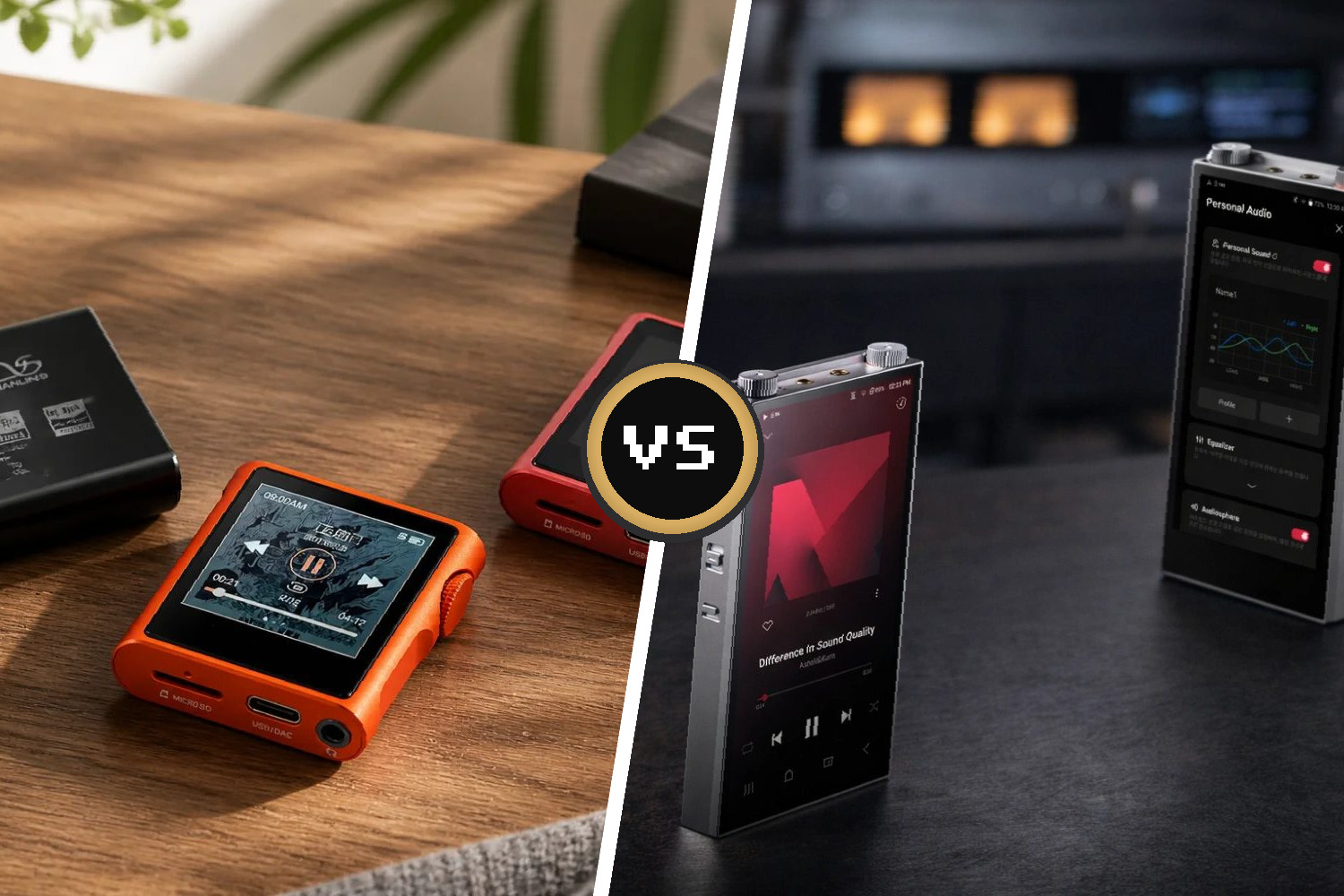
The Shanling M0 Pura and Astell & Kern PD20 are both dedicated portable music players, but they approach the job from almost opposite directions. Shanling’s player is built around extreme portability: a tiny body, a 1.54-inch touchscreen, lightweight MTouch OS, dual Cirrus Logic DACs, and unusually serious output power for something that can disappear into a pocket. The Astell & Kern PD20 is a much more ambitious high-end DAP, with a 6-inch FHD+ display, ESS Quad DAC architecture, personalized hearing-based tuning, advanced EQ, Class A/Class AB/hybrid amplification modes, Wi-Fi, Bluetooth, large internal storage, and support for very high-resolution PCM and DSD playback.
That makes this less of a simple winner-takes-all comparison and more of a question about priorities. Do you want the smallest possible dedicated player that still offers balanced playback, USB DAC use, Bluetooth hub duties, and enough drive to move beyond easy IEMs? Or do you want a full-scale portable audio platform designed around hearing personalization, deep sound adjustment, broad format support, and a more expansive hardware package?
The M0 Pura is the more minimal and mobile proposition. The PD20 is the more feature-rich and technically elaborate one. Both underline why dedicated players still matter, but they make that argument for very different listeners.
Shanling M0 Pura: ultra-compact hi-fi with balanced ambition
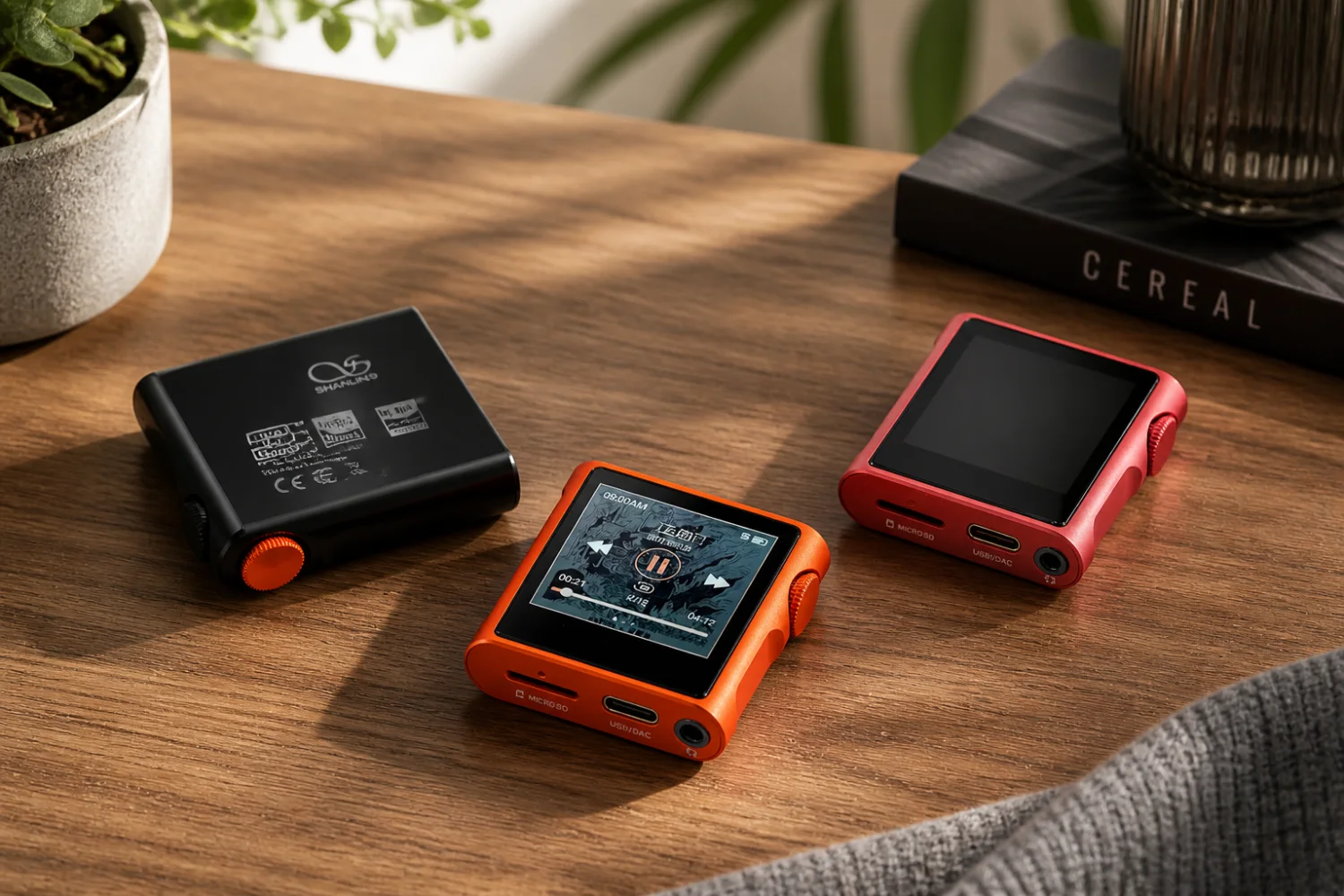
The Shanling M0 Pura is presented as the successor to the M0S, but its changes go beyond a cosmetic refresh. The concept remains deliberately compact and simple: a small, clean player centered around a 1.54-inch touchscreen and Shanling’s MTouch OS. The interface is designed to be lightweight, fast, and distraction-free rather than a full smartphone-style environment.
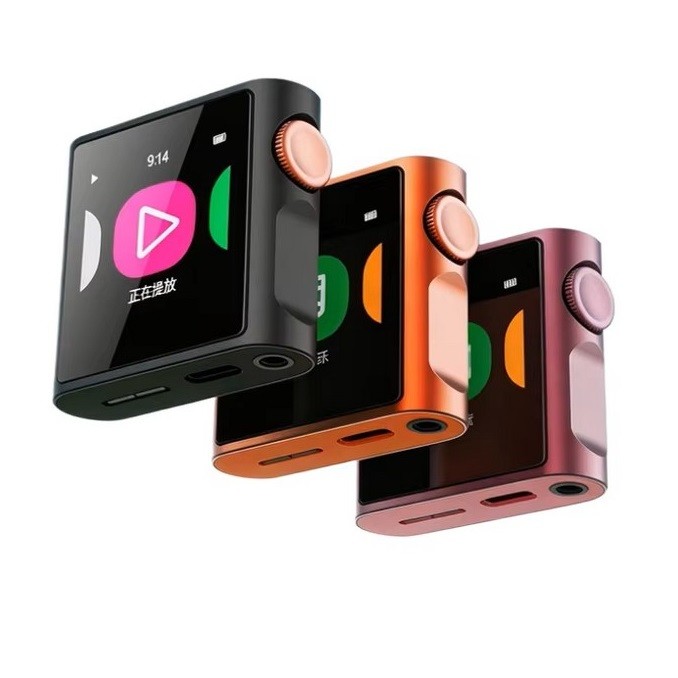
The serious part is inside. Shanling uses dual Cirrus Logic CS43131 DACs, a notable choice for such a compact player. The source material frames this as the sort of DAC implementation normally expected in larger and more expensive devices, and it gives the M0 Pura a stronger technical foundation than its size suggests.
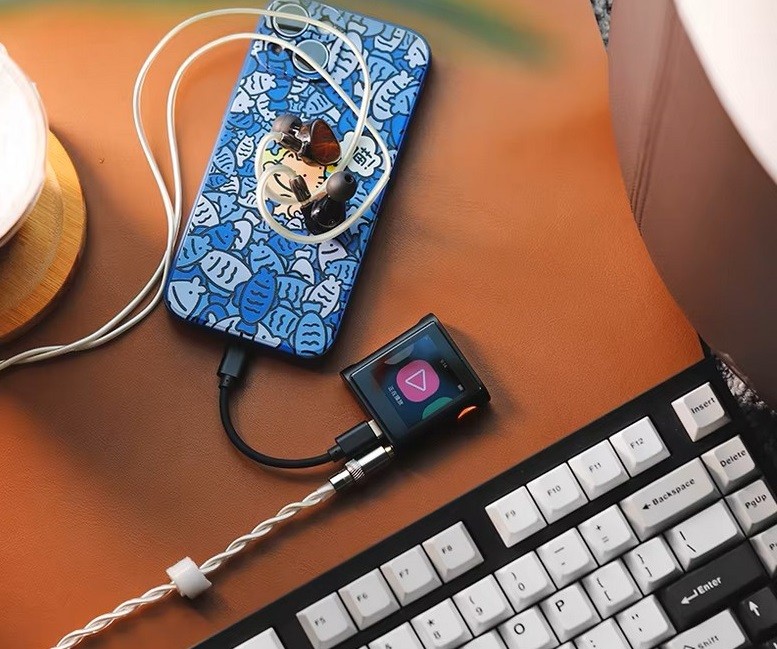
The biggest practical upgrade is output. The M0 Pura introduces balanced playback through its 3.5mm jack by using a 3.5mm-to-4.4mm adapter. That avoids adding extra sockets to the tiny chassis while still allowing the player to deliver the advantages associated in the source with better channel separation and power delivery. Output is quoted at 250 mW into 32 ohms, a substantial figure for a player of this size and enough for Shanling’s positioning to move beyond sensitive IEMs toward more demanding portable headphones.
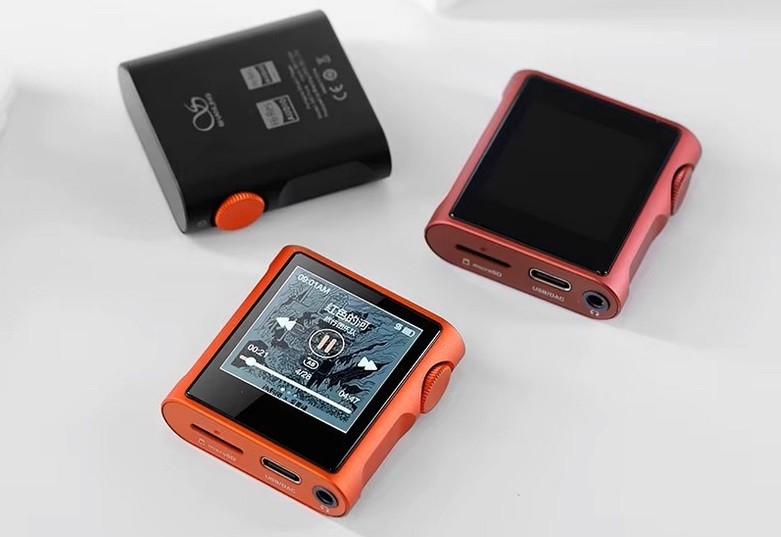
The trade-off is battery life. Shanling quotes around 9.5 hours, reflecting the cost of extracting meaningful output from such a small device. The M0 Pura also has a flexible role beyond standalone playback: it can work as a USB DAC for a laptop, act as a Bluetooth receiver and transmitter, support LDAC, aptX, AAC, and SBC, and serve as a digital transport feeding an external DAC over USB-C.
Pros
- Truly pocketable design with a simple 1.54-inch touchscreen and lightweight MTouch OS
- Dual Cirrus Logic CS43131 DAC implementation in an ultra-compact player
- Balanced playback supported through the 3.5mm jack with a 3.5mm-to-4.4mm adapter
- 250 mW at 32 ohms gives it far more drive than expected from its size
- Works as a standalone player, USB DAC, Bluetooth hub, and USB-C digital transport
- Bluetooth codec support includes LDAC, aptX, AAC, and SBC
Cons
- Around 9.5 hours of battery life is the stated trade-off for its stronger output
- Balanced use depends on an adapter rather than a dedicated balanced socket
- The small 1.54-inch display favors simplicity over expansive browsing or control
- The supplied material does not specify internal storage capacity, microSD support, Wi-Fi, or high-resolution file limits
Best for: Listeners who want the smallest practical dedicated hi-fi player with real output power, balanced playback capability, and flexible USB/Bluetooth roles without carrying a large DAP.
Read the original Stereoindex article →
Astell & Kern PD20: personalized sound, Quad DAC architecture, and full-size DAP features
The Astell & Kern PD20 is a high-end portable player built around a more expansive idea of what a DAP can do. Its headline feature is Personal Sound, developed with Audiodo, which analyzes the user’s hearing and creates a tailored sound profile. The system compensates independently for the left and right ears, and the profile is created using included in-ear eartips through a simple hearing test.
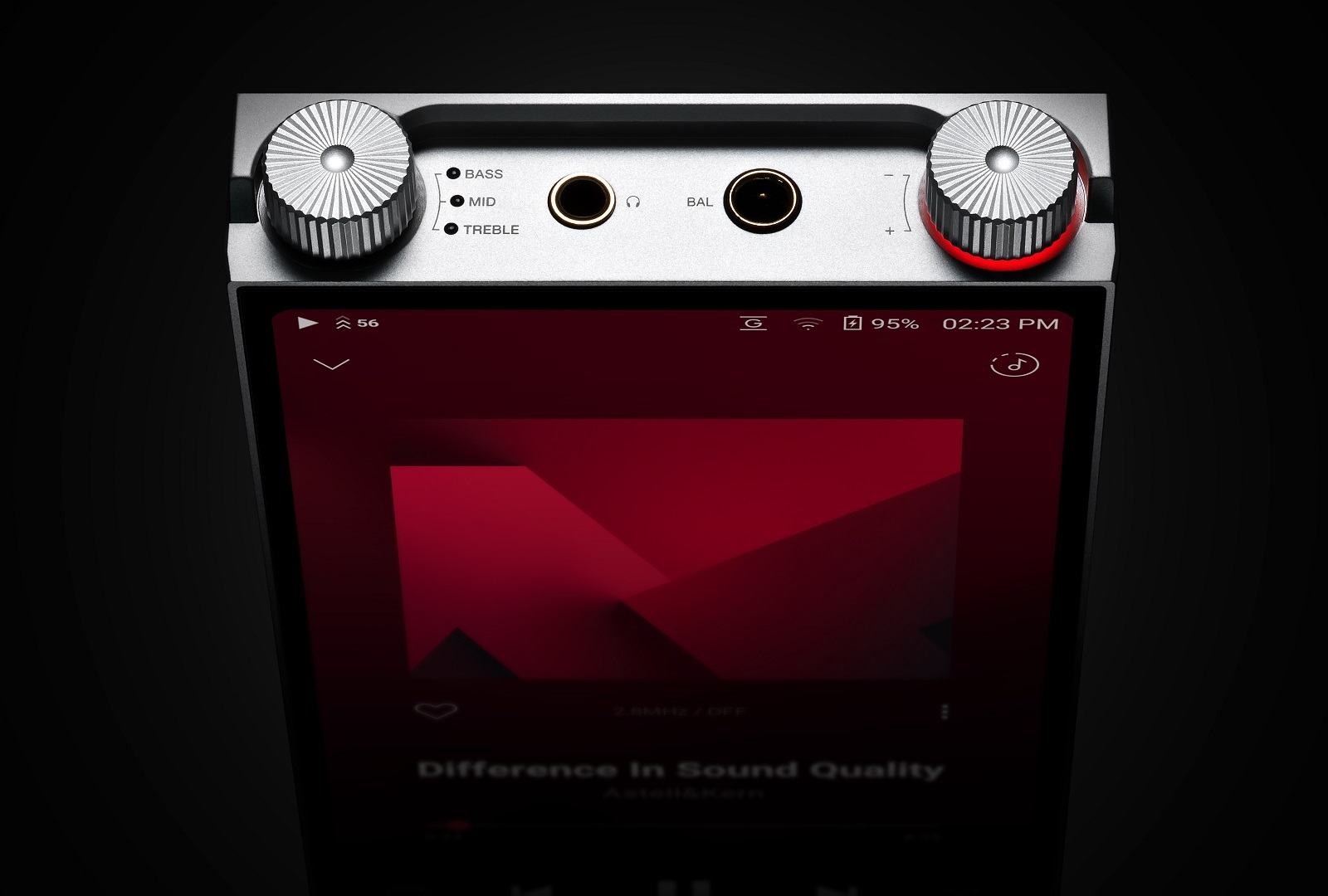
That personalization is paired with further manual adjustment through the Sound Master Wheel. This provides 160-step EQ control from –8.0 dB to +8.0 dB across bass, midrange, and high frequencies, with real-time refinement that does not interrupt playback. For listeners who want a player that adapts both to hearing characteristics and tonal preference, this is the PD20’s most distinctive advantage over a conventional compact DAP.
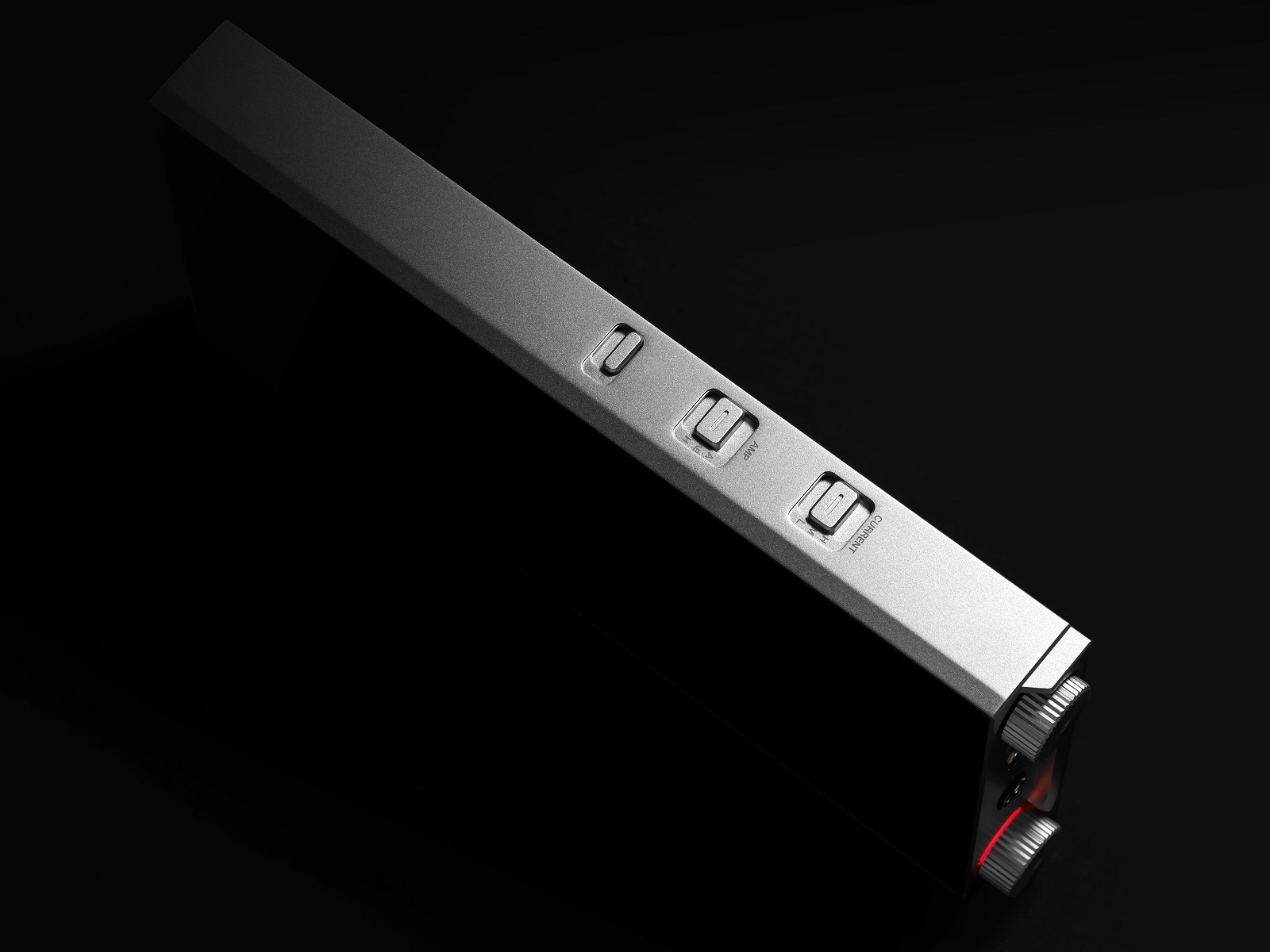
The hardware platform is correspondingly ambitious. The PD20 uses an aluminum housing and a 6-inch FHD+ display. Its DAC section is based on an ESS ES9027PRO Quad DAC configuration, with four DAC chips operating independently to minimize interference and improve signal separation according to the manufacturer. It supports native playback of hi-res PCM up to 32-bit/768kHz and DSD512.
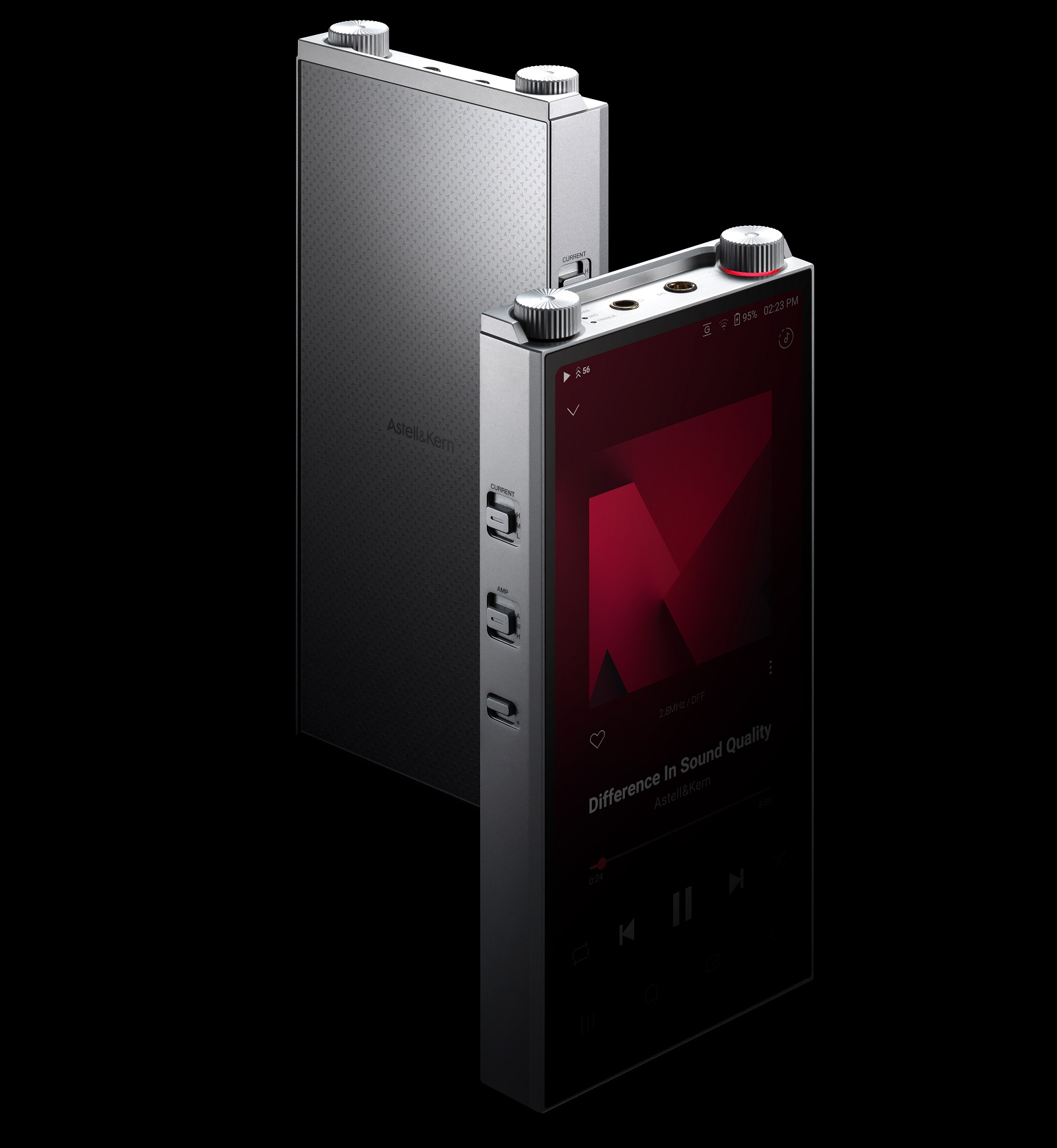
Astell & Kern also includes ESA, or Enhanced Signal Alignment, intended to reduce group delay by aligning frequency signals more precisely. Digital Audio Remaster technology, previously associated with the flagship SP4000, is included, along with Audiosphere spatial audio options. The player offers 256 GB of internal storage, microSD expansion up to 2 TB, approximately 14 hours of promised battery life, Bluetooth with aptX HD and LDAC, Wi-Fi, USB-C for digital audio, charging, or external DAC use, and two analog headphone jacks. Its triple amplifier architecture allows real-time switching between Class A, Class AB, and hybrid amplification modes.
Pros
- Personal Sound system creates a hearing-tailored profile with independent left/right compensation
- Sound Master Wheel offers 160-step EQ control from –8.0 dB to +8.0 dB for bass, midrange, and treble
- ESS ES9027PRO Quad DAC configuration with four independently operating DAC chips
- Native support for PCM up to 32-bit/768kHz and DSD512
- Triple amplifier architecture with Class A, Class AB, and hybrid modes
- 6-inch FHD+ display, aluminum housing, 256 GB internal storage, and microSD expansion up to 2 TB
- Bluetooth supports aptX HD and LDAC, with Wi-Fi also included
- USB-C supports digital audio, charging, and use as an external DAC
Cons
- Its larger 6-inch display and full-scale feature set make it a very different proposition from a truly tiny pocket player
- Personalized sound setup requires the hearing-test process and included eartips
- Roon Ready certification has begun but is not stated as completed
- The source confirms two analog headphone jacks but does not specify their exact connector types
- No exact price is provided, so value must be judged by feature depth rather than a stated cost
Best for: Listeners who want a sophisticated high-end portable player with hearing personalization, advanced EQ, broad hi-res format support, storage expansion, wireless connectivity, and selectable amplification modes.
Read the original Stereoindex article →
Shanling M0 Pura vs Astell & Kern PD20: direct comparison
Design is the clearest dividing line. The Shanling M0 Pura is an exercise in miniaturization. Its 1.54-inch touchscreen and lightweight operating system point to quick access, low bulk, and minimal distraction. It is meant to be carried almost invisibly, yet still provide proper dedicated-player functionality. The Astell & Kern PD20 is built around a larger, more luxurious portable format, with an aluminum body and a 6-inch FHD+ display. That gives it a more substantial interface for library navigation, adjustment, and feature control, but it is not chasing the same ultra-compact ideal.
The DAC architectures also reveal different priorities. Shanling’s dual CS43131 implementation is impressive because of where it appears: inside a tiny player that aims to outperform expectations for its size. Astell & Kern’s ESS ES9027PRO Quad DAC section is the more elaborate design on paper, with four DAC chips operating independently to reduce interference and improve separation according to the manufacturer. The PD20 also has declared native support for PCM up to 32-bit/768kHz and DSD512, while the supplied M0 Pura material focuses on DAC choice, output power, Bluetooth codecs, and USB roles rather than file-resolution limits.
Amplification is another major split. Shanling emphasizes raw drive in a miniature form, quoting 250 mW at 32 ohms and balanced playback via its adapter-based 3.5mm implementation. That is the M0 Pura’s knockout feature: it turns a tiny player into something that can be considered for more than just very sensitive IEMs. The PD20 answers with flexibility and sophistication rather than a quoted power figure. Its triple amplifier architecture lets the user switch in real time between Class A, Class AB, and hybrid modes, giving it a level of amplifier configurability the Shanling does not claim.
Connectivity overlaps but does not match. Both can operate as external USB DACs for computers, and both support Bluetooth with LDAC. Shanling additionally lists aptX, AAC, and SBC, and can act as a Bluetooth receiving/transmitting hub. It can also serve as a USB-C digital transport feeding an external DAC. The PD20 adds Wi-Fi, aptX HD, 256 GB of onboard storage, and microSD expansion up to 2 TB. Its USB-C port handles digital audio, charging, and external-DAC duties, while two analog headphone jacks are provided for wired listening.
Setup experience will also feel different. The M0 Pura should appeal to listeners who want a straightforward dedicated player: load music, connect headphones, decide whether to use standard or balanced output, and optionally press it into service as a DAC, Bluetooth device, or transport. The PD20 invites more involvement. Its Personal Sound system requires a hearing test with the included eartips, then builds a profile that compensates for each ear. After that, the Sound Master Wheel allows precise real-time EQ changes across bass, mids, and highs. That makes the PD20 more personal, but also more system-like.
For system matching, the M0 Pura’s selling point is portable versatility. Its power rating and balanced option make it credible beyond the most efficient earphones, while its size makes it ideal for commuting, travel, or desk use as a small USB DAC. The PD20 is better suited to listeners with larger libraries, varied file types, and a desire to tune the player to both hearing and preference. Its storage, Wi-Fi, high-resolution playback claims, and amplifier modes make it a more complete central portable source.
In value terms, the M0 Pura’s strength is concentration: dual DACs, balanced-capable output, USB DAC use, Bluetooth hub operation, and digital transport functionality in a tiny chassis. The PD20’s value is breadth: personalization, Quad DAC hardware, advanced EQ, hi-res PCM and DSD support, storage expansion, wireless capability, and selectable amplification in a premium player. They are not competing for exactly the same pocket or the same daily routine.
| Category | Shanling M0 Pura turns pocket hi-fi into something seriously powerful | Astell & Kern PD20: World’s First Personalized Sound DAP with Quad DAC & Audiodo Tech | Edge |
|---|---|---|---|
| Design and size | Ultra-compact minimalist player with 1.54-inch touchscreen and MTouch OS | Aluminum housing with larger 6-inch FHD+ display | Shanling for minimum bulk; Astell & Kern for screen space and premium full-size DAP feel |
| DAC implementation | Dual Cirrus Logic CS43131 DACs | ESS ES9027PRO Quad DAC configuration with four independently operating DAC chips | Astell & Kern is more elaborate; Shanling is unusually serious for its size |
| Amplification approach | 250 mW at 32 ohms; balanced playback via 3.5mm-to-4.4mm adapter | Triple amplifier architecture with Class A, Class AB, and hybrid modes | Shanling for quoted pocket power; Astell & Kern for amplifier-mode flexibility |
| Personalization and EQ | No hearing-profile or advanced EQ system described in the source | Audiodo Personal Sound plus 160-step Sound Master Wheel EQ from –8.0 dB to +8.0 dB | Astell & Kern |
| File support | Specific high-resolution file limits are not stated in the supplied material | Native PCM up to 32-bit/768kHz and DSD512 | Astell & Kern |
| Bluetooth | LDAC, aptX, AAC, and SBC; can receive and transmit audio | aptX HD and LDAC | Shanling for stated receive/transmit hub role and broader listed codec set; Astell & Kern includes aptX HD |
| Wi-Fi | Not specified | Wi-Fi connectivity included | Astell & Kern |
| Storage | Not specified in the supplied material | 256 GB internal storage and microSD support up to 2 TB | Astell & Kern |
| USB roles | USB DAC for laptop and USB-C digital transport to external DAC | USB-C for digital audio, charging, and external DAC use with computer | Both are flexible; Shanling explicitly adds transport use |
| Battery life | Around 9.5 hours | Approximately 14 hours | Astell & Kern on stated runtime; Shanling trades endurance for tiny size and output power |
Verdict: choose by use case, not by brand mythology
The Shanling M0 Pura is the more surprising product because it pushes genuine hi-fi hardware into a format that looks almost too small to be taken seriously. Dual CS43131 DACs, 250 mW at 32 ohms, balanced playback through an adapter, USB DAC functionality, Bluetooth receiving/transmitting, LDAC and aptX support, and USB-C digital transport capability make it far more than a convenience gadget. Its limitations are equally clear: the screen is tiny, battery life is quoted at around 9.5 hours, and the supplied material does not establish the same level of storage, Wi-Fi, file-format, or personalization capability found on the PD20.
The Astell & Kern PD20 is the more complete and technologically layered portable audio platform. Its Personal Sound system is the defining feature, especially because it compensates independently for left and right hearing characteristics. Add the Sound Master Wheel, ESS Quad DAC architecture, Class A/Class AB/hybrid amplifier switching, PCM up to 32-bit/768kHz, DSD512, 256 GB storage, microSD expansion, Wi-Fi, Bluetooth, and a 6-inch FHD+ display, and the PD20 clearly targets listeners who want a DAP they can configure, personalize, and use as a serious central source.
There is no honest single winner here. The M0 Pura is the better choice if portability is not just a preference but the point. It is for the listener who wants dedicated audio quality without carrying a brick, and who values balanced-capable output and multipurpose USB/Bluetooth flexibility in the smallest possible package. The PD20 is the stronger choice for the listener who wants deep control, hearing-tailored sound, high-resolution format support, large storage options, wireless features, and selectable amplifier behavior.
Put simply: buy the Shanling M0 Pura if you want pocket hi-fi distilled to its essentials. Buy the Astell & Kern PD20 if you want a feature-rich high-end DAP that makes personalization and system control central to the experience.
Frequently asked questions
Is the Shanling M0 Pura more powerful than its size suggests?
Yes. The supplied material quotes 250 mW at 32 ohms, which is presented as a major upgrade and enough to move it beyond use only with sensitive IEMs.
Does the Shanling M0 Pura have balanced output?
It supports balanced playback through its 3.5mm jack when used with a 3.5mm-to-4.4mm adapter. It does not add a separate balanced socket.
What makes the Astell & Kern PD20 different from a normal DAP?
Its key differentiator is the Audiodo-developed Personal Sound system, which measures the listener’s hearing and creates a customized profile with independent left/right compensation.
Does the PD20 support high-resolution formats?
Yes. The PD20 supports native PCM playback up to 32-bit/768kHz and DSD512.
Can either player be used as a USB DAC?
Yes. The M0 Pura can be used as a USB DAC for a laptop, and the PD20’s USB-C connection supports use as an external DAC for a laptop or computer.
Which player has better battery life?
Based on the supplied figures, the PD20 has the longer promised runtime at approximately 14 hours. The M0 Pura is quoted at around 9.5 hours.
Tiny Balanced DAP or Hearing-Tuned Powerhouse? Shanling M0 Pura vs Astell & Kern PD20
Two products. One winner. You decide.
Shanling M0 Pura turns pocket hi-fi into something seriously powerful