

The Sivga Lyrebird enters the crowded wired IEM market with a specification sheet designed to stand out: four drivers per earpiece, a hybrid acoustic architecture, stabilized wood faceplates and a supplied balanced cable. Based on the available product information, this is an editorial assessment of its design choices, feature set and likely positioning rather than a hands-on listening test.
Design & Build Quality
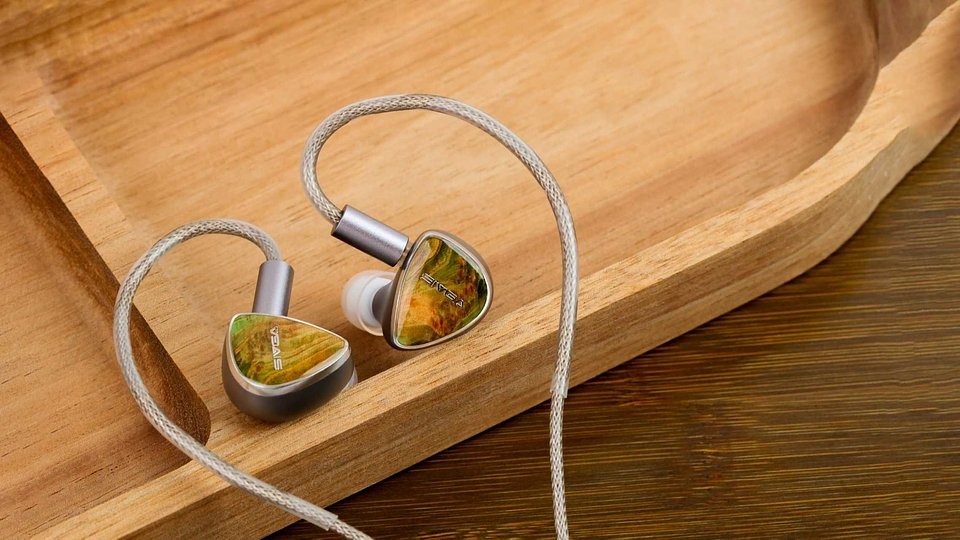
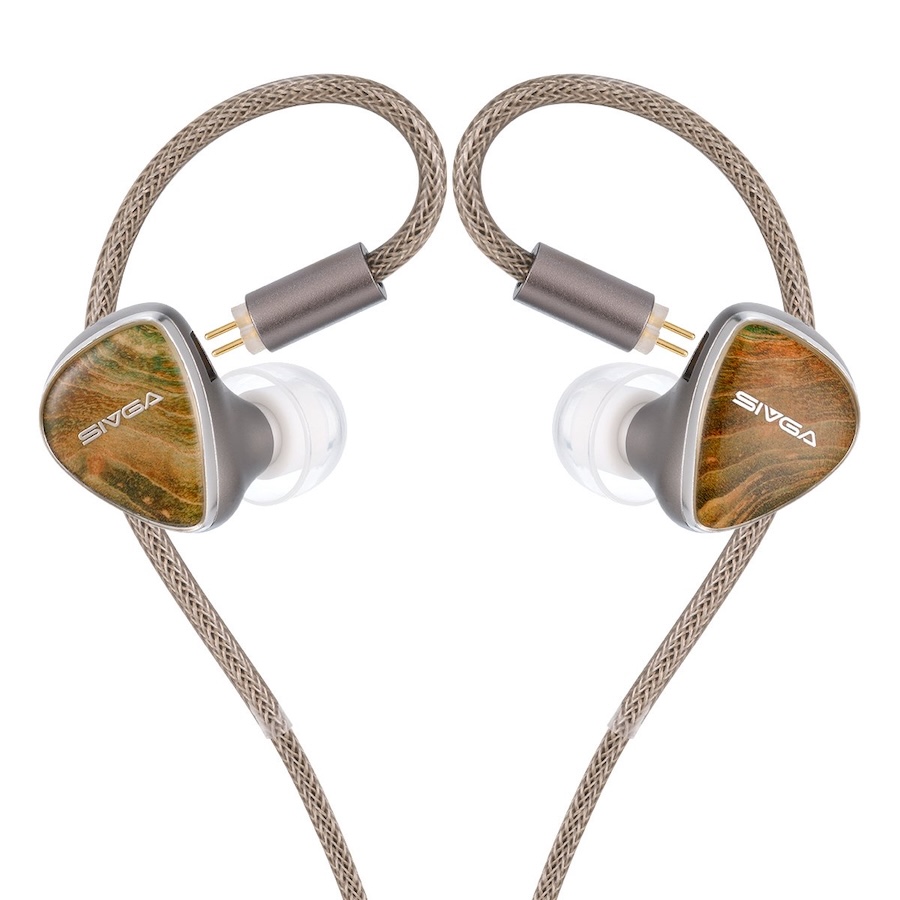
Sivga has given the Lyrebird a more decorative and materials-led identity than many affordable wired in-ear monitors. The most visible element is the handcrafted stabilized wood faceplate, with each earpiece expected to show its own grain pattern. That gives the Lyrebird a degree of visual individuality without moving into the fully bespoke territory of custom-molded IEMs.
The stabilized wood is treated with resin, which Sivga says improves the appearance, increases durability and helps reduce unwanted resonance. That claim is plausible as an engineering intention: resin-stabilized wood can be more dimensionally stable than untreated wood and can add damping to a decorative component. However, without independent measurement, it should be viewed as a design rationale rather than a verified acoustic outcome.
The faceplates are paired with CNC-machined housings made from an aviation-grade aluminum alloy. The combination of metal shells and wood faceplates gives the Lyrebird a hybrid construction that balances rigidity with a more organic visual finish. Sivga also describes the housings as lightweight and ergonomically shaped, with intended use cases including commuting, home listening and longer sessions.

Driver Architecture & Technology
The Lyrebird’s central technical story is its four-driver-per-side hybrid arrangement. Rather than using multiple identical drivers, Sivga combines different transducer types and assigns them to separate areas of the frequency range. The stated goal is a coherent and natural presentation across the spectrum, although that outcome depends heavily on crossover execution, acoustic chamber design and driver integration.
Low frequencies are handled by a 10mm polymer-composite dynamic driver. Dynamic drivers remain a common choice for bass reproduction because their diaphragm area and excursion characteristics can be well suited to moving air at lower frequencies. Sivga describes this driver as intended for deep, powerful and controlled bass.
For vocals, the Lyrebird uses a specially designed balanced armature driver. Balanced armatures are often selected for midrange and vocal duties because of their compact size and ability to deliver detail within a targeted band. A micro-planar driver supports the midrange, adding a less common element to the configuration. High-frequency detail and extended range are addressed by a 9.2mm multilayer piezoelectric ceramic driver.
This mix of dynamic, balanced armature, micro-planar and piezoelectric ceramic technologies is ambitious. It gives Sivga more tools with which to divide the frequency spectrum, but it also increases the complexity of tuning. Multi-driver IEMs can be impressive on paper, yet their success is ultimately determined by how seamlessly those elements are made to work together.
Cable, Connectivity & Usability
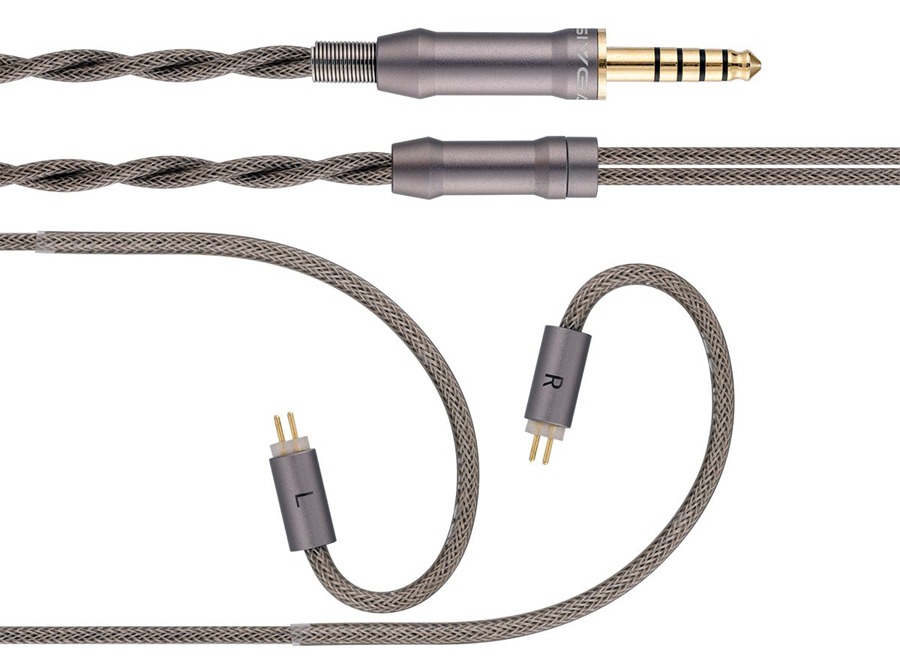
The Lyrebird is a wired in-ear monitor and does not appear to be aimed at wireless convenience. Its supplied cable is notable, combining Furukawa oxygen-free copper, silver-plated copper and gold-plated silver-copper conductors. The use of multiple conductor materials is presented as part of the product’s premium positioning, though the available material does not provide electrical specifications for the cable.
A detachable 0.78mm two-pin connection is a practical choice. It allows the owner to replace the cable if it is damaged or to use an alternative cable if a different termination is required. In the IEM world, that serviceability matters, particularly for users who carry earphones daily or rotate between sources.
The included termination is a 4.4mm balanced plug. This is well suited to compatible digital audio players, headphone amplifiers and DACs with balanced outputs. It is less universally convenient than a standard 3.5mm plug, however, because many phones, laptops and entry-level audio devices do not offer 4.4mm balanced outputs. Buyers should therefore confirm source compatibility before assuming the Lyrebird will plug directly into their everyday device.
Comfort & Included Accessories
Sivga positions the Lyrebird as suitable for commuting, home listening and longer listening sessions, and the ergonomic metal housings are designed with comfort in mind. As with all universal-fit IEMs, actual comfort will depend on ear shape, nozzle geometry, cable routing and eartip selection. The supplied information does not specify shell dimensions or weight, so fit expectations should remain cautious until buyers can try them or consult detailed fit reports.
The package includes a Crazy Horse leather case, which adds a useful storage element for a wired IEM that may be carried with portable sources. A case is particularly important with detachable two-pin cables, as it helps protect both the shells and connectors from unnecessary strain.
Sivga also includes a selection of silicone eartips. That is not merely a convenience accessory: the eartip seal is central to bass response, isolation and overall tonal balance in any in-ear monitor. The availability of multiple silicone fits should help users obtain a more secure seal, though the source material does not list the number of sizes or whether alternative foam tips are included.
Performance Potential
Because this is not a hands-on Stereoindex test, no subjective sound impressions are claimed here. The Lyrebird’s performance potential can still be assessed from its engineering direction. Its hybrid topology suggests an attempt to combine the strengths of several driver types: dynamic-driver low-frequency output, balanced-armature vocal articulation, planar-style midrange support and piezoelectric high-frequency detail.
The technical challenge lies in making those drivers behave as a unified system. A four-driver hybrid IEM needs careful crossover design and acoustic management to avoid discontinuities between bands. Sivga’s stated ambition is a spacious, balanced and coherent sound, but the specification alone cannot prove that the Lyrebird achieves it.
The 4.4mm balanced cable also suggests that Sivga expects many users to pair the Lyrebird with dedicated portable audio hardware rather than basic smartphone outputs. A balanced connection can be beneficial when implemented well in the source device, but it is not automatically a guarantee of higher sound quality. Its practical value depends on the amplifier or player being used.

Value for Money
The supplied material references only a non-USD rumored price, so Stereoindex will not publish a numerical price here. What can be said is that the Lyrebird is presented as an affordable hybrid IEM rather than a top-tier flagship model. In that context, its combination of four driver technologies, CNC aluminum shells, stabilized wood faceplates, detachable two-pin cabling and a 4.4mm balanced plug makes for an assertive feature set.
Value will depend on final regional pricing, availability and the tuning quality of the finished product. The materials and driver count are competitive talking points, but the IEM market is full of specification-heavy designs, and buyers should prioritize fit, source compatibility and tonal preferences over driver quantity alone.
For listeners already using a balanced-output digital audio player, DAC or headphone amplifier, the Lyrebird’s included 4.4mm cable may reduce the need for immediate aftermarket purchases. For users relying on 3.5mm outputs, the same decision may create an extra step, since an alternative cable or adapter may be required.
Pros
- Four-driver hybrid architecture with distinct driver types per frequency region
- Handcrafted stabilized wood faceplates paired with CNC-machined aluminum alloy housings
- Detachable 0.78mm two-pin cable design supports replacement or upgrades
- Included 4.4mm balanced cable suits compatible DAPs, DACs and headphone amplifiers
- Supplied leather case and silicone eartip selection add practical value
Cons
- 4.4mm balanced plug is not universally compatible with common 3.5mm sources
- No confirmed USD price in the supplied information
- Complex multi-driver design places heavy importance on tuning and integration
- No supplied details on weight, dimensions or full accessory sizing
The Sivga Lyrebird is a thoughtfully specified wired IEM with premium design cues and an ambitious hybrid driver array, but its real-world appeal will hinge on tuning, fit and final pricing.
The Sivga Lyrebird looks like a serious attempt to bring a more elaborate hybrid IEM formula to a broader wired-earphone audience. Its strongest points are clear: four different driver technologies per side, detachable two-pin cabling, a supplied 4.4mm balanced connection, CNC aluminum housings and distinctive stabilized wood faceplates. Those choices give it a more premium identity than a basic universal IEM and make it especially relevant for users who already own balanced-output portable audio players, DACs or headphone amplifiers. The main limitations are equally practical. The 4.4mm termination will not suit every source, no confirmed USD price is available from the supplied information, and a complex four-driver design only succeeds if the crossover and acoustic integration are executed well. For buyers seeking a wired IEM with visual character, replaceable cabling and an ambitious driver layout, the Lyrebird is worth watching. Stereoindex’s recommendation is cautiously positive, pending confirmed pricing and independent listening evaluation.


Sound Off
0Join the discussion if you have something to add.