

An AV receiver has to do more than add channels.
It sits at the center of a home cinema, switching sources, decoding surround formats, correcting for the room and driving speakers that may vary widely in load and layout.
The most convincing choices are not always the ones with the longest feature lists; they are the models whose strengths match the system you actually plan to build. This guide focuses only on the AV receivers and directly relevant AV receiver material in the supplied source set. That means the recommendations below exclude standalone subwoofers, turntables, compact speakers and wireless speaker systems, even when those products could form part of a wider home entertainment setup. The selection spans compact and full-size designs, five-channel and more ambitious immersive layouts, and several approaches to room correction. Anthem emphasizes its ARC Genesis system in a relatively focused five-channel receiver; Yamaha presents a heavyweight flagship-style AVENTAGE design; JBL leans into modern digital amplification and optional Dirac Live; Marantz offers both slim and full-size receivers with current home-theater video support; and the CINEMA 30 stands out in the source as a high-end AV receiver with substantial processing and amplification resources.

1. Anthem MRX 540
Anthem MRX 540 AV receiver, a five-channel model built around flexible connectivity and ARC Genesis room correction.
The Anthem MRX 540 is described as the junior receiver in Anthem’s range, but its appeal is not based on size or showmanship.
It uses five channels of amplification for 3.1, 5.1 and 5.2 systems, with seven HDMI inputs, multiple digital and analog audio inputs, parallel HDMI outputs and preamp outputs for all channels.
The major differentiator is ARC Genesis, Anthem’s room-correction platform, which the source presents as a substantial step forward with Mac and Windows support, new target-curve settings for deep bass and treble, improved algorithms and compatibility with many ARC-enabled Anthem and Paradigm products. For listeners building a carefully tuned conventional surround system rather than chasing the highest channel count, the MRX 540 is the most focused recommendation here.
Best for: Focused 5-channel home cinemas with serious room correction
- ARC Genesis room correction is a central feature
- Supports 3.1, 5.1 and 5.2 layouts
- Seven HDMI inputs
- Preamp outputs for all channels
Verdict: Choose the Anthem MRX 540 if room calibration and clean system integration matter more than having the largest channel count.

2. Yamaha RX-A3080
Yamaha RX-A3080 AV receiver, shown as a premium AVENTAGE model with nine channels, class AB amplification and an anti-resonance chassis.
The Yamaha RX-A3080 is presented as a fully equipped flagship model in the premium AVENTAGE series, with a design that balances digital processing and traditional analog amplification.
The source highlights ESS SABRE ES9026PRO DAC chips, a class AB power-amplifier stage, a substantial transformer-based power supply, two heat sinks for its nine channels and Yamaha’s anti-resonance ART chassis with an additional support to mechanically decouple the transformer.
It is also specified at 150 watts per channel in stereo into 8 ohms across 20 to 20,000 Hz, and its 19.6 kg weight underlines the hardware-first approach described in the article. This is the recommendation for buyers who want a large, conventional, full-size AV receiver with a premium build emphasis.
Best for: Full-size systems that prioritize traditional amplifier engineering
- Nine-channel amplifier design
- Class AB amplification
- ESS SABRE ES9026PRO DAC chips
- Anti-resonance ART chassis
Verdict: The Yamaha RX-A3080 suits buyers who value a heavyweight AVENTAGE receiver with substantial analog hardware behind its surround-processing features.

3. Velodyne DB-10
Velodyne DB-10 active subwoofer, a compact sealed model that can partner an AV receiver in a home theater system.
The Velodyne DB-10 is not an AV receiver, but it is directly relevant to an AV receiver-based home theater because it covers the low-frequency role that a receiver sends to a subwoofer output.
The source describes a compact sealed active subwoofer from Velodyne’s Deep Blue line, using a 10-inch driver, 350 W RMS long-term amplifier power and 850 W dynamic power.
Its MDF cabinet has a notably thick 52 mm front panel, and the source says its capabilities are suitable for a room of about 20 square meters. It should be considered only as a system partner for a receiver, not as an alternative to one.
Best for: Adding bass support to an AV receiver system
- Compact sealed cabinet
- 10-inch driver
- 350 W RMS amplifier power
- Source indicates suitability for about 20 square meters
Verdict: The Velodyne DB-10 belongs on the shortlist only if the receiver system needs a compact powered subwoofer rather than another electronics upgrade.
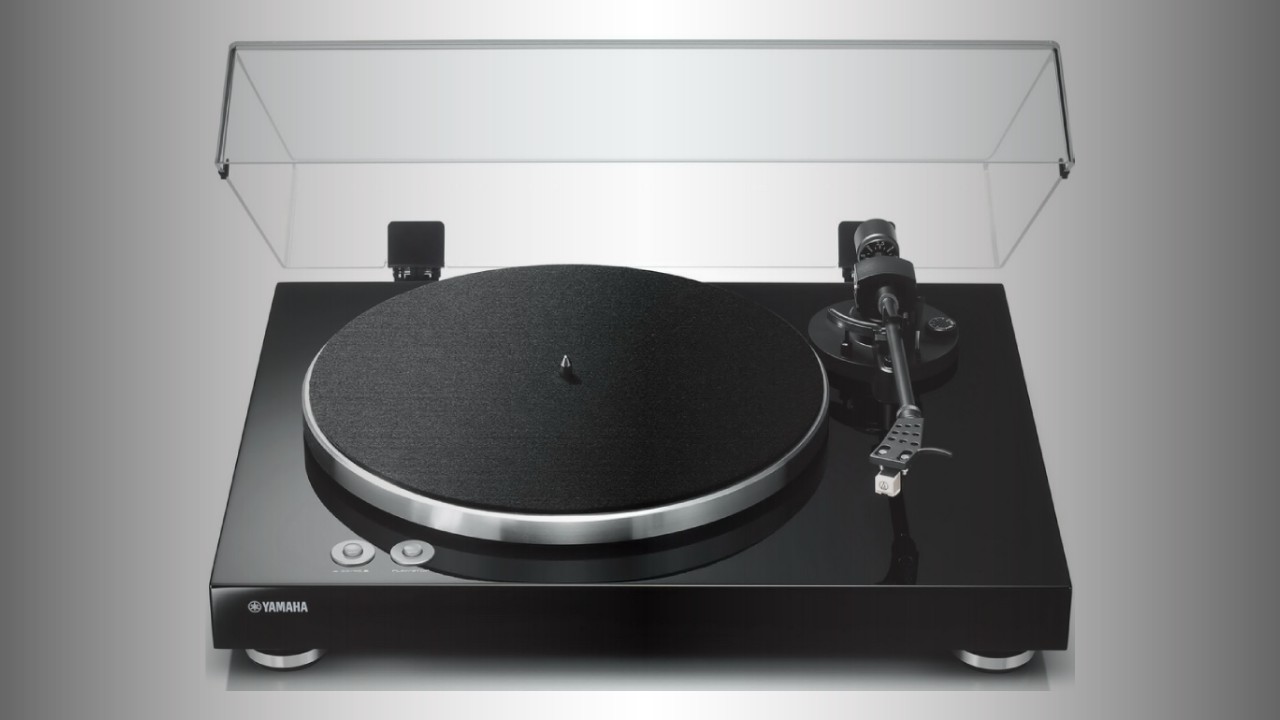
4. Yamaha TT-S303
Yamaha TT-S303 turntable, shown as a vinyl source that can connect to an AV receiver or stereo amplifier.
The Yamaha TT-S303 is a turntable rather than an AV receiver, but it matters for buyers who want a receiver-based system to include vinyl playback.
The source highlights its built-in correction amplifier, allowing connection to a line input on an amplifier or AV receiver without a phono stage, while a phono output mode is available for use with an amplifier’s own phono preamp.
Yamaha’s design is described as drawing on classic hi-fi aesthetics, and the article specifically mentions connecting it to a stereo amplifier or AV receiver. Its role in this guide is therefore as an analog source to match with a receiver, especially when the receiver’s phono facilities are limited or absent.
Best for: Adding vinyl playback to a receiver-based system
- Built-in correction amplifier
- Can connect to a line input
- Phono output mode available
- Designed to connect with an AV receiver
Verdict: The Yamaha TT-S303 is relevant if the priority is feeding records into an AV receiver, not replacing the receiver itself.

5. Cambridge Audio MINX MIN22
Cambridge Audio MINX MIN22 compact speaker, suitable as a small speaker-system component for space-conscious rooms.
The Cambridge Audio MINX MIN22 is a compact speaker, not an AV receiver, so it should be treated as a possible speaker-system component.
The source emphasizes the Minx concept as a way to achieve impressive sound from very compact speakers, using acoustic engineering intended to bring depth and quality from a miniature enclosure.
It also notes construction from acoustically damped thermopolymer and extruded aluminum, with styling intended to fit easily into a room. For an AV receiver buyer, the practical relevance is installation: compact speakers can help where a full-size surround package is impractical, provided the receiver and speaker layout are planned together.
Best for: Compact surround speaker installations with an AV receiver
- Very compact speaker format
- Acoustically damped thermopolymer construction
- Extruded aluminum used in the build
- Designed to fit easily into rooms
Verdict: The Cambridge Audio MINX MIN22 is a space-saving speaker option to consider alongside a receiver, not a receiver recommendation in itself.

6. JBL MA7100HP
JBL MA7100HP AV receiver, a 7.2-channel model with all-digital amplification, Dolby Atmos and DTS:X support.
The JBL MA7100HP is the most modern-feeling choice in this group for users who want a 7.2-channel platform and a path toward height-based surround.
The source describes all-digital amplification, 125 watts of power output, energy-efficient operation, Dolby Atmos and DTS:X support, and speaker options including a 5.2.2 layout with ceiling or height speakers.
Its room-tuning story is flexible: Dirac Live is supported but requires a separate license from the Dirac online store, while JBL’s free EZ Set EQ app offers a simpler equalization route. That combination makes the MA7100HP especially attractive for buyers who want immersive formats but also want to choose between advanced paid calibration and a more straightforward setup process.
Best for: Immersive 5.2.2 systems with flexible room-tuning options
- 7.2-channel surround platform
- Supports Dolby Atmos and DTS:X
- Dirac Live ready
- Free EZ Set EQ app available
Verdict: The JBL MA7100HP is a strong fit for users who want a contemporary 7.2-channel receiver with height-channel flexibility and a choice of calibration routes.

7. KEF LS50 Wireless II
KEF LS50 Wireless II active wireless speaker system, an all-in-one alternative to a traditional receiver-and-passive-speaker setup.
The KEF LS50 Wireless II is a wireless all-in-one audio system rather than a conventional passive speaker package for an AV receiver.
The source describes streaming support for 24-bit/384 kHz files, MQA and DSD256, plus AirPlay 2, Chromecast and wired connections for a TV, game console or vinyl player.
It also highlights KEF’s Metamaterial Absorbent Technology, developed to absorb sound energy from the rear of the speaker driver within a compact structure. For AV receiver shoppers, the key distinction is architectural: this product is designed as a self-contained active system, so it will suit a different kind of setup from a receiver driving passive surround speakers.
Best for: Listeners considering an active alternative to an AV receiver system
- All-in-one wireless active system
- Supports 24-bit/384 kHz files, MQA and DSD256
- AirPlay 2 and Chromecast support
- Includes wired source connections
Verdict: The KEF LS50 Wireless II is best viewed as an alternative system concept, not as a component to be driven by an AV receiver.

8. Marantz CINEMA 30
Marantz CINEMA 30 AV receiver, cited in the source as a high-end model with 13.4-channel processing and 11 channels of amplification.
The Marantz CINEMA 30 appears in the source as the AV receiver selected in the Home Theatre Audio category by EISA’s expert group.
The cited summary describes it as having a 13.4-channel processor and an 11-channel power amplifier, positioning it as a candidate for high-end home theater systems.
The source also notes high power reserves and a wide dynamic range, while emphasizing that its designers did not overlook detail in development. Compared with the other Marantz models in this guide, the CINEMA 30 is the ambitious step-up choice for systems that need far more processing and amplification headroom than a typical 7-channel receiver provides.
Best for: High-end home theaters needing extensive processing and amplification
- 13.4-channel processing
- 11-channel power amplifier
- Described with high power reserves
- Wide dynamic range cited in the source
Verdict: The Marantz CINEMA 30 is the Marantz choice here for large, ambitious systems where channel capacity and power reserves are the main priorities.

9. Marantz NR1711
Marantz NR1711 low-profile AV receiver, combining slim-case design with 5.1.2 immersive audio support and Audyssey calibration.
The Marantz NR1711 is the compact option among these AV receiver recommendations.
The source describes it as the top model in Marantz’s low-profile NR line, with a chassis height around half that of conventional full-size receivers.
Despite that form factor, it supports 8K video at 60 Hz, 4K at up to 120 Hz, Dolby Atmos and DTS:X in a 5.1.2-channel version, plus DTS Virtual:X and Dolby Atmos Height Virtualization for systems without dedicated height speakers. Seven high-current discrete amplifiers are specified at 90 watts per channel into 6 ohms, with support for 4-ohm loads, and Audyssey MultEQ calibration is included alongside Dynamic Volume and Dynamic EQ. It is the practical pick when cabinet space is limited but modern surround and video support remain important.
Best for: Space-conscious installations needing modern surround features
- Low-profile chassis
- Supports 8K at 60 Hz and 4K at up to 120 Hz
- Dolby Atmos and DTS:X in 5.1.2
- Audyssey MultEQ calibration
Verdict: The Marantz NR1711 is the most suitable choice here when a slim receiver must still handle immersive audio, current video formats and room calibration.

10. Marantz Cinema 60
Marantz Cinema 60 AV receiver, a 7.2-channel model with immersive audio support, advanced HDMI features and an MM phono stage.
The Marantz Cinema 60 is a full-size 7.2-channel AV receiver and the junior model in the updated Marantz AV receiver line described by the source.
It supports Dolby Atmos and DTS:X in a 5.1.2-channel configuration, with DTS Virtual:X and Dolby Atmos Height Virtualization available for systems without dedicated height speakers.
Its HDMI section is particularly relevant for modern displays and game sources: three of six HDMI ports support 8K at 60 Hz, 4K at 120 Hz, HDR10+, Dynamic HDR, VRR, QMS, ALLM and QFT, and the receiver can upscale video to 8K. The amplification section uses discrete HDAM modules with current feedback, and the source also notes a built-in MM phono stage. This makes the Cinema 60 one of the most broadly practical recommendations for a living-room theater that also has modern video and vinyl requirements.
Best for: Modern living-room theaters with gaming, video and vinyl sources
- 7.2-channel receiver
- Three HDMI ports support 8K at 60 Hz and 4K at 120 Hz
- Supports VRR, QMS, ALLM and QFT
- Built-in MM phono stage
Verdict: The Marantz Cinema 60 is the most broadly versatile Marantz recommendation here for users who want 7.2-channel surround, current HDMI features and an MM phono input.
Quick comparison
The table below separates the AV receivers from the related system components and highlights the most useful distinction supported by the source material.
For the strongest category match, focus first on the receiver entries; the subwoofer, turntable and speaker products are included only as surrounding-system considerations.
| Product | Best for | Verdict |
|---|---|---|
| Anthem MRX 540 | Focused 5-channel theaters | Best suited to 3.1, 5.1 or 5.2 systems where ARC Genesis room correction is a priority. |
| Yamaha RX-A3080 | Large full-size AVENTAGE systems | A hardware-heavy nine-channel receiver with class AB amplification and Yamaha’s anti-resonance chassis approach. |
| JBL MA7100HP | 5.2.2 immersive setups | A 7.2-channel receiver with Dolby Atmos, DTS:X, all-digital amplification and a choice between Dirac Live readiness and EZ Set EQ. |
| Marantz CINEMA 30 | High-end multi-channel theaters | The most ambitious receiver in the guide by channel processing and amplification count, with 13.4-channel processing and 11 amplified channels. |
| Marantz NR1711 | Slim receiver installations | A low-profile Marantz receiver that still supports 5.1.2 immersive audio, 8K/60 Hz video and 4K/120 Hz video. |
| Marantz Cinema 60 | Modern living-room theater hubs | A versatile 7.2-channel receiver with advanced HDMI features, virtual height options and an MM phono stage. |
| Velodyne DB-10 | Receiver-system bass support | A compact sealed powered subwoofer to partner a receiver, especially where the source’s stated room suitability is appropriate. |
| Yamaha TT-S303 | Vinyl playback through a receiver | A turntable with line and phono output options, useful when adding records to an AV receiver setup. |
| Cambridge Audio MINX MIN22 | Small speaker installations | A compact speaker option for rooms where a conventional large speaker package is difficult to accommodate. |
| KEF LS50 Wireless II | Active all-in-one alternatives | A self-contained wireless system for users who may not want a traditional AV receiver and passive speaker arrangement. |
Frequently asked questions
How many channels should an AV receiver have?
Start with the speaker layout you will actually install.
The Anthem MRX 540 is aimed at 3.1, 5.1 and 5.2 systems, while the Marantz NR1711 and Marantz Cinema 60 support 5.1.2 Dolby Atmos and DTS:X layouts.
The JBL MA7100HP can support a 5.2.2 arrangement, and the Marantz CINEMA 30 is the more ambitious option in this guide with 13.4-channel processing and 11 amplified channels.
Which room-correction systems are mentioned in the source material?
Anthem’s MRX 540 uses ARC Genesis, which is presented as a major strength of that receiver.
The JBL MA7100HP is Dirac Live ready, though the source notes that Dirac Live requires a separate license, and it also offers the simpler free EZ Set EQ app.
Marantz models in the supplied material use Audyssey calibration, with the NR1711 specifically described with Audyssey MultEQ and related Dynamic Volume and Dynamic EQ features.
Do I need 8K and 4K/120 Hz support in an AV receiver?
It depends on your sources and display.
If the receiver will sit between modern video or game sources and a compatible display, HDMI capability matters.
The Marantz NR1711 supports 8K at 60 Hz and 4K at up to 120 Hz, while the Marantz Cinema 60 has three HDMI ports supporting 8K at 60 Hz and 4K at 120 Hz, along with gaming-related features including VRR, QMS, ALLM and QFT.
Should I buy a slim AV receiver or a full-size model?
A slim model such as the Marantz NR1711 is useful when cabinet height is limited, and the source shows that it still supports immersive audio and modern video features.
A full-size receiver may be preferable when the build approach, channel count or amplifier design is the priority, as with the Yamaha RX-A3080, JBL MA7100HP, Marantz Cinema 60 or Marantz CINEMA 30.
Match the chassis style to ventilation, speaker layout and system demands.
How to choose from these AV receivers
The most sensible choice depends less on brand preference and more on system shape.
If you are building a conventional 5-channel room and want calibration to be central, the Anthem MRX 540 is the cleanest match in this guide.
Its ARC Genesis platform, full-channel preamp outputs and 5.1 or 5.2 focus make it particularly coherent for a carefully tuned setup. For larger traditional receiver builds, the Yamaha RX-A3080 offers the strongest emphasis on physical amplifier engineering in the supplied material, with nine channels, class AB amplification, a substantial power supply and an anti-resonance chassis. If you want a more current immersive layout with all-digital amplification and optional Dirac Live, the JBL MA7100HP is the more contemporary route, especially for 5.2.2 Dolby Atmos or DTS:X systems. Marantz covers three distinct needs. The NR1711 is the space-saving receiver for installations where a low-profile chassis is essential but 5.1.2 audio and modern video support are still required. The Cinema 60 is the broadly versatile living-room hub, combining 7.2-channel capability, strong HDMI support, virtual height options and an MM phono stage. The CINEMA 30 is the step-up choice where the system demands substantially more processing and amplification capacity than the smaller Marantz models provide. The related products in the source material are useful only when they solve a specific system problem. The Velodyne DB-10 can add powered low bass to a receiver system, the Yamaha TT-S303 can bring vinyl into an AV receiver setup, the Cambridge Audio MINX MIN22 can help where speaker size is restricted, and the KEF LS50 Wireless II represents an active alternative to the receiver-based approach. Decide first whether you want a traditional AV receiver at the center of the system; once that is settled, choose the channel count, HDMI support and room-correction approach that fit the room rather than buying features you will never connect.