

The Final DX4000CL and Focal Lensys Professional are being compared because both are closed-back over-ear headphones aimed at serious users who need isolation, controlled sound, and long-session comfort. They are not direct twins: Final’s model is positioned as an upper-tier audiophile closed-back headphone, while Focal’s Lensys Professional is built for producers, sound engineers, musicians, and composers. That difference matters more than the basic closed-back format.
| Category | Final DX4000CL | Focal Lensys Professional |
|---|---|---|
| Type | Closed-back audiophile headphone | Closed over-ear professional headphone |
| Target user | Serious hi-fi listeners using dedicated headphone amplifiers or high-end portable players | Producers, sound engineers, musicians, composers, and audio editors |
| Driver | Newly developed 40 mm dynamic driver with paper/carbon-fiber composite diaphragm | 40 mm aluminium-magnesium M-dome drivers |
| Acoustic design notes | Internal diffuser array in the rear chamber; free-edge diaphragm; design intended to create a more open and spacious presentation from a closed design | Slightly tilted drivers for stereo image; acoustic load optimised for operation similar to a bass reflex loudspeaker |
| Frequency response | Not stated in the source article | 5 Hz to 22 kHz, +/- 3 dB, as stated by Focal |
| Impedance | Not stated in the source article | 26 Ohms |
| Weight | Around 375 g without cable | 306 g |
| Cables and accessories | Detachable silver-coated cable with 4.4 mm Pentaconn balanced connector; 6.3 mm adapter included | Two cables and a durable carrying case included |
| Serviceability | User-replaceable ear pads without tools; construction avoids excessive glue and uses O-rings and precision screws | Not specified in the source article |
| Price and availability | Planned for Q2 2026; suggested retail price €999 | Retails for just under $700 |
Design and build: audiophile architecture versus studio practicality
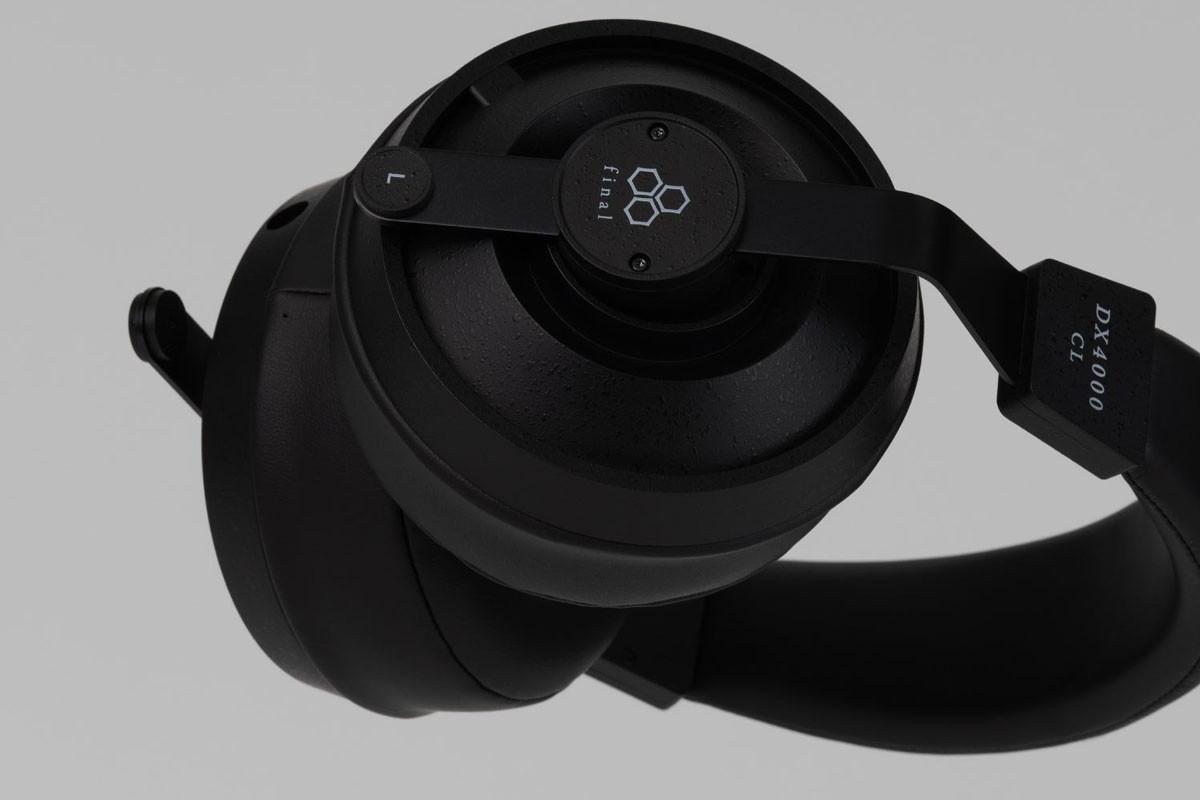
The Final DX4000CL is described as part of Final’s DX Series and positioned between existing variants in that lineup. Its core idea is ambitious for a closed-back headphone: keep the isolation and bass control associated with closed cups while reducing the boxed-in quality that can limit perceived space. The source article points to a newly engineered 40 mm dynamic driver, a paper and carbon-fiber composite diaphragm, a free-edge diaphragm structure, and an internal diffuser array as the major design elements behind that goal.
The Focal Lensys Professional takes a more explicitly work-focused path. It is presented as a closed over-ear headphone for mixing, editing, production, and recording-related use. Its 40 mm aluminium-magnesium M-dome drivers are said to provide linear frequency response, low distortion, and improved sound dispersion. The drivers are slightly tilted inside the ear cups to improve the stereo image, while the acoustic load is optimised for operation similar to a bass reflex loudspeaker.
Both products use memory foam ear cushions, but the implementation details differ. Final specifies particularly thick ear pads of around 30 mm, made from memory foam and synthetic leather. Focal specifies memory foam ear cushions, superior sound isolation, and a breathable fabric headband that maintains a consistent curvature for extended work sessions. On weight, Focal has the confirmed advantage: 306 g versus around 375 g for the Final without cable.
Features and connectivity: balanced hi-fi setup or studio package
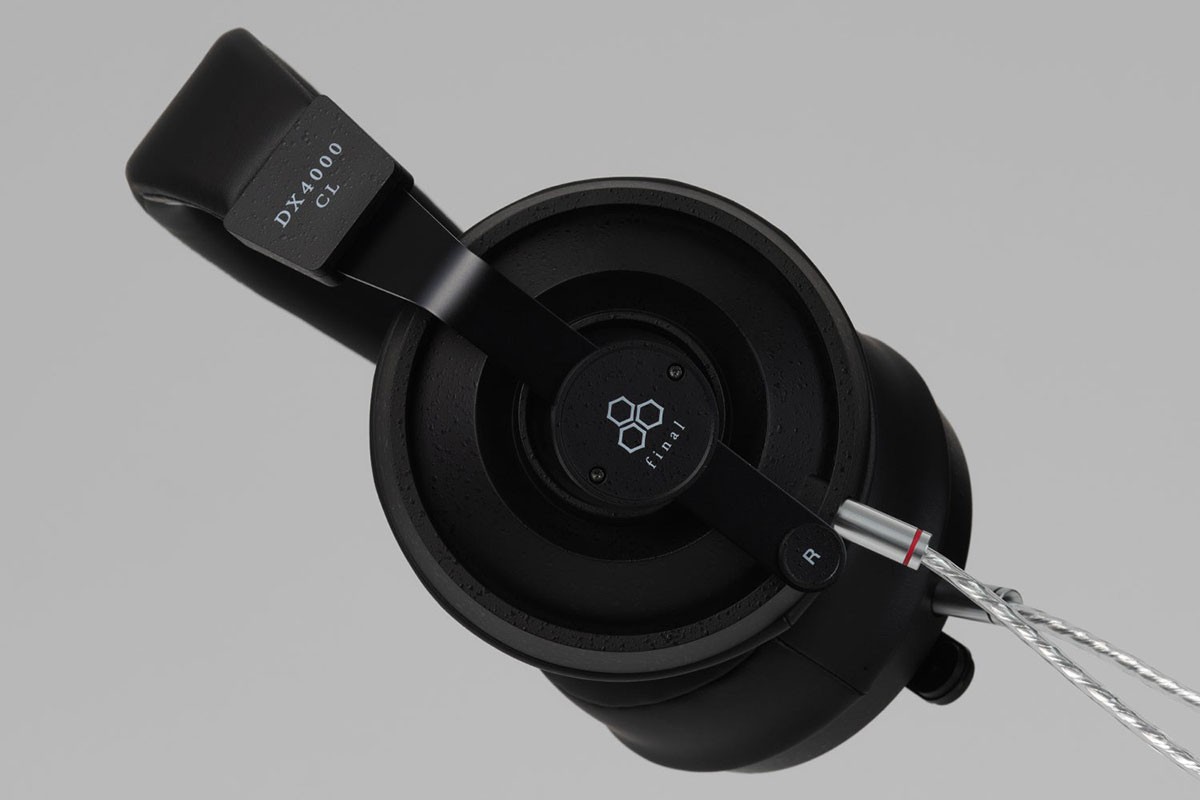
Final clearly expects the DX4000CL to be used in more audiophile-oriented systems. Its detachable silver-coated cable terminates in a 4.4 mm Pentaconn balanced connector, a format commonly used with high-end headphone amplifiers and portable audio players. A 6.3 mm adapter is included for traditional hi-fi setups. The source article does not mention a carrying case, extra cables, impedance, sensitivity, or frequency response.
Focal’s Lensys Professional package is more practical out of the box for professional environments. The buyer receives two cables and a durable carrying case. The source article also confirms a 26 Ohm impedance and a stated frequency response of 5 Hz to 22 kHz, +/- 3 dB. Those are useful details for buyers who need to integrate a headphone into a working setup, although the article does not specify connector types for the two cables.
Editorial inference: the Final is likely better aligned with listeners already using balanced headphone outputs, while the Focal appears packaged for transport and day-to-day studio use. That inference follows from the confirmed cable and accessory information, not from any independent test.
Performance intent and use case: spacious closed-back listening or neutral professional monitoring
No listening test results are provided in either source article, so the comparison here has to stay with stated design goals and manufacturer-oriented descriptions. The Final DX4000CL is presented as a closed-back headphone trying to blur the line between closed and open designs. Final’s internal diffuser array is intended to scatter reflections inside the rear chamber, similar in concept to acoustic diffusers used in recording studios and listening rooms. The expected result described in the source is cleaner reproduction and a more stable stereo image during dense or complex passages.
The DX4000CL is also framed as controlled and balanced rather than artificially boosted in the bass or overly colored across the spectrum. That makes it sound, on paper, like a closed-back headphone for home listening where isolation is still needed but the buyer does not want to give up spaciousness. However, because the article uses design intent and promise rather than measured performance, it would be misleading to treat its openness or imaging as proven.
The Focal Lensys Professional has a more direct performance brief: neutral tonal balance, high accuracy, and suitability for mixing and professional editing of audio recordings. Focal’s stated frequency response and low-distortion driver description support that professional positioning. Its slightly tilted drivers are also intended to improve the stereo image. Again, the source does not include third-party measurements or listening impressions, so the safest conclusion is that Focal designed the Lensys Professional as a reliable studio tool rather than a hi-fi luxury product.
Comfort and long-session use
Both headphones address comfort, but for different environments. Final uses thick memory foam and synthetic leather pads of around 30 mm. The source notes that pad thickness is not only about comfort; it also optimizes the distance between the driver and the ear, which can influence soundstage and tonal balance. At around 375 g without the cable, the DX4000CL is substantial but described as manageable for a headphone aimed at reference-level performance.
Focal’s comfort case is more explicitly tied to professional work sessions. The Lensys Professional is engineered to be lightweight, uses memory foam ear cushions, and includes a breathable fabric headband. At 306 g, it is meaningfully lighter than the Final based on the published figures. For buyers wearing headphones through long editing, tracking, or mixing sessions, that lower weight and studio-oriented headband design are important confirmed advantages.

Ownership considerations: serviceability, availability, and value context
Final gives unusually clear information about serviceability. The DX4000CL’s ear pads are user-replaceable without tools, and its construction avoids excessive glue, using O-rings and precision screws instead. For an expensive headphone, that matters. It suggests a design that may be easier to maintain over time, although the source does not provide warranty terms, spare-part prices, or repair policy details.
The Focal Lensys Professional includes two cables and a durable carrying case, which adds practical ownership value immediately. It is also the less expensive model based on the supplied information: just under $700 versus the Final’s suggested retail price of €999. Currency differences prevent a precise like-for-like value judgment, but the Focal is clearly positioned below the Final in stated price.
Availability is another key difference. The Lensys Professional is presented as an introduced product with a retail price. The DX4000CL is planned for release in Q2 2026. Buyers needing a headphone now cannot treat the Final as an immediate alternative unless it is available in their market at the time they shop.
Pros and cons: Final DX4000CL
- Pros: Ambitious closed-back acoustic design aimed at a more open and spacious presentation.
- Pros: Newly developed 40 mm driver with paper/carbon-fiber composite diaphragm and free-edge structure.
- Pros: Internal diffuser array addresses a known closed-back issue: internal reflections.
- Pros: 4.4 mm Pentaconn balanced cable and 6.3 mm adapter suit serious headphone systems.
- Pros: Tool-free replaceable ear pads and less glue-intensive construction are strong ownership points.
- Cons: Heavier than the Focal at around 375 g without cable.
- Cons: Higher stated price at €999.
- Cons: Source article does not provide impedance, sensitivity, or frequency response.
- Cons: Planned Q2 2026 release means availability is not as straightforward as an already retailing model.
Pros and cons: Focal Lensys Professional
- Pros: Purpose-built for producers, sound engineers, musicians, composers, mixing, and audio editing.
- Pros: 40 mm aluminium-magnesium M-dome drivers with stated linear frequency response, low distortion, and improved dispersion.
- Pros: Published frequency response of 5 Hz to 22 kHz, +/- 3 dB, and 26 Ohm impedance.
- Pros: Lighter than the Final at 306 g.
- Pros: Comes with two cables and a durable carrying case.
- Pros: Lower stated retail price, just under $700.
- Cons: Source article does not mention balanced 4.4 mm connectivity.
- Cons: Serviceability details such as tool-free pad replacement are not specified.
- Cons: Its professional neutrality may not be what a listener wants if the priority is a more audiophile-style closed-back presentation.
Who should buy each headphone?
Choose the Final DX4000CL if your priority is closed-back hi-fi listening and you are specifically attracted to the idea of a more spacious closed headphone. It is the more audiophile-coded product here: balanced 4.4 mm termination, a 6.3 mm adapter, premium acoustic construction, and a driver/cup design built around controlling reflections and improving spatial presentation. It also makes sense for buyers who value serviceability and are willing to wait for the planned Q2 2026 release.
Choose the Focal Lensys Professional if you need a working headphone for production, mixing, editing, or musical creation. Its lower weight, stated neutral tonal balance, included case, two-cable package, and published impedance/frequency response make it easier to evaluate as a practical professional tool. It is also the more accessible purchase on price according to the source material.

Final verdict: different winners for different rooms
The Focal Lensys Professional is the safer recommendation for most buyers who need a closed-back headphone today, especially if the job involves production or editing. It is lighter, less expensive based on the supplied prices, comes with a fuller accessory package, and has key specifications published in the source article.
The Final DX4000CL is the more intriguing specialist choice. Its acoustic design directly targets the classic weakness of closed-back headphones: reduced spaciousness caused by cup reflections. Its balanced cable and serviceable construction also make it appealing for serious hi-fi users. But it costs more, is heavier, and the available source leaves out some practical specifications.
Decisive verdict: buy the Focal Lensys Professional for professional reliability, comfort, and value today. Consider the Final DX4000CL if you are building a dedicated hi-fi headphone setup and are willing to pay more for a closed-back design focused on spacious, controlled audiophile listening.