
The iBasso DX340 and Shanling Q2 are both modern portable hi-fi players, but they approach the job from very different ends of the digital audio player spectrum. The DX340 is presented as a reference-class, performance-led flagship with a discrete 1-bit DAC architecture, dual operating systems, modular amplification and separate analog and digital battery supplies. The Shanling Q2 is a compact pocket player built around four Cirrus Logic DAC chips, balanced output, bidirectional USB and Bluetooth, and an interface that combines a touchscreen with a touch-sensitive control wheel.
That difference in philosophy matters more than any simple feature checklist. The DX340 is designed for listeners who want a serious portable source that can also function as a transport or USB DAC, with room to evolve through interchangeable amplifier boards. The Q2 is for those who want hi-res playback, balanced headphone output and modern wireless flexibility in a device weighing just 83 g.
Neither player has announced USD pricing in the supplied information, so value cannot be reduced to a cost-per-feature calculation. Instead, the comparison comes down to priorities: maximum portable ambition, modularity and Android flexibility on the iBasso side; compactness, broad connectivity and everyday pocket usability on the Shanling side.
iBasso DX340 overview
The iBasso DX340 is positioned as a reference-class digital audio player for audiophiles who want a high-spec standalone music source rather than a minimalist pocket gadget. Its most distinctive technical element is a discrete 1-bit DAC configuration governed by iBasso’s FPGA Master 3.0 system. The design is described as targeting high clarity, low distortion and precise timing, with decoding support for PCM up to 32-bit/768kHz and native DSD512.
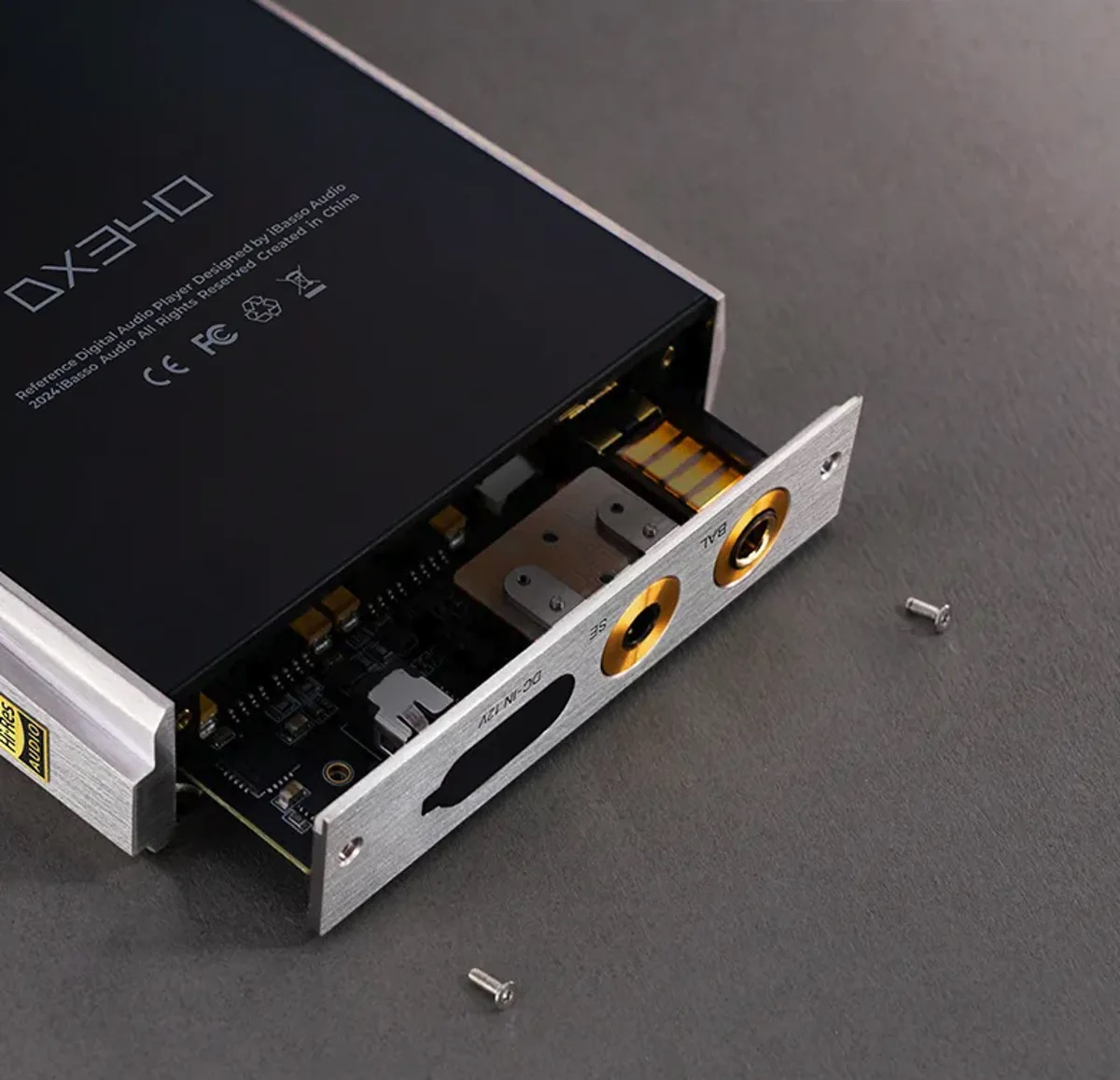
Unlike small closed-platform players, the DX340 offers a dual operating system layout. Mango OS provides an audio-focused environment for local playback, while Android 13 opens the door to broader app access and streaming flexibility. The player runs on a Qualcomm Snapdragon 665 processor with 8GB of RAM and 256GB of internal storage. A microSD card slot supports expansion up to 2TB, which iBasso equates to roughly 3,500 CD albums ripped as WAV files.
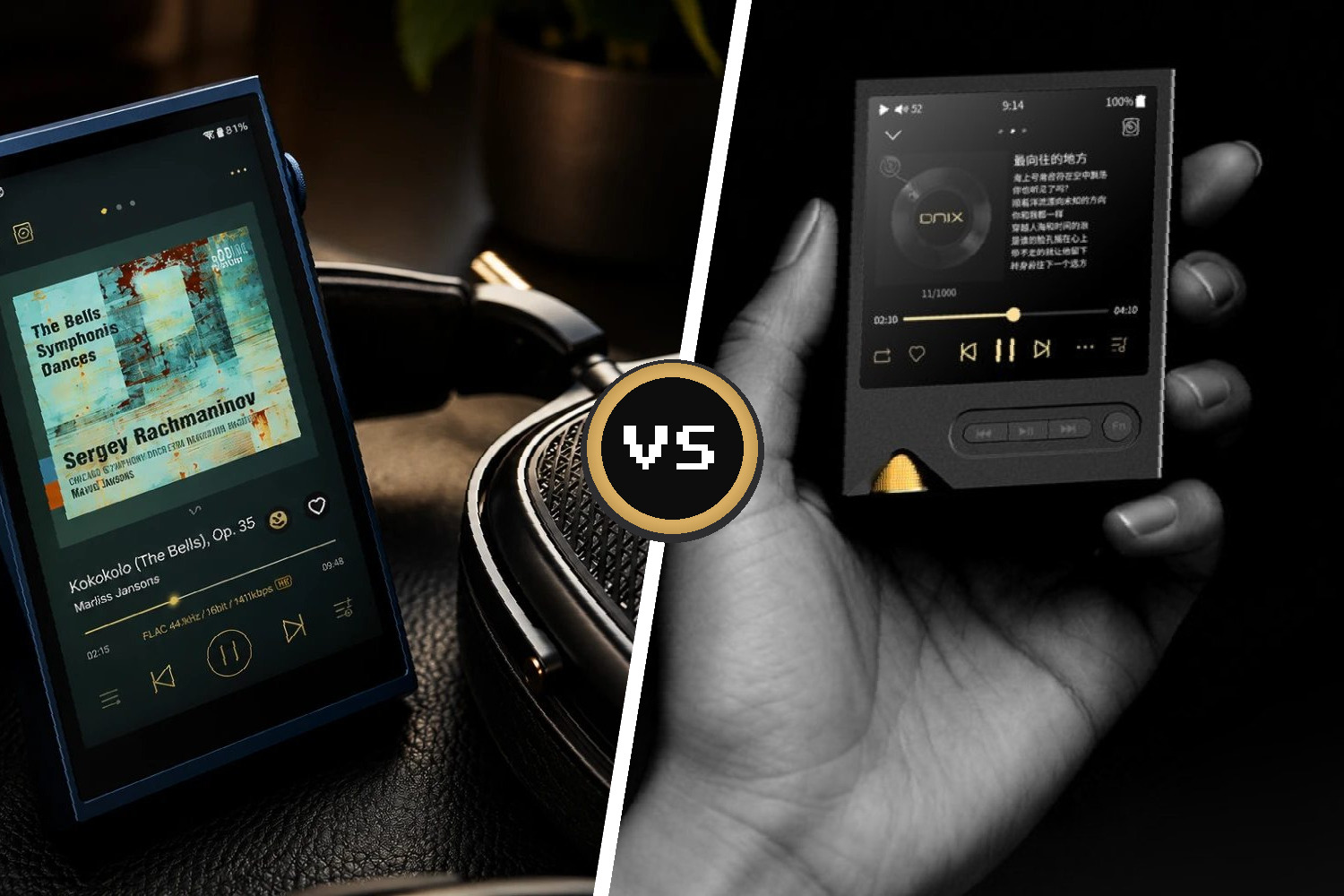
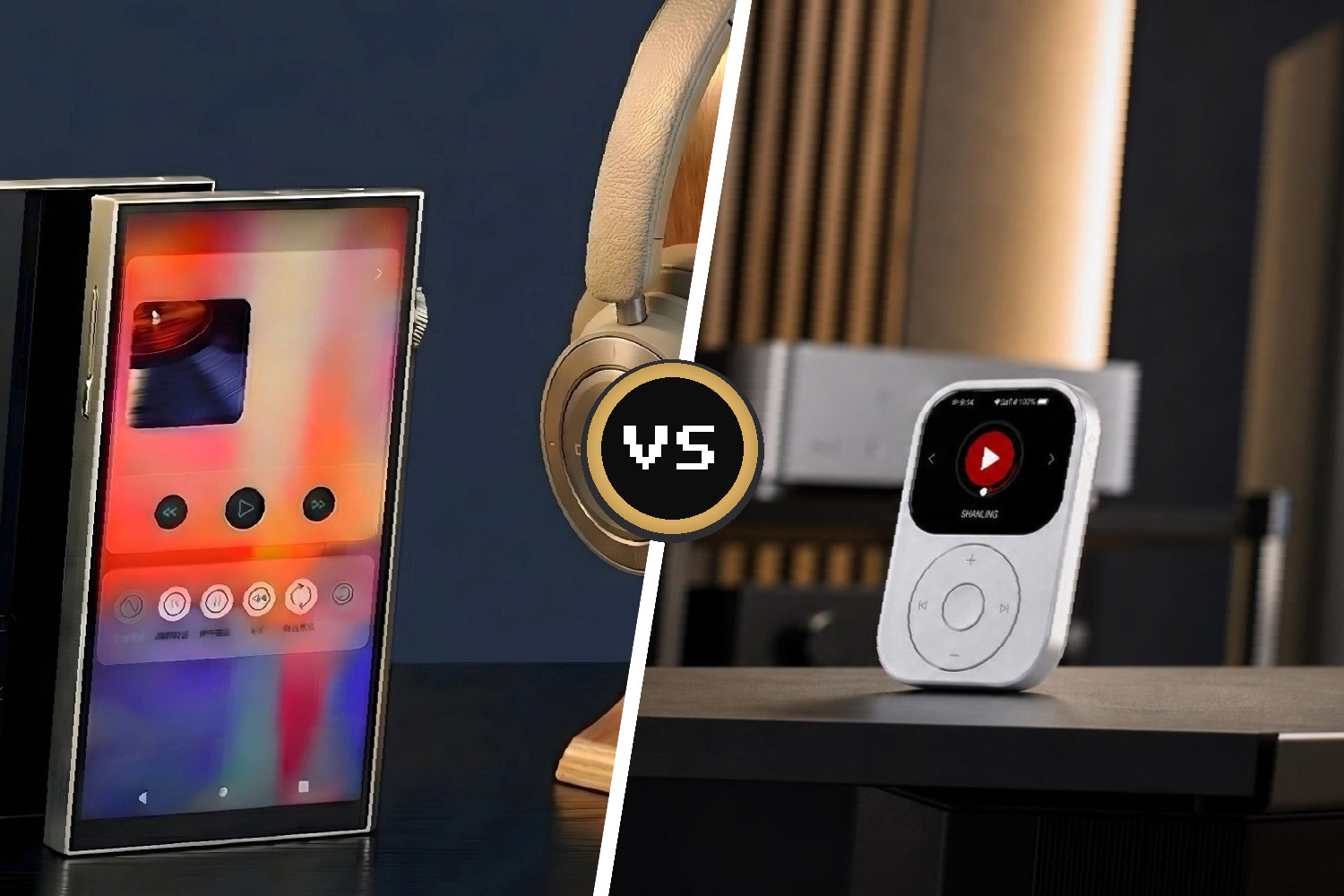
The physical design reinforces the DX340’s flagship positioning. It uses a stainless steel casing, weighs 486 g and carries a 6.0-inch AMOLED display with a 1080 x 2160 resolution. That makes it substantially larger and heavier than the Shanling Q2, but also gives it the screen size and processing platform to behave more like a high-end portable audio computer than a simple file player.
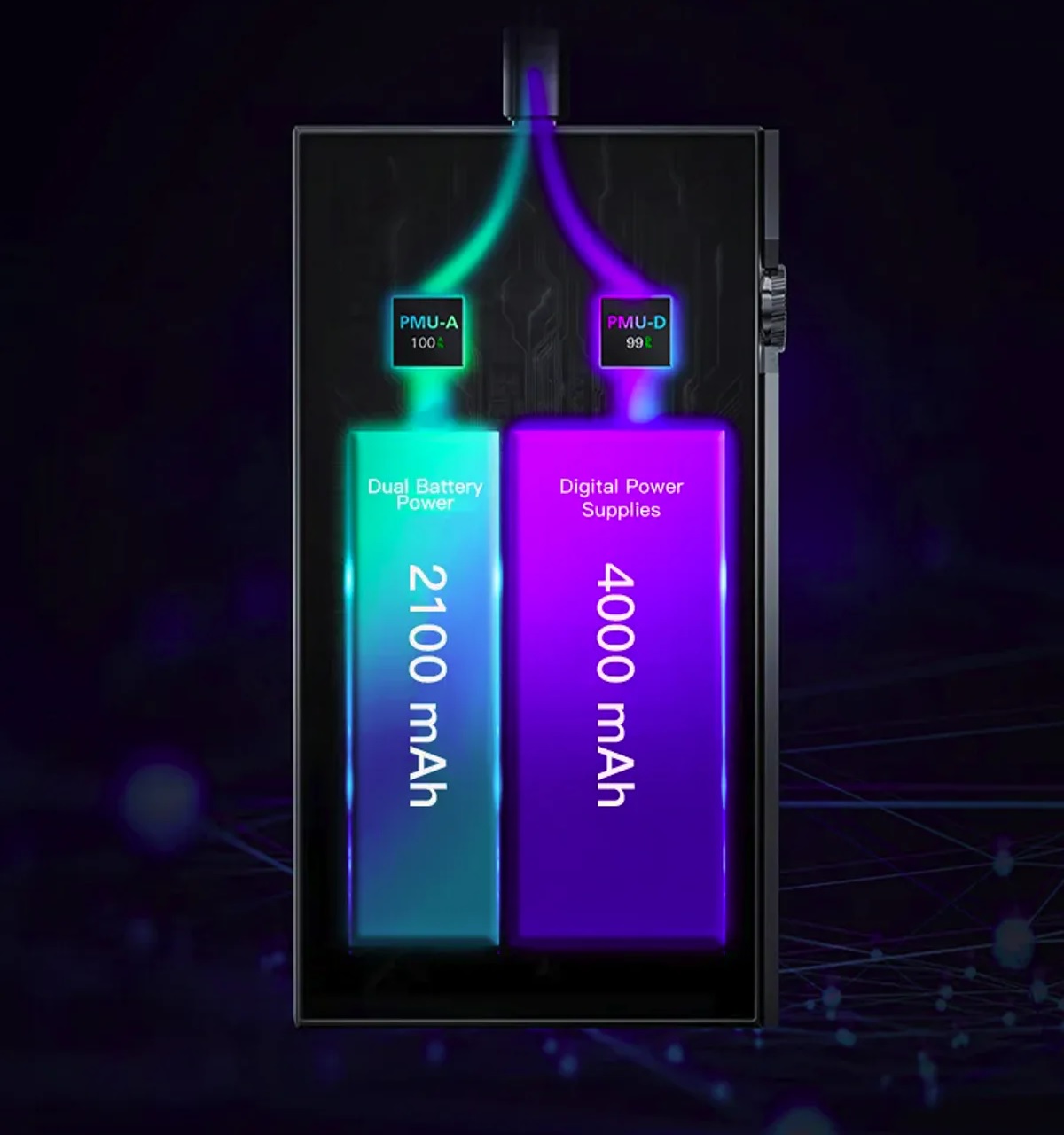
Amplification is modular. The supplied AMP15 module is described by the manufacturer as offering high output power and low noise, with suitability for a wide range of headphones from sensitive in-ear monitors to larger over-ear models. The amplifier board can be changed, and the DX340 is compatible with several iBasso modules including the AMP1X series, AMP12, AMP13 and AMP14, with future AMP1X boards also supported.
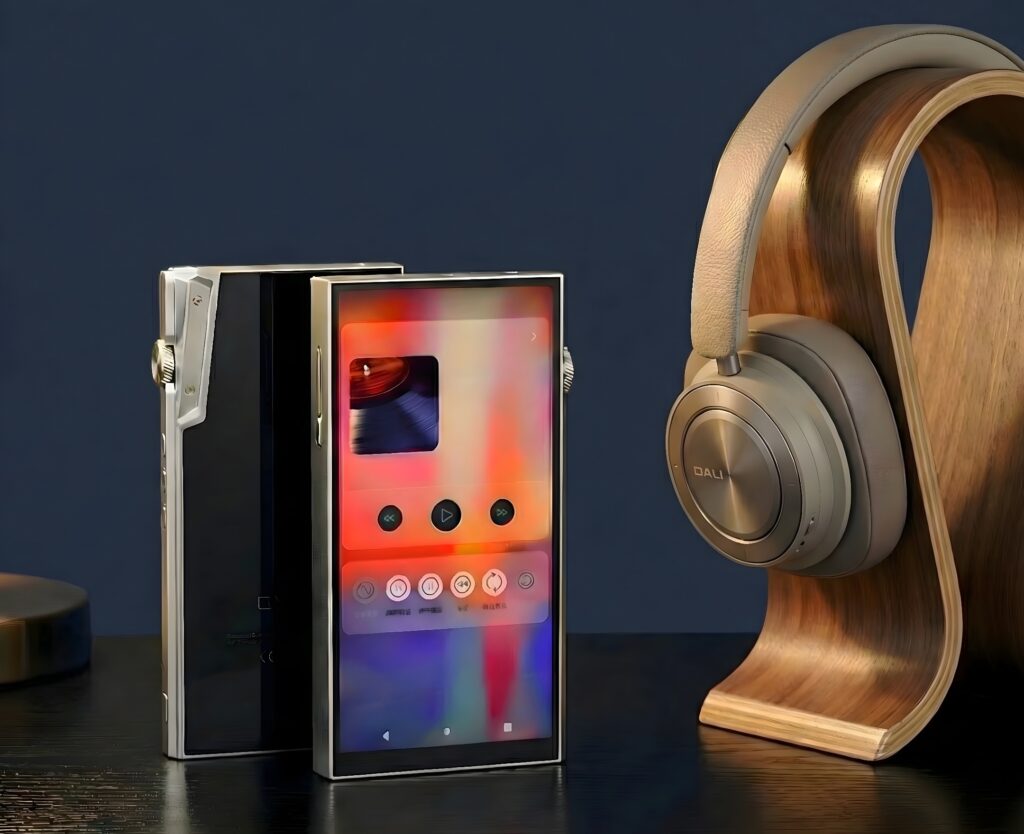
Power architecture is another defining feature. The DX340 uses iBasso’s patented dual-battery arrangement, separating power supplies for the analog and digital sections. The aim is to stabilize the headphone amplifier supply and isolate electromagnetic interference from the digital side. The batteries are replaceable, and claimed continuous playtime is up to eleven hours. Connectivity includes balanced and unbalanced outputs, coaxial output, USB OTG support, Bluetooth 5.0 and dual-band Wi-Fi.
Pros
- Discrete 1-bit DAC architecture with FPGA Master 3.0 processing
- Supports PCM up to 32-bit/768kHz and native DSD512
- Dual OS design: Mango OS for focused playback and Android 13 for app flexibility
- Modular amplifier platform with support for multiple iBasso amp boards
- 256GB internal storage plus microSD expansion up to 2TB
- Large 6.0-inch 1080 x 2160 AMOLED display
- Separate analog and digital battery architecture
- Balanced and unbalanced outputs, coaxial output, USB OTG, Bluetooth 5.0 and dual-band Wi-Fi
Cons
- At 486 g, it is far less pocket-friendly than the Shanling Q2
- Up to eleven hours of stated playback is shorter than the Q2’s specified maximum figures
- Output power figures and output socket sizes are not specified in the supplied information
- Price and delivery details have not been announced
- Its size and complexity may be more than some casual portable listeners need
Best for: Listeners who want a flagship portable source with Android flexibility, local hi-res support, modular amplification and a serious power architecture for higher-end headphone systems.
Read the original Stereoindex article →
Shanling Q2 overview
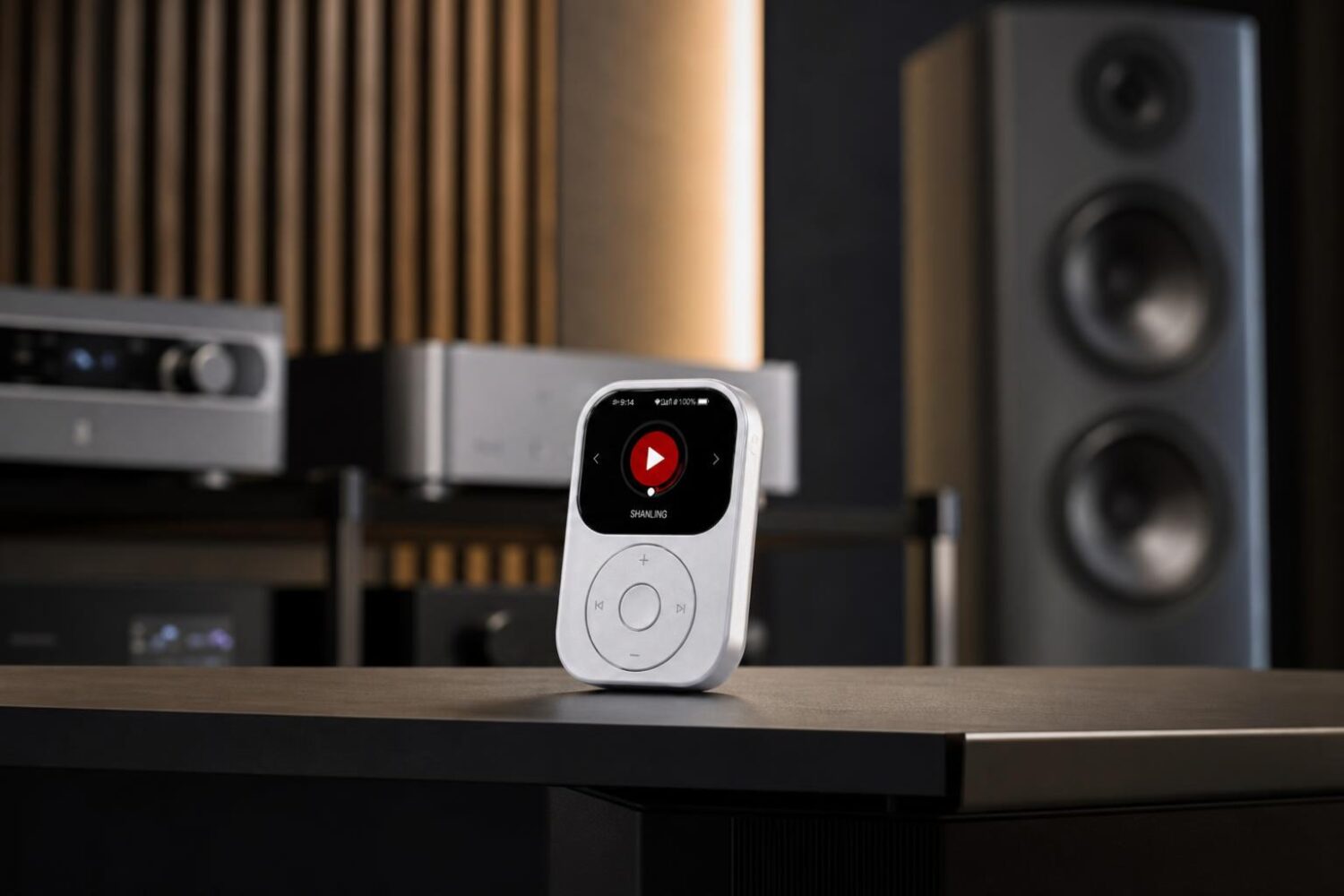
The Shanling Q2 takes the opposite path: it compresses a broad portable hi-fi feature set into a very small body. The player measures 80 × 50 × 13.5 mm and weighs 83 g, making it dramatically more pocketable than the iBasso DX340. Its enclosure combines an aluminum-alloy frame with a glass rear panel, and its control system mixes a 2.09-inch touchscreen with a separate touch-sensitive Click Wheel for menu movement and volume adjustment.
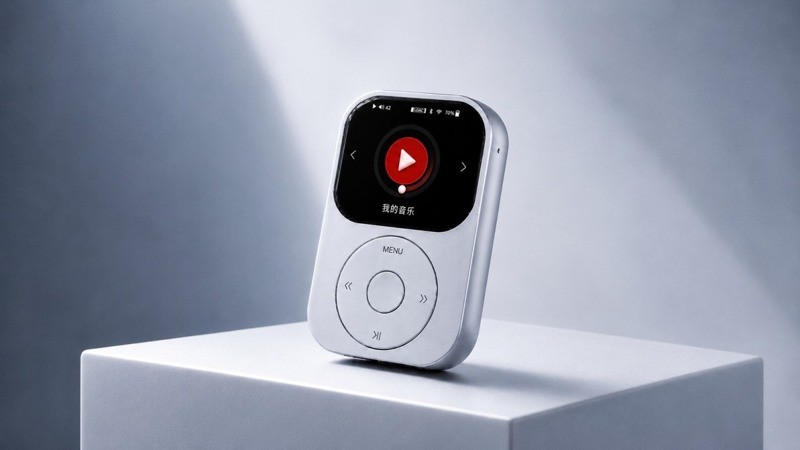
The Q2’s digital-to-analog conversion is handled by four Cirrus Logic CS43131 DAC chips. This is not the same design concept as the DX340’s discrete 1-bit DAC system, but it is a clearly specified multi-DAC implementation inside a compact player. Format support is extensive, matching the headline decoding limits of the iBasso with PCM up to 768kHz/32-bit and native DSD up to DSD512.
Headphone connectivity is explicit and practical. The Q2 provides a standard 3.5 mm unbalanced output and a 4.4 mm balanced output. Through the balanced connection, Shanling specifies maximum output power of 425 mW into 32 ohms. Low and High gain settings are included, allowing the user to choose an amplification mode better suited to headphone sensitivity and power requirements.
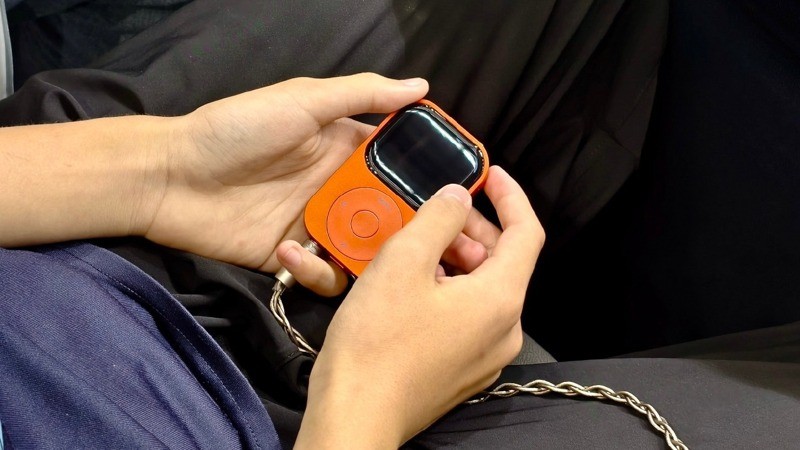
Storage is handled through a microSD card slot supporting capacities up to 2TB. No built-in storage capacity is specified, so the Q2’s local music library depends on removable media. Its USB connection is bidirectional: the Q2 can receive a digital audio signal for playback through its own audio hardware or send digital audio to another compatible device.
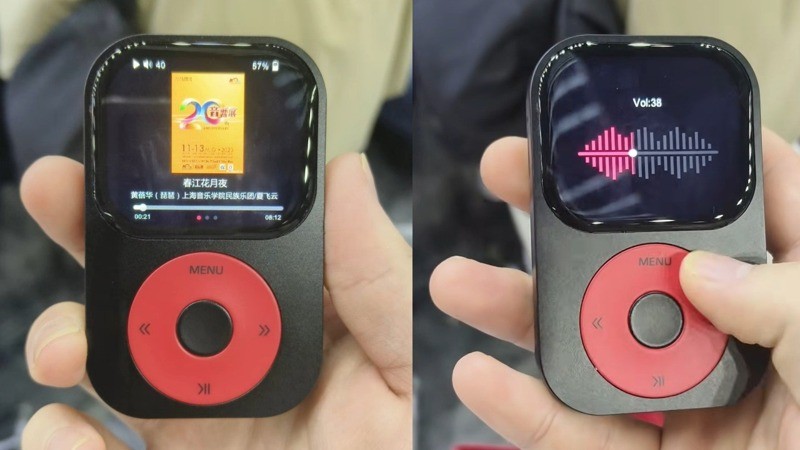
Wireless features are unusually comprehensive for such a small player. The Q2 supports dual-band Wi-Fi on 2.4GHz and 5GHz bands, with AirPlay, DLNA and QPlay for network playback and integration. Bluetooth 5.2 is bidirectional, so the Q2 can transmit audio to wireless headphones or speakers and receive audio from another source. Supported Bluetooth codecs are SBC, AAC, aptX, aptX HD and LDAC. Battery life is specified at up to 13.5 hours via 3.5 mm, up to 12.5 hours via 4.4 mm balanced, and up to 16.5 hours for LDAC Bluetooth playback.
Pros
- Very compact 80 × 50 × 13.5 mm body and low 83 g weight
- Four Cirrus Logic CS43131 DAC chips
- 3.5 mm unbalanced and 4.4 mm balanced headphone outputs
- 425 mW into 32 ohms specified through the balanced output
- Low and High gain settings for headphone matching
- PCM up to 768kHz/32-bit and native DSD up to DSD512
- microSD support up to 2TB
- Bidirectional USB and bidirectional Bluetooth 5.2 with SBC, AAC, aptX, aptX HD and LDAC
Cons
- No built-in storage capacity is specified
- Runs MTouch OS rather than a full Android environment for streaming-app flexibility
- Smaller 2.09-inch screen is less suited to large-library browsing than the DX340’s 6.0-inch display
- No modular amplifier upgrade path is described
- USD pricing and detailed regional availability have not been specified
Best for: Listeners who want a genuinely pocket-size hi-res player with balanced output, strong wireless options, microSD library support and straightforward portable control.
Read the original Stereoindex article →
iBasso DX340 vs Shanling Q2: direct comparison
The biggest difference is not file compatibility, because both players cover the same headline hi-res limits: PCM up to 768kHz/32-bit and native DSD512. The difference lies in implementation, scale and intended usage. The DX340 is a large, modular, Android-capable DAP with a discrete 1-bit DAC system and separate analog/digital power architecture. The Q2 is an ultra-compact MTouch OS player with four integrated Cirrus Logic DAC chips, clearly specified headphone sockets and wide two-way wireless functionality.
For design and construction, the DX340 feels more like a transportable flagship. Its stainless steel case, 486 g weight and 6.0-inch AMOLED screen make it a serious handheld source, but not a featherweight companion. The Q2 is explicitly built around pocket control: 83 g, a tiny footprint, an aluminum-alloy frame and glass rear panel, a small touchscreen, and a separate Click Wheel that avoids forcing every adjustment through the display.
The core DAC technologies are also fundamentally different. iBasso uses a discrete 1-bit DAC configuration managed by FPGA Master 3.0, a design presented as focused on timing precision, clarity and very low distortion. Shanling uses four Cirrus Logic CS43131 DAC chips, a compact and well-defined chip-based approach. The supplied information does not include comparable measured distortion, noise or output impedance figures for both players, so the distinction should be understood as architectural rather than a proven measurement hierarchy.
Amplification is where the DX340 offers the more expandable platform. Its AMP15 module is standard, and iBasso’s modular amplifier system allows swapping to compatible amp boards including AMP1X series, AMP12, AMP13 and AMP14. That makes the DX340 the more adaptable long-term platform for users who like to tune or upgrade the analog output stage. The Q2 counters with clearer out-of-the-box socket and power specifications: 3.5 mm unbalanced, 4.4 mm balanced, 425 mW into 32 ohms from balanced, and Low/High gain modes.
Operating system choice is another decisive split. The DX340 can run Mango OS for dedicated music playback or Android 13 for broader app access. That makes it the stronger option if streaming applications are part of the portable workflow. The Q2 supports network playback through AirPlay, DLNA and QPlay, and it offers bidirectional Bluetooth, but the supplied information does not describe a full Android app environment. For local-file listening and network integration, the Q2 is very capable; for app-led use, the DX340 is the more flexible design.
Storage favors the iBasso for users who want internal capacity. The DX340 includes 256GB of internal storage and expands by microSD up to 2TB. The Q2 also supports microSD cards up to 2TB, but no built-in storage capacity is specified. That does not limit its potential library size with the right card, but it does mean removable storage is the stated local-storage route.
Battery life is more nuanced. The DX340 claims up to eleven hours of continuous playtime, with replaceable dual batteries and separate analog and digital power supplies. The Q2 claims up to 13.5 hours from the 3.5 mm output, up to 12.5 hours from the 4.4 mm output and up to 16.5 hours over LDAC Bluetooth. On stated endurance alone, the Q2 has the advantage; on power-supply architecture and replaceability, the DX340 is the more elaborate design.
Connectivity is strong on both, but with different emphasis. The DX340 offers balanced and unbalanced outputs, coaxial output, USB OTG, Bluetooth 5.0 and dual-band Wi-Fi, and can function as a hi-res transport, wireless source or USB DAC. The Q2 offers 3.5 mm and 4.4 mm headphone outputs, bidirectional USB, dual-band Wi-Fi with AirPlay, DLNA and QPlay, and bidirectional Bluetooth 5.2 with named codecs including LDAC. If you need specific Bluetooth codec assurance, the Q2’s specification is more explicit. If you need a coaxial output or Android-based source flexibility, the DX340 has the edge.
| Category | iBasso DX340 DAP: Flagship Portable Player with Discrete 1-Bit DAC and Modular Amps | Shanling Q2 Combines Quad DACs With Pocket-Size Control | Edge |
|---|---|---|---|
| Product concept | Reference-class flagship portable player with modular amplification and dual OS operation | Pocket-size hi-fi player focused on compact control, balanced output and two-way connectivity | Depends on use |
| DAC architecture | Discrete 1-bit DAC configuration with FPGA Master 3.0 | Four Cirrus Logic CS43131 DAC chips | Different approaches |
| Hi-res support | PCM up to 32-bit/768kHz and native DSD512 | PCM up to 768kHz/32-bit and native DSD512 | Tie |
| Operating system | Mango OS plus Android 13 | MTouch OS | iBasso DX340 |
| Processor and memory | Qualcomm Snapdragon 665, 8GB RAM, 256GB internal storage | Ingenic X2000 processor; no built-in storage capacity specified | iBasso DX340 |
| Storage expansion | microSD up to 2TB plus 256GB internal storage | microSD up to 2TB | iBasso DX340 |
| Headphone outputs | Balanced and unbalanced outputs; socket sizes not specified | 3.5 mm unbalanced and 4.4 mm balanced | Shanling Q2 for specified sockets |
| Amplification | Standard AMP15 module; compatible with multiple iBasso amp boards | 425 mW into 32 ohms via balanced output; Low and High gain | DX340 for modularity; Q2 for specified output |
| Wireless | Bluetooth 5.0 and dual-band Wi-Fi | Bluetooth 5.2 bidirectional with SBC, AAC, aptX, aptX HD, LDAC; dual-band Wi-Fi with AirPlay, DLNA, QPlay | Shanling Q2 for specified wireless features |
| USB and digital output | USB OTG, USB DAC use and coaxial output supported | Bidirectional USB digital audio | Depends on system need separately: DX340 for coaxial; Q2 for specified bidirectional USB use},{ |
Verdict: which portable player should you buy?
The iBasso DX340 is the more ambitious audiophile platform. Its discrete 1-bit DAC architecture, FPGA Master 3.0 system, dual OS design, Android 13 support, modular amplifier boards, 256GB internal storage and separate analog/digital battery architecture make it the more comprehensive player for a listener building a serious portable or transportable headphone setup. It is the better fit if you want a DAP that can grow with amplifier modules, handle local libraries internally and run a broader app environment.
The Shanling Q2 is the more practical everyday portable. Its 83 g chassis, 3.5 mm and 4.4 mm outputs, specified 425 mW balanced output, Low/High gain options, microSD expansion, bidirectional USB, bidirectional Bluetooth 5.2 and network features make it unusually capable for its size. It is the stronger choice for commuters, travelers and pocket-first listeners who want hi-res local playback and flexible wireless use without carrying a large flagship player.
There is no responsible single winner without pricing and without comparable bench measurements or listening evaluations. The DX340 wins on platform depth, screen size, internal storage, modularity and Android flexibility. The Q2 wins on portability, specified output sockets, stated battery endurance and detailed wireless codec support. Choose the iBasso if your portable player is the heart of a high-end headphone system. Choose the Shanling if you want a compact, versatile hi-fi player that disappears into a pocket.
Frequently asked questions
Do the iBasso DX340 and Shanling Q2 support the same hi-res formats?
Their headline decoding limits match: both support PCM up to 768kHz/32-bit and native DSD up to DSD512.
Which player is more portable?
The Shanling Q2 is far more pocketable. It measures 80 × 50 × 13.5 mm and weighs 83 g, while the iBasso DX340 weighs 486 g and uses a much larger 6.0-inch display.
Which one is better for streaming apps?
The iBasso DX340 is the stronger choice for app flexibility because it includes Android 13 alongside Mango OS. The Shanling Q2 supports network playback features such as AirPlay, DLNA and QPlay, but a full Android app environment is not specified.
Does the Shanling Q2 have balanced output?
Yes. The Q2 has a 4.4 mm balanced output in addition to a 3.5 mm unbalanced output. Shanling specifies up to 425 mW into 32 ohms from the balanced connection.
Does the iBasso DX340 have modular amplification?
Yes. The DX340 ships with the AMP15 module and is compatible with multiple iBasso amplifier boards including AMP1X series, AMP12, AMP13 and AMP14, with future AMP1X boards also supported.
Which player has more storage?
The iBasso DX340 has the advantage for built-in storage, with 256GB internal capacity plus microSD expansion up to 2TB. The Shanling Q2 supports microSD cards up to 2TB, but no built-in storage capacity is specified.
A 486g Flagship DAP or an 83g Pocket Player? DX340 and Q2 Compared
Two products. One winner. You decide.

iBasso DX340 DAP: Flagship Portable Player with Discrete 1-Bit DAC and Modular Amps