Amplifiers Worth Discovering Beyond the Usual Shortlist
A discovery-led guide to amplifier options that deserve attention for specific systems, including tube integrated amps, compact balanced designs, powerful stereo power amps, and active alternatives.

Some amplifier choices are obvious because they dominate dealer shelves and forum threads.
Others deserve attention for more specific reasons: an unusual circuit approach, a thoughtful input set, a compact form factor, or a design philosophy that makes sense for a particular system rather than for everyone.

1. JBL 4305P: Active bookshelf speakers with with built-in streamer
JBL 4305P active bookshelf speakers with built-in amplification, streaming features, and studio-monitor styling.
The JBL 4305P is not a conventional standalone amplifier, but it belongs in the conversation for listeners who are considering whether they need separate amplification at all.
These active bookshelf speakers combine a digital system, built-in amplification for each driver, streaming support, a DAC, analog and digital inputs, and a subwoofer output in one compact studio-monitor-inspired package.
The source describes separate Class D amplifier channels for the compression driver and woofer, along with Ethernet, USB, optical, analog, XLR/TRS combo input, Chromecast, AirPlay 2, and Bluetooth support.
Best for: Listeners considering an all-in-one active speaker system
- Built-in active amplification for each driver
- DAC processing up to 24 bit / 192 kHz
- Ethernet, USB, optical, analog, and XLR/TRS connectivity
- Subwoofer output for system expansion
Verdict: Choose the JBL 4305P if you want to reduce box count and replace a traditional amplifier-and-speaker chain with a powered, streaming-capable bookshelf system.

2. Audio Note Oto SE 35: 35th Anniversary Tube Amplifier with Major Design Overhaul
Audio Note Oto SE 35 integrated tube amplifier, introduced as a significant redesign of the long-running Oto concept.
The Audio Note Oto SE 35 is presented as a major revision of one of Audio Note (UK)'s defining integrated tube amplifier designs.
The supplied article frames the Oto as central to the company's single-ended tube philosophy and says the new version represents the most significant design revision and improvement in decades.
It is best understood as a specialist amplifier for listeners drawn to Audio Note's long-running approach to simple, musically focused tube design rather than feature-heavy modern integration.
Best for: Tube-audio listeners drawn to long-running single-ended design ideas
- Major design revision of the Oto amplifier
- Rooted in Audio Note's single-ended tube philosophy
- Connected to the company's in-house amplifier history
- Backed by a stated service and repair ethos
Verdict: The Oto SE 35 is a compelling discovery for buyers who value amplifier lineage, tube simplicity, and Audio Note's continuity of design philosophy.

3. Luxman M-200: High quality stereo power amplifier
Luxman M-200 stereo power amplifier with compact metal chassis, front displays, and balanced input support.
The Luxman M-200 is a compact stereo power amplifier with a level of control and display functionality that is not always found on power amplifiers.
The source highlights a low metal chassis on vibration-isolating legs, an aluminum front panel, miniature displays for power values and other information, balanced XLR and RCA inputs, and phase switching for balanced connection.
Its push-pull discrete circuit, Schottky diodes, bipolar output transistors, EI transformer, and bridge mode make it a flexible option for systems that need a small but carefully specified power amp.
Best for: Compact systems needing a dedicated stereo power amplifier
- Balanced XLR and RCA inputs
- Bridge mode for mono operation
- Discrete push-pull circuit with selected components
- Front-panel displays with adjustable brightness
Verdict: The Luxman M-200 suits listeners who want a small power amplifier with balanced connectivity, useful monitoring displays, and bridge-mode flexibility.

4. Michi X5 Series 2: One of the best integrated amplifiers from Rotel
Michi X5 Series 2 integrated amplifier with extensive source switching, built-in DAC, and high-output architecture.
The Michi X5 Series 2 is a full-scale integrated amplifier positioned within Rotel's elite Michi line.
The supplied material emphasizes high output, an ESS SABER ES9028PRO DAC, a topology related to the Michi P5 preamplifier and S5 power amplifier, two in-house toroidal transformers, and switching for 13 sources.
With analog, MM phono, optical, coaxial, PC-USB, and Bluetooth aptX connectivity, it is one of the most broadly equipped amplifiers in this selection.
Best for: Ambitious two-channel systems with many sources
- High-power integrated amplifier platform
- ESS SABER ES9028PRO DAC with up to 32 bit / 768 kHz operation
- Switching for 13 sources
- MM phono, PC-USB, and Bluetooth aptX support
Verdict: The Michi X5 Series 2 is the choice here for buyers who want a powerful integrated amplifier with extensive analog and digital connectivity in one chassis.
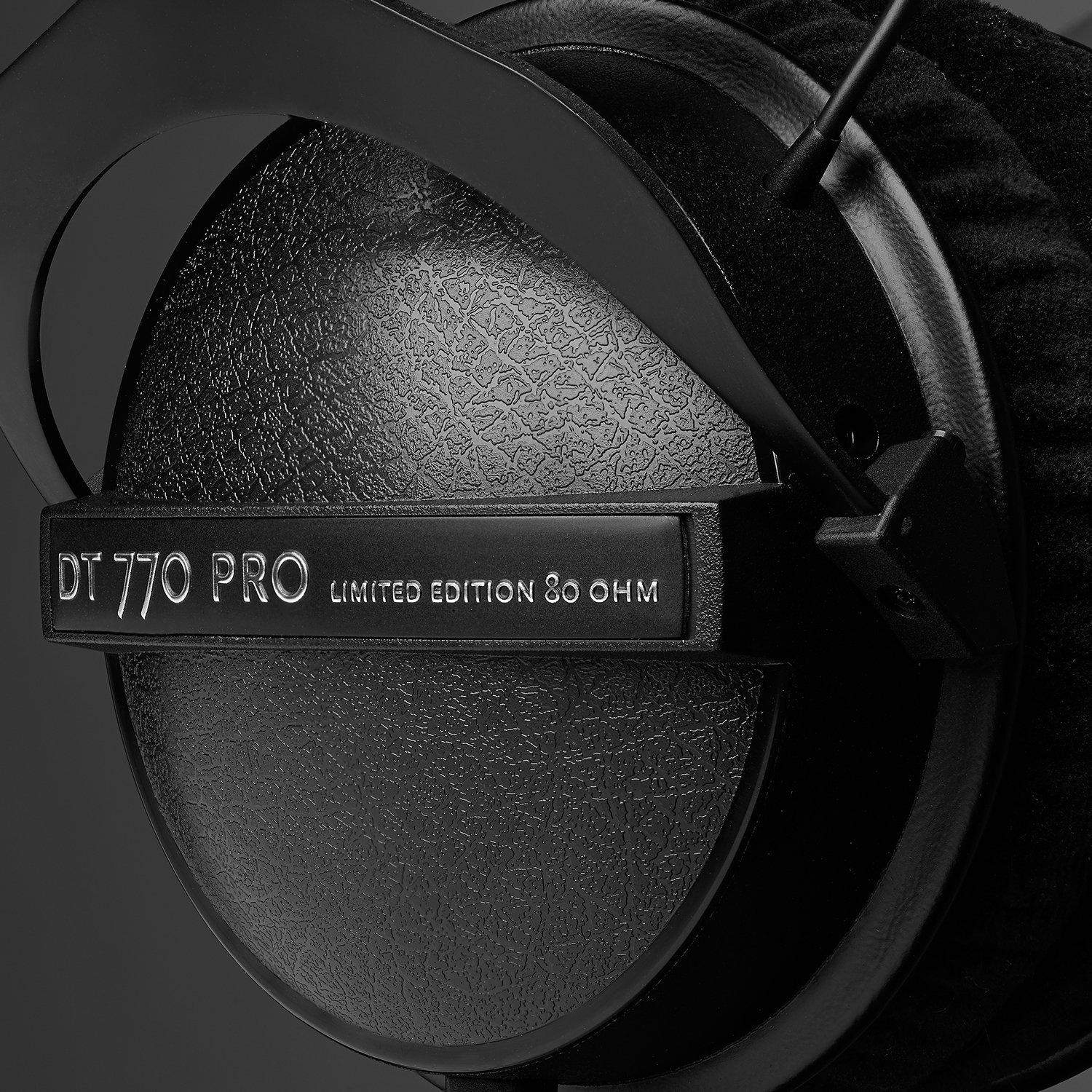
5. Beyerdynamic launches DT-series black edition
Beyerdynamic DT-series black edition headphones, offered across studio-oriented closed, semi-open, and open formats.
The Beyerdynamic DT-series black edition is not an amplifier, so it should not be treated as an amp recommendation.
Its relevance is as a monitoring partner for systems that include headphone outputs, headphone amplifiers, or studio-oriented playback chains.
The supplied article describes black-edition versions of the DT 770, DT 880, and DT 990 PRO families, with closed, semi-open, and open designs, impedance options, and a reputation for sound work, monitoring, and comfort.
Best for: Monitoring headphone buyers, not amplifier shoppers
- Closed, semi-open, and open designs in the line
- 80 ohm and 250 ohm options mentioned for DT 770 PRO Black Edition
- Comfort-oriented full-size design
- Suited to monitoring and sound work
Verdict: The DT-series black edition belongs beside an amplifier only as a headphone or monitoring choice, not as an amplifier alternative.

6. Jadis Óde: Pure Class A Tube Amplifier with KT88 Power & French Craftsmanship
Jadis Óde integrated tube amplifier with KT88 power tubes, Class A operation, and handcrafted French construction.
The Jadis Óde is a pure Class A integrated tube amplifier built around KT88 output tubes in push-pull configuration.
The source describes it as hand-assembled in France, using carefully selected components and individually tested vacuum tubes, with 30 watts per channel and support for KT120 tubes for those seeking a different character.
It is presented as an amplifier tuned for musicality rather than clinical analysis, making it a distinctive option for listeners who want a handcrafted tube integrated rather than a feature-led solid-state design.
Best for: Listeners seeking a handcrafted tube integrated amplifier
- Pure Class A tube design
- KT88 push-pull output stage
- 30 watts per channel
- Hand-assembled in France with individually tested tubes
Verdict: The Jadis Óde is for buyers who prioritize Class A tube architecture, French hand assembly, and a musically oriented presentation over maximum feature count.
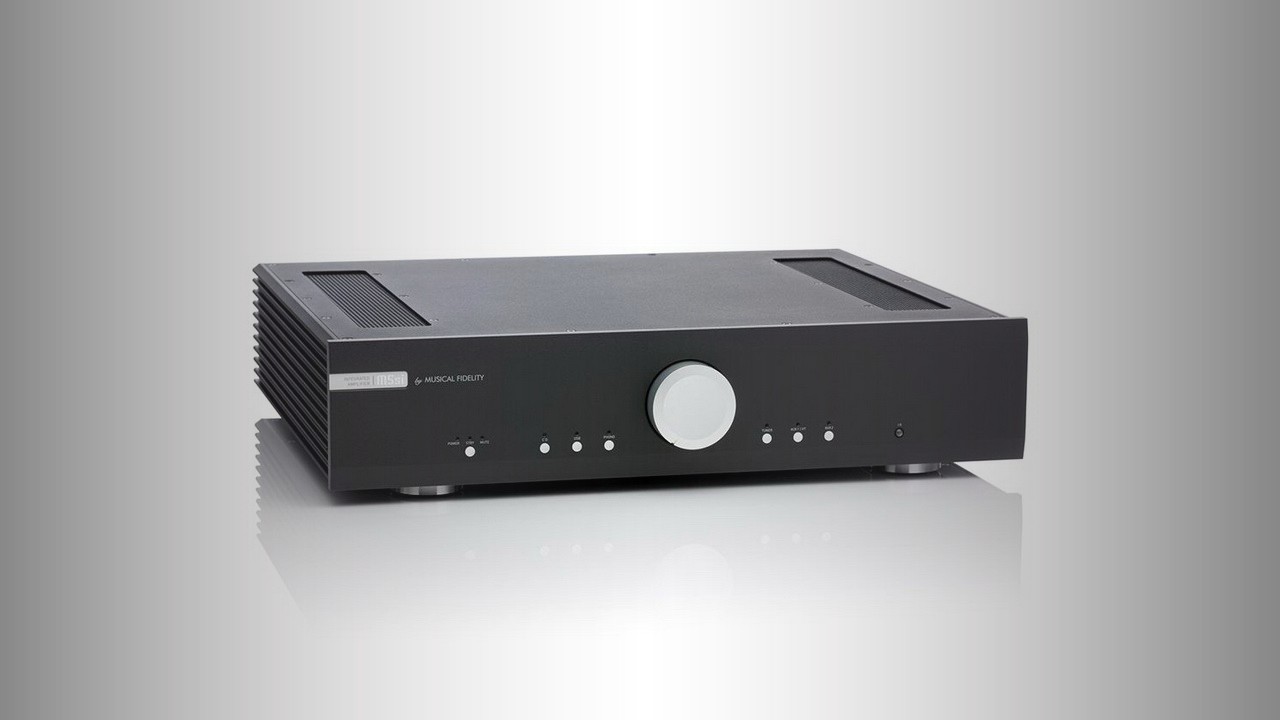
7. Musical Fidelity M5Si: A successor to the Nu-Vista 800 flagship amplifier
Musical Fidelity M5Si integrated amplifier with minimalist front panel and five-input rear-panel layout.
The Musical Fidelity M5Si is an integrated amplifier whose appeal lies in straightforward execution rather than visual excess.
The source places it ideologically closer to the M6si than the budget M3si and notes that the company positions it as a successor to the Nu-Vista 800, although it does not use nuvistors.
Around the back, its practical side is clear: five inputs, including four line inputs and an MM phono input, plus a Home Theater mode that can feed signal directly to the power amplifier section for AV-system integration.
Best for: Integrated-amplifier buyers wanting phono and AV flexibility
- Four line inputs plus MM phono input
- Home Theater mode for AV integration
- Minimalist front-panel layout
- Durable powder-coated finish described in the source
Verdict: The Musical Fidelity M5Si is a sensible discovery for listeners who want a cleanly laid-out integrated amplifier with MM phono support and a practical home-theater bypass option.

8. Primare A35.2: Powerful stereo amplifier
Primare A35.2 stereo power amplifier with UFPD technology, balanced inputs, and bridge-mode capability.
The Primare A35.2 is a dedicated stereo power amplifier rated at 2 x 200 watts and built around Primare's UFPD technology.
The supplied article emphasizes high output power, very low distortion, fast and clean sound over an extended frequency range, strong efficiency compared with traditional Class A/B designs, and reduced excess heat.
It also offers balanced XLR and unbalanced RCA inputs for each channel and can be bridged to deliver a fully balanced mono channel rated at 800 watts into 8 ohms.
Best for: Systems needing a powerful, efficient stereo power amplifier
- 2 x 200 watt stereo power amplifier
- Balanced XLR and RCA inputs
- Bridge mode rated at 800 watts into 8 ohms
- Efficient UFPD design with reduced excess heat
Verdict: The Primare A35.2 stands out for buyers who need substantial power, balanced connectivity, and the option to bridge into a high-output mono configuration.
9. Audiolab 6000A MkII: Updated integrated amplifier with new DAC chips
Audiolab 6000A MkII integrated amplifier with HDMI ARC, updated DAC section, and flexible operating modes.
The Audiolab 6000A MkII updates a well-known integrated amplifier platform with new DAC chips and HDMI ARC.
The source describes a Class AB amplifier with a 200VA toroidal transformer, four 15,000µF smoothing capacitors, three operating modes, and output of 50 watts per channel into 8 ohms or 75 watts into 4 ohms.
Its flexibility is the main story: it can work as an integrated amplifier, as a preamplifier, or as a power amplifier, while also offering Bluetooth 5.1 aptX HD, four digital inputs, and four analog RCA connections.
Best for: Flexible mixed music and TV systems
- Class AB amplifier with toroidal transformer
- Integrated, preamp-only, and power-amp-only modes
- HDMI ARC input
- Bluetooth 5.1 aptX HD support
Verdict: The Audiolab 6000A MkII is the practical pick for buyers who want an integrated amplifier that can adapt to changing system roles and modern source needs.

10. TEAC AX-505: Fully balanced integrated amplifier from Japan
TEAC AX-505 compact integrated amplifier with balanced inputs, Hypex Ncore amplification, and front-panel meters.
The TEAC AX-505 is a compact integrated amplifier built around Hypex Ncore Class D amplifier modules tuned for TEAC.
The source rates output at 70 W + 70 W into 8 ohms under the stated test condition and notes energy-efficient operation, silent use without an internal forced-cooling system, protection against current surges, overvoltage, and overheating, plus a toroidal transformer and Schottky barrier diodes in the power section.
Its fully balanced preamplifier and balanced inputs make it especially relevant for systems built around modern balanced-source components.
Best for: Compact systems using balanced source components
- Compact integrated amplifier design
- Hypex Ncore Class D modules tuned for TEAC
- Fully balanced preamplifier with balanced inputs
- Silent operation without forced cooling
Verdict: The TEAC AX-505 is a strong fit for listeners who want a compact, efficient integrated amplifier with balanced architecture and quiet operation.
Quick comparison
These products differ as much by system role as by amplifier topology.
Some are conventional integrated amplifiers, others are dedicated power amplifiers, one is an active speaker system with its own amplification, and one is a headphone line that should be considered only as a monitoring partner rather than an amplifier purchase.
| Product | Best for | Verdict |
|---|---|---|
| JBL 4305P | All-in-one active speaker setups | A powered bookshelf system that can replace separate amplification for listeners who want streaming, DAC, inputs, and speakers in one package. |
| Audio Note Oto SE 35 | Single-ended tube-amplifier enthusiasts | A heritage-led tube integrated amplifier for buyers attracted to Audio Note's long-running design philosophy and major Oto revision. |
| Luxman M-200 | Compact stereo power-amplifier systems | A small power amplifier with balanced inputs, useful front displays, and bridge-mode flexibility. |
| Michi X5 Series 2 | High-end integrated systems with many sources | A powerful, heavily connected integrated amplifier with DAC, phono, USB, Bluetooth, and broad source switching. |
| Beyerdynamic DT-series black edition | Studio monitoring and headphone use | Not an amplifier, but a relevant monitoring option for systems that include headphone amplification. |
| Jadis Óde | Handcrafted Class A tube systems | A KT88-based integrated tube amplifier focused on Class A operation, hand assembly, and a musically oriented presentation. |
| Musical Fidelity M5Si | Straightforward integrated systems with phono and AV needs | A cleanly designed integrated amplifier with MM phono input and a Home Theater mode for AV integration. |
| Primare A35.2 | Power-hungry stereo or bridged mono setups | A powerful and efficient stereo power amplifier with balanced inputs and substantial bridged output capability. |
| Audiolab 6000A MkII | Flexible systems combining music and TV sources | A Class AB integrated amplifier with HDMI ARC, Bluetooth, updated DAC hardware, and multiple operating modes. |
| TEAC AX-505 | Compact balanced-source systems | A small integrated amplifier with tuned Hypex Ncore modules, balanced preamp architecture, and silent cooling-free operation. |
Frequently asked questions
Should I choose an integrated amplifier or a power amplifier?
Choose an integrated amplifier if you need volume control and source switching in one box, as with the Michi X5 Series 2, Musical Fidelity M5Si, Audiolab 6000A MkII, TEAC AX-505, Jadis Óde, and Audio Note Oto SE 35.
Choose a power amplifier such as the Luxman M-200 or Primare A35.2 if you already have a preamplifier, DAC-preamp, AV processor, or other component handling control duties.
Do I need digital inputs inside the amplifier?
Digital inputs are useful when the amplifier is the hub of a system.
The Michi X5 Series 2, Audiolab 6000A MkII, and JBL 4305P include digital connectivity in the supplied material, while more traditional amplifiers such as the Musical Fidelity M5Si, Luxman M-200, Primare A35.2, Jadis Óde, and Audio Note Oto SE 35 are better considered around analog system building unless paired with external digital sources.
When do balanced inputs matter?
Balanced inputs are useful when your source component provides balanced outputs or when you want a connection format commonly used in more elaborate hi-fi systems.
The Luxman M-200, Michi X5 Series 2, Primare A35.2, TEAC AX-505, and JBL 4305P all include balanced connection options in the supplied descriptions, though the rest of the system must also support them to gain the practical benefit.
How much amplifier power should I prioritize?
Start with your speakers and room rather than chasing the largest number.
The Audiolab 6000A MkII and TEAC AX-505 provide moderate integrated-amplifier output, the Jadis Óde is a 30-watt Class A tube design, the Luxman M-200 is a compact power amplifier with bridge mode, and the Primare A35.2 and Michi X5 Series 2 are described as higher-output options.
Match the amplifier's role and speaker demands before comparing wattage alone.
How to choose from these overlooked amplifier options
The most useful way to approach this group is to decide what kind of system you are actually building.
If you want one central box with source switching, volume control, and broad connectivity, the Michi X5 Series 2 and Audiolab 6000A MkII are the most connectivity-led integrated amplifiers here, while the Musical Fidelity M5Si is more traditionally analog with MM phono and Home Theater mode.
The TEAC AX-505 is the compact balanced option, and the Jadis Óde and Audio Note Oto SE 35 are for listeners who are specifically drawn to tube-amplifier design philosophies rather than feature density.