
The DAC category is broader than it first appears.
Some products here are pure desktop converters, others add headphone amplification, streaming, preamp duties, room correction, Bluetooth, or even speaker amplification.
That variety can make shopping confusing, but it also means there are strong options for very different systems. This guide takes a discovery-led approach rather than ranking only by specification density. The selections below are grounded in the supplied product coverage: architecture, connectivity, platform support, form factor, and stated functions. No listening-test claims or ownership assumptions are made. The useful question is not simply which DAC is most advanced, but which one solves the right problem. A streamer-DAC may be ideal for a living-room system, a balanced desktop DAC/amp may suit headphone users, and a compact battery-powered unit may be the better fit for portable listening.

1. NAD C658
NAD C658 shown as a full-width streaming DAC and preamplifier with BluOS platform support.
The NAD C658 stands out because it is not just a DAC.
It combines DAC, preamplifier, and BluOS streamer functions, with Dirac Live room correction and MQA support identified in the source article.
Its strongest differentiator is the BluOS platform, which provides access to major streaming and radio services, local and online music, file support up to 32-bit/192kHz, and indexing for large libraries. AirPlay 2 support adds another route for Apple-device and multi-room streaming, while the BluOS app is described as easy to navigate and robust.
Best for: Networked hi-fi systems that need streaming, preamp control, and room correction
- DAC, preamplifier, and BluOS streamer in one
- Dirac Live room correction support
- AirPlay 2 and multi-room BluOS connectivity
- Supports files up to 32-bit/192kHz and MQA
Verdict: The NAD C658 is the most system-oriented option here, especially for listeners who want a DAC to act as the digital hub of a BluOS-based setup.
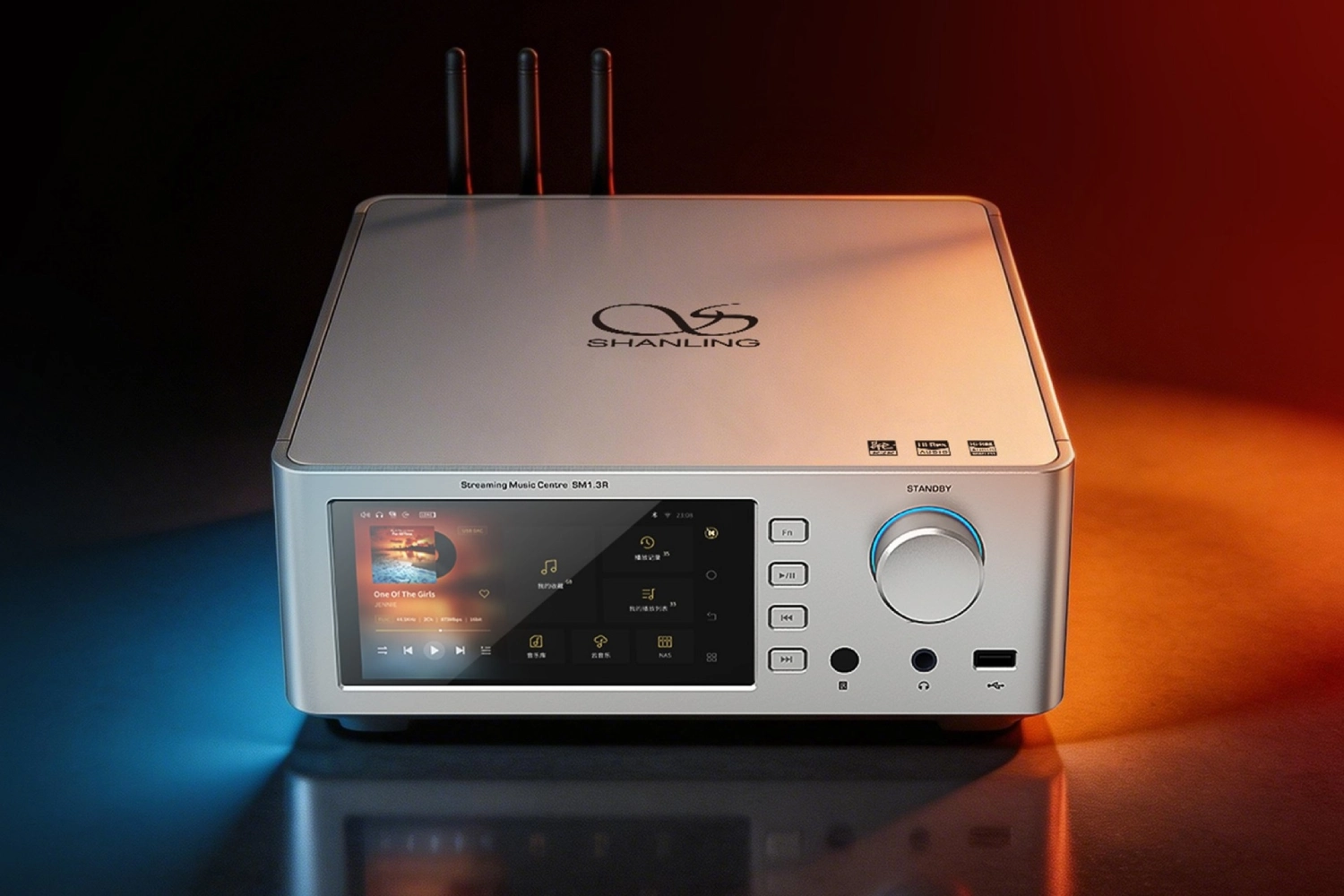
2. Shanling SM1.3R R2R DAC
Shanling SM1.3R combines a touchscreen streaming interface with a proprietary R2R DAC module.
The Shanling SM1.3R is the R2R version of Shanling’s SM1.3 streaming DAC, keeping the housing, 5.8-inch touchscreen, Android-based streaming platform, and connectivity approach while replacing the previous converter architecture with a proprietary 24-bit R2R module.
Shanling presents that R2R design as a more analog-leaning alternative to the earlier delta-sigma arrangement.
The streaming side is broad: Roon Ready status, Tidal Connect, Qobuz Connect, and Spotify Connect are built in, with separate apps for services including Apple Music, Apple Classic, and Amazon Music. The closed Android build is important to note because it excludes sideloading and Google Play Store installation.
Best for: Listeners who want a self-contained streaming DAC with R2R conversion
- Proprietary 24-bit R2R conversion module
- 5.8-inch touchscreen interface
- Roon Ready with Tidal Connect, Qobuz Connect, and Spotify Connect
- Internal SSD slot for local playback
Verdict: The Shanling SM1.3R is the most distinctive choice for those specifically interested in R2R architecture inside a modern streaming platform.

3. D&A Alpha
D&A Alpha presented as a compact balanced DAC, preamplifier, and headphone amplifier.
The D&A Alpha is positioned as a compact desktop control center rather than a lifestyle accessory.
It combines DAC, preamplifier, and headphone amplifier functions, with a balanced signal path from input to output.
Its dual-mono DAC architecture uses two ES9039Q2M chips, each with its own clocking and signal path, while the analog section uses a fully discrete four-channel balanced amplifier design. The analog-domain volume control allows it to operate as a true preamplifier, and the source also highlights femtosecond oscillators plus a two-stage PLL system for clock stability.
Best for: Desktop listeners who want a compact DAC, preamp, and serious headphone amplifier
- Dual-mono design with two ES9039Q2M DAC chips
- Balanced from input to output
- Discrete four-channel balanced headphone amplifier
- Analog-domain volume control for preamp use
Verdict: The D&A Alpha is a strong fit when balanced architecture and desktop headphone flexibility matter more than streaming features.

4. 7HZ Artemis39
7HZ Artemis39 is a portable DAC and headphone amplifier with metal construction and balanced output.
The 7HZ Artemis39 is the first DAC and headphone amplifier from 7Hertz, and it is built around portability.
The compact metal body, 1100 mAh battery, 3.5mm and 4.4mm outputs, and Bluetooth support make it a different proposition from the desktop and rack-width models in this guide.
The source lists an ES903902M DAC, 8 to 10 hours of continuous music playback, 3.5mm single-ended output, 4.4mm balanced output, and 4.4mm line-out. Output power is specified at 320 mW from 3.5mm and 405 mW from 4.4mm.
Best for: Portable headphone listening with both wired and Bluetooth options
- Compact metal body
- 1100 mAh battery with 8 to 10 hours of playback
- 3.5mm and 4.4mm headphone outputs
- Bluetooth support for wireless use
Verdict: The 7HZ Artemis39 is the mobility-first pick, offering battery operation and balanced output in a compact DAC/amp format.

5. QUESTYLE CMA Eighteen Master
QUESTYLE CMA Eighteen Master presented as a flagship DAC and headphone amplifier with current-mode amplification.
The QUESTYLE CMA Eighteen Master is described as a flagship DAC and headphone amplifier built around Questyle’s current-mode amplification approach.
The source emphasizes continuity with the CMA line and highlights full current processing as a core design theme.
On the digital side, the unit uses an upgraded XMOS XU316 USB platform with support up to PCM768 at 32-bit and DSD512. It also offers both USB-B and USB-C interfaces, while Bluetooth support includes aptX-HD and LDAC.
Best for: Headphone-focused systems where flagship DAC/amp architecture and high-resolution USB support are priorities
- Current-mode amplification technology
- XMOS XU316 USB platform
- Supports up to PCM768 at 32-bit and DSD512
- Bluetooth with aptX-HD and LDAC
Verdict: The QUESTYLE CMA Eighteen Master is the most flagship-oriented headphone DAC/amp in this group, with current-mode amplification at the center of its identity.

6. OSD DAC-X200
OSD DAC-X200 combines a compact amplifier chassis with digital and analog inputs.
The OSD DAC-X200 is closer to an integrated amplifier with a built-in DAC than to a standalone converter.
Its appeal is practical system consolidation: Class AB amplification, an onboard ESS ES9018K2M SABRE32 DAC, USB Type A Class 2 audio input, optical digital input, and two RCA analog inputs.
The source states that USB playback supports PCM up to 32-bit/384kHz and DSD up to 11.2MHz. It also includes two sets of speaker outputs and can be used in stereo or distributed audio systems around the home.
Best for: Systems that need a DAC and speaker amplifier in one compact component
- Class AB amplifier with built-in DAC
- ESS ES9018K2M SABRE32 DAC
- USB, optical, and RCA analog inputs
- Two sets of speaker outputs
Verdict: The OSD DAC-X200 is the practical integrated option for users who want digital conversion and loudspeaker drive from the same box.

7. xDuoo MH-02
xDuoo MH-02 is a compact tube DAC and headphone amplifier with multiple front-panel headphone outputs.
The xDuoo MH-02 brings tubes into the DAC/headphone-amplifier mix.
Its preliminary stage uses two 6J1 tubes, while the output stage uses transistors operating in pure Class A.
The DAC section is based on a Cirrus Logic CS43131 chip and supports PCM up to 32-bit/768kHz plus DSD256. Connectivity is straightforward but flexible for headphones: 3.5mm, 4.4mm, and 6.35mm headphone jacks sit alongside RCA analog input and output and a USB-C port.
Best for: Desktop headphone users who want a tube-stage DAC/amp format
- Two 6J1 tubes in the preliminary stage
- Pure Class A transistor output stage
- CS43131 DAC with PCM 32-bit/768kHz and DSD256 support
- 3.5mm, 4.4mm, and 6.35mm headphone outputs
Verdict: The xDuoo MH-02 is the characterful desktop choice here, pairing a tube preliminary stage with broad headphone output options.

8. TEAC UD-301-X
TEAC UD-301-X shown as a compact USB DAC with headphone amplification and balanced analog outputs.
The TEAC UD-301-X is a more traditional USB DAC with a built-in headphone amplifier and a design derived from TEAC’s higher-end UD-501 model.
The source highlights dual Burr-Brown PCM1795 DAC chips from Texas Instruments, one per channel, along with a toroidal transformer power supply and Muses operational amplifiers.
USB input supports DSD 2.8MHz and 5.6MHz, while PCM support is listed up to 192kHz/24-bit. Optical and coaxial digital inputs are included, and analog output is available on RCA and XLR connectors. Upsampling to 192kHz can be enabled or disabled.
Best for: Traditional desktop or component systems needing a USB DAC with balanced analog output
- Dual Burr-Brown PCM1795 DAC chips
- Toroidal transformer power supply
- RCA and XLR analog outputs
- Switchable upsampling up to 192kHz
Verdict: The TEAC UD-301-X is the conventional hi-fi DAC pick, built around dual-mono conversion and useful digital input flexibility.

9. Shanling EH1
Shanling EH1 uses a compact aluminum desktop chassis with simple front-panel controls.
The Shanling EH1 is a compact desktop DAC and headphone amplifier designed around simplicity.
It avoids a display and instead uses buttons and rotary encoders, including a front-panel volume control and controls for bass and tone.
The aluminum chassis is offered in black and silver, and the source positions the EH1 as more powerful than Shanling’s UA Line, simpler than the H Line, and smaller than the EH3 Desktop DAC & Amplifier. Its value in this group is not specification complexity, but a straightforward desktop operating style.
Best for: Users who want a simple compact desktop DAC/amp without a screen-heavy interface
- Compact desktop DAC and headphone amplifier
- Minimalist control layout without a display
- Rotary volume control plus bass and tone controls
- Aluminum chassis in black or silver
Verdict: The Shanling EH1 is the ease-of-use option, prioritizing compactness and direct controls over elaborate interface features.

10. Gold Note DS-10
Gold Note DS-10 combines DAC, streamer, preamp, headphone amplifier, and user-adjustable DAC profiles.
The Gold Note DS-10 is presented as a highly versatile DAC that also includes a streamer, all-analog line preamp, headphone amplifier, and Bluetooth 5.0 support.
Its most unusual feature in the supplied material is user-adjustable DAC behavior: three profiles can be created and saved, with parameters including low-pass filter and high-pass attenuation accessible through the display, rotary control, or remote control.
The DS-10 is also described as based on Gold Note’s DS-1000 and as combining capabilities associated with the IS-1000 all-in-one device.
Best for: Listeners who want a configurable DAC/streamer with preamp and headphone functions
- DAC, streamer, line preamp, and headphone amplifier functions
- Bluetooth 5.0 support
- Three user-saveable DAC profiles
- Adjustable low-pass filter and high-pass attenuation
Verdict: The Gold Note DS-10 is the most tuning-focused option, suited to systems where configurability is as important as source integration.
Quick comparison
These DACs differ less by being simply better or worse, and more by the role each is designed to play.
The comparison below separates streaming hubs, desktop DAC/amps, portable options, integrated amplifier solutions, and configurable hi-fi components using only the supplied source distinctions.
| Product | Best for | Verdict |
|---|---|---|
| NAD C658 | BluOS-based systems needing DAC, streamer, preamp, and room correction in one component | Choose it when streaming platform depth and system control are more important than desktop compactness. |
| Shanling SM1.3R R2R DAC | R2R-curious listeners who also want touchscreen streaming and Connect-service support | Its key distinction is the proprietary 24-bit R2R module inside a modern closed Android streaming platform. |
| D&A Alpha | Balanced desktop headphone and preamp setups | Its dual-mono DAC design, discrete balanced amplifier, and analog volume control make it a compact engineering-led desktop hub. |
| 7HZ Artemis39 | Portable headphone use with battery power and balanced output | It is the travel-friendly option thanks to its compact metal body, 1100 mAh battery, Bluetooth, and 3.5mm/4.4mm outputs. |
| QUESTYLE CMA Eighteen Master | Headphone systems centered on current-mode amplification and high-resolution USB playback | It is the flagship-style DAC/amp choice in this selection, with XMOS XU316 USB and aptX-HD/LDAC Bluetooth support. |
| OSD DAC-X200 | Speaker systems needing integrated amplification and digital conversion | It differs from most entries by combining a Class AB speaker amplifier with an ESS SABRE32 DAC and multiple inputs. |
| xDuoo MH-02 | Desktop headphone users interested in a tube preliminary stage | Its two 6J1 tubes, Class A transistor output, and three headphone output sizes give it a distinct desktop DAC/amp identity. |
| TEAC UD-301-X | Traditional hi-fi systems needing USB, optical, coaxial, RCA, and XLR connectivity | It is the classic component DAC here, with dual Burr-Brown chips, a toroidal transformer, and switchable upsampling. |
| Shanling EH1 | Simple compact desktop listening with physical controls | Its appeal is operational simplicity: no display, direct controls, compact aluminum build, and bass/tone adjustment. |
| Gold Note DS-10 | Configurable DAC/streamer systems with preamp and headphone needs | Its standout distinction is user-adjustable DAC profiling alongside streaming, Bluetooth, line preamp, and headphone functions. |
Frequently asked questions
Should I choose a standalone DAC, a DAC/headphone amp, or a DAC/streamer?
Start with the job the component must perform.
If you already have amplification and streaming covered, a traditional DAC such as the TEAC UD-301-X may be enough.
If headphones are central, models such as the D&A Alpha, QUESTYLE CMA Eighteen Master, xDuoo MH-02, Shanling EH1, or 7HZ Artemis39 add headphone amplification. If the DAC will be the digital hub of a system, the NAD C658, Shanling SM1.3R, or Gold Note DS-10 add streaming functions.
Is R2R conversion automatically better than delta-sigma conversion?
The supplied material does not support a universal claim of superiority.
Shanling presents the SM1.3R’s proprietary 24-bit R2R module as a more analog representation than the earlier delta-sigma design, but other products here use different DAC architectures for different purposes.
Treat R2R as a design preference to evaluate alongside platform, inputs, outputs, and system fit.
Do balanced outputs matter when choosing a DAC?
Balanced connectivity can be useful if the rest of the system supports it, especially in desktop or component systems designed around balanced signal paths.
The D&A Alpha is described as balanced from input to output, the TEAC UD-301-X provides XLR analog outputs, and the 7HZ Artemis39 includes a 4.4mm balanced headphone output.
If your amplifier or headphones only use single-ended connections, balanced output should not be the only deciding factor.
How important is the control app or streaming platform?
It matters most when the DAC will also be your main source.
The NAD C658 relies on BluOS, described as easy to navigate and robust, with access to major services and multi-room connectivity.
The Shanling SM1.3R uses a closed Android platform with built-in Connect services but no sideloading or Google Play Store installation. If you mainly connect a computer over USB, the app ecosystem may be less important than USB support and analog output options.
How to Choose the Right DAC from This Group
A good DAC purchase begins with system role, not with the longest specification list.
For a living-room digital hub, the NAD C658 makes sense if BluOS streaming, preamp functionality, AirPlay 2, MQA support, and Dirac Live room correction are relevant to the system.
The Gold Note DS-10 occupies a related but more tuning-focused lane, adding streamer, line preamp, headphone amplifier, Bluetooth 5.0, and three saveable DAC profiles. The Shanling SM1.3R is the more specialized streaming choice for listeners drawn to R2R conversion and a touchscreen-based platform with Roon Ready and major Connect-service support. For headphones, decide where and how the unit will be used. The D&A Alpha is the most engineering-focused compact desktop option in the supplied material, with dual-mono ES9039Q2M conversion, a balanced path, a discrete four-channel balanced amplifier, and analog-domain volume control. The QUESTYLE CMA Eighteen Master is the flagship-style headphone DAC/amp built around current-mode amplification and broad high-resolution USB support. The xDuoo MH-02 is different again, using a tube preliminary stage and Class A transistor output, while the Shanling EH1 keeps the experience simpler with physical controls, no display, and a compact desktop chassis. The 7HZ Artemis39 is the portable outlier, with battery power, Bluetooth, and 3.5mm/4.4mm outputs. For speaker-based systems, check whether you need amplification at all. The OSD DAC-X200 is not merely a converter; it integrates a Class AB amplifier, ESS SABRE32 DAC, digital and analog inputs, and speaker outputs. That makes it practical for simplified stereo or distributed audio arrangements. By contrast, the TEAC UD-301-X is a more traditional DAC component with USB, optical, coaxial, RCA, and XLR connectivity, dual Burr-Brown conversion, and a toroidal transformer power supply. The safest shortlist is the one that removes features you will not use. Streaming platforms, balanced paths, R2R modules, tubes, Bluetooth, preamp outputs, and room correction are all meaningful only when they match the rest of the system. Choose the DAC that fits the signal chain first; the specifications matter most after the role is clear.



Sound Off
0Join the discussion if you have something to add.