Choosing a TV is less about chasing the most dramatic specification and more about matching the screen to the room, the sources and the way it will be used.
The models gathered here cover very different priorities: 8K flagships, Mini-LED gaming sets, OLED ambience, budget-minded 4K smart TVs and ultra-large display concepts.
The recommendations below are grounded in the supplied source material, so the emphasis stays on supported strengths and trade-offs rather than speculative performance claims. Some entries are full reviews, while others are launch or showcase reports; where the source is limited, the recommendation is framed accordingly. For most buyers, the key questions remain practical: Do you need advanced gaming connectivity, wide app support, higher brightness, a large screen, or simply a dependable everyday TV? This guide keeps those distinctions clear so each model has a sensible place on the shortlist.
1. Samsung QN900C
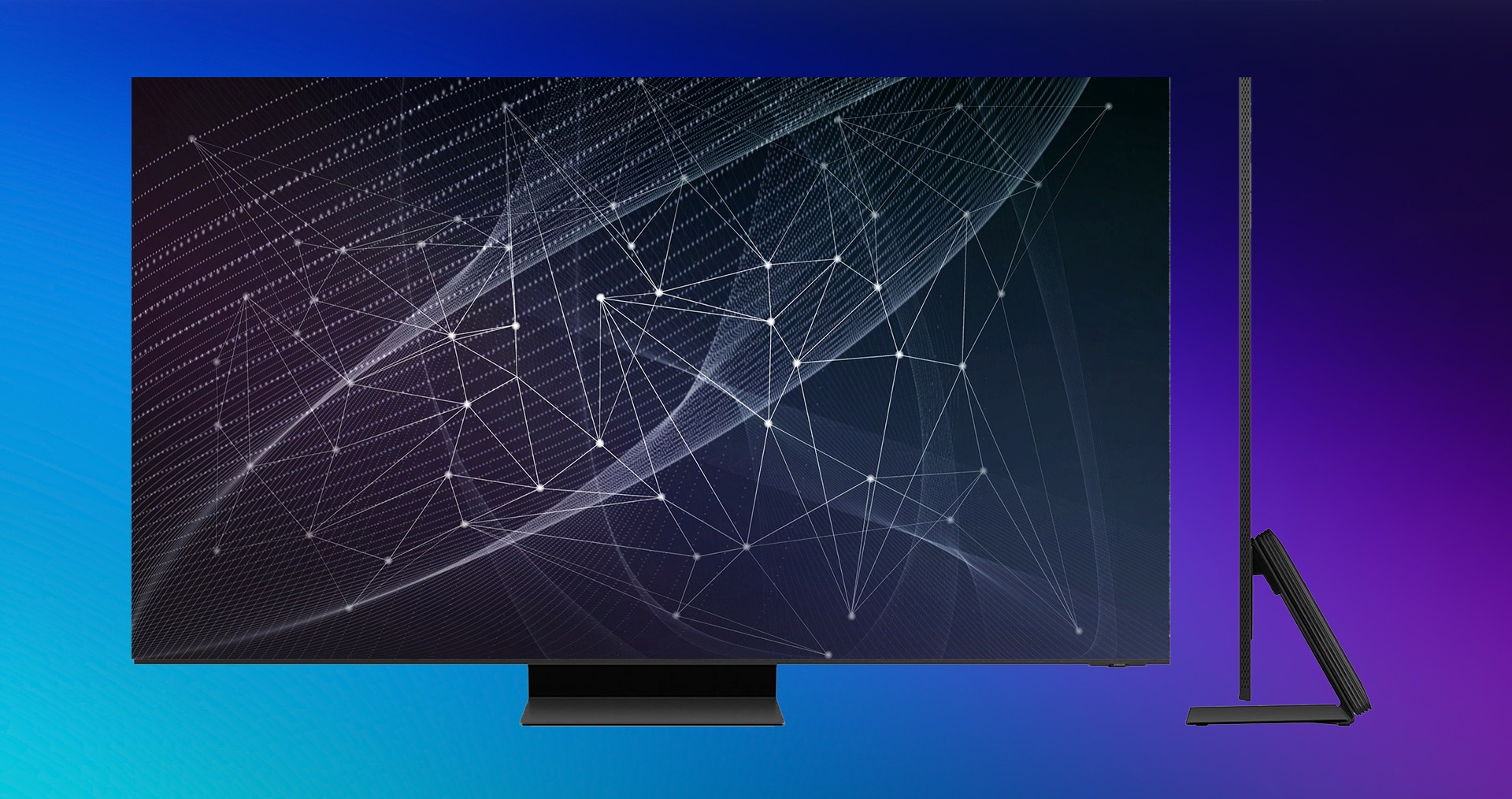
Samsung QN900C with slim bezels and an external One Connect box for tidier cable management.
The Samsung QN900C is an 8K QLED model aimed at buyers who want Samsung’s high-end Neo QLED approach with mini-LED backlighting, precise local dimming control and a clean installation option.
The source highlights pleasing contrast levels, low output latency and the external One Connect box, which routes connections through a single cable to the screen.
The main caution is value: commercial 8K content is described as almost non-existent, and the QN900C costs significantly more than its 4K sibling, the S95C.
Best for: 8K enthusiasts who value clean cabling and premium Samsung design
- 8K QLED panel
- Mini-LED backlighting
- Low output latency
- External One Connect box
Verdict: A technically ambitious 8K set with useful installation advantages, but its appeal depends on accepting the limited availability of native 8K content and the premium over 4K alternatives.
2. Panasonic W95A
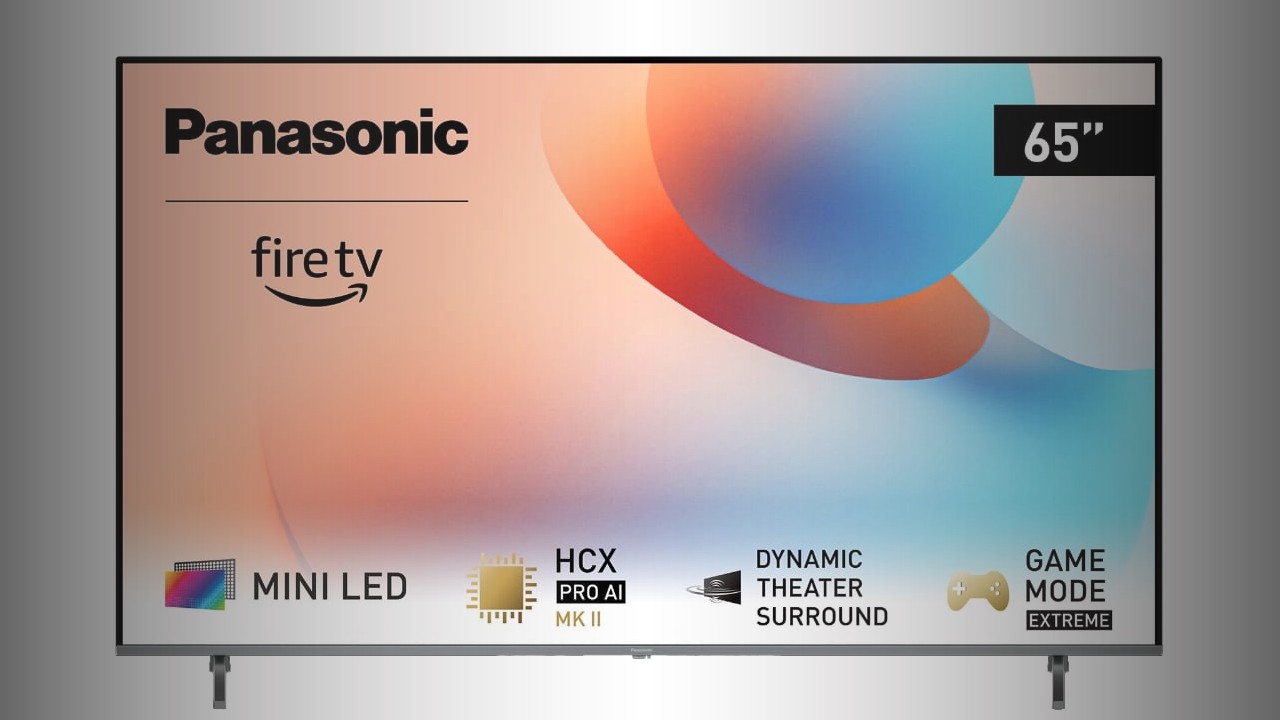
Panasonic W95A with slim metal framing, stable aluminum feet and enough clearance for many soundbars.
The Panasonic W95A stands out as a fully featured Mini-LED TV with local dimming and a strong gaming specification.
Its HDMI 2.1 support includes 4K at 144Hz pass-through and Variable Refresh Rate, while Dolby Vision IQ and HDR10+ broaden its HDR compatibility.
Panasonic’s HCX Pro AI Processor MK II is described as automatically optimizing contrast, color, clarity and sound according to the content, and the set also includes Fire TV OS, AirPlay, Alexa compatibility and a built-in 50-watt 2.1-channel audio system.
Best for: Gamers who also want wide HDR support and integrated smart features
- Mini-LED local dimming
- 4K at 144Hz via HDMI 2.1
- VRR support
- Dolby Vision IQ and HDR10+
Verdict: A well-equipped Mini-LED option for gaming-focused buyers who do not want to give up mainstream HDR formats or smart-TV convenience.

3. Haier Smart TV M1
Haier Smart TV M1 with narrow bezels, matte black finish and sturdy metal feet for stand placement.
The Haier Smart TV M1 is presented as an affordable 4K HDR smart TV with Android TV 11 at its core.
Its appeal is practical: access to apps through the Google Play Store, a minimalist design, ultra-narrow bezels and a matte black finish that resists fingerprints and dust.
The source describes it as a mid-range model with decent image quality and good usability, while noting that its Direct LED construction makes it a little bulkier and that it may look better on a console than wall-mounted.
Best for: Budget-conscious viewers who want a straightforward Android TV experience
- Affordable 4K HDR proposition
- Android TV 11
- Google Play Store access
- Fingerprint-resistant matte finish
Verdict: A sensible value-led 4K smart TV for everyday streaming and general viewing, with design and app support as its main strengths.

4. Sharp 120-inch XLED TV
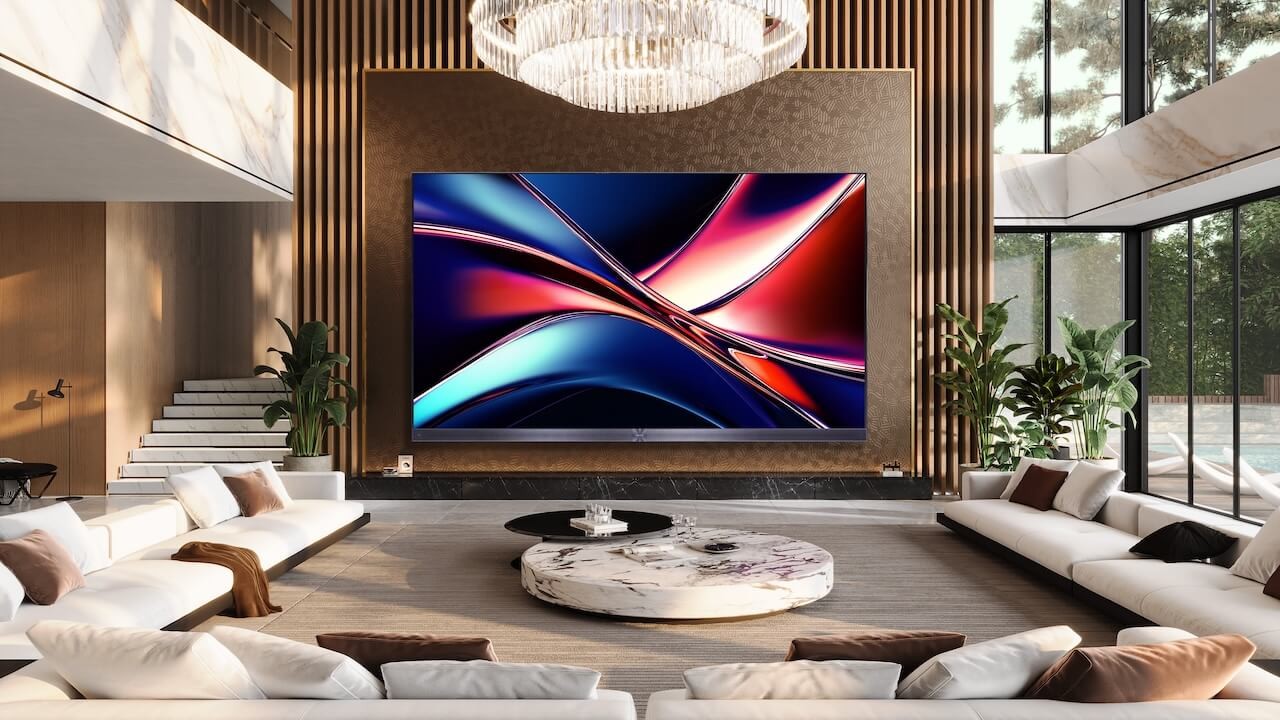
Sharp 120-inch XLED TV concept with Mini-LED backlighting and independently controlled illumination zones.
Sharp’s 120-inch XLED TV is less a conventional living-room recommendation and more a notable ultra-large display showcase.
The supplied source describes a massive screen with Mini-LED backlighting using thousands of LEDs divided into independently controlled zones.
It also mentions an additional phosphorescent layer designed to increase brightness and improve color saturation. For buyers tracking the future of very large premium displays, this is the standout entry here, but the source does not provide a full review or everyday-use assessment.
Best for: Ultra-large-screen enthusiasts and display-technology watchers
- 120-inch screen size
- Mini-LED backlighting
- Independent backlight zones
- Additional phosphorescent layer
Verdict: An attention-grabbing XLED showcase for very large-format viewing, though the available source material is too limited for a full performance recommendation.
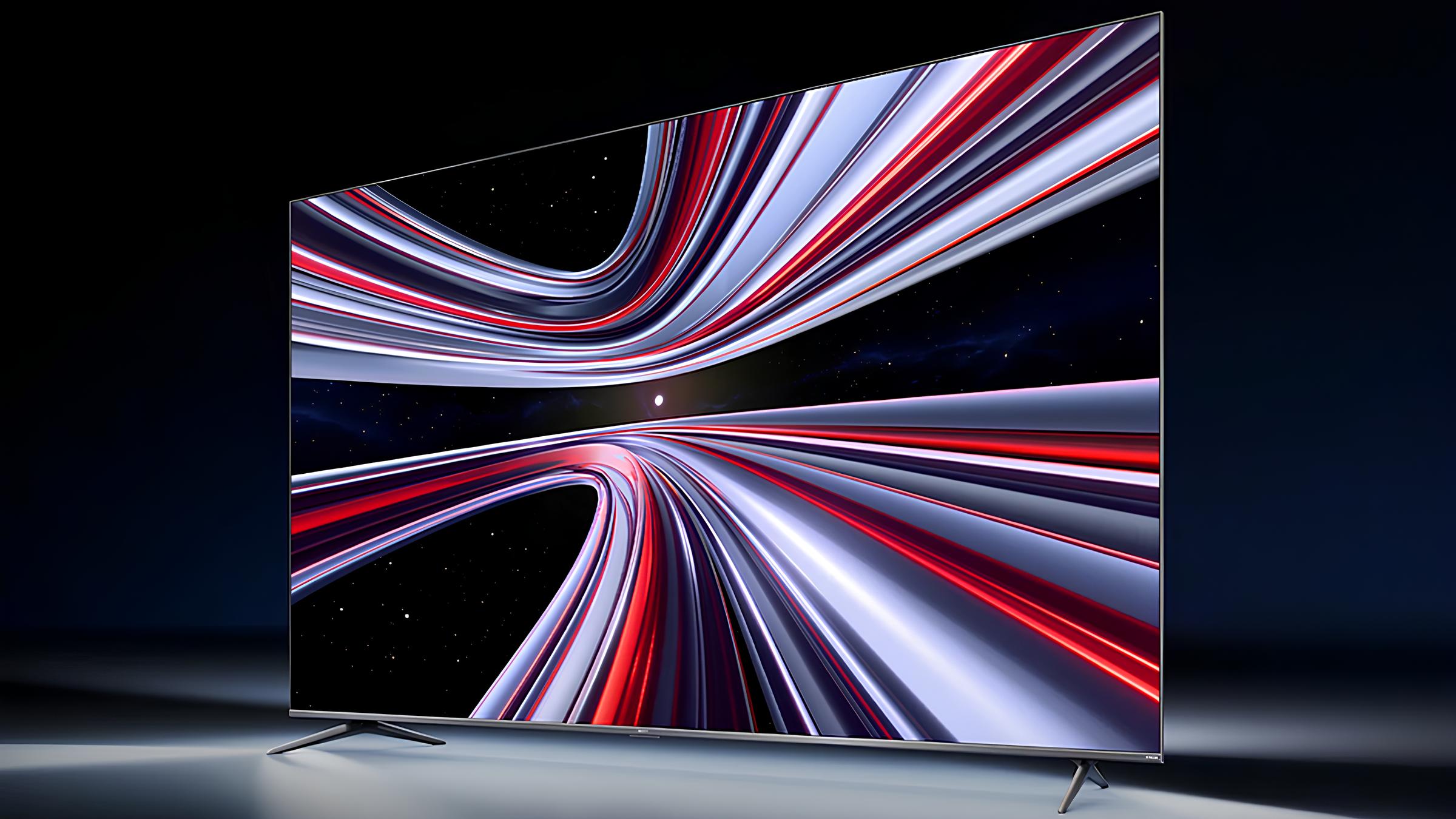
5. Redmi TV X 85-inch Mini LED
Redmi TV X 85-inch Mini LED with 4K resolution, local dimming zones and high-refresh gaming support.
The Redmi TV X 85-inch Mini LED is positioned as a large-format 4K television for gamers and movie fans.
The source highlights an 85-inch Mini-LED panel, 4K resolution, 640 local dimming zones and 1,200-nit peak brightness.
Gaming credentials are especially prominent, with a 144Hz standard refresh rate, up to 288Hz in Game Mode, Dolby Vision Gaming and AMD FreeSync Premium. Connectivity is also broad, with HDMI 2.1, HDMI 2.0, USB 3.0, USB 2.0 and Wi-Fi 6 mentioned, while sound is handled by an integrated 30W audio system.
Best for: Big-screen gamers who want high refresh-rate support
- 85-inch Mini-LED display
- Up to 288Hz in Game Mode
- 640 local dimming zones
- AMD FreeSync Premium
Verdict: A highly specified large Mini-LED gaming TV on paper, with its biggest strengths centered on screen size, refresh rate and gaming-format support.

6. Panasonic W85B
Panasonic W85B with slim graphite bezels and a center stand suited to narrower furniture.
The Panasonic W85B is described as Panasonic’s most affordable 120Hz TV, aimed at everyday viewers rather than flagship OLED buyers.
The source presents it as a balanced mid-range model for movies, sports and gaming, with smooth performance and solid image quality.
Its design is understated, with slim graphite bezels, a slightly thicker lower frame and a sturdy center stand that suits narrower TV units. It is not positioned as an ultra-slim wall-mount choice, but the remote is practical, including a numeric keypad, quick picture-setting access and a programmable My App button.
Best for: Everyday viewers who want smoother motion without moving into premium OLED territory
- 120Hz panel
- Balanced mid-range positioning
- Sturdy center stand
- Programmable My App remote button
Verdict: A practical 120Hz Panasonic for mixed use, especially where stand placement and simple day-to-day control matter.
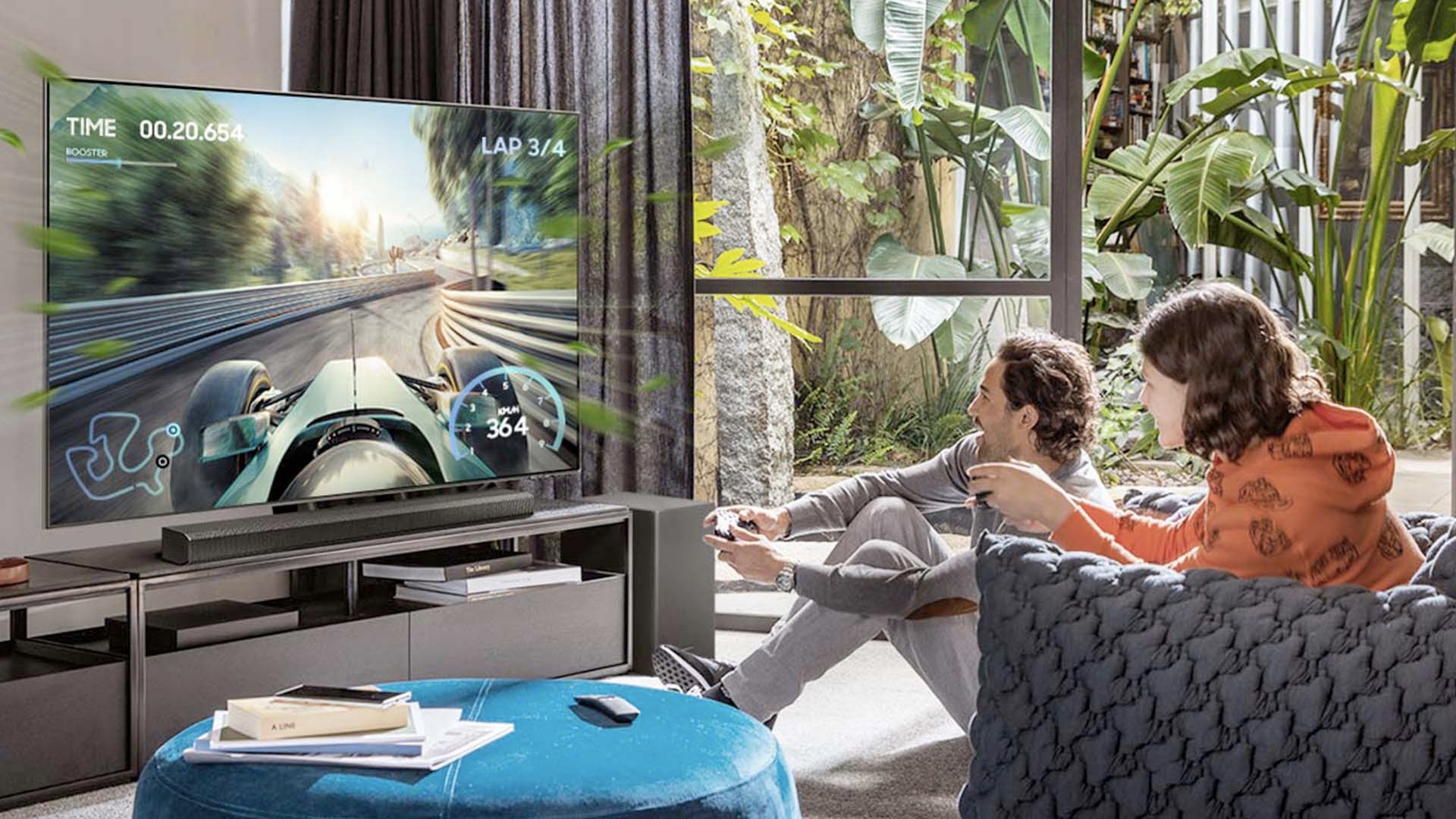
7. Samsung QN700B
Samsung QN700B with a thin frame designed to give the front of the TV a clean premium look.
The Samsung QN700B is a premium 8K model with a well-crafted design and a slim-framed front that helps the screen feel more elegant in a larger room.
The source emphasizes its 8K resolution, impressive image quality and refined appearance, while also making clear that it is very expensive and not without negative details.
It is best considered by buyers who specifically want to enter Samsung’s 8K range and are prepared for the cost and placement considerations of a large premium set.
Best for: Buyers seeking a premium Samsung 8K TV for a larger room
- 8K resolution
- Impressive image quality
- Thin-frame design
- Premium appearance
Verdict: A polished and visually appealing 8K Samsung, but its high price makes it a specialist choice rather than a default upgrade.

8. Samsung TU8072
Samsung TU8072, a high-contrast 4K TV suited to darker rooms and responsive gaming setups.
The Samsung TU8072 is a good all-round TV with clear strengths and equally clear limitations.
The source points to high contrast, black uniformity and strong dark-room movie performance, as well as ultra-fast input latency and responsiveness that many gamers will appreciate.
The limitations are important: it lacks local dimming, wide color gamut support for higher-quality HDR reproduction, wide viewing angles and variable refresh rate technology. It also handles glare well, but direct light can still make viewing uncomfortable.
Best for: Dark-room viewing and responsive gaming on a simpler feature set
- High contrast ratio
- Good black uniformity
- Ultra-fast input latency
- Responsive for gaming
Verdict: A capable everyday Samsung with strong contrast and gaming responsiveness, provided HDR expectations and viewing-angle needs are kept realistic.
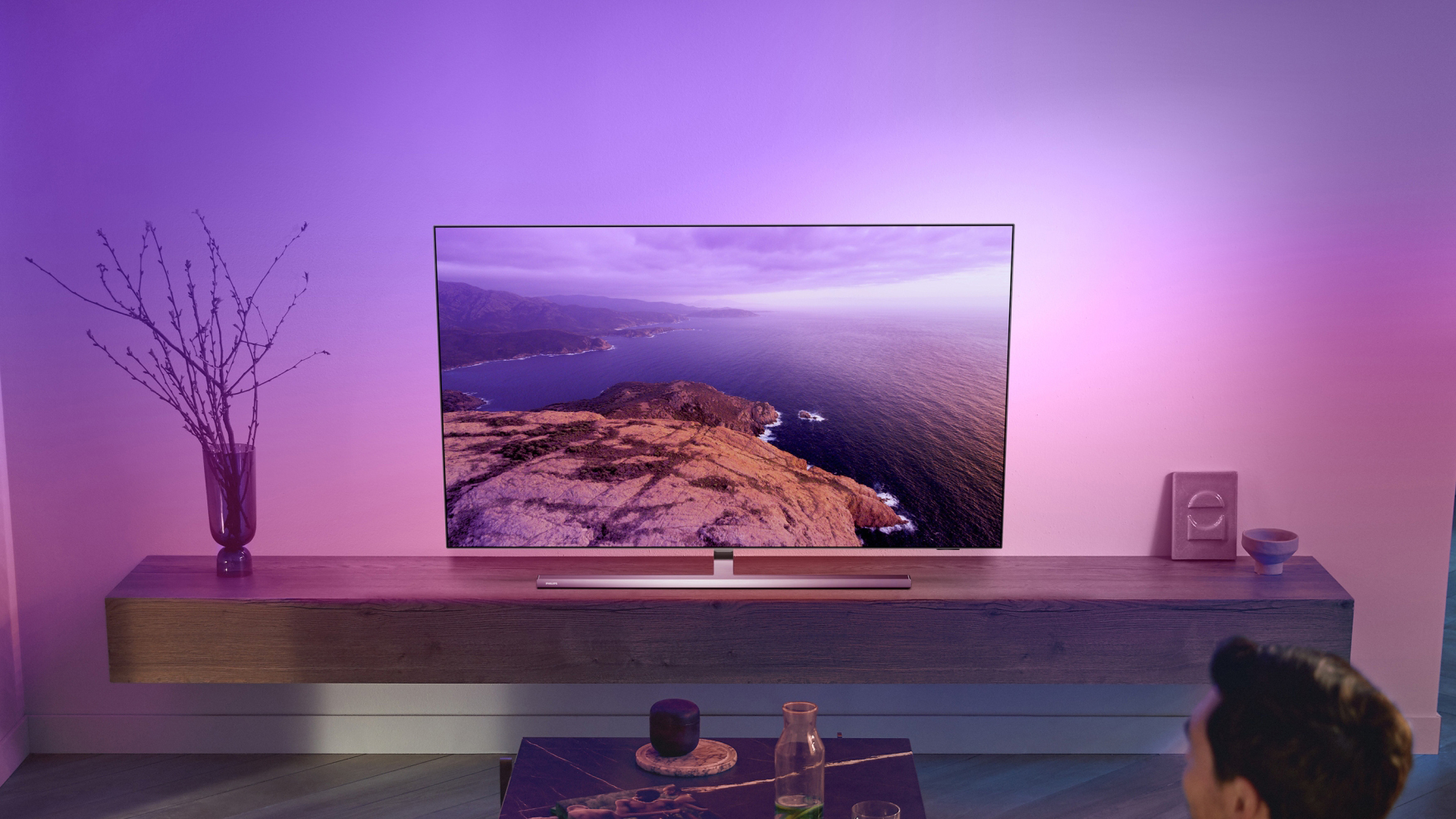
9. Philips OLED807
Philips OLED807 with an ultra-thin frame and four-sided Ambilight designed to extend the viewing atmosphere beyond the screen.
The Philips OLED807 is framed as a smooth upgrade with improved image quality and upgraded features over its predecessor.
The source describes a 4K OLED model with an ultra-thin metal frame, four-sided Ambilight and Philips’ anti-burn-in system, which smoothly dims static objects to help protect the panel during normal viewing.
It also uses a central T-shaped stand, and the series is described in 48-, 55- and 65-inch sizes. For buyers who value both OLED picture technology and Philips’ room-lighting signature, this is the most distinctive entry in the list.
Best for: Viewers who want OLED with Philips Ambilight immersion
- 4K OLED panel
- Four-sided Ambilight
- Anti-burn-in system
- Ultra-thin metal frame
Verdict: A distinctive OLED choice that combines slim design, Ambilight and panel-protection features for an immersive living-room setup.

10. Xiaomi Mi TV ES Pro
Xiaomi Mi TV ES Pro with a narrow bezel, metal body and 120Hz QLED screen aimed at value-conscious buyers.
The Xiaomi Mi TV ES Pro is a 4K QLED series positioned as an unusually affordable way to get a 120Hz screen and HDMI 2.1 support.
The source highlights a direct-backlit 120Hz panel, Android TV with voice control and a wide range of applications, plus TV tuner support for multiple reception types.
It is also described as attractive for gamers and sports fans, with a metal body, narrow bezel and thin metal legs that help it look more expensive than its positioning suggests.
Best for: Value-focused buyers who want 120Hz QLED features
- 4K QLED panel
- 120Hz direct-backlit screen
- HDMI 2.1 port
- Android TV with voice control
Verdict: A strong specification-led value option for gaming, sports and app-based viewing, especially for buyers prioritizing 120Hz and HDMI 2.1 support.
Quick comparison
The table below separates the models by their strongest supported use cases rather than ranking them by a single universal standard.
That distinction matters because the sources range from full reviews to launch reports, and because a gaming-led Mini-LED TV, a budget Android TV and a premium 8K model solve different problems.
| Product | Best for | Verdict |
|---|---|---|
| Samsung QN900C | 8K enthusiasts and tidy installations | Strong contrast, low latency and One Connect cabling make it appealing, but limited 8K content and the premium over 4K alternatives are key cautions. |
| Panasonic W95A | Feature-rich gaming and HDR flexibility | Mini-LED local dimming, 4K at 144Hz, VRR, Dolby Vision IQ and HDR10+ give it one of the broadest feature sets here. |
| Haier Smart TV M1 | Affordable 4K Android TV viewing | A budget-friendly 4K HDR smart TV with Android TV 11 and a clean design, though its Direct LED build is not the slimmest. |
| Sharp 120-inch XLED TV | Ultra-large display interest | A notable 120-inch Mini-LED XLED showcase, but the available information is not a full ownership or performance review. |
| Redmi TV X 85-inch Mini LED | Large-screen high-refresh gaming | An 85-inch 4K Mini-LED model with high refresh-rate claims, local dimming zones and gaming technologies such as FreeSync Premium. |
| Panasonic W85B | Everyday 120Hz viewing | A balanced mid-range Panasonic with a 120Hz panel, solid image quality and a practical center-stand design. |
| Samsung QN700B | Premium 8K Samsung buyers | A stylish 8K model with impressive image quality, but its high price narrows its audience. |
| Samsung TU8072 | Dark-room viewing and responsive gaming | High contrast and low input latency are the strengths, while HDR color, viewing angles, local dimming and VRR are the trade-offs. |
| Philips OLED807 | OLED viewing with Ambilight | Combines a 4K OLED panel, four-sided Ambilight, slim metal design and anti-burn-in measures. |
| Xiaomi Mi TV ES Pro | Affordable 120Hz QLED features | A specification-focused 4K QLED with 120Hz, HDMI 2.1 and Android TV, aimed at gamers, sports fans and value seekers. |
Frequently asked questions
Is an 8K TV worth considering if most content is still 4K or below?
The supplied material for the Samsung QN900C notes that commercial 8K content is almost non-existent, so 8K should be treated as a premium preference rather than a necessity.
If value matters more than owning an 8K panel, a well-equipped 4K model may be the more practical choice.
Which features matter most for gaming?
Look for the gaming features that match your sources: low input latency, HDMI 2.1, 120Hz or higher refresh rates, VRR and gaming-specific formats.
In this list, the Panasonic W95A, Redmi TV X, Xiaomi Mi TV ES Pro, Panasonic W85B and Samsung TU8072 each have gaming-related strengths, but they do not all offer the same features.
Should I choose Mini-LED, OLED or QLED?
The supplied models show the trade-offs clearly.
Mini-LED sets such as the Panasonic W95A and Redmi TV X emphasize local dimming and brightness-related specifications.
OLED, represented by the Philips OLED807, brings a different kind of premium panel experience with Ambilight and anti-burn-in measures in the source. QLED options such as the Samsung QN900C, Samsung QN700B and Xiaomi Mi TV ES Pro focus on Samsung or Xiaomi’s LCD-based premium and value feature sets.
How important are design and placement details?
They matter more than many buyers expect.
The Samsung QN900C’s One Connect box can simplify cabling, the Panasonic W95A’s feet leave room for many soundbars, the Panasonic W85B’s center stand helps on narrower furniture, and the Haier Smart TV M1 is described as better suited to console placement than ultra-slim wall mounting.
How to Choose the Right TV from This Shortlist
Start with content and room use rather than screen technology alone.
If the TV will mainly serve a console or gaming PC, prioritize refresh rate, HDMI 2.1, VRR or FreeSync support, and input latency.
The Panasonic W95A offers one of the most complete supported gaming feature sets in the supplied material, while the Redmi TV X pushes the large-screen, high-refresh angle. The Xiaomi Mi TV ES Pro is the value-led 120Hz QLED option, and the Panasonic W85B is the more everyday 120Hz choice. For movies and evening viewing, contrast, black uniformity and panel type become more important. The Samsung TU8072 is specifically described as strong in a darkened environment thanks to its contrast and black uniformity, though it lacks local dimming and wide color gamut support. The Philips OLED807 is the distinctive OLED route, especially for buyers drawn to Ambilight and the supplied anti-burn-in system. The Samsung QN900C and QN700B bring 8K ambition, but both should be weighed against the limited availability of 8K content and the higher cost of premium 8K ownership. Budget and practicality can be just as decisive as picture technology. The Haier Smart TV M1 makes sense for buyers who want an affordable 4K HDR Android TV with a clean look and broad app access. The Xiaomi Mi TV ES Pro aims at buyers who want more advanced specifications without stepping into flagship pricing. Placement should also influence the final decision: soundbar clearance, stand width, wall-mount depth and cable routing can determine how well a TV works in the room. The safest buying approach is to identify the feature you will use every day and avoid paying primarily for headline specifications that your sources cannot exploit. Choose 8K only if the premium itself makes sense to you, choose high-refresh models if gaming or sport is central, choose OLED if the viewing experience and room ambience appeal, and choose a value 4K smart TV if streaming, apps and straightforward setup matter most.