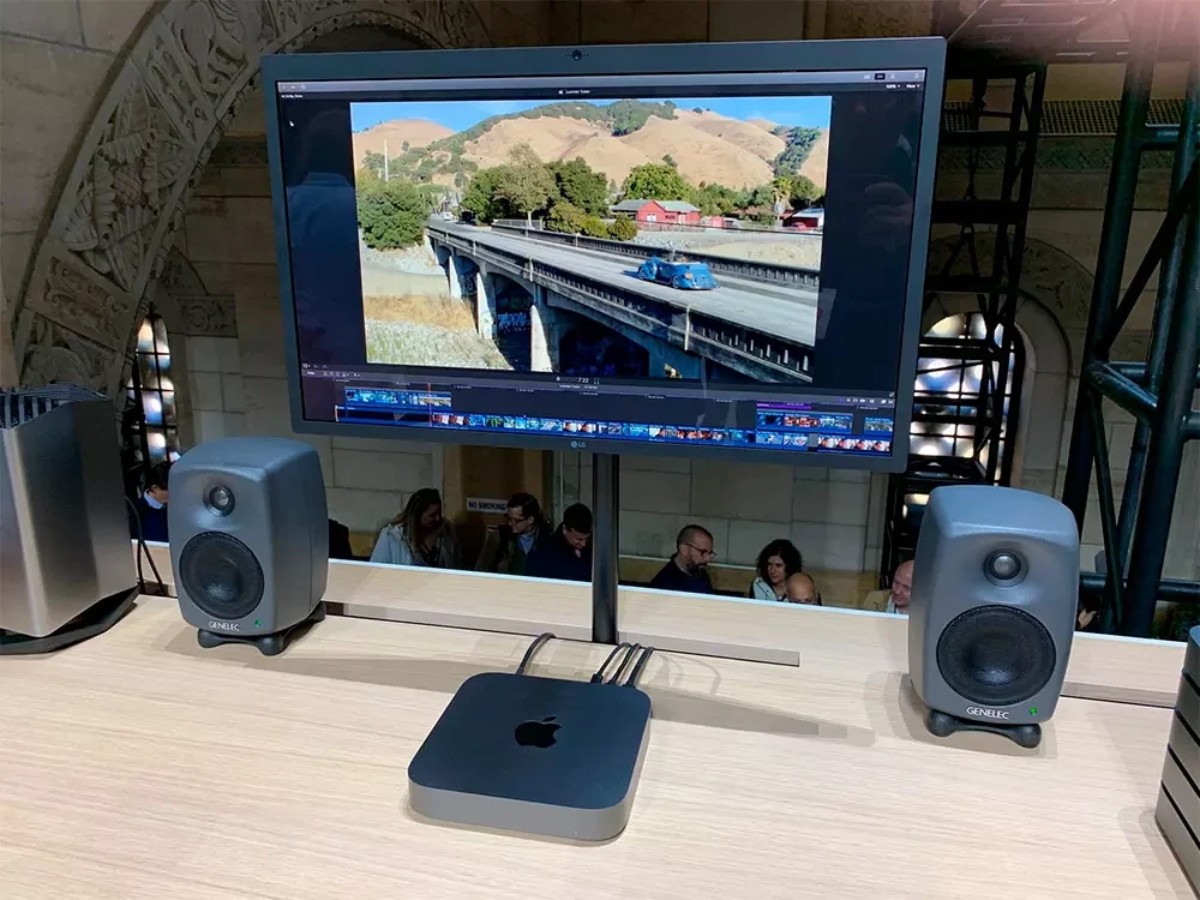
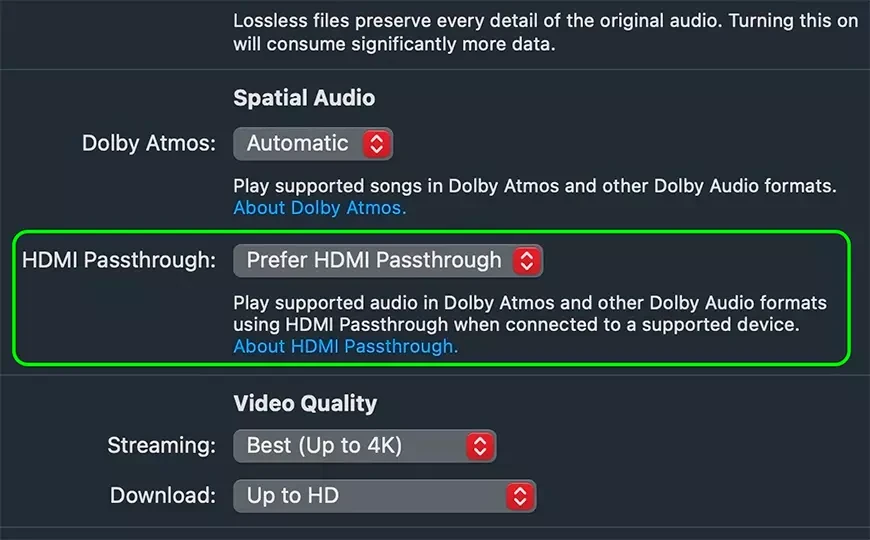
For listeners and home-cinema owners who use a Mac as a media source, macOS Sequoia introduces a feature that has been requested for years: HDMI audio passthrough. In practical terms, the update is intended to let a Mac send a native multichannel audio stream over HDMI to an external processor, AV receiver, or soundbar, rather than requiring the Mac itself to decode the audio first. That distinction matters in systems built around dedicated home-theater electronics. Many receivers and processors are designed specifically to identify, decode, manage, and display surround formats, and passthrough gives those components a more central role. For a Mac-based playback setup, this can make the computer feel less like a closed endpoint and more like a transport in a larger audio-video chain.
A long-requested feature for Mac-based home theater
The attraction of HDMI audio passthrough is not that it adds another surround logo to a specification sheet. Its appeal is more practical: it changes where decoding happens. Instead of the Mac decoding the soundtrack and sending the result onward, passthrough allows the connected receiver, processor, or soundbar to handle the original stream. For users who have invested in AV hardware, that can be a cleaner and more familiar arrangement.
This is especially relevant for people who already use a Mac for movie playback, music playback, disc-image libraries, or media-server duties. A Mac can be a capable source device, but until now, the lack of native HDMI passthrough support has made it less straightforward in systems where the downstream AV component is expected to do the decoding. macOS Sequoia directly addresses that gap, positioning the Mac more naturally alongside other HDMI sources in a surround system.
Why native multichannel output matters
Multichannel soundtracks are not all handled in the same way across devices. In some setups, the playback device decodes the audio internally and outputs a multichannel PCM signal. In others, the source passes the original bitstream to an AV receiver or processor, which then performs the decoding. Both approaches can be valid, but passthrough is often preferred by home-cinema enthusiasts who want the decoding device to be the dedicated AV component in the rack.
The new macOS Sequoia support is particularly meaningful for Dolby Atmos movie and music use from a Mac. Atmos playback can involve metadata as well as the base audio stream, and the handoff between source device, television, receiver, and soundbar can become complicated. By enabling native multichannel audio to travel over HDMI to the component designed to process it, Apple is making the Mac a more flexible participant in immersive-audio systems.
Better alignment with processors, receivers, and soundbars
A core strength of this feature is that it respects the role of specialized AV hardware. Modern processors, receivers, and higher-end soundbars are built to decode surround and immersive formats, apply system configuration, and route audio to the appropriate speaker layout. HDMI passthrough from macOS Sequoia allows those devices to receive the audio stream more directly, instead of being handed a decoded output from the computer.
That may also simplify the user experience in systems where the receiver or processor is the central switching and decoding hub. Owners often expect the front-panel display or on-screen interface of their AV device to confirm the incoming format. Passthrough can support that style of system operation, because the external component is given the responsibility of recognizing and decoding the soundtrack. For users who think of a Mac as one source among several, this is a more conventional AV workflow.
Useful context from Apple TV 4K and Dolby MAT
The significance of passthrough is easier to understand when contrasted with Apple TV 4K’s current audio behavior. Apple TV 4K already supports Dolby Atmos, but it decodes audio formats and sends the result over HDMI as Dolby MAT 2.0, a format described as LPCM plus metadata for Atmos. That can work well in compatible systems, but it is not the same as passing the original encoded soundtrack directly to the receiver.
This distinction can matter because Dolby MAT 2.0 is a high-bitrate stream and depends on the capabilities of the devices in the HDMI chain. A television with HDMI eARC is required in scenarios where the TV must pass that signal onward, while a regular HDMI ARC connection does not provide the same capability. For users whose systems are constrained by ARC rather than eARC, or whose hardware handles certain signal types differently, the method of audio delivery is not a minor technicality. macOS Sequoia’s passthrough support is therefore notable because it addresses the delivery path, not merely format naming.
Relevance for Blu-ray and UHD Blu-ray libraries
Another documented reason enthusiasts have wanted passthrough is support for playback scenarios involving Blu-ray and UHD Blu-ray disc images. These libraries can include lossless audio formats such as Dolby TrueHD and DTS-HD Master Audio. The Mac, when used as a media source, often sits at the center of such file-based playback systems, so the ability to send audio more natively over HDMI is a meaningful step for users who want their AV hardware to handle soundtrack decoding.
The broader hope around passthrough is that it may make support more universal across apps and help with formats that are not currently supported in every Apple playback environment. Apple TV 4K, for example, can support TrueHD and DTS-HD MA through an app such as Infuse when the required license is purchased, but it does not support Dolby Atmos in TrueHD or DTS:X in any form. The arrival of passthrough on macOS does not automatically change every other Apple device or every app, but it does create a more open path for Mac-based systems than users previously had.
A software update with system-level implications
One of the most attractive aspects of this development is that it arrives as part of macOS Sequoia, which is scheduled as a free update in the fall alongside Apple’s other major operating-system releases. Because this is an operating-system feature rather than a separate hardware accessory, it has the potential to improve the role of existing Mac-based setups once the update is available.
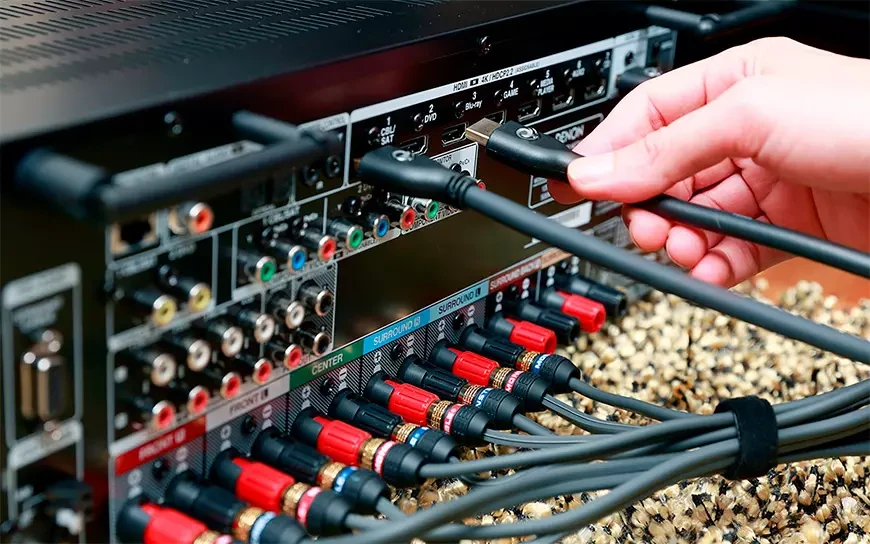
That said, the value of HDMI audio passthrough will depend on the rest of the system. The Mac must be connected in a way that allows the intended audio stream to reach the processor, receiver, or soundbar. The downstream component also needs to support the relevant decoding. In other words, passthrough is not a magic compatibility layer for every possible format and connection, but it is an important foundation for more direct audio routing.
Who it is most suitable for
macOS Sequoia’s HDMI audio passthrough will be most interesting to users who already integrate a Mac into a serious home-entertainment system. That includes people who use a Mac for Dolby Atmos movies or music, those who maintain Blu-ray or UHD Blu-ray disc-image libraries, and owners of AV processors, receivers, or soundbars that they prefer to use as the decoding device.
It is less significant for users who listen primarily through a Mac’s built-in speakers, USB DACs, headphones, AirPlay speakers, or simple stereo systems. It also may not matter much in setups where the existing decoded output path is already working as desired. The feature is best understood as a flexibility upgrade for HDMI-based multichannel systems, not as a universal change that every Mac owner will notice.
Conclusion
Apple’s addition of HDMI audio passthrough to macOS Sequoia strengthens the Mac’s role as a serious source component in home-cinema and immersive-audio systems. Its strongest documented qualities are straightforward but important: native multichannel audio can be sent over HDMI, external processors and receivers can take on decoding duties, and Mac-based playback becomes better aligned with conventional AV system design. For owners who use a Mac with Dolby Atmos content, lossless soundtrack libraries, or a receiver-led HDMI setup, this is a practical and welcome software-level improvement.