


The Philips 65OLED910 replaces the well-regarded OLED909 and brings with it a number of meaningful upgrades. The headline change is the introduction of a new multilayer OLED panel—often referred to as Meta OLED—which delivers significantly higher brightness and improved image dynamics.
This is essentially the same next-generation panel technology found in flagship models like the LG OLED G5, and its arrival in the Philips OLED910 signals a clear focus on peak luminance, color impact, and real-world viewing performance rather than chasing laboratory-perfect black levels alone.

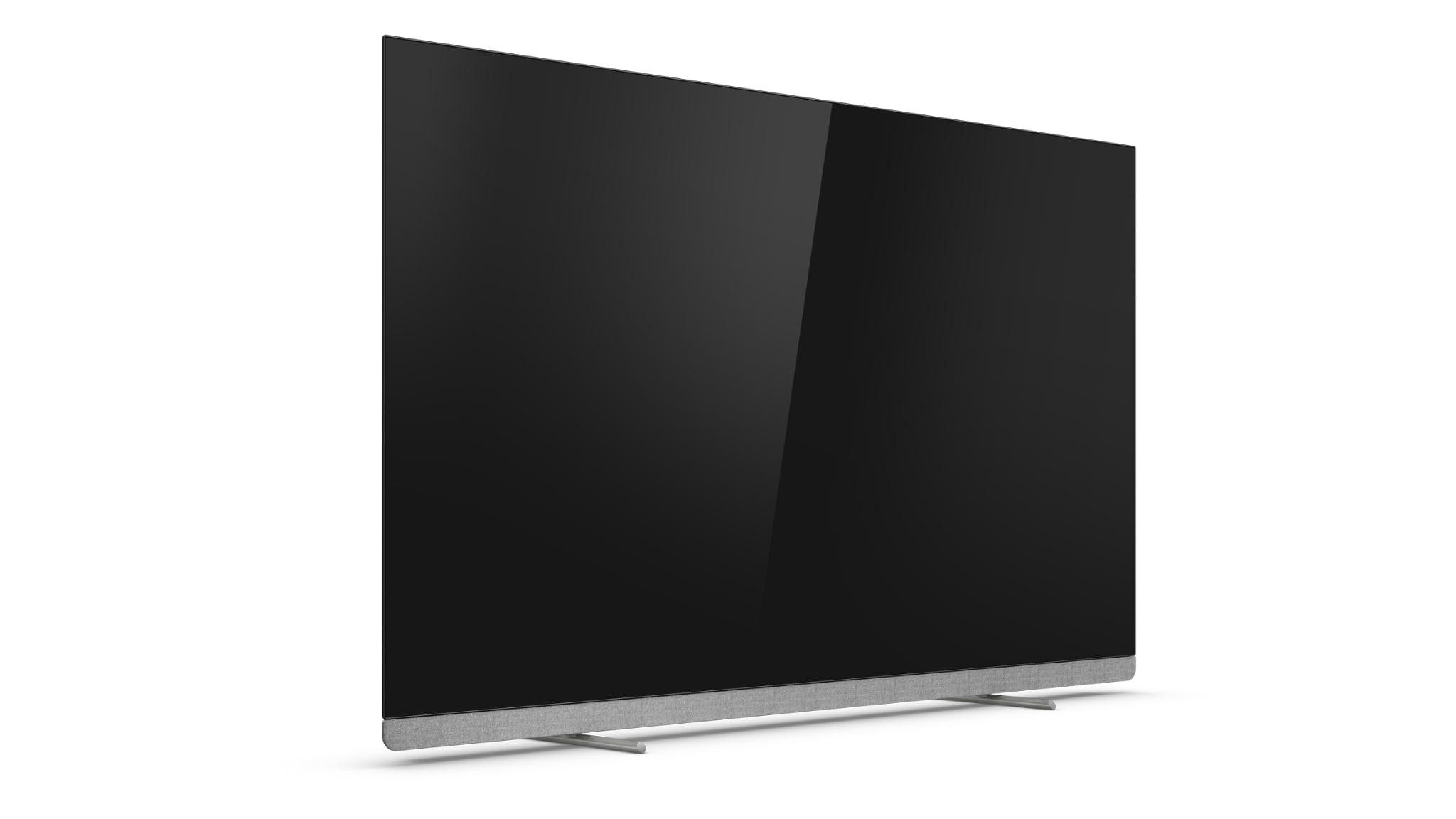
Visually, the TV retains much of the design language of its predecessor, but the integrated speaker section now resembles a slim soundbar finished in a lighter gray fabric. The result is a more distinctive, contemporary look that blends audio and display into one cohesive form.
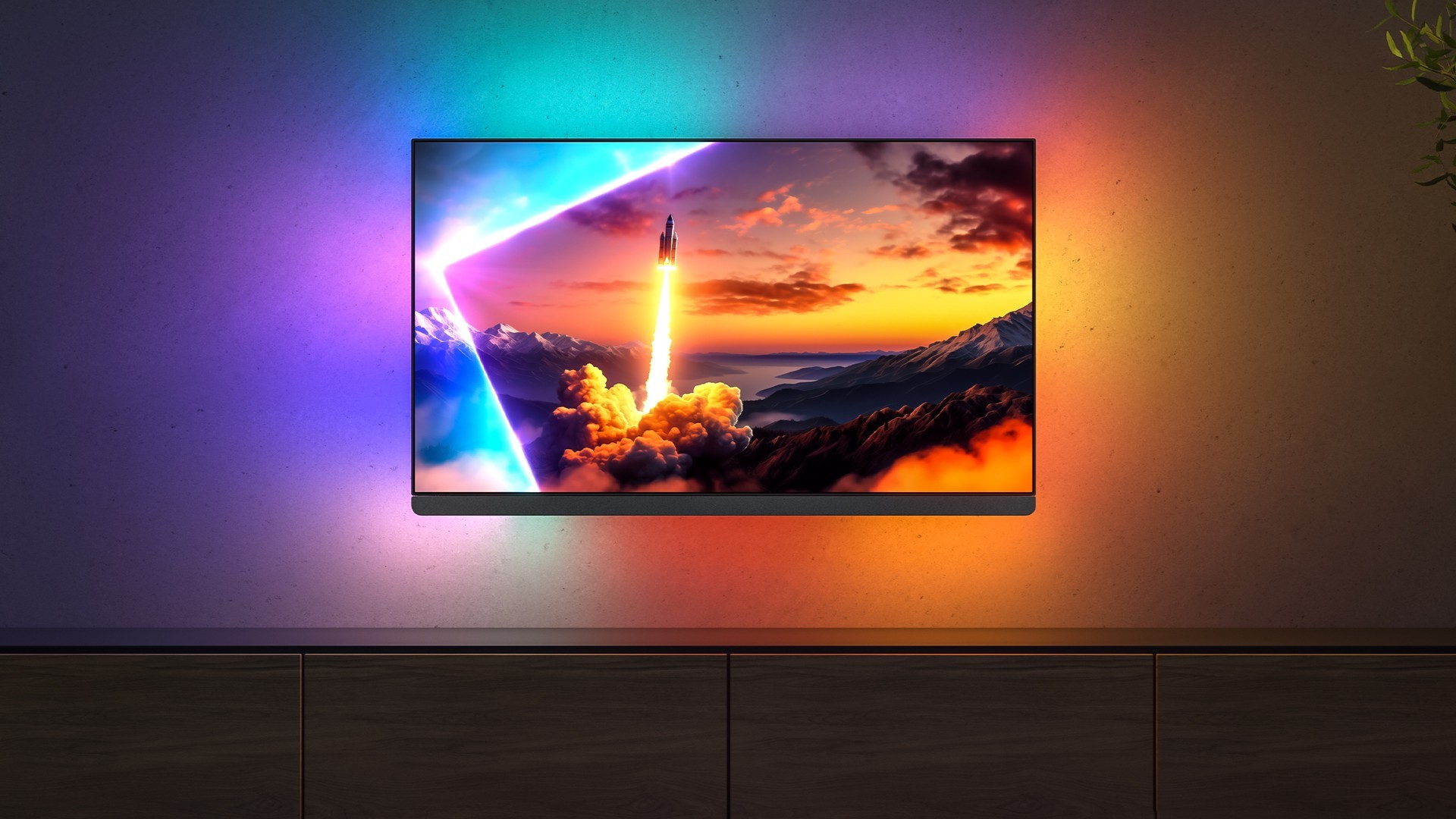
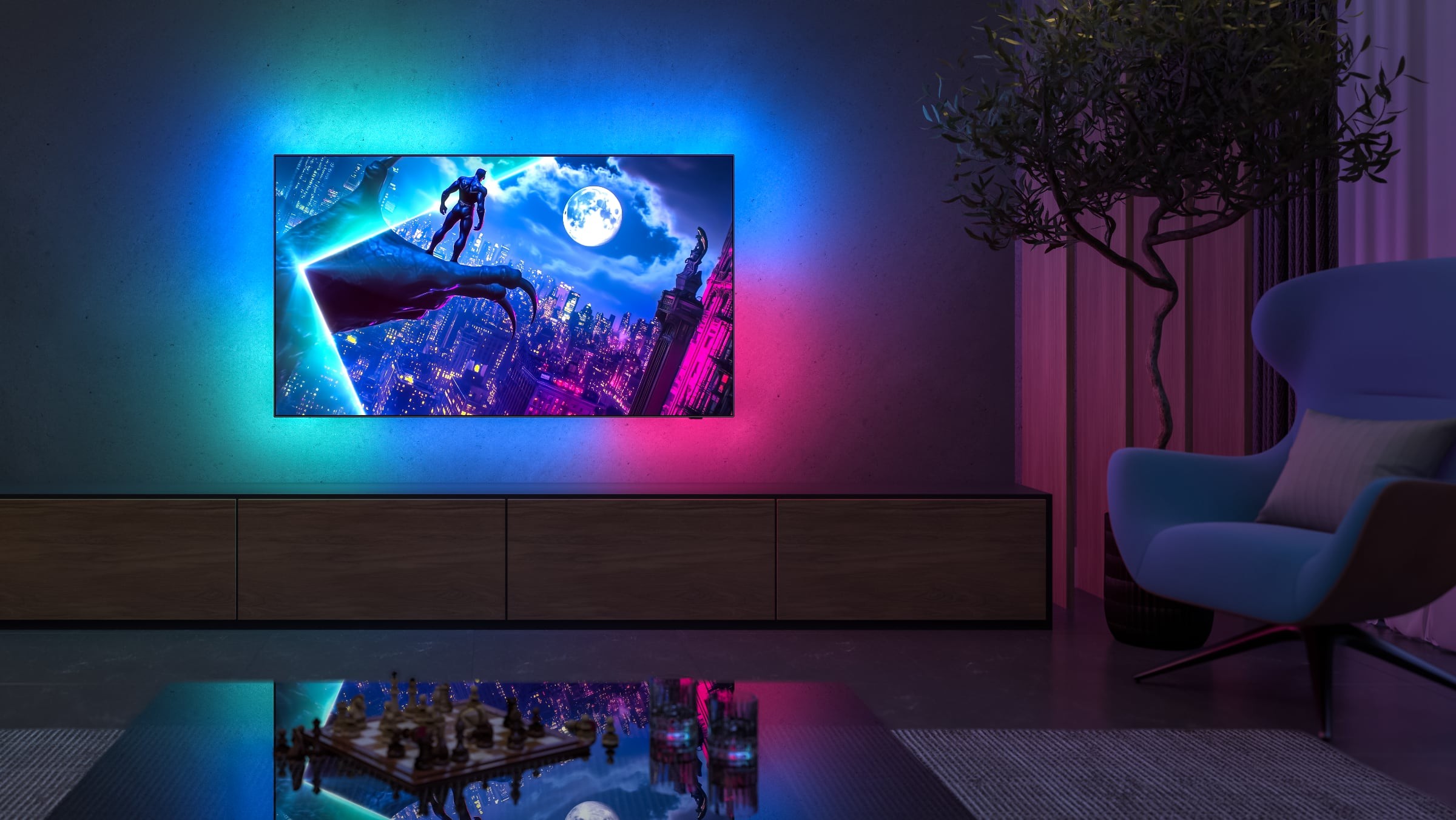
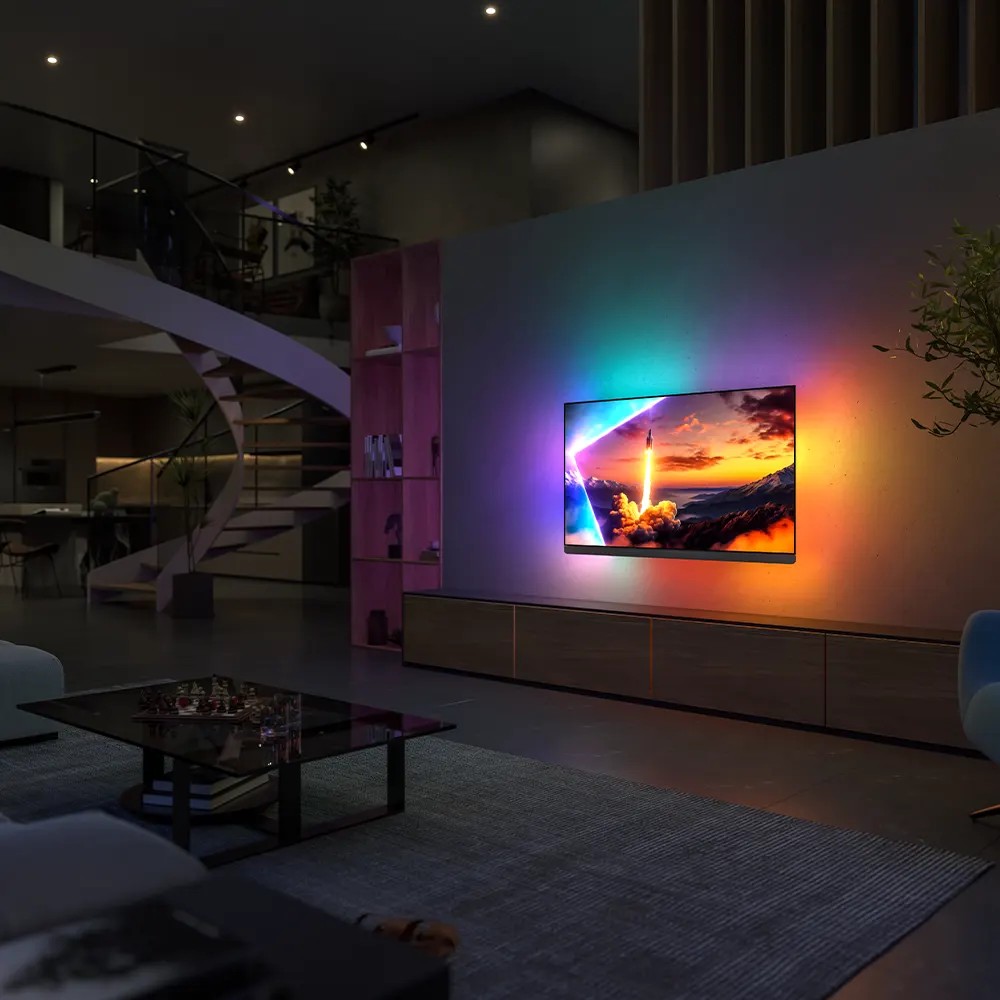
As always with Philips, the OLED910 also features the company’s signature four-sided Ambilight, which projects dynamic color onto the surrounding walls to extend the image beyond the screen and create a more immersive viewing environment.
Design and Build
The 65OLED910 is refreshingly simple to assemble. Two elongated feet screw directly into the underside of the panel, allowing the TV to be set up in just a few minutes.
The feet are sturdy and elegantly finished, though they offer no height adjustment. The screen sits slightly elevated above the surface, leaving a small gap beneath the panel. In many cases, this won’t be an issue, as the integrated Bowers & Wilkins audio system reduces the need for an external soundbar.
The TV cannot rotate on its stand, but the rear panel remains accessible enough for connecting HDMI cables and other inputs without much hassle.
Remote, Smart Platform, and Everyday Use
Philips includes its familiar remote control, which remains unchanged from previous models. It is practical, tactile, and features dedicated buttons for volume, channels, Ambilight, settings, and quick access to popular streaming services.
The OLED910 runs on Google TV, offering seamless access to major apps such as Netflix, Prime Video, Disney+, and YouTube. Navigation is responsive, and voice control is available through Google Assistant or Alexa.
Sound Quality
Most ultra-thin TVs struggle to produce convincing audio, but the OLED910 stands out thanks to its integrated Bowers & Wilkins 3.1-channel sound system.
The front-firing left, center, and right channels deliver clear dialogue and a stable soundstage, while a rear-mounted subwoofer adds weight and depth to the presentation.
Speech clarity is excellent, and the sonic image aligns naturally with the action on screen. The AI sound mode can occasionally exaggerate high frequencies, but Philips offers several presets—including Original, Music, Dialogue, and Surround—so users can easily tailor the sound to their taste.
Bass is present and controlled, though not as punchy as a dedicated soundbar or external subwoofer. Still, for an all-in-one solution, the OLED910 delivers some of the best built-in TV audio in its class.
Picture Quality
Picture performance is where the OLED910 truly shines. The new Meta OLED panel allows for peak brightness levels of up to 3,700 nits in small highlights, with full-screen brightness around 350 nits.
More importantly, the increased brightness is paired with refined processing from Philips’ 9th-generation P5 AI Picture Engine, resulting in improved shadow detail and more consistent black levels compared to the OLED909.
The TV supports all major HDR formats, including:
-
Dolby Vision
-
HDR10
-
HDR10+
-
HLG
This ensures optimal performance regardless of the source material.
Colors are rich and vibrant, with particularly strong greens and reds. Sharpness is high without appearing artificial, and the overall image has a lively, high-contrast character that feels both cinematic and engaging.
Motion handling is also impressive. Sports broadcasts look smooth and clear, while movies avoid the overly processed “soap opera” effect when the correct settings are selected.
Philips provides extensive image controls, allowing users to fine-tune contrast, color, sharpness, noise reduction, and motion processing. Ambient Intelligence features can also adjust brightness, color temperature, and HDR response based on room lighting.
For gaming, HDMI 2.1 support enables up to 4K at 120 Hz, along with VRR and ALLM for smooth, responsive gameplay.
Connectivity and Hardware
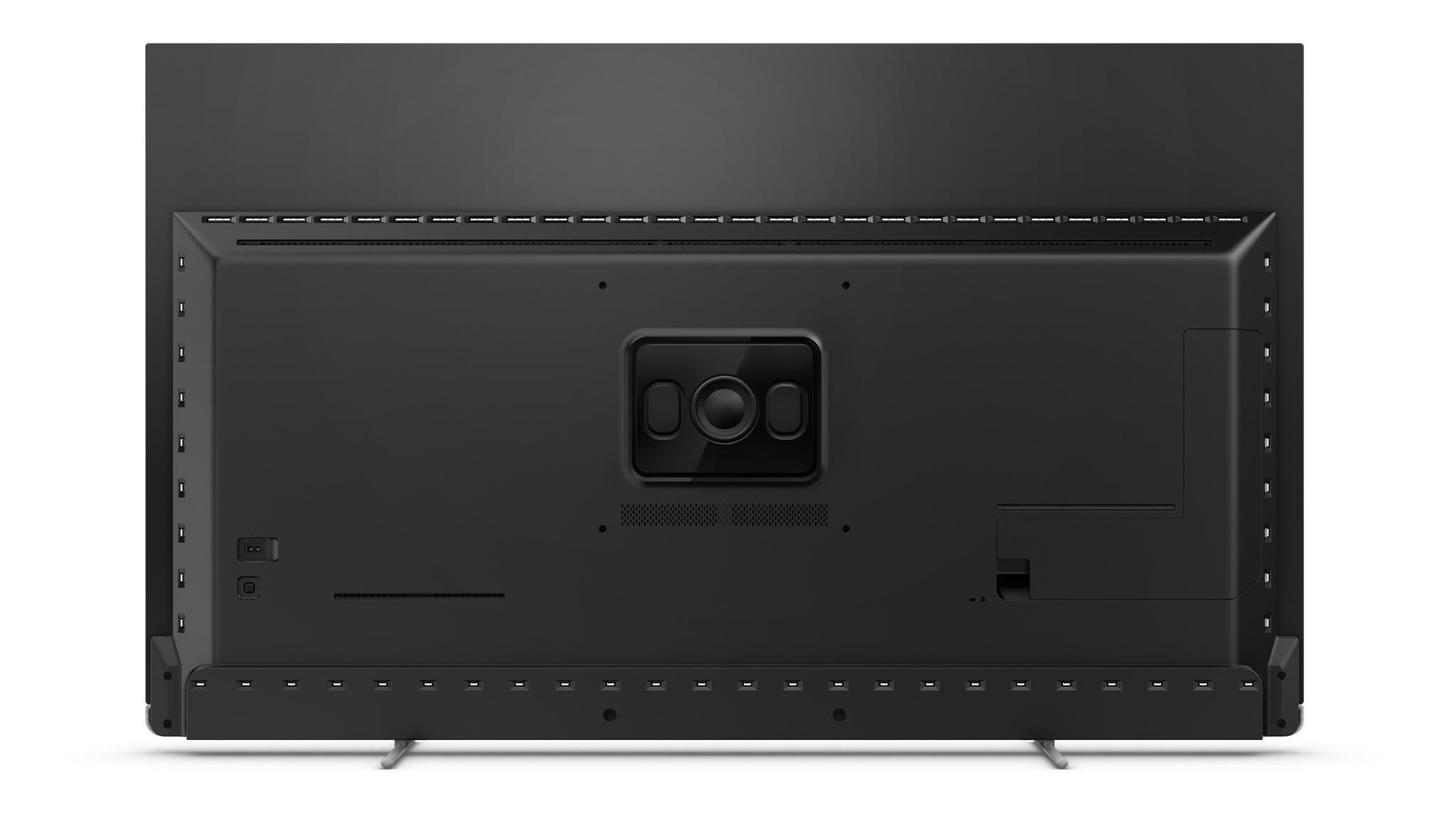
The OLED910 is powered by the latest P5 processor and includes four HDMI ports:
-
2 × HDMI 2.1 (one with eARC)
-
2 × HDMI 2.0
Additional connections include:
-
Optical audio output
-
3 × USB ports
-
Ethernet (RJ-45)
-
3.5 mm headphone jack
-
CI+ slot
Wireless connectivity is handled via Wi-Fi and Bluetooth.
Key Specifications
Screen: 65-inch 4K OLED
Resolution: 3840 × 2160
Panel: Meta OLED (multilayer)
Refresh rate: 40–144 Hz
Peak brightness: up to 3,700 nits
Audio: 3.1-channel Bowers & Wilkins system, 81 W
HDR support: Dolby Vision, HDR10, HDR10+, HLG
Smart platform: Google TV
Gaming features: VRR, ALLM, HDMI 2.1
Price (USD)
Approximate launch pricing:
-
65-inch model: about $2,050
-
77-inch model: about $3,200
Conclusion
The Philips OLED910 is a confident evolution of the OLED909, combining a much brighter Meta OLED panel with refined image processing and a genuinely capable integrated sound system.
Its picture is bold, colorful, and highly engaging, while the four-sided Ambilight system adds a sense of scale and immersion that few competitors can match. The Bowers & Wilkins audio solution further strengthens its appeal as an all-in-one entertainment centerpiece.
It isn’t perfect—only two HDMI 2.1 ports and slightly less inky blacks than some rivals—but the overall experience is undeniably impressive.
For viewers who want a bright, dynamic OLED with strong built-in sound and the unique Ambilight effect, the OLED910 stands out as one of the most distinctive premium TVs of its class.

