A good TV shortlist should not treat every screen as if it solves the same problem.
The source material here ranges from affordable 4K smart TVs and gaming-focused displays to design-led OLED statements and large-format Mini-LED sets, so the useful question is not simply which one is most advanced, but which one fits a particular room, source mix, and budget expectation.
Several entries are full reviews or detailed previews, while others are launch or comparison articles. That matters: a tested review can support stronger buying confidence than a short announcement, and a family comparison is more about choosing a technology tier than endorsing one exact model. We have reflected that difference in the verdicts rather than overstating what the material proves. The strongest themes across these articles are clear. OLED remains the choice for buyers prioritizing slim design and high-end image processing, Mini-LED and Neo QLED aim to improve LCD contrast with more precise backlighting, and affordable 4K smart TVs continue to deliver broader features at accessible prices. Gamers should pay particular attention to HDMI 2.1, 4K/120 Hz support, VRR, ALLM, and low latency where those features are explicitly stated.

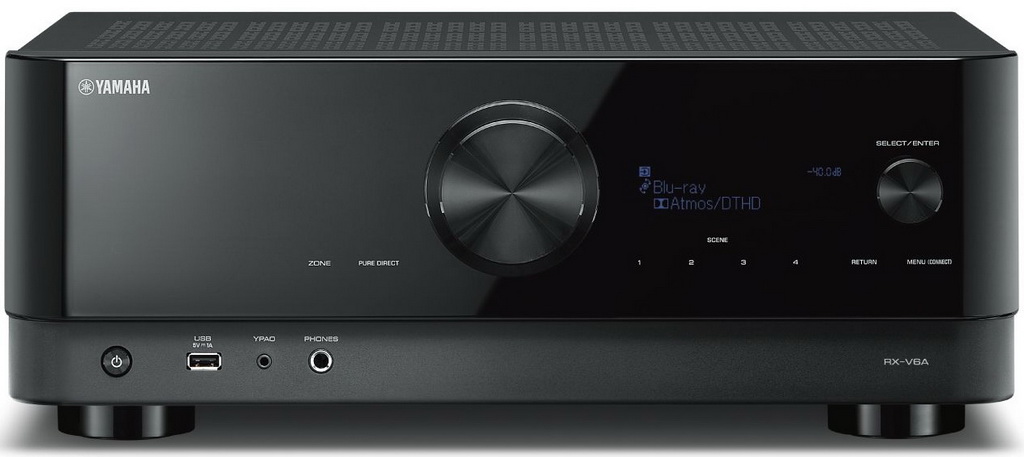
1. Sony unveils PS5-style gaming TV/Monitor and headphones
Sony InZone M9 gaming monitor with white-and-black styling inspired by the PlayStation 5.
Sony’s InZone M9 is presented as a gaming monitor rather than a conventional living-room TV, but it belongs on a TV-adjacent shortlist for players who want a compact 4K screen with console-friendly styling.
The article highlights a 27-inch 4K IPS panel, 1 ms response rate, 144 Hz refresh rate, variable frame-rate technology, HDMI 2.1, DisplayPort, and USB Type-C video input.
Its PlayStation 5-inspired design is also part of the appeal, though the source makes clear that the line was created specifically for PC gamers and can also be used with current consoles.
Best for: Desk-based gaming with PC or console sources
- 4K IPS panel
- 1 ms response rate
- 144 Hz refresh rate
- HDMI 2.1 and USB Type-C video input
Verdict: The InZone M9 is the gaming-focused choice here, especially for buyers who want high refresh-rate 4K performance in a monitor-sized screen rather than a full-size TV.
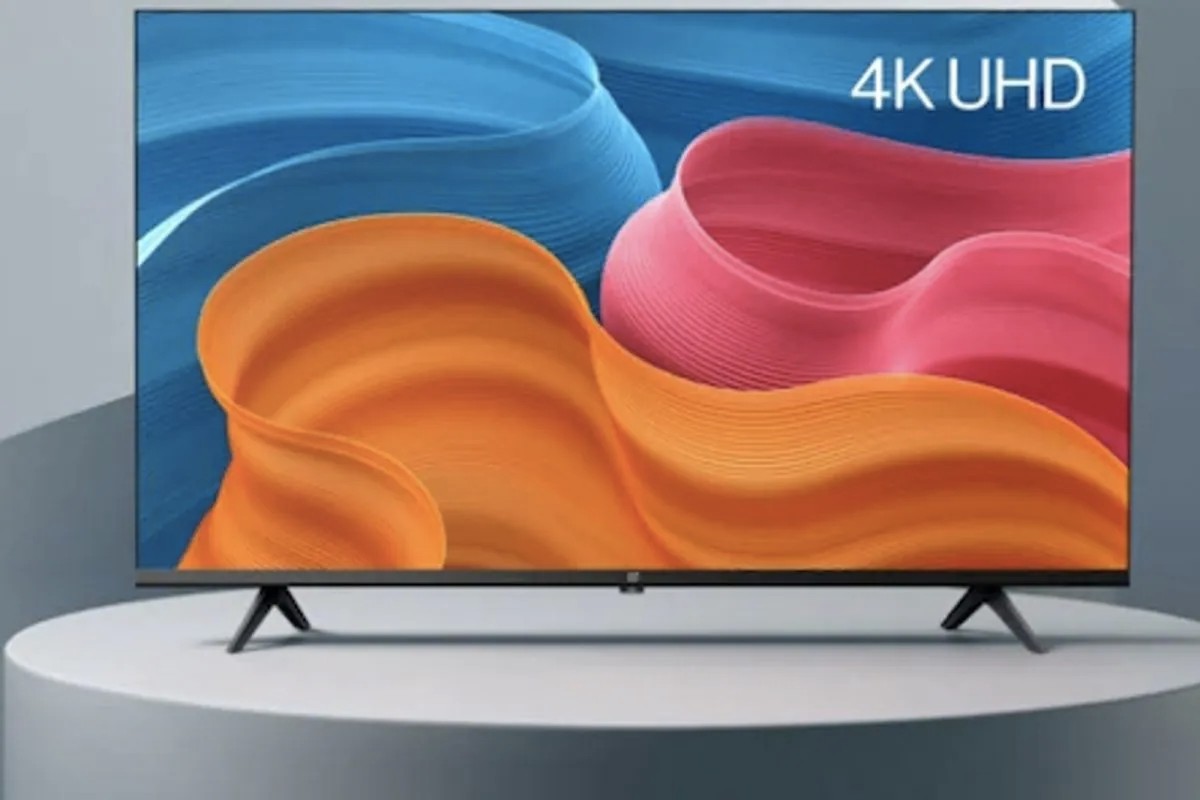
2. OnePlus announces 50 Y1S Pro smart TV with HDR10+ and MEMC support
OnePlus 50 Y1S Pro smart TV with a frameless design and Android TV software.
The OnePlus 50 Y1S Pro is described as a 50-inch Android TV model with a 4K panel and support for HDR10+, HDR10, and HLG.
The article also points to ALLM for lower-latency gaming, MEMC for smoother motion in dynamic scenes, and Gamma Engine processing intended to improve color reproduction and overall picture quality.
Its frameless design, Wi-Fi, Bluetooth 5.0, 24-watt speakers with Dolby Audio, and Google Assistant support make it a broadly equipped smart TV, although the source does not provide pricing.
Best for: Feature-focused 50-inch smart TV shoppers
- 50-inch 4K panel
- HDR10+, HDR10, and HLG support
- ALLM and MEMC mentioned
- Android TV with Google Assistant
Verdict: The 50 Y1S Pro looks like a well-specified mainstream Android TV on paper, but the source is an announcement rather than a full review.
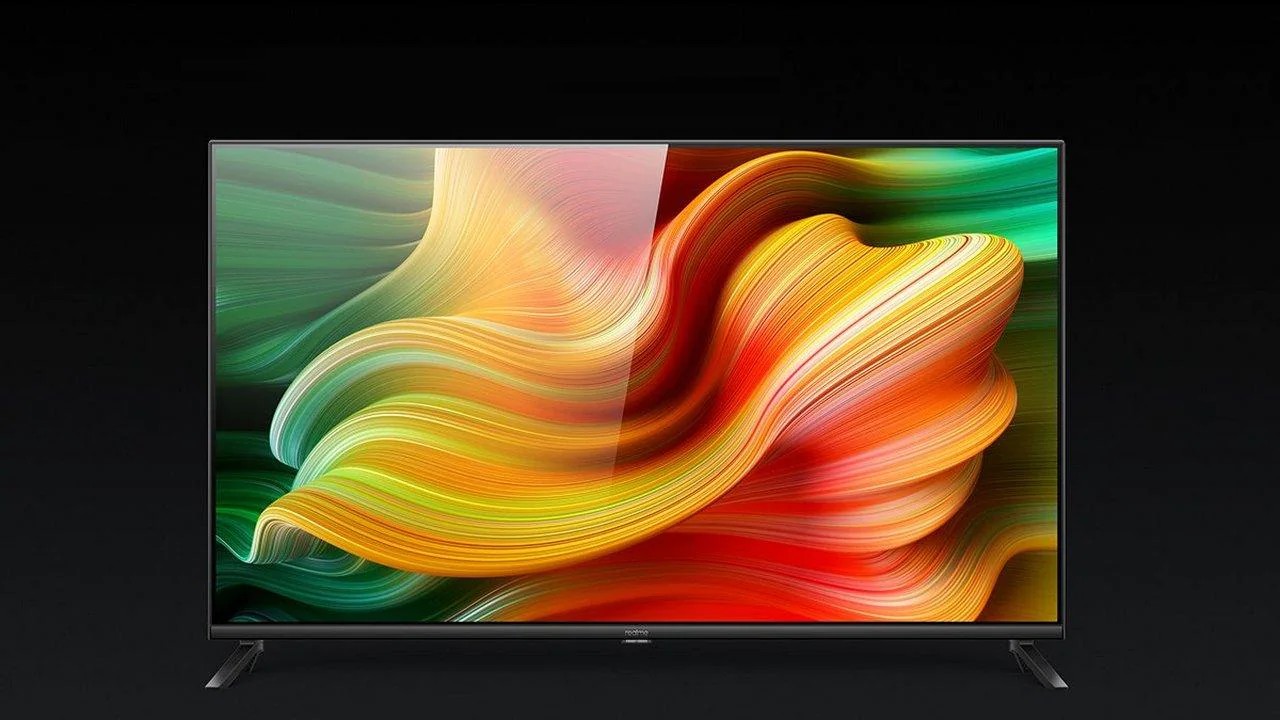
3. Realme TV 43: Impressive considering the low price
Realme TV 43 with thin bezels and two Y-shaped feet placed near the screen edges.
The Realme TV 43 is framed as one of the more affordable 43-inch 4K TVs in its class, with the article emphasizing value as much as specification.
It combines a 4K HDR screen, Android Smart TV operating system, tuner, and a wide range of connections.
The design is conventional but practical, with a thin bezel and two Y-shaped legs positioned near the outer edges, so buyers need a suitably wide cabinet for placement.
Best for: Budget-conscious buyers wanting a compact 4K smart TV
- Affordable 43-inch 4K option
- 4K HDR screen
- Android Smart TV operating system
- Wide range of connections
Verdict: Realme TV 43 is the value-led pick for smaller rooms, provided its wide-leg stand layout fits the furniture available.
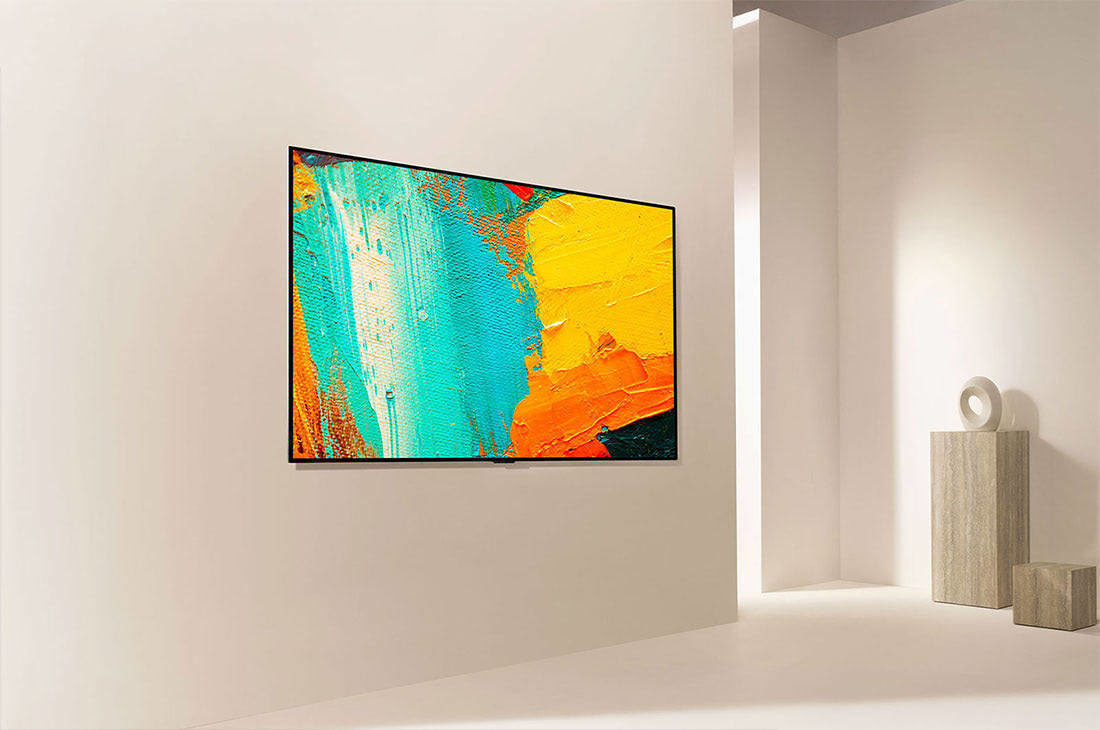
4. LG OLED65GX Review • Neutral design with an ultra-modern interior
LG OLED65GX OLED TV designed for a clean, modern interior installation.
The LG OLED65GX review focuses on a high-end 65-inch OLED built around LG’s premium panel and image-processing platform.
The source notes improved spectrum characteristics, a 10-bit matrix driver, the Alpha 9-3 video processor, and software that renders the image noticeably better than the prior processor generation discussed in the article.
It also highlights HDMI 2.1 support for up to 4K at 120 Hz, Nvidia G-Sync, AMD FreeSync, ALLM, VRR, and a stated 5 ms output delay, making it one of the more gaming-capable televisions in the set of sources.
Best for: High-end OLED buyers who also care about gaming features
- OLED panel with 10-bit matrix driver
- Alpha 9-3 video processor
- HDMI 2.1 with 4K/120 Hz support
- VRR, ALLM, G-Sync, and FreeSync support
Verdict: The LG OLED65GX stands out as the most rounded premium TV source here, combining design-led OLED appeal with explicitly stated gaming support.
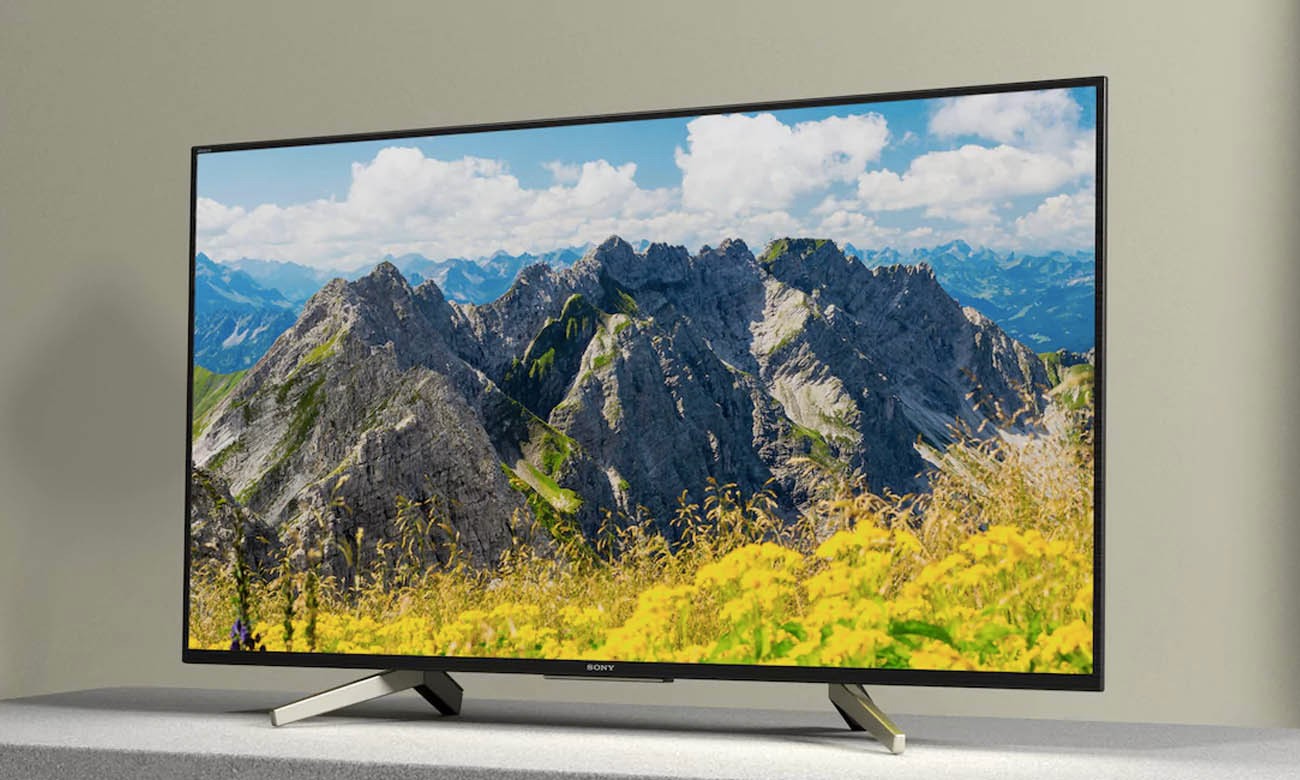
5. Top 4 incredibly cheap 4K TVs of
Budget 4K smart TV selection including Sony and TCL models with different screen sizes and software approaches.
This article is a budget 4K TV roundup rather than a single-product review, with Sony KD-49XF7596 and TCL L55P65US specifically described in the source excerpt.
The Sony is presented as a functional 49-inch smart TV with an IPS 4K panel, Edge LED backlighting, Android-based smart features, voice control, 16 GB built-in storage, and 24p True Cinema.
The TCL example is a 55-inch 4K smart TV with HDR playback, though the source notes its Linux-based smart platform is less advanced and may not support third-party apps in the same way.
Best for: Shoppers comparing low-cost 4K TV trade-offs
- Covers inexpensive 4K smart TV options
- Sony model includes Android-based smart features
- Sony model supports voice control
- TCL model offers 55-inch 4K HDR playback
Verdict: This roundup is useful for budget orientation, but each model should be judged individually because the smart platforms and feature depth differ substantially.
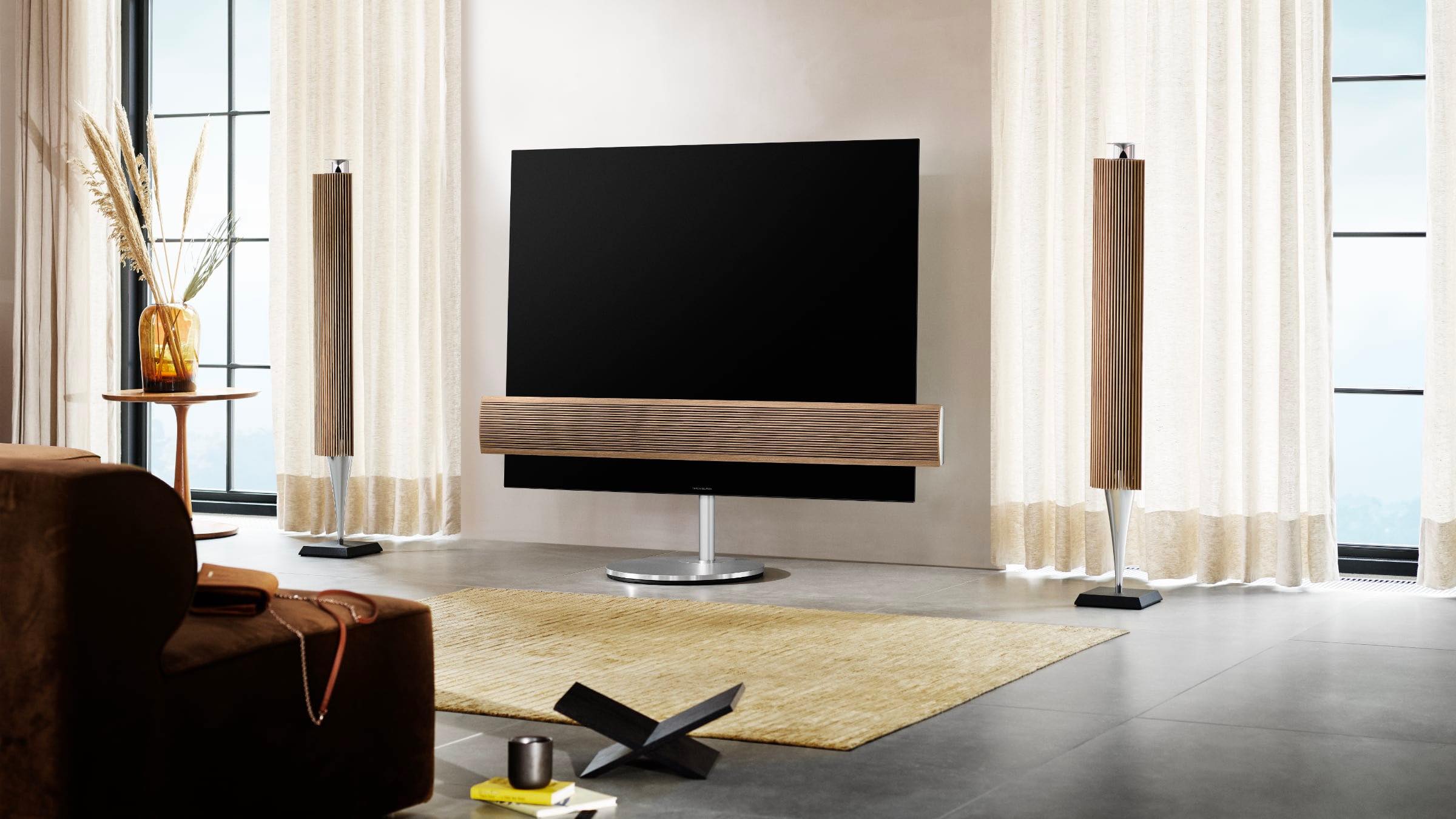
6. Bang & Olufsen launches 2nd generation Beovision Eclipse OLED TV
Bang & Olufsen Beovision Eclipse OLED TV combining a slim OLED panel with an integrated soundbar.
The second-generation Bang & Olufsen Beovision Eclipse is a design-led OLED TV built in partnership with LG, using the GX-series OLED screen platform.
The source lists 4K resolution, HDMI 2.1 ports, webOS 5.0, and the third-generation Alpha 9 processor among the inherited LG features.
Bang & Olufsen’s addition is the integrated soundbar, described as suitable for both film and music, along with WiSA support for wireless audio transmission. The article also notes a 55-inch version and a price of about 9,000 euros.
Best for: Design-conscious OLED buyers who value integrated audio
- GX-series OLED screen platform
- 4K resolution
- HDMI 2.1 ports
- Integrated Bang & Olufsen soundbar with WiSA support
Verdict: The Beovision Eclipse is the luxury integrated-audio option, pairing an LG OLED foundation with Bang & Olufsen’s design and soundbar approach.
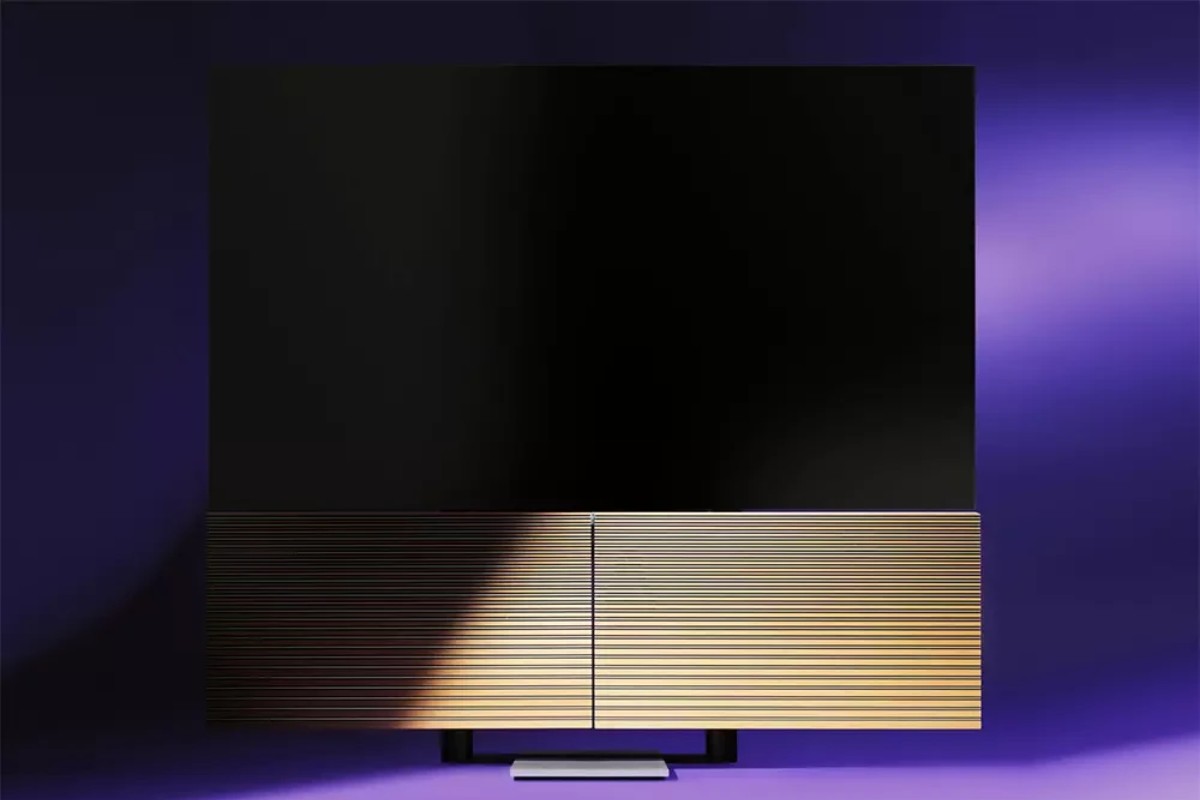
7. Bang & Olufsen launches 97-inch OLED TV
Bang & Olufsen Beovision Harmony 97 with large OLED screen and wood-and-aluminum speaker grilles.
The Bang & Olufsen Beovision Harmony 97 is the large-format luxury entry in this list.
The source describes a 97-inch OLED TV based on LG’s OLED G2 model, with 4K resolution, HDR10, Dolby Vision IQ, four HDMI 2.1 ports, 4K/120 Hz support, VRR, and ALLM.
Its design is central to the proposition, with natural wood finishes, black anthracite, natural aluminum and gold tone options, and custom design possibilities through Bang & Olufsen Atelier. The speaker system is also specified in detail, including multiple amplified drivers and wood-and-aluminum grilles.
Best for: Large luxury spaces and statement home cinema installations
- 97-inch OLED panel
- 4K resolution with HDR10 and Dolby Vision IQ
- Four HDMI 2.1 ports with 4K/120 Hz support
- VRR and ALLM support
Verdict: Beovision Harmony 97 is the most ambitious big-screen luxury TV in the source set, with design, OLED scale, gaming inputs, and integrated audio all emphasized.

8. Samsung Neo QLED TV Comparison
Samsung Neo QLED lineup comparison illustrating Mini-LED backlighting as the key distinction from standard QLED.
This Samsung Neo QLED article is a technology and range comparison rather than a single model recommendation.
Its key value is explaining the difference between conventional QLED and Neo QLED: Neo QLED uses much smaller Mini-LED backlighting, allowing a larger number of backlight control zones.
The source states that this improves backlight precision, generally increases contrast, provides deeper blacks, and reduces blooming around bright objects on dark backgrounds compared with typical LCD limitations.
Best for: Buyers choosing between Samsung LCD TV tiers
- Explains Neo QLED versus QLED
- Mini-LED backlighting
- More precise backlight control
- Aims for higher contrast and deeper blacks
Verdict: The Neo QLED comparison is most useful as a shopping guide for understanding Samsung’s Mini-LED-based contrast advantages, not as a verdict on one exact model.

9. TCL C7K: A Mid-Range Mini-LED Powerhouse
TCL C7K QLED Mini-LED TV with slim bezels, central stand, and wall-friendly connectivity layout.
The TCL C7K is presented as a mid-range QLED Mini-LED TV with a strong feature mix for the money.
The article describes a clean, nearly frameless design, a centrally mounted stand, accessible side-facing connectivity, VESA 300 x 300 wall-mount compatibility, rear cable clips, and a solid overall build for its category.
It is also positioned as well rounded for gaming, movies, and casual viewing, with the source highlighting better contrast, impressive gaming features, and advanced display technology, though the excerpt does not list the complete gaming specification set.
Best for: Mid-range buyers wanting Mini-LED features without a luxury positioning
- QLED Mini-LED display technology
- Nearly frameless design
- Central stand does not require a wide surface
- Accessible side-facing ports
Verdict: The TCL C7K is the pragmatic Mini-LED pick, balancing modern design, practical installation details, and a feature-rich mid-range positioning.
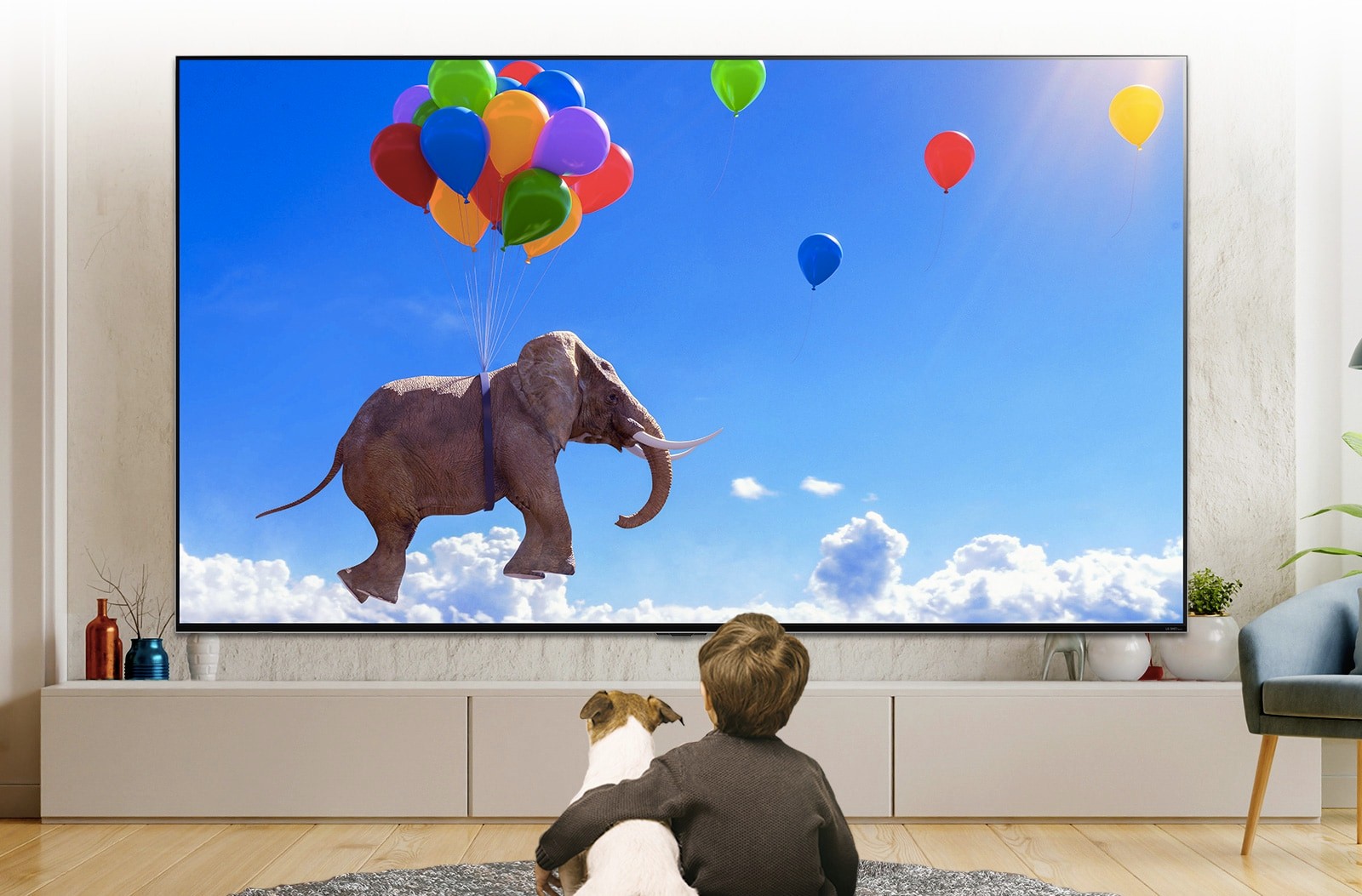
10. LG QNED81: A beautiful TV with awesome image quality
LG QNED81 shown as a large-format black TV with a slim frame for living-room placement.
The LG QNED81 is presented as a large, visually striking QNED television, with the excerpt focusing especially on the 86-inch LG 86QNED81 variant.
The article emphasizes its black finish, thin frame, room-friendly visual presence, and the need for adequate installation space because of its size and stated 55.3 kg weight, rising to 59.1 kg with VESA support.
The source describes it as part of LG’s high range and notes expectations around improved experience, but the supplied excerpt gives more design and placement detail than picture-performance specifics.
Best for: Buyers planning a very large-screen living-room installation
- Large 86-inch option described
- Thin frame design
- Black finish suited to room integration
- VESA support mentioned
Verdict: The LG QNED81 is most clearly supported here as a big-screen design choice, with careful planning needed for space, weight, and mounting.
Quick comparison
The entries below differ as much by purpose as by panel type.
Some are compact gaming displays, some are mainstream 4K smart TVs, some are luxury OLED systems, and others are technology guides that help narrow a broader range.
Use this table to separate the practical role of each item before comparing finer details.
| Product | Best for | Verdict |
|---|---|---|
| Sony InZone M9 gaming monitor | Desk-based 4K gaming | A compact gaming display with 4K, 144 Hz, 1 ms response, HDMI 2.1, and PC-first positioning. |
| OnePlus 50 Y1S Pro | 50-inch Android TV features | A 4K smart TV announcement with HDR format support, MEMC, ALLM, Dolby Audio, and Google Assistant. |
| Realme TV 43 | Affordable compact 4K TV buying | A value-oriented 43-inch 4K HDR Android TV with practical connectivity and a simple thin-bezel design. |
| LG OLED65GX | Premium OLED with gaming support | A design-forward 65-inch OLED with Alpha 9-3 processing, HDMI 2.1, 4K/120 Hz, VRR, ALLM, G-Sync, and FreeSync support. |
| Top 4 incredibly cheap 4K TVs of | Budget 4K TV comparison | A low-cost 4K TV roundup that highlights differences in screen size, smart platform, HDR support, and feature depth. |
| Bang & Olufsen Beovision Eclipse | Luxury OLED with integrated sound | A 55-inch OLED built on LG GX-series technology and paired with a Bang & Olufsen soundbar and WiSA support. |
| Bang & Olufsen Beovision Harmony 97 | Statement large-screen OLED | A 97-inch luxury OLED with 4K, HDR10, Dolby Vision IQ, HDMI 2.1, 4K/120 Hz, VRR, ALLM, and extensive audio hardware. |
| Samsung Neo QLED TV Comparison | Understanding Samsung Mini-LED tiers | A technology explainer showing how Neo QLED uses Mini-LED backlighting to improve control, contrast, blacks, and blooming performance. |
| TCL C7K | Mid-range QLED Mini-LED value | A feature-rich Mini-LED TV positioned around strong contrast, gaming features, practical design, and competitive pricing. |
| LG QNED81 | Large-screen room planning | A large QNED option with a thin-frame black design, substantial weight, and clear installation requirements. |
Frequently asked questions
Should I choose OLED, Mini-LED, Neo QLED, or QNED?
OLED models in the source, such as LG OLED65GX and Bang & Olufsen’s Eclipse and Harmony sets, are positioned around premium image technology, slim design, and high-end integration.
Mini-LED and Neo QLED entries focus on improving LCD backlight precision, contrast, deeper blacks, and reduced blooming.
QNED81 is presented mainly as a large, design-conscious LG option in the supplied excerpt, so buyers should check the full model details if picture technology is the deciding factor.
Which features matter most for gaming on a TV?
Look for HDMI 2.1, 4K/120 Hz support, VRR, ALLM, and low input delay where those details are stated.
The LG OLED65GX source explicitly mentions HDMI 2.1, 4K up to 120 Hz, G-Sync, FreeSync, ALLM, VRR, and a 5 ms output delay.
The Bang & Olufsen Beovision Harmony 97 source also lists HDMI 2.1, 4K/120 Hz, VRR, and ALLM, while the Sony InZone M9 monitor emphasizes 4K, 144 Hz, 1 ms response, variable frame-rate technology, and HDMI 2.1.
Are budget 4K smart TVs a good choice?
They can be, if expectations are realistic.
The Realme TV 43 is described as an affordable 43-inch 4K HDR Android TV with a tuner and wide connections, while the budget 4K roundup shows that inexpensive models can still include features such as Android-based smart software, voice control, 4K panels, and HDR playback.
The trade-off is that smart platforms and app flexibility can vary, as noted with the TCL L55P65US example.
What practical installation details should I check before buying a large TV?
Screen size, stand width, weight, and wall-mount compatibility matter as much as specifications.
The Realme TV 43 has legs placed near the screen edges, requiring a cabinet at least 108 cm wide according to the source.
The LG QNED81 excerpt highlights the 86-inch model’s substantial weight and the added weight with VESA support. For wall mounting, the TCL C7K excerpt notes VESA 300 x 300 compatibility, side-accessible ports, and rear cable clips.
How to choose from these TV recommendations
Start with the viewing situation rather than the spec sheet.
A desk or gaming setup points naturally toward the Sony InZone M9 because its strengths are monitor-like: 27-inch size, 4K resolution, 144 Hz refresh rate, 1 ms response, and flexible video inputs.
A smaller living room or secondary space is better served by value-minded 4K smart TVs such as Realme TV 43, while the OnePlus 50 Y1S Pro looks stronger on feature breadth if a 50-inch Android TV with HDR formats, MEMC, ALLM, Dolby Audio, and Google Assistant is the target. For premium home cinema and design-led interiors, the OLED choices separate clearly. LG OLED65GX is the most directly supported all-round premium recommendation in the supplied material, especially because its review covers processing, panel details, HDMI 2.1 gaming features, and low delay. Bang & Olufsen Beovision Eclipse adds luxury industrial design and integrated sound around an LG OLED foundation, while Beovision Harmony 97 is a statement-scale option for buyers who want a 97-inch OLED with advanced HDMI 2.1 gaming support and a substantial built-in audio system. If LCD-based brightness and contrast control are the focus, the Samsung Neo QLED comparison is useful background because it explains why Mini-LED backlighting matters: smaller LEDs can create more control zones, improving contrast and reducing blooming compared with conventional LCD backlighting. TCL C7K carries that Mini-LED idea into a mid-range QLED Mini-LED product with practical design details, while LG QNED81 is better supported in the excerpt as a large-format installation choice than as a fully specified performance pick. The safest buying route is to match the product type to the room first, then check the features that matter most: HDMI 2.1 and VRR for gaming, Android TV or webOS preferences for apps, stand and VESA requirements for installation, and whether integrated audio is important enough to justify a design-led premium model. Where the source is a launch announcement or preview, treat the specification list as promising but not the same as a full review verdict.