

The era of physical PlayStation games is coming to an end. Sony has announced that it will stop producing physical game discs for its consoles from January 2028, making all new PlayStation 5 releases digital-only. At the same time, the company confirmed plans to gradually retire the digital stores for PlayStation 3 and PlayStation Vita, reigniting concerns about the long-term preservation of video games.
While digital distribution has become the preferred way for most players to buy games, the move raises an important question: what happens to the games when the digital storefront eventually disappears?
The Shift to a Digital-Only Future
Sony’s latest financial figures show that around 80 percent of all PlayStation 5 software sales are now digital. That number has continued to grow as faster internet connections, larger SSDs, and convenient online storefronts have made digital purchases the default choice for many players.
The industry as a whole is following the same direction. Rockstar Games recently confirmed that physical retail editions of Grand Theft Auto VI will no longer include a game disc. Instead, buyers will receive a download code inside the box, turning the physical package into little more than collectible packaging.
For publishers, the benefits are obvious. Eliminating discs reduces manufacturing, shipping, and retail costs while increasing direct sales through digital storefronts.
For consumers, digital libraries offer several advantages as well:
- Instant downloads without visiting a store
- Pre-loading games before launch
- Automatic updates
- Access to frequent digital sales
- An entire game collection stored on a single console
However, those conveniences come with significant trade-offs.
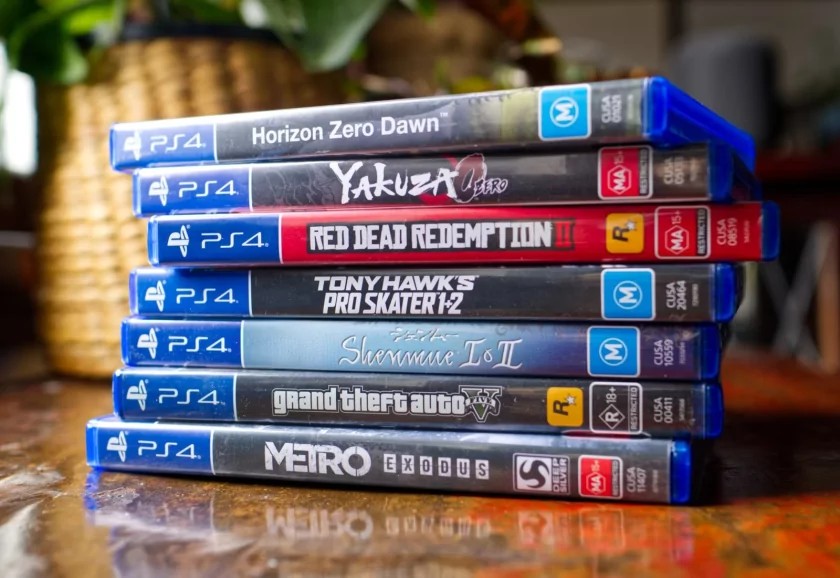
You Never Truly Own a Digital Game
Unlike a physical disc, a digital purchase cannot normally be resold, traded, lent to a friend, or given as a gift. Instead, players purchase a license tied to their account rather than permanent ownership of the software itself.
If an online store closes or licensing agreements expire, access to certain games can become impossible for new buyers—and, in some cases, even for existing owners.
This growing dependence on online services has become one of the biggest concerns surrounding the industry’s move away from physical media.
A Growing Preservation Problem
Game preservation experts have warned for years that digital-only releases could make large portions of gaming history inaccessible.
In 2023, the Video Game History Foundation estimated that roughly 87 percent of classic video games released before 2010 are already at risk of disappearing. The organization specifically chose 2010 as a reference point because it marked the rapid expansion of digital storefronts and downloadable-only releases.
As more publishers move away from physical media, preserving games becomes increasingly difficult. Without discs or cartridges to archive, future access depends almost entirely on the continued operation of online services.
Store Closures Are Nothing New
History suggests these concerns are justified.
Nintendo shut down the Nintendo eShop for both the Wii U and Nintendo 3DS in 2023, making hundreds of digital-exclusive titles effectively unavailable to new players. Unless users had already purchased the games before the closure, many titles simply disappeared from official distribution.
Sony’s plans to phase out the PlayStation 3 and PlayStation Vita stores follow a similar path. If the PlayStation Store for PS5 is eventually retired years from now, countless digital-only games could become impossible to purchase legally.
Are There Better Solutions?
Some companies are taking steps to reduce these risks.
Microsoft has built strong backward compatibility into the Xbox ecosystem, allowing many digital purchases to carry across multiple console generations. On PC, GOG has built its business around DRM-free downloads that remain playable without requiring an online service or authentication.
These approaches demonstrate that digital distribution does not necessarily have to come at the expense of long-term ownership and preservation.
The End of an Era
Sony’s decision marks another major milestone in gaming’s transition away from physical media. For many players, the convenience of digital downloads outweighs the loss of discs. For collectors, archivists, and preservationists, however, the announcement represents another step toward a future where access to games depends entirely on the lifespan of online storefronts.
As physical releases disappear, the debate over digital ownership, consumer rights, and game preservation is likely to become even more important in the years ahead.