

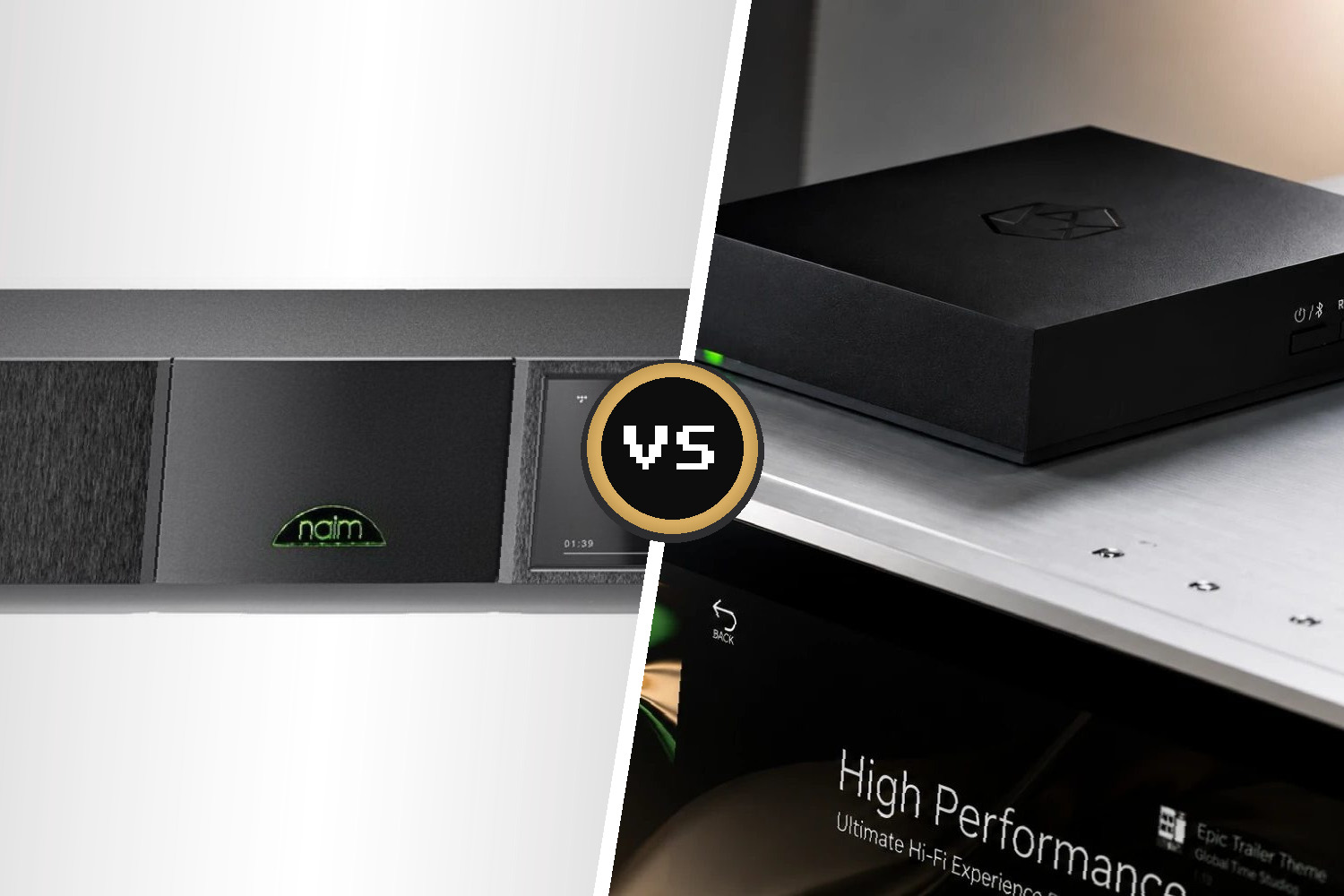

Naim NDX 2: A classic yet versatile network player
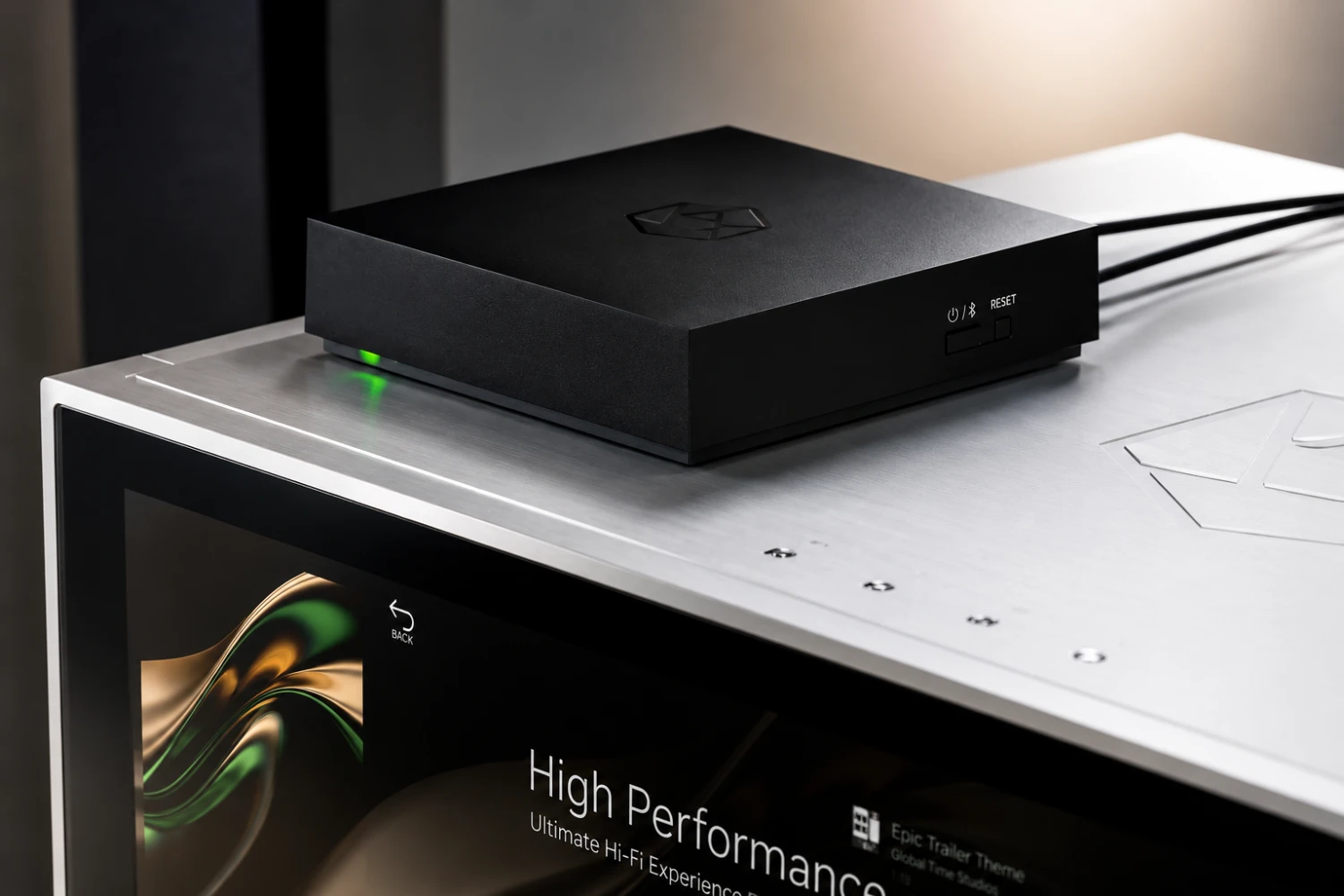
HiFi Rose RW800 Rose Air Lite Brings Modern Streaming to Existing Systems
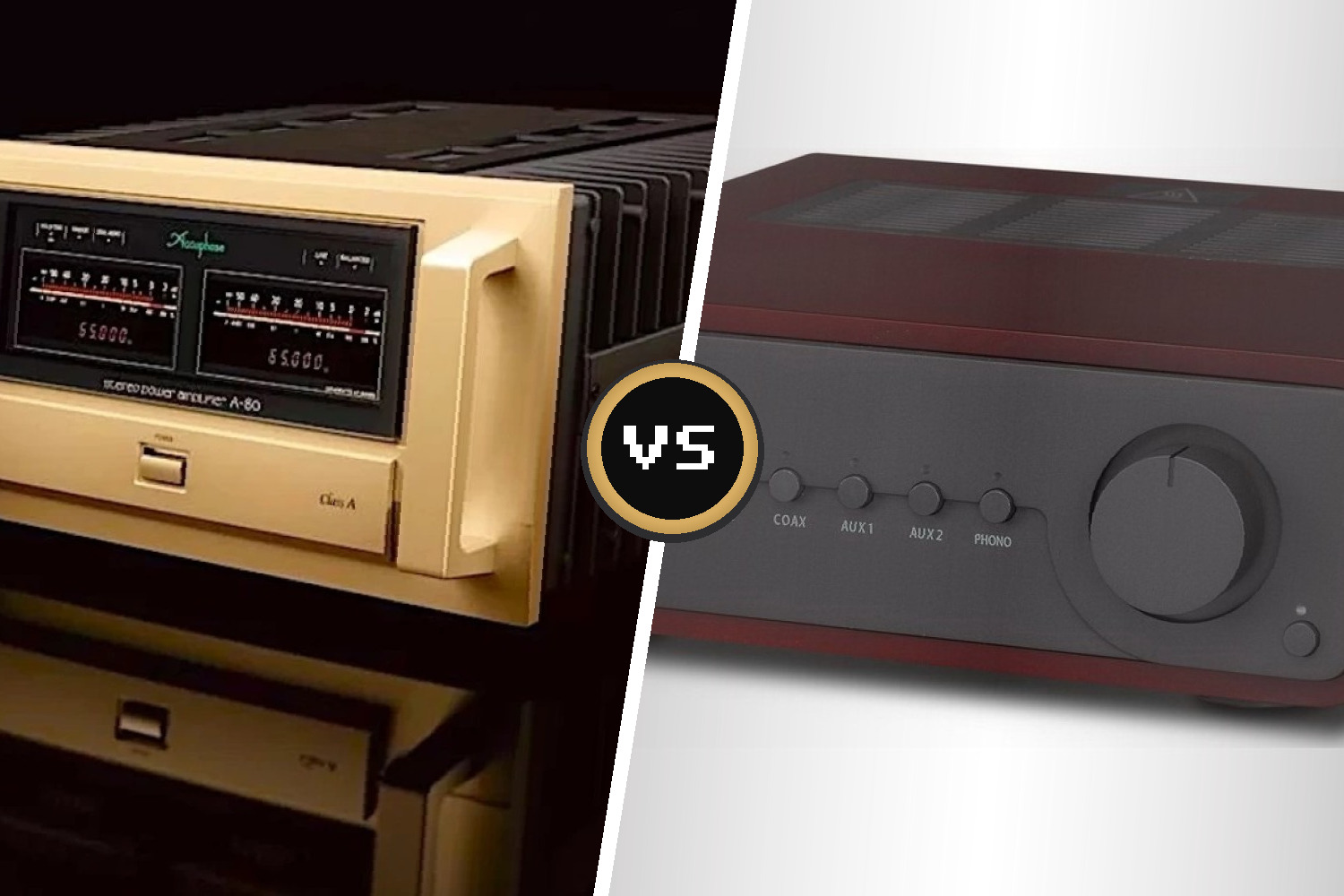
VS
At first glance, this is an uneven contest. The Naim NDX 2 is a full-width, 10 kg network player measuring 432 x 87 x 314 mm, with a 5-inch color display, front-panel controls, a radio-frequency remote, an internal DAC and analog outputs. The HiFi Rose RW800 Rose Air Lite is deliberately described as a compact network player. It is designed either to act as a small standalone streaming source or to add newer streaming protocols to compatible Rose components.
That difference in physical and functional ambition is precisely what makes the comparison useful. Many listeners do not need another large source component; they need an unobtrusive bridge that lets an established amplifier, active-speaker system or external DAC work with the apps they use every day. Others want the streamer to become a central digital source, accepting local files, USB storage, network music and external digital components before delivering an analog signal to the rest of the system.
Both support network playback up to PCM 32-bit/384kHz and DSD128, and both can participate in Roon-based systems. Beyond that shared foundation, their priorities diverge. The Naim emphasizes proprietary signal processing, low-noise network engineering, extensive wired integration and future hardware upgrading. The Rose emphasizes Tidal Connect, Qobuz Connect, Spotify Connect, AirPlay 2, Google Cast, Bluetooth 5.2 and a compact, app-centric workflow. This is therefore not a simple question of which streamer has more features. It is a question of which architecture makes sense for the system around it.
Naim NDX 2: The full-scale digital source
The NDX 2 has the physical presence of a traditional premium hi-fi component. Its full-width enclosure carries a switchable 5-inch TFT display and a four-button front-panel interface derived from Naim’s Uniti models. A ZigBee radio-frequency remote provides wide operating range without relying exclusively on line-of-sight control. That combination makes the Naim suitable for listeners who still want their network player to behave like a visible, independently operable source rather than an anonymous box controlled only from a phone.
Internally, the NP800 hardware and network platform routes music data from connected devices, network sources and multiroom streams through a central processor before conversion. Naim’s stated aim is to keep the signal path short and place sources such as NAS storage, USB devices, local drives, streaming services and mobile products on comparable footing. A 40-bit SHARC processor performs the digital processing, after which the signal is converted to I2S and sent separately for the left and right channels.
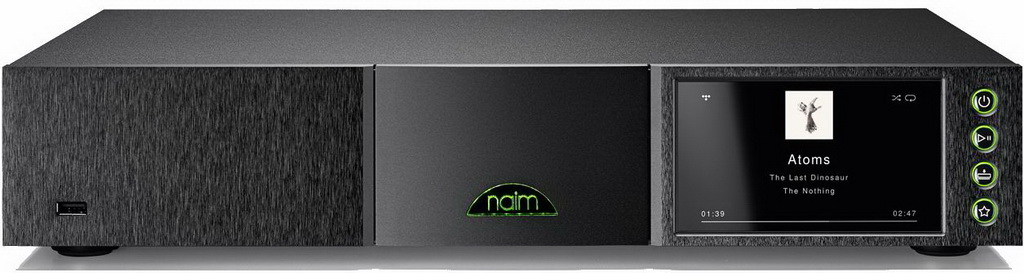
The source identifies a Burr-Brown converter and describes proprietary Naim filtering in place of standard filtering algorithms. It also specifies a discrete current-to-voltage conversion stage and an extended-bandwidth analog path built with discrete elements in the manner of Naim preamplifiers. The network card is Naim’s own low-voltage differential signaling design. Its logic operates from a 1.2 V reference rather than the more conventional 3.3 V level, an approach intended to reduce noise and interference during broadband data transmission.
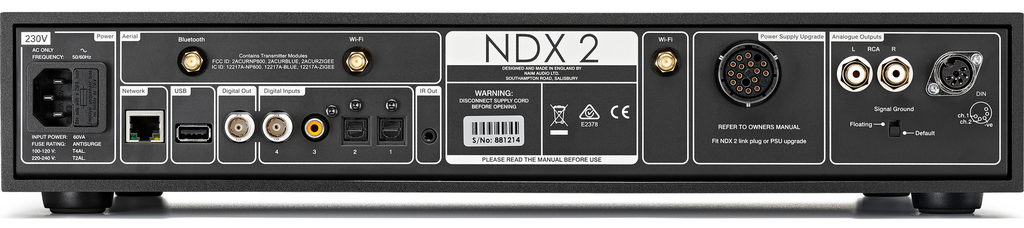
UPnP playback reaches PCM 32-bit/384kHz and DSD64 or DSD128. Listed file compatibility includes WAV up to 32-bit/384kHz; AIFF, FLAC and ALAC up to 24-bit/384kHz; DSD up to 128 Fs; and AAC, WMA, Ogg Vorbis and MP3, with MP3 listed up to 16-bit/48kHz. Its four S/PDIF inputs accept up to 24-bit/192kHz. Streaming and wireless support includes Tidal, Spotify, Google Cast or Chromecast, AirPlay, Bluetooth aptX HD and Roon compatibility. The source does not identify the Naim’s Tidal or Spotify implementation as the corresponding Connect version, and it lists AirPlay rather than AirPlay 2.
Physical connectivity is a major strength. Inputs comprise two optical Toslink sockets, coaxial RCA, BNC, two USB Type-A ports and Ethernet, with Wi-Fi 802.11 b/g/n/ac available for wireless networking. Outputs include coaxial RCA digital, analog RCA and a 5-pin DIN connection. This allows the NDX 2 to serve as a network source, a DAC for external digital equipment or a digital transport feeding another converter. Power consumption is specified at 19 W.
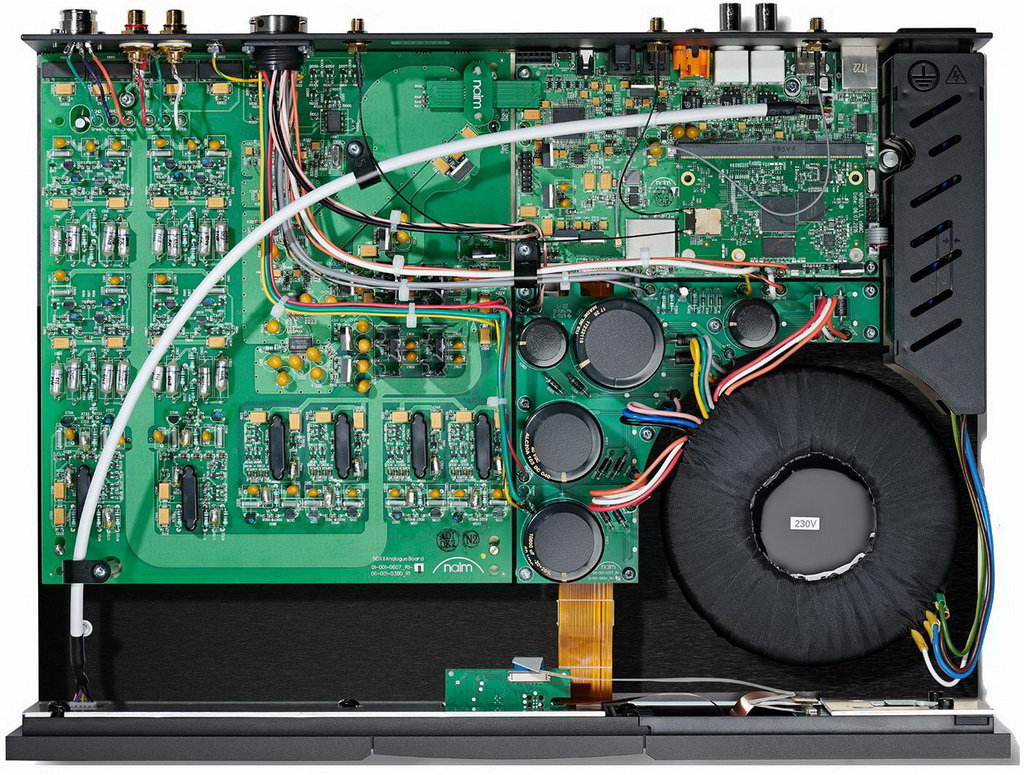
The most distinctive upgrade provision is compatibility with Naim XPS DR or NAPS 555 DR external power supplies, both described as using low-noise discrete regulators. The source reports increased sound resolution and a larger sense of stage space when an external supply is added. This creates a staged ownership path, although it also means realizing the platform’s fullest stated performance requires another substantial component and additional rack space.
Pros
- Full-size source design with a switchable 5-inch display, front-panel operation and ZigBee remote control
- Extensive digital input selection, including dual optical, coaxial RCA, BNC, dual USB Type-A and Ethernet
- Analog RCA and 5-pin DIN outputs allow direct connection to a conventional amplifier
- Supports local high-resolution playback up to PCM 32-bit/384kHz and DSD128 through UPnP
- Detailed file-format support includes WAV, AIFF, FLAC, ALAC, AAC, WMA, Ogg Vorbis and MP3
- Proprietary filtering, 40-bit SHARC processing, discrete current-to-voltage conversion and a discrete analog path
- Can be expanded with XPS DR or NAPS 555 DR external power supplies
- Works as a central digital hub rather than only as a streaming endpoint
Cons
- Large and heavy compared with a compact streaming bridge
- Its 5-inch display and hardware interface may be unnecessary for listeners who control everything from service apps
- The supplied source lists AirPlay, not AirPlay 2
- Tidal and Spotify are supported, but the source does not explicitly promise their Connect implementations
- Qobuz support is not listed in the supplied information
- External power-supply upgrading adds another component and requires more installation space
Best for: Listeners who want one substantial network player to anchor a conventional hi-fi system, convert multiple external digital sources and provide analog output without requiring a separate DAC. It is particularly well matched to systems that can exploit its RCA or DIN output, local-file support and optional Naim power-supply path.
HiFi Rose RW800 Rose Air Lite: The compact app-driven bridge
The RW800 Rose Air Lite addresses a more narrowly defined problem: adding current streaming behavior without replacing the rest of the system. It can operate as a standalone network streamer connected to an amplifier, active loudspeakers or an external DAC. It can also work as an expansion module for compatible HiFi Rose products, giving existing owners access to protocols that may not have been included in their original component.
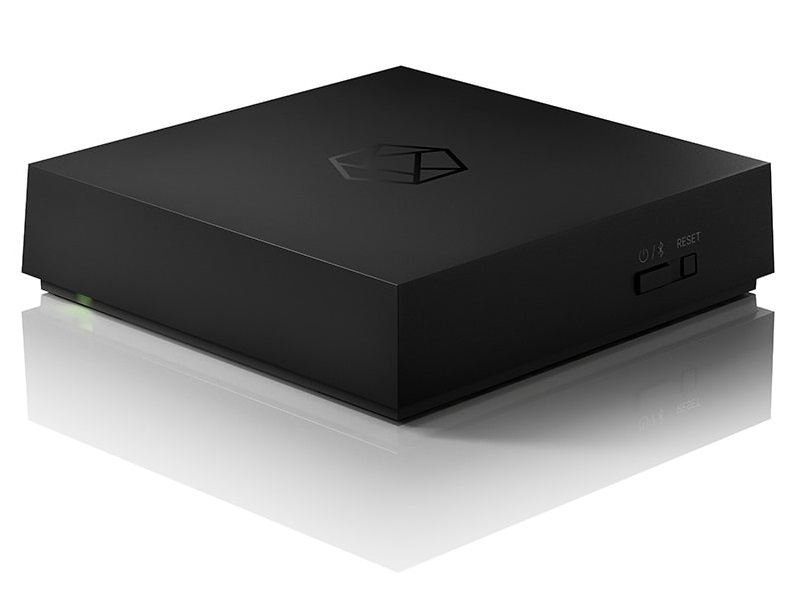
Its feature set reflects the way many people now interact with streaming hardware. Tidal Connect, Qobuz Connect and Spotify Connect permit control from the native applications of those services where supported. AirPlay 2 and Google Cast broaden access for Apple, Android and multiroom users, while Roon Ready certification places the Rose directly within a Roon-managed library and playback environment. Bluetooth 5.2 provides a quick alternative when a complete network workflow is unnecessary.
Networking is available through dual-band Wi-Fi or Ethernet. A wired installation may be preferable where the system location permits it, while dual-band wireless allows the unit to be positioned without another cable run. The source lists USB audio among its connection options and specifies high-resolution playback up to PCM 32-bit/384kHz and DSD128. It does not provide a complete socket-by-socket input and output inventory, supported file-format list, dimensions, weight, display specification or internal DAC architecture, so those points cannot be compared directly with the Naim from the supplied material.
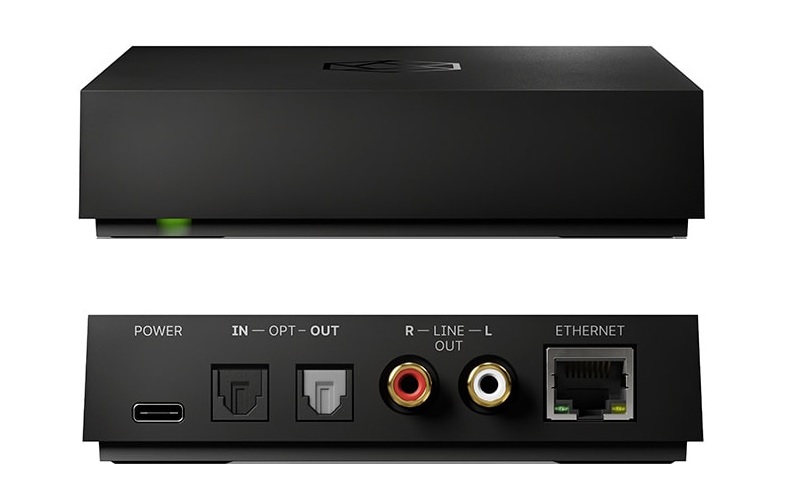
The Rose does not attempt to duplicate the Naim’s display-led operation, collection of digital inputs, disclosed analog-stage engineering or external power-supply path. Its appeal instead comes from doing a smaller job: placing widely used service apps and network protocols in front of established audio hardware. This may prevent an otherwise satisfactory amplifier, DAC, active-speaker setup or compatible Rose component from needing replacement merely to obtain updated streaming access.
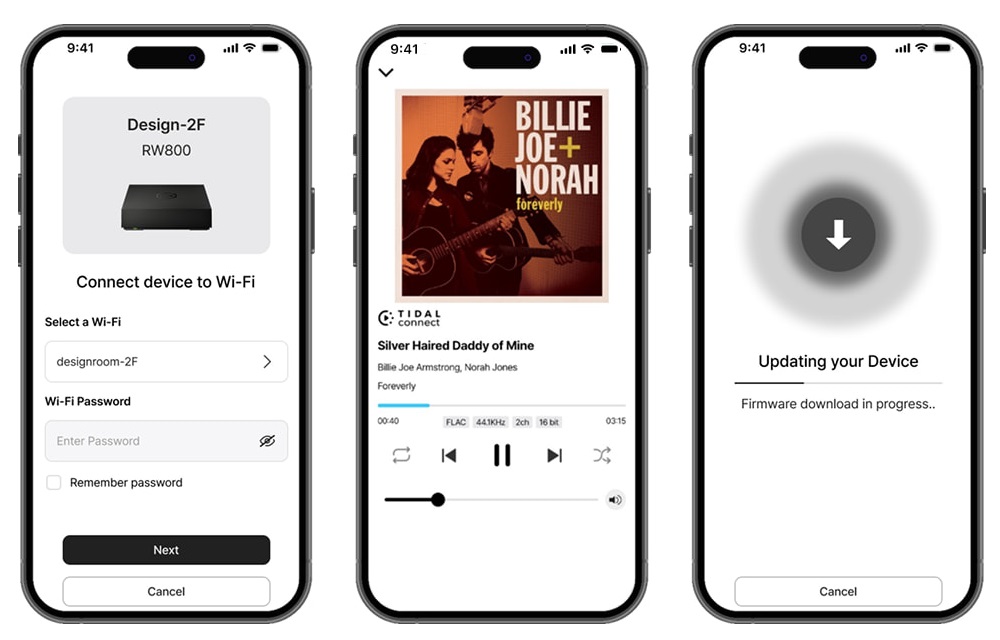
The absence of HDMI ARC, a large touchscreen, phono input, room correction and preamplifier functions is intentional according to the stated target. Buyers who need those facilities should look beyond the RW800. Buyers who already have them elsewhere, or do not need them, avoid paying for duplicated functionality. Its eventual value position cannot yet be judged conclusively because USD pricing and market-specific availability have not been announced in the source.
Pros
- Supports Tidal Connect, Qobuz Connect and Spotify Connect for native service-app control
- Includes AirPlay 2, Google Cast, Roon Ready support and Bluetooth 5.2
- Dual-band Wi-Fi and Ethernet provide flexible network installation
- Specified for playback up to PCM 32-bit/384kHz and DSD128
- Compact concept suits systems that do not need another full-width component
- Can operate as a standalone streamer or expand compatible HiFi Rose equipment
- Focused way to modernize an existing amplifier, external DAC or active-speaker system
Cons
- No announced USD price or confirmed market-specific availability in the supplied source
- The supplied information does not enumerate every physical input and output
- No detailed supported file-format list is provided
- No large touchscreen, HDMI ARC, phono input, room correction or preamplifier functionality
- Construction details, dimensions, weight, DAC design and analog-stage architecture are not specified
- Less suitable than the Naim for buyers who need a streamer to switch among several wired digital sources
Best for: Listeners who already like their amplifier, active speakers, external DAC or compatible Rose component and mainly need current Connect services, Roon, AirPlay 2, Google Cast and Bluetooth in a compact device. It is also the more logically focused option for users who regard the native service app as the primary interface.
Naim NDX 2 vs HiFi Rose RW800: Direct comparison
The decisive difference is role. The NDX 2 is built to be the digital center of a serious component system. Its display, remote, onboard conversion, discrete analog circuitry and numerous inputs allow it to replace several narrower source devices. The RW800 is a streaming access point whose principal purpose is to connect modern software ecosystems to hardware the owner already wants to keep.
Their identical stated maximum PCM and DSD figures should not be mistaken for identical implementations. The Naim source supplies extensive information about processing, filtering, network-card design, conversion and analog output. The Rose source confirms USB audio and resolution ceilings but does not detail its conversion topology or full connection panel. Resolution compatibility alone therefore cannot establish equivalent engineering or sonic performance, and no direct listening comparison is provided by the source articles.
For subscription streaming, the Rose has the clearer modern app-control proposition. Tidal Connect, Qobuz Connect and Spotify Connect are explicitly named, alongside AirPlay 2 and Google Cast. The Naim supports Tidal, Spotify, Google Cast, AirPlay and Bluetooth aptX HD, but the supplied information does not specify Tidal Connect, Spotify Connect, Qobuz or AirPlay 2. Conversely, Naim’s aptX HD codec support is stated, whereas the Rose source gives Bluetooth 5.2 without naming a codec. Version numbers and codec names describe different aspects of Bluetooth, so neither specification should be treated as an automatic overall victory.
System matching should begin with the equipment downstream. A traditional integrated amplifier that needs a finished analog source can connect to the Naim through RCA or 5-pin DIN. Multiple digital sources can also use its optical, RCA coaxial and BNC inputs. An owner with a favored external DAC may use the Naim’s coaxial digital output, although that leaves some of its internal conversion and analog engineering unused. The Rose is conceptually more economical in such a DAC-centered arrangement because compact bridging is central to its purpose, but the supplied source does not give enough socket detail to prescribe the exact cable for every system.
Setup philosophy also differs. The Naim offers hardware interaction through its screen, buttons and RF remote in addition to network control. The Rose assumes that the service app, Roon, AirPlay or Google Cast will usually be the interface. Ethernet is available on both and is the straightforward choice when reliable cabling reaches the rack. Wi-Fi is available on both, with 802.11 b/g/n/ac specified for the Naim and dual-band operation specified for the Rose.
Value cannot be reduced to a price comparison because the supplied articles do not provide a price for the Naim and say the Rose’s USD price is unannounced. Functional value is clearer. The Naim concentrates value in hardware depth, input flexibility, analog output engineering and upgrade potential. The Rose concentrates it in protocol coverage, compactness and avoiding the replacement of otherwise useful equipment. The better value is the one that prevents unnecessary duplication in the intended system.
| Category | Naim NDX 2: A classic yet versatile network player | HiFi Rose RW800 Rose Air Lite Brings Modern Streaming to Existing Systems | Edge |
|---|---|---|---|
| Primary role | Full-size network player, DAC and multi-input digital source | Compact standalone streamer or expansion module | Depends on whether the system needs a hub or a bridge |
| Maximum stated resolution | PCM 32-bit/384kHz and DSD128 through UPnP | PCM 32-bit/384kHz and DSD128 | Tie on stated ceiling |
| Service integration | Tidal, Spotify and Google Cast listed | Tidal Connect, Qobuz Connect, Spotify Connect and Google Cast | HiFi Rose RW800 for explicitly stated native Connect support |
| Apple streaming | AirPlay | AirPlay 2 | HiFi Rose RW800 |
| Roon | Ready to work in a Roon environment | Roon Ready | Both support Roon use, with Roon Ready explicitly stated for Rose |
| Bluetooth | Bluetooth aptX HD | Bluetooth 5.2, codec not specified | Different specifications; no overall winner established |
| Network connection | Ethernet and Wi-Fi 802.11 b/g/n/ac | Ethernet and dual-band Wi-Fi | Both support wired and wireless installation |
| Physical interface | 5-inch TFT display, four front buttons and ZigBee remote | App-led compact design; display and remote not specified | Naim NDX 2 for direct hardware operation |
| Wired digital integration | Two optical, RCA coaxial, BNC, two USB Type-A inputs and coaxial digital output | USB audio listed; full socket inventory not supplied | Naim NDX 2 based on documented connectivity |
| Analog system connection | Analog RCA and 5-pin DIN outputs explicitly listed | Can feed amplifiers or active speakers, but exact outputs are not enumerated | Naim NDX 2 for clearly documented analog integration capability and connections listed in the source article description, rather than an assumed Rose implementation. |
Verdict: Choose the architecture, not the matching resolution number
The Naim NDX 2 is the more complete source component in the supplied material. It has the documented construction, interface and connection range needed to anchor a conventional hi-fi rack, while its proprietary processing, discrete analog path and optional external power supplies show an emphasis extending beyond protocol support. Choose it when streaming is only one part of the job and the player must also accept external digital sources, perform conversion and connect directly to an amplifier through established analog interfaces.
The HiFi Rose RW800 Rose Air Lite is the more targeted modernization tool. Its explicit support for Tidal Connect, Qobuz Connect, Spotify Connect, AirPlay 2, Google Cast, Roon Ready and Bluetooth 5.2 suits listeners who prefer native apps and already own the major audio hardware they want to keep. It avoids the size and broader ambitions of the Naim, but its incomplete connection details and unannounced pricing mean prospective buyers should confirm physical compatibility and final cost before deciding.
There is no responsible basis here for declaring an absolute sound-quality winner. The Naim article offers much more detail about conversion and analog engineering, while the Rose article concentrates on services and use cases and provides no comparable listening assessment. What can be concluded is that the Naim is the stronger documented choice as a full digital control center, while the Rose is the more attractive concept for compact, app-driven streaming expansion. Buy the Naim to build around the streamer; consider the Rose to bring an existing system into a current streaming workflow without rebuilding around it.
Frequently asked questions
Do both players support PCM 32-bit/384kHz and DSD128?
Yes, both are specified up to PCM 32-bit/384kHz and DSD128. For the Naim, those limits are associated with UPnP playback, while its S/PDIF inputs accept up to 24-bit/192kHz. Matching maximum figures do not prove identical processing, conversion or sound quality.
Which is better for Tidal, Qobuz and Spotify app users?
The RW800 has the clearer stated proposition because Tidal Connect, Qobuz Connect and Spotify Connect are explicitly supported. The NDX 2 source lists Tidal and Spotify but does not explicitly identify their Connect versions, and Qobuz is not listed.
Can the Naim NDX 2 connect directly to an integrated amplifier?
Yes. It provides analog RCA and 5-pin DIN outputs, allowing it to function as a complete network source with onboard digital-to-analog conversion. It also has a coaxial digital output for use with an external DAC.
Can the RW800 work without other HiFi Rose equipment?
Yes. It is designed both as a standalone network streamer and as an expansion module for compatible HiFi Rose components. In standalone use it can serve an amplifier, active loudspeakers or an external DAC, although the supplied source does not enumerate every physical output.
Which product is easier to use without a phone?
The NDX 2 is the better-documented option for hardware-led operation because it has a 5-inch display, four front-panel controls and a ZigBee RF remote. The RW800 is conceived around native service apps, Roon, AirPlay 2 and Google Cast, and no comparable onboard display or remote is specified.
Which one is better for an external DAC?
Either may fit a DAC-based system, but the decision depends on connections and priorities. The Naim explicitly offers coaxial digital output and extensive source switching, although using an external DAC bypasses its documented analog-stage investment. The Rose is designed with external-DAC use in mind and lists USB audio, but its complete socket arrangement should be verified because it is not detailed in the supplied article.

Join the discussion
Share your thoughts, listening impressions or product experience.