

An AV receiver is the switching, decoding, amplification, and setup hub of a home-cinema system, so the right choice depends less on a single headline feature and more on the system you plan to build.
Speaker count, HDMI needs, room correction, streaming support, and future expansion all matter before brand preference does.
The strongest entries in this source set cover a wide span: compact 5.2-channel and 7.2-channel receivers for simpler rooms, 9-channel models for more advanced Atmos layouts, and flagship-class designs with 11 amplification channels and more elaborate DAC, calibration, and processing platforms. Several models also support 8K video paths, while others are centered on 4K switching or streaming convenience. Two supplied entries are not AV receivers at all: one is a Technics turntable article and one is a turntable buying-tips article. They are preserved here for source integrity, but they are clearly marked as outside the AV receiver category and should not be considered receiver recommendations.

1. Denon AVR-S760H: 7.2-channel AV receiver that can handle 8K resolution
Denon AVR-S760H, a 7.2-channel AV receiver with 8K handling, HEOS networking, and object-based surround support.
The Denon AVR-S760H is a practical 7.2-channel receiver for buyers who want modern video support, object-based audio, and broad network playback in one component.
Its source profile includes seven discrete high-current amplifiers, 8K handling, Dolby Atmos and DTS:X support in a 5.1.2-channel layout, and virtualization modes for systems without physical height speakers.
It also covers high-resolution file playback from network storage or USB, plus streaming services, dual-band Wi-Fi, Bluetooth, AirPlay 2, and HEOS multiroom integration.
Best for: Flexible 7.2 or 5.1.2 home-cinema systems with network streaming
- 7.2-channel platform with 5.1.2 Dolby Atmos and DTS:X support
- 8K video handling
- High-resolution file playback up to 24-bit/192 kHz and DSD
- Wi-Fi, Bluetooth, AirPlay 2, and HEOS support
Verdict: A well-rounded Denon receiver for users who want surround decoding, 8K readiness, and strong wireless music options without stepping into larger multi-channel separates.

2. Denon AVR-S970H: Relatively inexpensive AV receiver unveiled
Denon AVR-S970H, a 7.2-channel or 5.1.2-channel AV receiver with HDMI 2.1 inputs and Audyssey room correction.
The Denon AVR-S970H is positioned in the source as a relatively inexpensive 7.2-channel or 5.1.2-channel receiver with a modern video path and useful room-correction tools.
It supports Dolby Atmos and DTS:X, passes Dolby Vision, HDR10+, and HLG, and includes three HDMI 2.1 inputs able to accept UHD 8K at 60 Hz or UHD 4K at 120 Hz.
Wireless support includes Wi-Fi with AirPlay 2 and DLNA, Bluetooth, and Denon’s HEOS network platform, while Audyssey MultEQ XT32, Dynamic EQ, and Dynamic Volume are listed for room and playback optimization.
Best for: Cost-conscious Atmos systems needing HDMI 2.1 video support
- 7.2 or 5.1.2 configuration
- Three HDMI 2.1 inputs for 8K/60 or 4K/120 signals
- Dolby Atmos and DTS:X support
- Audyssey MultEQ XT32 with Dynamic EQ and Dynamic Volume
Verdict: A feature-rich Denon option for buyers who want current HDMI features, HEOS streaming, and Audyssey correction in a relatively accessible receiver.

3. Pioneer VSX-535
Pioneer VSX-535, a budget-oriented 5.2-channel receiver with Dolby Atmos support and MCACC calibration.
The supplied source is a broader AV receiver roundup, but the relevant product entry is the Pioneer VSX-535.
It is described as an affordable 5.2-channel receiver from a reputable brand with five amplification channels, Dolby Atmos and Dolby Surround decoding, 8K/4K Ultra HD video switching, Dolby Vision compatibility, Bluetooth audio streaming, MCACC Multi-Channel Acoustic Calibration, and Pioneer’s Advanced Sound Retriever.
The same source notes a good spatial picture for its price category, while also stating that DTS:X support is absent.
Best for: Basic home-theater builds where Dolby Atmos support matters more than DTS:X
- Affordable 5.2-channel AV receiver positioning
- Dolby Atmos and Dolby Surround decoding
- 8K/4K Ultra HD video switching with Dolby Vision compatibility
- MCACC room calibration
Verdict: A decent entry-level Pioneer choice when budget, simple channel count, and Dolby-based spatial audio are the priorities.

4. Pioneer VSA-LX805: Top-of-the-line AV receiver
Pioneer VSA-LX805, an 11-channel AV receiver designed for 7.2.4 surround systems with Dirac Live calibration.
The Pioneer VSA-LX805 is the most expansion-oriented Pioneer entry in the supplied material.
It provides 11 amplification channels rated at 150 watts each under the stated source conditions, enabling a 7.2.4 surround layout, and uses two 32-bit ESS Sabre ES9026PRO DAC chips for all 11.2 channels.
The source also highlights class AB output stages with cast aluminum radiators, Dirac Live Room Calibration, optional Dirac Live Bass Control software modules for subwoofer management, and additional engineering details aimed at signal precision and low noise.
Best for: Large Atmos theaters needing 11 powered channels and advanced calibration
- 11 amplification channels for a 7.2.4 layout
- Two 32-bit ESS Sabre ES9026PRO DAC chips
- Dirac Live Room Calibration
- Optional Dirac Live Bass Control expansion
Verdict: A serious high-channel-count Pioneer receiver for users planning a full 7.2.4 system and wanting Dirac-based room optimization.

5. Onkyo TX-NR7100: AV receiver that guarantees high quality sound
Onkyo TX-NR7100, a nine-channel AV receiver with THX certification and support for 5.2.4 immersive speaker layouts.
The Onkyo TX-NR7100 is a nine-channel AV receiver suited to more ambitious installed systems.
The source states that it has THX certification, Onkyo Dynamic Amplification technology, aluminum heat sinks, and a custom transformer, along with decoders for common surround formats including Dolby Atmos and DTS:X.
It can support 3D systems up to 5.2.4 without external amplifiers, adds Dolby Atmos Height Virtualizer for virtual surround, and provides correct processing of IMAX content.
Best for: 5.2.4 Atmos systems with THX-certified Onkyo amplification
- Nine-channel configuration
- THX certification
- Dolby Atmos and DTS:X decoding
- Supports up to 5.2.4 without external amplifiers
Verdict: A capable Onkyo receiver for users who want nine powered channels, Atmos and DTS:X, and room to build a more enveloping layout without external amplification.

6. Arcam AVR5: Confident AV receiver even with a complex load
Arcam AVR5, a seven-channel class A/B AV receiver with IMAX Enhanced certification and 7.1.4 expansion potential.
The Arcam AVR5 stands out in the source as a receiver with classic class A/B amplification, a strong power supply, and a music-friendly profile as well as home-theater capability.
It has seven amplification channels, IMAX Enhanced certification, Dolby Atmos and DTS:X decoding, and additional processor outputs that allow systems up to 7.1.4 channels when used with extra amplification.
The video section includes seven HDMI inputs and two outputs with 4K Ultra HD signal transmission, HDCP 2.2, and support for modern video technologies, while ESS9026PRO DAC conversion is cited for detail and wide dynamic range.
Best for: Listeners who want an AV receiver with strong music credentials and expansion potential
- Seven class A/B amplification channels
- IMAX Enhanced certification
- Dolby Atmos and DTS:X decoding
- Processor outputs for systems up to 7.1.4 channels
Verdict: A versatile Arcam receiver for buyers who value class A/B amplification, serious decoding support, and the option to expand beyond its onboard channels.
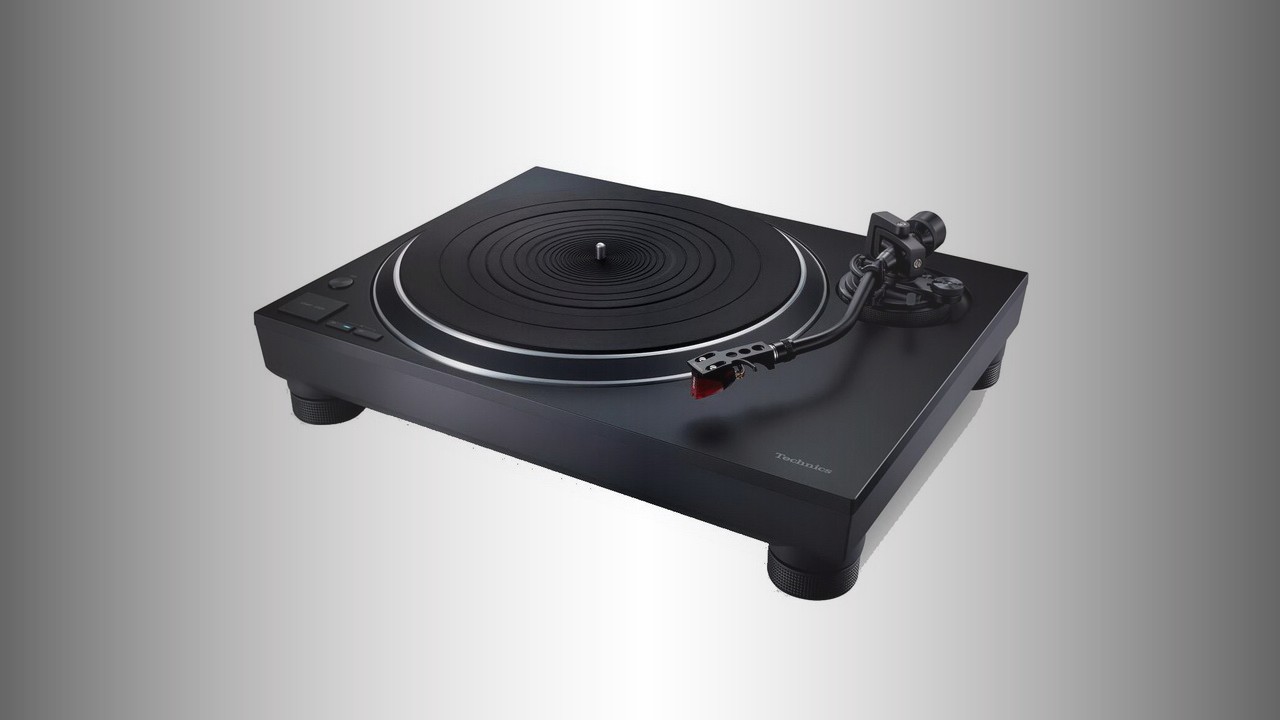
7. Technics SL-1500C: Turntable made for audiophiles
Technics SL-1500C, a direct-drive turntable with an Ortofon 2M Red cartridge and built-in MM phono stage.
The Technics SL-1500C is not an AV receiver, so it should not be treated as a home-cinema control or amplification hub.
Within the supplied source, it is an audiophile-oriented turntable with a direct-drive motor, an installed Ortofon 2M Red cartridge, a built-in MM phono preamplifier, and automatic tonearm lift at the end of a record.
It may be relevant to an AV receiver buyer only as a vinyl source component, particularly if the receiver or system needs to accommodate analogue playback.
Best for: Vinyl playback, not AV receiver duties
- Direct-drive turntable design
- Installed Ortofon 2M Red cartridge
- Built-in MM phono preamplifier
- Automatic tonearm lift at the end of the record
Verdict: A credible vinyl source in the supplied material, but not a substitute for an AV receiver.

8. Sony STR-DN1080: AV Receiver perfect for any home theater
Sony STR-DN1080, a Dolby Atmos and DTS:X AV receiver with six HDMI inputs, two HDMI outputs, and network streaming features.
The Sony STR-DN1080 is a 5.1.2 or 7.1-channel receiver with Dolby Atmos and DTS:X support, built on the earlier 1070 platform with a stronger home-theater focus.
The source highlights six HDMI inputs, two HDMI outputs, 4K video delivery to two living areas, and streaming features including Chromecast, UPnP, and Spotify Connect.
Connectivity also includes optical and coaxial inputs, Bluetooth, Wi-Fi, and Ethernet, with Google Home control described for music playback through compatible services.
Best for: Streaming-friendly 5.1.2 or 7.1 systems with dual HDMI output needs
- 5.1.2 or 7.1-channel configuration
- Dolby Atmos and DTS:X support
- Six HDMI inputs and two HDMI outputs
- Chromecast, UPnP, and Spotify Connect
Verdict: A Sony receiver with strong everyday streaming convenience and generous HDMI connectivity for its class.

9. Yamaha RX-A8A: The King of AV Receivers
Yamaha RX-A8A, a high-end AV receiver with SURROUND:AI processing, ESS SABRE PRO DAC technology, and 8K-capable HDMI support.
The Yamaha RX-A8A is presented in the supplied source as a high-end AV receiver built around advanced processing and conversion.
It supports Dolby Atmos and DTS:X, uses a Qualcomm QCS407 chipset, and includes an ESS SABRE PRO Premier ES9026PRO 32-bit DAC with Yamaha’s DOPG layout concept to reduce background noise between audio circuit stages.
Yamaha’s SURROUND:AI processing analyzes content elements such as dialogue, background music, and effects to optimize surround presentation, while the video path is described as supporting 8K to 4K resolutions and higher refresh-rate options through the HDMI ecosystem.
Best for: Advanced Yamaha-based theaters prioritizing processing, DAC design, and HDMI video flexibility
- Dolby Atmos and DTS:X support
- ESS SABRE PRO Premier ES9026PRO 32-bit DAC
- Yamaha SURROUND:AI processing
- 8K to 4K video support with higher refresh-rate options
Verdict: A feature-heavy Yamaha receiver for demanding home-cinema systems where surround processing and premium digital conversion are central priorities.

10. 5 useful tips for choosing your first turntable
A turntable-buying advice article focused on operation style and construction choices rather than AV receiver features.
This source article is not an AV receiver recommendation; it is a general guide to selecting a first turntable.
Its useful crossover lesson for receiver buyers is that source components have their own setup and usability requirements: the article contrasts fully automatic turntables with more hands-on Hi-Fi models and notes that construction materials affect sound quality.
If vinyl will be part of the system, receiver shoppers should think about how the turntable will connect, but the article itself does not provide AV receiver specifications.
Best for: Vinyl buying context, not AV receiver selection
- Explains manual versus fully automatic turntable operation
- Highlights construction materials as a sound-quality factor
Verdict: Helpful background for adding a record player to a system, but outside the AV receiver category.
Quick comparison
The clearest differences in this source set are channel count, immersive-audio format support, video handling, room correction, and whether the entry is actually an AV receiver.
The table below keeps those distinctions at a high level and avoids unsupported comparisons.
| Product | Best for | Verdict |
|---|---|---|
| Denon AVR-S760H | Flexible 7.2 or 5.1.2 systems with wireless streaming | A balanced Denon option with 8K handling, Dolby Atmos and DTS:X, HEOS, AirPlay 2, Bluetooth, and high-resolution file playback. |
| Denon AVR-S970H | Budget-aware buyers wanting HDMI 2.1 and Audyssey features | A relatively accessible 7.2 or 5.1.2 receiver with three HDMI 2.1 inputs, HEOS, and Audyssey MultEQ XT32. |
| Pioneer VSX-535 | Entry-level Dolby Atmos systems | A basic 5.2-channel Pioneer with Dolby Atmos, MCACC calibration, and 8K/4K video switching, but no DTS:X support according to the source. |
| Pioneer VSA-LX805 | Large 7.2.4 rooms and advanced calibration | An 11-channel receiver with ESS Sabre DACs, Dirac Live, and optional Dirac Live Bass Control expansion. |
| Onkyo TX-NR7100 | 5.2.4 Atmos and DTS:X systems without external amplifiers | A nine-channel THX-certified Onkyo receiver with Dolby Atmos, DTS:X, Dolby Atmos Height Virtualizer, and IMAX content processing. |
| Arcam AVR5 | Home cinema plus serious music playback | A seven-channel class A/B receiver with IMAX Enhanced certification, ESS9026PRO DAC conversion, and processor outputs for up to 7.1.4 systems. |
| Technics SL-1500C | Vinyl playback as a source component | A direct-drive turntable with cartridge, MM phono preamp, and auto lift; it is not an AV receiver. |
| Sony STR-DN1080 | Streaming-focused 5.1.2 or 7.1 setups | A Dolby Atmos and DTS:X receiver with six HDMI inputs, two HDMI outputs, Chromecast, UPnP, Spotify Connect, Wi-Fi, Bluetooth, and Ethernet. |
| Yamaha RX-A8A | Advanced Yamaha theater systems with AI surround processing | A high-end receiver with Dolby Atmos, DTS:X, SURROUND:AI, ESS SABRE PRO DAC technology, and 8K-to-4K HDMI support. |
| 5 useful tips for choosing your first turntable | General vinyl setup advice | A turntable guidance article rather than an AV receiver product, useful only if vinyl is part of the wider system plan. |
Frequently asked questions
How many AV receiver channels do I need?
Match the receiver to the speaker layout you intend to install.
A 5.2-channel model such as the Pioneer VSX-535 suits simpler systems, 7.2-channel receivers such as the Denon AVR-S760H and AVR-S970H can support layouts including 5.1.2, and nine- or eleven-channel models such as the Onkyo TX-NR7100 and Pioneer VSA-LX805 are better aligned with larger immersive layouts such as 5.2.4 or 7.2.4.
Should I prioritize Dolby Atmos and DTS:X?
If immersive movie sound is a goal, format support matters.
Several receivers here support both Dolby Atmos and DTS:X, including the Denon AVR-S760H, Denon AVR-S970H, Onkyo TX-NR7100, Arcam AVR5, Sony STR-DN1080, and Yamaha RX-A8A.
The Pioneer VSX-535 source entry supports Dolby Atmos but explicitly notes no DTS:X support, which is an important distinction.
How important is room correction?
Room correction can help adapt a surround system to the listening space, especially as channel count rises.
The supplied material mentions MCACC on the Pioneer VSX-535, Audyssey MultEQ XT32 on the Denon AVR-S970H, Dirac Live on the Pioneer VSA-LX805, and Dirac Live compatibility context for the Arcam AVR5, although the AVR5 source also notes the absence of an auto-calibration microphone.
Do I need 8K support in an AV receiver?
8K support is useful if your display, sources, or future system plan require it, but it should not be the only selection criterion.
The Denon AVR-S760H, Denon AVR-S970H, Pioneer VSX-535, and Yamaha RX-A8A sources all include 8K-related video support, while the Arcam AVR5 source describes 4K Ultra HD transmission rather than 8K.
How to Choose the Right AV Receiver from This Shortlist
Start with the speaker layout.
A compact or first surround system does not need the same amplifier count as a full height-channel theater.
The Pioneer VSX-535 is the simplest AV receiver entry in the supplied material, while the Denon AVR-S760H and AVR-S970H cover the popular 7.2 or 5.1.2 middle ground. The Onkyo TX-NR7100 moves into nine-channel territory for 5.2.4 operation without external amplifiers, and the Pioneer VSA-LX805 is the obvious source-supported choice for an 11-channel 7.2.4 layout. Next, check format support. Dolby Atmos appears across many entries, but DTS:X is not universal: the Pioneer VSX-535 source specifically lists no DTS:X support. If you play a broad mix of discs, streams, and game audio, choosing a receiver with both Dolby Atmos and DTS:X gives more decoding flexibility. Video switching deserves the same practical scrutiny. If your sources require HDMI 2.1 features such as 8K/60 or 4K/120 input support, the Denon AVR-S970H is the clearest source-backed match because its three HDMI 2.1 inputs are specifically described. The Denon AVR-S760H, Pioneer VSX-535, and Yamaha RX-A8A also include 8K-related support in the supplied material. The Arcam AVR5 is better viewed through its 4K Ultra HD HDMI capability and its audio-first class A/B profile. Room correction and system tuning can be decisive. Audyssey MultEQ XT32 on the Denon AVR-S970H, MCACC on the Pioneer VSX-535, Dirac Live on the Pioneer VSA-LX805, and the Arcam AVR5’s Dirac Live context all point to different setup ecosystems. Buyers considering multiple subwoofers or a complex room should pay particular attention to the calibration platform and any optional modules mentioned by the manufacturer or source. Finally, treat the two vinyl entries appropriately. The Technics SL-1500C and the turntable buying guide may be useful if records are part of the wider listening system, but neither is an AV receiver. For an actual home-cinema hub, focus on the receiver entries and choose by channel count, decoding, HDMI needs, room correction, and streaming ecosystem rather than by headline power alone.