

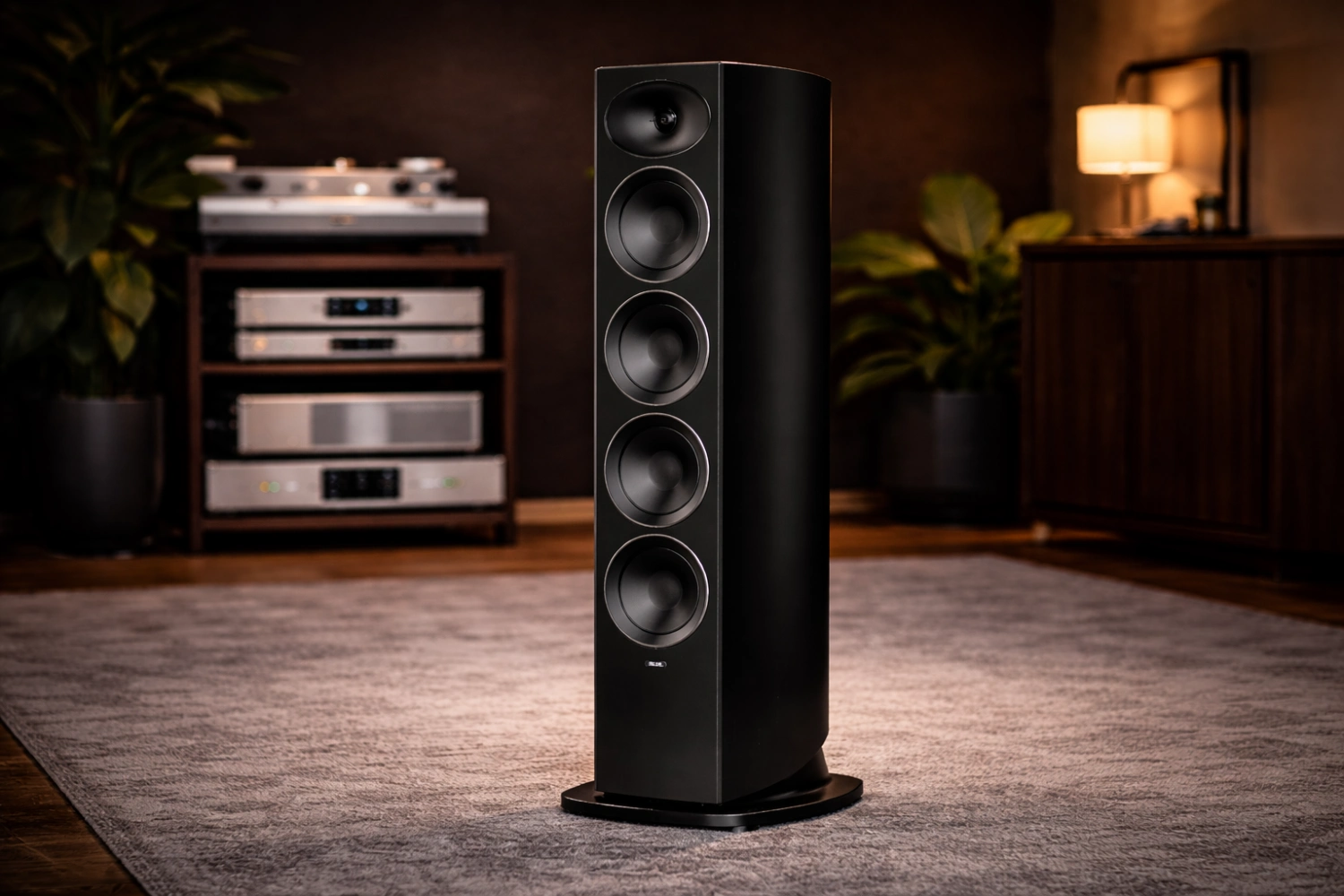
Revel’s Performa4 series is not just a single loudspeaker launch; it is a coordinated family of speakers intended to cover serious two-channel systems, multichannel home cinema, and systems that may evolve over time. Developed under Harman Luxury Audio, the fourth generation of the Performa line places particular emphasis on controlled dispersion, driver materials, cabinet construction, and model-to-model consistency. The range includes two floorstanding speakers, two standmount monitors, a dedicated center speaker, and an active subwoofer, giving system builders a coherent set of options rather than forcing them to mix unrelated products. What makes the Performa4 concept interesting is the way Revel has concentrated its engineering story around a few clear ideas: a seventh-generation Acoustic Lens waveguide, DCC and MCC driver materials, cast aluminum driver frames, and cabinets designed to support both performance and domestic integration.
A complete loudspeaker family rather than a single statement model
One of the most useful aspects of the Performa4 series is its breadth. The line includes the F346 and F345 floorstanding speakers, the M146 and M145 monitor speakers, the C245 center channel, and the B140 active subwoofer. That spread matters because many owners do not build a system all at once. A listener might begin with a pair of monitors, later add a subwoofer, and eventually expand into a multichannel installation. Alternatively, a home cinema owner may want front left, center, right, surround, and bass components that are designed within the same engineering family.
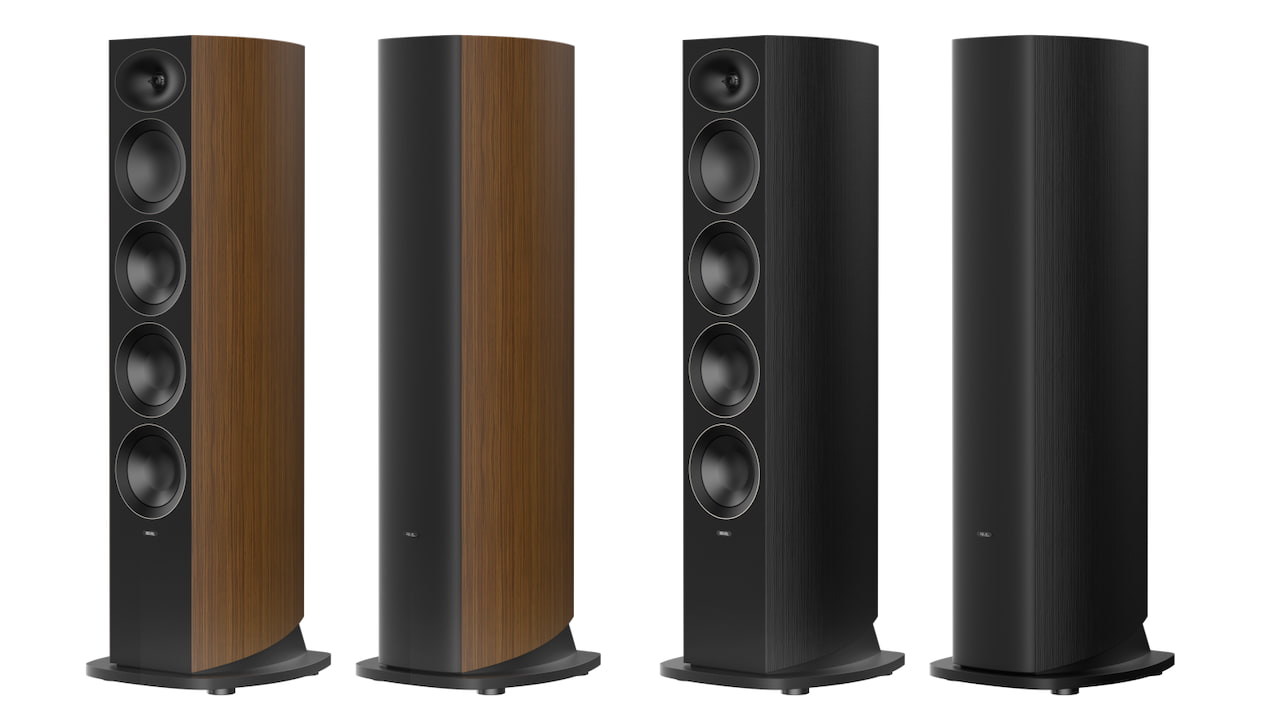
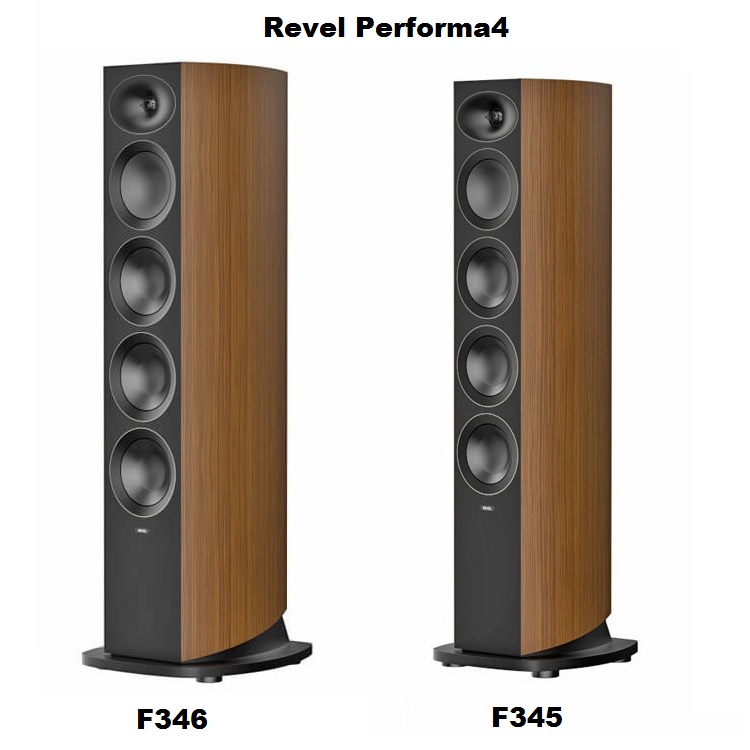
The two floorstanding models sit at the top of the loudspeaker range. The F346 is a three-way design using three 6.5-inch MCC bass drivers and a 6.5-inch DCC midrange driver, while the F345 follows the same architecture with 5.25-inch drivers. Both include dual rear bass ports and dual bi-amp connections. The use of multiple bass drivers in a tower format gives these models a role as full-range main speakers within the Performa4 ecosystem, while the shared design language helps them fit naturally alongside the smaller models.
The monitor speakers, the M146 and M145, provide more compact alternatives. Each combines a single MCC mid/bass driver with the DCC dome tweeter and the new waveguide, with the M146 using a 6.5-inch driver and the smaller M145 using a 5.25-inch unit. For rooms where a large floorstander is impractical, or for listeners who prefer standmount speakers, these models preserve the key technologies of the range in a smaller form. Revel also offers optional MFS4 floor stands made from extruded aluminum and steel, with integrated cable management, which is a practical detail for owners who want the installation to look as deliberate as it sounds on paper.
Why the seventh-generation Acoustic Lens waveguide matters
At the center of the Performa4 story is Revel’s in-house developed seventh-generation Acoustic Lens waveguide. In each model, a 1-inch DCC dome tweeter is integrated with the midrange or mid/bass driver through this patented waveguide system. Revel says the waveguide is intended to provide superior directional control, higher efficiency, improved dynamic range, and reduced distortion, including when listening away from the central seating position.
The practical importance of that approach is easy to understand. Many loudspeakers sound most consistent from a narrow central position, with tonal balance and detail changing as the listener moves off-axis. In real homes, however, people rarely sit in only one exact spot. Sofas are wide, family members sit in different places, and home cinema systems often serve several listeners at once. A waveguide designed for more controlled and consistent dispersion can help maintain a more uniform presentation across a wider seating area, according to Revel’s stated design goals.
This is also relevant for system matching. When a speaker’s output changes less abruptly as listening angle changes, it can be easier to create a coherent front soundstage or surround field. That is particularly valuable in a family such as Performa4, where floorstanders, monitors, and a center speaker may be combined in one room. The technology is not presented as a cosmetic feature; it is a core part of the range’s acoustic architecture.
DCC and MCC drivers as a materials-led design choice
Revel identifies Deep Ceramic Composite and Micro Ceramic Composite materials, abbreviated as DCC and MCC, as central to the Performa4 series. The tweeter uses a 1-inch DCC dome, while the midrange, mid/bass, and bass driver configurations vary by model. Harman Luxury Audio describes these cone materials as offering high stiffness and lower weight compared with conventional alternatives, with the aim of reducing coloration.
In loudspeaker design, cone behavior is fundamental. A driver must move air accurately while resisting unwanted flexing, ringing, and breakup within its intended operating range. Materials with a favorable stiffness-to-weight relationship are often pursued because they can support controlled motion without unnecessary mass. Revel’s use of DCC and MCC across the family gives the Performa4 line a consistent engineering foundation, rather than treating each model as a separate design exercise.
The drivers are also housed in newly patented cast aluminum frames. These frames were designed using finite element analysis, with goals including optimal airflow and improved resonant performance. That kind of mechanical design can matter because the frame is not merely a mounting bracket; it is part of the driver’s operating environment. Air movement, structural rigidity, and resonance behavior can all influence how cleanly a driver performs. Revel’s attention to the basket structure indicates that the range’s engineering extends beyond visible cone materials.
Model choices for stereo and home theater use
The Performa4 line is structured to serve both music-focused and cinema-focused installations. In a stereo context, the F346 and F345 floorstanders are the most substantial options, offering three-way architecture and multiple bass drivers. The M146 and M145 monitors, meanwhile, suit systems where speaker size, room layout, or furniture placement makes a tower less appropriate. Their compatibility with dedicated stands is useful because standmount speakers often perform and look better when given stable, purpose-built support rather than improvised placement.
For home theater, the C245 center speaker is an important inclusion. It uses two 5.25-inch MCC mid/bass drivers placed on either side of the DCC tweeter, and it is intended to support clear dialogue reproduction in cinema systems. A dedicated center channel matters because film and television mixes place a large amount of dialogue and central action in that speaker. Having a center model designed within the same Performa4 family helps buyers create a front stage with shared driver materials and waveguide thinking.
The B140 active subwoofer completes the range’s low-frequency offering. It uses a 10-inch fiber composite cone driven by a 750-watt RMS Class D amplifier, and Revel specifies bass extension down to 26 Hz. The subwoofer also incorporates the company’s Constant Pressure Gradient rear port, which is described as eliminating turbulence at the output. For owners building a cinema system, or for stereo users who want additional low-frequency foundation, the presence of a matching active subwoofer makes the Performa4 range more complete.
Cabinet construction and domestic integration
The Performa4 cabinets are built with sturdy, cross-reinforced panels and slightly curved sides. That combination addresses both engineering and visual concerns. Cross-reinforcement is relevant because loudspeaker cabinets must resist vibration and unwanted panel movement, while curved side panels can help reduce the impression of a simple rectangular box. The series is finished in natural walnut or black walnut veneer, providing two relatively restrained options rather than an extensive palette of decorative finishes.
Magnetically attached grilles are another practical touch. They allow the speakers to present a clean front baffle when the grilles are removed, without visible peg holes, while still giving owners the option of a more discreet appearance when grilles are in place. For many households, that flexibility is important. A loudspeaker may be chosen for its engineering, but it must still live in a room shared with furniture, lighting, screens, and other design considerations.
The optional MFS4 stands for the monitors add a further installation detail. Their extruded aluminum and steel construction suggests a purpose-built support solution, while integrated cable management helps reduce visual clutter. That does not change the acoustic design of the loudspeakers themselves, but it does make the smaller Performa4 models easier to integrate neatly into a living space or dedicated listening room.
Who the Revel Performa4 series is most suitable for
The Performa4 range is best suited to listeners and system builders who value a coordinated speaker family with a clear engineering basis. It will be especially relevant for owners planning a serious stereo system today but wanting the option to expand into multichannel later, as well as home cinema users who want front, center, surround, and subwoofer choices that share a common design philosophy.
The series may also appeal to buyers who care about listening area consistency. Revel’s emphasis on the seventh-generation Acoustic Lens waveguide directly addresses the realities of shared rooms and multiple seating positions. Rather than focusing only on a single ideal listening seat, the documented design goal is a wider and more consistent listening area with reduced degradation away from center.
It is less suitable for someone looking for a minimalist all-in-one audio solution, wireless lifestyle speaker, or compact desktop system. The Performa4 models are passive loudspeakers apart from the active B140 subwoofer, so they require appropriate amplification, source components, and installation planning. The floorstanding models also use rear ports, which means room placement will need consideration. In short, this is a speaker family for people prepared to build a system around dedicated loudspeakers, not for those seeking a plug-and-play convenience product.
Conclusion
Revel’s Performa4 series stands out as a thoughtfully structured loudspeaker family built around consistent engineering choices: a seventh-generation Acoustic Lens waveguide, DCC and MCC driver materials, cast aluminum driver frames, reinforced curved cabinets, and a model lineup that supports both stereo and home cinema systems. Its strongest documented qualities are flexibility, dispersion-focused design, material consistency, and the ability to assemble a matched system from floorstanders, monitors, a center channel, and an active subwoofer. The ideal audience is the listener or installer who wants a serious, expandable loudspeaker platform with careful attention to driver technology, room coverage, and long-term system matching.