

Bose SoundTouch occupies an interesting place in modern home audio. Introduced in 2013, it was Bose’s move into wireless multi-room listening at a time when app-controlled speakers were becoming a serious alternative to traditional hi-fi systems and one-box radios. The platform covered compact speakers, larger wireless models, soundbars, and Series III devices, giving Bose customers a way to build a connected audio system around a familiar brand and a relatively straightforward user experience. Today, SoundTouch also carries an important caution: Bose has confirmed that cloud-based support will end on February 18, 2026. That change will remove online music services, multi-room sync, Spotify Connect, TuneIn radio, and the broader SoundTouch app ecosystem. Even so, understanding what made SoundTouch attractive helps explain why the decision matters to long-time owners and why product longevity has become a central issue in connected audio.
A platform built around accessible multi-room listening
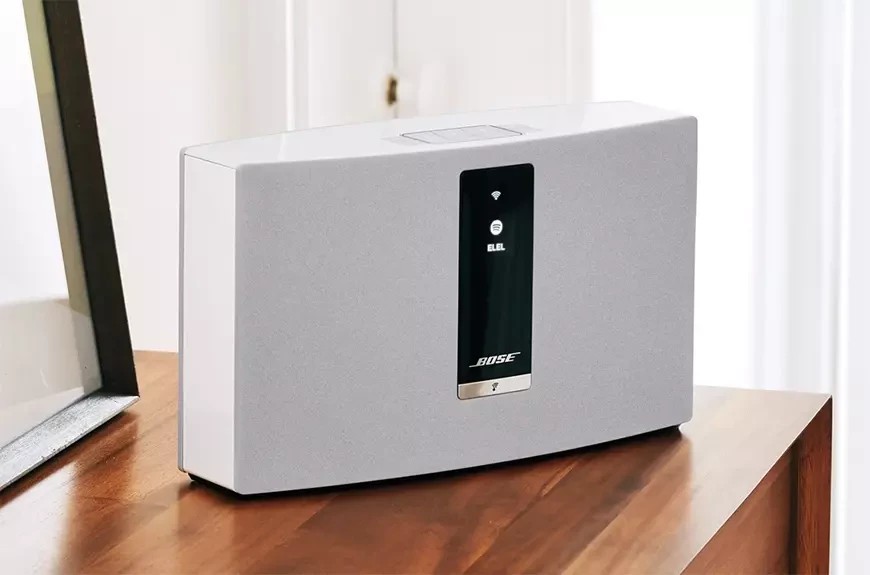
The core appeal of Bose SoundTouch was its promise of simple, whole-home audio. Rather than asking users to assemble separate streamers, amplifiers, and speakers, Bose offered integrated products designed to work within a single wireless ecosystem. Models such as the SoundTouch 10, 20, and 30 addressed different room sizes and use cases, while the SoundTouch 300 soundbar extended the same connected approach into television audio.
For many prospective owners at the time, this kind of integration mattered as much as any individual specification. Multi-room audio is most useful when it feels easy to live with: one app, one product family, and the ability to group rooms without turning playback into a technical project. SoundTouch was designed for listeners who wanted music in several spaces but did not necessarily want the visual or operational complexity of a component-based system.
That simplicity was also part of Bose’s wider market position. SoundTouch competed directly in the wireless multi-room category, including against Sonos, but it did so through Bose’s own product language: self-contained devices, straightforward controls, and a familiar emphasis on convenience. Its value was not just that it streamed music, but that it made networked audio approachable for households that already trusted Bose hardware.
Why built-in streaming and app control mattered
SoundTouch’s app-driven design reflected a major shift in listening habits. Instead of treating a speaker as a passive endpoint for a phone, the platform connected users to online music services, internet radio, and synchronized playback across rooms. Features such as Spotify Connect and TuneIn radio gave SoundTouch products utility beyond basic Bluetooth playback, allowing them to function as household music appliances rather than merely wireless speakers.
This distinction is important. Bluetooth is convenient for quick playback from a nearby device, but cloud-connected streaming and multi-room control create a different experience. They allow a speaker to be part of a broader home audio routine: music in the kitchen, radio in the office, a grouped system for a gathering, or soundbar integration in the living room. The SoundTouch app ecosystem was therefore not an accessory feature; it was central to what made the platform feel modern when it arrived.
The attraction for owners was also practical. A product such as a SoundTouch speaker could stand alone in one room, then become part of a larger arrangement if additional SoundTouch models were added later. That kind of incremental expansion is one of the reasons multi-room platforms became so appealing: users did not need to commit to a full system on day one.

A product family rather than a single speaker
One of the more distinctive aspects of SoundTouch was that it was not confined to a single form factor. The SoundTouch 10, 20, and 30 gave the family a conventional wireless-speaker ladder, while the SoundTouch 300 soundbar addressed home cinema and television setups. The mention of Series III devices also points to Bose’s continued iteration within the platform during its active life.
That range mattered because multi-room systems are strongest when they can adapt to different spaces. A compact speaker may be suitable for a desk or small room, a larger unit may make more sense in a main living area, and a soundbar can serve the television while still belonging to the same general ecosystem. Even without discussing unlisted technical specifications, the product strategy itself was clear: Bose wanted SoundTouch to cover multiple listening contexts under one connected umbrella.
For owners who invested in several units, the benefit was consistency. They could stay within a single control environment, use products with a related design philosophy, and avoid mixing unrelated playback systems around the home. That coherence is a real part of the appeal of any multi-room platform, and it helps explain why the upcoming loss of online functionality is more consequential for multi-unit households than for someone using a single speaker over Bluetooth.
Fallback connectivity gives the hardware a second life
Bose has confirmed that SoundTouch products will still play audio through supported local inputs after the cloud shutdown. Depending on the specific model, that can include Bluetooth, AUX, or HDMI. This does not preserve the full SoundTouch experience, but it does mean the hardware is not necessarily unusable once online services disappear.
Those fallback options are worth separating from the connected features. Bluetooth keeps basic wireless playback available from a phone, tablet, or computer. AUX can be useful for a wired source where supported. HDMI, relevant to compatible products such as soundbars, helps maintain a role in a television-based setup. In practical terms, these connections allow SoundTouch devices to continue as standalone audio products even after they stop being cloud-connected multi-room components.
For a current or prospective owner, this is the key distinction: SoundTouch’s future value depends heavily on intended use. If the goal is app-based whole-home streaming with online services and synchronized rooms, the platform’s confirmed 2026 cutoff is a major limitation. If the goal is local playback through Bluetooth or a physical input, the remaining utility may still be meaningful, provided the specific model includes the desired connection.
The 2026 cutoff changes the ownership equation
The most important documented limitation is the end of Bose’s SoundTouch support on February 18, 2026. After that date, the platform will lose online music services, the SoundTouch app ecosystem, multi-room sync, Spotify Connect, and TuneIn radio. Bose has also stated that there will be no new updates or security patches. There is no stated migration path or trade-in offer in the supplied information.
This changes how the products should be understood today. SoundTouch can no longer be viewed as a future-facing connected ecosystem in the same way it was during its active years. Its strongest remaining appeal is as existing hardware with local playback options, or as a case study in the benefits and risks of cloud-dependent audio design.
The cutoff also highlights a broader issue for connected hi-fi and lifestyle audio. When core features depend on manufacturer-run infrastructure, product lifespan is tied not only to hardware durability but also to software support. SoundTouch demonstrates both sides of that equation: the convenience of an integrated ecosystem when it is active, and the disruption that follows when the cloud layer is retired.

Who Bose SoundTouch is most suitable for now
SoundTouch is most suitable for existing owners who understand the coming limitations and can continue using their products through Bluetooth, AUX, or HDMI where supported. It may also suit users who value straightforward standalone playback more than long-term app-based streaming, especially if they already have SoundTouch hardware in place and do not rely heavily on multi-room synchronization or built-in online services.
It is less suitable for anyone seeking a new long-term multi-room platform built around online services, synchronized zones, and continued software development. The confirmed loss of streaming and app functions makes SoundTouch a poor match for buyers whose main reason to choose it would be the original connected ecosystem.
For households with several SoundTouch devices, the best fit may depend on how each unit is used. A soundbar connected locally may remain useful in a television setup, while speakers formerly used for grouped streaming may feel significantly diminished. The platform’s practicality after 2026 will therefore vary from room to room and model to model.
Conclusion
Bose SoundTouch remains notable for the qualities that made it attractive in the first place: an accessible approach to multi-room audio, a family of products covering speakers and soundbars, app-based convenience, and useful fallback connections such as Bluetooth, AUX, or HDMI where supported. Its confirmed February 2026 support cutoff, however, sharply limits its future as a connected streaming ecosystem. The ideal audience now is not someone looking for a fresh multi-room platform, but an informed owner or buyer who values the remaining local playback options and understands exactly which SoundTouch features are scheduled to disappear.