

The right headphones can make music feel more immediate, whether you are listening through a traditional full-size design, a compact in-ear monitor or a pair of true wireless earbuds.
This selection spans those formats rather than treating every listener as though they have the same priorities.
Sound-focused options include titanium and aluminum in-ear monitors, planar-magnetic headphones and established wired over-ear designs. More practical alternatives emphasize solar charging, active noise cancellation, low-latency playback, multipoint pairing or the ability to convert compatible wired earphones for wireless use. These recommendations are not interchangeable. Consider where you listen, whether sound leakage matters, how much you value wireless convenience and which source devices you use. The distinctions below are based on the supplied product information, with manufacturer performance claims treated as claims rather than independent test results.
1. Softears Edge: Luxury Titanium Design, Serious Audiophile Performance
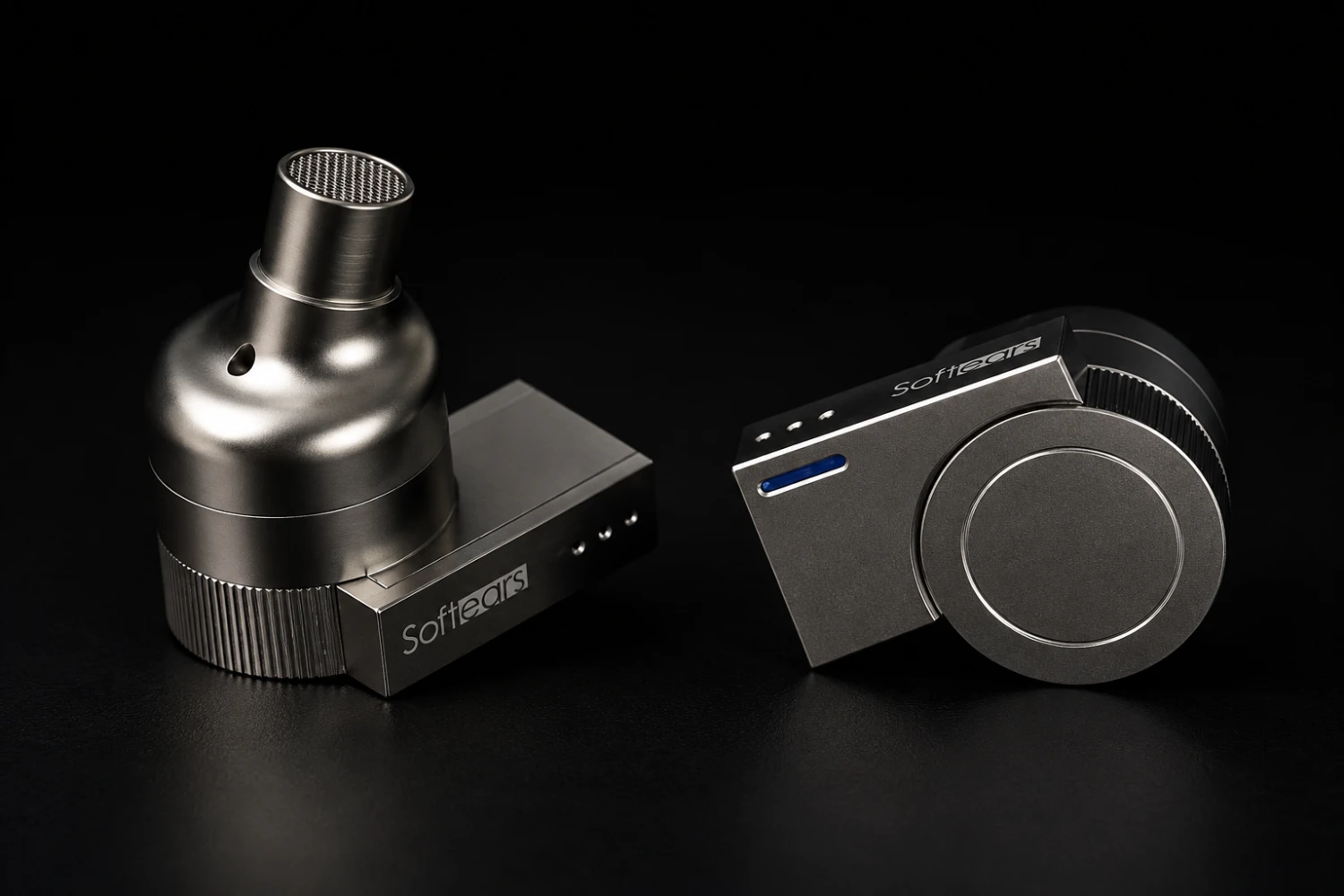
The Softears Edge features angular, precision-machined titanium-alloy shells built around a custom 11mm dynamic driver.
The Softears Edge is a premium in-ear monitor and the first model in the company’s Lifestyle Series.
Its sharply angled, CNC-machined titanium-alloy shells depart from the rounded forms common among modern IEMs, giving it a distinctive industrial appearance.
Titanium also provides a rigid enclosure intended to limit unwanted vibration and resonance. Inside, a custom 11mm dynamic driver works with a labyrinth-style acoustic structure that manages airflow and internal reflections. Softears describes the resulting presentation as natural, balanced and engaging.
Best for: Premium single-driver IEM enthusiasts
- Rigid CNC-machined titanium-alloy shells
- Custom 11mm dynamic driver
- Internal structure manages airflow and reflections
- Distinctive geometric design
Verdict: The Edge combines an unusually sculpted titanium enclosure with a purpose-built dynamic-driver platform aimed at balanced, engaging listening.
2. New generation of solar-powered headphones from Urbanista
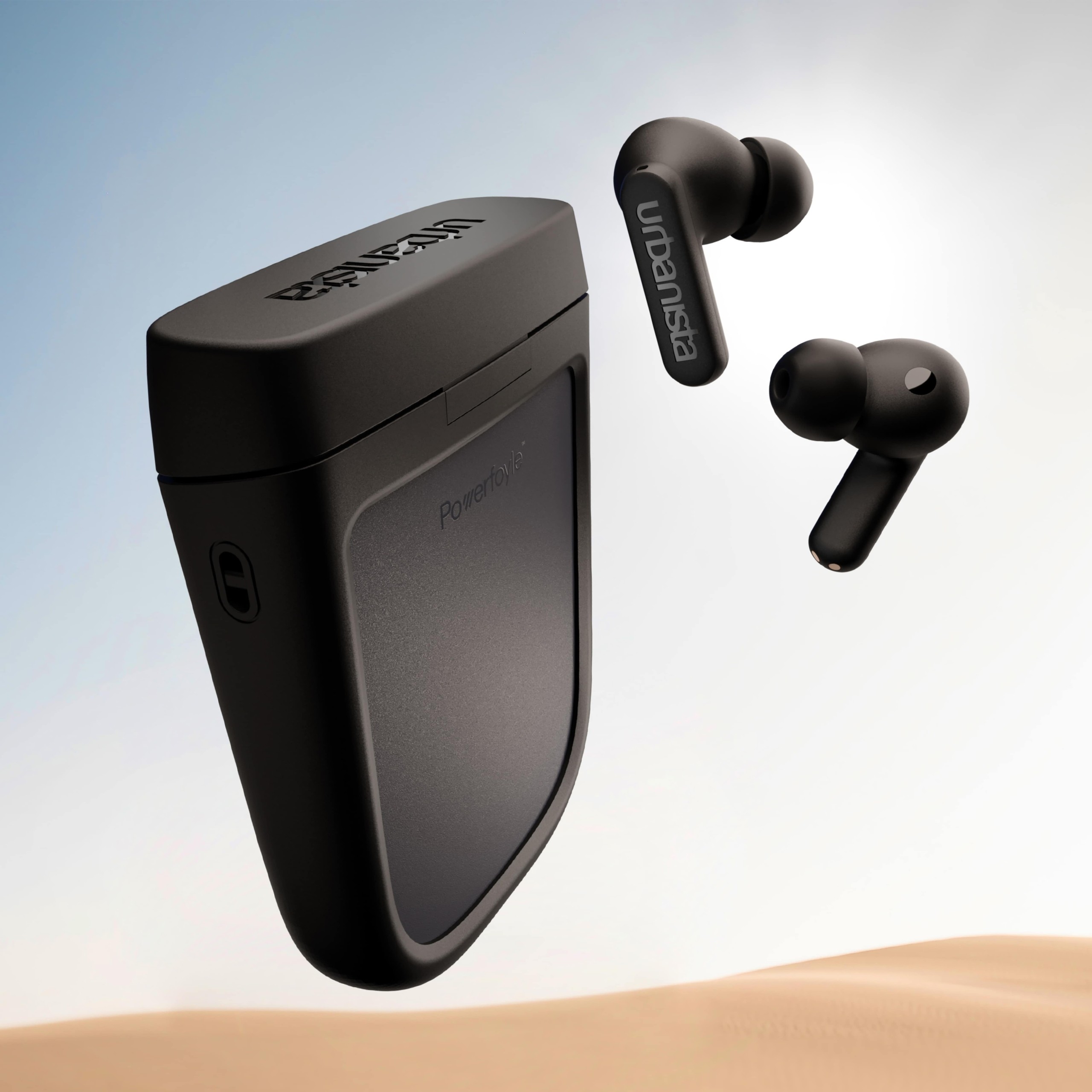
Urbanista’s Los Angeles headphones and Phoenix earphones use flexible Powerfoyle material for light-assisted charging.
Urbanista’s updated Los Angeles over-ear headphones and Phoenix in-ear monitors use flexible Powerfoyle material to replenish their batteries when exposed to natural or artificial light.
Both models are made from recycled plastic and incorporate adaptive noise cancellation, while their redesigned ergonomics address their respective formats.
Los Angeles receives larger ear pads and has a claimed 60-hour battery life on a full charge. Phoenix is rated for eight hours, with another 32 hours provided by its more compact charging case; it also carries an IP54 water-resistance rating. These are particularly relevant to listeners who prioritize reduced charging dependence and everyday wireless convenience.
Best for: Wireless listeners who want fewer charging interruptions
- Charging from natural and artificial light
- Adaptive noise cancellation
- Recycled-plastic construction
- Format choice between over-ear and in-ear
Verdict: Urbanista’s Los Angeles and Phoenix stand apart by using ambient light to supplement their conventional battery reserves.
3. Cambridge Audio Melomania M100: TWS earbuds with aptX Lossless Audio
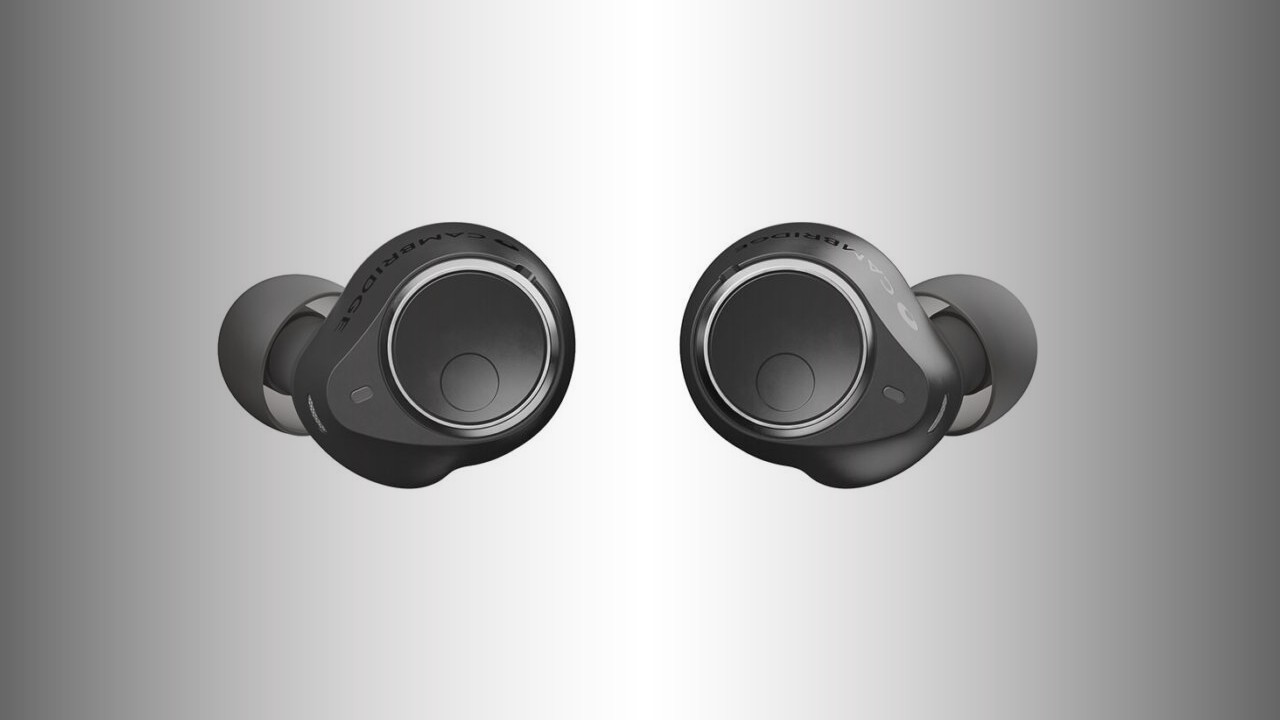
Cambridge Audio’s Melomania M100 pairs 10mm neodymium drivers with Class A/B amplification in a true wireless form.
The Melomania M100 brings Cambridge Audio’s personal-audio range into a true wireless format with aptX Lossless Audio support.
Its 10mm drivers use neodymium magnets and are powered by Class A/B amplification, an approach more commonly associated with conventional hi-fi electronics.
Development was handled by the team at Cambridge Audio’s London headquarters that also works on the company’s wider component range. That combination makes the M100 a logical option for listeners seeking wireless convenience without abandoning a clearly hi-fi-oriented design philosophy.
Best for: Hi-fi listeners seeking true wireless earbuds
- aptX Lossless Audio support
- 10mm drivers with neodymium magnets
- Class A/B amplification
- Developed by Cambridge Audio’s hi-fi team
Verdict: The Melomania M100 applies Cambridge Audio’s component-level expertise to a compact true wireless design with aptX Lossless support.

4. Meze 99 Classics: Pleasant and immersive listening experience
The Meze 99 Classics use naturally patterned walnut ear cups and are supplied with a closely fitted protective case.
The Meze 99 Classics are full-size wired headphones distinguished by walnut-wood ear cups, each with its own natural grain pattern.
Two finishes are described: Walnut Gold and Walnut Silver.
The supplied hard case is closely fitted to the headphones for transport, while a separate fabric pouch organizes the included cables and adapters. The source characterizes the listening experience as pleasant and immersive, making the 99 Classics relevant to buyers who value traditional materials and presentation alongside sound.
Best for: Listeners drawn to wood-finished over-ear headphones
- Walnut-wood ear cups with individual grain patterns
- Choice of Gold or Silver trim
- Closely fitted protective case
- Dedicated pouch for cables and adapters
Verdict: The Meze 99 Classics pair a distinctive walnut construction with a pleasant, immersive presentation and useful travel protection.

5. HiBy x F.Audio Project Ace: Audiophile-grade headphones price at $249
The HiBy x F.Audio Project Ace combines a 12mm dynamic driver, CNC-machined aluminum shells and a braided eight-conductor cable.
Developed by HiBy in collaboration with F.Audio, Project Ace is a wired in-ear monitor built around a single 12mm full-range dynamic driver.
Its dome diaphragm combines a magnesium-lithium alloy with a beryllium coating, while a neodymium magnetic system supplies the motor structure.
CNC-machined aircraft-grade aluminum-alloy housings provide an all-metal exterior, and HiBy’s TBAC system is intended to control air pressure for greater wearing comfort. The included eight-conductor Litz Type-5 copper-silver braided cable comes with both 3.5mm and 4.4mm plugs, accommodating common single-ended and balanced connections.
Best for: Wired IEM users with single-ended and balanced sources
- 12mm full-range dynamic driver
- CNC-machined aluminum-alloy housings
- TBAC air-pressure control system
- Includes 3.5mm and 4.4mm plugs
Verdict: Project Ace is a substantial single-driver IEM package with metal housings, pressure management and versatile cable termination.

6. Timsok TS-1024: Unique magnetic planar headphones
Timsok’s TS-1024 uses 103mm planar-magnetic drivers within a shaped array of N42 neodymium magnets.
The Timsok TS-1024 is a full-size planar-magnetic headphone using unusually large 103mm drivers and a shaped magnetic array built around N42 neodymium magnets.
Timsok describes its tuning as studio-neutral, with solid but neutral bass and particular attention paid to the transition between the midrange and treble.
The company also says it coordinated driver development and tuning to pursue both tonal accuracy and technical clarity. Buyers interested in planar construction and a neutral tuning target will find the TS-1024 more relevant than listeners seeking a compact or wireless design.
Best for: Listeners seeking full-size planar headphones with neutral intent
- Large 103mm planar-magnetic drivers
- N42 neodymium magnetic array
- Studio-neutral tuning target
- Tuned midrange-to-treble transition
Verdict: The TS-1024 is a technically ambitious planar design centered on large drivers and a studio-neutral tuning objective.

7. Audio-Technica ATH-SQ1TW2: Affordable wireless in-ear headphones
The compact Audio-Technica ATH-SQ1TW2 earbuds offer multipoint pairing, low-latency playback and environmental sound controls.
Audio-Technica’s ATH-SQ1TW2 true wireless earbuds are smaller and lighter than their predecessor, with compact square housings offered in four color combinations.
Their 5.8mm drivers are joined by a low-latency mode intended to keep game and video sound synchronized more closely with on-screen action.
Multipoint pairing allows simultaneous connection to two source devices, while hear-through and talk-through functions provide different levels of environmental awareness. Tuned microphone placement is intended to improve hands-free calls, including when only one earbud is in use.
Best for: Everyday users switching between entertainment and calls
- Compact, lightweight square design
- Low-latency mode for games and video
- Multipoint connection to two devices
- Hear-through and talk-through controls
Verdict: The ATH-SQ1TW2 prioritizes compactness, device switching and low-delay media playback in an approachable true wireless design.

8. How to turn wired headphones completely wireless
Bluetooth ear-hook adapters can replace the detachable cable on compatible IEMs and add wireless playback, controls and case charging.
This guide examines Bluetooth ear-hook adapters that can convert compatible dynamic, hybrid or balanced-armature in-ear headphones into cable-free systems.
Such adapters offer a way to retain a favored pair of detachable-cable IEMs while adding wireless playback and call controls.
One highlighted entry, the TRN BT20 XS, uses Bluetooth 5.3, supports AAC and SBC, and comes with a charging case containing a 700mAh battery. Each ear hook contains an 80mAh battery, with claimed playback of up to 13 hours per charge and 40 hours in total with the case. Connector compatibility remains an essential check before choosing any adapter.
Best for: Owners of compatible detachable-cable IEMs
- Adds wireless operation to compatible wired IEMs
- Preserves the use of existing detachable-cable earphones
- Charging-case options are available
- Can add playback and call controls
Verdict: A Bluetooth adapter can be a practical middle ground for listeners who want wireless freedom without replacing their existing in-ear monitors.

9. Grado RS1e: Close to perfect
The Grado RS1e is supplied in a substantial magnetic-closing box with dense foam protection and a full-size jack adapter.
The Grado RS1e sits in the company’s Reference series and arrives in more substantial packaging than the brand’s Prestige models and the RS2e described in the source.
The thick cardboard box uses a magnetic closure, while dense foam protects the headphones inside.
A gold-plated 3.5mm-to-6.3mm adapter is fitted to the cable, supporting use with equipment that has a full-size headphone socket. Although the article title gives the RS1e a strong endorsement, the supplied excerpt concentrates on presentation rather than fit, construction details or sound, so an informed purchase should include further consideration of those factors.
Best for: Buyers investigating Grado’s Reference series
- Dense protective foam packaging
- Magnetic box closure
- Included 3.5mm-to-6.3mm adapter
Verdict: The RS1e is presented as a leading Grado model, but the available source supports its packaging and adapter provision more clearly than its acoustic character.

10. Beyerdynamic is marking its 100th anniversary by introducing the new over-ear headphones DT 1770 Pro MKII and DT Pro MKII
Beyerdynamic’s closed DT 1770 Pro MKII and open DT Pro MKII share TESLA.45 drivers and replaceable wearing components.
Beyerdynamic’s second-generation professional over-ear range comprises the closed-back DT 1770 Pro MKII and open-back DT Pro MKII.
Both use the company’s TESLA.45 driver, developed and manufactured at its Heilbronn headquarters, with a PEEK-polymer diaphragm and an aluminum-coated copper voice coil.
Their 30-ohm impedance is intended to make them easier to drive, while the manufacturer specifies a frequency range of 5Hz to 40kHz. Comfort provisions include a flexible spring-steel headband, memory foam, leatherette and a recess designed to reduce pressure on the top of the head. Detachable headbands and ear cups also support servicing or replacement.
Best for: Studio and home users choosing between isolation and openness
- Choice of closed-back or open-back configuration
- TESLA.45 drivers made at Beyerdynamic’s headquarters
- 30-ohm impedance
- Replaceable headbands and ear cups
Verdict: The DT 1770 Pro MKII and DT Pro MKII offer a clear closed-versus-open choice around the same serviceable TESLA.45 platform.
Quick comparison
The most meaningful comparison is not simply wired versus wireless.
Form factor, enclosure type, charging demands, source compatibility and intended use separate these recommendations.
The table highlights those broad distinctions without treating manufacturer claims as independently verified performance findings.
| Product | Best for | Verdict |
|---|---|---|
| Softears Edge | Premium single-driver IEM enthusiasts | A titanium in-ear monitor with an 11mm dynamic driver and airflow-managed acoustic structure. |
| Urbanista Los Angeles and Phoenix | Wireless listeners who want fewer charging interruptions | Over-ear and in-ear wireless options distinguished by light-assisted charging and adaptive noise cancellation. |
| Cambridge Audio Melomania M100 | Hi-fi listeners seeking true wireless earbuds | True wireless earbuds combining aptX Lossless support, 10mm drivers and Class A/B amplification. |
| Meze 99 Classics | Listeners drawn to wood-finished over-ear headphones | Wired full-size headphones with walnut ear cups, protective storage and an immersive presentation. |
| HiBy x F.Audio Project Ace | Wired IEM users with single-ended and balanced sources | A metal-bodied 12mm dynamic-driver IEM supplied with both 3.5mm and 4.4mm connections. |
| Timsok TS-1024 | Listeners seeking full-size planar headphones with neutral intent | A 103mm planar-magnetic design developed around a studio-neutral tuning target. |
| Audio-Technica ATH-SQ1TW2 | Everyday users switching between entertainment and calls | Compact true wireless earbuds with multipoint pairing, low latency and ambient listening modes. |
| Bluetooth adapters for wired IEMs | Owners of compatible detachable-cable IEMs | A route to wireless playback that does not require replacing compatible wired earphones. |
| Grado RS1e | Buyers investigating Grado’s Reference series | A Reference-series wired model supplied with protective packaging and a 6.3mm adapter, though the excerpt provides limited sonic detail. |
| Beyerdynamic DT 1770 Pro MKII and DT 1990 Pro MKII | Studio and home users choosing between isolation and openness | Closed-back and open-back professional headphones sharing a 30-ohm TESLA.45 driver platform. |
Frequently asked questions
Should I choose in-ear or full-size headphones?
In-ear models are easier to carry, while full-size headphones may be preferable for a stationary listening or studio setup.
Decide first where you will listen, then compare fit, storage needs and whether you want wired or wireless operation.
What is the practical difference between open-back and closed-back headphones?
Closed-back headphones such as the DT 1770 Pro MKII are the more appropriate choice when isolation and reduced sound leakage matter.
Open-back models such as the DT 1990 Pro MKII suit environments where leakage is acceptable and isolation is not the priority.
Can detachable-cable wired IEMs be made wireless?
Often, but not universally.
Bluetooth ear-hook adapters can replace the cable on compatible IEMs, adding wireless playback and controls.
Check the connector type, physical fit, supported codecs and stated battery life before buying.
Which wireless features are most useful for everyday listening?
Multipoint pairing helps when moving between two devices, low-latency modes are relevant to games and video, and ambient modes improve awareness of surroundings.
Active noise cancellation is more useful when reducing external noise is the priority, while light-assisted charging can reduce reliance on power outlets.
How to Choose the Right Headphones for Your Listening
Begin with the listening environment.
For commuting and mobile use, compact true wireless models such as the Melomania M100 or ATH-SQ1TW2 emphasize portability and practical connectivity.
Urbanista’s Los Angeles and Phoenix add light-assisted charging and adaptive noise cancellation, while Phoenix also provides an IP54 rating for greater reassurance around dust and splashes. A wired IEM makes more sense when you prefer a direct connection or already own suitable source equipment. The Softears Edge focuses on a rigid titanium enclosure and a custom single dynamic driver, whereas Project Ace combines a larger 12mm driver with aluminum housings and both 3.5mm and 4.4mm plugs. Owners of detachable-cable IEMs can also investigate Bluetooth adapters, but connector compatibility should be confirmed before purchase. For full-size listening, construction and enclosure type become decisive. The Meze 99 Classics combine walnut ear cups with a protective case, and the Timsok TS-1024 pursues a studio-neutral target through large planar-magnetic drivers. Beyerdynamic offers the clearest functional split: choose the closed DT 1770 Pro MKII when isolation matters or the open DT Pro MKII when sound leakage is acceptable. The Grado RS1e may also warrant investigation, although the supplied material does not provide enough acoustic or ergonomic detail for a direct performance comparison. Finally, check the less glamorous details that determine long-term suitability: connector type, plug size, source compatibility, replaceable parts, carrying protection, battery expectations and the controls you will actually use. A feature-rich model is not automatically the right choice; the strongest purchase is the one whose format and operating requirements fit your daily listening habits.


Join the discussion
Share your thoughts, listening impressions or product experience.