

Portable music players now cover a remarkably broad spectrum.
Some are genuinely pocket-sized, while others combine player, DAC, headphone amplifier and network source functions in a transportable enclosure.
That range makes choosing by category name alone surprisingly difficult. The most useful distinctions are practical: size and weight, battery life, operating system, local-file and streaming support, headphone connections, wireless codecs and amplification. A tiny player may be the natural everyday companion, whereas a heavier model can make more sense as the centre of a headphone or desktop system. This selection reflects the supplied source material, which includes dedicated players, a transportable all-in-one, wireless earphones and two broader buying guides. Those category-adjacent entries are identified clearly rather than treated as portable players.

1. Shanling M30 – New digital turntable and headphone amplifier
The substantial Shanling M30 combines player, DAC, Nutube headphone amplification and network connectivity in a modular enclosure.
The Shanling M30 stretches the definition of portable.
It weighs three kilograms and measures 260 x 210 x 50 mm, making it better understood as a transportable all-in-one player and headphone amplifier.
Its modular construction, 16,500 mAh battery and external power option support that hybrid role. The listed configuration includes an AKM4497 DAC, Korg 6P1 Nutube amplification, Bluetooth, Wi-Fi, Ethernet and six types of headphone output.
Best for: Transportable headphone and desktop systems
- Modular construction
- Battery or external power operation
- Wi-Fi, Bluetooth and Ethernet
- Wide selection of headphone outputs
Verdict: The M30 is a feature-rich all-in-one for listeners who value flexibility more than pocket-sized portability.

2. Hiby WH2: TWS headphones with LDAC support and Bluetooth 5.22
The HiBy WH2 true wireless earphones come in dynamic-driver and dual balanced-armature configurations.
The HiBy WH2 is not a portable music player but a pair of true wireless earphones that could accompany one.
It was offered in single dynamic-driver and dual balanced-armature versions, with LDAC, UAT TWS, AAC and SBC support.
HiBy Blue app management, separate use of either earpiece, adjustable digital crossover and IPX4 splash protection broaden its practical appeal.
Best for: Wireless listening with a compatible player or phone
- LDAC, UAT TWS, AAC and SBC support
- Two driver configurations
- HiBy Blue app control
- Up to 30 hours with the charging case
Verdict: Although it falls outside the player category, the WH2 is a relevant wireless partner for sources supporting its available codecs.

3. Cayin N7+ Digital Audio Player: Audiophile Power in Your Pocket
The Cayin N7+ uses an aluminum-magnesium alloy enclosure with a sandblasted titanium surface and a five-inch touch display.
The Cayin N7+ develops the N7 concept with higher power output, revised energy management and an upgraded power transistor.
Its audio architecture combines a discrete digital-to-analog converter with a fully balanced bipolar-transistor headphone amplifier that can operate in Class A or Class A/B.
Both balanced and unbalanced outputs are accommodated, while a five-inch Full HD touch display provides the main interface.
Best for: Listeners seeking configurable amplification in a portable player
- Discrete DAC architecture
- Class A and Class A/B amplifier modes
- Balanced and unbalanced headphone outputs
- Five-inch Full HD touch display
Verdict: The N7+ stands out for its discrete conversion stage and switchable amplifier operation rather than for minimalist portability.

4. HiBy RS6: Digital player with R2R DAC
The copper-bodied HiBy RS6 pairs an R2R DAC with a five-inch Full HD display and Android-based operation.
The HiBy RS6 is differentiated by its R2R digital-to-analog conversion and copper body.
A Snapdragon 660 processor runs Android 9, supported by an Adreno 512 GPU and dual-band Wi-Fi.
Its five-inch IPS display has a x 1080 resolution, while the player measures 130 x 73 x 15 mm and weighs approximately 315 grams.
Best for: Listeners specifically interested in an R2R Android player
- R2R DAC design
- Snapdragon 660 processor
- Full HD five-inch IPS display
- Dual-band Wi-Fi
Verdict: The RS6 combines an unusual R2R conversion approach with a smartphone-style Android interface in a relatively substantial copper chassis.

5. Shanling M8: The company’s top player
The Shanling M8 features a five-inch display and a replaceable socket system for multiple balanced and single-ended headphone connections.
The Shanling M8 is a flagship player built around dual AK4499 DAC chips and an XMOS XU208 USB receiver.
It supports PCM up to 32-bit/768 kHz and native DSD512, with low, high and turbo gain settings.
A replaceable headphone-output system accommodates 3.5 mm single-ended, 4.4 mm balanced, 2.5 mm balanced and 3.5 mm Pro connections. Open Android, dual-band Wi-Fi, Bluetooth and a five-inch Full HD display complete a broad specification.
Best for: Users with several wired headphone connection formats
- Dual AK4499 DAC configuration
- Three gain modes
- Replaceable headphone-output system
- Up to 14 hours of stated battery life
Verdict: The M8 is particularly flexible for wired listening thanks to its replaceable outputs and three available gain settings.

6. iBasso DX170: Player with the latest generation Dual DAC chipset
The iBasso DX170 combines a five-inch display with dual Cirrus Logic DACs and a custom FPGA-based audio architecture.
The iBasso DX170 uses two Cirrus Logic CS43131 DAC chips and a custom FPGA Master audio architecture.
Two independent NDK crystal oscillators support the clocking system, while a quad-core Rockchip processor handles the Android interface and multitasking.
Format support includes PCM up to 32-bit/384 kHz, native DSD256 and full 8x MQA, all presented through a five-inch colour display.
Best for: High-resolution local-file playback in an Android player
- Dual CS43131 DAC chips
- Custom FPGA Master architecture
- PCM, native DSD and MQA support
- Five-inch colour display
Verdict: The DX170 offers a focused combination of dual-DAC conversion, dedicated clock management and broad high-resolution format support.

7. FiiO M21: Portable Hi-Res Audio Player with Android 13 and LDAC
The compact FiiO M21 has an aluminum chassis, a 4.7-inch display and an included cassette-inspired protective case.
The FiiO M21 packages Android 13 and LDAC support in a compact aluminum chassis with a matte AG glass rear panel.
Its 4.7-inch display has an oleophobic coating, and the audio section uses four Cirrus Logic CS43198 DAC chips in a fully differential eight-channel configuration.
A cassette-inspired protective case, retro interface and vintage sound effects give the presentation an intentionally nostalgic element.
Best for: Listeners wanting a compact Android player with modern wireless support
- Four CS43198 DAC chips
- Android 13 operation
- LDAC support
- Compact aluminum construction
Verdict: The M21 balances a portable form, Android functionality and an ambitious four-DAC architecture with playful retro styling.

8. NiPO N2: A sophisticated approach to music playback
The compact NiPO N2 uses an eight-core processor, dual-band Wi-Fi and a fully discrete amplifier architecture.
The NiPO N2 places considerable emphasis on internal signal management.
Its listed design includes SLEA, CMMT and DRVC processing and amplification technologies, a fully discrete amplifier and a ten-layer circuit board intended to reduce interference.
An eight-core processor runs the interface, while dual-band Wi-Fi enables streaming alongside local high-resolution file playback. The player is stated to start in under one second and run for up to 13 hours.
Best for: Users balancing local libraries with network streaming
- Fully discrete amplifier architecture
- Local-file and streaming playback
- Dual-band Wi-Fi
- Up to 13 hours of stated operation
Verdict: The N2 is a compact option distinguished by its discrete amplifier, layered internal construction and support for both local and streamed music.

9. Best Hi-Res Players: Choosing the right player for your favorite music
The compact Shanling M0 Pro featured in the guide has a 1.54-inch touch display and weighs just 36.8 grams.
This is a broader selection guide rather than a single product.
The supplied section highlights the Shanling M0 Pro, a miniature aluminum player measuring 43.8 x 45 x 13.8 mm and weighing 36.8 grams.
It uses dual ESS ES9219 DAC chips, offers three gain levels and provides two-way Bluetooth with LDAC and aptX. Its single 2.5 mm balanced socket is accompanied by a 3.5 mm adapter.
Best for: Comparing player formats and discovering miniature options
- Exceptionally compact dimensions
- Dual ES9219 DAC chips
- Two-way Bluetooth
- Up to 14.5 hours of stated battery life
Verdict: The guide is useful for surveying the category, with the featured M0 Pro illustrating how much functionality can fit into a very small player.
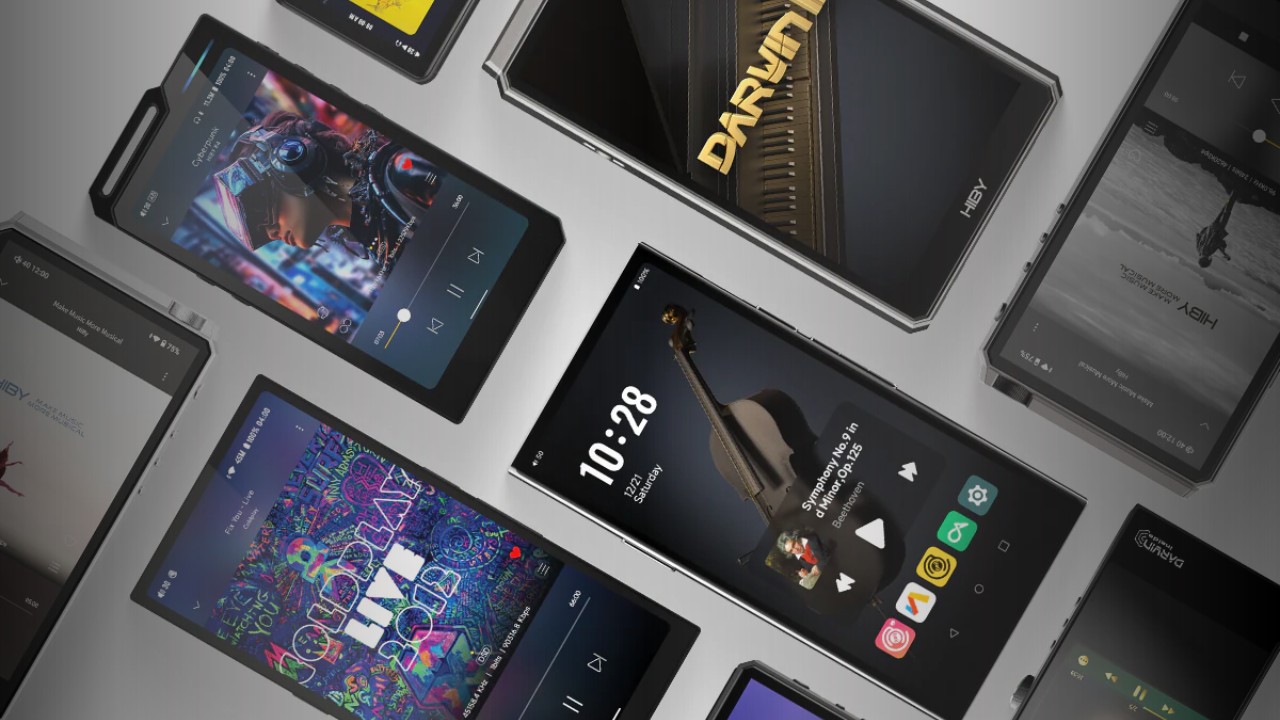
10. Choosing your first Hi-fi player: 10 useful tips for beginners
The introductory guide helps first-time buyers identify why they want a dedicated player before considering specific models.
This beginner-focused guide addresses the decisions that come before selecting a particular player.
It explains why someone might use a dedicated device instead of a smartphone, including separating music from phone battery use, keeping a music library distinct and choosing a smaller device for activities.
Its straightforward approach is intended to make unfamiliar terminology and specifications easier to navigate.
Best for: First-time portable player buyers
- Written specifically for beginners
- Explains the case for a separate player
- Focuses on practical selection questions
Verdict: This is a useful starting point for defining priorities before comparing individual player specifications.
Frequently asked questions
Why use a portable music player instead of a smartphone?
A dedicated player can keep a music library separate, avoid using a phone’s battery for extended listening and provide audio hardware or headphone connections not available on a particular phone.
The benefits depend on how and where you listen, so start by identifying the limitation you want the player to solve.
How portable are portable music players in practice?
Check dimensions and weight rather than relying on the category label.
The supplied examples range from the 36.8-gram Shanling M0 Pro to the three-kilogram Shanling M30, which is better treated as a transportable all-in-one than a pocket player.
Which headphone output should I choose?
Match the player to the plug already fitted to your headphones or to an appropriate manufacturer-supported cable.
Some players provide several connections, while others use a replaceable output module or a single balanced socket with an adapter.
A balanced connection should not be treated as automatically preferable without considering compatibility and the player’s implementation.
Should I prioritise local files, streaming or Bluetooth?
Choose according to your listening habits.
Local playback requires suitable format support and enough internal or removable storage, streaming depends on Wi-Fi and service compatibility, and wireless headphones require matching Bluetooth codecs.
Models such as the NiPO N2 support both local files and streaming, while the FiiO M21 explicitly includes LDAC support.
How to choose the right portable music player
Begin with the physical realities.
Decide whether the player must fit comfortably in a pocket, can live in a bag or will mainly move between rooms.
Weight, dimensions and stated battery life are more useful here than the word portable. A device such as the Shanling M30 serves a very different purpose from the tiny M0 Pro, even though both can operate away from a wall socket. Next, audit the rest of the system. Check headphone plug type, balanced and single-ended output availability, gain options and whether the player supports the file formats, streaming services and wireless codecs you actually use. Android can provide a familiar, app-oriented interface, but operating-system version, processor and display size should be considered alongside audio connections rather than in isolation. Finally, avoid selecting purely by DAC count, decoding limits or flagship positioning. Those details help distinguish designs, but practical compatibility will determine whether a player is convenient every day. The strongest choice is the model whose size, interface, playback sources and outputs fit an existing listening routine without unnecessary adapters or unused features.


Join the discussion
Share your thoughts, listening impressions or product experience.