

Network audio products live or die by software as much as by hardware. A streamer can be beautifully built and sonically ambitious, but if its app support fades or streaming services move on, its usefulness can shrink long before the rest of the hi-fi system is ready for replacement. Cambridge Audio’s latest StreamMagic firmware update addresses that problem directly by bringing expanded streaming functionality to compatible devices released from 2014 onward. The update, available at no charge from February 24, 2026, adds Qobuz Connect support to older second- and third-generation StreamMagic devices, while also extending access to features that newer platforms already enjoy. For owners of eligible Cambridge Audio network players, AV receivers, and streaming preamplifiers, the appeal is straightforward: more current streaming behavior without changing hardware.
A meaningful update for established StreamMagic hardware
The most important aspect of this update is its scope. Cambridge Audio is not limiting current streaming conveniences to only its newest products. Devices running second- and third-generation StreamMagic software, covering models released from 2014 onward, are included in the rollout where the hardware allows. That matters because network-enabled hi-fi equipment often faces a different kind of ageing from traditional amplifiers, turntables, or passive loudspeakers. The electronics may still perform their core duties, yet the streaming layer can become less convenient if services, authentication methods, or app ecosystems change.
By continuing to develop its StreamMagic platform for older products, Cambridge Audio gives existing owners a clearer route to keeping those components in daily use. The update is designed for several categories of Cambridge Audio hardware, including network players, AV receivers, and streaming preamplifiers. Newer devices using fourth-generation StreamMagic already include the documented features, so this release is primarily about narrowing the experience gap for earlier StreamMagic owners rather than introducing an entirely separate product line.
Qobuz Connect is the headline feature
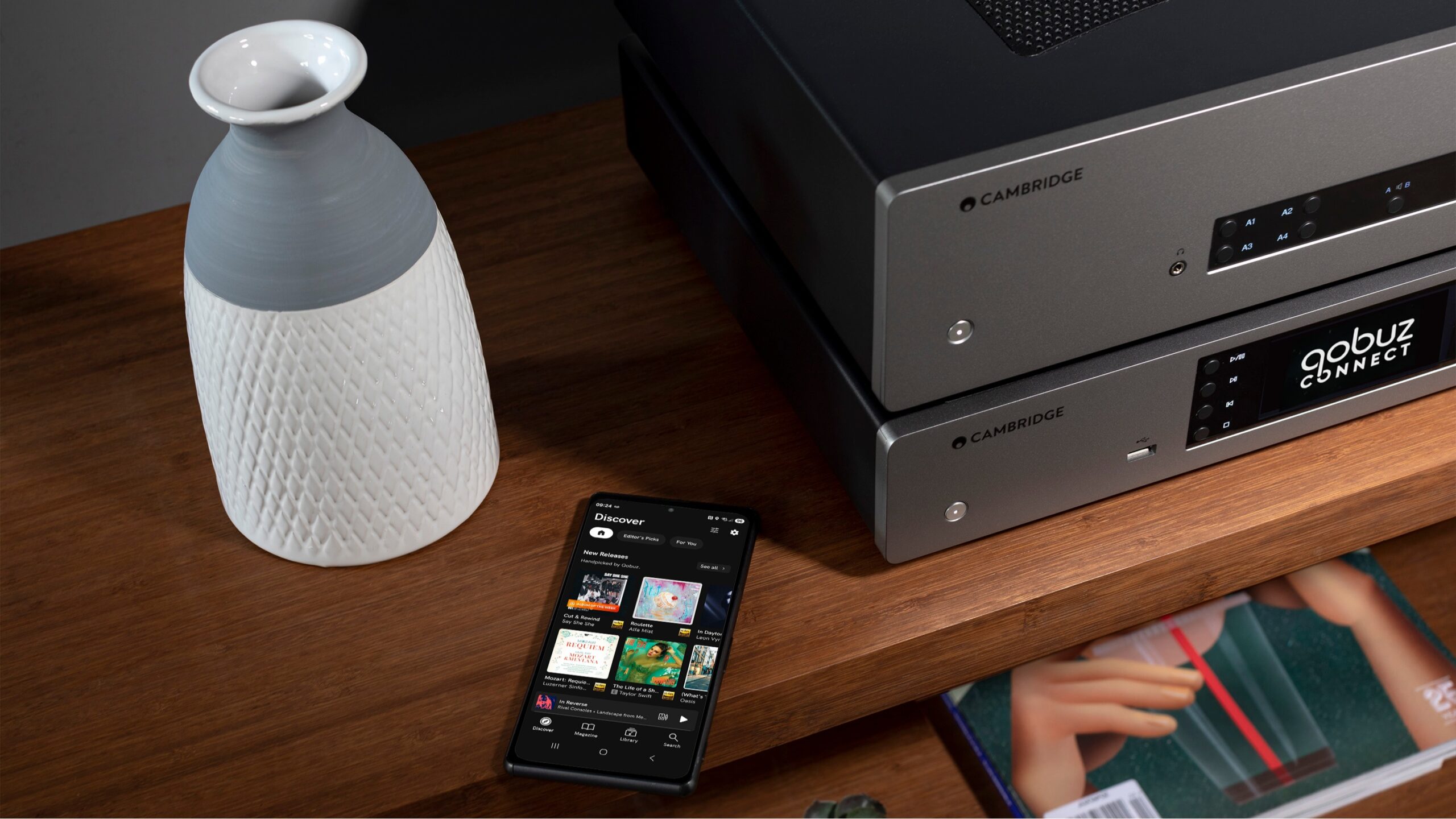
The addition of Qobuz Connect is the most visible change. With Connect functionality, users can choose a compatible Cambridge Audio device directly from inside the Qobuz app when both the control device and the Cambridge component are on the same network. The practical benefit is convenience: playback can be started from the Qobuz environment itself, without first needing to open or install Cambridge Audio’s own software on a phone or tablet.
For listeners who already use Qobuz as a primary music service, this simplifies the daily routine. The streaming component becomes an available playback destination within the music app they may already know well. That can make a hi-fi streamer feel less like a separate computer to be managed and more like an integrated part of the household’s digital listening setup. It also helps when multiple people use the same system, because guests or family members familiar with Qobuz can select the Cambridge device from the Qobuz app rather than learning a separate control interface first.
This does not make the StreamMagic app irrelevant. Instead, it adds another control path. Some owners may prefer the manufacturer’s app for broader device management or service integration, while Qobuz users may prefer to browse, search, and initiate playback from within Qobuz. The strength of the update is that it gives compatible older hardware more flexibility in how it is controlled.
Streaming features beyond Qobuz
The update also brings earlier StreamMagic platforms closer to the functionality already associated with newer versions of Cambridge Audio’s streaming software. According to Cambridge Audio, Spotify lossless streaming and Amazon Music integration in the StreamMagic app had already been added through firmware development and are now also available on older platforms covered by this release.
For prospective or current owners, the broader point is not only the number of services listed, but the evidence of a software platform that can be extended over time. Streaming preferences vary widely, and they can change quickly. A system that supports multiple established services gives the owner more room to adapt without replacing the hardware at the centre of the system. In practical terms, this can make a StreamMagic-based component a more stable long-term anchor for digital playback, especially in systems where the streamer is connected to amplification and loudspeakers intended to remain in place for many years.
Automatic distribution keeps the process approachable
Firmware updates can be a source of friction when they require manual downloads, computer connections, or unclear installation steps. Cambridge Audio’s rollout is designed to reduce that burden. Internet-connected compatible devices are set to detect the update automatically. Users need to confirm installation and download, rather than search for files or perform a more technical update process.
That detail matters because many hi-fi systems are shared appliances in the home, not hobby projects requiring constant attention. An automatic update path makes the new features accessible to owners who simply want their equipment to remain current. It also supports the central idea behind the release: extending product life should not require the owner to become a software technician.
Why long-term software support matters in hi-fi
Traditional hi-fi has long been associated with longevity. A good amplifier, tuner, or pair of loudspeakers can remain useful for decades if treated well. Network audio complicates that expectation because modern streamers depend on software, service compatibility, authentication, mobile apps, and cloud-connected platforms. When those layers stop being maintained, a product may become less usable even if its physical hardware remains functional.
Cambridge Audio’s StreamMagic update is significant because it treats software maintenance as part of product stewardship. The company connects this policy to a wider sustainability approach that also includes recyclable packaging and replaceable wear parts in headphones. In the context of network components, sustainability is not only about materials. It is also about keeping working equipment relevant, reducing premature replacement, and preserving the value of existing systems.
This is especially relevant for owners who have built systems around Cambridge Audio streaming components from the past decade. If a device released in 2014 or later can gain current streaming features through firmware, the owner has less reason to retire it solely because service access has evolved. The update therefore supports both practical convenience and a more durable view of digital hi-fi ownership.
Who this update is most suitable for
The strongest audience is existing owners of compatible Cambridge Audio products using second- or third-generation StreamMagic software. For them, the update adds functionality without requiring a hardware purchase, and it may make an older network player, AV receiver, or streaming preamplifier feel more aligned with current streaming habits. Qobuz users benefit most immediately, because Qobuz Connect changes the control experience in a tangible way.
It is also relevant to prospective buyers considering used or existing-stock Cambridge Audio streaming products from the supported period. The presence of continuing software support can be an important factor when assessing whether an older network component still fits a modern system. The update does not mean every historic model gains every future feature, and Cambridge Audio notes that updates are dependent on what the hardware can support. Still, the documented support window from 2014 onward is unusually meaningful in a product category where app compatibility can be a limiting factor.
This update is less relevant for owners who do not use streaming services, who rely only on local inputs, or who already own fourth-generation StreamMagic models with these features in place. It is also not a reason by itself to change systems if the existing setup already meets all playback needs. Its value lies in extending capability and convenience for compatible Cambridge Audio hardware, not in redefining the role of a streamer.
A software-first improvement with hardware implications
Although this is a firmware release rather than a new physical component, it has clear hardware implications. A network player’s usefulness is shaped by the services it can access and the ease with which it can be controlled. By adding Qobuz Connect and broadening streaming-service integration across older StreamMagic generations, Cambridge Audio is improving the owner experience of products already installed in racks and systems.
That approach also reinforces the value of an in-house platform. Cambridge Audio describes StreamMagic as its proprietary hardware and software environment, which gives the company more control over long-term updates than it might have with a less integrated solution. For users, the relevant takeaway is simple: a dedicated streaming platform can be judged not only by how it works at launch, but by whether it continues to evolve after purchase.
Conclusion
Cambridge Audio’s StreamMagic firmware update is attractive because it addresses one of the most important issues in modern digital hi-fi: keeping networked equipment useful as streaming services and control methods change. Its strongest documented qualities are Qobuz Connect support, broader service integration for older StreamMagic generations, automatic internet-based delivery, and a clear emphasis on long-term product support. For owners of compatible Cambridge Audio network players, AV receivers, and streaming preamplifiers released from 2014 onward, it offers a practical way to extend the life and everyday convenience of existing hardware. It is best suited to listeners who use streaming services, especially Qobuz, and who value a hi-fi component that can remain current through thoughtful software support rather than immediate replacement.