Nocs Monolith Aluminium: A Wireless Speaker Built Around Longevity
The Nocs Monolith Aluminium brings together a solid aluminium enclosure, replaceable parts, five-driver amplification, Wi-Fi streaming and battery operation in a design that puts longevity at the center of the product.
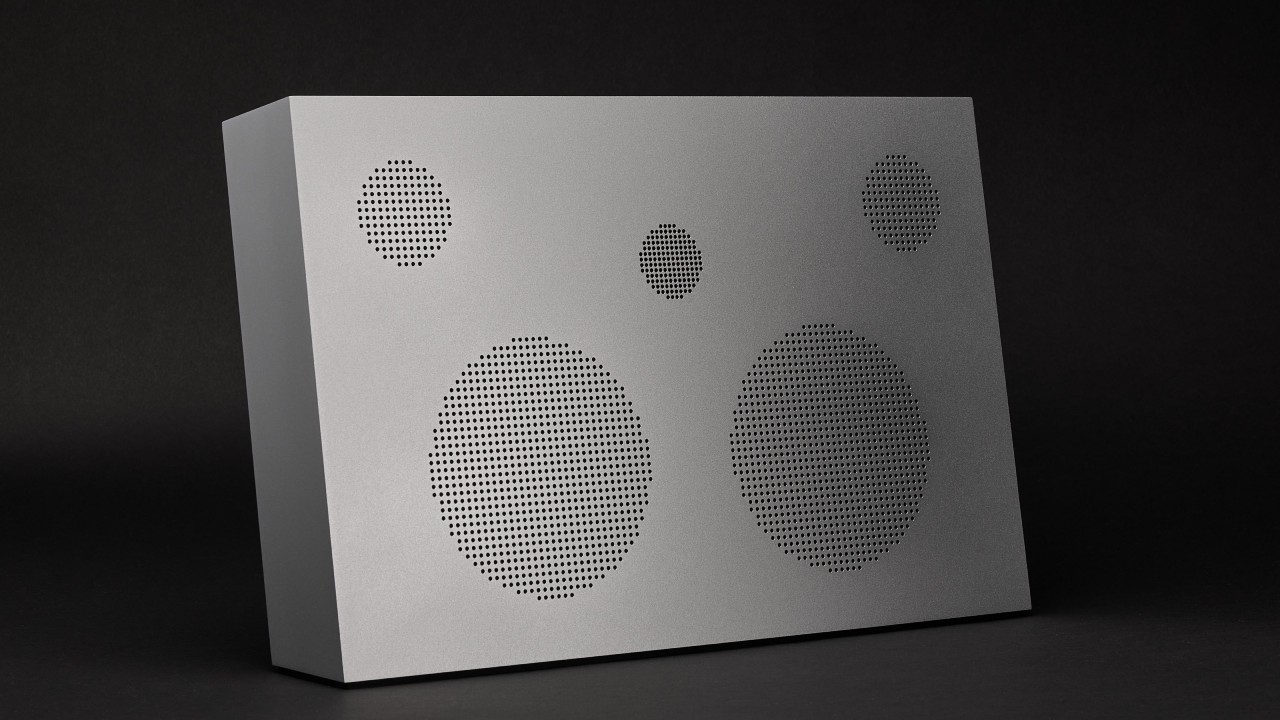
The Nocs Monolith Aluminium is a wireless speaker with a clear design brief: reduce the unnecessary, build from durable materials, and make the product easier to keep in service over time. Designed and developed in Sweden, it follows the earlier Monolith and Mini models in Nocs Design’s portfolio, but places particular emphasis on aluminium construction, recyclability and modularity. Rather than treating sustainability as an accessory to the product story, the Monolith Aluminium makes it part of the physical design. Its solid-looking form, absence of visible branding, replaceable components and integrated streaming platform all point toward a speaker intended to live in a home for years rather than feel tied to a short upgrade cycle.
A restrained aluminium design with a practical purpose
The most immediately distinctive aspect of the Monolith Aluminium is its enclosure. Nocs Design has chosen aluminium not only for its appearance, but also for its durability and recyclability. In a category where many wireless speakers rely heavily on plastics, fabric wraps and decorative finishes, an aluminium body gives this model a more architectural presence. It is offered in matte black and silver, two finishes that suit the speaker’s intentionally minimal visual language.
That minimalism is not just styling. The design avoids logos and unnecessary ornamentation, placing the focus on symmetry, material and proportion. The published dimensions of 348 x 230 x 57 millimeters describe a relatively slim rectangular form, while the four-kilogram weight suggests a product with real substance rather than a lightweight portable accessory. For prospective owners, that combination may be attractive if the speaker is expected to sit visibly in a living room, office, studio space or design-conscious interior without calling too much attention to itself.

Modularity as a long-term ownership feature
One of the most useful aspects of the Monolith Aluminium is the promise that all parts are replaceable. This matters because wireless speakers are often limited less by their basic acoustic hardware than by wear, batteries, connection modules or internal components that become difficult to service. A modular approach gives the product a better chance of remaining useful if a part fails or requires replacement later in its life.
The battery is specifically described as easy to replace, which is particularly important for any speaker with integrated lithium-ion power. Rechargeable batteries are consumable parts by nature; their capacity gradually declines with use and age. Making the battery replaceable helps separate the life of the speaker from the life of a single battery pack. That can reduce waste, lower the need for full-product replacement and support a more responsible ownership model.
For buyers who care about sustainability, this kind of design is more concrete than vague eco-language. Replaceable parts, recyclable material and a robust enclosure all address practical reasons why electronics become waste. They also make sense for the owner: a product that can be serviced is less likely to become obsolete because of a single worn component.
Five drivers in a compact wireless format
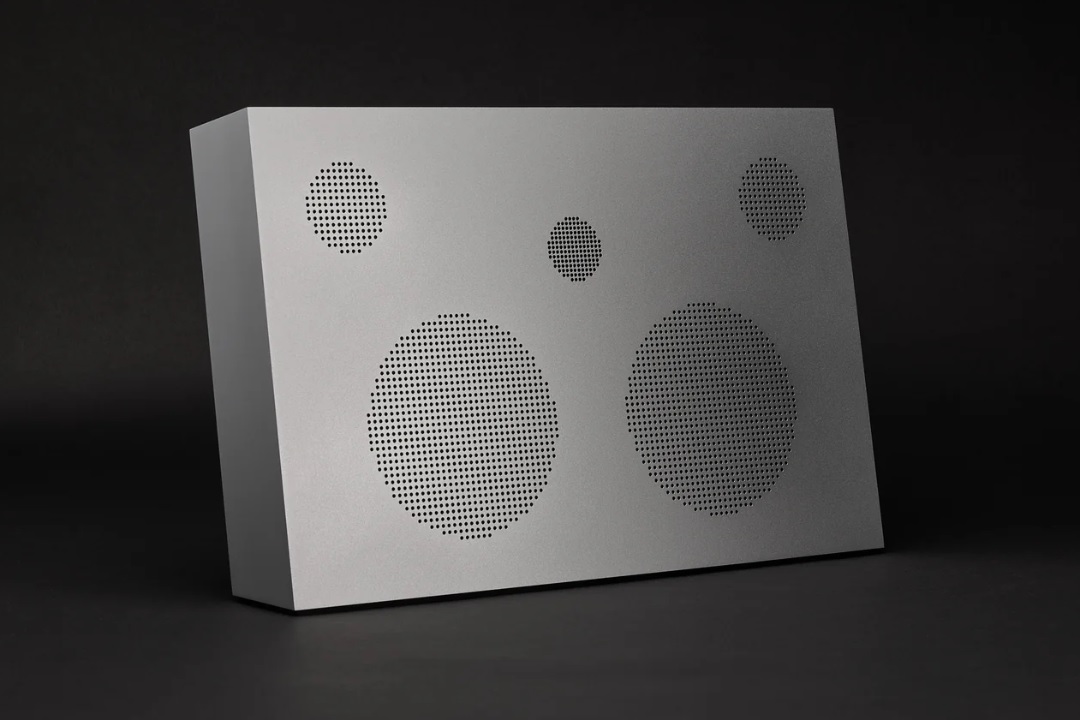
Inside the aluminium enclosure, the Monolith Aluminium uses a five-driver arrangement: two four-inch woofers, two two-inch midrange drivers and a 0.8-inch tweeter. All drivers use neodymium magnets, and each is driven by Class D amplification with a stated maximum of 45 watts per driver. This configuration gives the speaker a more elaborate acoustic layout than a simple single-driver or two-way compact unit.
The purpose of such a layout is not only output. Separate woofers, midrange drivers and a tweeter allow different parts of the frequency range to be handled by drivers suited to those roles. Nocs Design states a frequency range of 39 Hz to 23 kHz. As always with manufacturer specifications, that figure should be understood as part of the product’s technical description rather than a substitute for independent measurement, but it does indicate that the speaker has been engineered with full-range operation in mind.
For a prospective owner, the five-driver design may be especially relevant if the speaker is expected to serve as a primary all-in-one music system rather than a casual background device. It gives the Monolith Aluminium a more serious technical foundation while still keeping the product self-contained and wireless.
Streaming flexibility without abandoning simple Bluetooth
Connectivity is another area where the Monolith Aluminium is designed to cover several common use cases. It supports Bluetooth 5.0 with AAC and SBC codec support, making it straightforward to play audio directly from phones, tablets and computers. Bluetooth remains valuable because it requires little setup, works with almost any modern device and is useful for guests or quick listening sessions.
For home use, the speaker also connects wirelessly to a network via dual-band Wi-Fi on 2.4 GHz and 5 GHz. Wi-Fi streaming can be preferable in a fixed home system because it does not depend in the same way on a short-range Bluetooth connection from a nearby device. The Monolith Aluminium supports Spotify Connect and Tidal Connect, allowing playback to be handed off from compatible streaming apps while the speaker itself streams over the network.
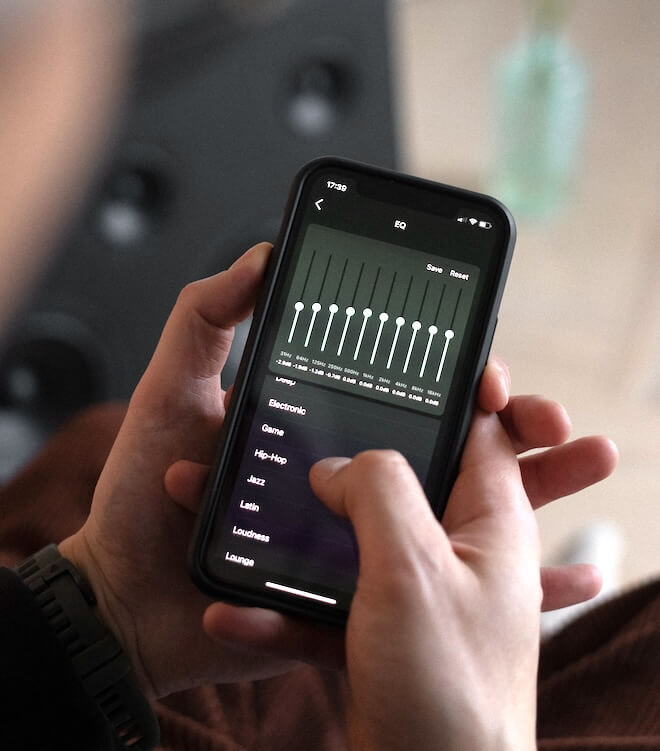
Control is available through the Nocs Design Music App. That app-based layer is important because a modern wireless speaker is not only an audio device; it is also part of a software and streaming environment. The inclusion of both Bluetooth and Wi-Fi gives the Monolith Aluminium a flexible role: it can be used casually, but it can also sit as a more integrated network audio component in the home.

Battery operation with USB-C charging
Although the Monolith Aluminium has the mass and construction of a substantial home speaker, it includes a 5,000 mAh lithium-ion battery with a stated runtime of about 15 hours. That makes it more flexible than a speaker that must remain tied to a wall outlet, while its four-kilogram weight makes clear that it is better thought of as movable within a home or workspace rather than an ultralight travel speaker.
USB-C charging is a practical choice. Many households already have USB-C chargers and cables for phones, tablets, laptops or accessories, so the charging method fits well with current device ecosystems. More importantly, the battery’s replaceability reinforces the product’s broader longevity argument. Wireless convenience often comes with battery anxiety over the long term; making the battery serviceable helps address that concern directly.
This combination suits users who want a speaker that can move from a desk to a kitchen, from a living room to a terrace, or between work and leisure spaces, while still feeling like a serious piece of audio equipment when placed in a main room.
Who the Monolith Aluminium is most suitable for
The Monolith Aluminium is most suitable for listeners who want an all-in-one wireless speaker with a strong emphasis on material quality, visual restraint and long-term serviceability. It should appeal to owners who prefer a single, self-contained music system over a rack of separate components, but who still want a product with a more considered acoustic and industrial design than many compact wireless speakers.
It is also a natural fit for environmentally aware buyers who look for specific design decisions rather than broad sustainability claims. Aluminium construction, recyclable materials and replaceable components are tangible choices that may make the product more attractive to someone trying to reduce avoidable electronics waste. The lack of visible branding and the two neutral finishes also make it relevant for interiors where equipment needs to blend in rather than dominate.
It may be less suitable for someone seeking a pocketable speaker, a rugged outdoor product or a traditional component-based hi-fi system with separate amplification and passive speakers. The Monolith Aluminium is best understood as a premium, design-led wireless speaker for home and lifestyle use, with enough connectivity and hardware detail to make it more than a decorative object.
A distinctive position in the wireless speaker category
What makes the Monolith Aluminium interesting is the way its features support the same central idea. The aluminium enclosure, replaceable components, battery design, understated appearance and network streaming are not isolated specifications; together they define a speaker intended to be lived with, maintained and used across different listening situations.
In market terms, its appeal is likely to come from the overlap between design-conscious ownership and practical longevity. Many wireless speakers emphasize convenience, while many hi-fi products emphasize separable upgrade paths. The Monolith Aluminium occupies a different space: it is an integrated speaker that still acknowledges repairability and component life. That is a valuable distinction for buyers who like the simplicity of wireless audio but are wary of disposable electronics.
The documented driver array and amplification also help give substance to the design. A beautiful enclosure alone would not be enough for a serious audio product; the presence of five individually amplified drivers, Wi-Fi streaming and support for major Connect platforms shows that Nocs has approached the Monolith Aluminium as both an object and a functioning music system.
Conclusion
The Nocs Monolith Aluminium stands out for its solid aluminium construction, restrained Swedish design, replaceable components, serviceable battery and flexible wireless connectivity. Its five-driver Class D architecture, Bluetooth 5.0, dual-band Wi-Fi, Spotify Connect, Tidal Connect and USB-C charging make it a practical all-in-one speaker for modern home listening. Its strongest documented qualities are longevity, material integrity and ease of integration. It is ideally suited to listeners who want a visually calm, durable wireless speaker with a more sustainable ownership path than typical sealed consumer electronics.