Subwoofer Placement: The Product Detail That Shapes Home Cinema Bass
A subwoofer is more than an add-on for extra bass. Its low-frequency role, room interaction, cabling, placement options, and potential use in pairs all shape how effectively it supports a home theater or multi-channel audio system.

A subwoofer is one of the most specialized components in a home entertainment system. Its job is focused: reproduce the lowest frequencies that many traditional multi-channel speaker layouts cannot handle adequately. In practical terms, that means working in the region from around 20 to 200 Hz, where bass energy contributes scale, weight, and impact to film soundtracks, games, and music. But the usefulness of a subwoofer is not defined only by its ability to produce low notes. It is also defined by how well it is integrated into a room. Because low-frequency sound behaves differently from midrange and treble, placement, wiring, room boundaries, furniture, and seating position can have a major effect on the result. A carefully positioned subwoofer can support front, center, and rear speakers more effectively, while a poorly placed one can create uneven bass, with some seats sounding excessive and others lacking low-end presence. That makes the subwoofer a product category where setup is not an afterthought but part of the design challenge.
A specialized speaker for the lowest frequencies
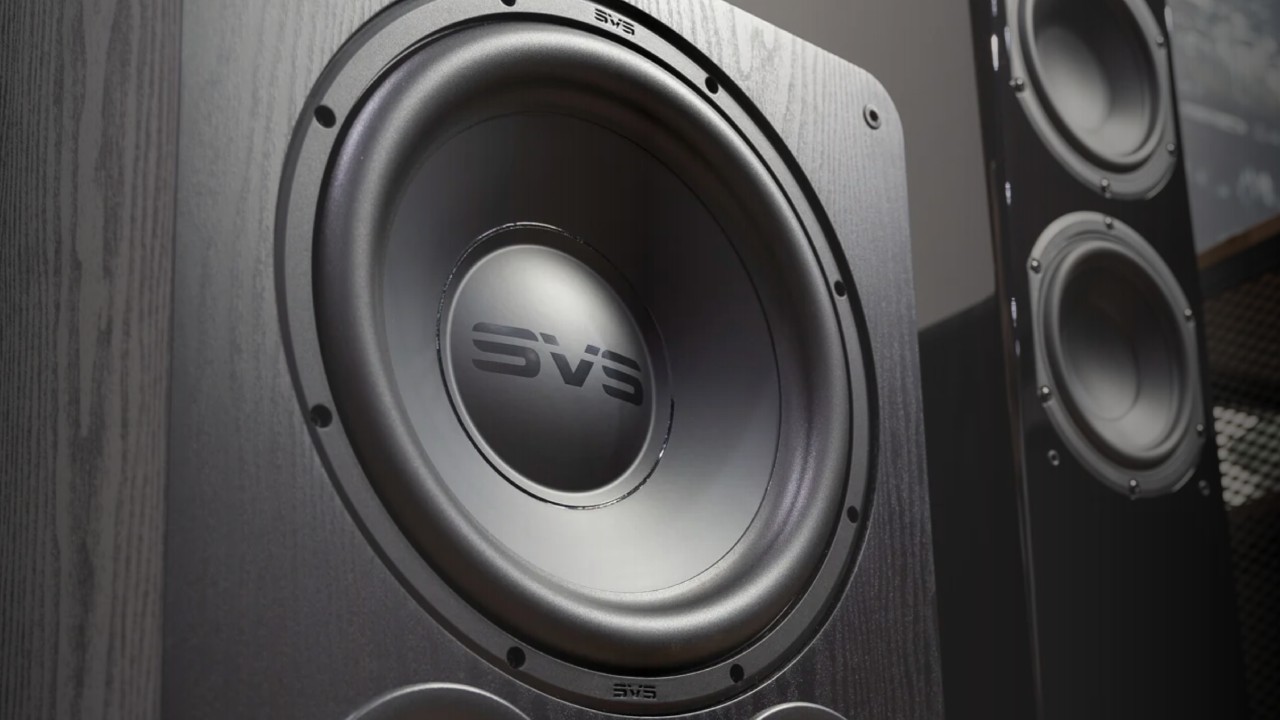
The main attraction of a subwoofer is its narrow but important purpose. Conventional front, center, and surround speakers may provide much of the audible spectrum, but they are not always suited to reproducing the deepest bass with authority. A subwoofer is engineered specifically for this low-frequency range, allowing the rest of a multi-channel system to be supported where the physical demands are greatest.
In home theater use, this specialization can be especially valuable. Low-frequency effects are a central part of many soundtracks, and bass also contributes to the sense of space and scale in an immersive system. Rather than asking every speaker in the room to handle demanding bass information, the system can use a dedicated acoustic component for that task. This is why the subwoofer has become a common partner for front, center, and rear speakers in cinema-oriented installations.
The product’s usefulness, however, depends on more than output. Bass frequencies interact strongly with the listening room, and that means a subwoofer should be thought of as both a component and a placement-sensitive acoustic tool. Its performance is tied to the environment in which it operates.

Why room interaction matters so much
Low-frequency sound radiates in a broadly spherical pattern, spreading in all directions rather than behaving like a narrow beam. When those bass waves meet walls, windows, floors, and other room boundaries, they reflect back into the space. These reflections can combine with the direct sound from the subwoofer in ways that either reinforce or cancel parts of the bass response.
Two common room-related problems are standing-wave antinodes and dead zones. Antinodes occur when direct and reflected waves align in phase at the same frequency, producing bass that can become boomy and indistinct. Dead zones occur when reflected waves arrive in opposite phase and cancel the direct bass energy, leaving areas where low frequencies are weak or barely noticeable. Both outcomes can happen in ordinary living rooms, not just in dedicated theater spaces.
This is why subwoofer placement is so important. Moving a subwoofer by a relatively modest distance can change how its output interacts with room boundaries. For a prospective owner, the key point is practical: a subwoofer is not simply placed wherever it is least visible. It should be positioned where the room allows it to operate with the most even and useful bass response.

Placement flexibility is part of the product’s value
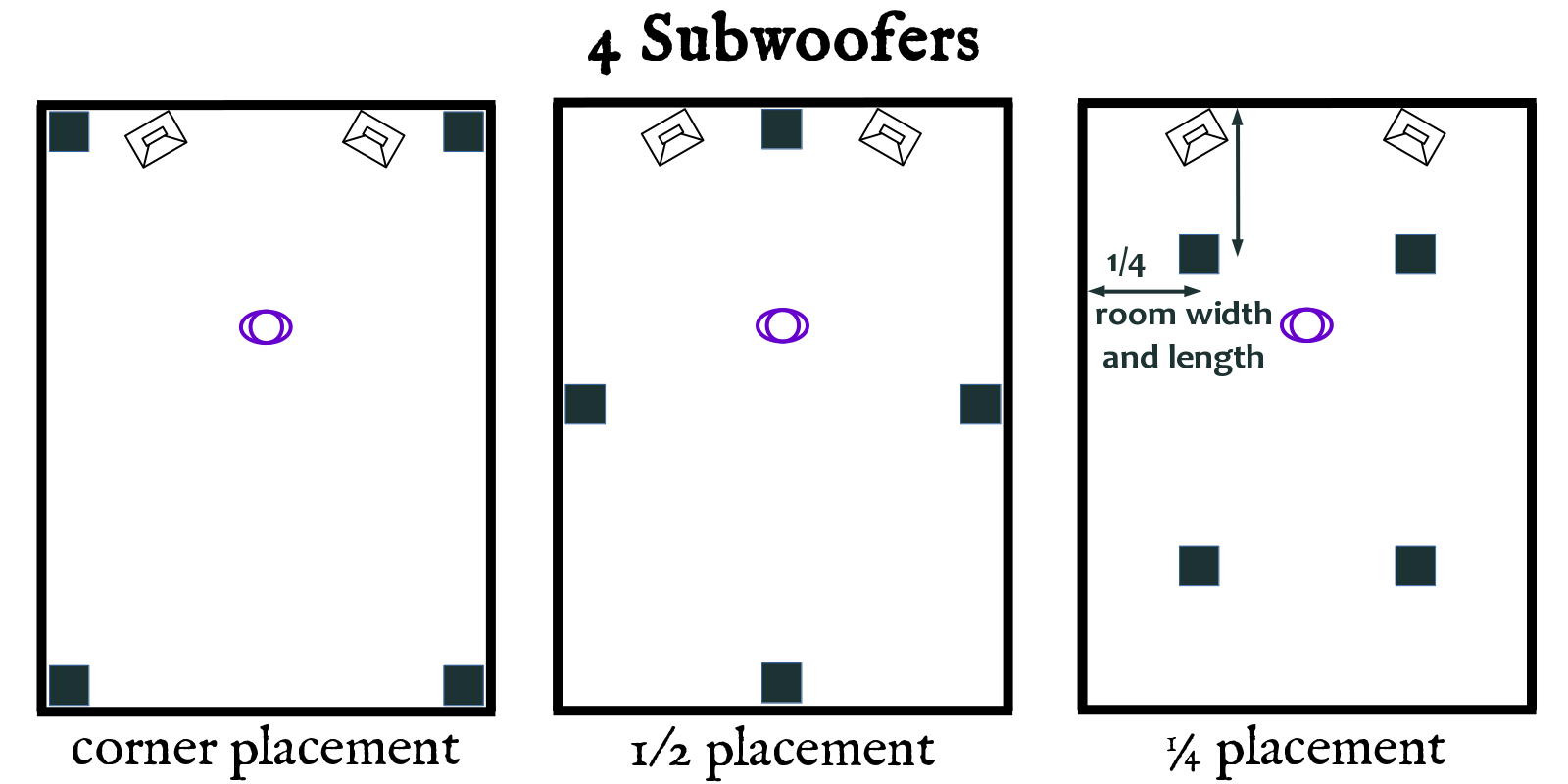
Many home entertainment systems place loudspeakers toward the front of the room, facing the seating area. A subwoofer can also be positioned in this frontal zone, where it supports the main speaker array without drawing attention to itself visually. One placement guideline is the so-called rule of thirds: positioning the woofer at a distance equivalent to one-third of the space between the walls. The purpose is to reduce the likelihood of standing-wave peaks and bass cancellations.
Corner placement is another common approach. Because placing a subwoofer in a corner can increase the presence of low frequencies and reduce the chance of certain dead zones, it may be useful in rooms where additional bass level is desired without adding more equipment. This does not make the corner automatically right for every space. If the subwoofer ends up too far from the listening area, or if the room dimensions create other problems, the result may not be ideal. Still, the corner option shows why subwoofers can be more flexible than many speakers: their low-frequency output is less tied to precise visual alignment with the screen or listening chair.
The least successful placement option is often inside furniture, shelving, or a rack. Low frequencies need space to develop and move through the room. Confining the subwoofer inside a cabinet-like structure can undermine its effectiveness. When space is limited, this may be unavoidable, but it is generally better to avoid enclosing the subwoofer if other placement choices are available.
Cables, wireless options, and everyday usability
Subwoofer setup is not only an acoustic question. Cable routing matters for safety, reliability, and long-term convenience. Exposed cables across the floor can be stepped on, damaged, or pulled loose, creating connection problems between the subwoofer and an AV receiver. They may also become tripping hazards or be vulnerable to pets.
For this reason, a clean installation is a genuine usability advantage. Cables should be stored neatly and kept out of the way where possible. In rooms where cable runs are awkward, a wireless subwoofer model can simplify installation by reducing the need to buy, route, and conceal long signal cables. Wireless operation does not eliminate every setup consideration, but it can make the product easier to integrate into shared living spaces.
This practical side is part of what makes subwoofer ownership different from simply adding another bookshelf speaker. The component often sits away from the main electronics stack, and its best acoustic position may not be the most convenient wiring position. Planning both issues together leads to a cleaner and safer system.
Custom installations and in-wall subwoofers
In-wall subwoofers are often chosen for customized installations where visual integration is a priority. By moving the subwoofer into the architecture of the room, the system can achieve a more seamless appearance. This can be attractive in dedicated home cinemas or carefully designed living spaces where visible audio hardware is kept to a minimum.
However, in-wall installation is not a simple substitute for placing a conventional box subwoofer against a wall. It requires specialist work and suitable enclosures that do not compromise the acoustic result. Labor and materials can also make this approach more involved. For renters, it is generally an unsuitable route, since cutting into walls can create problems with landlords and neighbors.
The advantage of the in-wall format is therefore contextual. It suits permanent, planned installations more than casual upgrades. For owners building a room around an audio-visual system, it can offer a clean and integrated solution, provided the installation is handled properly.
The value of testing placement in the actual room
Because every room is different, practical testing is one of the most useful parts of subwoofer setup. A simple method is to place the subwoofer in a candidate location and play familiar material with a repeating bass line. The listener then returns to the main seating area and evaluates the bass balance from a low listening height, roughly around knee level, before repeating the process with the subwoofer in other locations.
This exercise is sometimes informally described as a floor-based placement test, and its purpose is not to create laboratory measurements. It is a practical way to identify which position gives the most balanced and satisfactory bass response in the real room. Furniture, wall spacing, openings, and seating layout all affect the outcome, so the best position on paper may not be the best position in use.
For a prospective owner, this is an important reminder: the subwoofer is adjustable not only through controls but through geography. Its location is one of the most powerful setup variables available.
When a second subwoofer makes sense
In larger rooms, or in home cinemas with multiple rows of seats, one subwoofer can struggle to distribute bass evenly across the whole listening area. A position that works well for one chair may be less satisfying only a few meters away. This is not necessarily a flaw in the product; it is a consequence of how low-frequency sound interacts with space.
Adding a second subwoofer can help address this issue. When multiple subwoofers are positioned strategically, they can improve bass density and create a more seamless frequency response over a larger area. This can be particularly useful when the goal is not just to serve one prime listening seat but to provide more consistent bass for several viewers.
This approach is most relevant to spacious rooms and multi-seat cinema layouts. In a smaller space or a single-seat listening arrangement, careful placement of one subwoofer may be sufficient. The value of a second unit depends on the room, seating plan, and expectations for coverage.
Conclusion
A subwoofer is most suitable for listeners building a home theater or multi-channel audio system that needs dedicated low-frequency support below what conventional speakers can comfortably provide. It is especially relevant for rooms where film soundtracks, immersive audio, or large-scale entertainment are priorities. Its strongest documented qualities are its specialization in the 20 to 200 Hz region, its ability to complement front, center, and rear speakers, and its flexibility in placement, from front-wall and corner positions to carefully planned in-wall installations. The most successful ownership experience comes from treating placement, cable management, room acoustics, and seating coverage as part of the product itself. For owners willing to spend time finding the right position, and for larger rooms that may benefit from multiple units, a subwoofer can become a foundational part of a more complete and better-integrated system.